Photography Tutorial · 2024-05-12
400 Tutorials in 8 Years: How I Kept Going
From 2016 to today, over 8 years, I have consistently created 400 original photography tutorials at a pace of one per week.
How did I manage to stick with one thing for so long? How can persistence be made twice as effective? And how has doing one thing for years changed me?
In today's video, Thomas shares some of his personal growth methodology beyond photography itself.
Video
▶ Watch the video tutorial on Bilibili
This is the fully illustrated companion to the video above. For once Thomas steps outside photography technique itself and shares his personal growth methodology: how eight years and 400-plus tutorials transformed his photography, what makes a pursuit worth sustaining long-term, and the deeper drive that keeps him going. Keyframe screenshots are included — read the text for the framework, then hear the full story in the video.
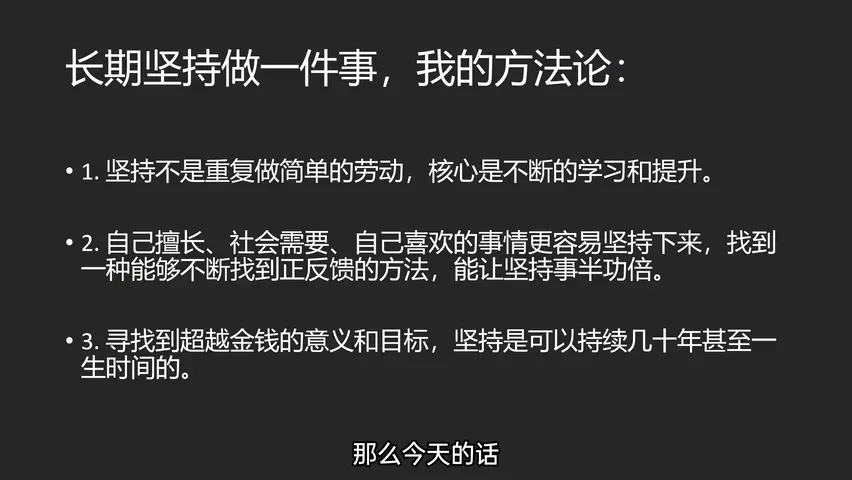
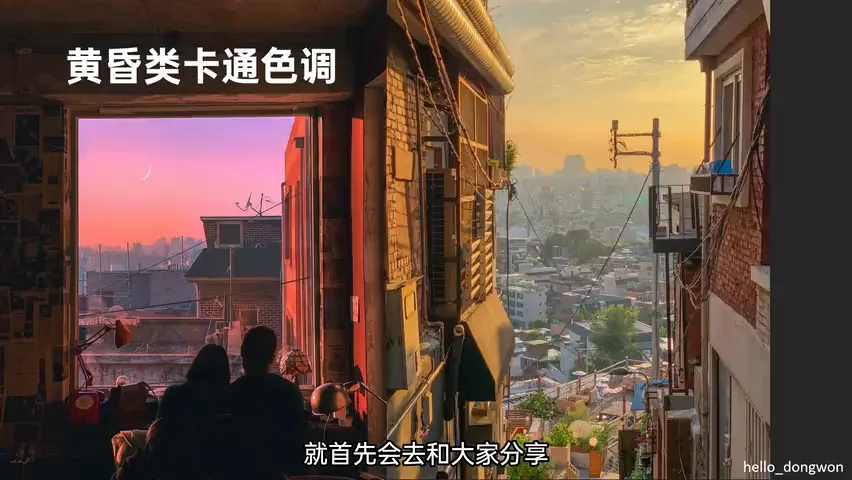
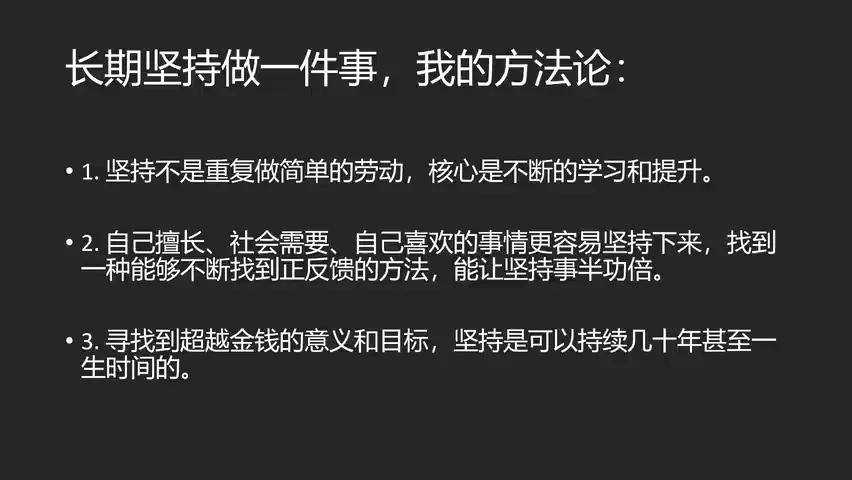
Start with the overview. This outline card from the opening of the video lays out the three threads of the whole talk — persistence means continuous learning, a triangle model for filtering what is worth sustaining, and a meaning that goes beyond money. Each is unpacked below.
01 Lifelong Learning: The Biggest Change Eight Years Brought
Thomas divides his photography education into two phases. From 2008 to 2015 he kept shooting for seven years, but it was simply repeating the shutter press, and his level barely improved. On May 14, 2016 he began publishing one tutorial every week, rain or shine — over 400 in total by the time of this video (at 0:19 in the video).
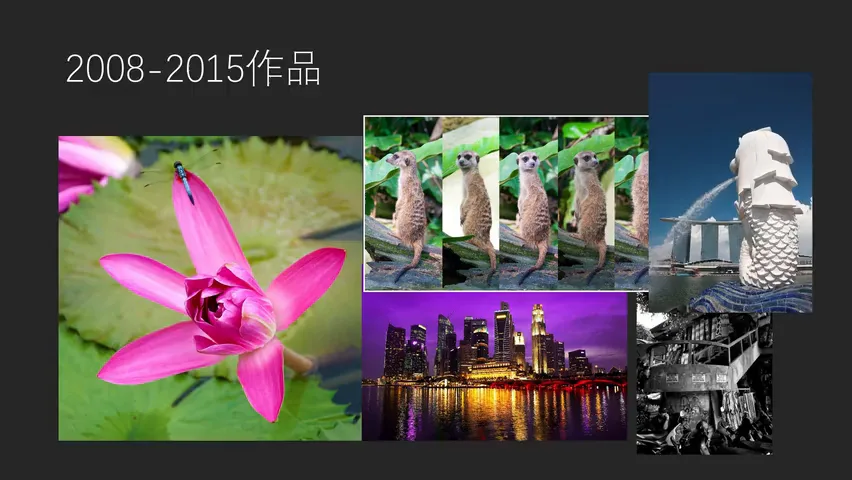
A weekly publishing cadence forces constant learning and thinking: the newest techniques, the work of other photographers. His AI noise reduction started from what wildlife photographer Jeff shared; through the Dutch photographer Max Rive he discovered how popular multi-frame exposure blending had become in Europe and America; and he learned how Western photographers use drones and satellite maps to scout locations far more efficiently (at 1:51 in the video).
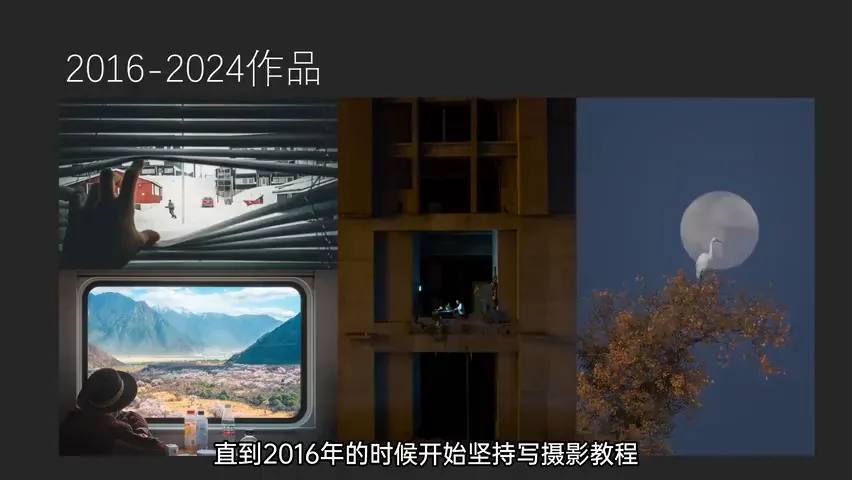
The result was rapid progress: after two years of continuous writing he became a full-time landscape photographer; in 2019 he won the Grand Prize of the National Geographic Travel Photo Contest as its first mainland Chinese winner; in 2022 he won a World Press Photo, this year he was shortlisted for the Hasselblad Masters, and his following across platforms has grown to five million (at 2:35 in the video).
02 Choice Beats Effort: The Triangle Model
To decide whether something can be sustained, Thomas screens it along three dimensions of a triangle: what you are good at, what society needs, and what you love. The sentence he keeps in mind: choice matters more than effort — spend real time thinking about whether a pursuit deserves the work, instead of just grinding away (at 3:22 in the video).
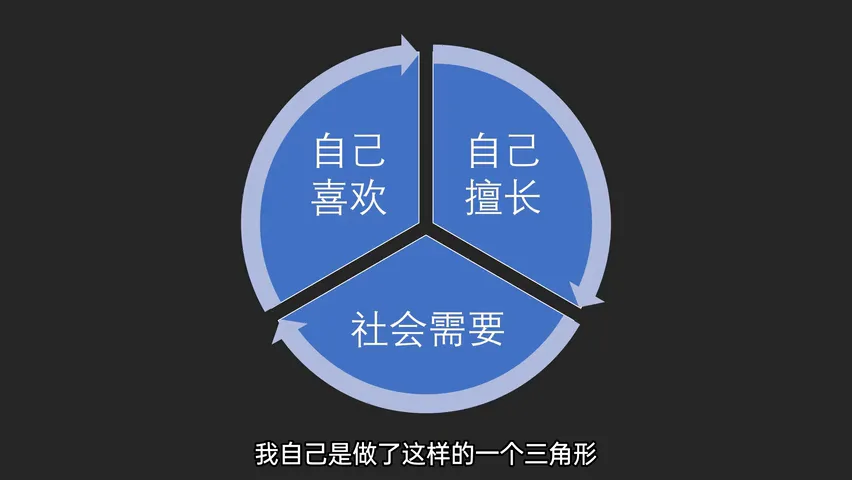
The first dimension is aptitude. His slow early progress came not only from not studying, but from a poor method — learning bits here and there with no system. The turning point was applying his strongest asset, an engineering mindset, to photography: building his color course for hobbyists, he split color grading into four dimensions — aesthetics, theory, technique and practice — and taught aesthetics first: only after studying nearly a hundred of the most popular photographers on Instagram plus the classics of photographic history can you learn to grade well (at 4:14 in the video).

Another example of the engineering mindset: while learning the Levels tool he would ask how Curves, Shadows/Highlights and Brightness/Contrast — which also adjust tonality — resemble and differ from it, what each does best, and which belongs at which step of the workflow, then write it all down the way you would in high-school problem sets. Master the tools properly and progress follows quickly (at 5:08 in the video).
Aptitude also means picking your own track. At emotional, poetic imagery he is no match for many photographers, but he found his distinctive lane — the grand narrative — and kept investing in it. In school you must not neglect weak subjects; in society it is the opposite — reinforce your strengths until they are unbeatable and become the expert in that niche, instead of fixing your weaknesses (at 5:59 in the video).
03 Positive Feedback: Making Persistence Pay Twice
The second dimension is social need — study where society is heading and whether there is demand. Thomas habitually enters his best work into photo contests: winning brings immense spiritual satisfaction that validates years of investment, plus reputational and financial rewards. After the NatGeo Grand Prize he gave interviews to more than a hundred domestic and international media outlets in two months, and commercial deals for phones and cars followed (at 6:53 in the video).
Reading trends matters just as much. When he changed careers he noticed portrait photographers were already winning clients through self-media while landscape photographers barely used it — that was the opportunity; a growing following brings more deals, a virtuous cycle. Conversely, people keep asking how to become a magazine photographer: that is a profession of the past era, and chasing it doubles the effort for half the result. The real question is how to publish and promote your work in the age of self-media and short video (at 7:48 in the video).
04 Love: Enduring the 80 Percent That Is Boring
Only the third dimension is love — and it comes last because when you are good at something and society rewards it with money, reputation and satisfaction, it easily becomes something you love. The real test of genuine interest: can you endure the 80 percent of the work that is boring? (at 8:48 in the video)
His example: everyone claims to love gaming, but what you love is the thrill of winning and not having to think about anything else — a pro esports player must grind daily to shave another hundredth of a second off reaction time. Photography is the same: many people only enjoy pressing the shutter, while one image can take months of planning and four or five hours of grading a day; continuous learning, honing technique, client communication, constant reflection — the boring 80 percent decides whether you truly love it (at 9:15 in the video).
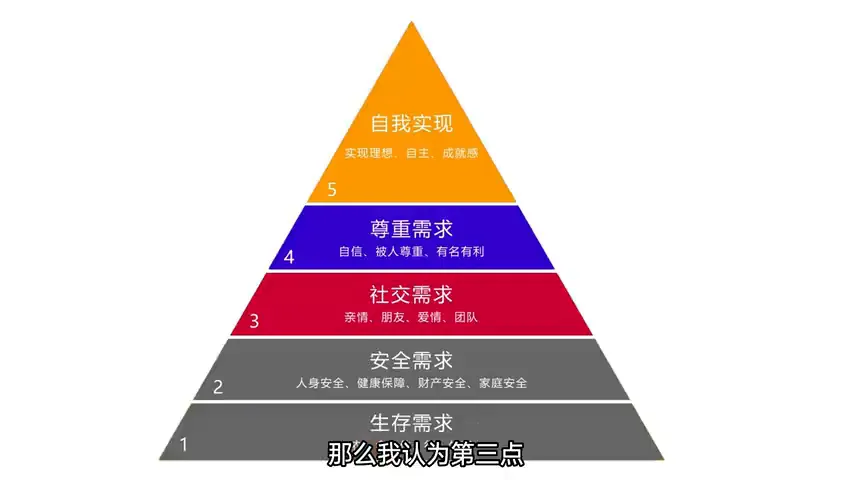
Practical takeaway: screen your pursuits with the triangle, and if a goal satisfies two of the three dimensions it becomes far easier to sustain. The pyramid of needs shown in the video explains why social need ranks so high — a goal that serves both others and self-actualization carries built-in positive feedback (at 9:53 in the video).
05 A Drive Bigger Than Money
To sustain something for decades you also need a drive beyond money. After the 2019 award he took on a flood of commercial work for two straight years, yet grew only more lost, questioning his original intention: had he really left software engineering for full-time photography to earn more? No — it was to pursue what he genuinely loves (at 10:36 in the video).

So since the year before last he reserves at least four to six months annually for his own projects: six to eight months of commercial work to pay the bills, the rest devoted to what he truly wants to shoot. In 2022, for the unfinished-buildings project 'Light in Unfinished Homes,' he turned down every commercial shoot for a month and buried himself in it. He also realized that the work giving him the most fulfillment and recognition is almost never commissioned — it comes from photographing what genuinely interests him in his own time (at 11:09 in the video).
These personal projects share a theme: photographing the Qinghai-Tibet Railway from train windows, China's green energy and infrastructure, came from his years abroad where he saw how much foreigners misunderstand China — the economy has taken off, but the culture has not traveled well; China's renewables and infrastructure are world-class, so why is there so little photographic work presenting them artistically? He also gives free lectures on photography and growth methodology at over 30 universities and a dozen secondary schools, hoping more young people will carry the cultural revival forward (at 12:03 in the video).
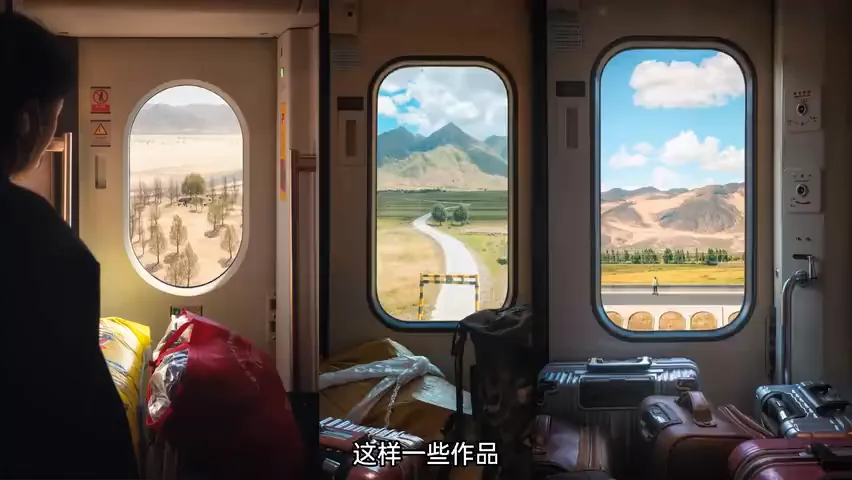
That is his imagined look-back decades from now: remembering the unfinished buildings, the trains, China's green energy, and the photography knowledge he kept popularizing, he will feel the life was not wasted — he recorded and witnessed a great era of China and contributed his small share to it. So the railway project is planned to run for a decade or more, and the weekly tutorial continues, rain or shine (at 13:59 in the video).
1. Persistence is not mindless repetition — the core is continuous learning, and the pressure of weekly output is the best learning engine; 2. Screen pursuits with the triangle of aptitude, social need and love — satisfy two of three and you can go the distance; 3. After entering society, sharpen strengths instead of patching weaknesses, and actively seek positive feedback from contests and self-media; 4. Find meaning beyond money — reserve fixed time each year for the projects you truly want to shoot, and persistence can last for decades.
Full tutorial list:
Complete directory of photography tutorials (updated 2024.4.16)
HD video:
https://www.bilibili.com/video/BV1NJ4m1N73Y/