Photography Tutorial · 2024-08-19
The Strongest Night-Sky Photos! Appreciating the Shortlisted Works of the 2024 Astronomy Photographer of the Year~
August 19 is World Photography Day.
Today, Thomas will join everyone in appreciating the shortlisted works of the 2024 Astronomy Photographer of the Year competition, enjoying the strongest photos of the universe and starry skies from around the world.
Video
▶ Watch the video tutorial on Bilibili
This is the illustrated companion to the video above. For World Photography Day on August 19, Thomas reviews the shortlist of the 2024 Astronomy Photographer of the Year — from a dragon-shaped aurora to star trails mirrored by ten thousand heliostat mirrors, from a 1.5-light-year-wide nebula to a galaxy 11.75 million light-years away. This article regroups the works by theme with screenshots, so you can quickly see what makes each image strong.
01 Three Auroras: Shape Is Everything
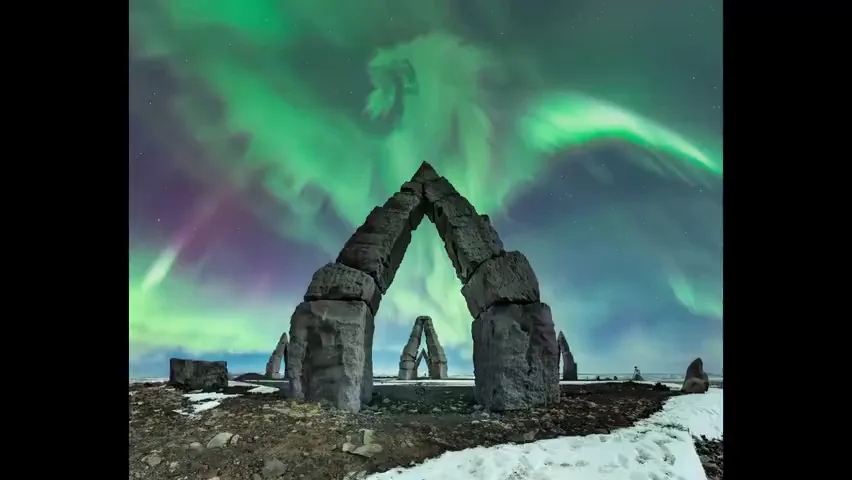
The first image is the most talked-about aurora of the shortlist: its shape really resembles a flying dragon, a rising phoenix. Even better is the foreground — the basalt columns in Iceland carry a timeless, almost mythic character, and one column's tip points exactly at the dragon's head, a once-in-a-lifetime coincidence of timing (at 0:58 in the video).
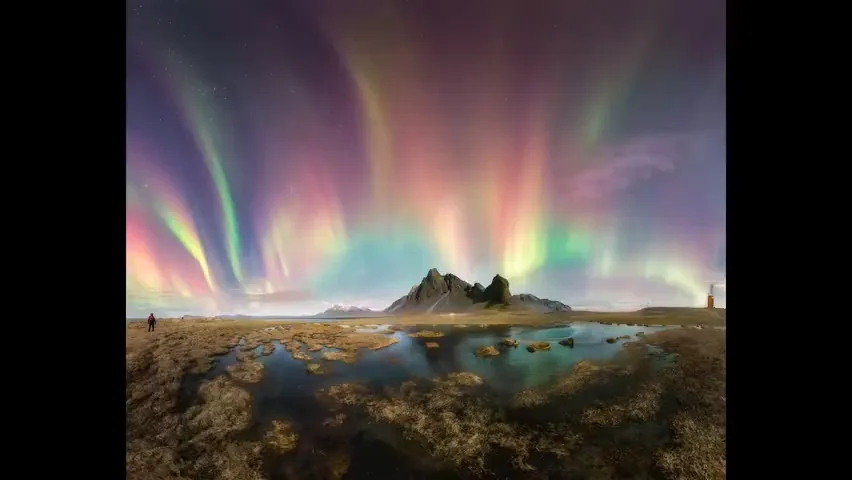
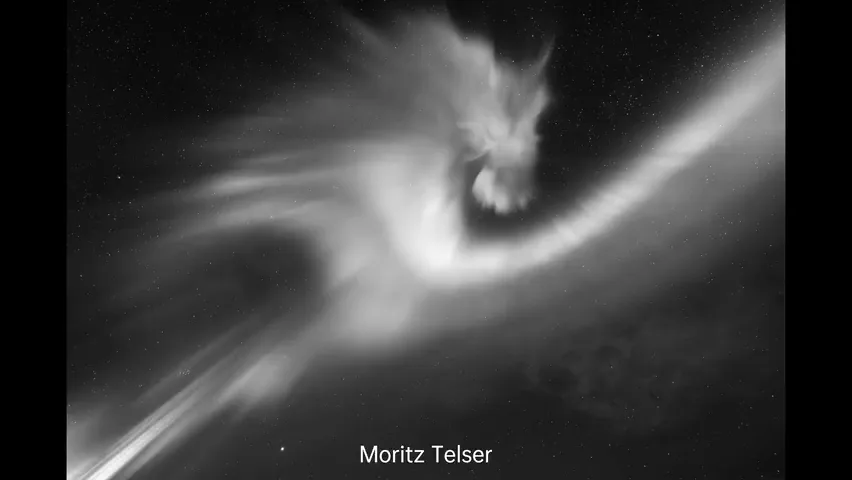
Next comes an aurora storm at Kp7: green, red and violet flooding the sky at once, spectacular in color. The following image takes the opposite approach — the photographer converted the aurora to black and white, deliberately stripping the color so every ounce of attention goes to the aurora's form: an arc like a dragon or a galloping horse, utterly distinctive (at 7:49 in the video).
02 Deep Sky: Sizing Up the Universe
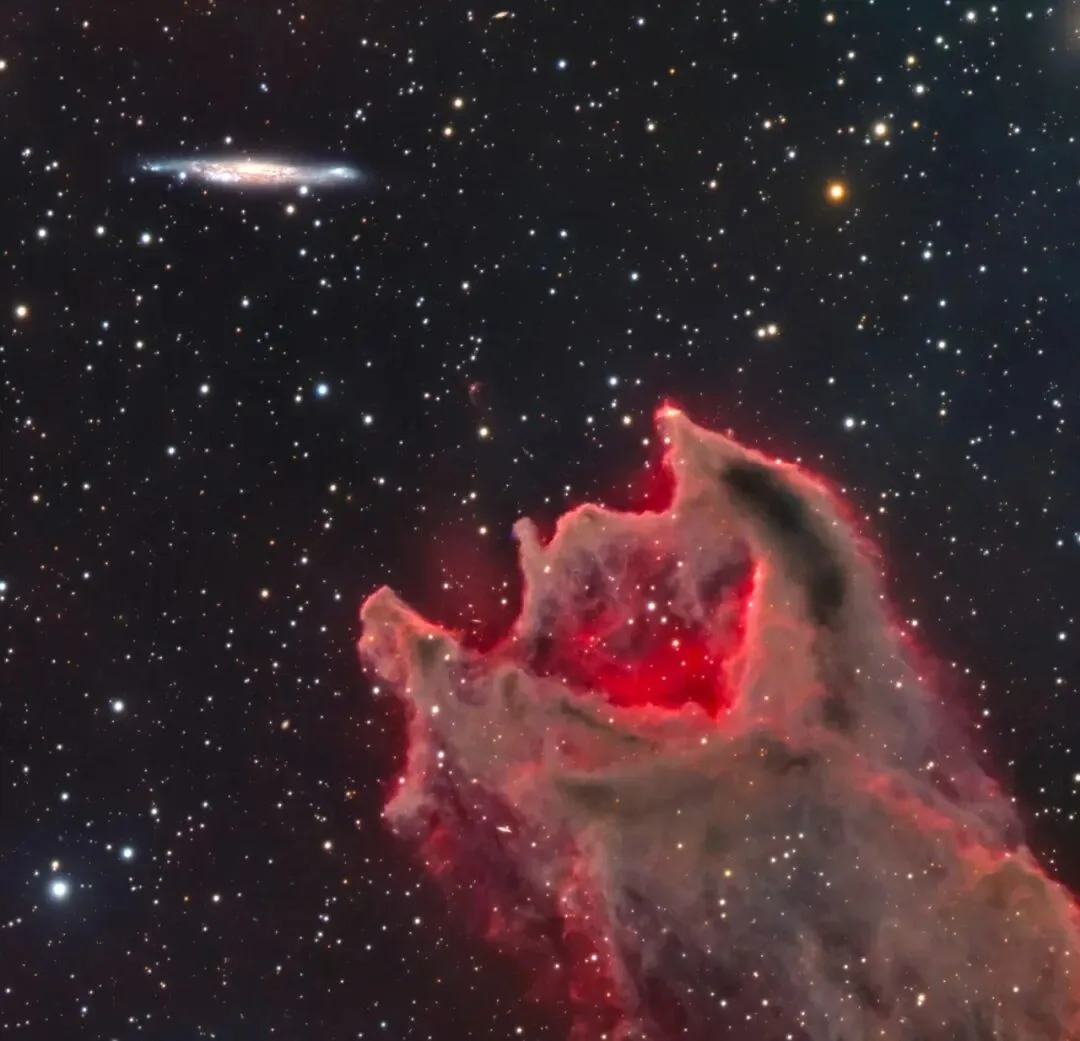
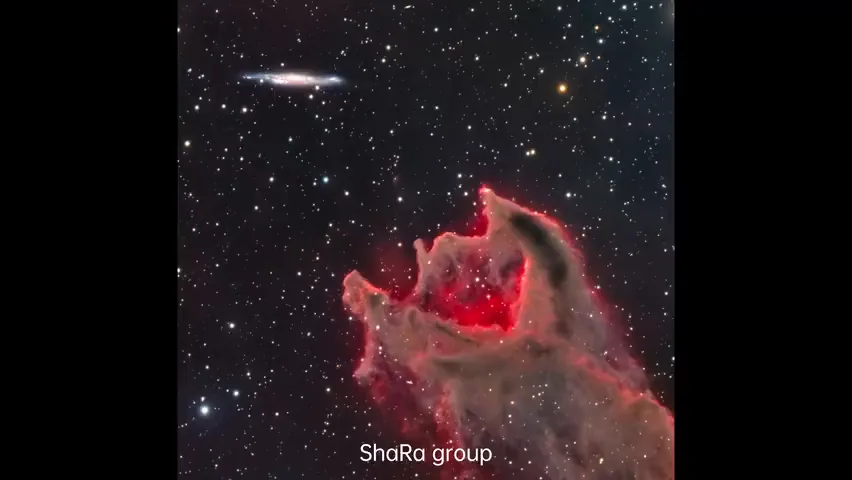
CG4 is a nebula-and-dust complex in the southern constellation Puppis, shaped like a cat pouncing on a flying saucer. Its head alone spans 1.5 light-years — an enormous figure woven from countless stars. The object is so faint that a team of photographers jointly rented a powerful telescope service to capture it at all (at 1:28 in the video).
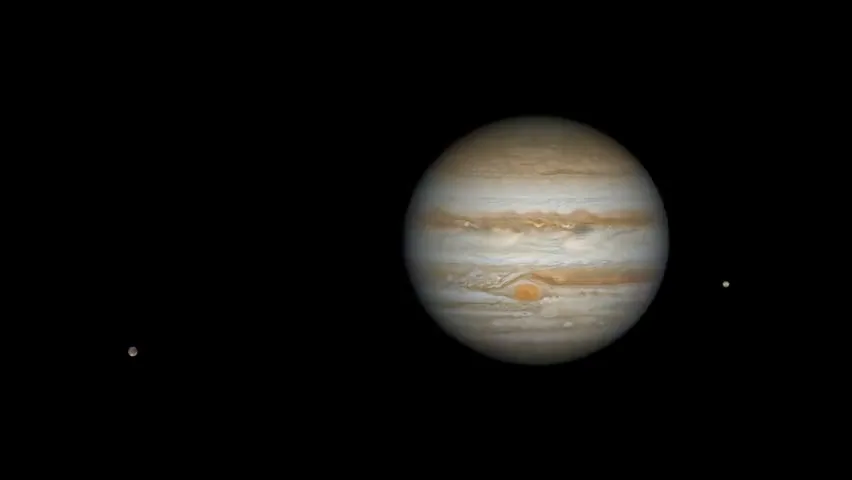
Planetary work is just as strong: one image captures Jupiter flanked by its moons Io and Ganymede, evoking the depth of space. Even more hardcore is the dwarf planet Ceres — the photographer spent eight hours shooting stacked long exposures to record it moving beyond a galaxy's spiral arms; Ceres outshines the galaxy behind it and drifts quickly, its path plain after stacking (at 2:05 in the video).
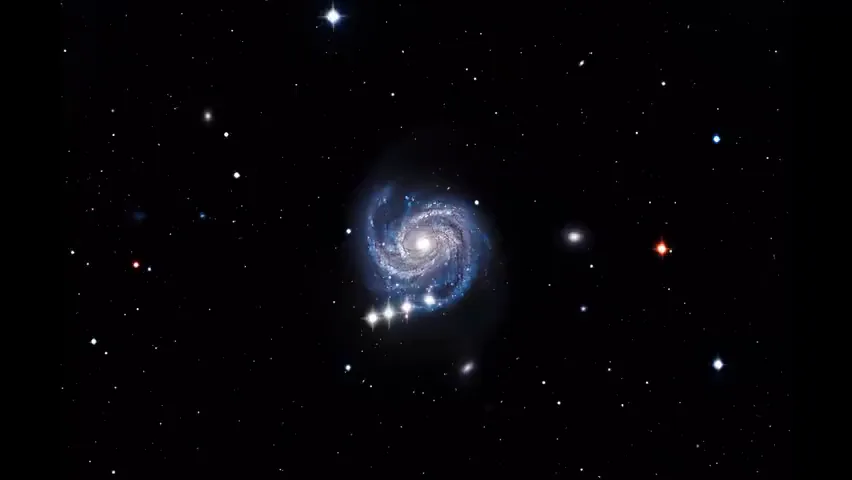
And the photo of M81, Bode's Galaxy, pushes the sense of scale to its peak: it lies in Ursa Major, 11.75 million light-years away — the light reaching your eyes tonight has been traveling for 11.75 million years. Against the universe, human scales of time and space barely register (at 6:21 in the video).
03 Sun and Moon: How the Classics Get Competitive
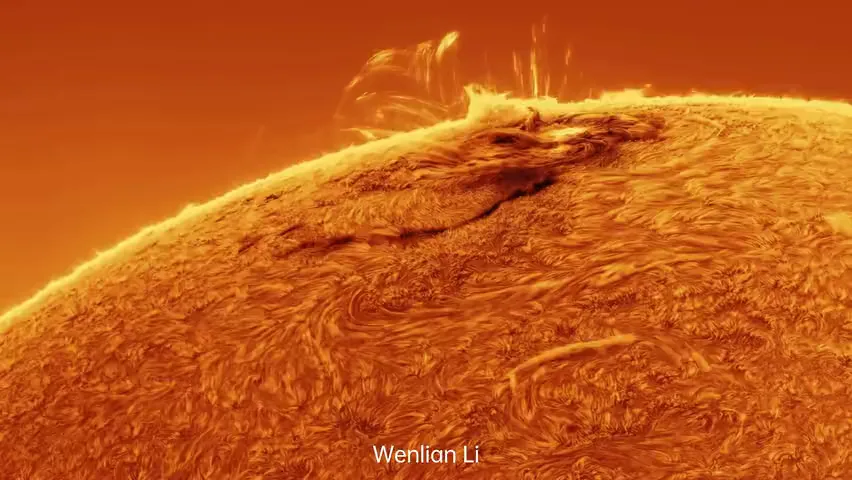
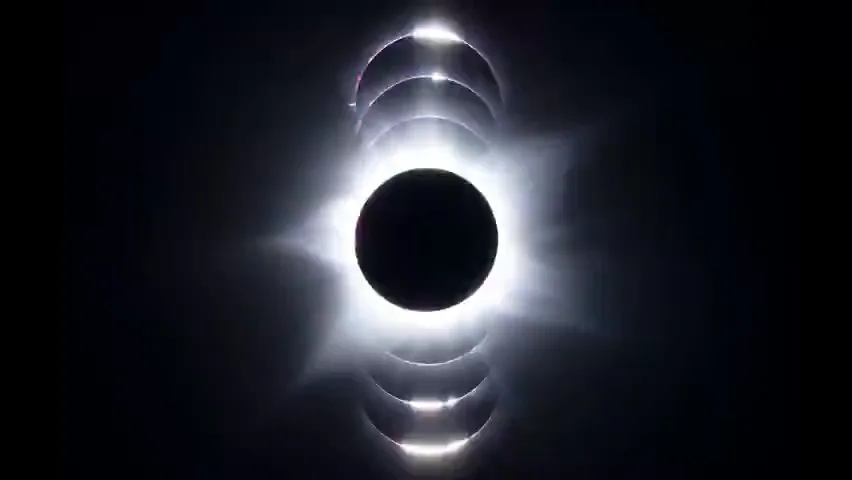
Sun and moon are the most hotly competed classics in astrophotography. Chinese photographer Wenlian Li caught enormous prominences erupting from the sun's limb, every fiber of the orange-red surface rendered; and the Baily's beads sequence of a total solar eclipse remains timeless — a string of pearls compressing minutes of the eclipse into one frame (at 2:17 in the video).
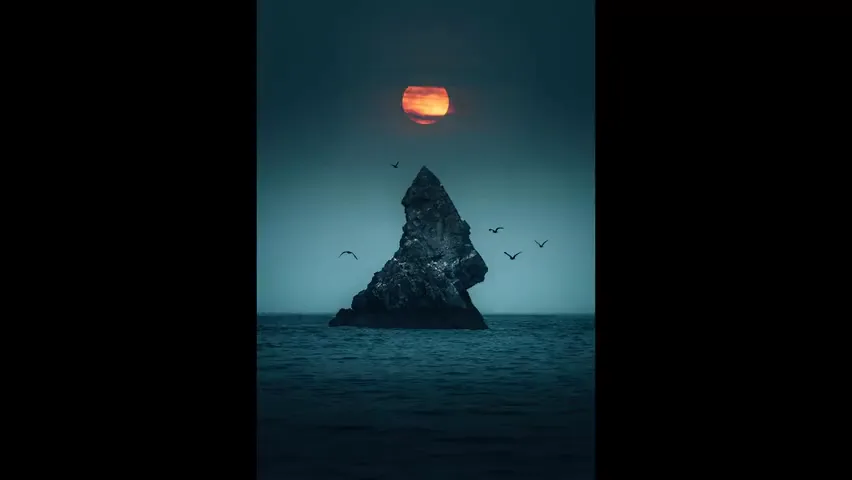
Moon photos keep multiplying, and the competition only sharpens: one image pairs the full moon with the International Space Station, dwarfing humanity's grandest research facility; another stacks the 51-percent-lit half moon with the station's traced path for an uncanny sense of order. And one is a textbook time blend: expose slightly longer for a clean lunar surface first, then raise the shutter speed to freeze birds over the sea, and blend the two into a wonderfully atmospheric frame (at 9:36 in the video).
04 Chinese Photographers: Mirrors Reflecting the Stars
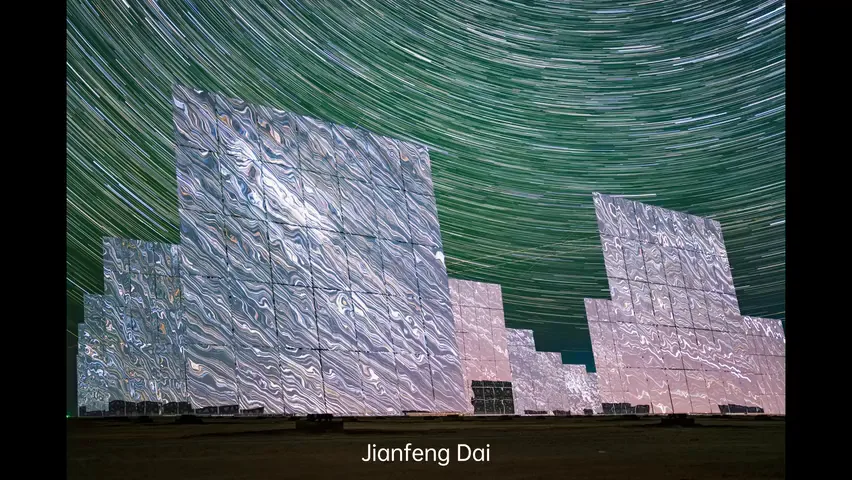
The Chinese entry that impressed Thomas most comes from Dai Jianfeng: the Dunhuang 100-megawatt molten-salt tower solar thermal plant — more than ten thousand giant heliostat mirrors in concentric arrays. Star trails reflect off the mirrors into a singular structure, carrying the theme of humanity exploring new energy and a green, sustainable future. That layer of meaning lifts the photograph considerably (at 2:26 in the video).
Add Wenlian Li's solar close-up and another Chinese photographer's rare celestial phenomenon shot from extreme altitude, and this year's shortlist carries a notably strong Chinese presence — a once-niche field is being pushed to new heights by Chinese photographers (at 8:43 in the video).
05 Elements and Order: What Wins the Judges Over
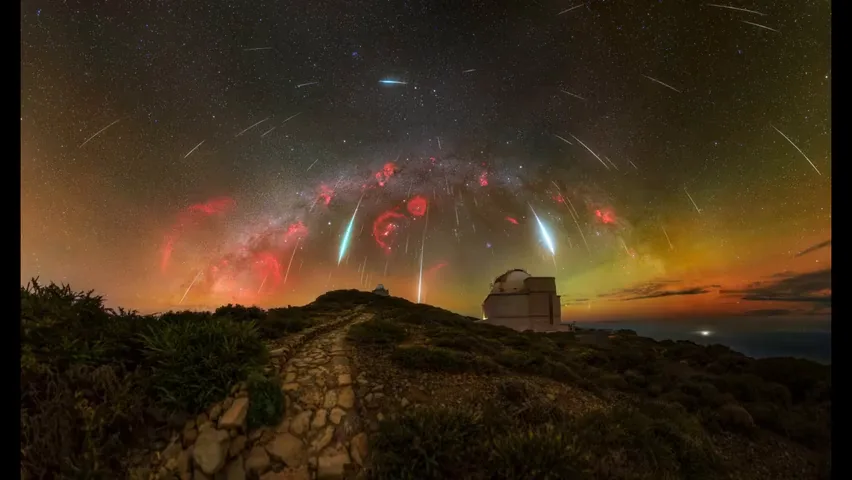
More elements do not make a better picture. This one from La Palma, Spain, packs a path, an observatory, the Milky Way, nebulae, Geminid meteors and even airglow — each fine on its own, yet Thomas finds the frame overcrowded. Clearer intent wins: a runner statue of stone and steel facing the Milky Way, humanity bound for the stars; and over New Zealand the galactic arch sets while a band of yellow aurora australis hugs the horizon — a rare celestial encounter (at 3:13 in the video).
Such ingenuity runs through the whole list: light painting to ignite an abandoned house against the Milky Way; the curves of a dried mudflat answering the arcs of star trails; Mars abstracted into an oil-painting-like vista from orbiter imagery. Astrotrophies today are won on ideas, patience and expression — not just gear and dark skies (at 4:31 in the video).
1. Auroras are judged on form: catch the dragon arc, align a stone tip with its head, or go black-and-white and let structure speak; 2. Deep sky moves us through scale and persistence — a 1.5-light-year nebula, eight hours on Ceres, starlight 11.75 million years old; 3. Sun-and-moon is a crowded field — prominences, Baily's beads, ISS transits and time blends are how to stand out; 4. Great images carry a message — mirrors reflecting star trails and a statue facing the galaxy move judges more than piled-up elements.
Full tutorial list:
Complete Photography Tutorial Index (updated 2024.4.16)
HD video:
https://www.bilibili.com/video/BV1rf421q7cu/
Scan the QR code above or click "Read the Original" at the end of the article