Photography Tutorial · 2018-01-28
Advanced Photography Thinking - "Awakening" Your Inner Artistic Cells
The author of this article is Mr. Weihao Pan (潘玮浩) of Jiying. In his journey of self-exploration, he has tried to summarize the following five points, hoping to bring some help to photography enthusiasts seeking change and seeking to shoot unique landscape works.
Introduction
About a year ago, I found myself in a subtle transitional period in landscape photography. Before that, I had spent a long time shooting in North America, a place hailed as a "paradise" for landscape photographers, visiting many locations. At the same time, I invested a great deal of time practicing and mastering various pre- and post-production techniques. Gradually, I felt that my photos and style had reached a point where some changes were needed. Of course, I am still exploring and changing - the process is ongoing. In this article, I will also briefly look back at works I shot in 2017.
After years of shooting landscapes until now, I no longer deliberately pursue simply beautiful sunrises and sunsets. Indeed, pretty sunrise and sunset landscape images can give viewers aesthetic pleasure, but on a deeper level, does the image carry some meaning? In other words, can it convey to the viewer the feeling and meaning the photographer wanted to express? If not, then the image is at best just a "pretty vase." Some friends might say, are not all landscape photos just "pretty vases"? I do not think so. If a landscape photo can express the author's feelings and emotions about the scenery he visited, and can resonate with viewers who sense those feelings and emotions, then it is not a "pretty vase" - it has meaning.
Over the past year or so, I have spent a lot of time exploring and shooting in southeast Tibet. For me, this was not only a journey of exploring new shooting locations, but also a process of self-exploration. During this process, I also launched my long-term personal shooting project "Mountains’ Portraits" (《山之肖像》). Through this project, I have been searching for the primitive, pure, and unique side of mountains, without any foreground, middleground, or background to "decorate" the peaks. At the same time, I also hope to let viewers feel the emotions and feelings I had when shooting. The following are some works from this project.
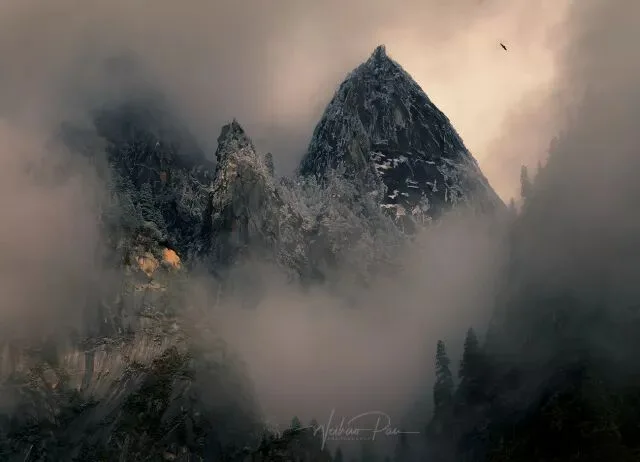
《Above All Else》
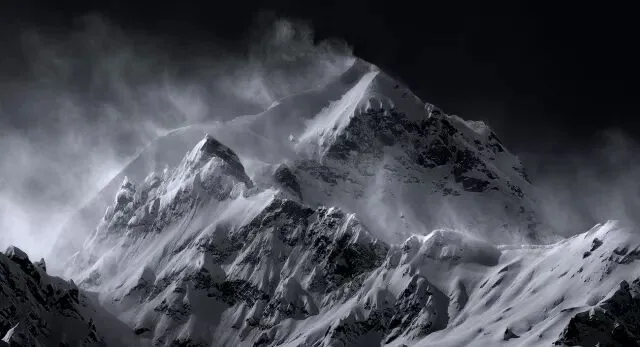
《Wuthering》
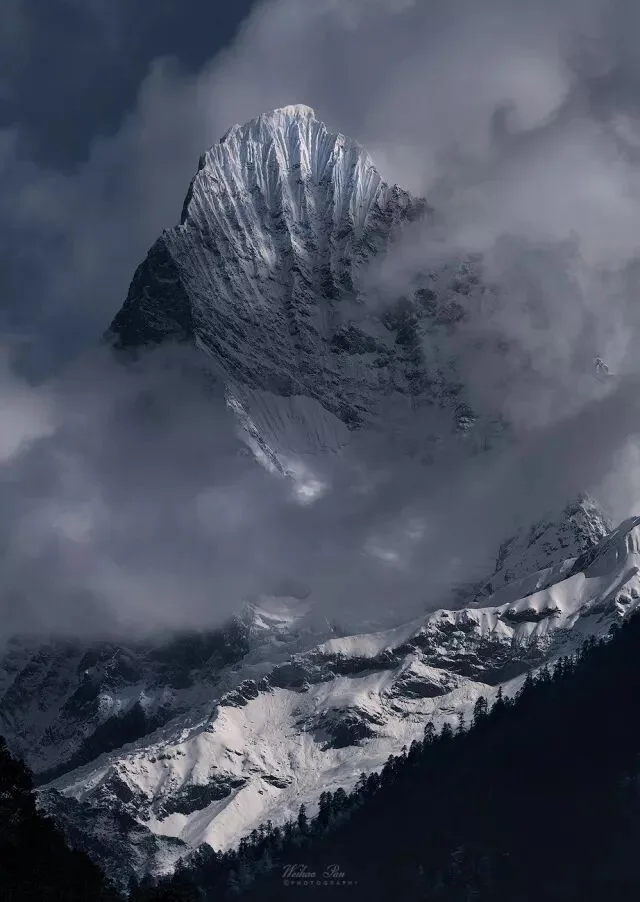
《Shark's Fin》
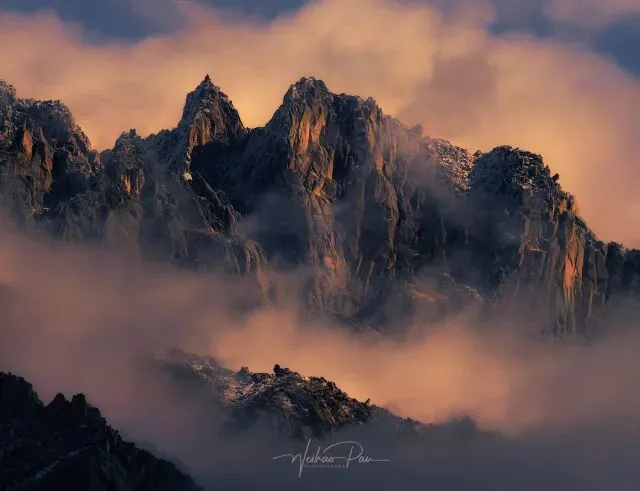
《Fortress》
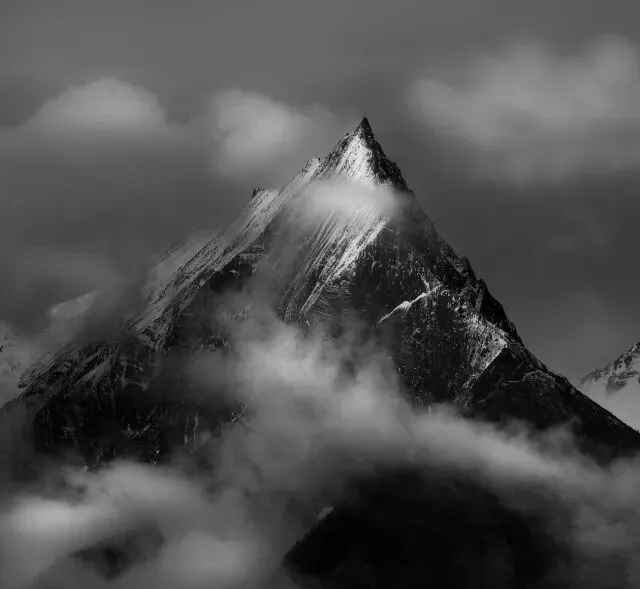
《The Spear》
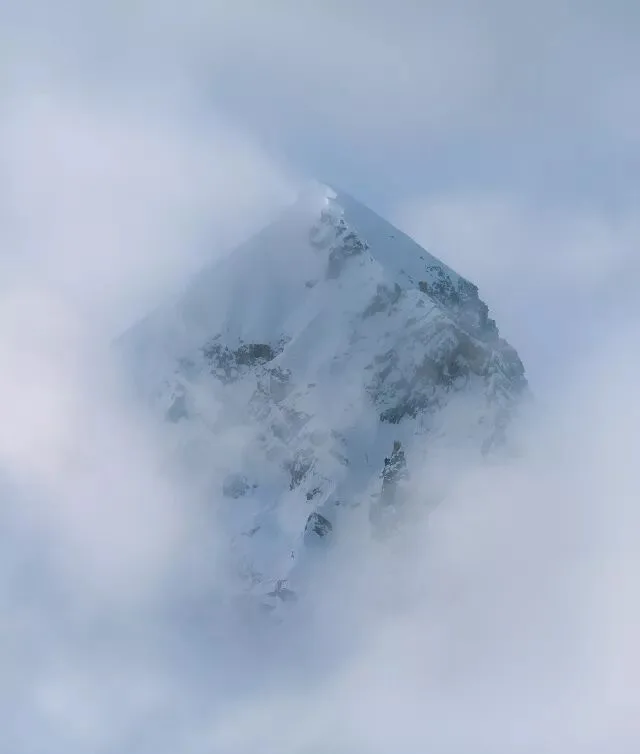
《Into the Dream》
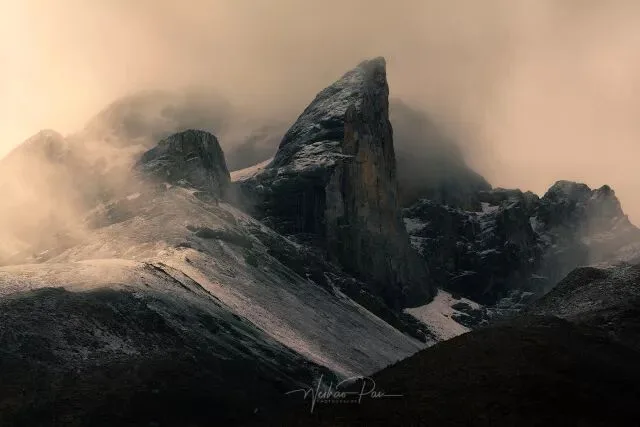
《Stand in Storm》
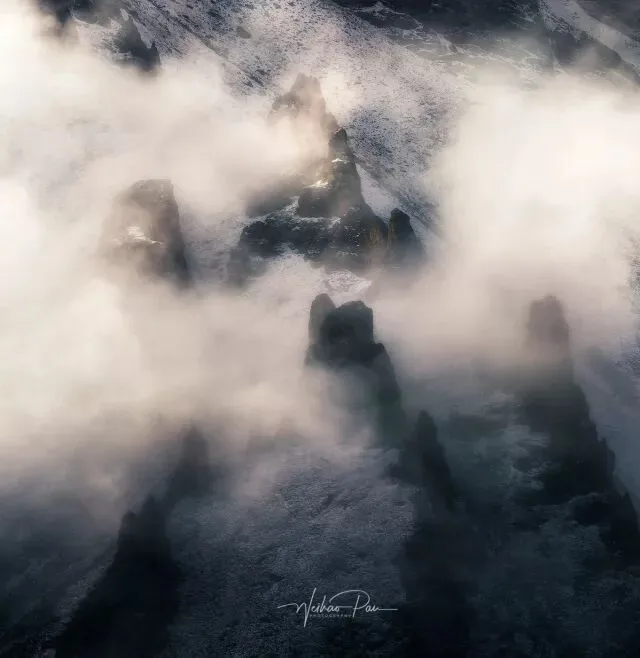
《Spiritualization》
Over the past year or so, I have used telephoto lenses more often when shooting in Tibet, deliberately using wide-angle lenses less. I am especially cautious with wide angles: if I do not come across a wide-angle scene I like that matches the feeling I want to express, I would rather not shoot even with good light and a beautiful sunrise or sunset sky. As for using telephoto lenses to present landscapes, I am still experimenting and exploring - the "Mountains' Portraits" (《山之肖像》) project is an experiment I am still figuring out.
In this journey of self-exploration, I have tried to summarize the following five points. I hope they can bring some help to you who seek change and seek to shoot landscape works of your own.
1. Seek and Explore Originality
I am sure many friends have heard this countless times: shoot something different, unique, and new. You can go to a new place no one has shot before, or a place many have shot, but shoot it from a new perspective or with a different post-processing atmosphere. Art is creative. Copying perspectives and post atmospheres others have already shot is indeed a great practice and learning opportunity for beginners, but for you who seek your inner artistic potential, this might be called "cloning." Each of us is unique, having grown up in different eras, lives, and family environments, with different views and feelings about different things and landscapes. As long as an image reflects your inner feelings about things and landscapes, it has originality. Showing your perspective and your world through the lens is very important. The charm of photographic art lies in its uniqueness; if everyone shoots the same things, it naturally loses its charm.
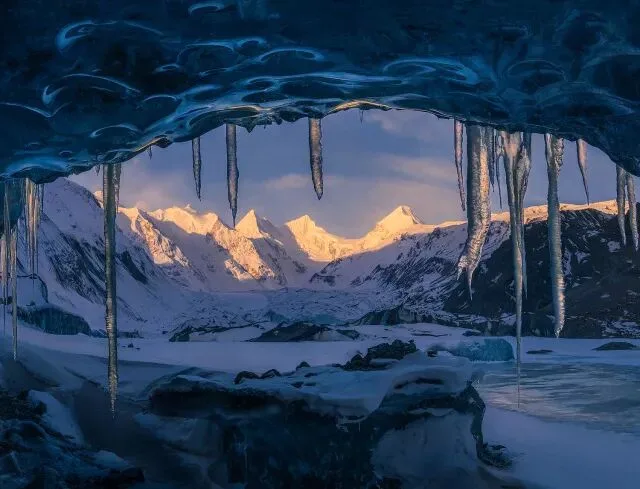
《Icebound Window》
Southeast Tibet indeed has its unique charm. In March 2017, I witnessed everything from heavy winter snow to spring peach blossoms to summer temperate rainforests - you could say I experienced all three seasons of winter, spring, and summer in just three weeks. This is a unique shot for me, and it was also the first time I photographed icicles echoing with glaciers and snowy peaks.
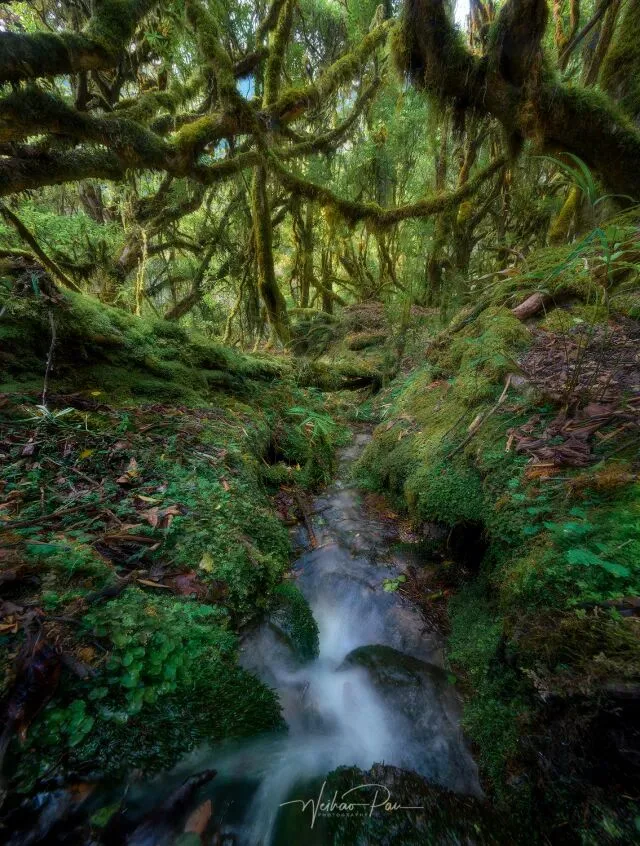
《The Path to Green Haven》
In March 2017, while trekking in a valley at over 2,000 meters above sea level in Tibet, I discovered a unique temperate rainforest covered in moss. This forest taught me about the diversity of Tibet's terrain - it is not just pine and fir forests, shrublands, rocks, and snow mountains. Forests are also one of the most difficult subjects in landscape photography. I used a stream as a guide to simplify the entire complex scene, and this remains my favorite forest image to date.
2. Have a Focal Point
"An image can tell a story." I am sure many friends have heard this. Some may ask: "How can I tell a story with an image?" In fact, any good image has a focal point - a main feature - supported by different elements. If we include too many elements in the frame, such as too many landscape elements or oversaturated colors across all elements, the image becomes chaotic and lacking in focus, making it hard for viewers to find the story you want to tell. Many beginners, including myself when I first started shooting landscapes, would face a grand scene and want to cram all the landscape elements into one frame. This tells viewers nothing because the image is chaotic. That is why composition always comes first in photography. Composition determines the focal point and main feature of an image, and how different elements support that focal point and main feature.
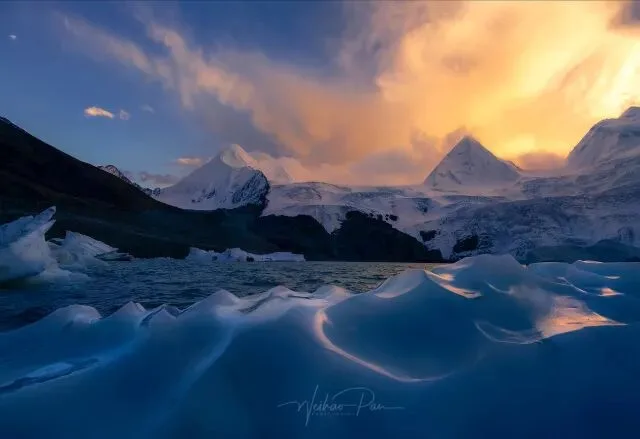
《Ice Wave》
While scouting locations in southeast Tibet in autumn 2017, I kayaked on this glacial lake. I used the wavelike ice foreground to recreate the scenery and feeling I saw from the kayak, while keeping part of the lake surface and other ice blocks on the lake. This ice foreground supports the important background elements and the focal point: the snowy peaks and the glacial lake environment.
3. Learn to Choose Light
When shooting landscapes outdoors, different light always affects the scenery at any given moment - sometimes strong, sometimes weak, light always affects the scene to varying degrees. As a photographer, besides choosing the right composition, the second thing to do is choose the light - the light best suited to the image you want to shoot, the light that embodies the feeling you want to express. True, we cannot control nature's light, but we can choose to use suitable light to tell the story of the image. Make sure the light enhances the focal point and the feeling you want to express, and guides viewers to see the focal point. Getting out for a shoot is not easy, and going to a place that moves you to shoot may be even harder. So allow yourself enough time to wait for the right light, or stay open-minded, adapt to circumstances, and react quickly to ever-changing light. Many times, the light in my most satisfying works lasts only two or three minutes or even less, and many times the shot was not even taken with the camera on a tripod.
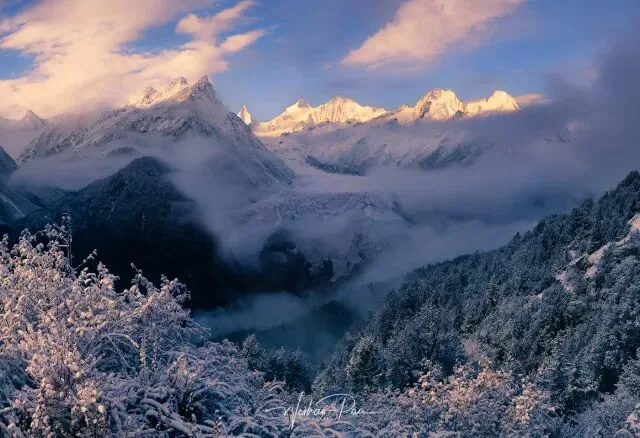
《Fullfill the Dream》
This is a remote corner of southeast Tibet with beauty few have seen. This was the region's first snow of the year; after a night of snowfall, everything turned pure and flawless white. In the morning the mist gradually cleared, and the sunrise light fell on the peaks, utterly dreamlike. The light for this shot was fleeting - the moment the peaks briefly emerged from the mist, I immediately grabbed my camera and sought a suitable angle. One or two minutes after shooting, the mist piled back up and covered part of the peaks.
4. Travel to Places That Move You
The world we live in is colorful and diverse; everyone has places and seasons they dream of going to. This place does not have to be far away - it can be just in the countryside near home. The same place looks different across seasons, and there will always be something that moves you most. Ignore the photography hotspots and places shot by millions, and go find and shoot the places and details that move you. Sometimes it is not grand and spectacular scenery that moves people; a simple, tiny scene can also bring enjoyment. For me, Tibet is a unique place, one that moves me. In this short period of just over a year, I went three times, in different seasons, and was always moved by different landscapes. The deeper your connection with a place, the more naturally your personal experiences and feelings are reflected in your works - that is what I have learned from shooting in Tibet over the past year or so.
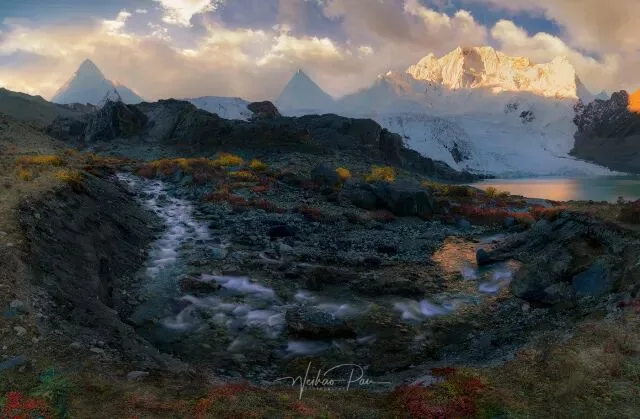
《Mountain Curve》
Tibet's autumn colors have their own unique charm, and this perfect U-shaped stream bend full of autumn hues moved me to shoot it. This was a scene too wide even for an 11mm lens, so I used 18 frames at 15mm - 9 in each of the top and bottom rows - and spent considerable time in post semi-manually merging and stitching them to achieve the visual effect I wanted.
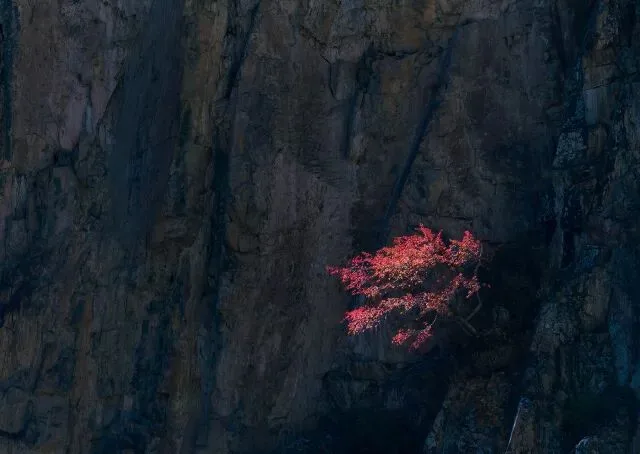
《Yearn for the Light》
On a travel shoot in Tibet, a small tree growing on a cliff was "desperately" longing for a ray of warm sunlight. It immediately caught my attention, and I captured this shot.
5. Shoot for Yourself
Paying attention to what you want to shoot and following your inner voice is very important. We are surrounded by all kinds of noise and pressure - simplest of all, the "voices" and invisible "pressure" from photo-sharing social networks and other social groups. "This photo has no character, it is average"; or the flood of "praise"; how many likes this image got - these are all external voices and pressures. You do not need those thousands or tens of thousands of likes to prove an image is good. An image that touches the feeling in your heart is a good image; if it also resonates with other viewers, that is even better. If you shoot purely to chase attention and thousands of likes, over time you will be eroded by it, and your images will naturally lose their charm and uniqueness. For me, the ability to explore and live in the wild, and simply being in touch with nature itself, is the source of my passion. Being able to shoot the landscapes I see along my journey and share them with everyone is an added bonus.
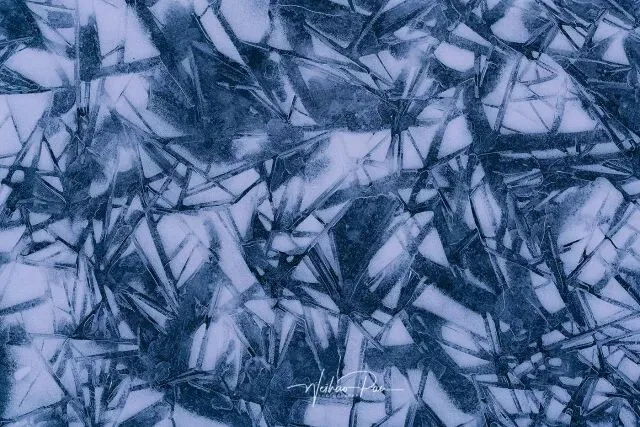
《Trap in Pieces》
At first glance you may not know what this is. In fact, these are ice crystals on a frozen lake; after a snowfall, the wind blew snow into these ice crystals, and the snow trapped within the crystals formed this landscape.
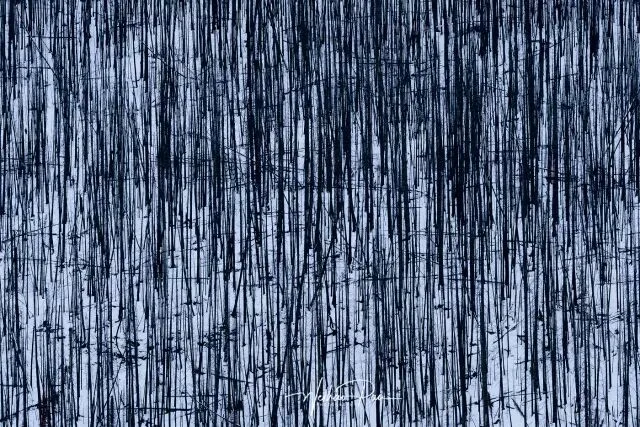
《Insanity Net》
A forest burned by a great fire, leaving only rows of dark, straight trunks, combined with a winter covered in heavy snow, forms an abstract painting.
These two abstract works, which I love, were shot early this year. Abstract works like these have never seemed popular with the masses, but that has never stopped me from shooting such images. For me, they hold special meaning. I am always in awe of nature's craftsmanship, able to create scenes we could never imagine.
Finally
In fact, each of us has the ability to create art and shoot works of our own. All you need to do is find a way to express your inner voice and feelings, keep trying and experimenting, keep shooting, and do not fear external voices and "pressure." I hope that in the new year, everyone can shoot works they are satisfied with! Here, I would like to wish all fellow photographers a happy New Year in advance!
I am Weihao Pan (潘玮浩), a photographer of Jiying
http://www.weihaopanphotography.com
Jiying AdventureX (极影AdventureX)
Push the Limits
Ultimate Imagery
Geek Sharing
Follow @Thomas Chu Photo,
and learn one photography skill every week.
Click "Read the Original" at the end of the article to study Thomas's free public course "Photography Learning: How to Evaluate and Appreciate a Photo?" (《摄影学习,如何评价欣赏一张照片?》).