Photography Tutorial · 2019-11-17
How to Take Great Photos in 'Bad' Weather: Ideas for Rain, Haze and Fog
Thomas Chu Photo
Most photography enthusiasts prefer shooting on cloudy days — especially cloudy days with dawn glow, sunset glow, or sunrises and sunsets.
In fact, every kind of weather has its own emotional character, and its own visual pros and cons.
In this week's tutorial, Thomas will share how to shoot in 'bad' weather: overcast days, rain, sunny noons, snow, haze and more!
Video Tutorial
▶ Watch the video tutorial on Bilibili
This is the fully illustrated companion to the video above. Stuck with a string of overcast days on a trip to Beijing, Thomas turned 'how to shoot bad weather' into a 13-minute tutorial, breaking down noon light, fog, haze, overcast, rain and snow, each with his own finished images and shooting parameters. The five chapters below keep the video's timestamps so you can follow along.
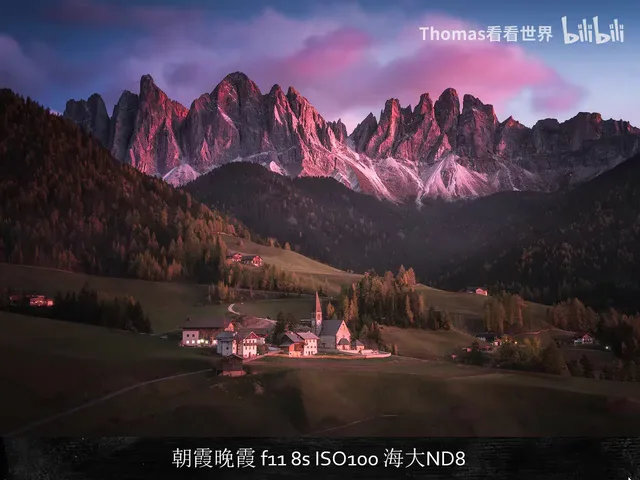
Start with the opening frame: pink clouds over the Dolomites at dawn (0:28 in the video) — the weather most people believe produces portfolio shots, with vivid color, strong warm-cool contrast and the natural light-dark layering of sunrise and sunset. But such days are rare; noon, haze and drizzle make up most of our shooting days, and each has its own playbook.
01 Harsh Noon Light: Color, Stories and a Polarizer
Noon top light lacks the light-dark layering of sunrise and sunset, but its intensity pushes saturation to the extreme, which makes boldly colored subjects perfect for midday. The aerial below — kayaks on a pink-orange sand beach — is exactly that: harsh light acting as a color amplifier (1:40 in the video).

Noon is also the time to 'wait for a story'. This small-town street in Western Australia was shot while Thomas was producing sample photos for a Huawei phone: with sunlight falling straight down, he fixed the phone in place and waited for a cyclist to ride into the frame — a decisive moment to redeem the flat light (2:21 in the video). An interesting scene keeps the viewer from ever getting bored.

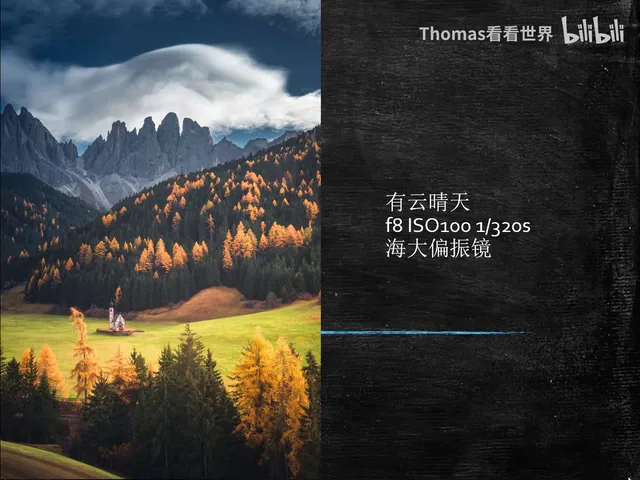
A polarizer is the noon shooter's best friend: it cuts polarized reflections and adds another layer of saturation to blue sky, autumn foliage and rock — like this church in fall color captured around 11 a.m. (3:19 in the video). And remember to build depth with foregrounds: meadow, church, forest, snowy peaks and clouds stacked in sequence — even with weak light-dark contrast, differences in texture and form carry the sense of depth (3:24 in the video).
02 Fog: Mystery and Atmospheric Perspective
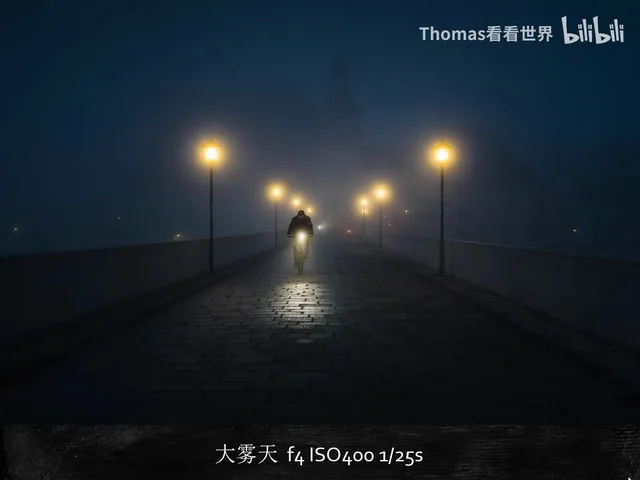
The keyword for fog is mood. Sunny days suit fairy tales, glowing sunsets suit fantasy, and fog carries mystery by default — in movies, murders rarely happen in broad daylight; they happen in fog and rain. Trying to force dreamy shots in fog is futile; follow its mysterious, quiet, suspenseful mood instead (4:42 in the video). In Regensburg, Germany, heavy fog reduced the cathedral behind to a hazy silhouette while lamps lit up on the stone bridge and cyclists' headlights drifted through the mist — an instantly cinematic, foreign-looking frame (5:03 in the video).
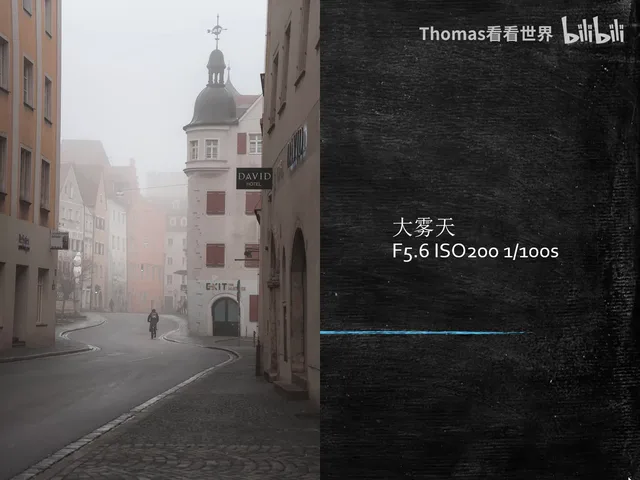
Fog's second gift is atmospheric perspective: the foreground stays sharp while everything farther away fades layer by layer into the mist — a degree of tonal separation clear weather can never offer. In the foggy street below, the road recedes into depth as the far end grows darker and softer in the mist (6:00 in the video); its color and tone are plain, but the hush of early morning is the subject itself (6:29 in the video). And when the fog happens to lift, glimpsing scenes half-veiled has a pleasure of its own.
03 Heavy Fog and Haze: A Minimalist Canvas
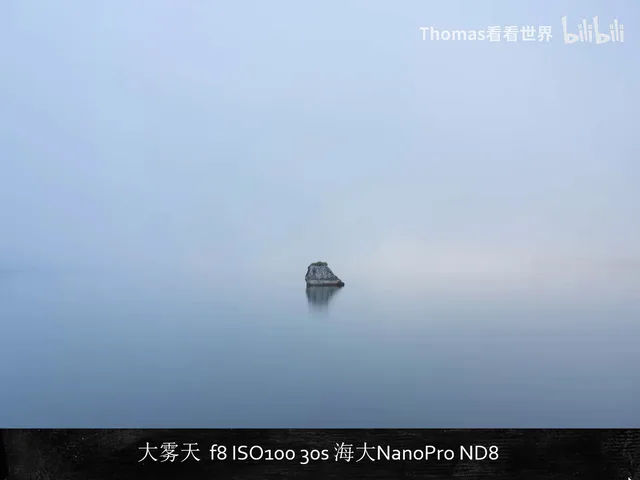
Even pea-soup fog is shootable. Waiting for a sunrise one morning, fog rolled in thick and his friends packed up their tripods and went back to sleep — but Thomas noticed the fog had cut off the distant snow mountains entirely, leaving only a rock five meters away, with a background as clean as a blank canvas. He added a long exposure to smear the fog and water: the caption on screen reading Haida NanoPro ND8 is actually a mistake — the real filter was an ND1000-class solid ND, and under the slow shutter the mist turned to gauze while the rock's texture and color stood out completely (6:59-7:49 in the video).
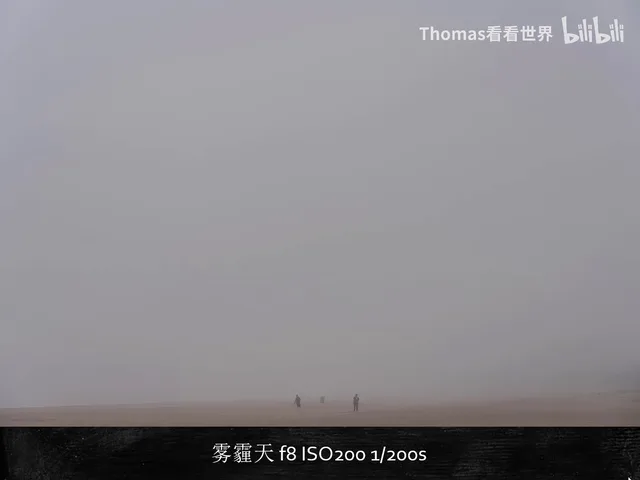
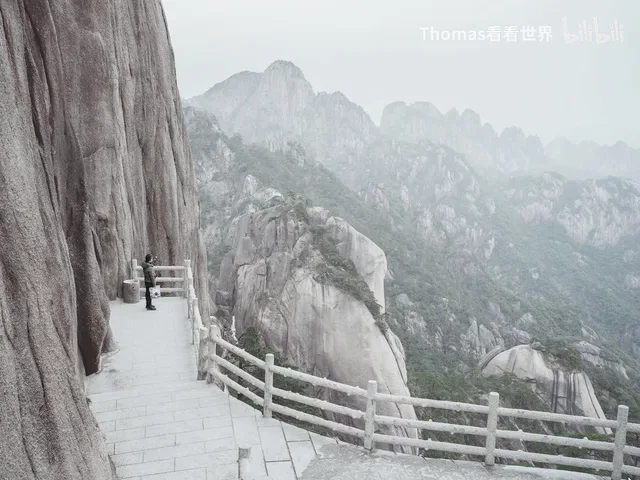
Haze also invites more conceptual photography: the absurd, the estranged, the lonely. Two tourists photographing each other on a beach, a faintly visible trash bin — the composition is deliberately offbeat, with the land squeezed into a single strip at the frame's edge and most of the image given to a gray-white sky, using minimalist negative space to express how small and isolated people are in the murk (7:57 in the video). The Huangshan shot uses haze for an immersive, stripped-down scene (8:36 in the video). Read the emotional character of hazy weather and shoot accordingly, and it is a wasted day no more.
04 Overcast Soft Light: Minimal Seascapes and Icebergs
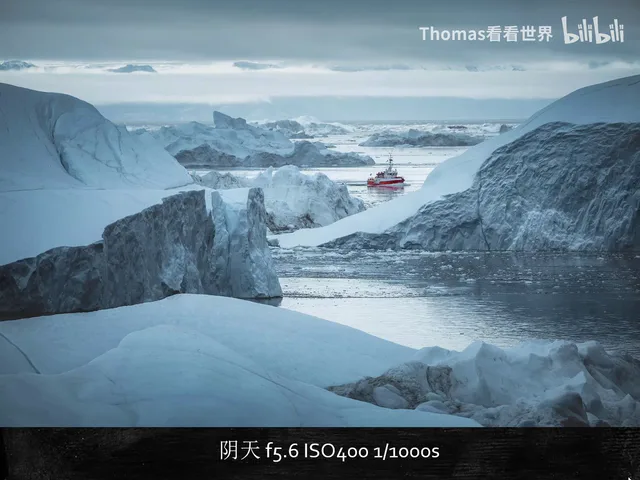
Overcast is a weather Thomas genuinely enjoys: soft light without messy contrast is tailor-made for minimalism. In sunshine the sea is all ripples; only under an overcast sky can the water read clean and mirror-flat (8:55 in the video). Icebergs even more so — strong surface reflections in sunlight hide the ice below the waterline, while overcast's soft light reveals it (9:17 in the video). Overcast days also reward good composition and layering: express the soft light and cold atmosphere fully, and the shortcomings disappear (9:33 in the video).
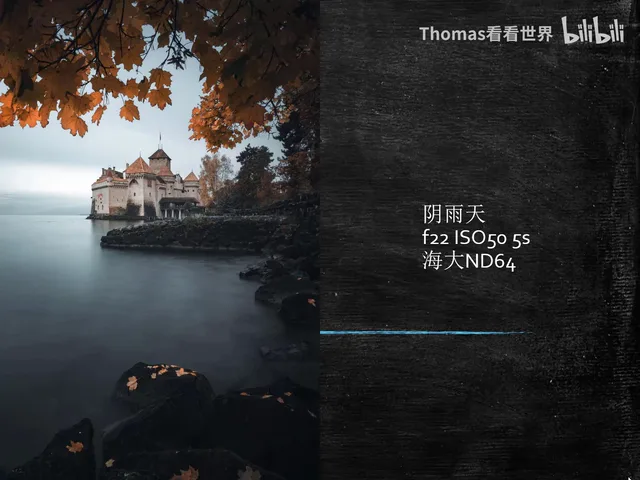
A rainy sky is often a sheet of dead white, and the workaround is to block it: hide the sky behind a foreground. For this lakeside castle, autumn leaves press down over the sky and echo the fallen leaves on the rocks and the warm tone of the castle — the weakness of rainy weather becomes the structure of the frame (10:47 in the video). Fog-wrapped mountains take the other route: the mystery rain and overcast bring is something a bright sunny day simply cannot produce (9:53 in the video).
05 Rain, Snow and the Blue Hour: Any Weather Works
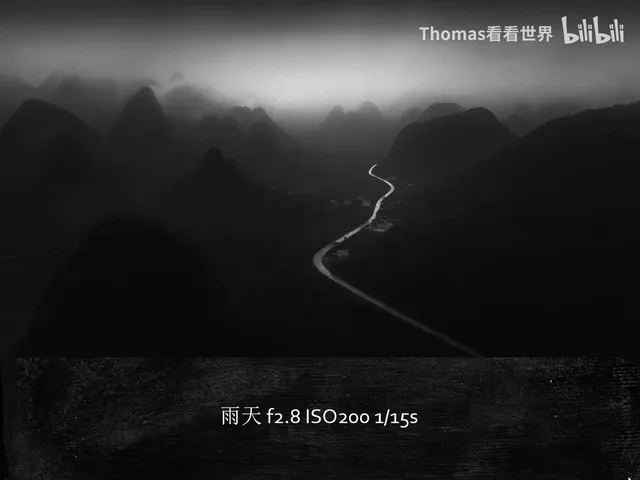
Rain lends itself to moods of bewilderment, depth and sorrow — and it has zero gear threshold: the walker under an umbrella was shot on a Xiaomi 6 phone, because the only things that limit us are perception, imagination and observation (11:18 in the video). The rainy mountain road below is plain as an original file, but the road's shape and the distant mist deserved recording, and a final conversion to black and white gives it a mood of its own (11:34 in the video). Snow, meanwhile, is a natural fit for minimalism, estrangement and solitude (11:55 in the video).
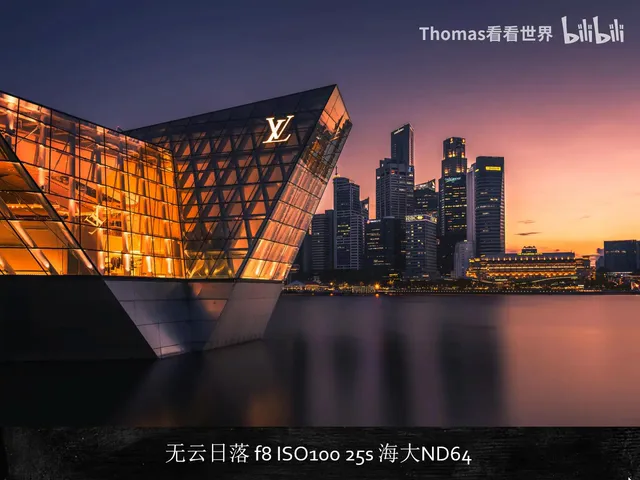
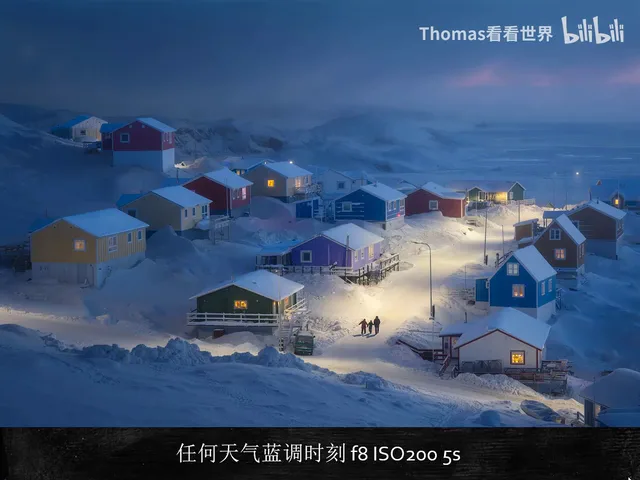
Finally, Thomas's all-weather insurance: the blue hour. In any weather — clear, rainy or snowy — 20 to 30 minutes after sunset the sky has turned blue but not yet black, town and city lights come on, and the scene carries natural warm-cool and light-dark contrast, guaranteed to work 100% of the time (12:16 in the video). A cloudless blue hour over Singapore's Marina Bay (3:43 in the video) and colorful houses on a snowy Greenland night are the proof.
1. There is no bad weather, only weather you haven't learned to read — identify each weather's emotional character first, then play to its strengths; 2. At noon, let harsh light saturate color, wait for the decisive moment, and add a polarizer; shoot mystery and atmospheric perspective in fog, and turn heavy fog and haze into a minimalist canvas with long exposures; 3. Overcast soft light is made for minimal seascapes and icebergs; in rain, block the dead white sky with foregrounds; 4. Out of ideas? Wait for the blue hour — it works in any weather, 100% of the time.