Photography Tutorial · 2023-05-21
Cloudless Blue Sky? Three Ideas for Great Shots in 'Flat-Light' Weather
A cloudless blue sky is monotonous and less photogenic than a partly cloudy one — photographers call it a 'flat-light day'.
But flat-light days can still deliver great shots. Once you understand the pros and cons, three ideas are all you need to make strong images under a cloudless sky!
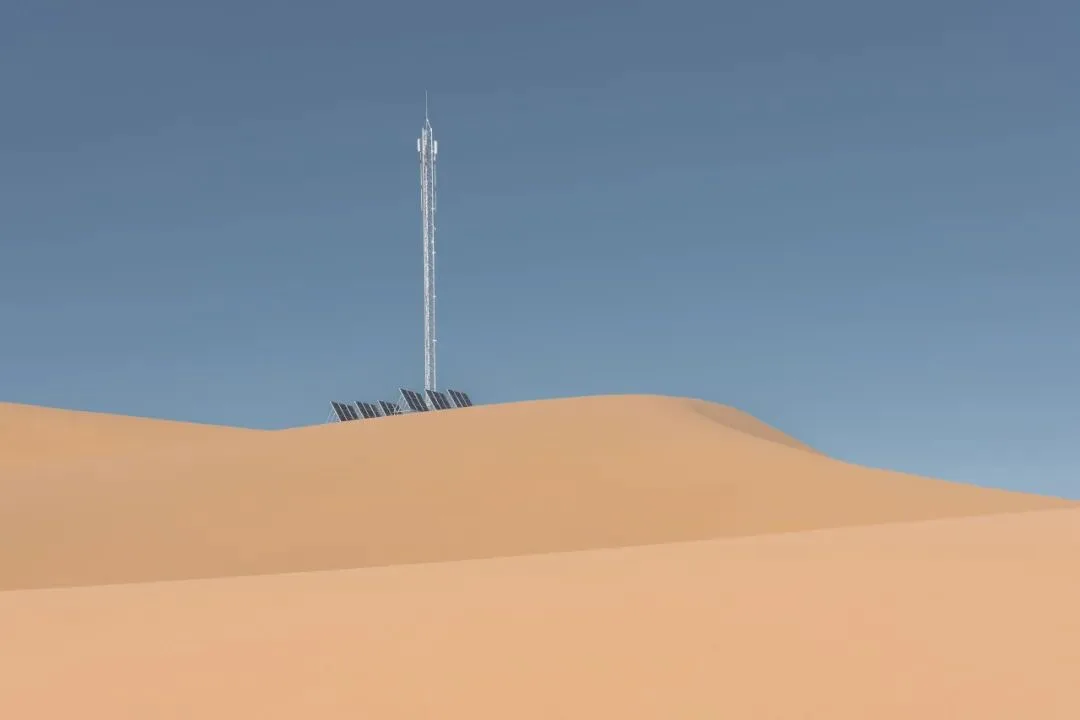
Video
▶ Watch the video tutorial on Bilibili
This is the fully illustrated companion to the video above. Photographers call a cloudless sky a "blank sky" — a slab of white or blue with zero texture that makes many beginners pack up and go home. In this sub-10-minute tutorial, Thomas breaks the blank sky into three completely different ways out: use the monotony as cleanliness, hide or crop the sky, and manufacture detail in it. Keyframe screenshots from the video are paired throughout — skim here for the framework, then hear the details in the video.
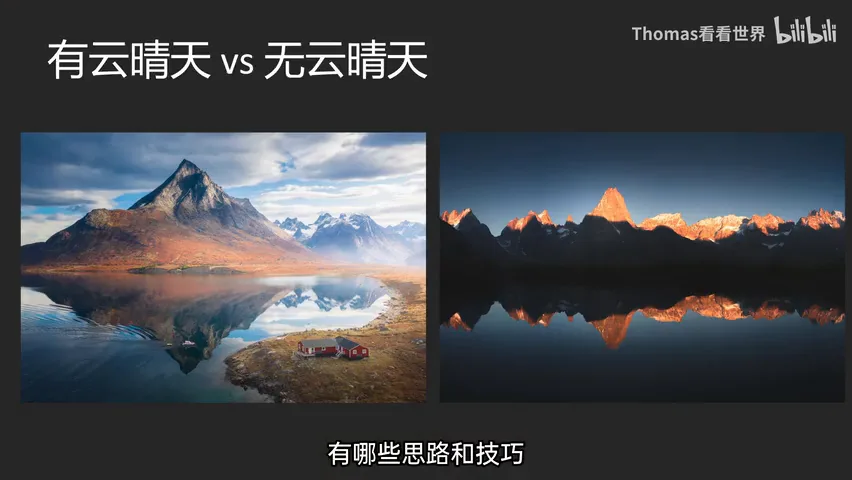
First, the problem itself. The comparison at 0:12 in the video says it all: the cloudy sky on the left has layers and detail, while the cloudless sky on the right survives only on the sunrise-sunset gradient — otherwise it is just a sheet of white. How do you shoot such a day? The outline card at 0:44 lays out the three angles of the whole tutorial, each unpacked below.

01 Monotony as an Asset: A Friend of Minimalism and Popular Tones
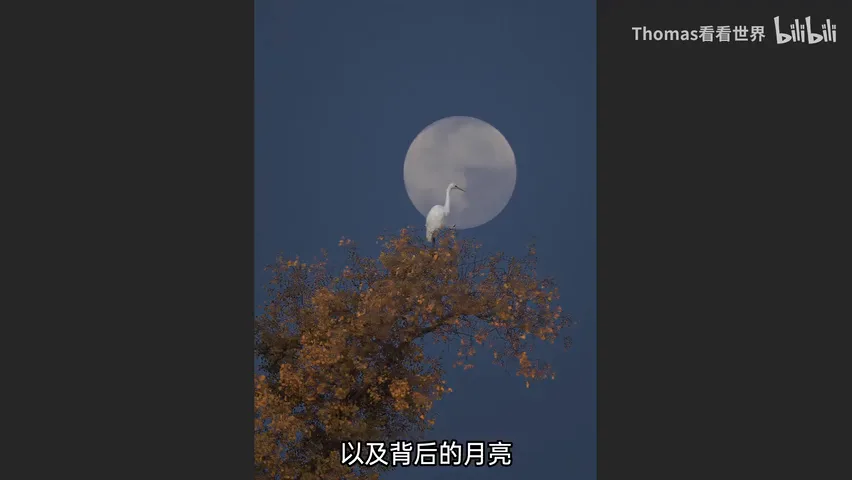
The first approach flips the premise: a cloudless sky is monotonous, but monotony is cleanliness in disguise. With zero detail overhead, it makes a perfect backdrop for minimalist compositions (at 1:22 in the video). Take the frame at 1:50 — an egret on a treetop against a full moon on a pure deep-blue sky. Add some clouds or mist and the picture would fall apart into clutter.
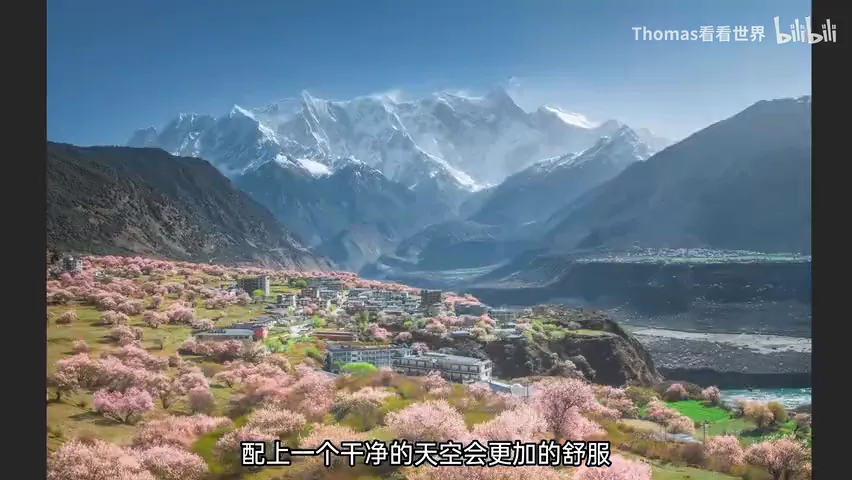
The flip side is a lesser-known use: when the foreground itself is busy, a clean sky is the best subtraction. The peach-blossom village frame at 2:39 already packs green fields, pink blossoms, a wall of hotel buildings and snow peaks behind — the ground is on the edge of clutter. Fill the sky with dense clouds and the photo loses all hierarchy. A blank sky gives the image room to breathe. The same logic applies to long-lens city silhouettes and shots of gully-carved terrain.
The blank sky is also the standard backdrop of many popular looks. The saturated cartoon tone at 4:06 thrives on bold color and simple compositions, usually under a cloudless sky; Japanese-style portrait photographers often use a clean blue sky as the backdrop; and the quiet, muted low-saturation look likewise leans on an empty sky (4:07-5:00 in the video). In all of these styles, extra clouds instantly turn simplicity into clutter.

02 Hide It or Crop It: Keep the Sky under Thirty Percent
The second approach avoids fighting the sky head-on — block it, or include as little of it as possible. The summary card at 5:00 gives two concrete paths: use trees, umbrellas, buildings and frame-like structures to shield the sky; or emphasize the foreground and keep the sky under 30% of the frame, while making the ground rich with layers and detail.

Elevated shielding becomes a frame-within-a-frame. In the Fitz Roy sunrise at 5:20, Thomas put the camera very low so overhanging shrubs and bare branches swallow the sky — the small patch left over joins the mountain in a picture-in-picture frame that makes the shot feel special. Variations on the same move include a fallen dead tree (at 5:47) and a train window (at 5:52): both draw a frame around the blank sky with whatever is at hand.
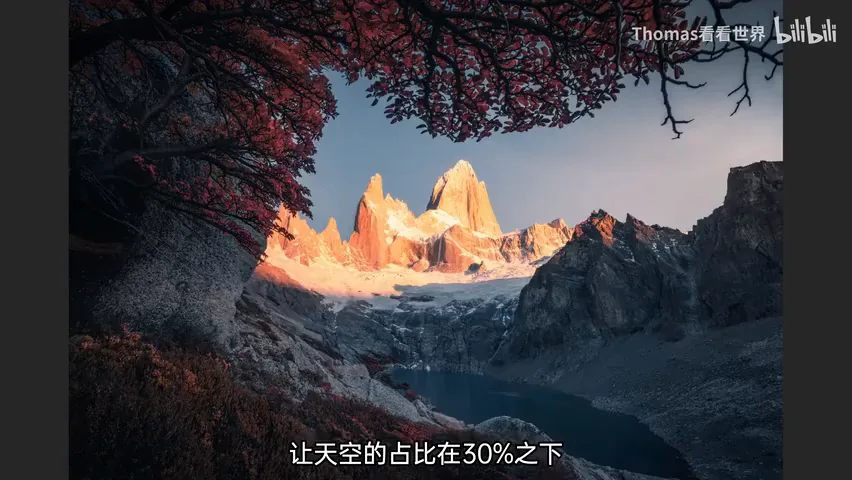
The extreme version of cropping is not shooting the sky at all. Sunny days, with their bright light, are perfect for minimal, colorful ground-only compositions — a slice of desert dunes, ice crevasses, or a beach frame that keeps the sea and sand but excludes the sky (5:58-6:25 in the video). When sky must stay in the frame, abandon the usual symmetric, half-and-half or rule-of-thirds splits: a quarter to a fifth works better for a blank sky, and 10% is fine too. In the frame at 6:47, the sky takes one corner while all the attention lands on the jagged rocks and the village below; the Suosong Village shot at 7:04 keeps the sky minimal and adds a gradient in post — which leads straight into the third approach.
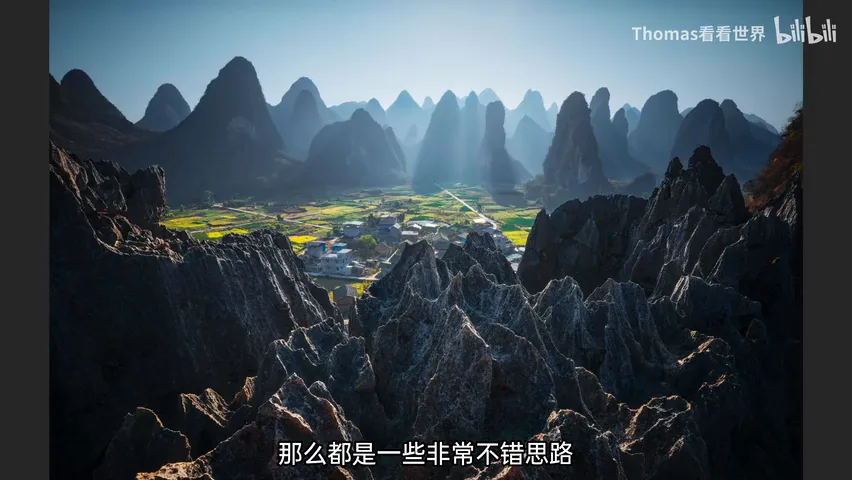
03 Manufacturing Detail: Gradients and the Night Sky
The third approach tackles the monotony head-on: manufacture layers in the blank sky. The summary card at 7:59 lists two routes — at sunrise and sunset the cloudless sky carries a cold-to-warm, bright-to-dark gradient that can be strengthened in post; or simply wait for blue hour and night to shoot starry skies and the moon.

The gradient play is shown end to end in the example at 8:33: the sky takes only about a quarter of the frame, the shot is positioned for sidelight at sunrise, and boosting the warm light on the right in post gives the sky a warm-to-cold gradient — no longer monotone at all. When the light is not there in the field, fake it in post: the photo at 9:11 relies entirely on pulled gradients darkening the upper part, and even a small slice of sky ends up with visible layers.
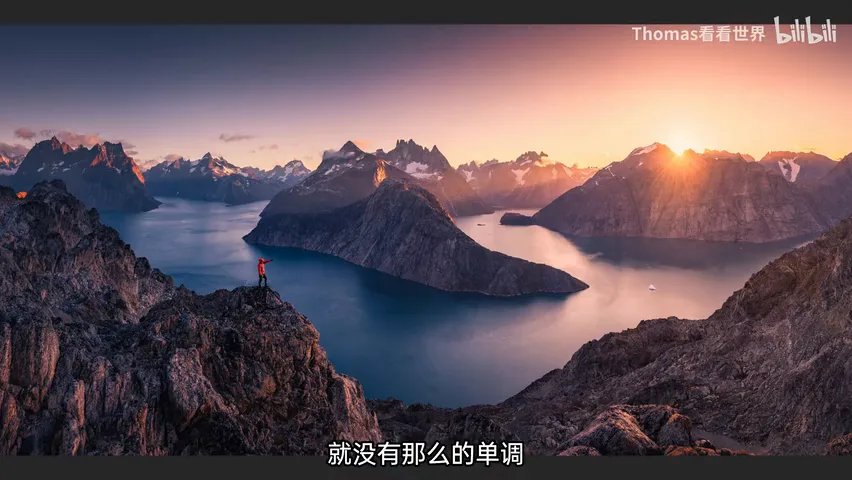
A blank daytime sky is a debt repaid generously by the night. Precisely because the day is cloudless, the night sky is crystal clear: meteors, the Milky Way, auroras and the moon — a blank-sky day is exactly the weather to go shooting nightscapes (at 8:21 and 9:32 in the video). A day with nothing to shoot overhead may be the eve of a night-sky feast.
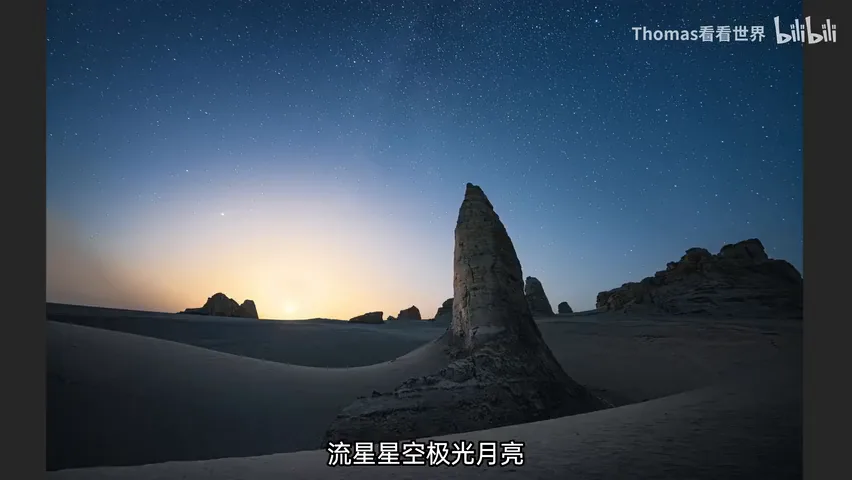
1. The monotony of a blank sky is cleanliness: use it as the backdrop for minimal compositions, as subtraction when the foreground is busy, and as the canvas of popular looks like cartoon, Japanese and low-saturation tones; 2. When in doubt, hide it or crop it: shield the sky with trees, umbrellas, buildings and frames, keep it under 30% of the frame, or leave it out entirely; 3. When you want detail, make it: position for the sunrise-sunset warm-cold gradient and strengthen it in post, or wait for night — a blank-sky day is the prelude to transparent starry skies.