Photography Tutorial · 2023-03-12
Contrast and Clash: A Composition Technique the Pros All Use
The most important thing in photographic composition is not placing the people or objects in suitable positions, but considering which elements to take into the frame.
And repetition & echo, contrast & clash are the framing-and-composition techniques professional photographers use all the time.
A previous tutorial covered repetition and echo. In today's video, I'll use many examples to explain the magic of contrast and clash.
Video
▶ Watch the video tutorial on Bilibili
This is the illustrated companion to the video above. Where the last tutorial covered repetition and echo, Thomas now breaks down the other framing habit of professional photographers — contrast and clash — through a dozen cases: an iceberg against gulls, soft foregrounds against hard peaks, and Marc Riboud's flower facing bayonets. Every case is paired with a timestamped screenshot so you can follow along in the video.
The overview first. The opening slide (at 0:06) frames the whole tutorial: composition has two classic tools — repetition & echo, and this episode's contrast & clash. The antonym list below (at 1:50) is an ammunition kit you can carry to any shoot; every case in this article unfolds from it.
01 Putting Antonyms into the Frame
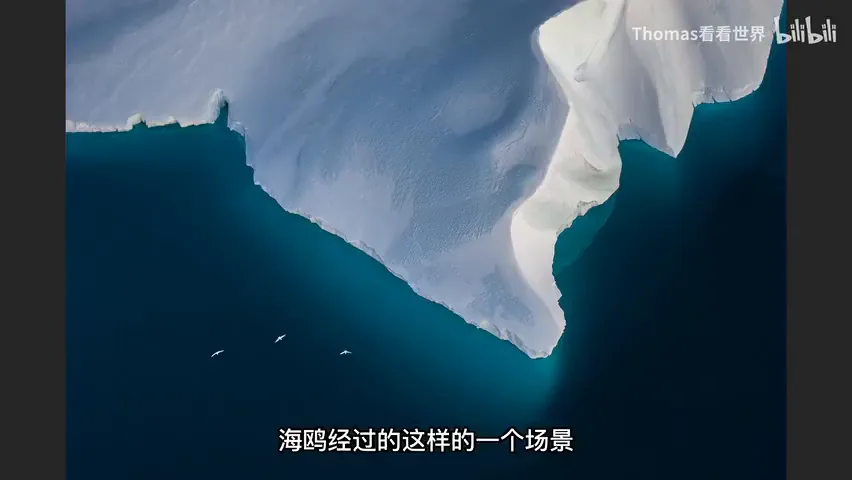
To show how big something is, the most effective move is to pit it against something small. The opening case is an aerial of an iceberg: with only a corner of ice in frame, the viewer cannot gauge its scale at all. Thomas waited for three gulls to fly through and pressed the shutter — once the tiny birds and the enormous ice share the frame, the clash speaks, and the scene's immensity becomes self-evident (at 0:16-0:44 in the video).
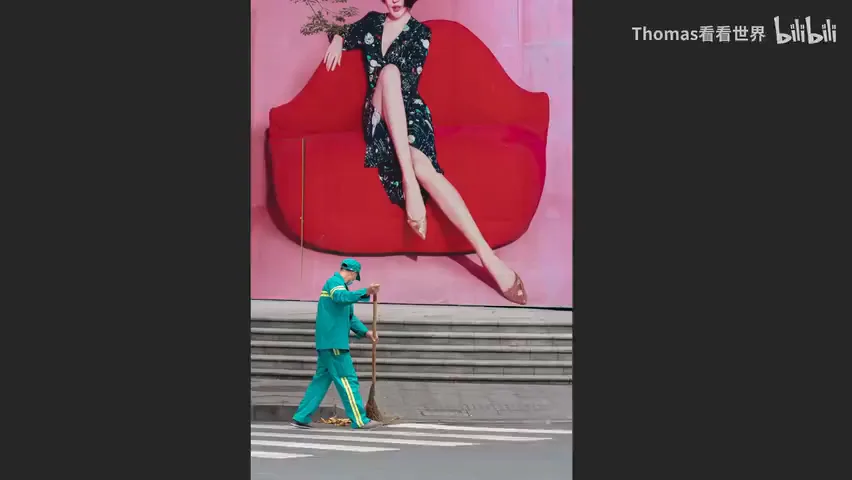
Another kind of contrast hides in meaning. In this street shot he deliberately graded the billboard into striking reds and greens, while the real subject is the unremarkable worker in the frame — the ordinary labourer versus the refined life that luxury brands advertise, a clash of identities (at 0:50-1:16 in the video). The colour serves that metaphor and makes the contrast legible at a glance.
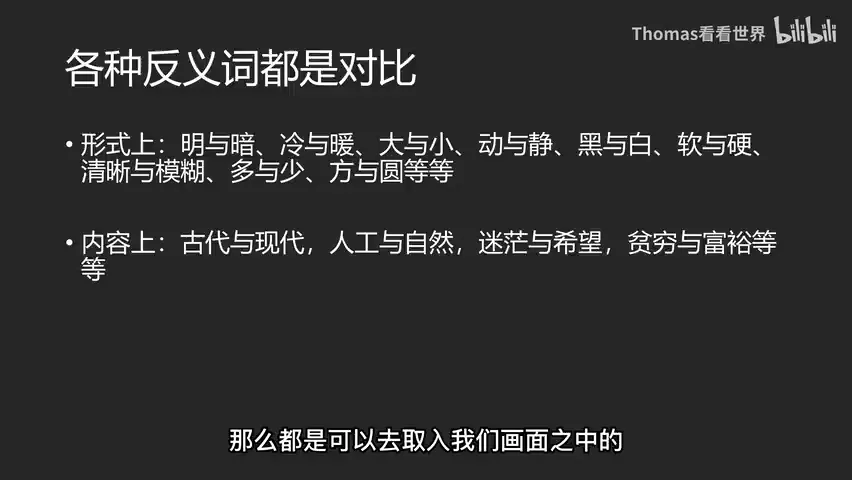
The methodology surfaces: nearly every antonym from language class can be moved into the viewfinder. Formal pairs — light and dark, order and chaos, big and small, moving and still, black and white, soft and hard, sharp and blurred, many and few, square and round; content pairs — ancient and modern, man-made and natural, decline and hope, poverty and wealth (at 1:33-2:17 in the video). Composition is never just about where to place elements, but which elements to admit; contrast and clash are the selection criterion at the framing stage, and the raw material of depth and visual impact.
02 Landscape Contrasts: Soft against Hard, Light against Dark
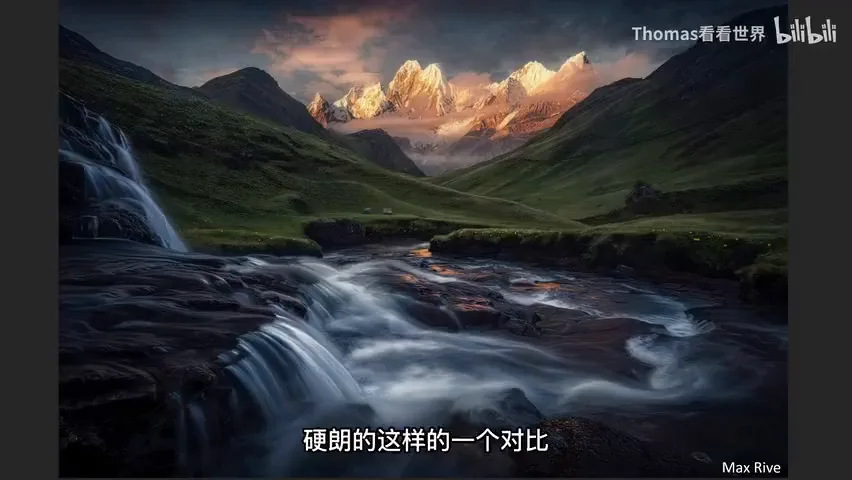
In landscape photography this becomes a question of foregrounds. Many photographers want a foreground for snowy peaks, and good foregrounds tend to be soft — water, flowers, vegetation (at 2:55 in the video). Take landscape photographer Max Rive's image: the flowing water contrasts with the hard mountain in texture; better still, he timed the shot for alpenglow on the distant summits while the foreground stayed in shadow — light-dark and warm-cool contrasts hold at once, and the photo breathes for it (at 2:58-3:25 in the video).
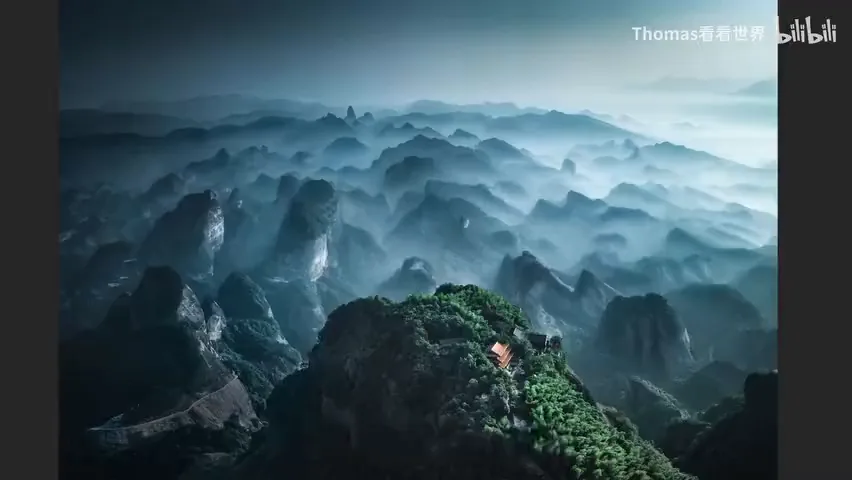
Thomas's own photo stacks many-against-few, big-against-small and a colour contrast. In post he first desaturates the whole frame, then re-colours it — but keeps a touch of orange on the building while stripping the mountain's hues, a single finishing stroke of warm in an expanse of teal (at 3:29-4:17 in the video). If the whole scene were one teal mass there would be no contrast; precisely because one orange survives, the eye has somewhere to land.
03 Building Contrast in Post
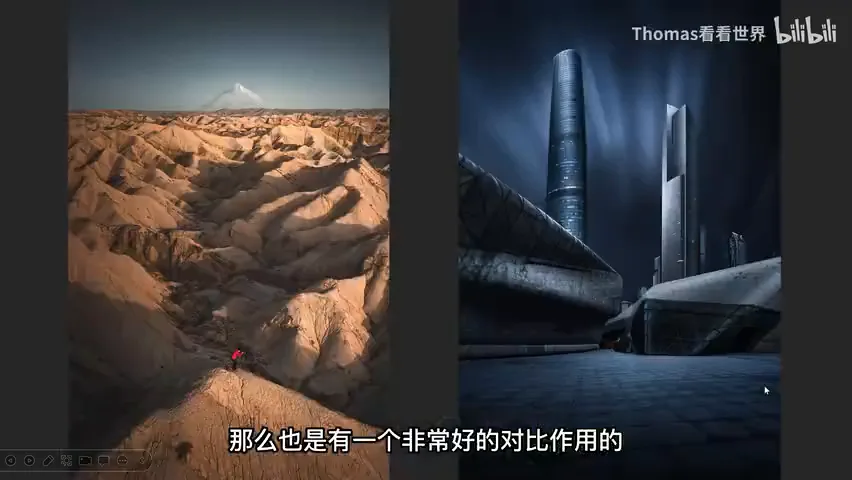
Contrast is not only seized at the shutter — post can manufacture it deliberately. The two photos shown side by side in the video (at 4:18) each combine repetition & echo with contrast & clash. In the left one he pulls foreground and background colours apart into the familiar teal-and-orange — the two hues are themselves complementary opposites; in the right one, luminosity-mask techniques (the lightness-architecture approach) paint the building with stylised but strongly directional light, creating contrast of brightness (at 4:39-4:54 in the video).
The right photo adds one more soft-versus-hard layer: the clouds were deliberately smoothed — only softened clouds can stand against hard metal-and-glass architecture (at 5:00 in the video). That is why cloud and water so often ride along when photographing rigid structures: for the soft-hard ratio.
04 Documentary Contrasts: Flower versus Bayonets, One Lamp versus a City of Lights
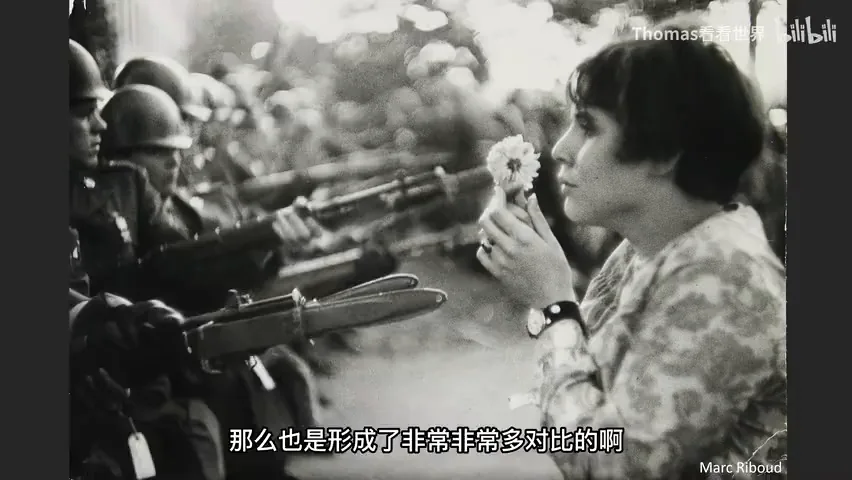
Documentary photography pushes contrast further. Marc Riboud's classic image — soldiers and a girl offering a flower — made history precisely because it carries so many contrasts at once: war against peace in meaning; and in form, one person against a crowd, a young woman against a rank of armed men, a single flower against a thicket of bayonets (at 5:24-5:54 in the video). The contrasts are blunt, and so is the impact.
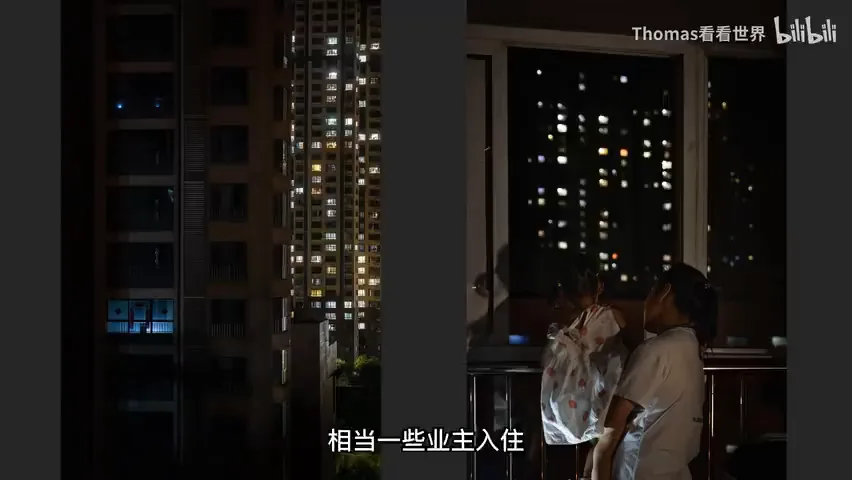
Thomas's own documentary project of the past year, Glimmers in the Roundhouse, wrote contrast into its shooting plan from day one. Before starting, he had already listed candidate antonyms: could the city's sea of lights next door clash with the lamp-light of the tulou? (at 5:57-6:40 in the video) In post he cooled the originally neutral night tones on purpose, setting cold against warm — which also hints at how uncomfortable the dwellings were (at 6:05 in the video).
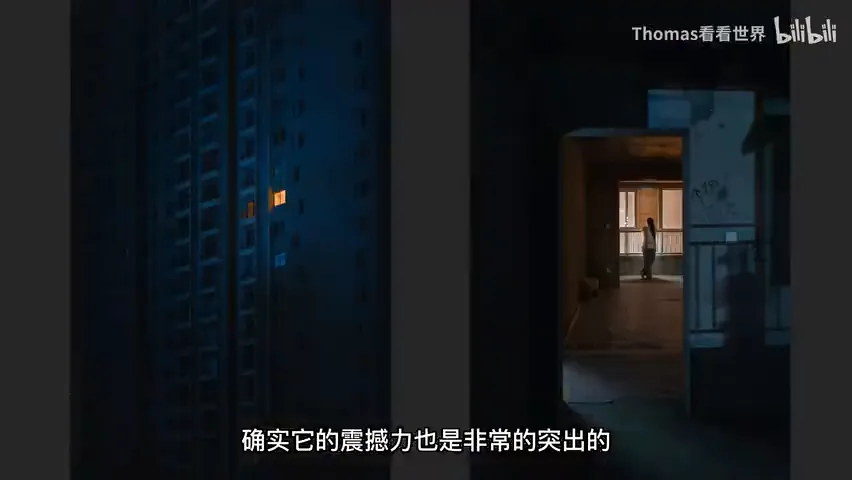
The framing, then, had to be deliberate: residents had long moved into the tulou with lights scattered about, yet he hunted for a composition where exactly one lamp burns — that single lamp against the city's ten thousand lights behind it is a conflict of enormous force (at 6:43-6:59 in the video). Cold against multicolour, single against many: the stacked contrasts make the photo's meaning unmistakable, charged with tension and story, and deeply thought-provoking (at 7:05-7:18 in the video).
05 Closing Cases: from Loneliness to Warmth
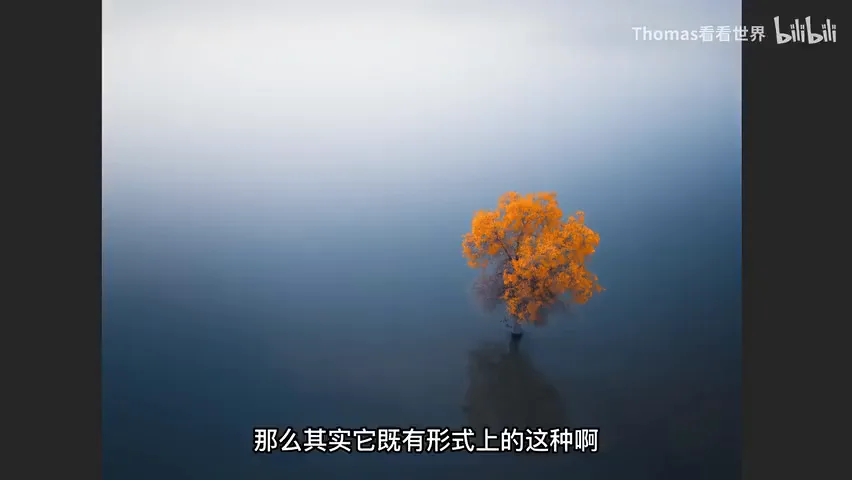
A quick tour of how the vocabulary combines, in a final set of photos. The orange tree in fog: a formal contrast of cold and warm, and simultaneously a contrast of life against lifelessness (at 7:27 in the video). The house and street lamp at night: the moving-versus-still contrast heightens the loneliness and chill that the light-dark scheme already evokes (at 7:41 in the video).
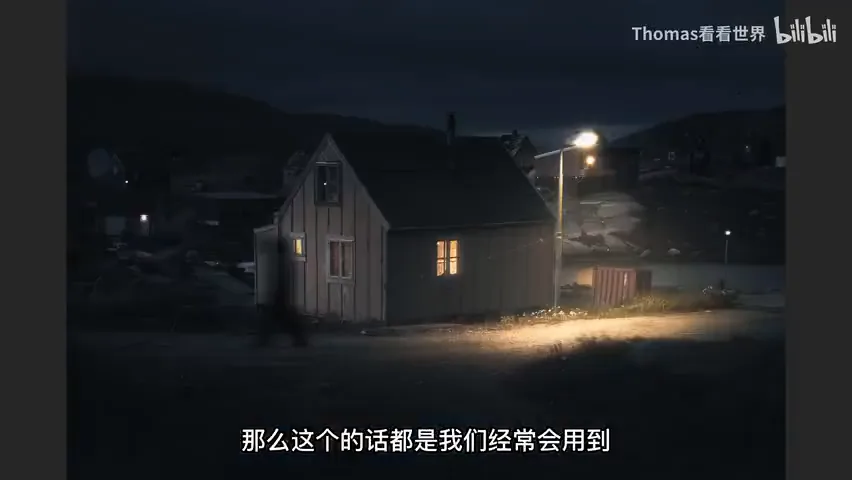
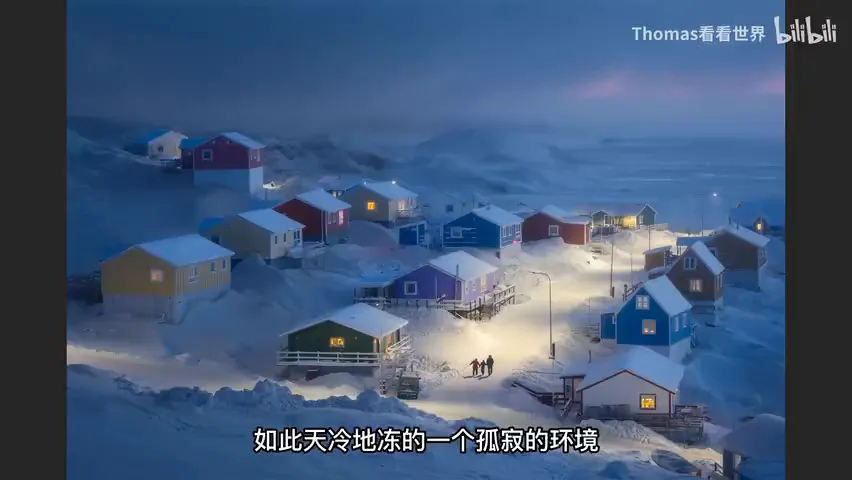
The award-winning finale deploys nearly the whole vocabulary: every house built to the same pattern, the whole scene in cold tones — repetition and echo; cold palette against warm lamplight, a bright frame with a few figures rendered distinctly black — formal contrasts of warm-cool and light-dark; and a family of three, content and close, inside the frozen loneliness — a contrast of meaning (at 7:53-8:44 in the video). When repetition & echo and contrast & clash all hold at once, a grand-prize photograph is born.
1. The core question of composition is which elements to admit; contrast and clash are the framing filter — admit the small to say big, admit the moving to say still; 2. Every antonym from language class is ammunition: light-dark, warm-cool, soft-hard, many-few, moving-still in form; ancient-modern, man-made-natural, decline-hope, rich-poor in content; 3. Contrast can be waited for in the field (alpenglow, passing gulls) or manufactured in post (desaturate then keep one orange, teal-and-orange, lightness-architecture lighting, smoothed clouds); 4. In documentary work it becomes voice: one lamp against ten thousand lights, a flower against a thicket of bayonets — the blunter the clash, the deeper the provocation.