Photography Tutorial · 2021-03-07
How to Improve Your Aesthetics Through Photo Contests: A Methodology
Thomas Chu Photo
Many photography beginners don't know how to improve their aesthetics, or where to find outstanding photographers to follow and learn from. One handy trick is to keep an eye on reputable photography contests.
Contests pre-select works and reflect current trends, making them a great way to learn. In this tutorial, Thomas shares: which contests are worth trusting? How do you analyze a photographer's work? And how do you find more material about them?
Video Tutorial
▶ Watch the video tutorial on Bilibili
This is the fully illustrated companion to the video above. In 16 minutes Thomas lays out a very practical learning method: treat reputable photo contests as a pre-filtered inspiration library, follow them from the contest website all the way to a photographer's portfolio, then use the eyedropper tool to break a master's colors down one by one. The article follows the video in five steps with keyframe screenshots — skim it here for the framework, then dive into the video for the details.
01 Why Start from Photo Contests
The question beginners ask most is how to improve their taste and which photographers to follow. Thomas's trick is to keep an eye on reputable photo contests — entries there are filtered by professional juries, so what you see is mostly accomplished photographers of real standing (at 0:20 in the video).
Contests also mirror the current conversation: what subjects people are shooting this year, which styles are trending, and what post-processing techniques are in vogue — all readable from the winners list. The jury filters for quality, the trends keep you current — together they make contests an excellent way to learn.
02 Three Kinds of Contests Worth Following
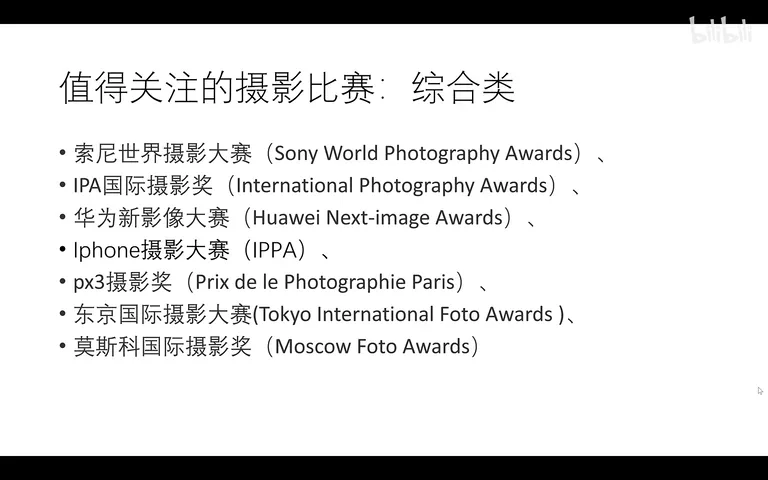
The first kind is the comprehensive contest, with every category covered — landscape, environment, photojournalism, portraiture, advertising, commercial work and more. Even if you shoot landscapes, browsing portraits, car ads and news photos broadens your eye enormously (at 1:22 in the video). Representatives include the Sony World Photography Awards, IPA, Huawei Next-Image, the iPhone Photography Awards (IPPA), Prix de la Photographie Paris, Tokyo International Foto Awards and the Moscow Foto Awards.
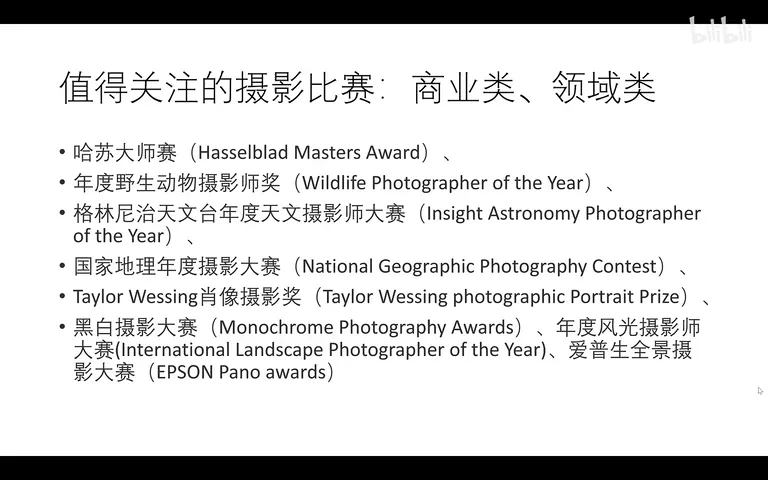
The second kind covers commercial and specialist fields, tracking the trends and aesthetics of one specific genre and demanding a mature personal style: the Hasselblad Masters, Wildlife Photographer of the Year, Insight Investment Astronomy Photographer of the Year, the National Geographic Photography Contest, the Taylor Wessing Photographic Portrait Prize, the Monochrome Photography Awards, the International Landscape Photographer of the Year and the EPSON Pano Awards (at 2:23 in the video). Want to know what astrophotography looks like at its best right now? Open the winners list and the eclipses, Milky Ways and auroras are all there (at 2:58 in the video).
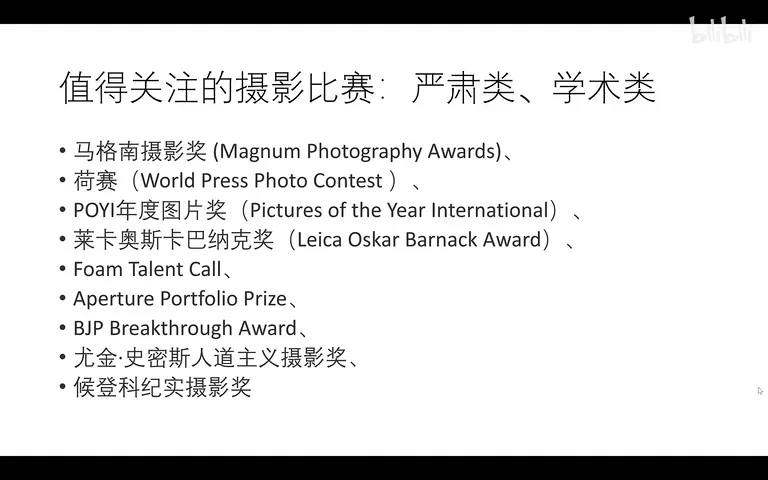
The third kind is the serious, academic contest — documentary, photojournalism and fine art, such as the Magnum Photography Awards, World Press Photo, POYi, the Leica Oskar Barnack Award and the W. Eugene Smith Grant. If you want to build social or artistic projects, study how they present a whole body of work: read the statements, look at the sequencing, then visit the photographer's website for the complete series — enormously inspiring (at 3:26 in the video).
03 From the Winners List to a Single Work
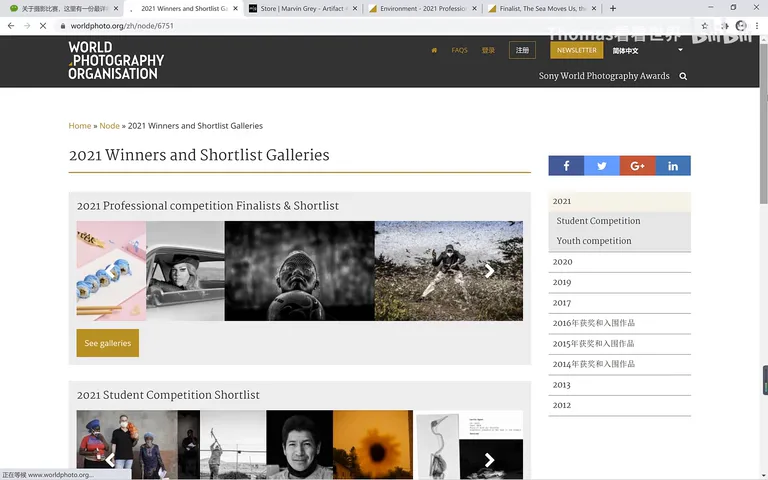
The walkthrough uses the Sony World Photography Awards as its example. Search the contest's English name on Google or its Chinese name on Baidu, and the top results are the official site and coverage; many contests, Sony and IPA included, support Simplified Chinese (at 4:54 in the video). On the official site, open the Winner Gallery, where the winning works of past years are listed (at 5:14 in the video).
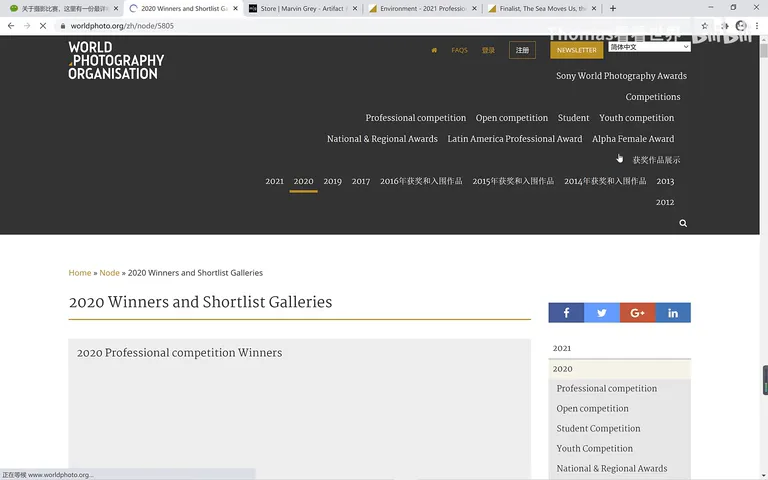
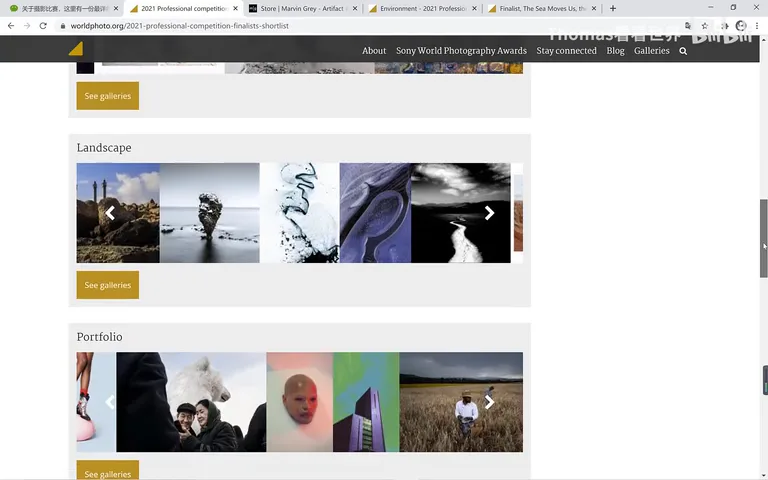
Contests are usually divided into student, professional, youth and even national categories. Thomas's experience: except for the most serious academic competitions, the gap between professional and open categories is often small — the open category is full of hidden talent and can be extremely strong, so browse them all (at 5:52 in the video). Categories run from architecture, creative and environment to landscape, portraiture, sport and wildlife — open whichever matches your interests and see how others shoot it (at 6:03 in the video).
04 Reading a Series: Titles, Statements and Intent
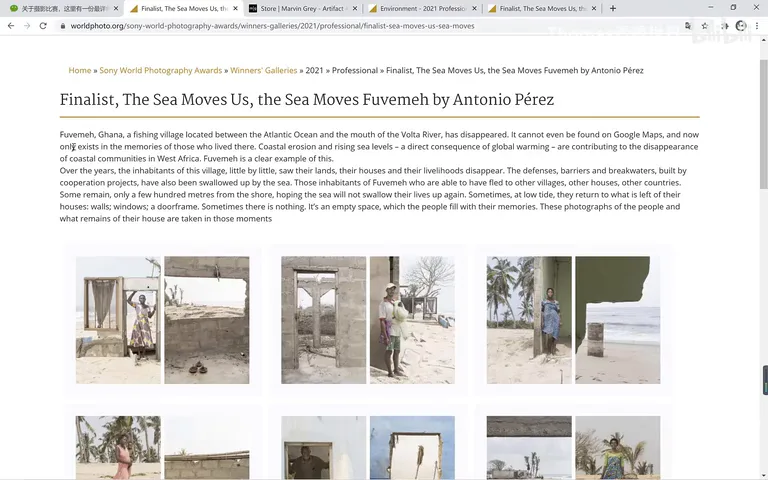
When a series catches your eye, don't scroll past — read its title and statement. Why did the photographer shoot this subject, why this way, why these pictures, why this form of presentation? Whether linear narrative or a tightly unified style, there is always a reason. Read the statement first, then view the whole set again for its overall mood, and only then open single frames for a close look (at 7:13 in the video).
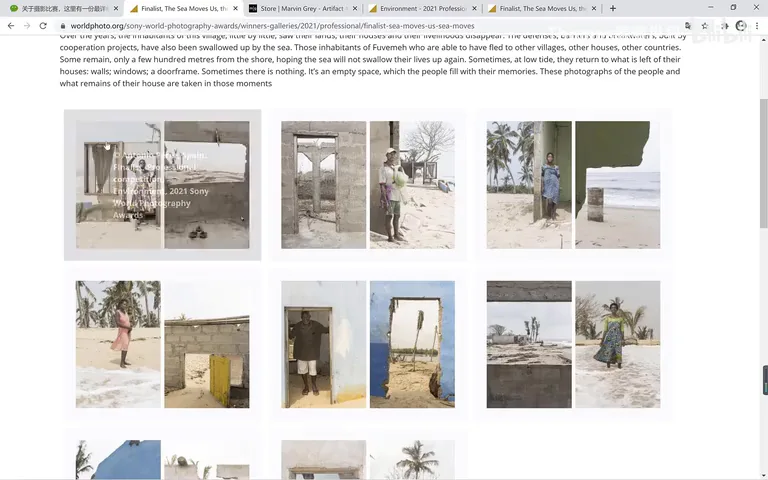
The environment series shown in the video is a perfect example: soft, slightly cool tones, earthy oranges carrying a subdued mood; on one side of the diptychs a person interacting with the land, on the other a ruined home — you can guess the theme of homeland and loss before reading a word. The statement confirms it: rising sea levels caused by global warming have swallowed the islanders' old homes, and they still return to wander and remember. Tone, form and the human-environment relationship all serve the theme — that is what an outstanding body of work looks like (at 8:49 in the video).
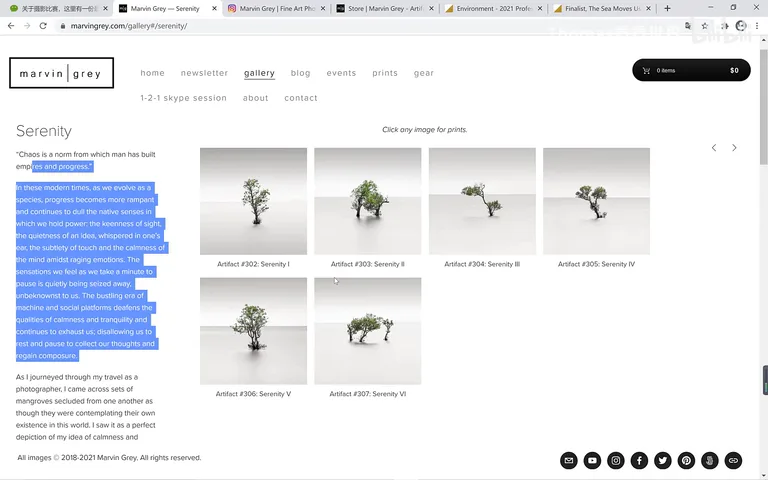
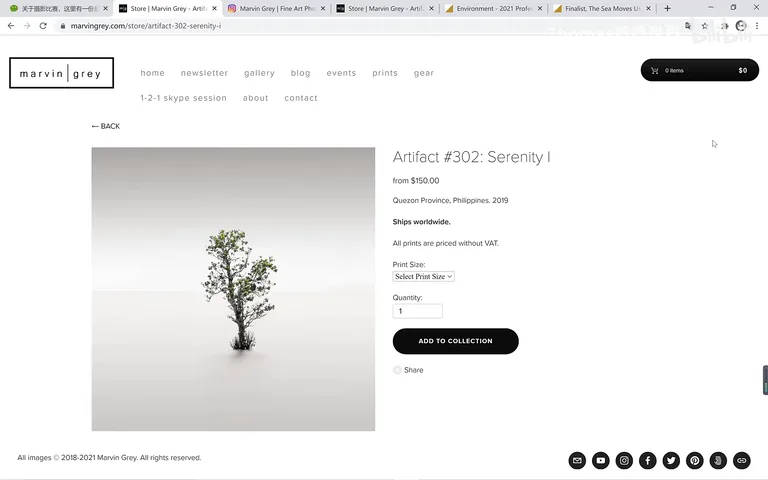
If the photographer impresses you, put the name into Google — the top results are usually the personal website or Instagram. International photographers almost always maintain a portfolio site where their complete works live, easy to find (at 9:50 in the video). On the site, open Gallery for the work, About for the biography and artist statement, then follow their Instagram and Facebook — once you're hooked, updates keep coming (at 11:28 in the video).
The video goes on to browse the landscape entries: a dormant volcano radiating stubborn vitality, landscapes encoding political symbols, and a minimalist series of highly unified style expressing mood and wit — if you've wondered how to photograph winter, series like this deserve careful study (at 11:08 in the video). The minimalist set shares unmistakable traits: square format, centered composition, high-key tones — a search for calm inside a noisy world (at 12:29 in the video).
05 Reverse-Engineering a Photo with the Eyedropper
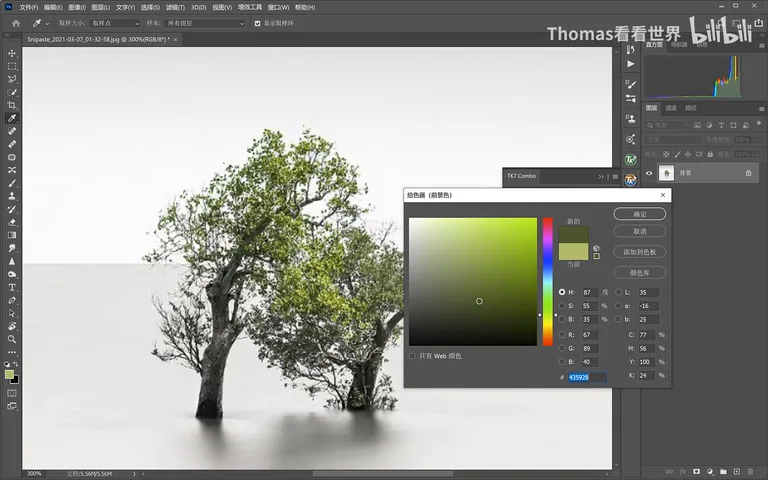
Save screenshots of the works you love and dissect them color by color in Photoshop with the eyedropper (at 12:35 in the video). Take that high-key minimalist frame: sample the sky first — in HSB only B (brightness) carries a value, meaning it's pure gray; at the top it sits around 75 brightness with a hint of warmth, graduating down to pure white (at 13:27 in the video).
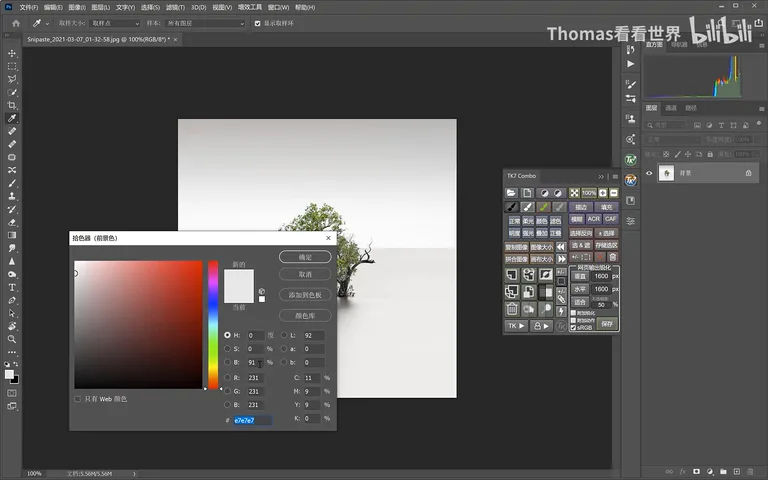
Then sample the water and snow behind the subject: what reads as gray-white is actually a warm tint at around hue 40. The discovery is hugely practical — next time you build a similar image you'll know not to use a dead-pure white; a pinch of cool or warm color instantly gives the background more feeling (at 14:05 in the video).
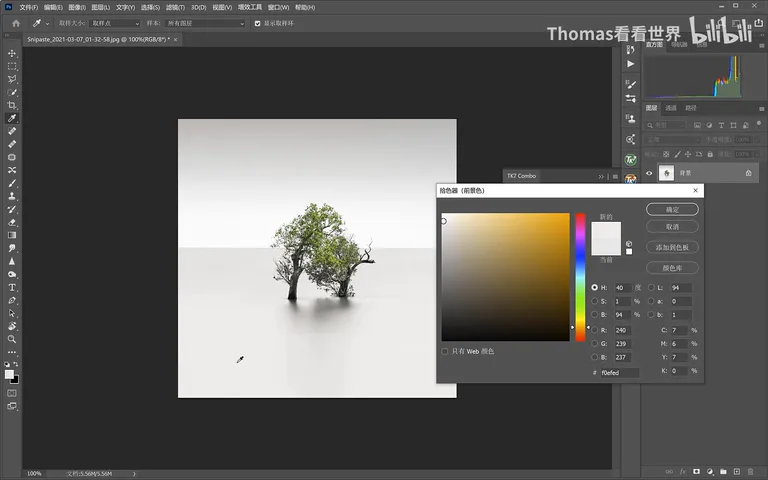
Finally sample the green of the leaves: a yellow-leaning green rather than a cyan one, very high in brightness, moderate in saturation. Sampling shadows and highlights separately even reveals whether split-toning was applied. The more you look and dissect, the more visual memory you bank; when you next shoot and edit, ideas surface on their own — and you can borrow one strength from each photographer you admire until your own style grows out of it (at 15:43 in the video).
1. Photo contests are jury-filtered inspiration libraries — they surface reliable photographers and mirror current trends; 2. Build your own contest list across the three types — comprehensive, specialist and academic — and walk the winners list once a year; 3. The learning path: the winners gallery → titles and statements → on to the photographer's website and social media; 4. Use the eyedropper to break down the colors of work you love — note hue, brightness and saturation, and over time your own color sense will grow.