Photography Tutorial · 2023-08-13
How to Photograph the Dunhuang Desert: A Live Lesson Amid Sandstorms & Thunderstorms
In this week's tutorial, Thomas takes you to the desert to share composition tips for both cameras and drones.
While filming in Dunhuang, Thomas even ran into a rare haboob — and captured a dramatic sandstorm shot!
Video
▶ Watch the video tutorial on Bilibili
The video above is Thomas's on-location desert tutorial from Dunhuang — also a small survival story: while scouting on day one he watched a sandstorm roll in and escaped with seconds to spare, then woke to a cloudless dawn that revealed every ridge of the dunes in backlight. This article is the illustrated write-up — scouting, dust-proofing gear, climbing dunes, shooting people, and building layers — with screenshots throughout.
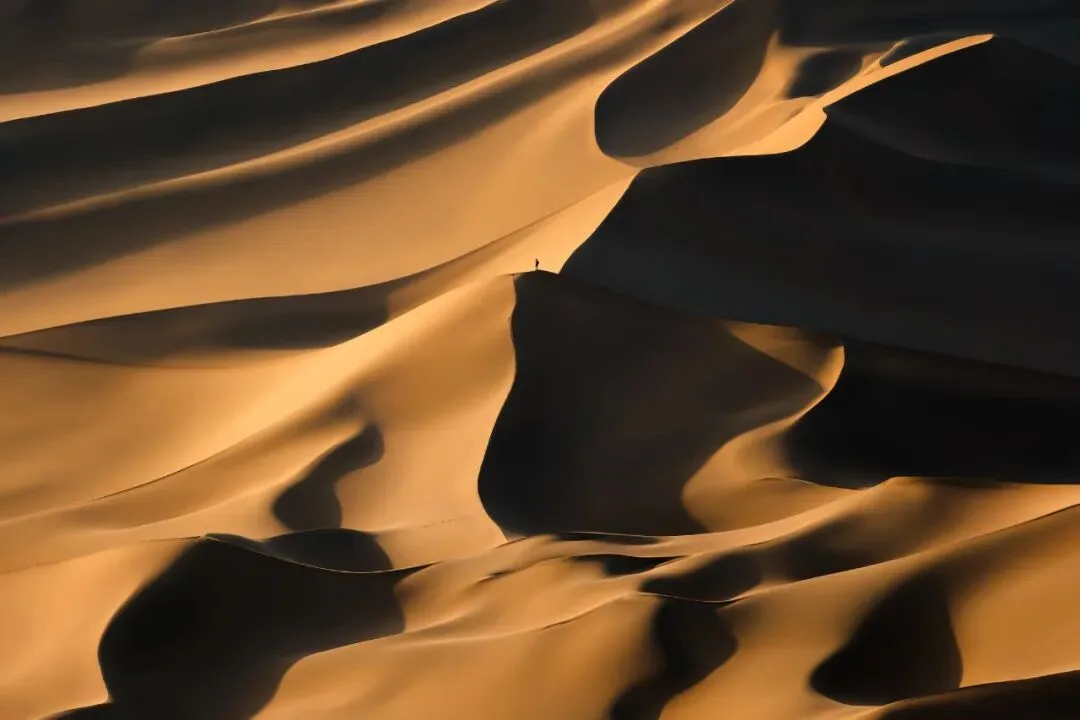
Start with the final image: low-angle backlight at dawn traces a bright line along every ridge, and light and shadow slice the dunes into layer after layer. That is what makes desert photography so seductive — and what this tutorial teaches you to capture.
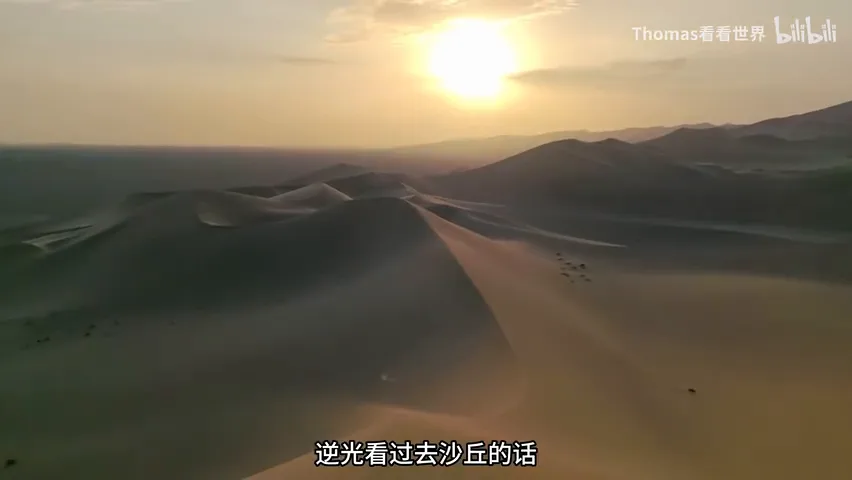
01 Scouting: let the drone climb for you
In the desert, the drone is the single most important piece of gear — dunes are exhausting to climb, so Thomas's first move on arrival is to send it up and scout (0:32-0:45). Once airborne he immediately swings the nose east, toward the next morning's sunrise: the backlight position gets locked in your head first (0:49-0:57).
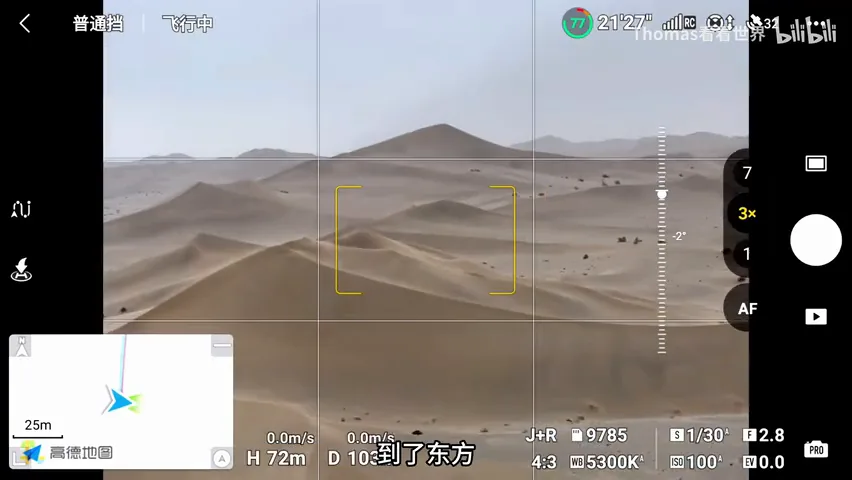
While scouting, flick constantly between wide and telephoto: a sea of dunes that looks unremarkable wide becomes dramatic once you zoom in, the tumbling textures of the ridges spectacular (0:59-1:09). Thomas also flies the drone low, mimicking the eye height of a person standing on the crest — so he knows exactly what the summit view will look like tomorrow without climbing. If a angle like the one he checked offers poor distant layering, it gets rejected on the spot (1:13-1:31).
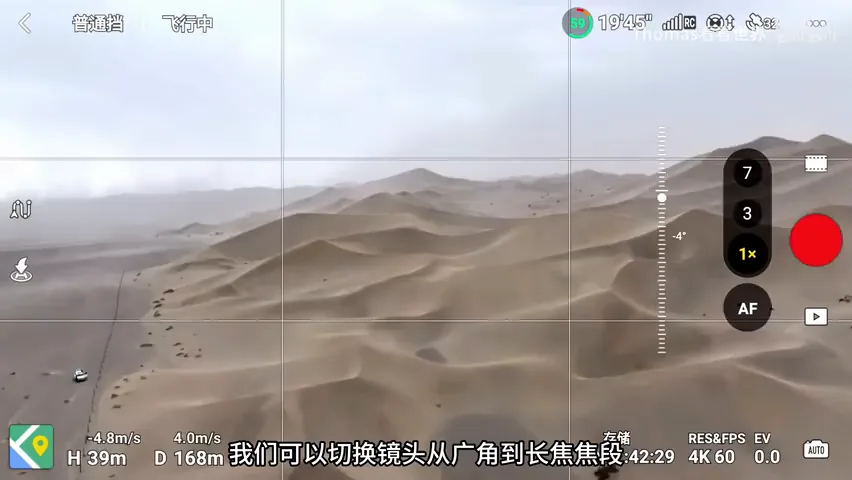
02 The sandstorm: from sighting to a ten-second escape
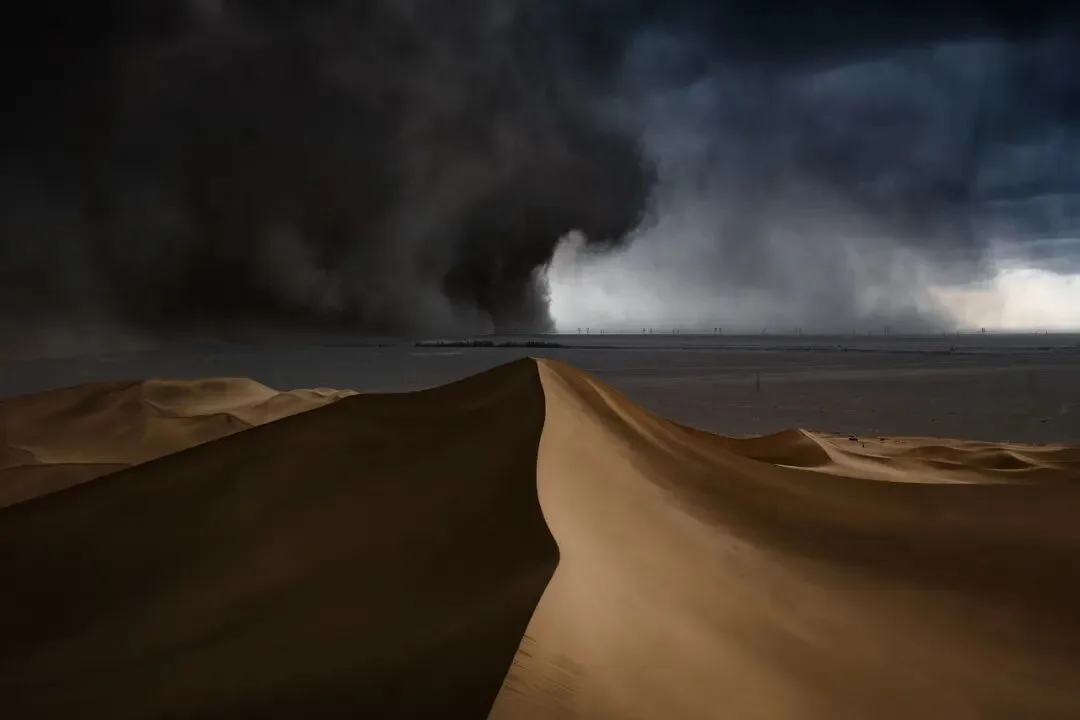
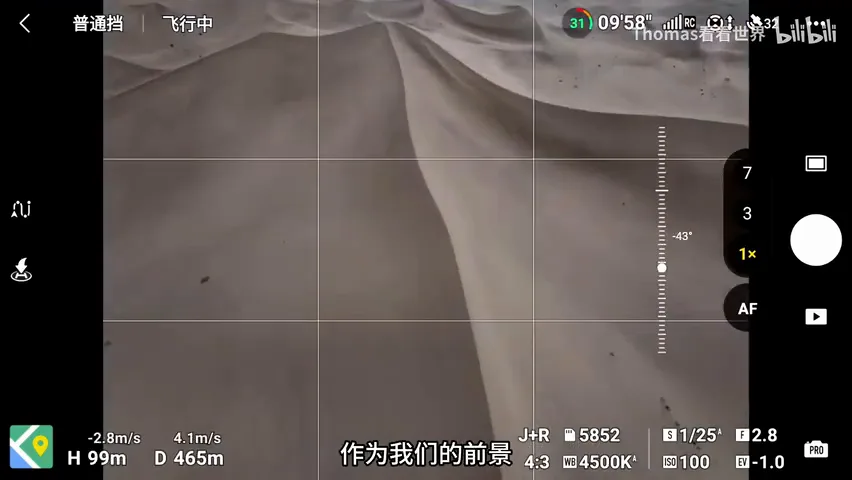
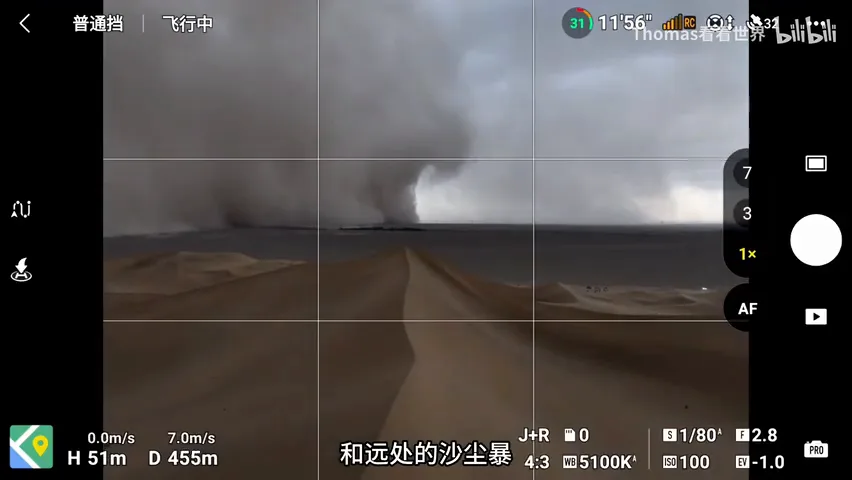
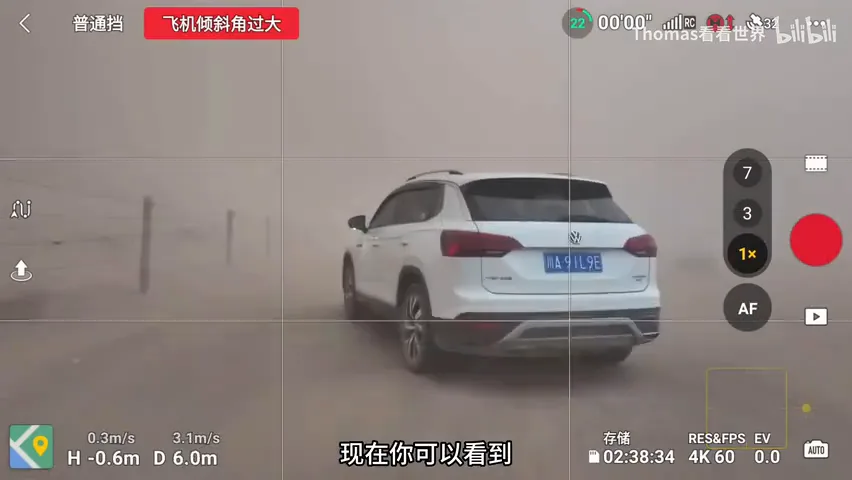
Mid-scout, the weather turns. The wind picks up, and a sandstorm comes rolling in on the horizon (1:31-1:39). Yet Thomas first spots a creative opening: he finds a boldly geometric dune line for a foreground, so the desert and the distant storm set each other off inside one frame (1:39-1:48).
He had not yet grasped how serious it was, and casually flew another short aerial clip (1:52-1:58) — until he noticed the power poles he had just seen in the distance were being swallowed by the storm. It moves fast. He flipped the drone around and raced it back toward the car, his first ever encounter with weather this extreme (2:01-2:16). Just ten seconds after he got inside, the world outside had gone apocalyptic and the sky was fully dark (2:18-2:27). That is how violently desert weather can change.
The contrast the next morning is even starker: yesterday brought a sandstorm and heavy rain; today is utterly cloudless, the sun rising red behind the dunes (2:31-2:43). Yesterday's scouting pays off — now it is time to shoot the desert at sunrise in earnest.
03 Gear: dust-proofing comes first
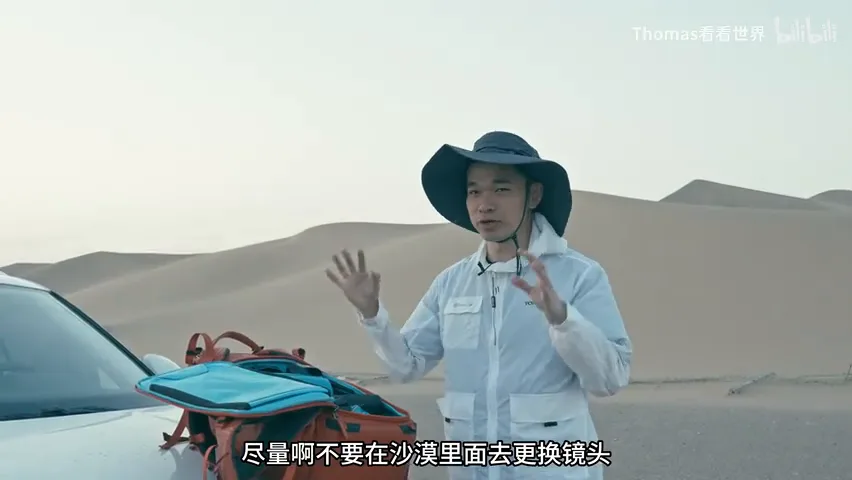
In desert shooting the camera bag is critical: it must seal out water and sand, and you avoid opening it at all so grit cannot blow inside (2:49-3:04). Thomas brought two bodies, one wearing the 24-70 and the other the 100-400 telephoto — precisely so he would never swap lenses in the sand, cutting off every path for dust to get in (3:05-3:18).
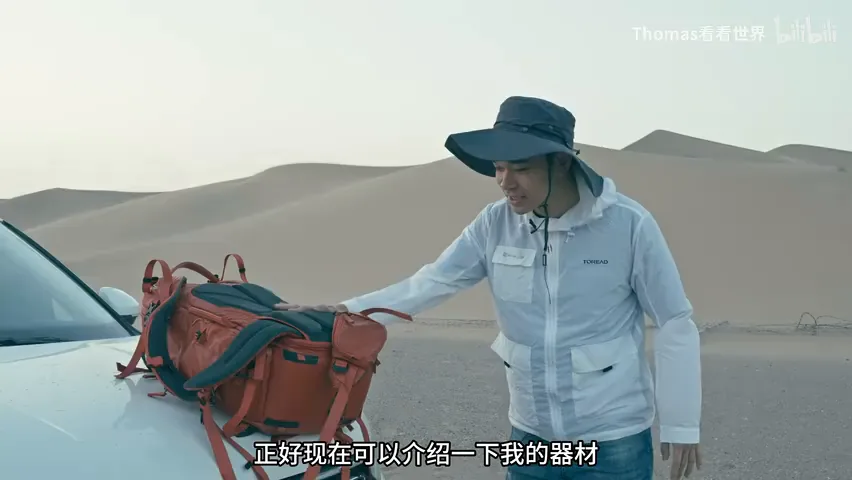
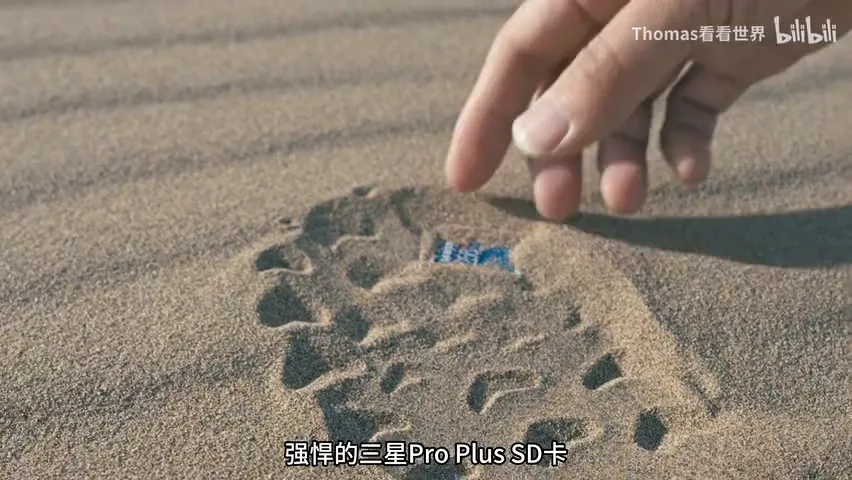
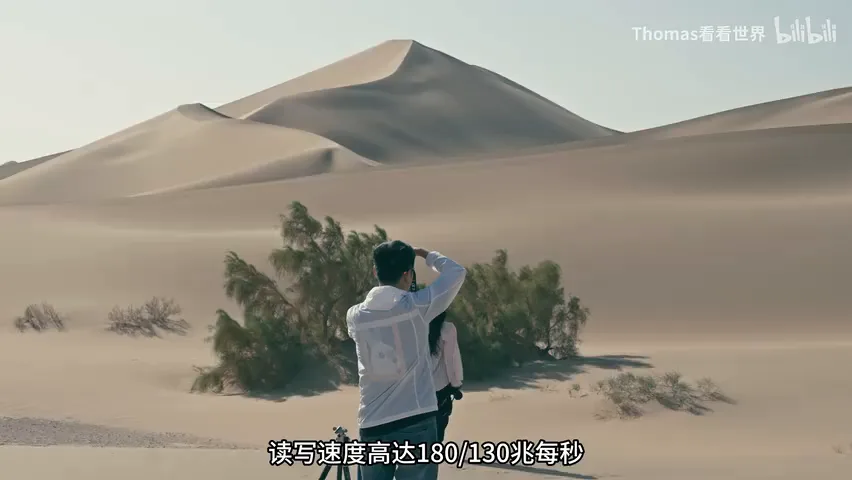
The drone and a blower are desert essentials too, for flying and cleaning (3:22-3:28). For storage he picked the Samsung PRO Plus SD card, built for the outdoors: sand-proof, waterproof and heat-resistant, so a drop into the sand is no disaster (3:29-3:41) — and it later earns its keep during high-speed bursts.
04 Summit backlight: the layers of the dunes
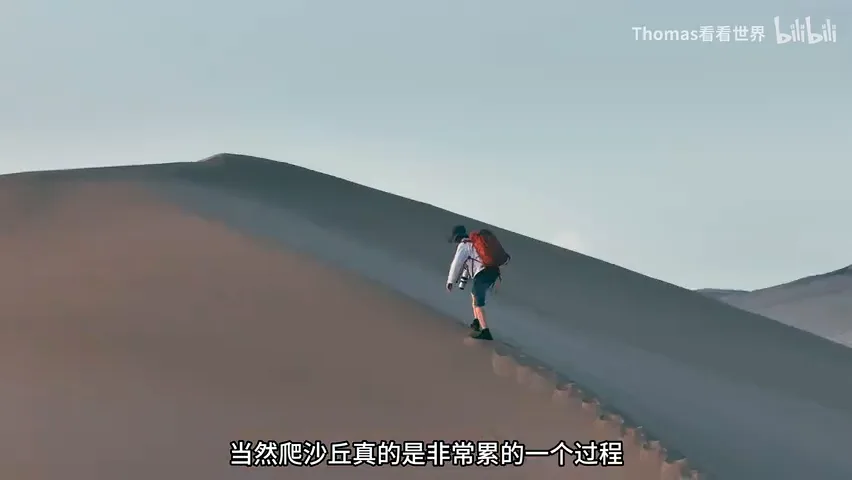
Then comes the cardio: climbing the dune, where every step up can slide you half a step back — it takes a while to find the rhythm (3:50-3:56). The payoff at the top is instant: from that king-of-the-hill vantage, the backlit dunes split into highlights and shadows, layer upon layer (4:13-4:20) — the very scene behind the finished photo at the top of this article.
For desert work Thomas still favors the telephoto: reach out and grab small scenes from far away — especially textures and layers like these, which come out superbly (4:21-4:31). The frames he previewed through the drone's zoom yesterday get recreated with the camera's telephoto today.
05 People in the desert: tiny figure, vast scene
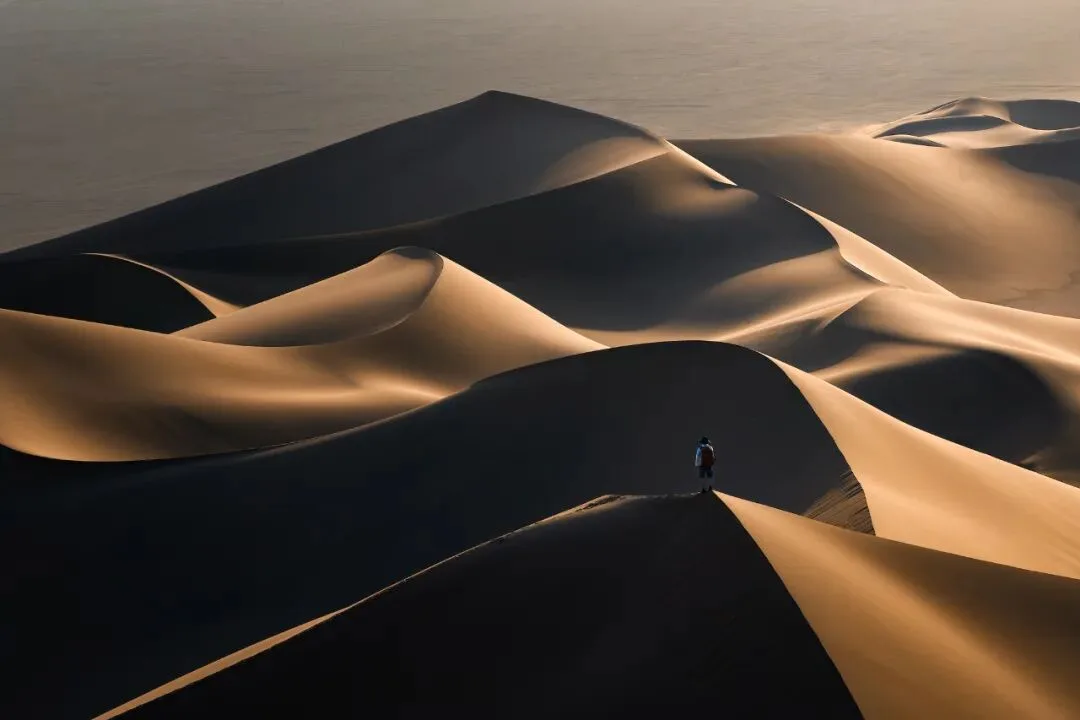
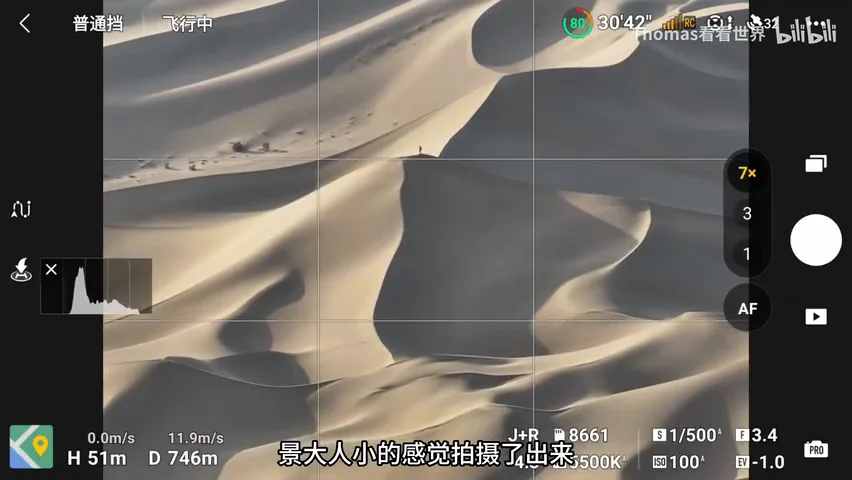
Putting a person into the frame is one of the best choices in the desert — it reliably produces standout images (5:20-5:24). The method: fly the drone up to find the angle, ideally shooting at medium-telephoto focal lengths (4:33-4:48); the backdrop behind the person should be clean and tonally distinct from the clothing — wearing white, Thomas specifically hunted for a black shadowed slope to set himself off (4:49-4:59).
At 7x zoom he notices the ridge behind him forming a superb contrast of light and shadow, traced with an S-curve (5:02-5:12); then, pulling the drone far back, the whole desert and the tiny figure share one frame — the "vast scene, small person" effect lands (5:12-5:19).
06 Layered composition and small scenes
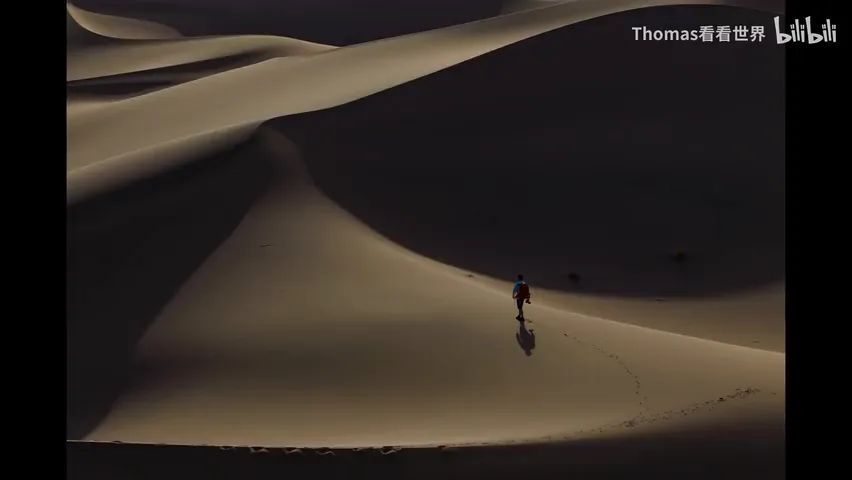
Desert composition lives and dies on layering (5:34-5:39). Thomas demonstrates a classic structure: a very tall dune in the far distance, a stretch of attractive shrubs at midground, open sand in front (5:39-5:51). Too empty? Send a teammate walking across the front — their silhouette and footprints become the foreground (5:53-5:58); then burst-shoot at high speed to catch the single best moment (6:01-6:07).
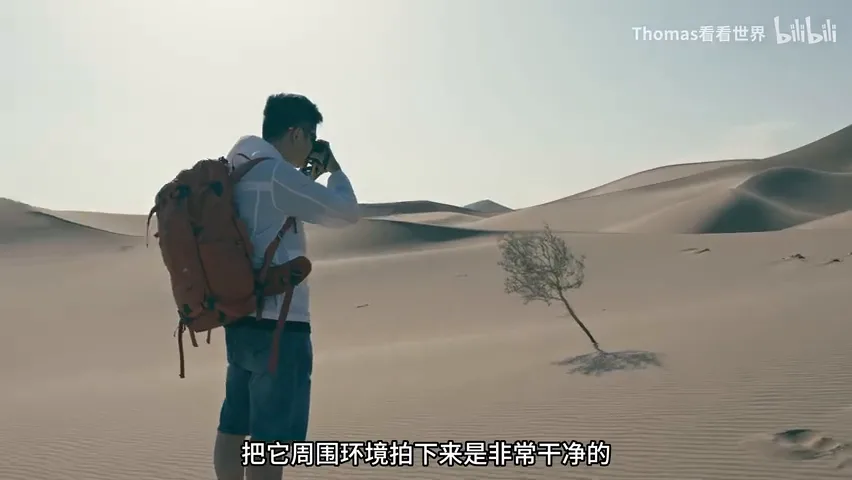
Deserts are dotted with lone plants, and one standing by itself in a spotless surrounding like this is well worth a frame (6:22-6:31). The tutorial closes with three rules for desert photography: lean on backlight — face east at sunrise, west at sunset, and let it carve the layers; include people or plants for story and richness; and use the telephoto to catch the shifting light and layers far away (6:31-7:01).
1. The drone is the desert's first tool: send it up toward the sunrise or sunset, flick between wide and telephoto hunting for layers, fly low to preview the summit view — it climbs the dunes you cannot. 2. Desert weather flips in minutes — this storm went from photo-op to swallowing power poles almost instantly, so no matter how strong the creative itch, always leave yourself an exit. 3. Dust-proofing keeps gear alive: two bodies so no lens swaps, a bag you barely open, and sand-proof, waterproof SD cards as the last line of defense. 4. Three shooting rules: backlight for layers, people or plants for story, telephoto for distant light and texture — "tiny figure, vast scene" and footprints in the foreground are formulas ready to copy.