Photography Tutorial · 2020-04-16
In Photography, Is Detail or Feeling More Important? Photo-Editing Mini-Contest, Episode 11 Review
Thomas Chu Photo
In today's photography tutorial, Thomas will use the photos from "Cinque Terre Time-Blending + Exposure-Blending Originals! Photo-Editing Mini-Contest, Episode 11" (《五渔村时间合成+曝光合成原图!修图小赛第11期》) as examples to share several common problems in post-editing:
For example, in post-editing, is it more important to recover all the details, or to bring out a good feeling in the photo?
Original 1:
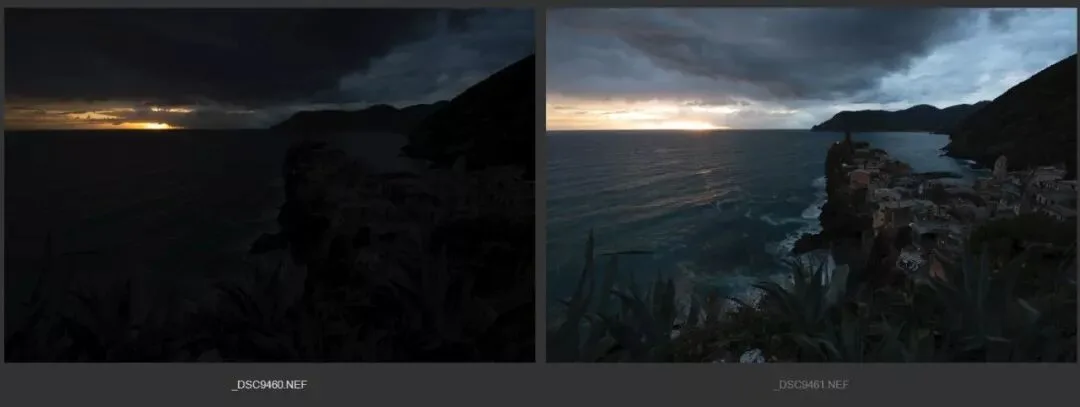
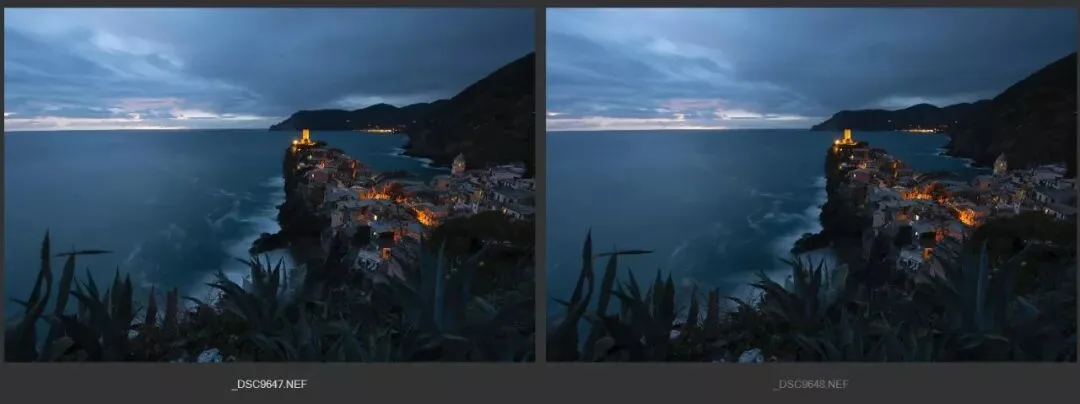
Download link: https://pan.baidu.com/s/1dxSasJuwIa5i35mnqlHg-w
Extraction code: g9r4
Judging and review
▶ Watch the video tutorial on Bilibili
This is the illustrated companion to the video above. Editing Contest No. 11 used four raw files Thomas shot in Cinque Terre, Italy — the spectacular sunset clouds, and the village lights half an hour later at blue hour. Reviewing the entries, Thomas tackles a core question of post-processing: what matters more, recovering every detail, or creating the right feeling?
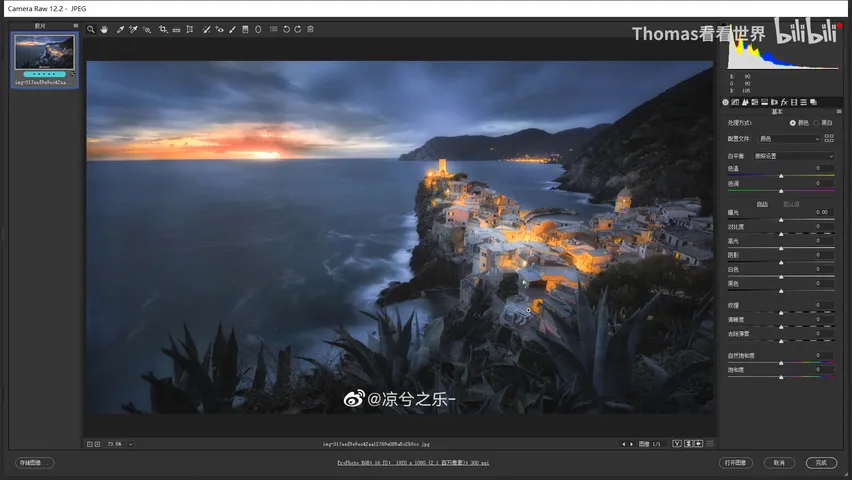
Start with the conclusion: once the lights glow again and the shadows sink back down, the same photo shakes off its HDR flavor and regains believable light (the corrected edit inside Lightroom at 4:52 in the video).
01 The Brief: Sunset Clouds, Blue-Hour Lights
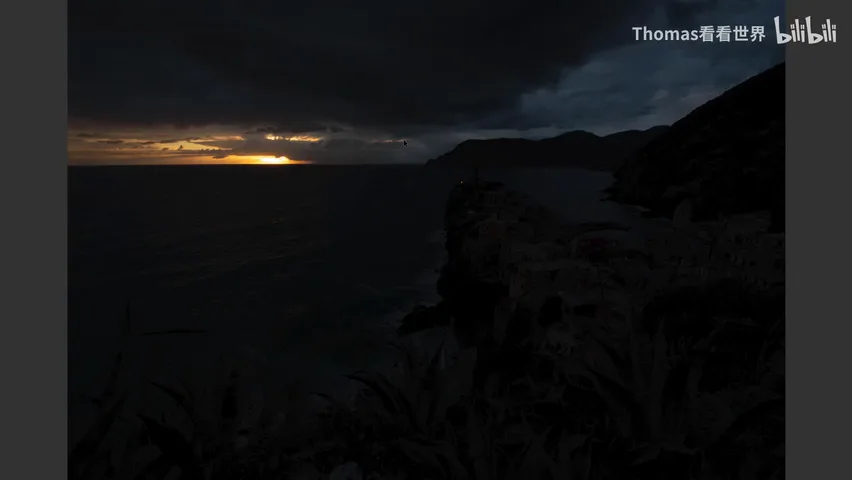
Four raws from the same tripod position were provided: after capturing the dramatic sunset clouds and light, the camera stayed untouched for half an hour until blue hour, when the village lights came on (the sunset raw at 0:24 and the blue-hour raw at 0:32 in the video). Entrants could therefore grade the blue-hour frame alone — blue backdrop plus orange lamps is already rich — or time-blend the sunset glow with the blue-hour lights, a matter of personal taste.
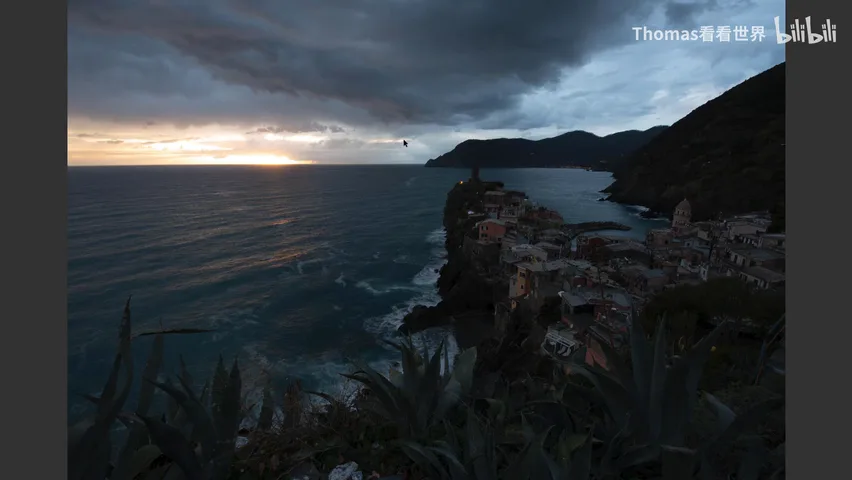
02 The Common Flaw: Detail Isn't Everything
Reviewing the entries, Thomas spots a shared flaw: many images grade well yet feel off — because they carry too much detail. Beginners want to recover every highlight and every shadow, but when everything has detail, nothing stands out (one such entry at 0:46 in the video). The most jarring move is crushing the lamps and the sun to save their highlights — yet lights seen at night are blindingly bright, and a slight bloom in a photo matches what our eyes expect; restoring the detail inside every bulb only reads as fake.
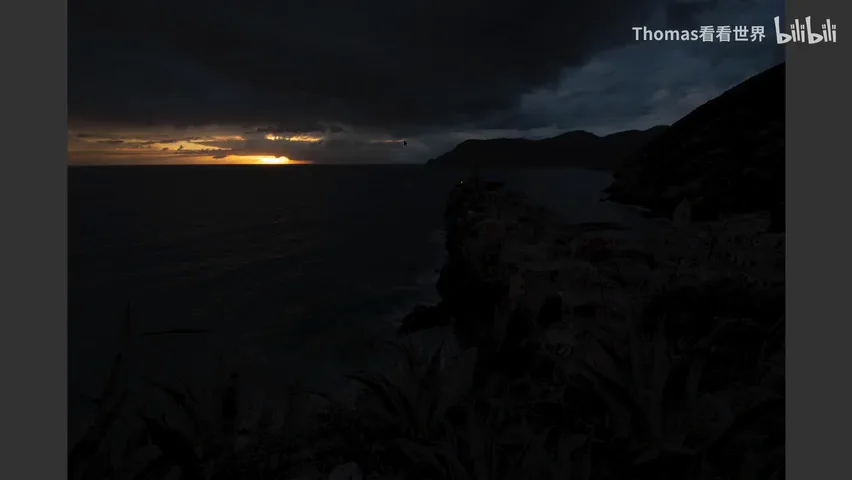
03 Live Demo: Bringing the Light Back
The fix is simple: boldly let the bright zones glow. Thomas drops radial filters over the sun and the lamp clusters, adding +0.2 EV and +10 highlights — the sun immediately blooms into a clear overexposed patch, and that is exactly the intent (at 3:50 in the video). A brush or HSL would refine it further; the demo stays deliberately rough (several stacked radial filters visible at 4:10).
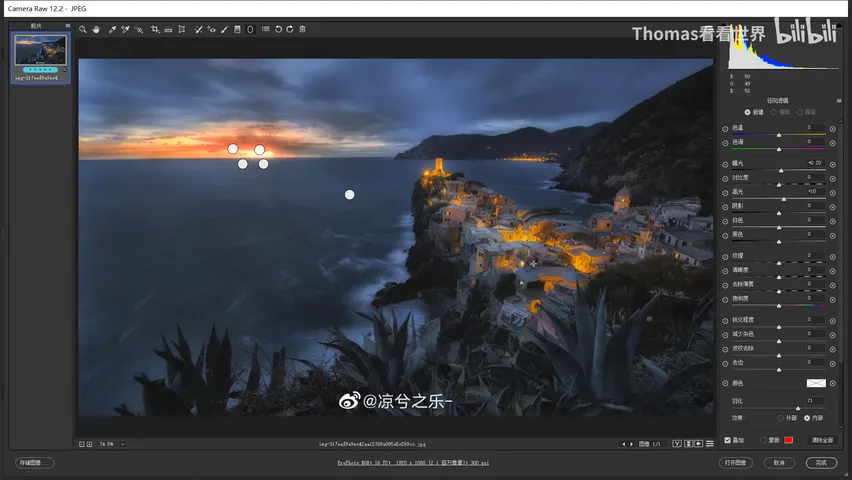
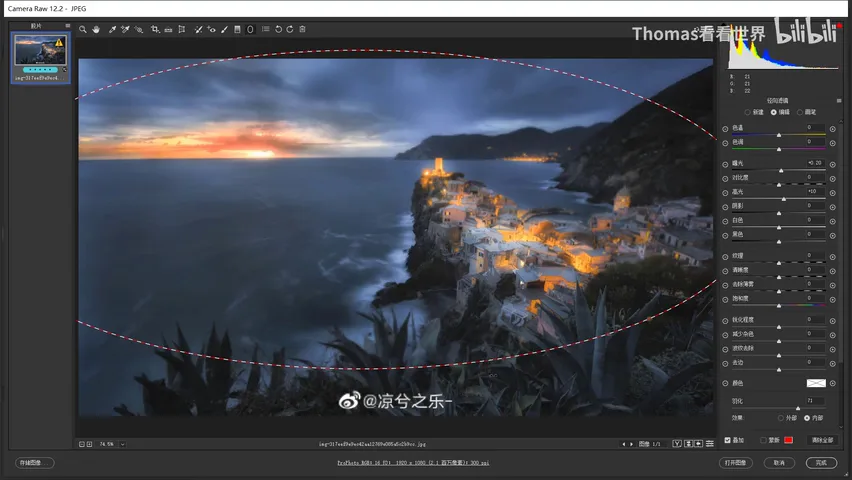
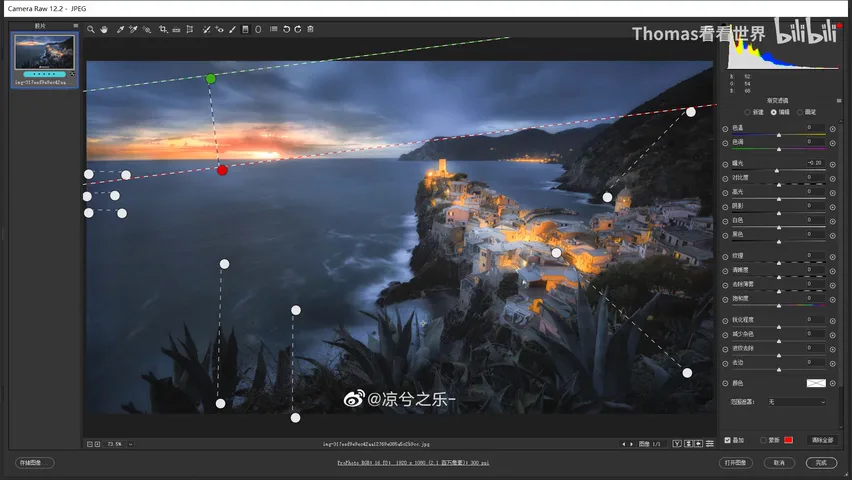
Conversely, anything that competes for attention gets darkened: the right-hand hillside loses exposure and detail, and the bright strip along the edge is tamed. After a few moves the before/after is striking — the original feels stuffy, HDR-like; the corrected version lets the sun and lamps glow again, even at the cost of bloom and some shadow detail, and because the feeling is right, the photo is right (at 4:52 in the video). Feeling first, detail second.
04 The Winners: When Feeling Rings True
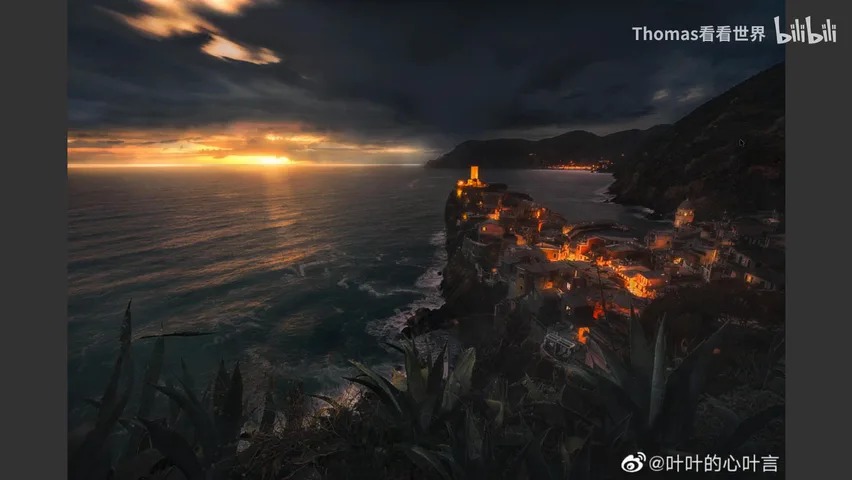
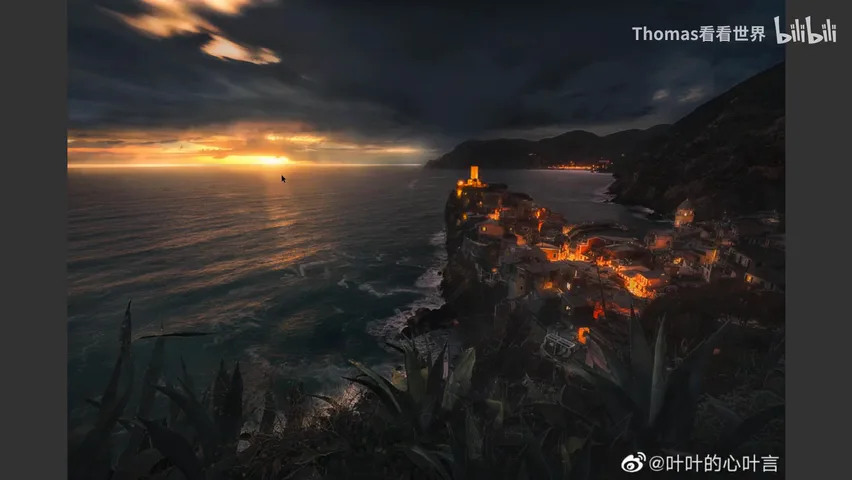
Both winners this round are textbook cases of feeling first. The first is a dark-tone render: the ring around the sun is blown out completely, yet it looks entirely comfortable; the lamps hold their brightness and the distant lights bloom a little without harm; the foreground rocks keep sculpted highlights for texture while the right-hand hillside falls decisively dark — strong contrast, clear interest points (at 5:53 in the video). One nitpick: the slightly messy highlights could take another dip of the highlight slider.
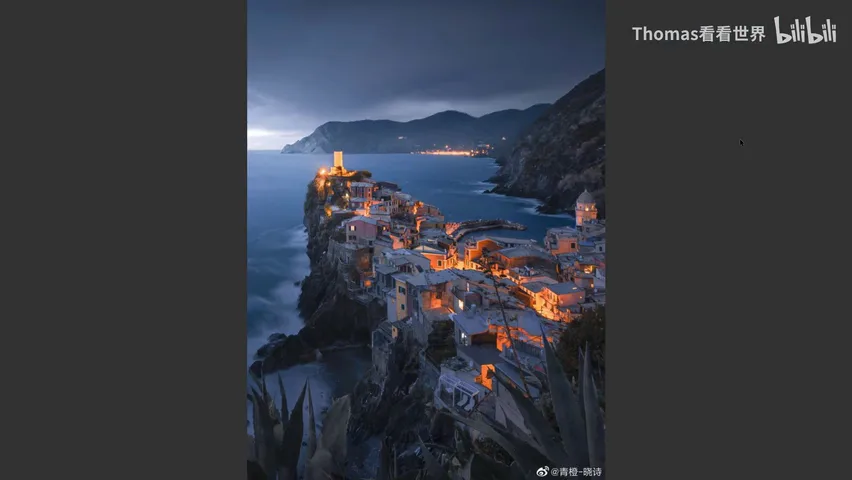
The second winner grades the blue-hour raw and crops it: the vertical frame pulls the eye to the village on the left, dreamlike, with a lovely warm-cool contrast (at 5:44 in the video). The distant lights again bloom slightly — that glow is the point — while the trees are darkened so nothing competes. Clear contrast, a strong subject, harmonious color: once again, restraint bought the feeling.
1. More detail is not better — when everything has detail, nothing stands out; 2. Lights at night are bright by nature: slight bloom matches perception, while restoring every bulb's detail reads false; 3. Let the bright zones glow boldly (radial filter plus exposure and highlights) and let the rest sink — recover the feeling of light first; 4. A photo lives on feeling, not detail — when the feeling is right, a little bloom and lost shadow detail are perfectly acceptable.
HD video:
https://www.bilibili.com/video/BV16k4y1R7oM/
Selection Award winning works
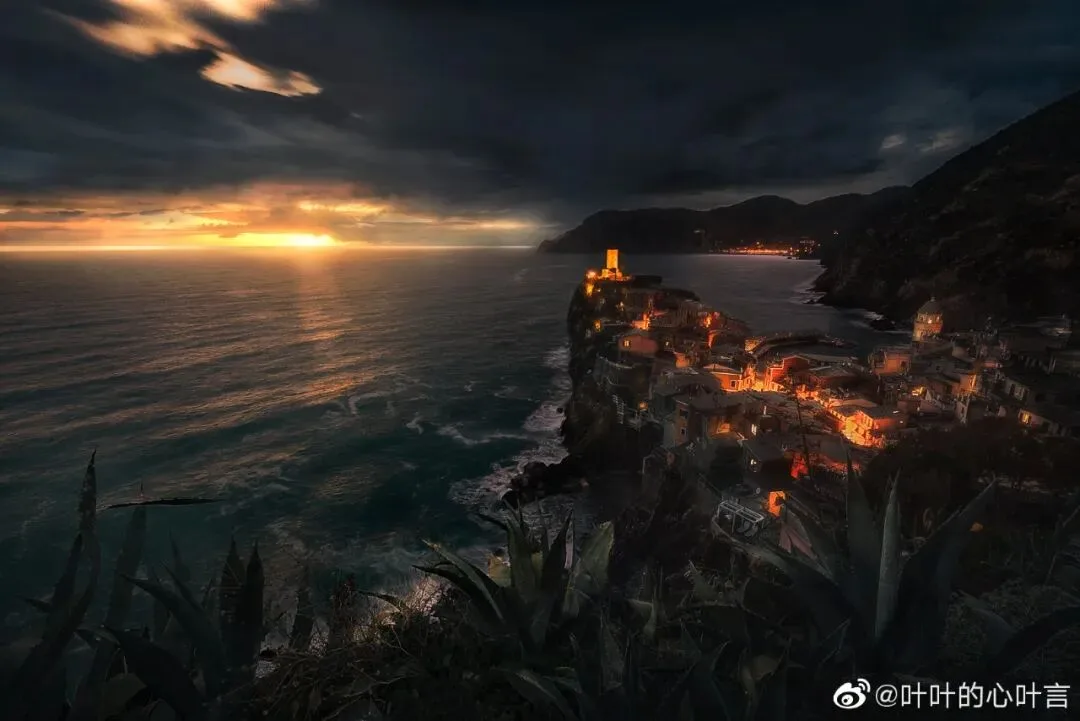
Photographer: 叶叶的心叶言 (Weibo)
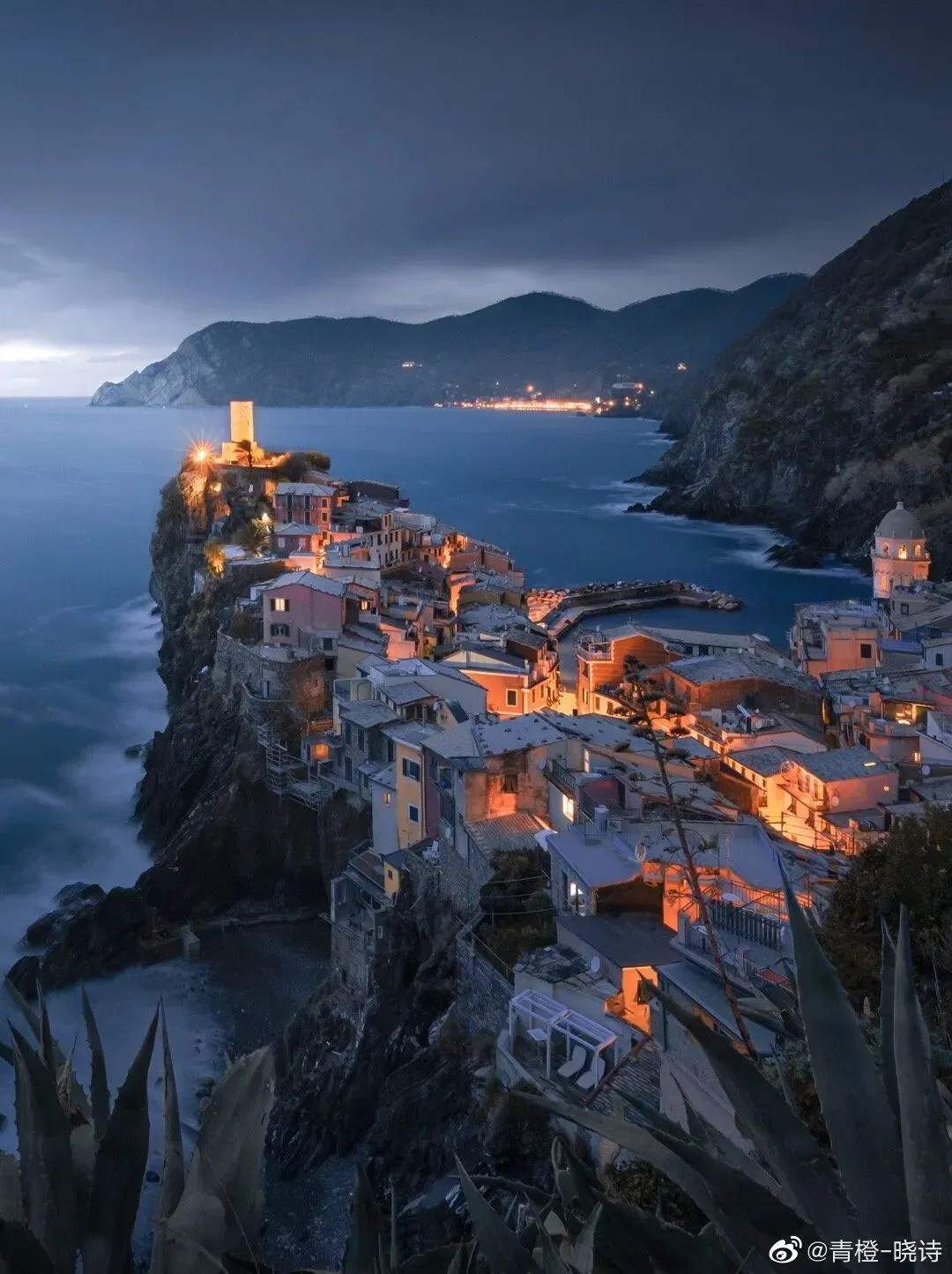
Photographer: 青橙-晓诗 (Weibo)
Prize: Thomas's signed copy of "Seeing the World" (《看见世界》) + postcards
(Winners, please contact Thomas via private message)
The pre-shoot is composing, and post-processing is performing. From the same original, different photographers produce different results. The collision of different ideas is fascinating.
If you have different views or ideas about Thomas's opinions and the way the selected works are presented, you're welcome to discuss them in the comments.
Past episodes:
"So Many Effects from the Same Image? The Winning Works of the First Photo-Editing Mini-Contest Are Out!"
"Can You Imagine Editing It Like This? Thomas's Photo-Editing Mini-Contest, Episode 2 Exhibition"
"How to Control Color Combinations in Photos - Photo-Editing Mini-Contest, Episode 3 Review"
"Post-Processing Should Go from the Whole to the Parts, with Selection and Omission - Photo-Editing Mini-Contest, Episode 4 Review"
"Overcast Days Can Be Edited Like This! Photo-Editing Mini-Contest, Episode 5 Review"
"How to Give Photos a New Atmosphere Through Post-Processing - Photo-Editing Mini-Contest, Episode 6 Review"
"Spectacular Landscape Masterpieces Need Visual Guidance Even More - Photo-Editing Mini-Contest, Episode 7 Review"
"What Kind of Photos Stand Out in Photography Contests? - Photo-Editing Mini-Contest, Episode 8 Review"
"Bad Weather" Tests a Photographer's "Good Thinking" - Photo-Editing Mini-Contest, Episode 9 Review"
"Video Reveals How Photography Contests Are Actually Judged! Photo Review & Photo-Editing Mini-Contest, Episode 10"