Photography Tutorial · 2018-11-18
Where Do Those Extreme Landscape Masterpieces Come From? Shooting and Post Revealed
Thomas Chu Photo
One tutorial per week — making photography easy to learn
How are those ultimate landscape masterpieces made? In future tutorials, Thomas will gradually share the capture process and post-processing ideas behind selected landscape photos.
Today's photo is a panorama I shot last year during a 2-month trek in Greenland.
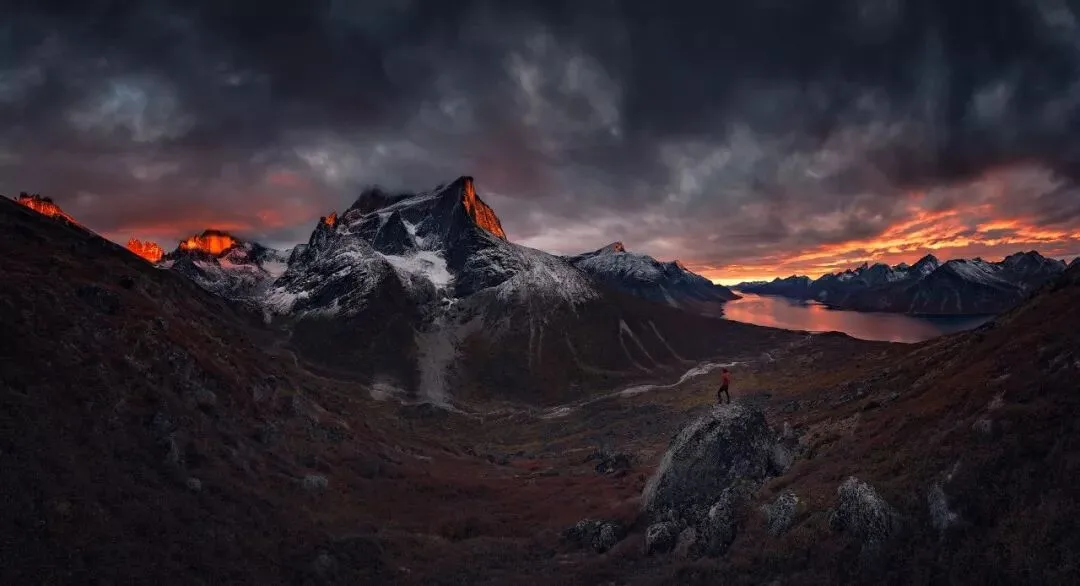
Capturing a stunning landscape photo often tests a photographer's perseverance, patience and careful observation.
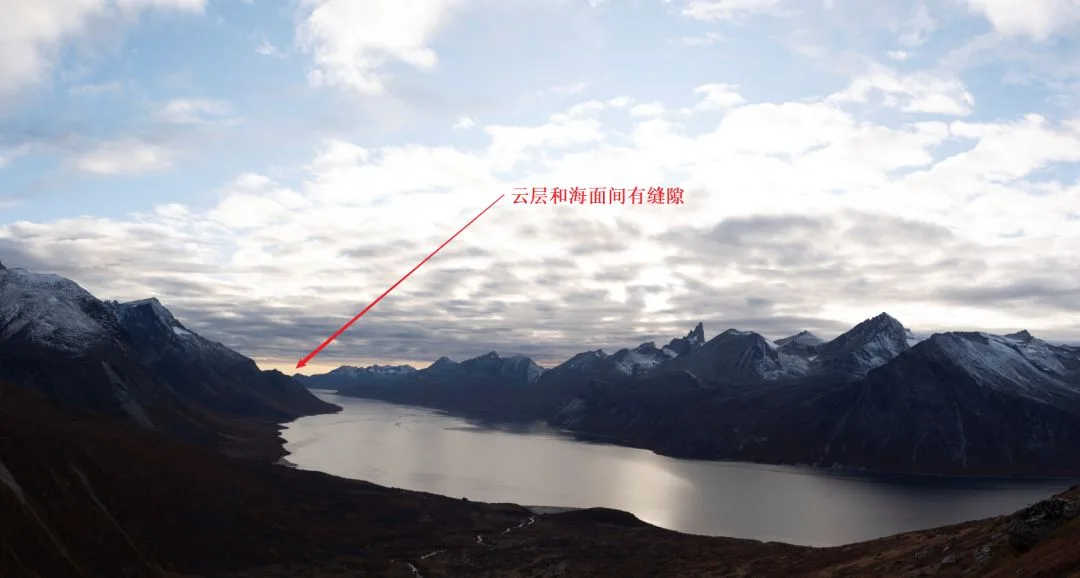
That afternoon, the entire western sky was covered in dark clouds — quite discouraging.
But we noticed a tiny gap between the clouds and the sea level at the far horizon. If it stayed that way into the evening, the sun would drop into the gap and light up the clouds, possibly creating a spectacular sunset glow.
So my teammate and I decided to bet on the weather and kept climbing to a 600-meter-high vantage point to wait for sunset. Along the way we found many interesting foregrounds, but compositions like this still felt too ordinary to me.
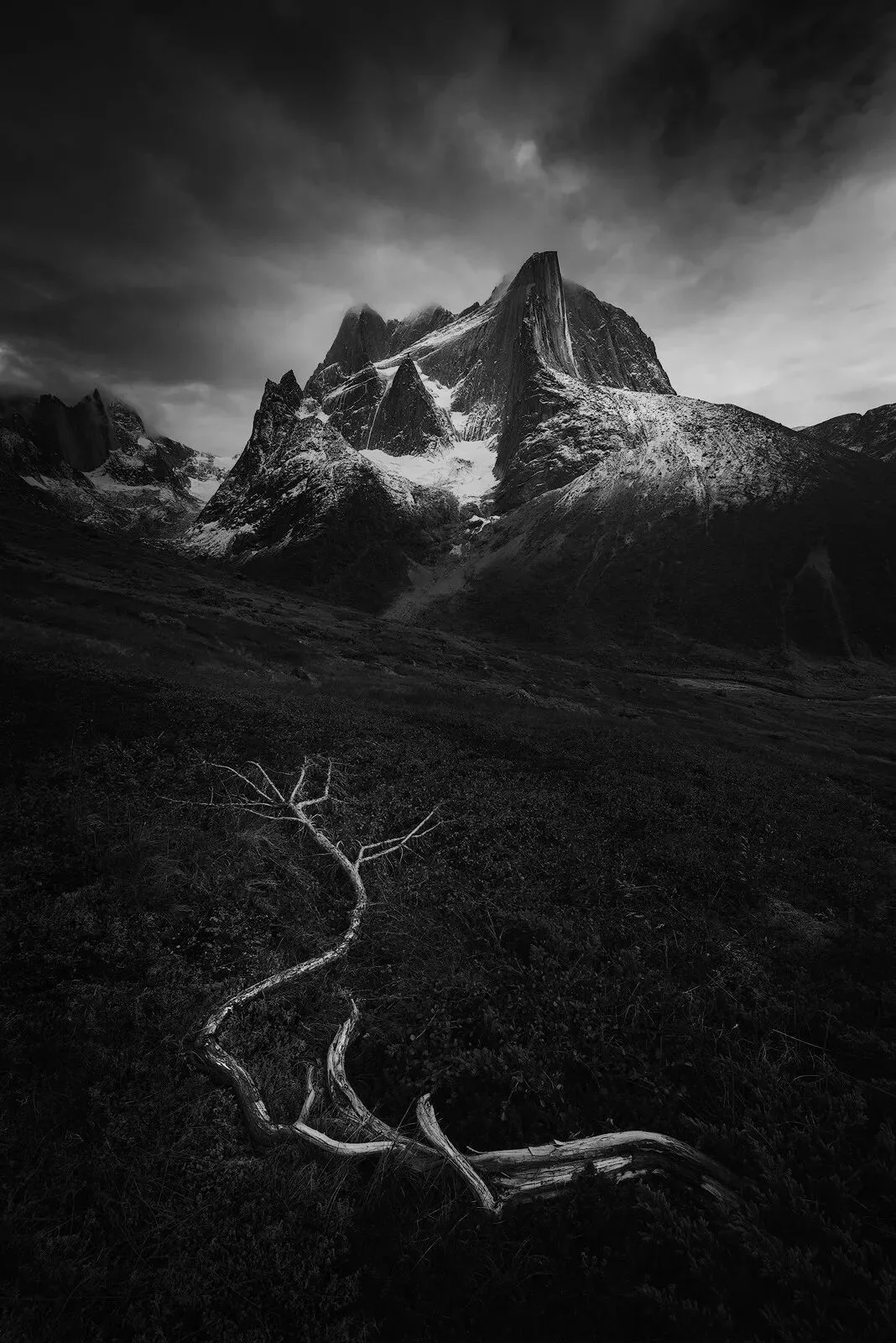
We traveled thousands of miles — multiple flights, helicopters and fishing boats — and trekked for 2 months in Greenland's uninhabited wilderness, all to seek out and record some of the most stunning mountain landscapes on Earth.
And using a panorama to take in the entire stretch of snow mountains and fjords is undoubtedly a more impactful way to compose.
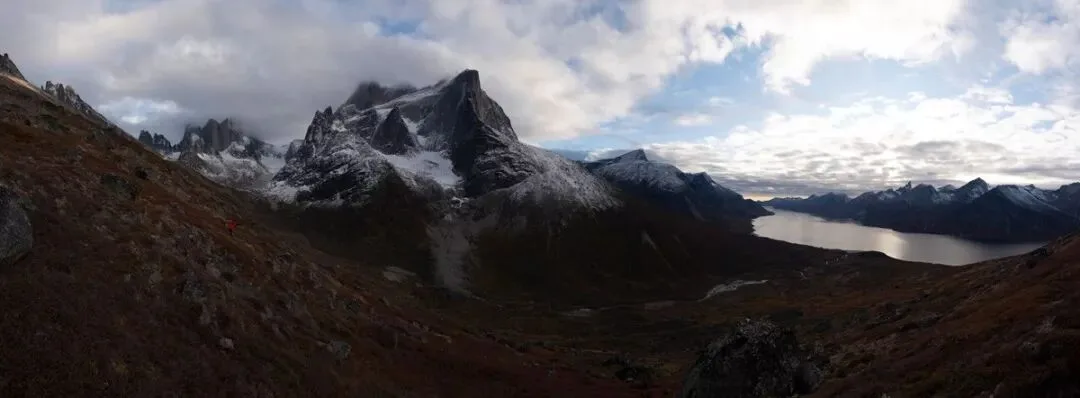
With a wide-angle lens, scenes containing only distant objects tend to look small and lack depth; you need foreground elements to strengthen the spatial relationships. There were many rocks on the slope, but most were messy and not suitable for the composition.
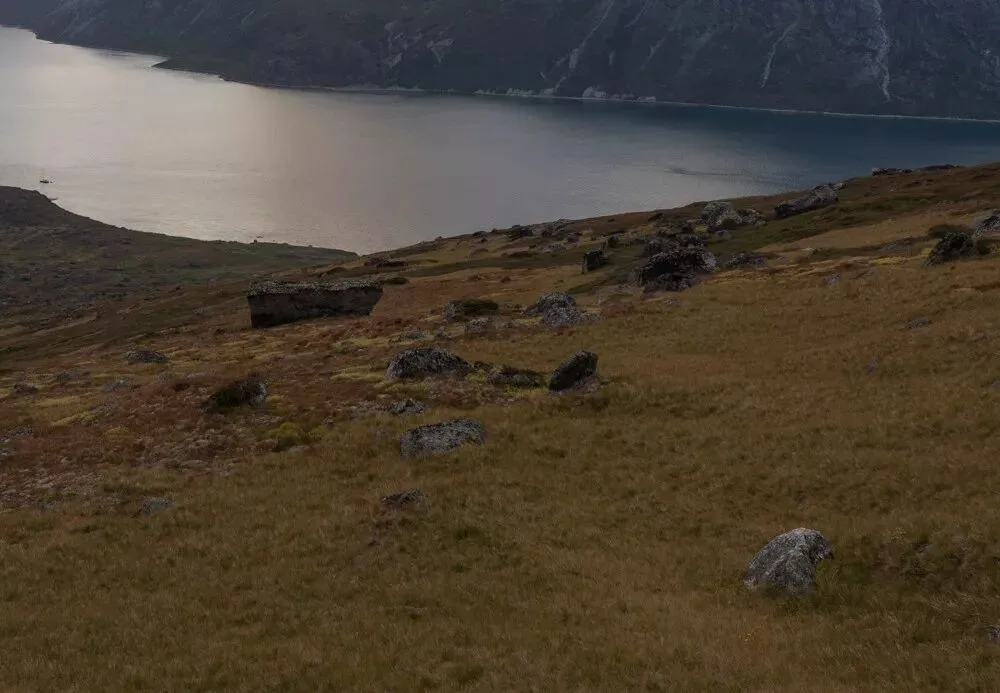
I searched the slope carefully and found a group of rocks with orderly shapes and arrangement, suitable as a foreground.
In the middle of the rock formation was one large boulder, surrounded by smaller rocks whose pointed tips all aimed at the central boulder — like arrows, giving a sense of order.
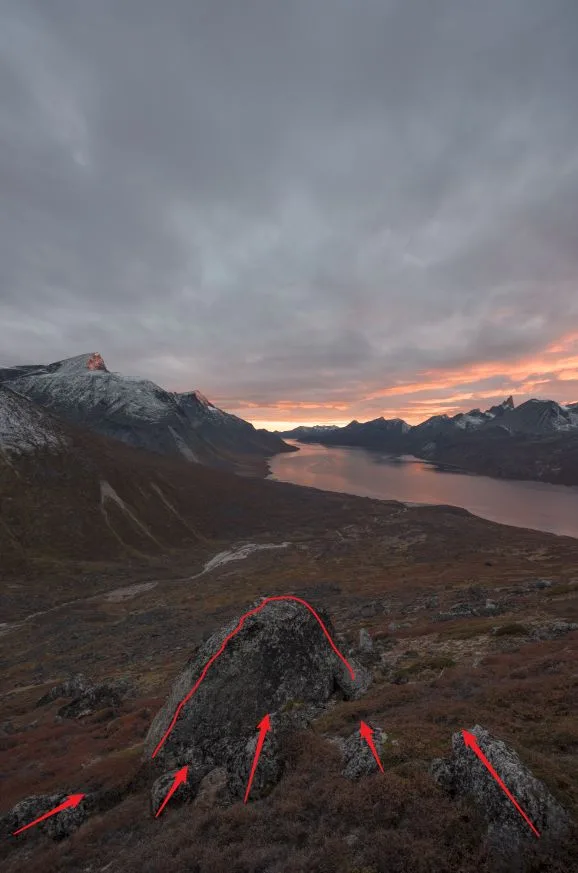
The foreground is part of the landscape image, not a separate set of objects. How could I build a better connection and interaction between the foreground rocks and the sunset clouds in the background?
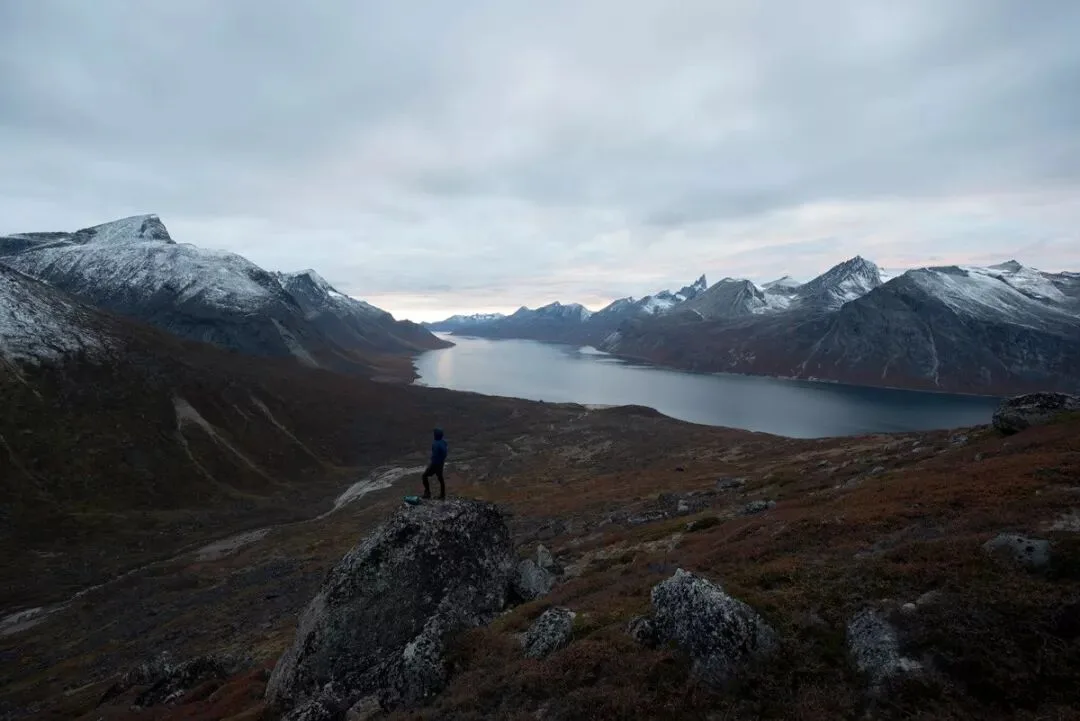
I mentioned in my book 'Foundations of Landscape Photography Post-Processing' that a person's line of sight or pointing direction is also a kind of visual leading line.
If a person stands on the rock looking into the distance (or pointing afar), a visual flow between the lower and upper parts of the frame is established.
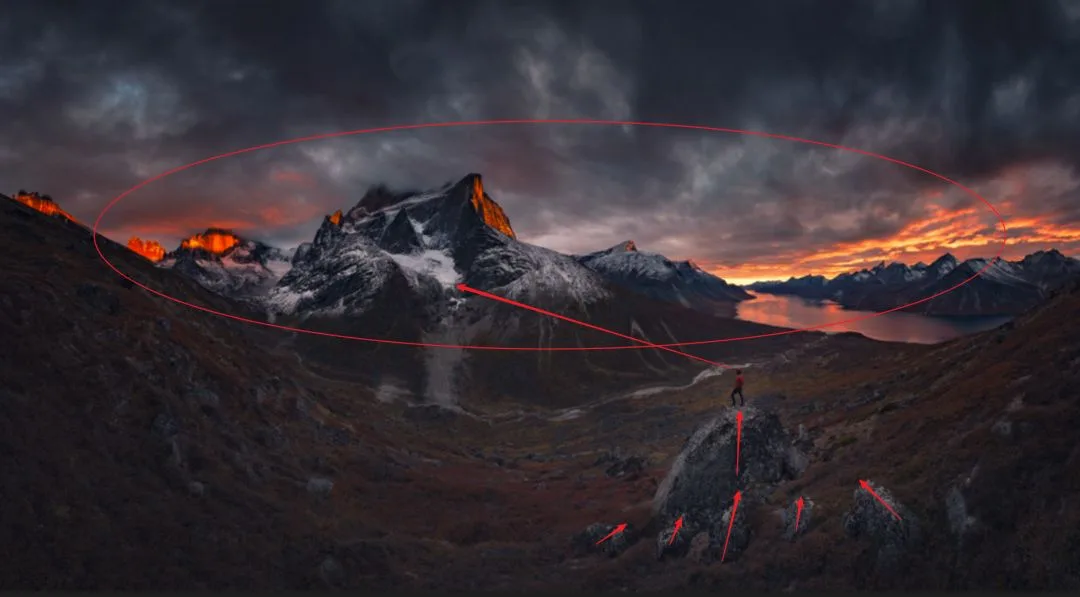
Of course, beyond visual connection, the person also serves as a scale reference and adds storytelling.
Without the person, we couldn't sense how tall the boulder really is or how far the distant peaks are. With the person, viewers immediately understand the rock is 2-3 people tall, and through perspective they grasp that the peaks are kilometers away.
In pure landscape photography, creating atmosphere and story is harder — adding a person undeniably makes it easier for the image to carry emotion.
The photo below is an on-location drone selfie: you can see where I placed the tripod and where I stood.
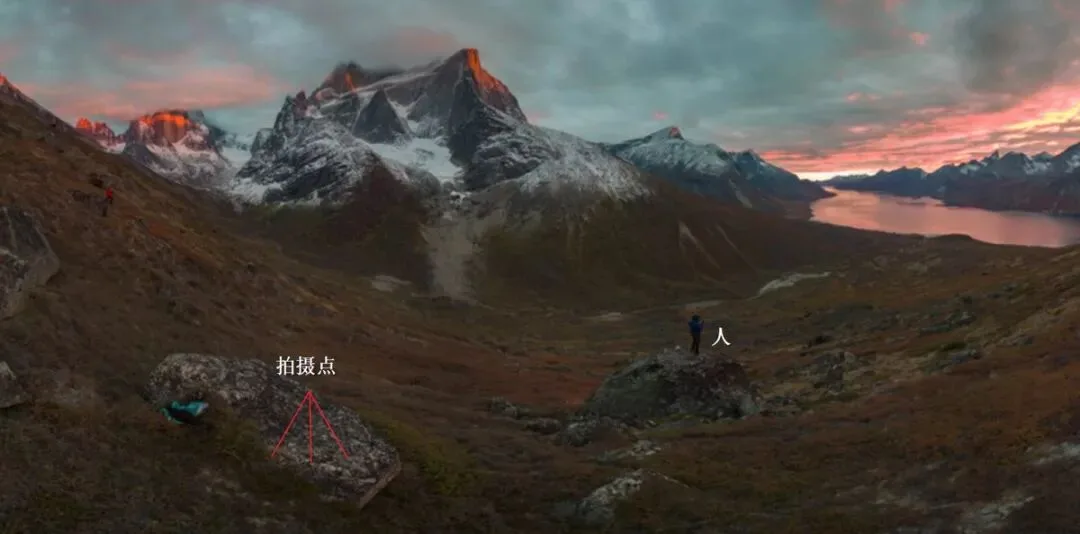
Many people wonder how to do both a selfie and a panorama — the answer is to shoot them separately. When the sunset glow had just begun to show, I climbed onto the rock and used a timer remote to take a self-portrait standing on the boulder.
Once the sunset clouds erupted, I returned to the shooting spot behind the rock formation and began the panorama capture.
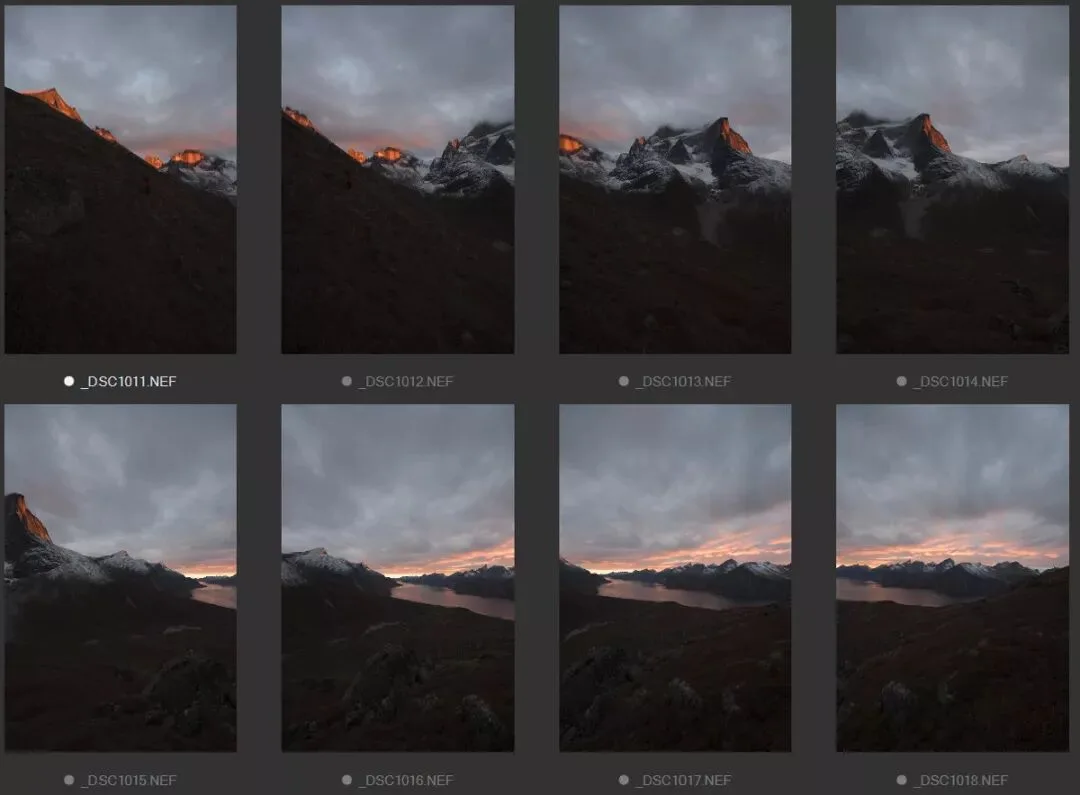
This panorama was shot with a Nikon D750 and a 14-24mm ultra-wide lens at 16mm per frame, in vertical orientation — one row of 8 frames.
Because it's a wide-angle panorama, I needed at least 50% overlap between adjacent frames, so the stitching software prefers the less-distorted center of each frame and avoids the exaggerated edges.
The three photos below are my first three frames from left to right — you can see 50%-70% overlap between each pair.
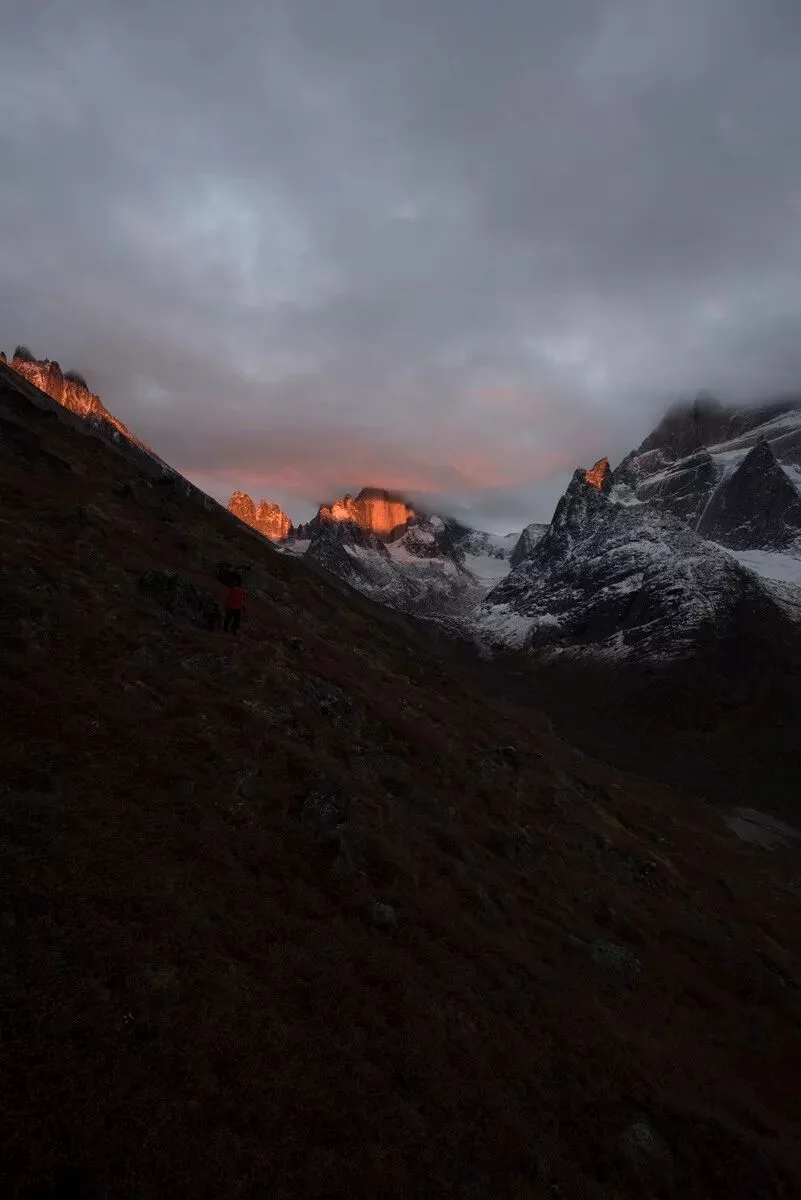
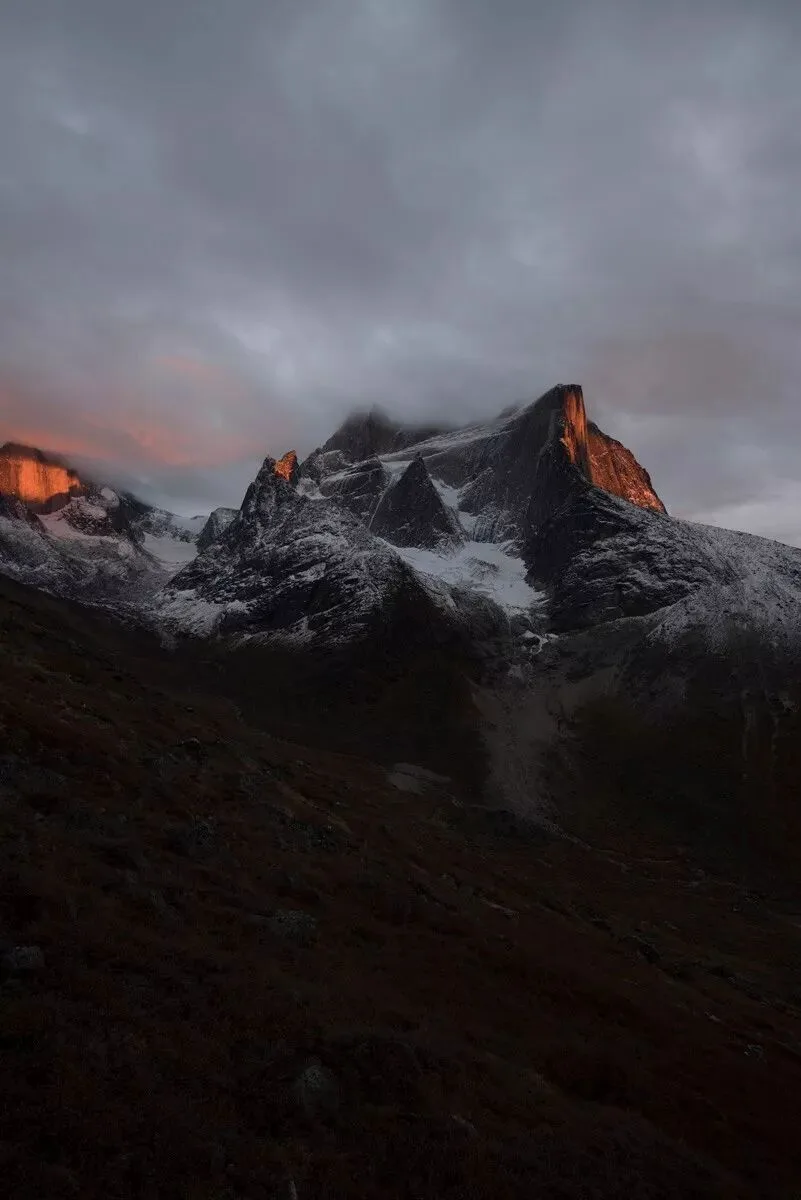
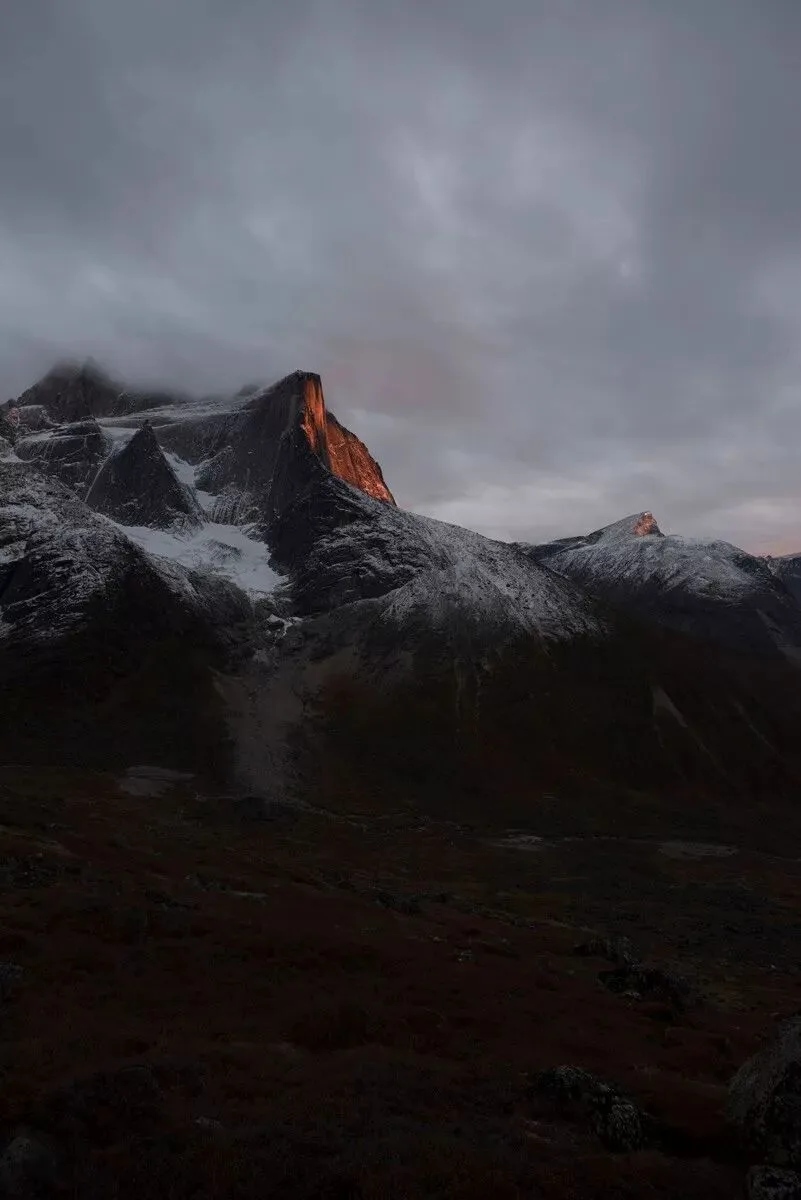
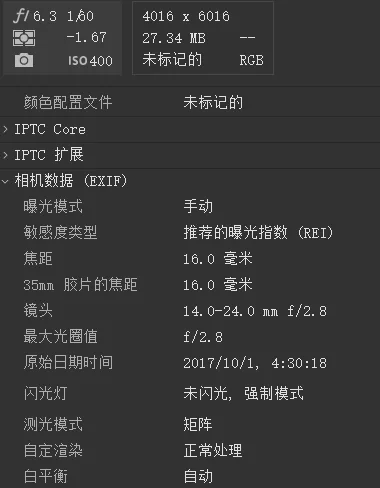
The settings for each frame were as follows:
First: auto white balance, auto matrix metering, autofocus — I trust technology and use auto in most situations.
I generally prefer aperture priority: fix the aperture and ISO, and let the camera choose the shutter speed.
Because the light was changing rapidly and the capture had to be fast, I simply handheld the panorama (adjusting the pano head for each frame was too tedious), so the shutter speed couldn't be too slow.
So I raised ISO to 400, kept the aperture at f/6.3 near the lens's sweet spot (f/8), and since the rocks were over 7 meters away, f/6.3 gave sufficient depth of field. The camera then chose 1/60s — quite suitable.
In post, I imported the 8 frames into Camera Raw and stitched them using the method from the tutorial 'How to Stitch High-Quality Panoramas in PS/LR'.
Below is the stitched panoramic image; I continued with simple adjustments in Camera Raw.
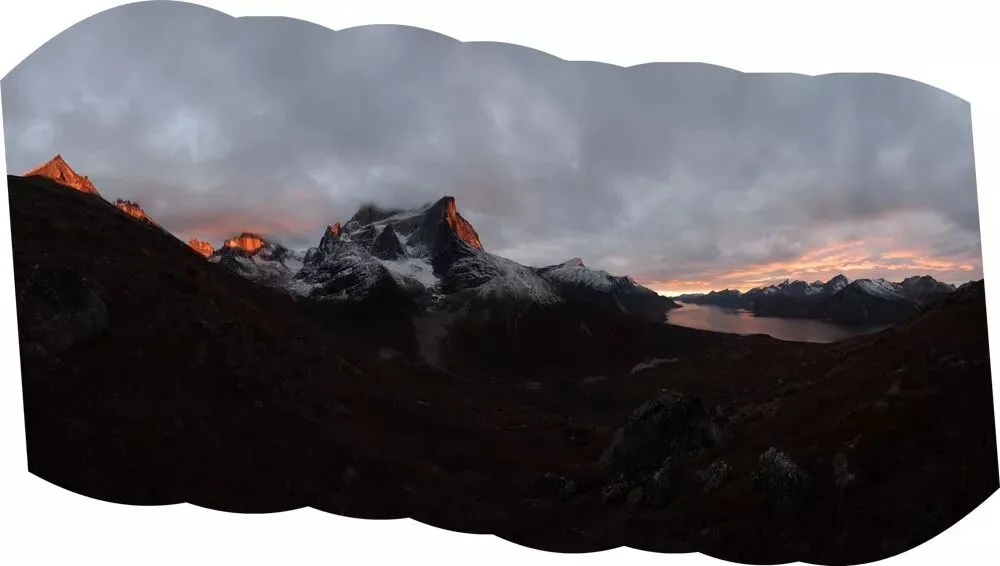
First, recover the details. The sky in the original was overexposed and the ground pitch black, so I raised exposure, shadows and blacks, and pulled down the highlights slider.
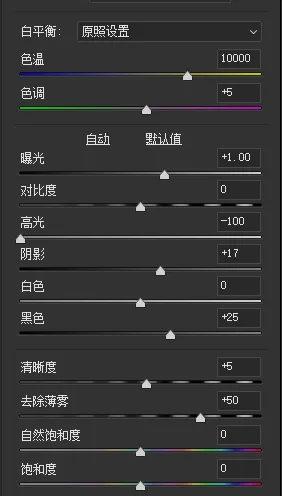
The sky clouds in the original contained lots of detail — a little processing brings out rich texture.
Besides global Clarity +5 and Dehaze +50 to strengthen detail, I also applied several graduated filters to the sky only — reducing exposure, adding clarity and dehaze there.
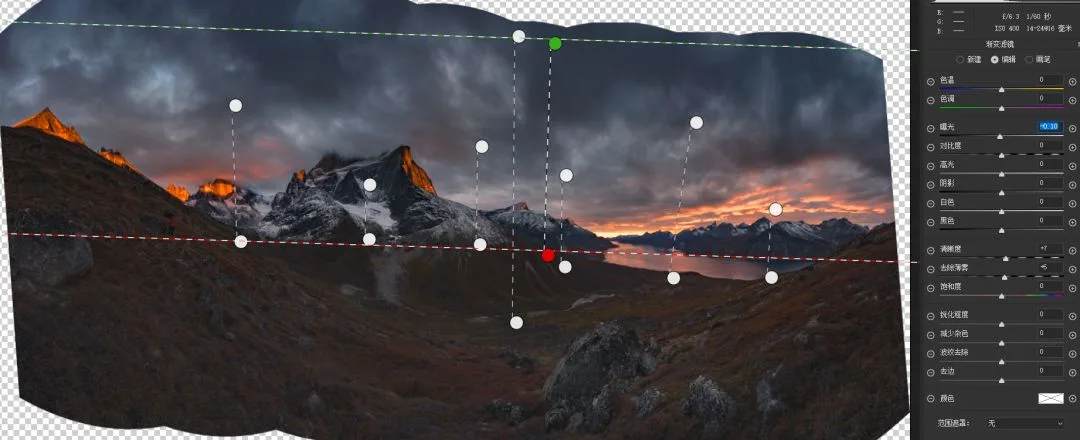
When using graduated and radial filters, I follow the principle of 'many passes, small amounts': each filter's adjustment is modest, but applied many times with slightly different mood and feather values, so the final result looks more natural.
After this simple Camera Raw pass, the photo already looked outstanding.
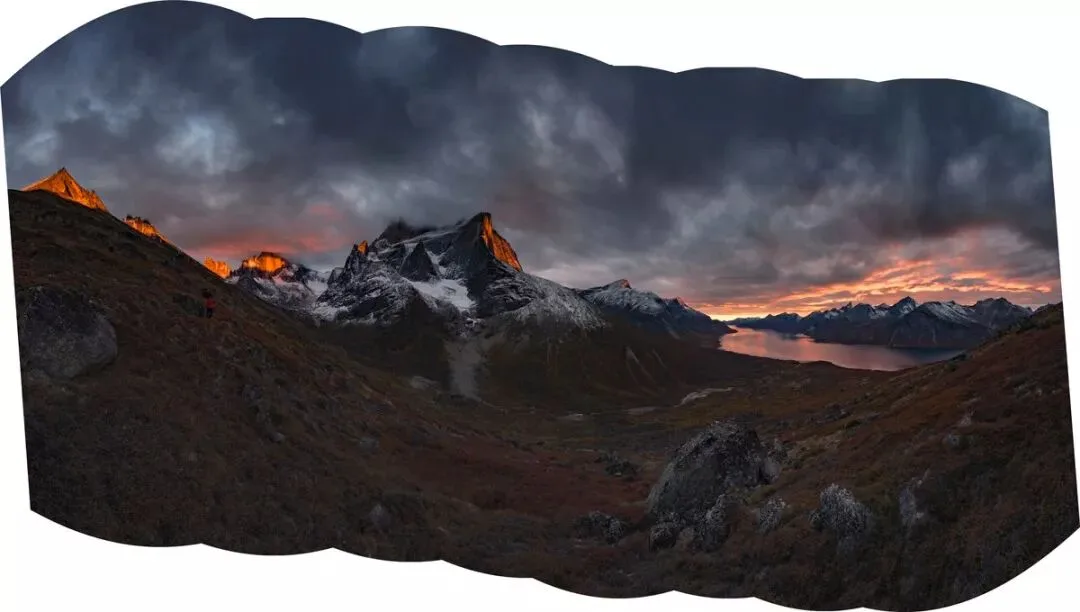
The stitched panorama had blank gaps around its edges; I used the method from the tutorial 'How to Losslessly Fix Distortion and Gaps in Panoramas', using warp and fill tools to handle the empty pixels.
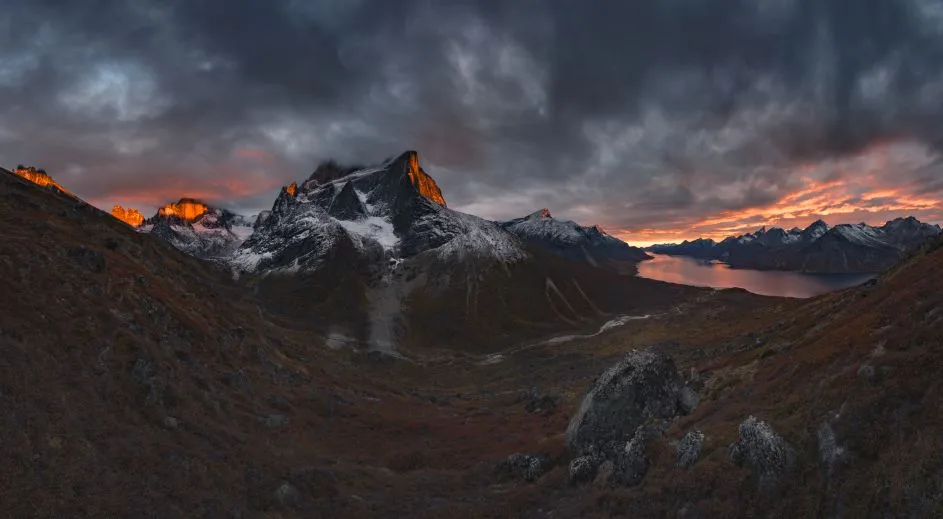
Next, I imported the previously shot human subject, cut it out, and merged it into the panorama.
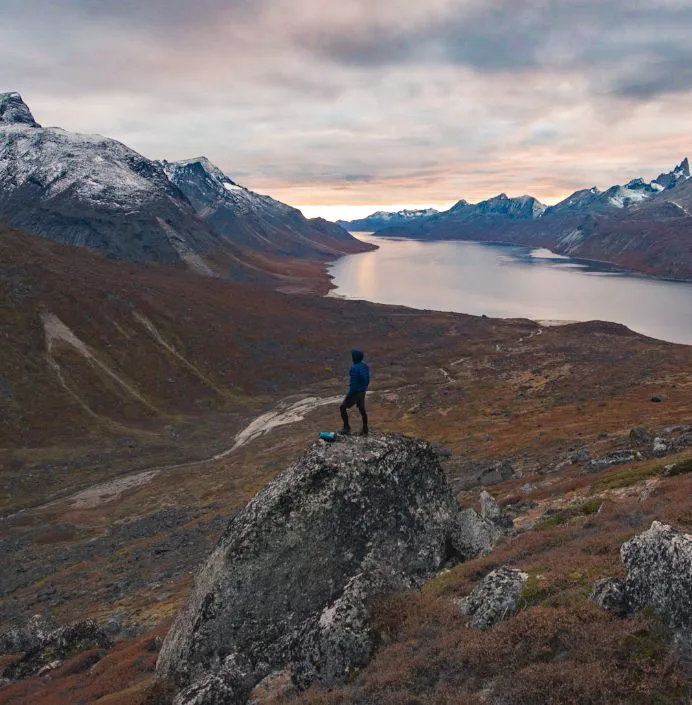
Because the person was shot from the same position at nearly the same time, the perspective, angle and lighting merged in naturally and easily.
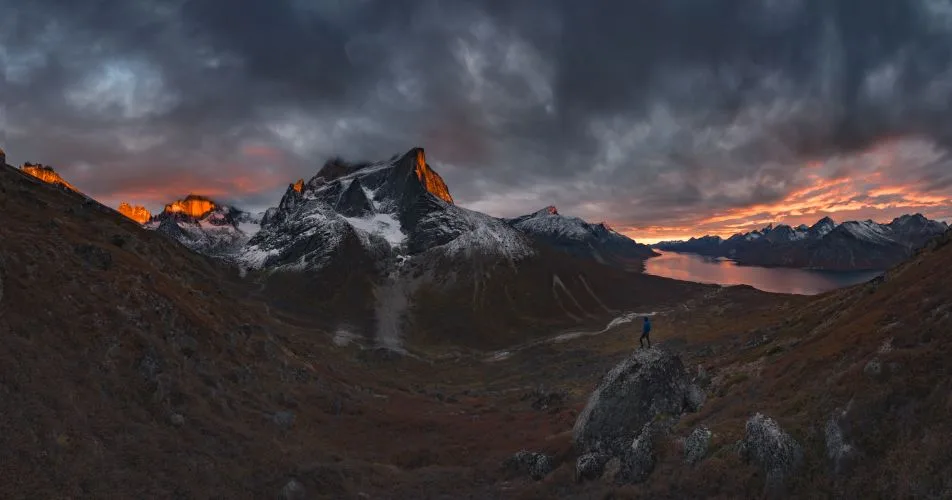
In the final image, I used the Hue/Saturation tool to change my blue down jacket to red, unifying and echoing the red sunset clouds.
There are many similar small details in a photo that the photographer must consider — beyond clothing color, the choice and matching of clothing also matters.
The photo below is another back-facing selfie of mine, and it didn't work well.
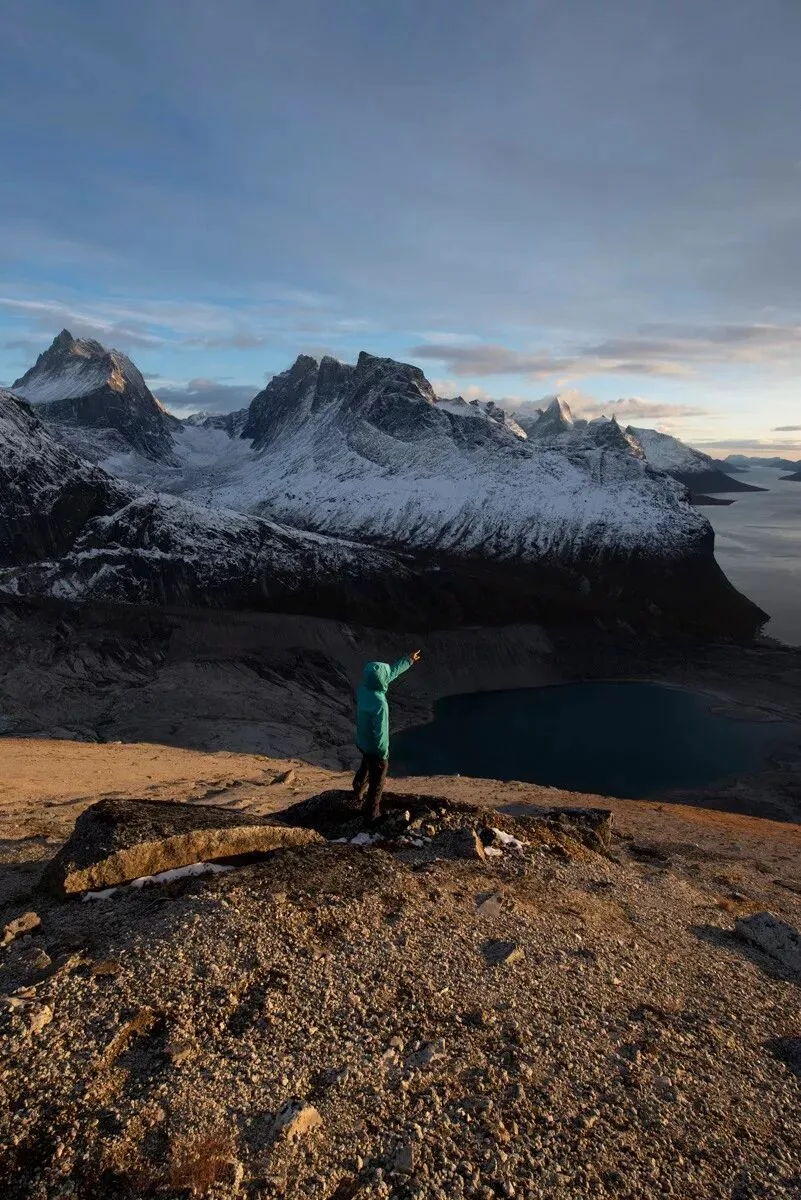
The reason: Western-cut hardshell jackets and pants are generally puffy and not very fitted, so the resulting lines and texture feel insufficient.
Later I studied many of Max Rive's selfies and found he often uses the odd combination of a down jacket with shorts.
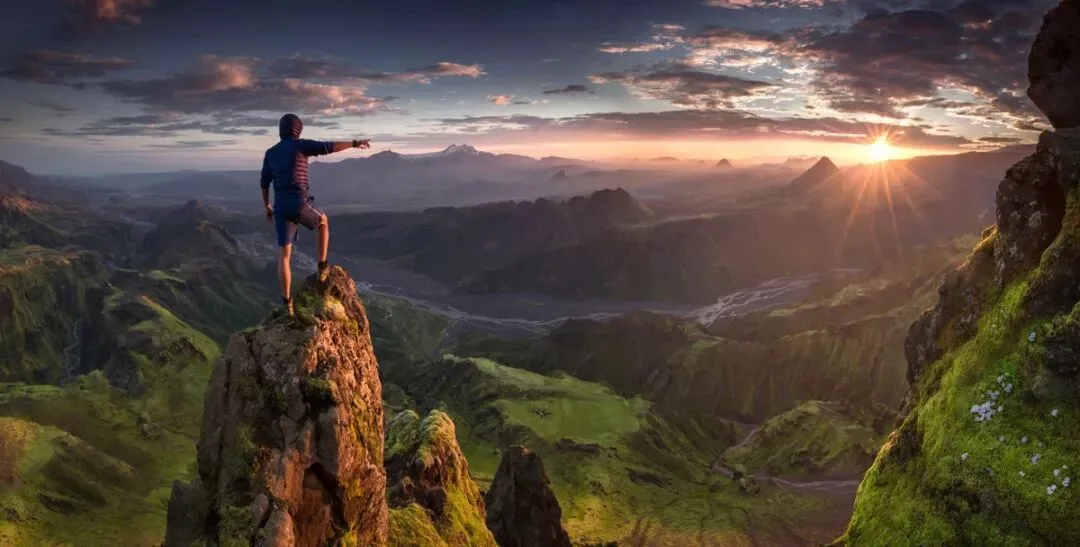
I experimented repeatedly myself, and it really worked well. My conclusion: the down jacket's surface has segmented bulges that photograph with great texture, far better than a smooth hardshell.
And shorts preserve the leg lines, showing more strength and matching the grand natural scene better.
So even though the Arctic temperature was around 0°C, I insisted on shooting in the odd combo of shorts and a down jacket.
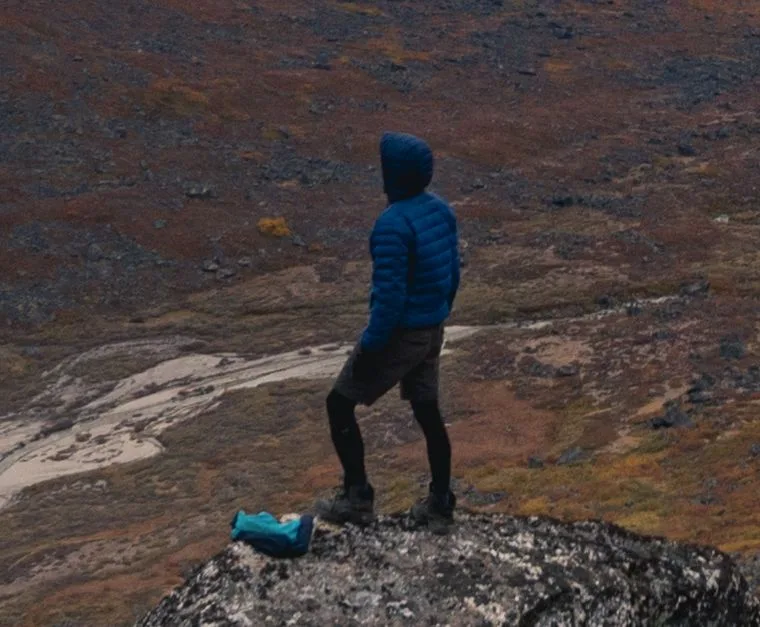
These are all tiny details. But it is the accumulation of small details that determines a photo's final visual expressiveness.
Behind every great landscape photo lie objective factors of timing and place, as well as the photographer's relentless exploration and ultimate pursuit.

Follow @Thomas Chu Photo —
learn one photography skill every week.
Yesterday, when Thomas ran a poll on Weibo, the plan was to share the full workflow of 3 photos — who knew one photo alone would take this much writing~~~
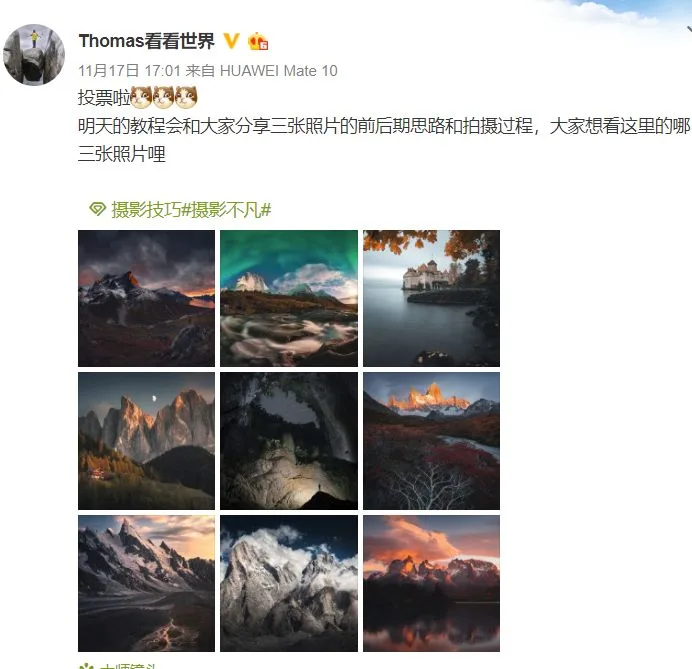
Which photos' shooting ideas and process would you like to see next? Follow my Weibo @Thomas Chu Photo and leave a comment to discuss!