Photography Tutorial · 2024-07-28
15 Years of Photography - Sharing the Stories Behind My 10 Favorite Photos!
In today's photography sharing, Thomas will share with everyone my 10 favorite photos from 15 years of photography.
Along with the shooting stories and behind-the-scenes moments behind these photos, as well as the overall trajectory of my photography creation.
Video
▶ Watch the video tutorial on Bilibili
This is the illustrated companion to the video above. Counting from when Thomas fell in love with photography in 2010, 15 years have passed. In this video he picks the 10 favorite photos of his career, tells the stories behind them, and traces his whole creative arc — from emulating foreign masters, to turning his lens on China, to expressing ideas through long-running series.
The video has no outline card, so this milestone serves as the overview: the award email from the 2019 National Geographic Travel Photo Contest grand prize, won by the third photo below. The stories unfold in the order they appear in the video.

01 Beginnings: From Emulating Max Rive to a Greenland Fairy Tale
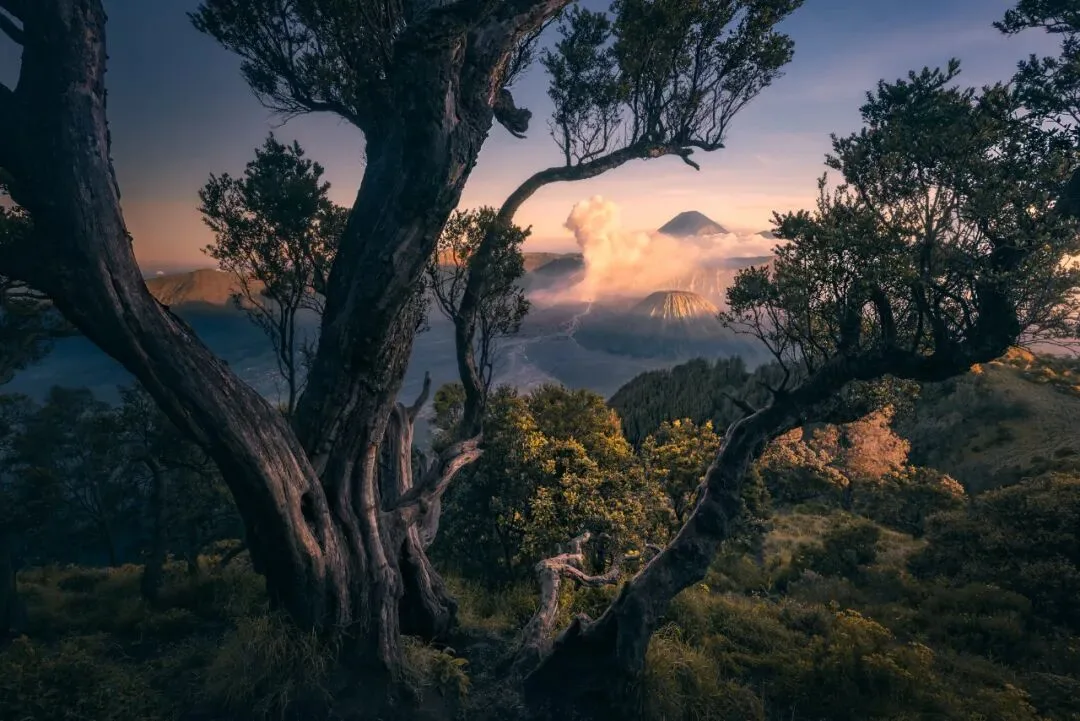
The first photo was made in 2017, just after Thomas quit his job to become a full-time photographer; it later served as the cover of his book 'Fundamentals of Landscape Post-Processing' (at 0:27 in the video). It came directly from one of his learning methods: deeply studying and imitating excellent foreign photographers — and his chief model back then was the Dutch landscape photographer Max Rive (at 0:42).
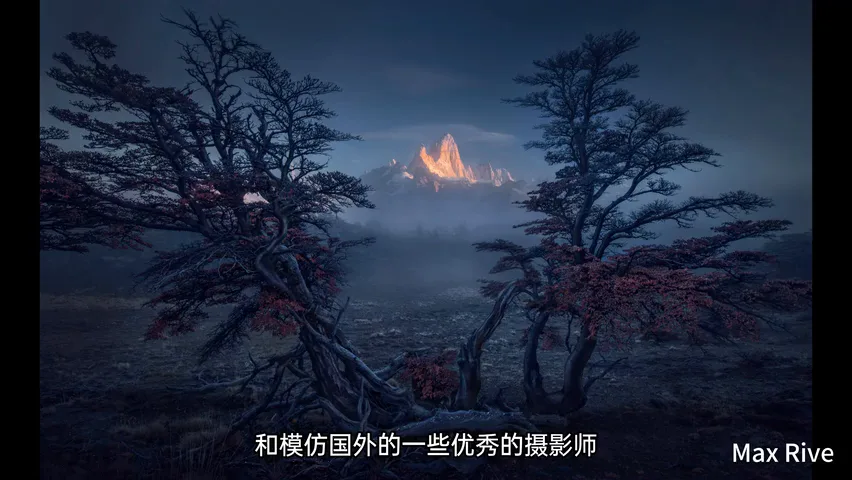
From one of Max Rive's classics, Thomas realized for the first time that a tree could work as a superb foreground. He borrowed that compositional idea: the tree stands barely a dozen meters below the public viewing platform — very few people had thought to use it as a foreground before (at 0:54). Imitation is not copying; it is learning to see again through someone else's eyes.
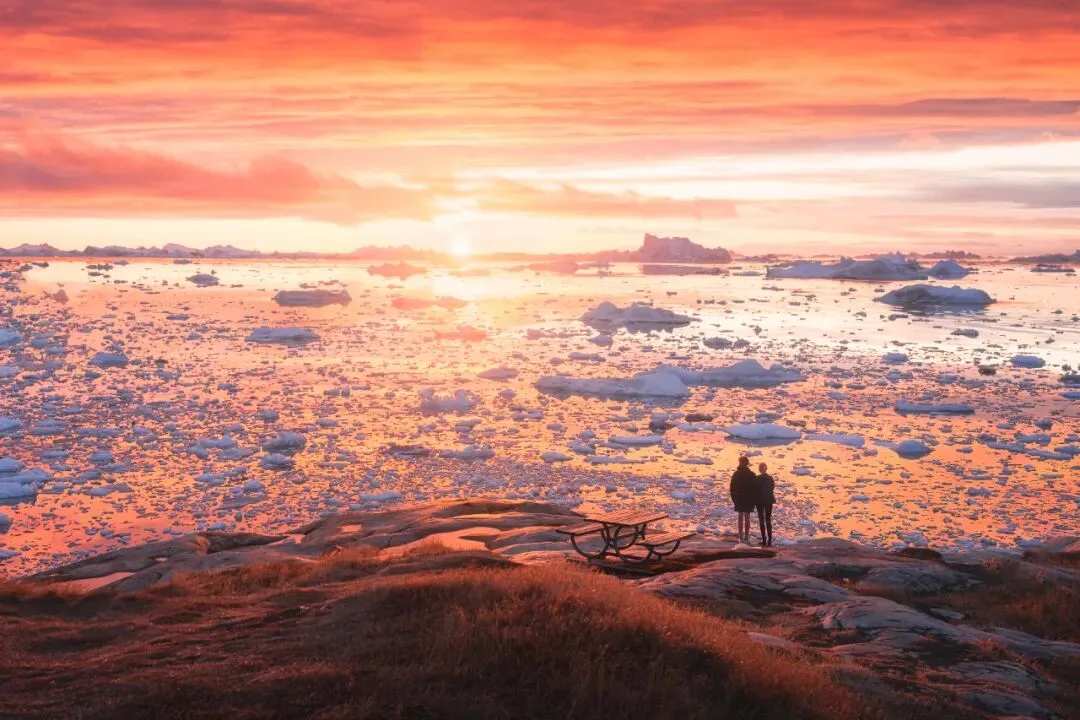
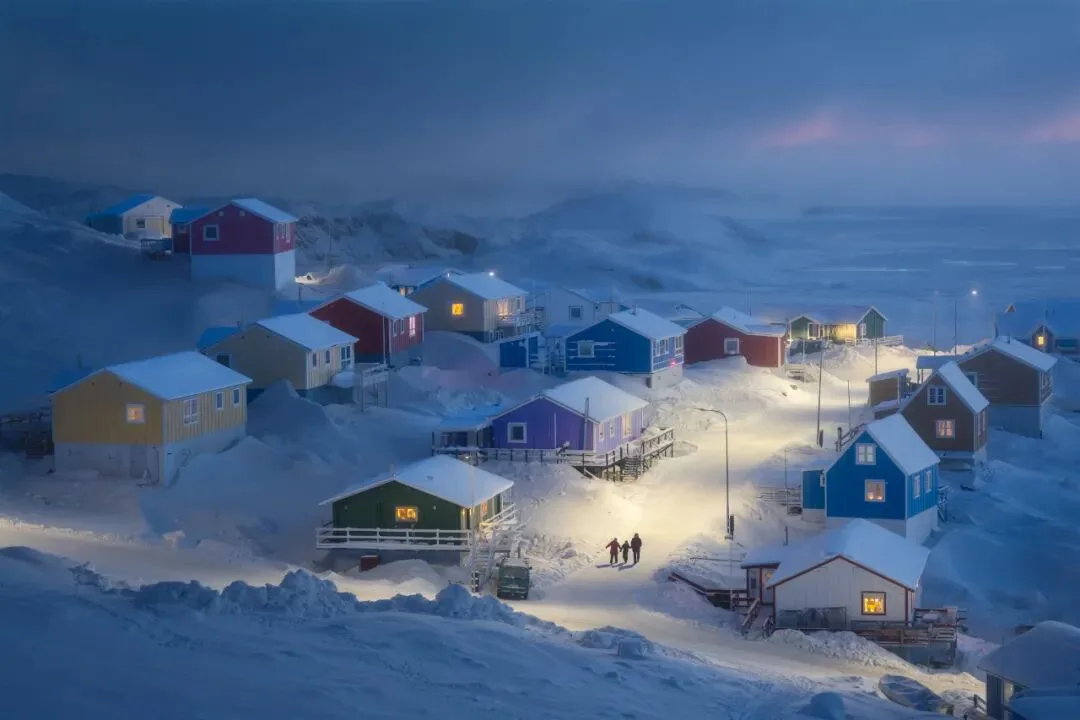
The second photo is the Greenland sunset Thomas calls the most spectacular he has witnessed in 15 years of photography. A storm had just passed, and the wind had shoved dense packs of sea ice from the surrounding waters right up beside the town; the ice then blocked the swell from the open sea, leaving the water mirror-flat — an almost surreal state (at 1:40). By luck, a seam had opened in the distant sky just as the rain stopped — and he knew that when the sun dropped into that gap, a magnificent sunset was guaranteed.
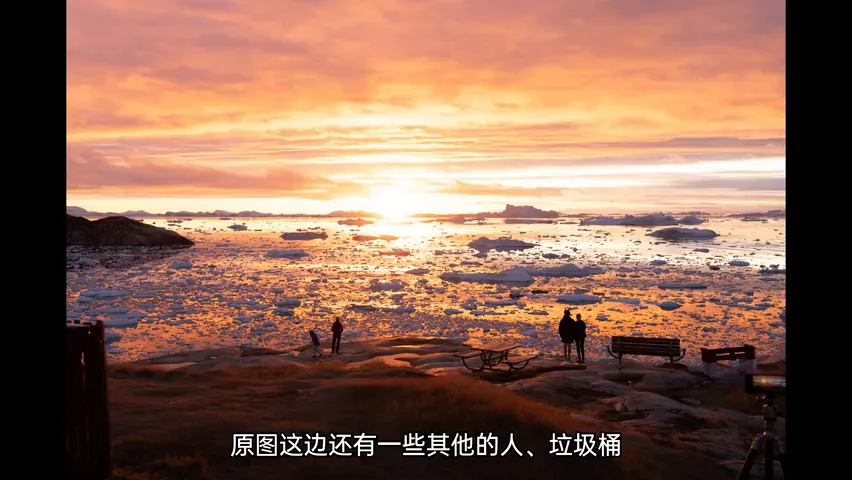
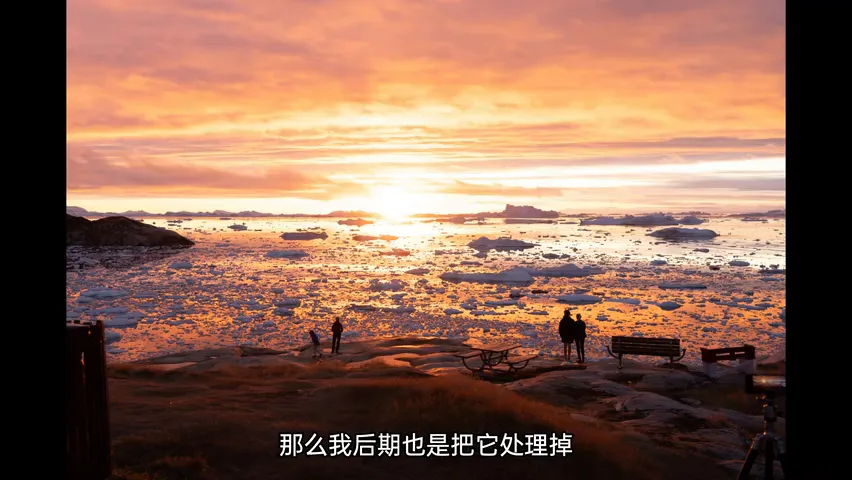
The before-and-after comparison appears at 2:26 in the video: the raw file leans orange, closer to what the eye saw; in post he pushed it toward a fairy-tale red and removed other visitors and a trash bin, keeping the frame clean and dreamlike, true to the mood of the moment.
02 Award Moment: Two Versions of One Photograph
The third photo won the grand prize of the 2019 National Geographic Travel Photo Contest (at 2:50), a huge boost to Thomas's recognition — but the deeper gift was the insight: weaving documentary elements into landscape. From then on, more and more of his frames blend reportage into scenery, gaining a sense of era and story, plus an unrepeatable rarity.
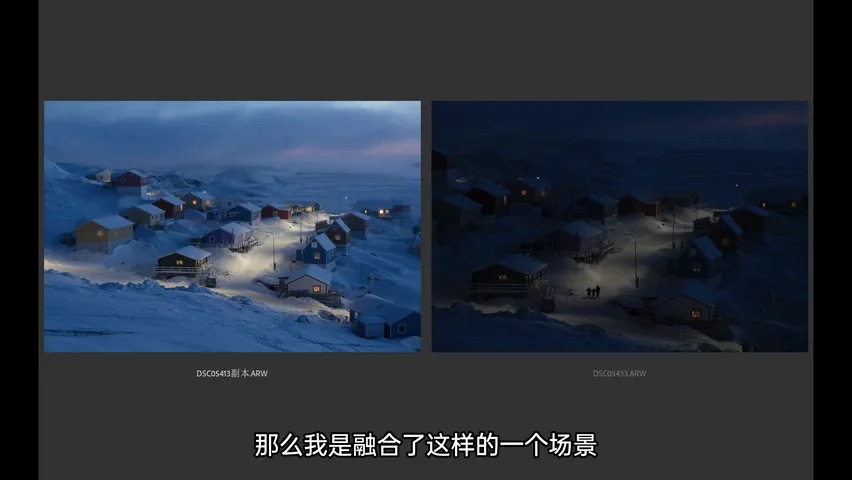
The amusing part: the version that actually won is the one on the left — a grabbed shot at ISO 3200, f/4, 1/40 s, with rather poor image quality (at 3:27). The version he posts on social media, on the right, is a time blend: a dreamy 5-second long-exposure background at f/8, ISO 200, fused with the person captured in the moment (at 3:39). Each version has its job — one for the jury, one for the audience.
03 Fitz Roy: Alpenglow Meets the Milky Way
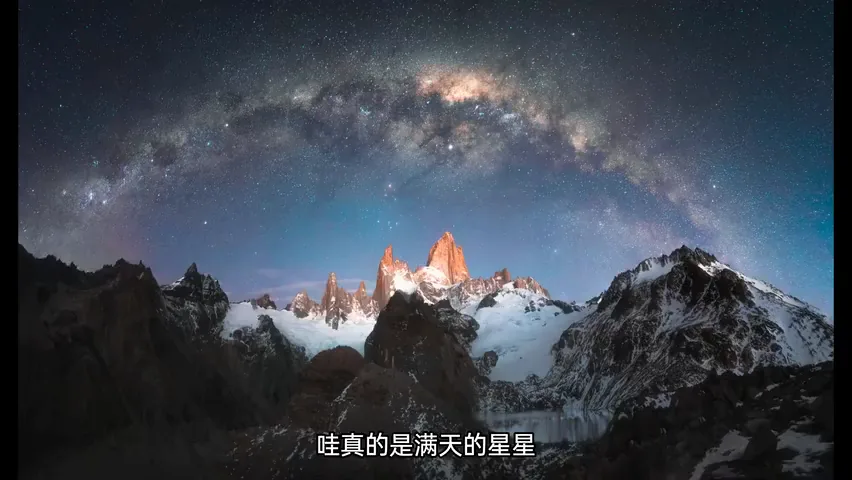
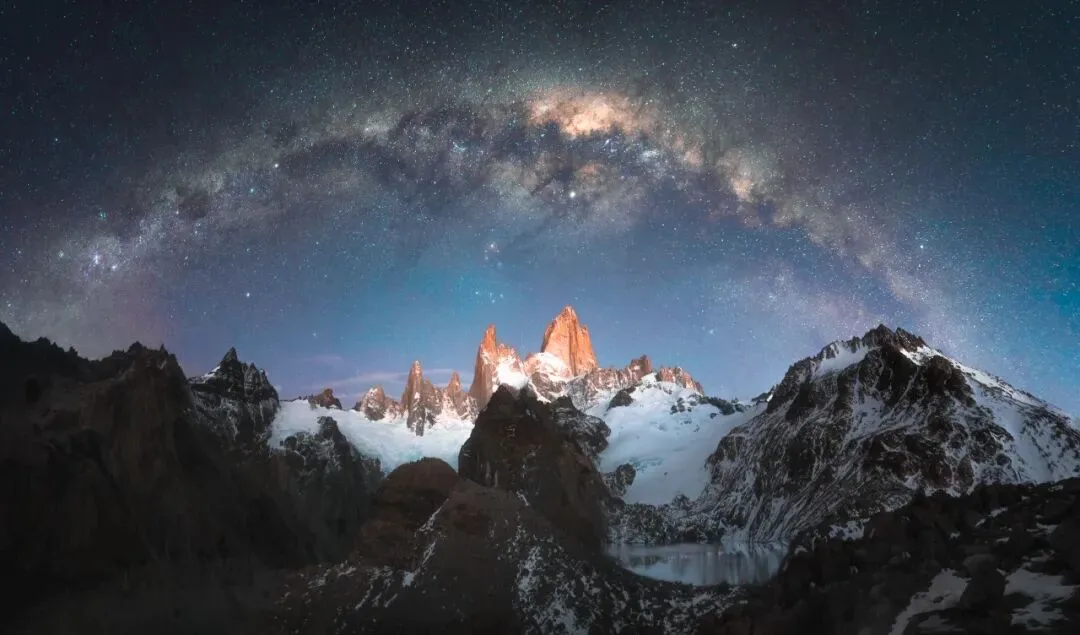
The fourth photo went viral online — it looks a bit like a Disney castle, but it is Mount Fitz Roy in South America (at 4:06). That day they started climbing at 4 a.m., and from a high vantage point the full panorama of the massif opened up: under a sky full of stars, he saw alpenglow and the Milky Way in the same frame for the first time in his life (at 4:12).
What makes this mountain special is that it rises from endless plains. While the sun was still below the horizon, refracted light had already tinted the snow peaks a faint orange as the Milky Way arched overhead — two fleeting elements framed together, producing a nearly unrepeatable photograph (at 4:37).
04 Back to China: Rainy Nights, an Egret and the Peach Blossom Train
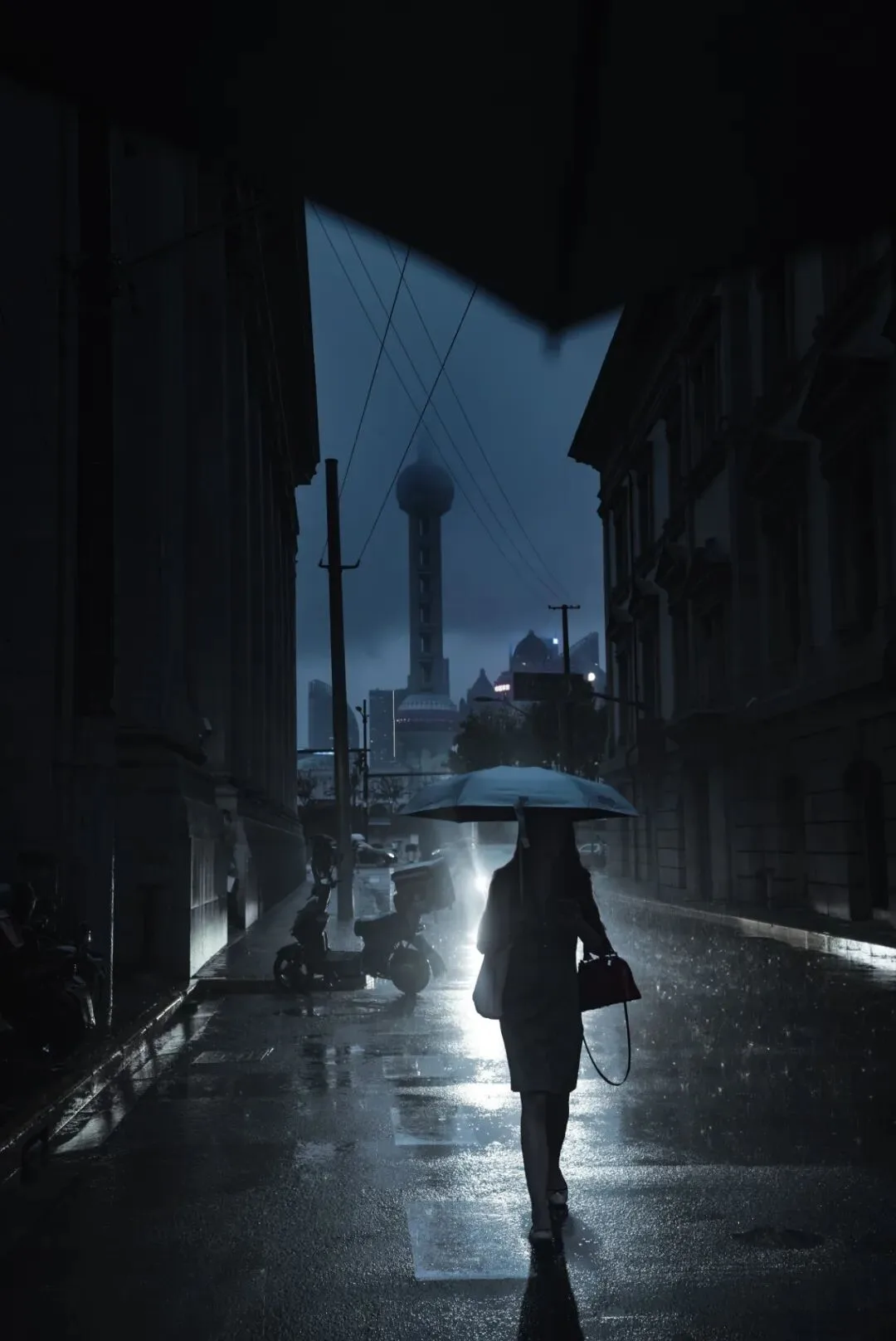
The fifth photo finally returns to China. In Shanghai, Thomas skipped the usual weather and adopted the rainy-day style then popular in Western photography: an umbrella-holding pedestrian completes the frame, and backlit car lights scatter brilliant droplets in the rain (at 5:24); he then waited for a fashionably dressed woman walking while staring at her phone, with a Meituan bike and the Oriental Pearl Tower behind — the tangled structure of a fast-paced city, folded into one frame by a time blend (at 5:54).
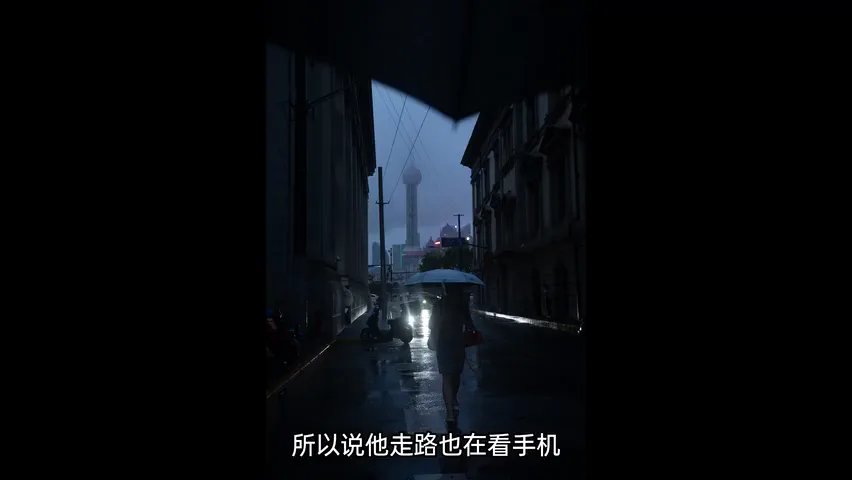
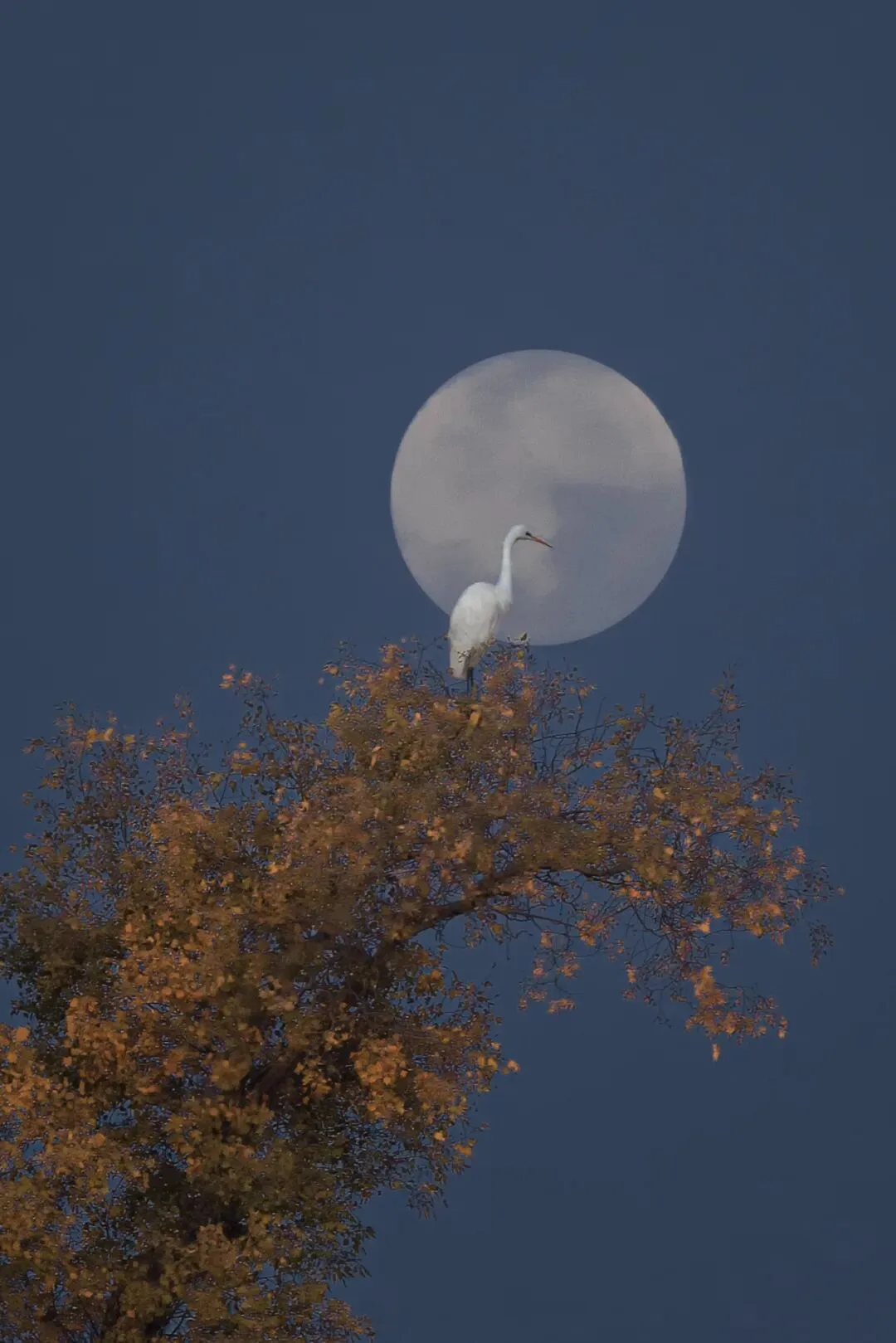
Making his own picture of the Bund — a place everyone has photographed — gave Thomas a huge boost in confidence (at 6:14). The sixth image, 'Egret in Moonlight', was an entirely unplanned encounter: shooting water-bound poplars with photographer Yao Minglai in Shaya's desert-poplar forest in Xinjiang, he spotted an egret perched on a distant tree; after adjusting his angle left and right, the moon landed right behind the bird (at 6:47).
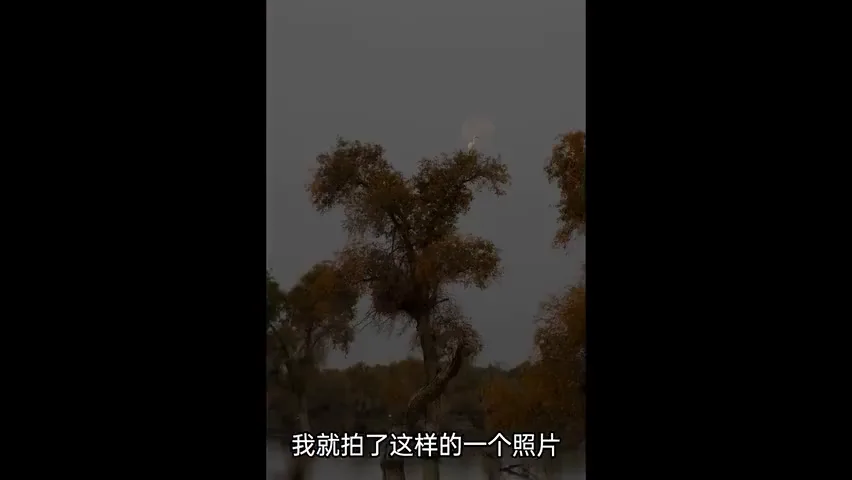
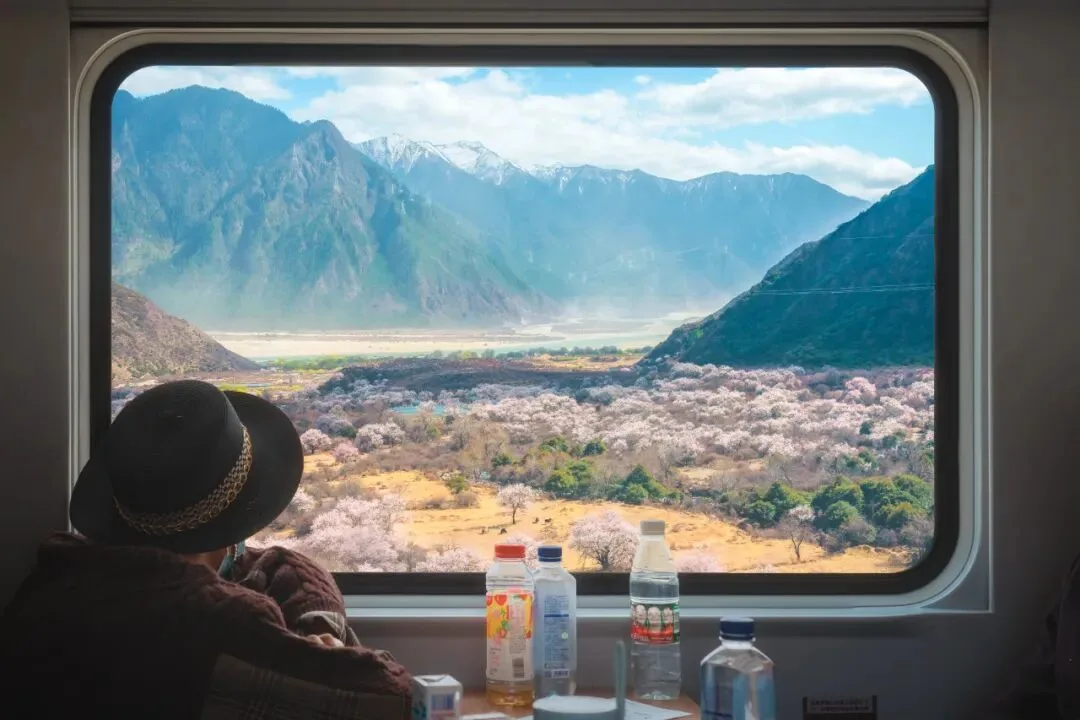
At 200 mm the reach was already maxed out and the egret sat small in the frame; fortunately the high-resolution body survived the crop with quality intact (at 6:55). The seventh image comes from the 'Seeing China from Trains' series — one of the three submissions that won the Landscape category at the 2023 Hasselblad Masters (at 7:09).
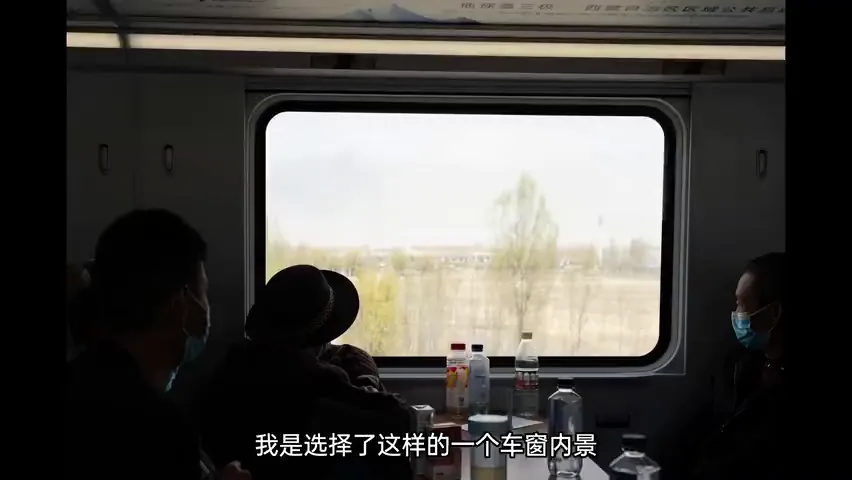
Part of the inspiration came from Wang Fuchun's classic 'Chinese on the Train': fusing documentary elements with the scenery beyond the window, inside and outside framing the development of an era together (at 7:28). When the Lhasa–Nyingchi railway opened in June 2021, he remembered that Nyingchi is famous for peach blossoms and asked: could he ride a train to see the blossoms? So he rode the line a dozen times in a dozen-odd days, until he found a dozen-second gap between two tunnels — peach groves, pastures, a village, the Yarlung Tsangpo River, a line of snow peaks and eastern Tibet's power lines flashing past the glass. The window frame was shot at ISO 200, f/6.3, 1/1000 s (at 8:33).
05 Series Take Shape: Faint Light, Sandstorm and New Pagodas
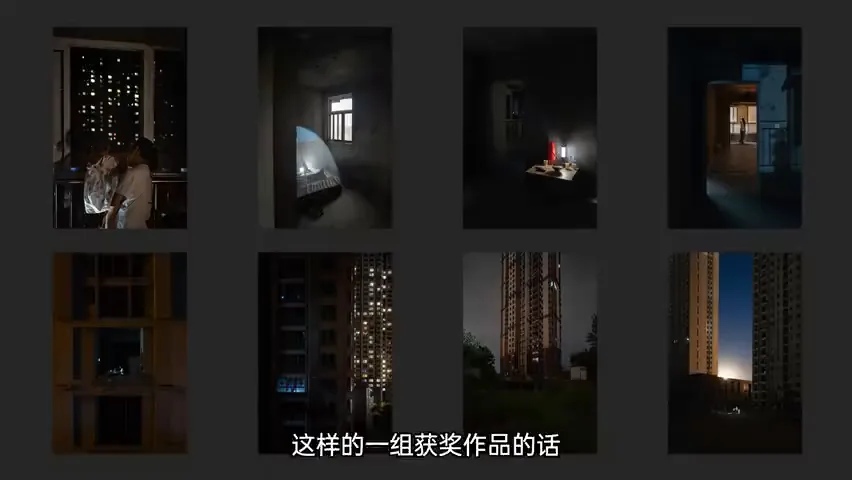
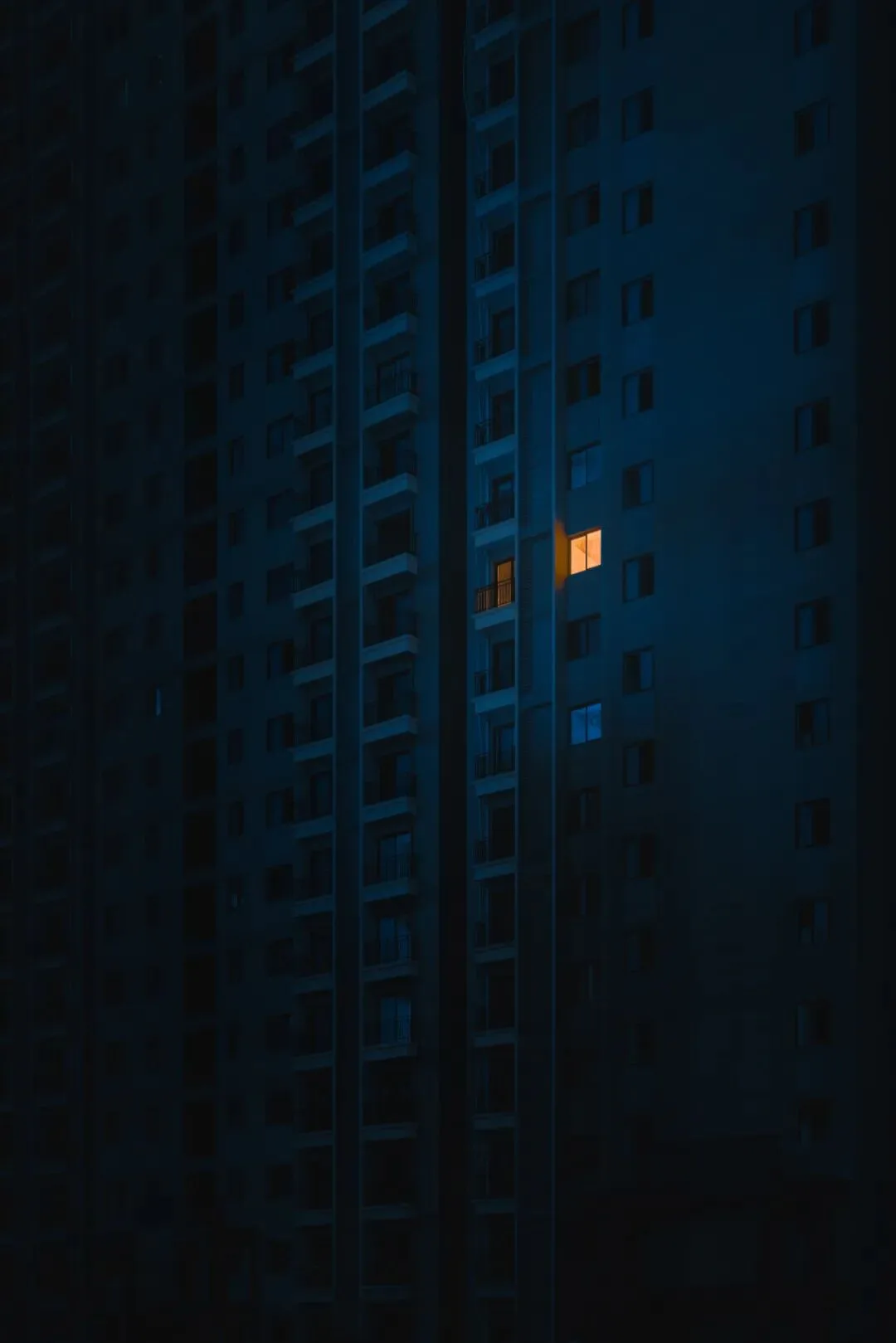
The 'Faint Light' series splits in two: the art-leaning set is tightly unified — colossal concrete masses in near-black, pierced by windows glowing faint but warm; the version entered to World Press Photo leans documentary, portraying how people actually live behind those windows (at 9:43). Thomas himself prefers the art set: from raw file to final he applied heavy stylization of tone and color, and it was this set that resonated most widely on social media — the first time he felt photography could truly influence social progress (at 10:35).
The ninth photo was an accident of weather. Thomas took the distant darkness for an ordinary storm cloud and was flying his drone when the wind picked up and that black wall kept closing in — a closer look revealed a sandstorm bearing down on him (at 11:05). He rushed the drone to a handsome foreground just as a dune emerged, and grabbed the frame.

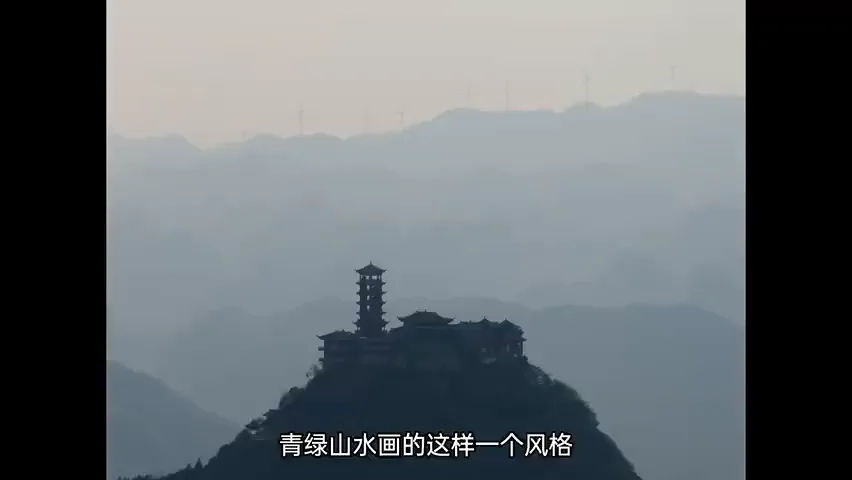
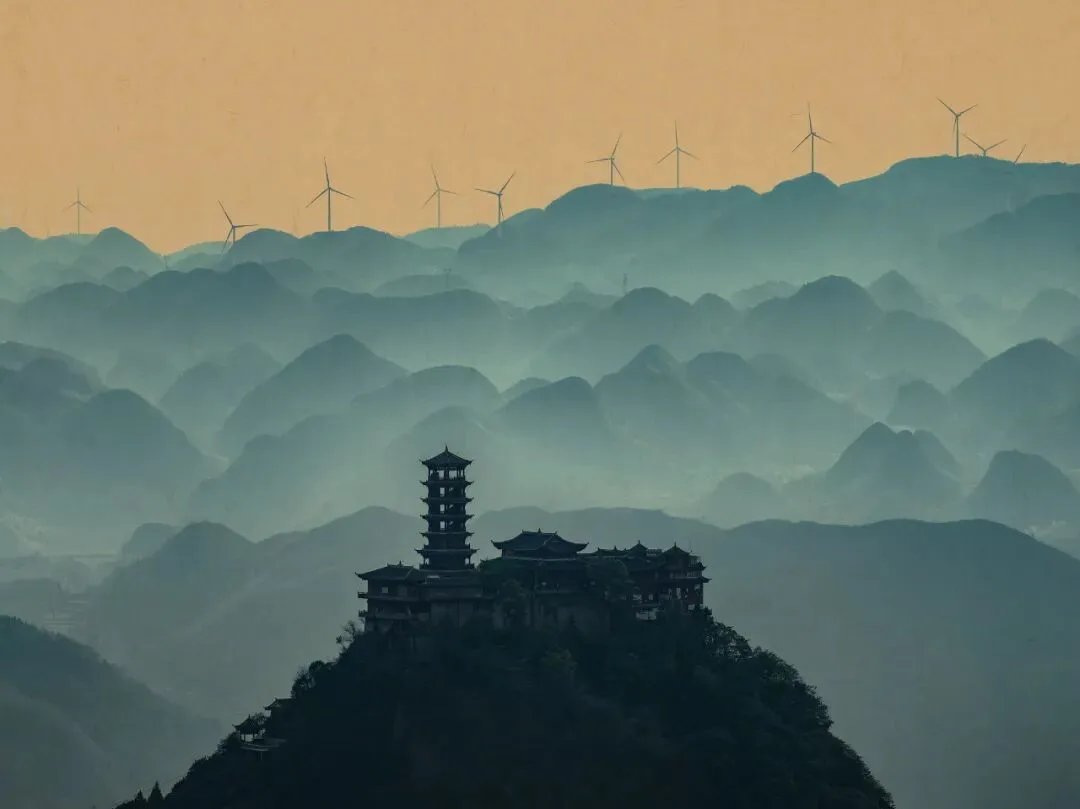
The last photo belongs to 'New Pagodas of China', the third series he launched this year, focusing on the new-energy industry — a key sector on humanity's path toward the future (at 11:35). Pagodas once symbolized civilization and faith; today they have become towers of energy, of materials, of 4G/5G information — still the load-bearing structure of a civilization. The finishing style deliberately echoes traditional Chinese blue-green landscape painting, because that tradition is itself an expression of the complex relationship between humans and nature (at 12:20).
1. Deep imitation is a powerful way in: deconstruct the composition and thinking of great work, then translate it into your own pictures in the field; 2. Great light demands both patience and a plan — the Greenland sunset, the Fitz Roy Milky Way and the closing sandstorm all began with arriving early and reacting fast; 3. One scene can hold several versions: the contest's candid original and the social media time blend each do their own job; 4. Use series to express ideas — Seeing China from Trains, Faint Light and New Pagodas of China move photography from recording to statement.
Full tutorial list:
Complete Photography Tutorial Index (updated 2024.4.16)
HD video:
https://www.bilibili.com/video/BV1vb421J7pH/

Scan the QR code above or click "Read the Original" at the end of the article