Photography Tutorial · 2021-12-26
Shooting Distinctive Landscapes at Popular Spots: Focal Length Matters
Thomas Chu Photo
Students often ask me how to take distinctive photos at popular destinations like Huangshan, Guilin or Dunhuang.
Today I'll share one on-location trick: make full use of unusual focal lengths!
Video Tutorial
▶ Watch the video tutorial on Bilibili
This is the illustrated companion to the video above. Readers often ask Thomas: at heavily visited spots like Huangshan, Dunhuang or the Badain Jaran Desert, is a distinctive photo even possible? This 6-minute tutorial offers a simple answer — use an unexpected focal length: telephoto where everyone shoots wide, ultra-wide or panoramas where everyone shoots tele. The article turns every case and tip from the video into text, paired with key-frame screenshots for easy reference.

01 Badain Jaran: Telephoto Where Everyone Goes Wide
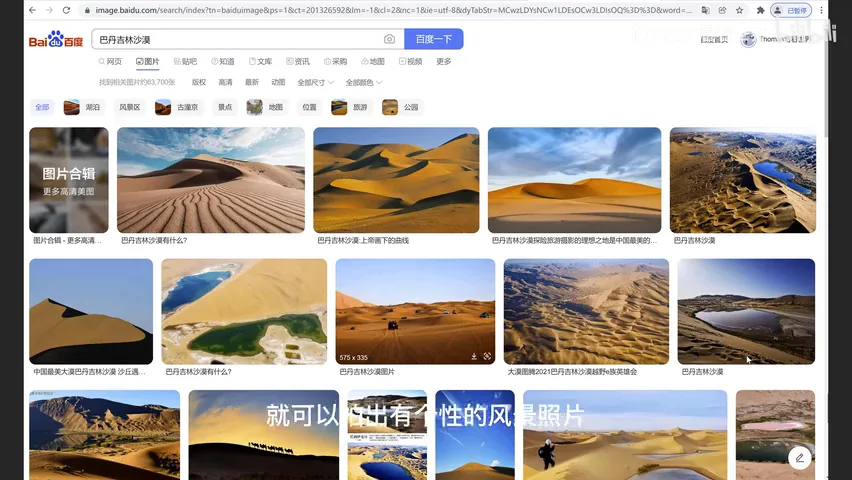
First, how universal the problem is: search the Badain Jaran Desert online and you mostly get deserts-and-lakes shots taken at 24mm, 35mm or 50mm. There are only a handful of pretty lakes and viewpoints, so everyone stands in the same spot with a wide angle and the photos all look alike (at 0:29 in the video). Thomas's move is the exact opposite: lean on a telephoto and hunt for desert details.
Take this frame: while the driver was moving, Thomas spotted a stretch of dunes with beautiful texture, so the group camped right there overnight — and he pitched his own tent inside the frame on purpose. Texture alone felt incomplete; the tent is the finishing touch (at 1:16 in the video).
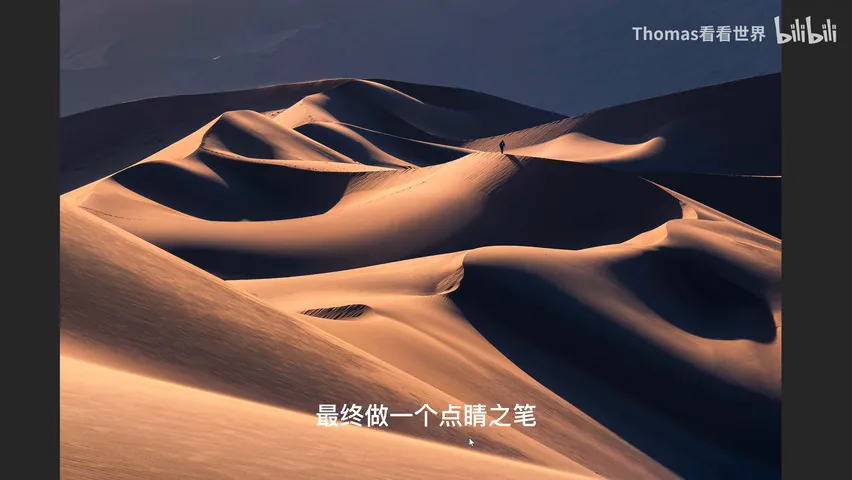
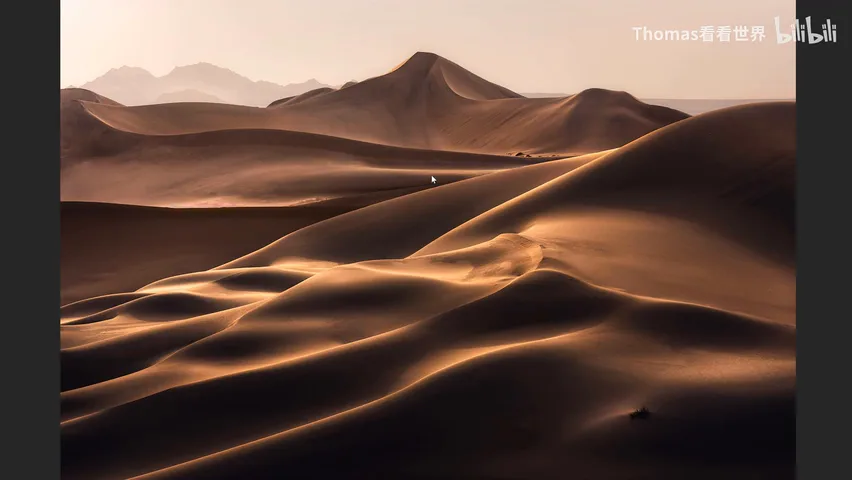
In the desert he and his friend split up to scout distinctive viewpoints — and splitting up has a bonus: you can wander into each other's frames and become each other's finishing touch. At 70-105mm he captured distant dunes layered in side and semi-back light, just as someone walked through, which makes the image feel singular (at 1:47 in the video).
02 Shooting at Noon: A Different Light Logic
Many assume the desert is unshootable at noon. It isn't — the logic simply changes. At dusk you rely on side and backlight for chiaroscuro on the dunes; at noon the dunes have almost no layered shadow, so you shoot for color, texture and a clean, minimal mood — the 70mm frame above was taken at midday (at 2:07 in the video).
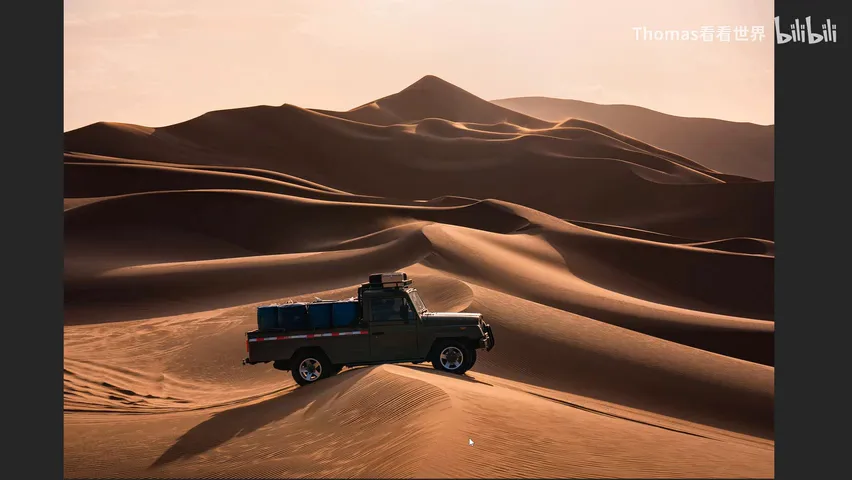
This "chocolate desert" was shot at 105mm. Thomas noticed the foreground ridge curving into an elegant line, with richly layered dunes behind. The secret to that silky chocolate texture is backlight — but not at sunset: shoot between three hours and one hour before sunset, while the sun is still fairly high. The backlight ignites the top of each ridge into a highlight while the shaded faces fall into shadow, and the interplay renders the sand silky. As a bonus, a tour vehicle happened to drive through — a genuinely unique moment (at 2:59 in the video).
03 The Opposite of the Opposite: Panoramas and Dunhuang Telephoto
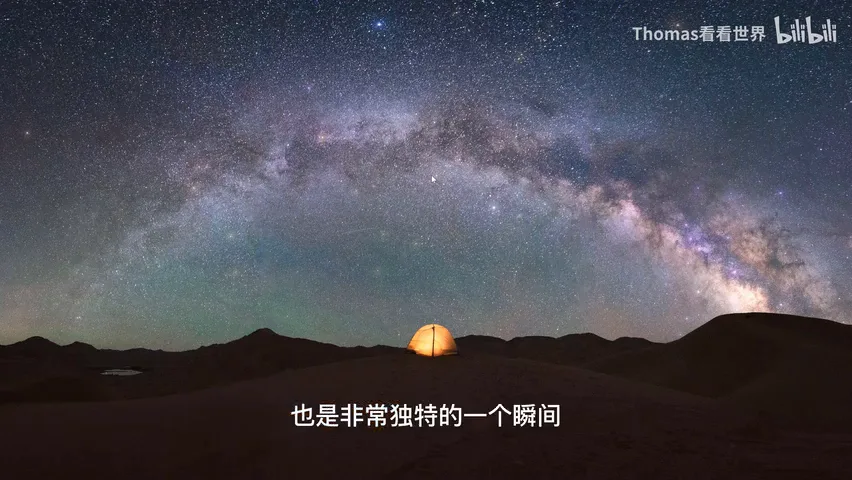
And if everyone is already shooting telephoto? Push the contrarian move further — stitch a panorama, going wider than wide. In the frame below the desert is merely a supporting player; the tent and the Milky Way are the protagonists (at 3:26 in the video). A special focal length is never the fixed answer — "different from the crowd" is.
The same thinking holds in the Dunhuang dunes: compress the dunes' layering with a telephoto and wait for a shrub to enter the frame (at 3:44 in the video); snap a walker on a ridge; or shoot pure sand texture and ripple patterns. The three photos that follow in the video were all taken at Dunhuang — same method, and a crowded landmark still yields distinctive images (at 3:58 in the video).
04 Laigu Glacier: Going Ultra-Wide Inside the Ice
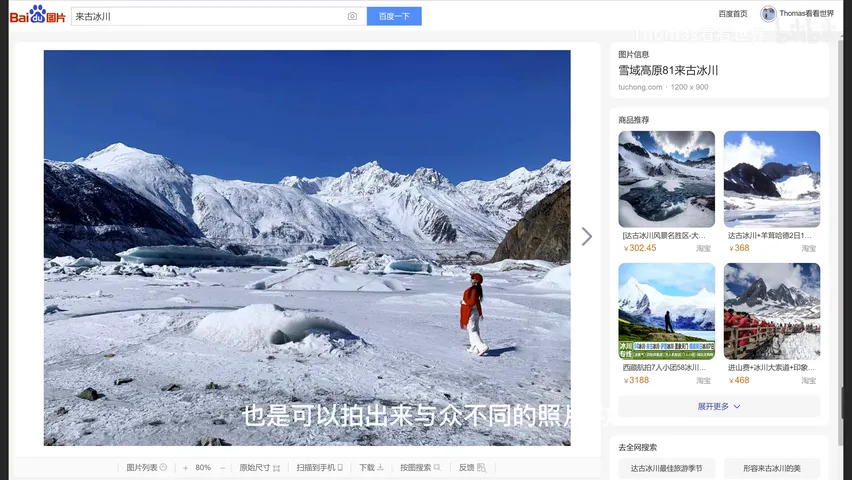
The second case is Laigu Glacier in Tibet. After the frozen lake thaws each winter, plenty of visitors come for the checklist photo — shot normally it looks just like the search results: neither stunning nor special (at 4:09 in the video). Thomas's weapon of choice here switched to the ultra-wide.
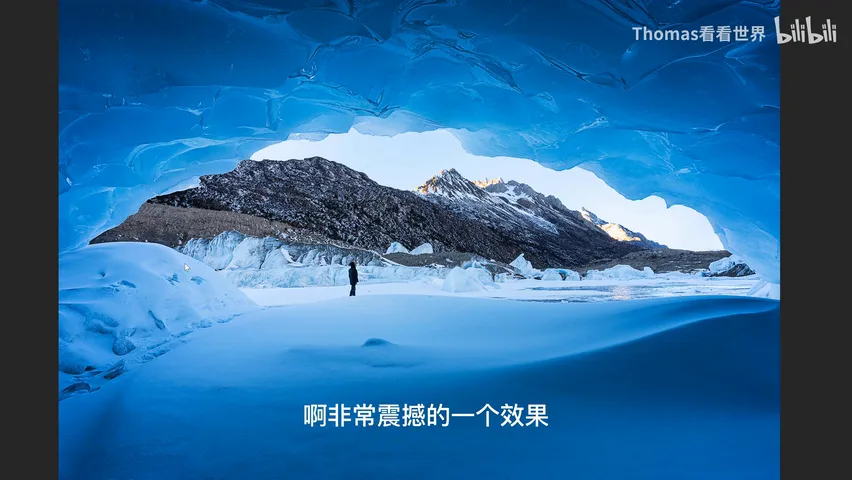
Wherever the ice formed shadowed hollows, he climbed into ice-cave-like spaces and used the ultra-wide to take in the full cave and its crevices — the result is genuinely jaw-dropping (at 4:40 in the video). The ultra-wide's exaggerated perspective amplifies the wrapping feel of the ice walls to the extreme: a vantage you simply cannot get from outside with a normal focal length.
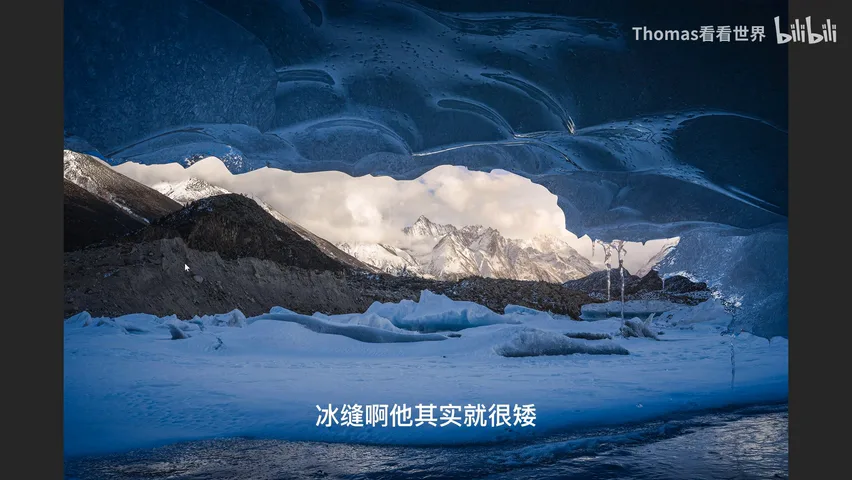
This ice crevice is barely half a person tall — he crawled in flat on the ground, then used the ultra-wide to include a foreground and build an unusual composition (at 4:52 in the video). The effort of the viewpoint buys scarcity of perspective — the most valuable currency in a crowded landmark.
05 Huangshan: Drop the Camera to the Ground
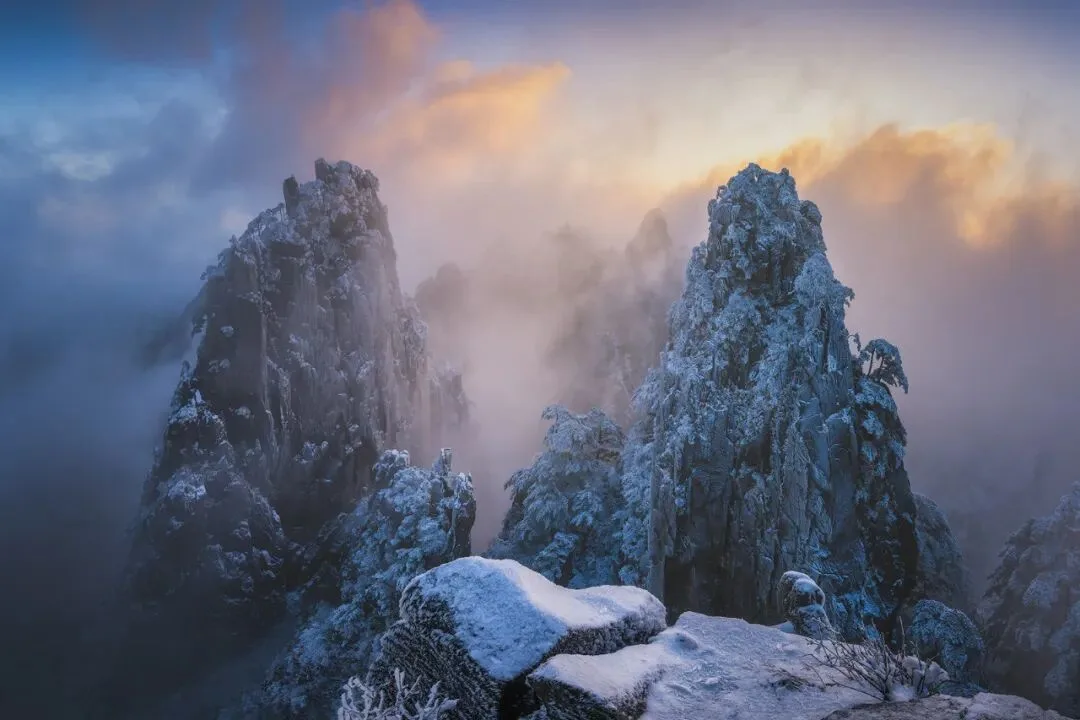
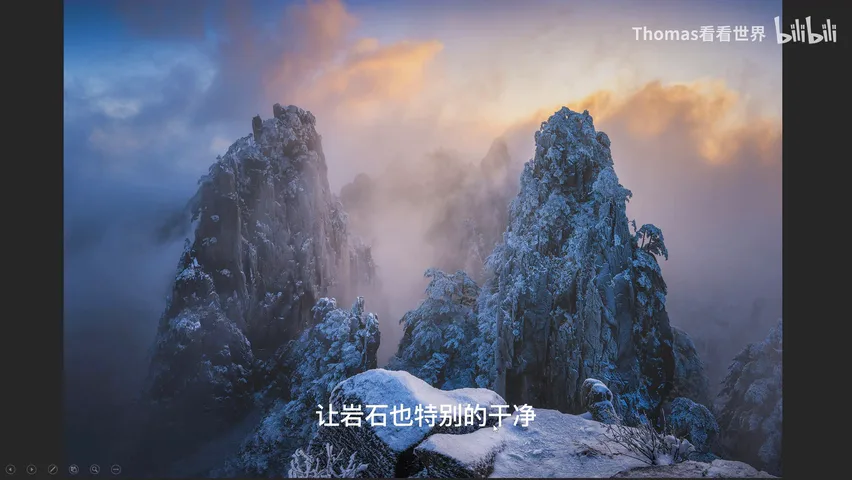
Online photos of Huangshan are dominated by telephoto and normal focal lengths, so Thomas again swam upstream: ultra-wide, with aggressively exaggerated foregrounds. At the famous Shixin Peak viewing platform he set the camera extremely low and pulled the foreground rock into the frame — fresh snow had scrubbed it spotless — letting the wide-angle perspective deliver the impact (at 5:24 in the video).
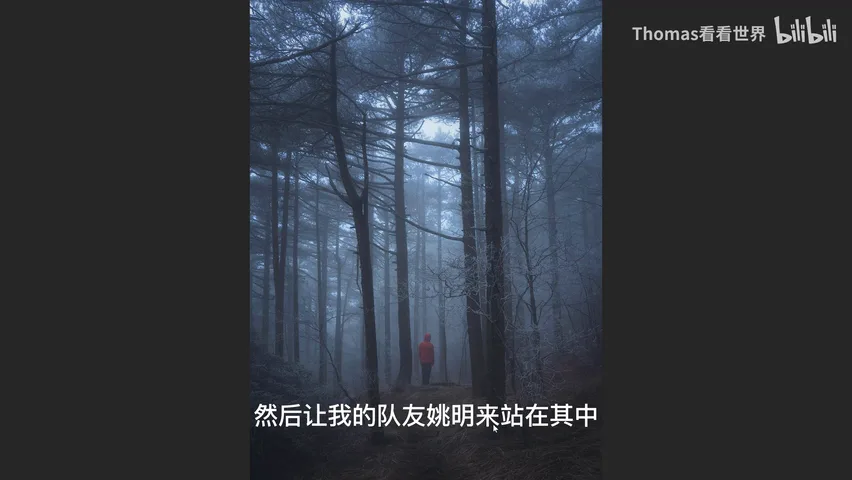
Conversely, in an utterly ordinary patch of woods on Huangshan he switched to a telephoto and had a teammate stand among the trunks, producing a forest image full of mood (at 5:47 in the video). One mountain, two opposite focal-length strategies, one principle: perspective is what makes a photo personal.
1. The core of a distinctive photo at a crowded spot is contrarianism: telephoto where the crowd goes wide; wide, ultra-wide or stitched panoramas where the crowd goes long. 2. In the desert, telephoto grabs texture, layered dunes and passersby — shoot texture and color at noon, light and shadow at dusk; the lighting logic must change with the hour. 3. The silky chocolate-dune look comes from low-angle front backlight one to three hours before sunset, with the sun still fairly high. 4. Ultra-wide demands extreme positions — into ice caves, crawling through half-person-height crevices, camera dropped to the snow before a rock — trading effort of viewpoint for scarcity of perspective.