Photography Tutorial · 2019-03-10
Landscape Photography Requires Following Your Heart - Thomas in Conversation with Photographer Yunman (云漫)
Thomas Chu Photo
A few days ago, organized by Duoye and Jack Rabbit of the Xingcan Studio (星粱工作室), Thomas had a conversation with the renowned Chinese landscape photographer Yunman (云漫). The topics covered their respective experiences, diverse styles, and the influence of equipment, technique, and experience on photography.
The following is an edited transcript of the conversation. Thanks to the editors at Xingcan Studio (星粱工作室) for their work.
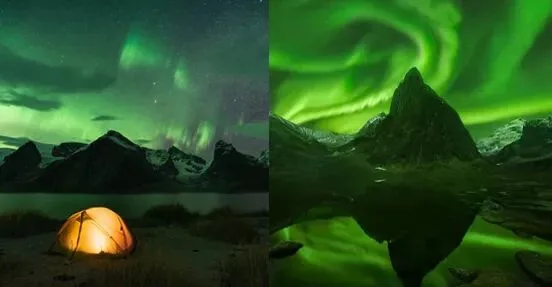
iCanStudio, "The Xingcan Dialogue" (《星粱对话》)
Wang Anshi once said: "The world's most majestic, marvelous and extraordinary sights often lie in perilous and distant places rarely reached by man, so only those of strong will can reach them."
Landscape photographers are truly people of strong will. They brave the elements, camp out in the wilderness and travel wearily, never forgetting their original aspirations. Overcoming all harsh and difficult natural conditions, they tirelessly explore the magnificent and beautiful scenery of nature.
In this episode of "The Xingcan Dialogue" (《星粱对话》), we are honored to invite two outstanding landscape photographers: Yunman (Hu Yiming) (云漫(胡亦鸣)) and Thomas. Through their professional discussion on photography, we hope to bring a more international and comprehensive perspective to photography enthusiasts and professional photographers alike, helping everyone think more deeply and find a photography philosophy that suits them.


1
Photography Journey
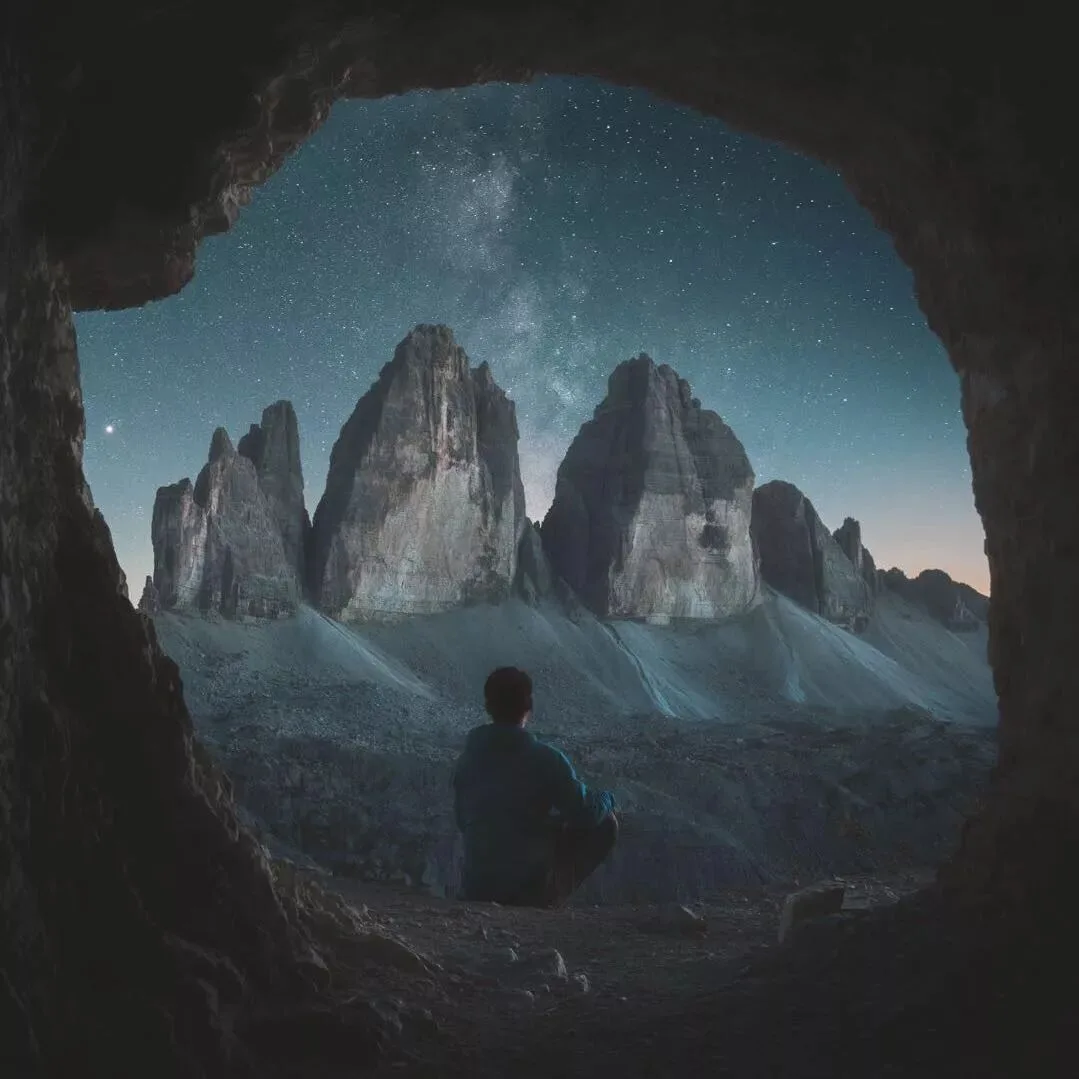
Host: Jack Rabbit
Had the two of you known each other before? How did you two happen to meet?
Thomas and I had never met in person — you could call it a spiritual friendship. I started following him on Tuchong (图虫) very early on, and we often interacted on WeChat Moments. Some of my editor friends at publishing houses would often mention and recommend him to me.
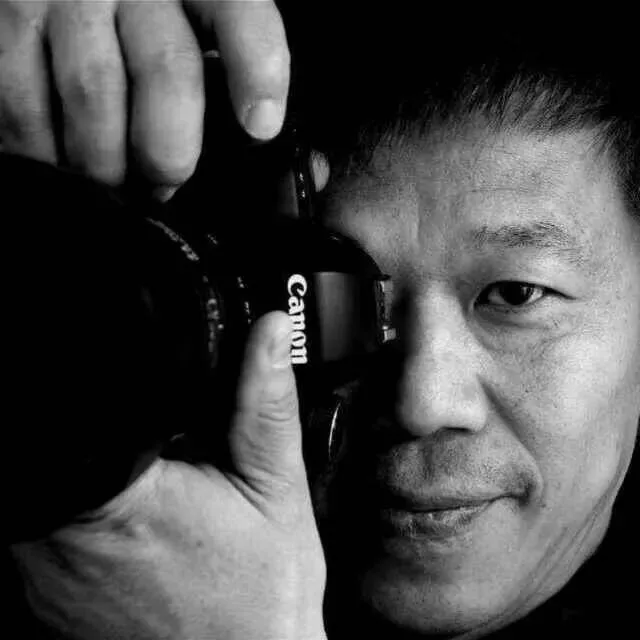
Yunman (云漫)
Thomas
I also started following Teacher Hu a long time ago. Back then I saw his posts about the American West and landscape techniques on Xitek (摄影无忌), and I frequently saw his work on Tuchong (图虫) as well.
So I'm really delighted to have this exchange with Teacher Hu about landscape photography today. Of course, I also want to thank Duoye and Jack Rabbit for organizing it.
Apart from landscape photography, Teacher Hu, did you ever try other genres of photography before — like portraits or documentary work?
Like most people, at first I liked everything. I tried portraits, street photography, landscapes, urban snapshots, and even city travel photography. Actually, like many people, I shot a lot of travel photos in the beginning. For a while, some travel magazines even commissioned me to shoot European city travel, American city travel, and so on.
But later I gradually discovered that my personal interest really wasn't in those areas. As I delved deeper into photography, I found myself increasingly drawn to pure nature. So I think taking the path of landscape photography was a natural inevitability for me.
Yunman (云漫)
Thomas
Teacher Hu, you've loved photography since college, which is already a very long time. During this long journey in photography, did you ever hit a plateau? And if so, how did you overcome it and improve yourself during that period?
Although I started photography in college, I never studied it in depth. I think no matter how long that period lasts, it's useless — whether for 10 years or 20, I'd always remain at a low level.
As for when I seriously began, it was about a decade-plus ago. By then my job was stable, I'd earned my university tenure, and I'd bought my first digital SLR. That's when I started getting deeply into photography. Looking back, it's been over ten years now.
Looking back at my journey now, I've grown quite a lot. There were indeed times when I hit plateaus. At first it felt so hard, and then gradually I'd feel pretty good about myself. But later, when you calm down and reflect, you do encounter a plateau where it feels very hard to keep growing.
Yunman (云漫)
I find that communicating regularly with some of the best photographers today — like America's Marc Adams and my good friend Jeff — and exchanging a lot of photographic ideas with them, has been very helpful to me. I reflect on whether the path I'm on should be broken through or changed.
For me, breaking through a plateau requires two things: thinking a lot, and staying humble. You can't always think you're really, really good.
You should know that there are many people in the world worth learning from. Whether they're older, veteran photographers or the younger generation, all are worth learning from. Especially the younger generation — they have so many new ideas. Also, I frequently exchange ideas with and learn from the world's top photographers.
Yunman (云漫)
Thomas
Teacher Hu just mentioned Marc Adams. This photographer is also very popular in China, and everyone is curious about how you two met.
Also, during your shoots with Marc, did you gain anything — did you discover qualities or a spirit in him that others could learn from?
As for how I met Marc Adams, a few years ago we had a chance opportunity through a collaborative project. Originally I wanted to introduce a friend to join his photography workshop, but that friend couldn't make it. Later we talked about a place in Alaska that no one in the world had ever photographed, and he suggested we go explore it together.
So our first meeting and collaboration was that trip to Alaska. We flew by helicopter to look for ideal locations — when we found one we'd land and check it out, and if it wasn't right we'd keep flying and searching. Once we found a good spot we'd camp there. The camping was actually quite dangerous, with bears roaming around, in completely uninhabited wilderness.
But it was very rewarding for us — we discovered some of the best and most interesting photo locations in the world. Personally, I truly learned a great deal from him.
Yunman (云漫)
2
Photography Styles and East-West Differences
Jack Rabbit
So, both of you, do you agree that your own work — and indeed China's current photography system — was imported from foreign photographers like Marc Adamus? Is it true that we don't have our own landscape photography system and need to inherit a foreign one?
In terms of the system, I do think our landscape photography system today is predominantly Western. But photography itself was invented by Westerners, so there's not much to argue about there.
Still, it's not a wholesale import. Chinese and Western photographers share many commonalities, but also have many distinctive traits.
Many people say my photos look like they were taken by a Western photographer, but others say traces of a Chinese photographer can still be seen in them.
Yunman (云漫)
Thomas
Regarding the East-West difference, my own feeling is that Western landscape photographers tend to be more realistic. That's because landscape photography in the West was originally used to explore geographic features, and even later with social landscapes and man-made terrain, the style remained fairly realistic — including their use of perspective, structure, color, and so on.
Chinese photographers, influenced by ancient landscape literati painting, pay more attention to freehand expression and artistic conception. This includes early masters like Lang Jingshan (郎静山) and He Fan (何樊). In the same pictorialist tradition, Chinese work resembles Chinese ink painting, while Western pictorialism resembles oil painting.
Lang Jingshan's composite photography might be an exception, but apart from him, other photographers' styles and techniques are almost entirely Western in origin.
Take monochrome atmospheric works, for example, like Britain's Michael Kenna. Every one of his photos is full of mood and has a very Eastern feel. That might be why he's more popular in the East — especially in Japan — than in the West.
Yunman (云漫)
Jack Rabbit
So is the root cause that the starting point of us Chinese-descendant photographers lies in a people-pleasing personality? Did our personality and character make us crave others' approval, which is why we focus on exaggerated, fantastical styles — to please others? Is that right?
What do the two of you think about this?
The fantastical, exaggerated styles Brother Rabbit mentioned really have nothing to do with being Chinese-descendant. Of course, many Chinese-descendant photographers do like such styles, but we also like other styles. In fact, it's Westerners who do this kind of thing even more. So it probably has nothing to do with being Chinese-descendant. Pleasing others and seeking attention aren't behaviors unique to any race.
Yunman (云漫)
Thomas
Brother Rabbit thinks this exaggerated, fantastical style comes from a people-pleasing personality, but I don't see it that way. I think it's because domestic photography is still in its early stages, so the styles are relatively homogeneous.
This isn't just true of landscape photography — I think it's a widespread phenomenon across photography. After "Coastline" (《海岸线》) and "Beiliu River" (《北流活活》), everyone flocked to the style of big landscapes, tiny people, and desaturated colors, with subjects like hometowns, childhood memories, the Yangtze and Yellow Rivers, and so on.
Overall, it's because people simply know too little. Some North American photographers introduced this Western fantastical style, and everyone rushed to imitate it. When shooting urban architecture, everyone rushed to imitate the "Instagram style." Once a style is introduced to China and people find it novel, they all flock to copy it.
At a deeper level, it may also relate to the society's overall level of economic development. People's lifestyles and backgrounds are fairly homogeneous, so what they shoot all looks similar — or they can only imitate.
In China there are still few photographers like Jimmy Chin, who lived in a van for seven years to pursue climbing, nor do we have growth environments like Stephen Shore's, surrounded by brilliant artists. When we look at foreign photographers, we find their experiences are extraordinarily diverse.
I believe the younger generation of photographers will become more and more diverse in style, because their backgrounds are so different and many are delving deep into fields they love. I've met students who rode bicycles along the Sichuan-Tibet route at age 15, many people with painting backgrounds who've turned to photography for creation, and some amazing people who've collected strange and wonderful objects since childhood. When people's upbringings and ways of seeing the world differ, they're bound to produce distinctive work.
Many times we still need a bridge to connect Eastern and Western cultures. Think about it — beginners who go straight to learning the latest foreign trends face many obstacles, such as language and ways of thinking.
Moreover, many of China's top photographers — including the new generation — can no longer be called middlemen, I think. They already stand on the same level as the world's finest and most outstanding photographers. Everyone is pushing forward and exploring new frontiers.
Yunman (云漫)
Thomas
So I think in the future we need more domestic photographers and photography organizations to build this bridge. More and more foreign photographers now come to China to give lectures and serve as judges for Chinese competitions, and so on.
I think these are all great forms of exchange, and foreign photographers are increasingly valuing the Chinese market. So we can actually seize this opportunity to introduce more photographers, bring in their diverse styles, and — more importantly — absorb their personal perspectives, innovative thinking, and spirit of pursuing perfection.
3
Do You Need to Care About "Likes"?
Jack Rabbit
So do you advise beginner photographers not to care too much about the likes they receive? How do you suggest beginner photographers maintain a healthy relationship with social platforms — keeping their recognition without losing it, while also developing their own style and not letting the pursuit of traffic corrupt their mindset?
When we talk about social media or social networking sites like WeChat and Tuchong (图虫), they do make it much easier for images to circulate, but they also create a herd-mentality phenomenon.
Many photographers chase likes and attention-grabbing content, which naturally leads to homogeneous styles — shooting whatever is trendy at the moment. This is something we hope everyone can try to avoid.
Yunman (云漫)
Thomas
On the question of likes, I personally think we should look at it dialectically.
For example, if a photo you post gets relatively few likes, there could be many reasons. Maybe you're not well-known yet, in which case you need to raise your profile.
Or maybe you're doing something experimental and exploratory, so people genuinely don't understand your approach and ideas. Then you'll know it's likely due to others' lack of understanding, while you yourself are on the right track.
Of course, it's also quite possible the photo genuinely isn't good, in which case we need to analyze where it fell short, or what doesn't match people's taste.
Of course, photographers need to pay attention to their target clients. Public likes are only one aspect — the approval of clients, clients' organizations, peers, judges, editors, and so on may matter even more.
4
The Development of Technology
Thomas
Actually, many of the concepts I've learned — including luminosity masks, focus stacking, focal-length blending, and so on — I first learned about through Teacher Hu and other members of 4Aperture (四光圈) and AdventureX (极影).
So I'd like to ask Teacher Hu: how do you view the technological development of landscape photography? What impact will technology have on it — will it make landscape photography more accessible and easier to pick up, or harder to master?
These various pre- and post-processing techniques do offer us greater possibilities, but they don't seem to have made photography easier. In a way, it's become harder, because as a beginner you now have to learn more — from shooting techniques to post-processing skills.
Yunman (云漫)
Thomas
Moreover, the development of landscape photography technology today isn't limited to shooting and post-processing. For example, software like planit, which Teacher Hu strongly recommends, can influence our planning and subject selection to a certain degree.
Also, with the development of modern media, magazines, books, and portfolios will gradually fade from mainstream media. Now everyone can publish their photography through Instagram, Tuchong (图虫), Weibo, or even Douyin.
Given this kind of all-around technological development — like pre-planning and media channels — Teacher Hu, what impact do you think these technologies will have on photography's future trends? How can photographers avoid being left behind by the times?
Of course, that last point was about beginners. For amateur enthusiasts with some skill, I think these new technologies can genuinely raise the quality of everyone's output. For example, many things we couldn't capture before, or scenes where exposure was hard to control, are now much easier to shoot. So many friends who've only been into photography for a few years can produce quite impressive work — something hard to imagine in the past.
The planit software you just mentioned does make our photography planning much easier. But we also need to be careful — don't all jump on the bandwagon, or we'll easily end up with repetitive results. For example, we used to see rare astronomical phenomena like the moon perfectly aligned above a mountain peak — those were hard to get and required luck. Now the internet is flooded with such shots, which easily causes aesthetic fatigue.
Yunman (云漫)
5
Does Equipment Matter?
Jack Rabbit
I often tell my students that when shooting sunrise I can produce compositions from 5-10 different positions, largely because I don't waste time setting up a tripod and rarely use filters — I rely entirely on post-processing, saving time at the shoot and increasing output. Do you two agree with the idea that "post-processing saves shooting time"?
We've mentioned Marc Adamus several times today, so let's use him as an example. When I shot alongside him, I noticed he often doesn't even use a tripod — he just shoots handheld.
Honestly, I know handheld shooting makes it hard to achieve the best image quality. But handheld has one advantage: speed. At low angles, especially when the camera is near the ground, it's extremely convenient. A tripod might take two or three minutes to set up, while he can be ready in seconds.
He also often shoots at f/22 to get deep depth of field. But I'm strongly against f/22 — I've written many articles arguing that f/22 gives poor image quality, and I've proven it with real-world tests.
Yunman (云漫)
But I can fully understand Marc's approach, because he's a professional photographer whose goal isn't printing very large photos. Honestly, his workshop clients told me that when they saw his printed photos in shops, the print quality was quite poor — you can imagine that handheld shots won't have great image quality. But as a professional who makes a living leading photography workshops, his goal is to expand his influence online: the more photos he posts, the faster, and the more unconventional the angles, the better.
So this approach suits him perfectly. He chooses handheld shooting, fast shooting, f/22, and he doesn't need to print large works.
But some photographers are different. Those who shoot medium format or large format, for example, pursue ultimate image quality and would never shoot this way.
In the end there's no right or wrong. If you're a professional photographer, you know exactly what you need. If you're a top-level enthusiast, you also know clearly what you're pursuing, what results you want, and what you need to do. There's no single correct answer.
Yunman (云漫)
Jack Rabbit
I feel they're all just like me — except I'm purely lazy, hahaha. I think Teacher Hu put it very well: shooting efficiency is what matters most to me.
Thomas
On tripods and filters, I agree with Teacher Hu. Depending on their needs and goals, everyone may make different trade-offs.
If you truly need to pursue image quality, then you definitely need a tripod and filters. But if you just want fast output and quick results to post online, you don't really need to fuss over equipment.
I think it comes down to choosing according to each person's needs and goals.
Teacher Hu mentioned Marc Adamus's approach. And when I've gone shooting with Max Rive and other Western photographers myself, I've also noticed that many of them don't particularly like using tripods.
When Max Rive goes shooting with me, he always shoots handheld. He feels that without a tripod he's lighter and can move around more easily to discover different vantage points. In this respect he's very similar to Marc Adamus. But such images can probably only be shared online — when you really view them large, there are some flaws.
Many people have a bad habit with tripods: they set up at a classic vantage point and then just wait, without exploring or searching for new angles. Foreign photographers care greatly about a personal perspective — if you merely imitate classic compositions, they'd say it doesn't count as your own work.
Thomas
Max Rive's post-processing is also very distinctive — he doesn't use layers at all. I've heard Marc Adamus doesn't use layers either, working only with the clone stamp, a very old and outdated technique.
My feeling is that many professional photographers abroad may not care much about equipment or technical details; they're more concerned with the final presentation and the final result of their photos.
They actually disregard equipment and specific techniques — as long as it's sufficient and looks good enough. They don't need the best gear or the most standard, modern techniques.
Indeed, Marc Adams also doesn't use any layers — he just retouches repeatedly with the clone stamp. For him, efficiency comes first, because he spends 300 days a year out in the field and has no time to slowly refine at the computer; he always retouches quickly.
If you enlarge the photos greatly, you might spot some flaws, but his photos don't need to be enlarged. I think everyone just needs to find what suits them — his current workflow suits him very well.
Yunman (云漫)
Jack Rabbit
With such expensive equipment and more constraints, creative efficiency drops. Aren't you worried about economic output? For example, you shoot medium format, Thomas shoots full frame, and I shoot with my phone — this is a topic we're all interested in.
Also, would the two of you be willing to share how much you've invested in equipment? How much did you pay out of pocket, and how much came from sponsorships or prizes?
Because I'm not very commercial, I have few collaborations with manufacturers. Apart from one or two lenses, I don't think I have anything sponsored. For me, that's just fine — I can be free to do as I please. For instance, if Canon isn't working out, I switch to Nikon; a few days later if Nikon isn't great and Canon is better, I switch back to Canon. I can follow my own needs without considering manufacturers' opinions.
As for input and output, I think that's the advantage of being a non-professional landscape photographer — I don't need to worry about it much. But professional photographers do need to worry. For them, adequate gear is enough. For me, though, I definitely pursue perfection — I need the best.
Yunman (云漫)
Thomas
As for equipment, my own investment has been relatively small, because I love traveling — basically I put most of my budget into traveling to different places.
From 2010 to 2015 I used a Nikon D90, an APS-C camera. Near the end of 2015, I switched to a Nikon D750, also an entry-level full-frame. Then at the end of 2017, after partnering with Sony, I upgraded to the Sony a7R III.
The equipment I use now — including the Sony a7R III and related lenses, as well as the Hasselblad X1D and related lenses — are all borrowed from manufacturers. I also collaborate with manufacturers on the DJI drone, Haida filters, and Fotopro tripods.
Equipment manufacturers don't collaborate with you because of the gear you use, but rather because of the distinctiveness, completeness, and popularity of your work. For beginners, more resources should go into creation — equipment can be upgraded gradually.
Thomas
Speaking of equipment, I wonder how Teacher Hu views the relationship between equipment and photography. In the past, everyone was very focused on equipment — even exclusively so.
But now some people pay no attention to equipment at all, thinking a phone can produce great images — a phone shot posted to Moments is good enough, so there's no need to buy good gear.
So on this relationship between equipment and photography, what are your views, Teacher Hu? Do you have any advice for beginners?
Many people say good work has little to do with equipment. Indeed, looking at composition and color, apart from the photographer's ideas and technical skills, one could say the "head" behind the lens matters more.
On equipment and photography, I think they're both related and unrelated. But we also know that photography's presentation depends on the medium — viewing on a small screen versus a large screen gives a completely different feeling.
Watching "Lawrence of Arabia" on TV, you might only grasp the gist of the story, but to truly experience this epic masterpiece, you must go to a cinema — the feeling of large-format film projected onto a giant screen is completely different. Photography is the same: viewing large-format prints gives you a full-bodied appreciation, even of composition, which is very different from small photos.
So from this perspective, it mainly comes down to what each of us uses our photos for. If most of your photos circulate online, you really don't need great equipment — an ordinary 135 full-frame camera is more than good enough. But if you want to turn your photos into large exhibitions that leave people awe-struck, you need the best equipment.
Yunman (云漫)
Thomas
I agree with Teacher Hu. Photography equipment may not be especially important for beginner enthusiasts, but it's actually very important for photographers with genuine creative and output needs.
Photography equipment is closely tied to your output medium and creative ideas. Some photographers even deliberately use special equipment, like shooting with wet-plate processes. Ultimately, equipment serves your chosen output and your expression.
6
Landscape Photography and Its Social Value
Thomas
I'd like to ask Teacher Hu one more question: after shooting landscape photography for so many years, what do you think its value and significance is to our society as a whole?
Generally, landscape photography is more likely tied to the tourism industry, or to environmental protection and geographic exploration. So is it possible for landscape photography to influence our society on larger dimensions?
I don't think there's a need to pursue social value.
I've said something similar at other seminars. I think landscape photography is an expression of one's inner self — it's not just tourism. Because at a certain point, everyone seeks to express their inner feelings.
Landscape photography carries emotion, and that emotion needs to be expressed. Landscape photography isn't just copying or recording the objective world.
That's also why we pay attention to angles and our personal style in the field, and maintain our own style in post-processing — it's about expressing your creative desire and emotions.
Jack Rabbit
Both of you know photography competitions like World Press Photo, which have a nature category. They're quite serious and pay more attention to what's currently happening with humanity, society, and even the world — they don't even prioritize beauty first. But most photography enthusiasts don't choose that path.
So what do the two of you think about this? Is pursuing something more artistic and humanistic inherently nobler? And what suggestions do you have?
Indeed, top-tier landscape photography pursues more than just beauty — it needs diversity. At least it's not this narrow kind of beauty of pleasant weather, sunrises and sunsets, or pretty red-tinted peaks. This beauty is far broader.
For me, landscape photography can express personal emotions that are calm, or surging and powerful. Some works move you to tears of excitement, and others touch your heart.
For me, the humanistic pursuit is about the heart of every one of us — why pit landscape photography against humanistic pursuit? Some people used to say, "You landscape photographers shoot starry skies all day — what's the point?" In fact, I shoot stars very rarely. But when I read certain remarks, I don't quite understand. Kant once said something to the effect that the moral law within him and the starry heavens above him were the two things he pondered with ever-deepening awe.
It's the same for me. If a person claims to be an artist and claims to have humanistic care, yet feels no excitement when gazing at the brilliant starry sky, and is unmoved by the wonders of nature — what right do they have to claim humanistic care, or to call themselves an artist?
Personally, I really don't like pitting these things against each other — I still hope for diversity. You may not like landscape photography, but you can't oppose it, because many people genuinely love it and, deep down, need this closeness with nature. We also need such awe.
Yunman (云漫)
Thomas
Beauty is not the yardstick of photography. What matters most is the ability to express a theme or move people's hearts. Most photos move people through poetry and beauty, but many others do so through soul-striking impact, human stories and historical contexts, or even absurd and bizarre styles. I think all these approaches are valid.
I view film the same way — I don't think art films are inherently more difficult than commercial films. If a film market only had art films, probably few people would even discuss cinema, young people wouldn't be interested, and industrialization would be far off.
But if the soil for art films completely disappears and all you see are commercial blockbusters, that market is also unhealthy. Without the exploration that leads to genetic mutations, you lose the momentum to drive future development.
So a healthy market needs talent across art, commerce, technology, and more. Art films explore social phenomena and more forms and directions of expression, while commercial films further unlock market potential, expand audiences, and build a strong industrial system.
Photography today, besides the photographers who've carved out their own styles, includes camera inventors, smartphone engineers, social media tech geeks, studio workshops on streets everywhere, enthusiasts who treat photography as a hobby, and ordinary people who use photography to document their lives. They are all part of the photography ecosystem — or rather, the silent majority.
Thomas
World Press Photo itself has encountered problems — it's fallen into formulaic ruts, and its relevance in China and around the world is declining. When politically correct photos win every year, even the humanistic care loses its appeal.
World Press Photo is indeed far too formulaic. For a while almost all the winners were about African refugees, and some people joked they might as well create a separate Africa award so other subjects could win.
Yunman (云漫)
Thomas
World Press Photo is now also seeking breakthroughs. This year it added some new categories, including multimedia interactive awards. For WPP, even in pursuing humanistic care, if there's no breakthrough and no development, it will still hit a ceiling.
So I think the most important thing is not to be complacent or keep producing retro and repetitive work. The times are always changing — if you stand still, you're bound to be left behind.
7
Beyond Photography
Jack Rabbit
So, do things beyond photography influence your work more, or photography itself?
Ansel Adams famously said: "We don't take photographs with just a camera. We bring to the act of photography all the pictures we have seen, the books we have read, the music we have heard, the people we have loved." Do you two agree with this?
I don't know — it seems hard to quantify. But I still have to quote that old saying: the books we've read, the films we've seen... they all carry into our photography. In other words, the real skill lies beyond the craft itself.
Yunman (云漫)
Thomas
For me, it's definitely things beyond photography — like hiking, the outdoors, and the joy of exploring the world — that have influenced me more.
Photography is just one way I record and present my perspective. I'm now also trying to use images, text, and video — not only still photography — to present my exploration and travels in multiple forms, evoking everyone's longing for nature.
I think photography, like writing, is ultimately just a medium of expression. What matters most is the life and experiences behind it. Only with extraordinary experiences can you write extraordinary articles and take extraordinary photos.
Yunman (云漫)
I think what we most need to advocate in China is a mindset of diversity — don't all jump on the same bandwagon.
With any style, you can't either glorify it to the heavens or condemn it to the ground. I hope for diversity. It's like food: eating only greens and tofu every day gets bland, but eating only rich meat and fish every day gets cloying.
A photographer may have one style, but it would be frightening if an entire society had only one style.
Yunman (云漫)
We can look at this more broadly — not just landscape photography styles. For example, decades ago the Chinese photography community pushed landscape photography to the exclusion of everything else, which was a frightening thing.
But then things suddenly changed, as if landscape photography were something shameful. Even now, many leaders in the photography community still go out of their way to disparage landscape work, insisting on the supremacy of humanistic photography.
These views are all wrong. Imagine how frightening it would be if the world had only landscape photography, or only humanistic photography — only one kind of thing. No single school is inherently right or wrong.
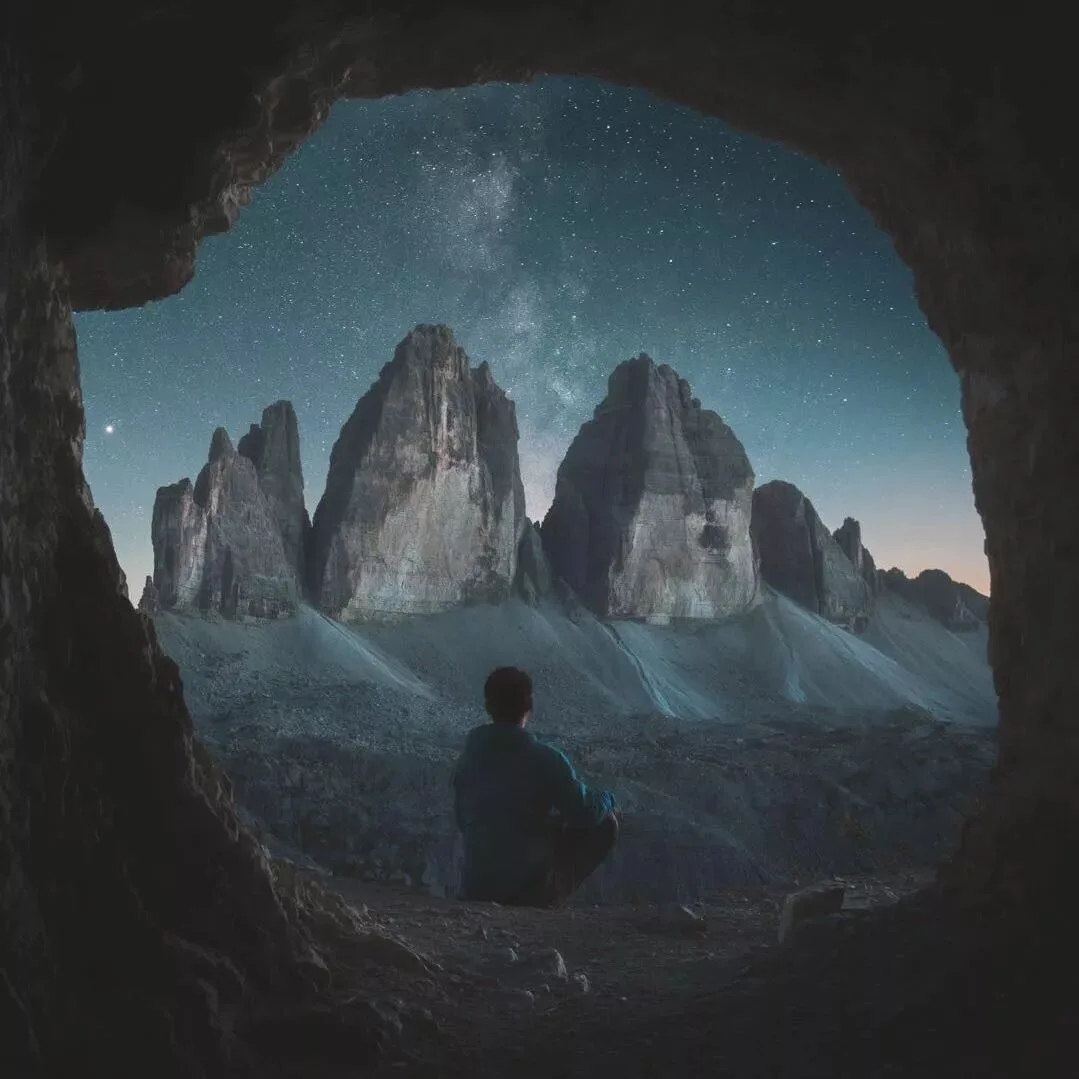
Jack Rabbit
All right, let's have Teacher Hu wrap up with some brief advice for the photography enthusiasts at our Xingcan Academy (星粱学院).
Well, I hope all photography enthusiasts — whether you're a beginner or a seasoned landscape photographer — can learn new ideas, new concepts, and new techniques with a humble mindset, and keep improving yourselves.
At the same time, keep a childlike innocence and purity forever, and don't chase too much utilitarianism. Though being pragmatic isn't wrong in itself, don't let the pursuit of fame and profit hinder your progress in photographic art.
And we need an inclusive mindset. Whether it's something you like or dislike, whether you understand it or not, every style and every subject has its own value and meaning for existing.
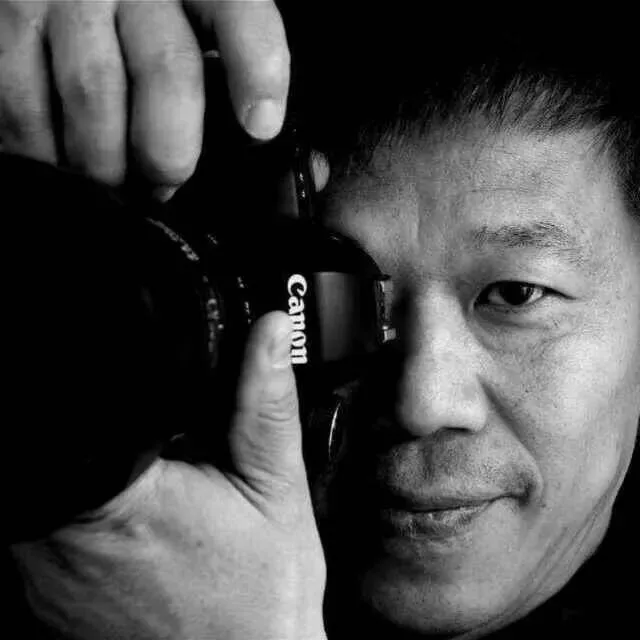
Yunman (云漫)
Related Books:
This article was first published on the WeChat official account of Xingcan Studio (星粱工作室).

Related Articles:
"Why Did These Photos Win National Geographic Photography Awards?" (《这些照片为什么能拿到国家地理摄影大奖?》)
"5 Landscape Photographers Most Worth Following on 500px" (《500px上最值得关注的5位风光摄影师》)
"The Stunning Photos You See Every Day Are Just the Tip of the Iceberg of Landscape Photography" (《你天天看的大片,其实只是风光摄影的冰山一角》)
"The Best Style Is Perfection: 4 Niche Landscape Photographers Worth Following" (《最好的风格就是极致,4位值得关注的小众风光摄影师》)
"Don't Know How to Shoot Without Red Clouds? Check Out These 3 Landscape Photographers~" (《没有红云就不知道怎么拍?不妨关注一下这3位风光摄影师~》)