Photography Tutorial · 2018-10-11
How to Photograph Forests: Techniques Worth Trying
Thomas Chu Photo
One tutorial a week — making photography easy to learn
I'm AdventureX member Jingshu Zhu
Forests are a common subject in landscape photography, but shooting them well isn't easy. Compared to mountains and seascapes, forest imagery tests the photographer's aesthetic depth and powers of discovery. The trees' forms, light conditions, weather and shooting angle all directly shape the artistry of the work.
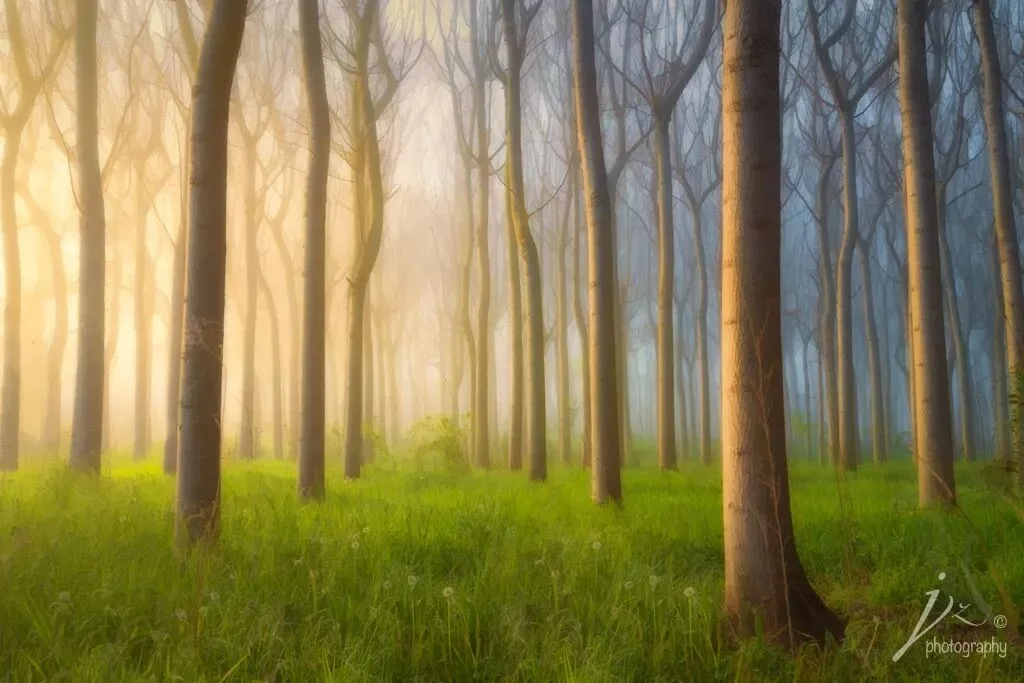
Forest photography isn't my strongest suit — I'm still learning and exploring — so I'm simply sharing my current on-location experience here. Additions and insights are welcome; you can also study on the website of tree-photography master Lars van de Goor.
Using my own forest works as examples, this article covers shooting techniques in five areas:
Weather — building atmosphere
Light — shaping depth
Using unconventional viewpoints
Forms of artistic expression
Intimate forest scenes

1
Weather — Building Atmosphere
As the saying goes, landscape photographers live at the mercy of the sky. Fiery sunset clouds are the most beloved condition — but forest frames usually contain no sky, so a blazing sky can't play to its strength.
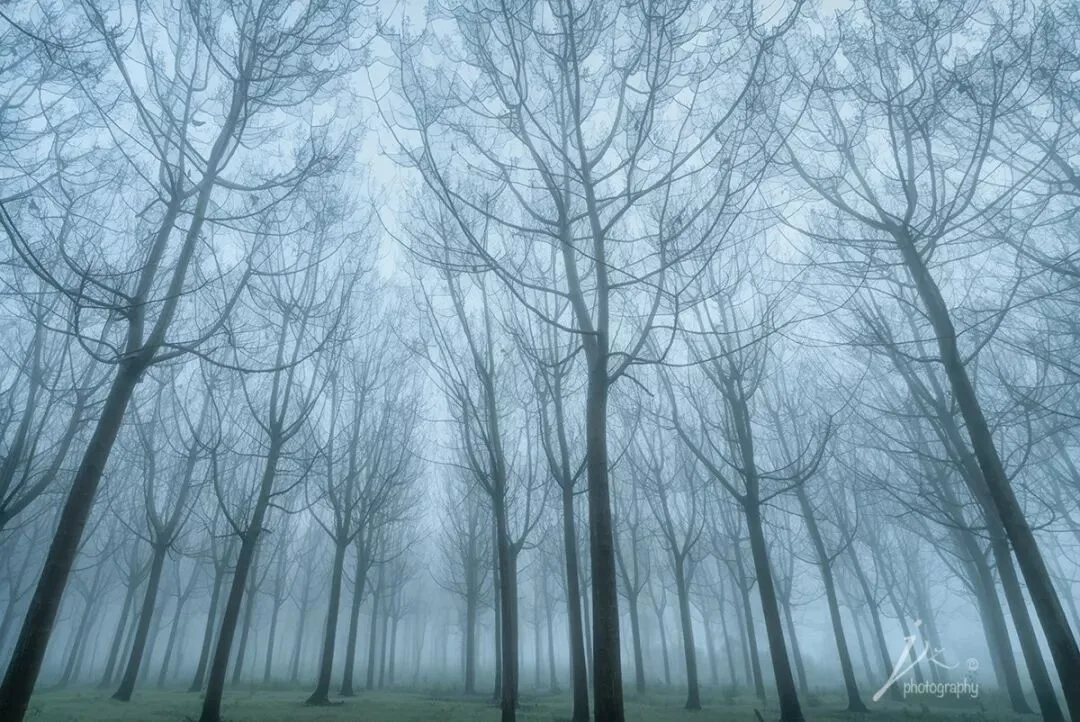
Fog and snow are especially good at building atmosphere: they create tranquil, serene moods and help hide messy details, simplifying the frame.
Foggy mornings also raise the odds of Tyndall beams: after the sun rises, shafts of light slant down through the branches — the Tyndall effect in nature.

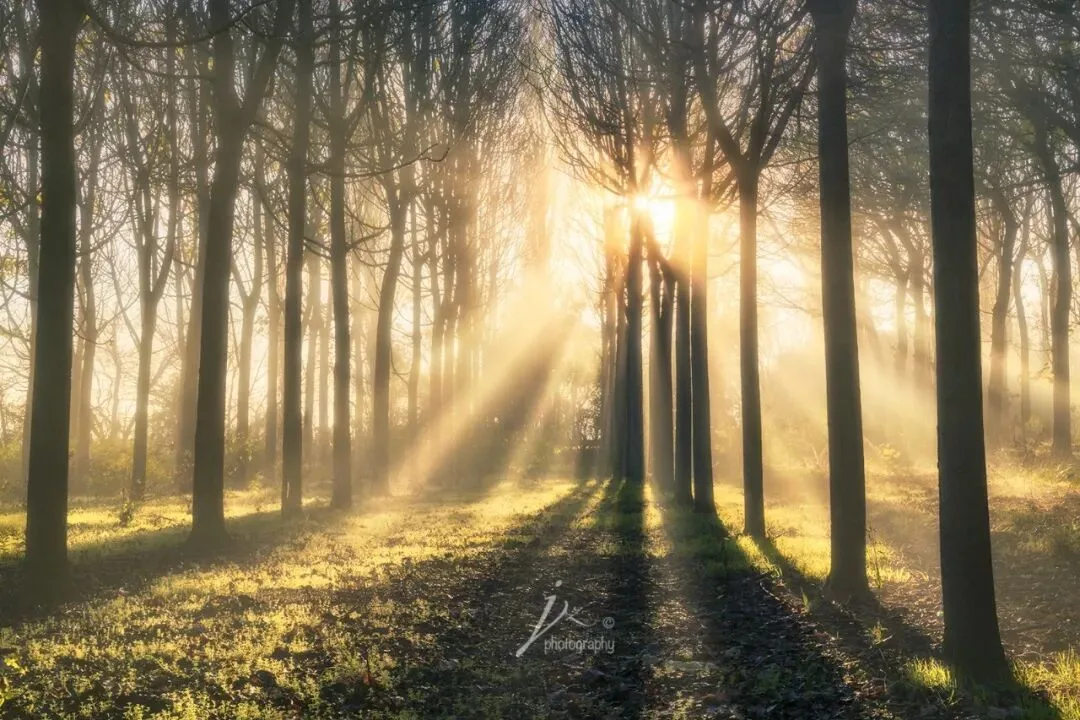
'Warm Winter' was shot on a misty winter morning. Tyndall light falling through the forest adds a touch of warmth; the arrival of light and shadow instantly brings the frame alive.
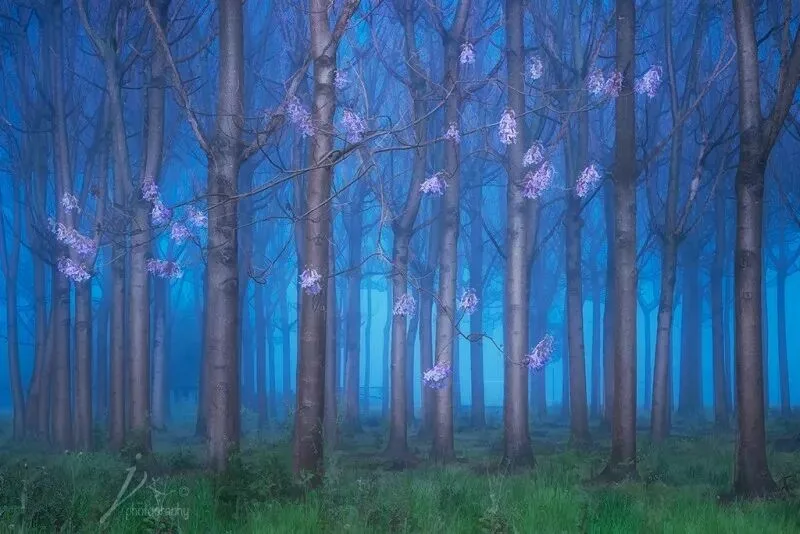
'Fairyland' was taken on a fog-wreathed morning: paulownia blossoms drifting down through the misty trees like a fairyland — flowers seen through fog, with a strongly painterly feel.
2
Light — Shaping Depth
Photography is the art of using light, and the charm of light and color adds the finishing touch to a frame. Rendering a forest's three-dimensionality, depth and texture all depend on light — and light can also heighten the artistic effect.
Different light conditions produce very different photos. Natural light is beyond our control, but knowing how to use it serves your expression and lifts your work to a higher level.
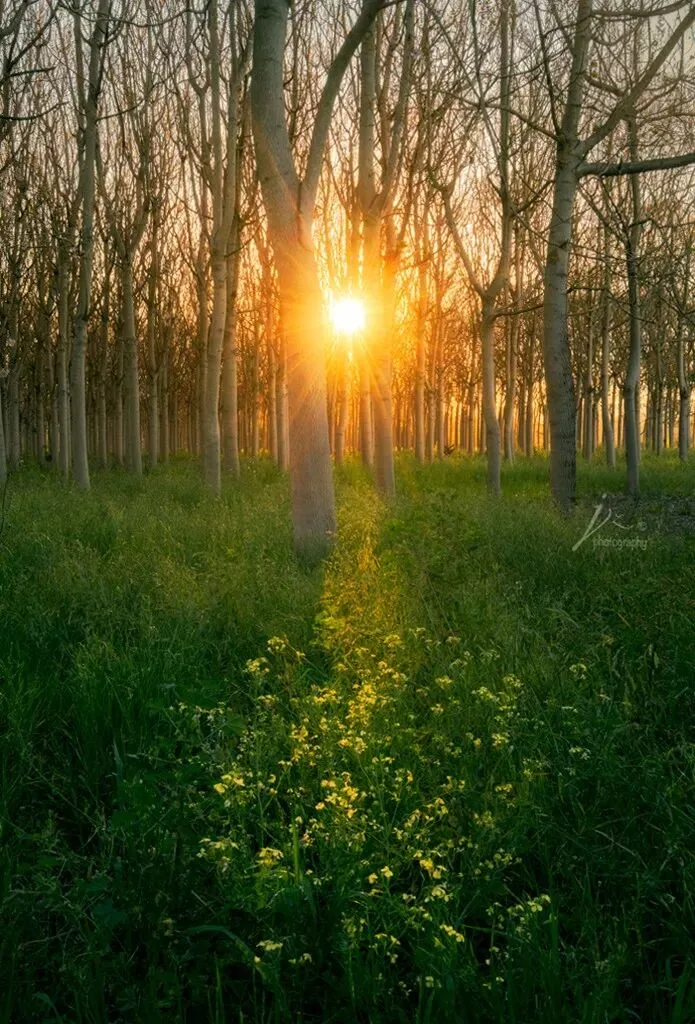
Backlight: light comes from the opposite direction of the lens, creating strong contrast between light and dark, vivid foreground-background tension, and rim light on subject edges. Used well, backlight delivers uniquely charming visual impact — atmospheric glow the eye barely notices can be captured in backlight. Watch out for lens flare when shooting.
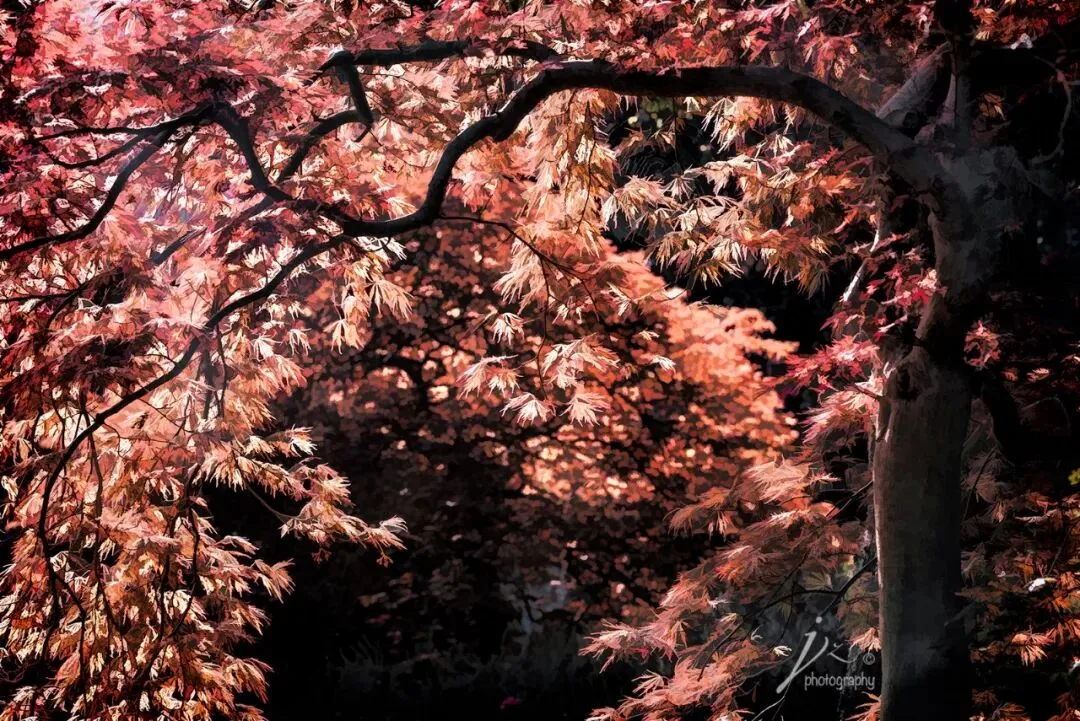
The image above uses backlight to reveal the texture of leaves.
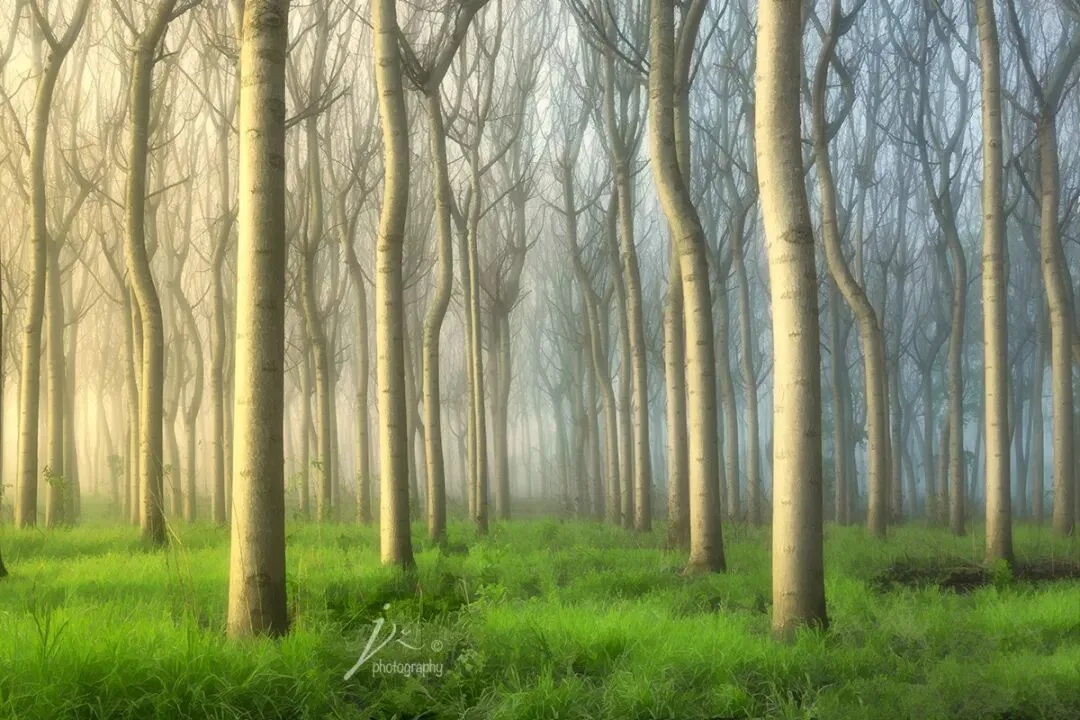
Side-backlight: the light source sits at an obtuse angle to the camera's direction, just outside the frame on the left or right. Side-backlight greatly helps shape layering and three-dimensionality.
Front light: light comes from the same direction as the lens. Subjects are evenly lit with complete detail — an honest, objective rendering — but the frame feels flat, lacking depth and dimension.
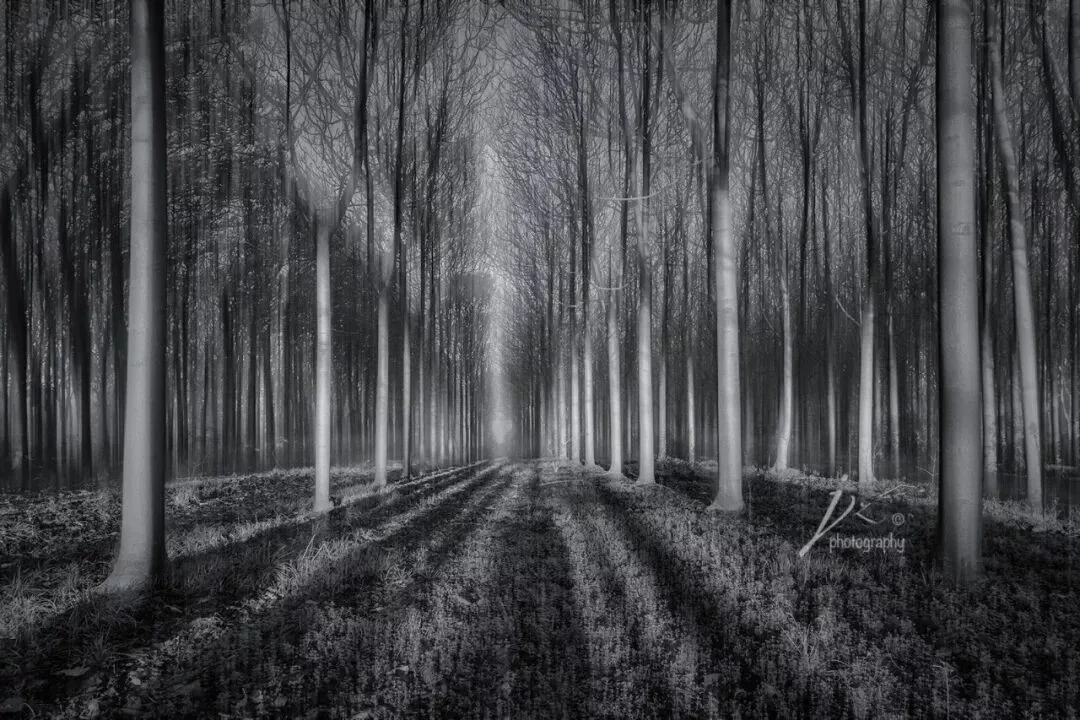
Front light is the least flattering condition in landscape photography. But just after sunrise, light rakes into the forest from just above the horizon — perfect for emphasizing the linear quality of trees. The image below was shot in front light, converted to monochrome in post to simplify color and emphasize the lines.
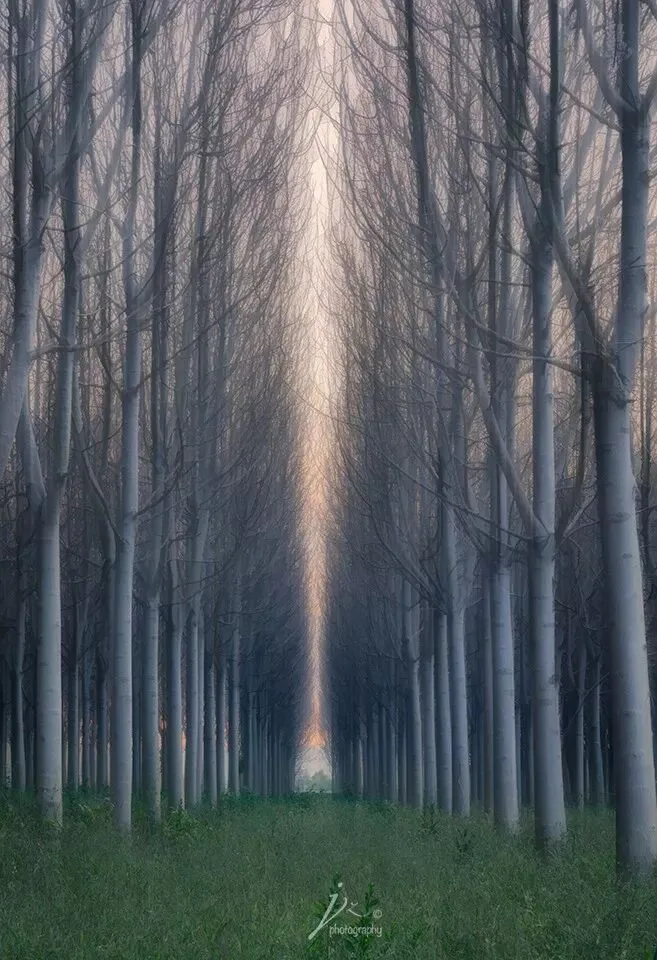
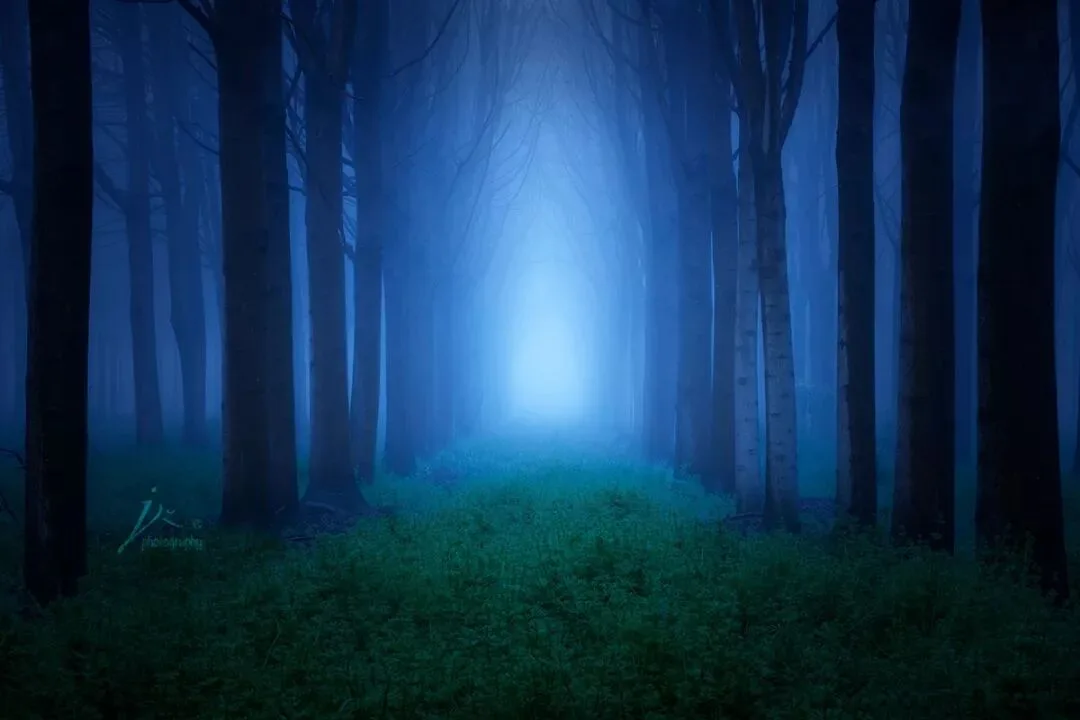
Diffused light: with no obvious light-shadow contrast on the subject, scenes show low contrast and weak dimensionality — suited to expressing spatial recession. Its flat, soft quality is especially good for quiet, tranquil moods.
3
Using Unconventional Viewpoints
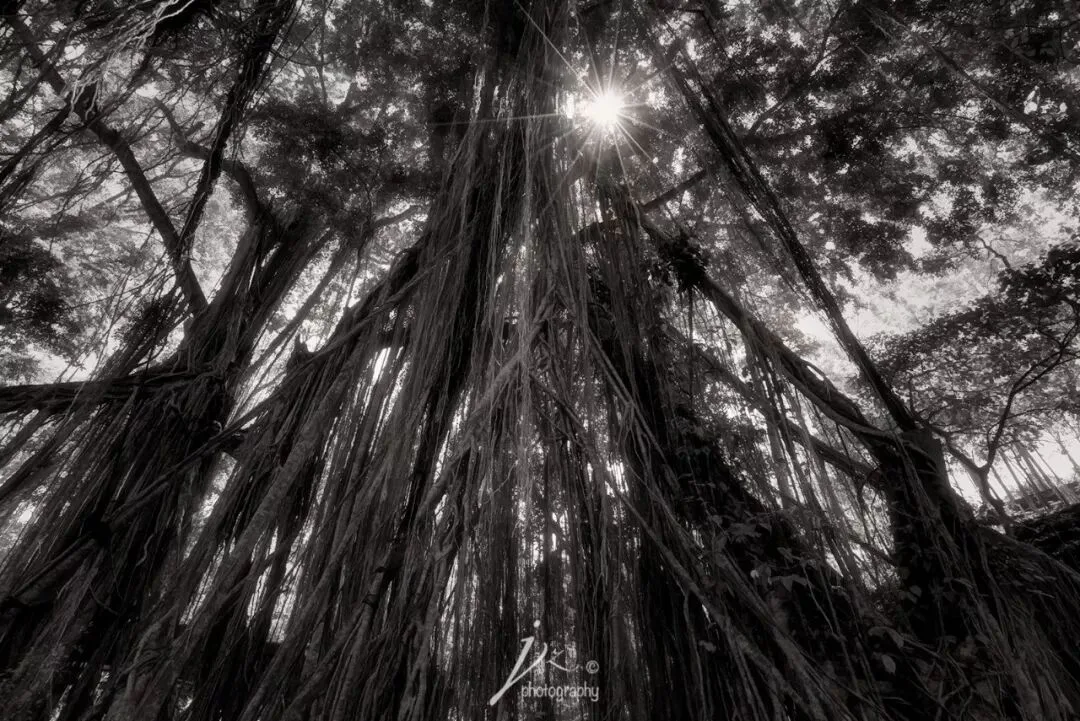
Standing in the forest, look up at the canopy and down at the ground — through these unconventional viewpoints you may discover unexpected scenes.
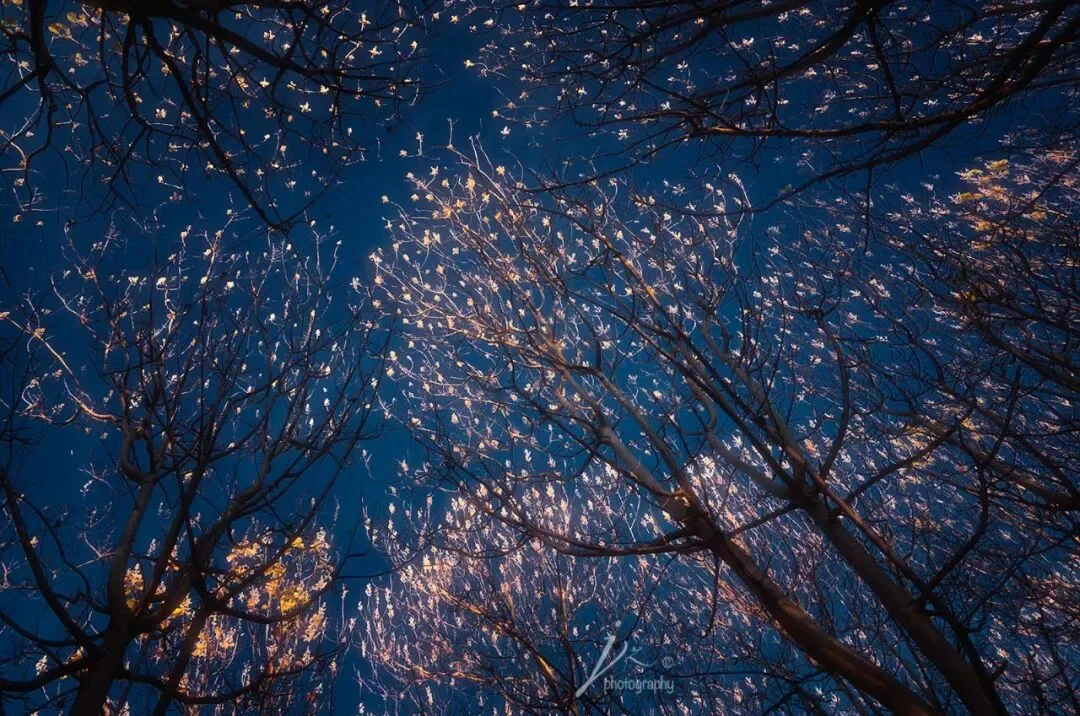
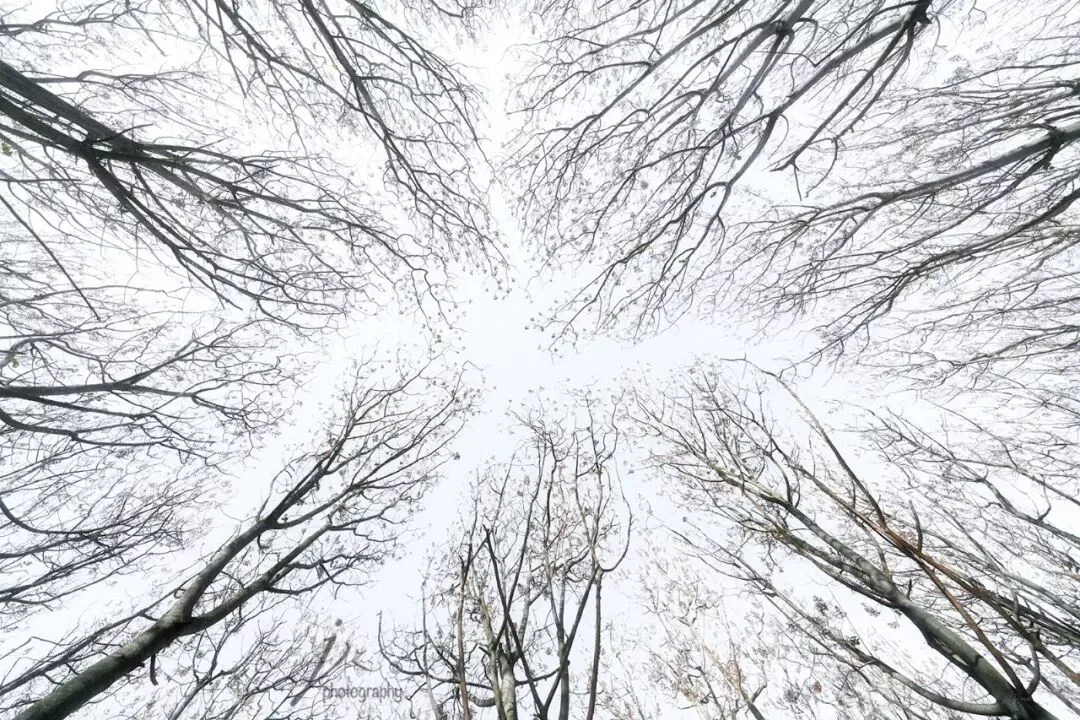
The two photos above use a low-angle view looking up to express the forms of branches.
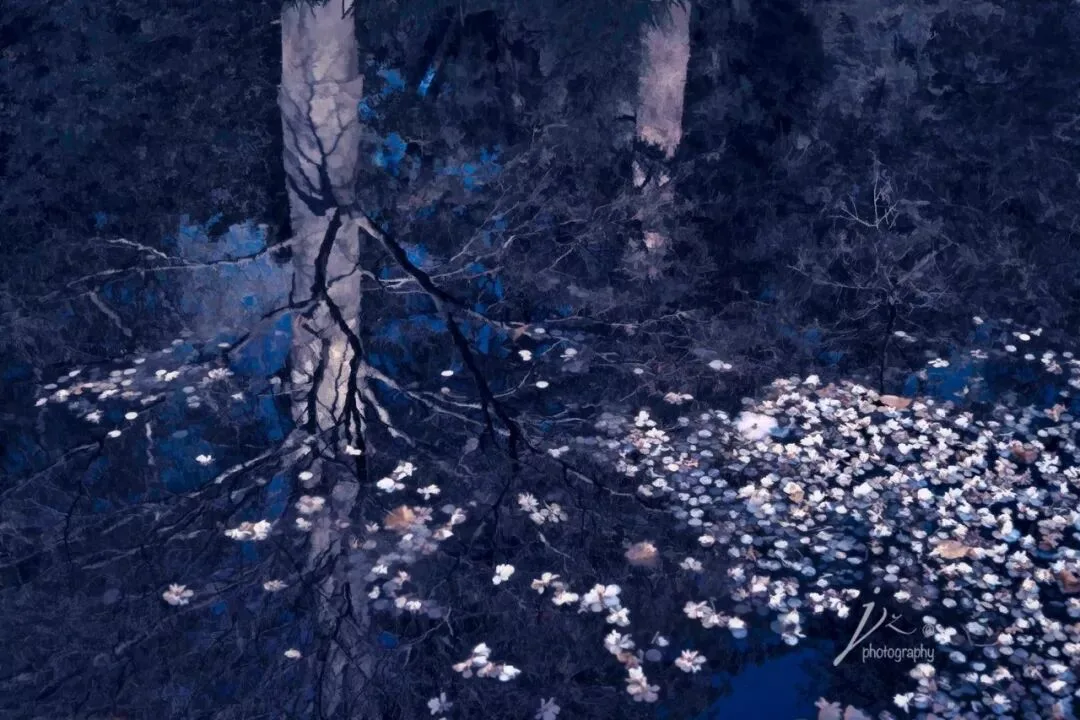
'Flowers in the Water' uses a top-down view of tree reflections in a pool; the colorful fallen petals floating on the surface lend a romantic tenderness, processed into a painterly effect in post.
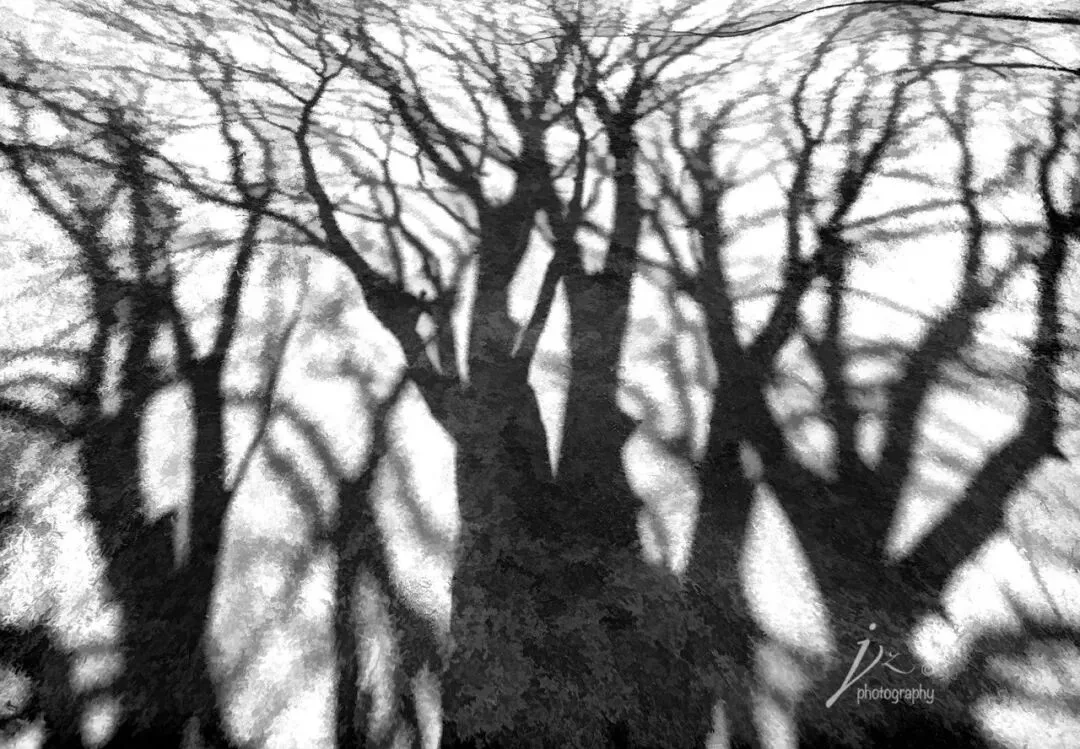
'Light and Shadow' is also a top-down view. The overhead light was unfavorable at the time, but the century-old tree's lush branches cast richly detailed, staggered shadows on the ground. I excluded all surroundings and let the shadow fill the frame — better serving the subject.
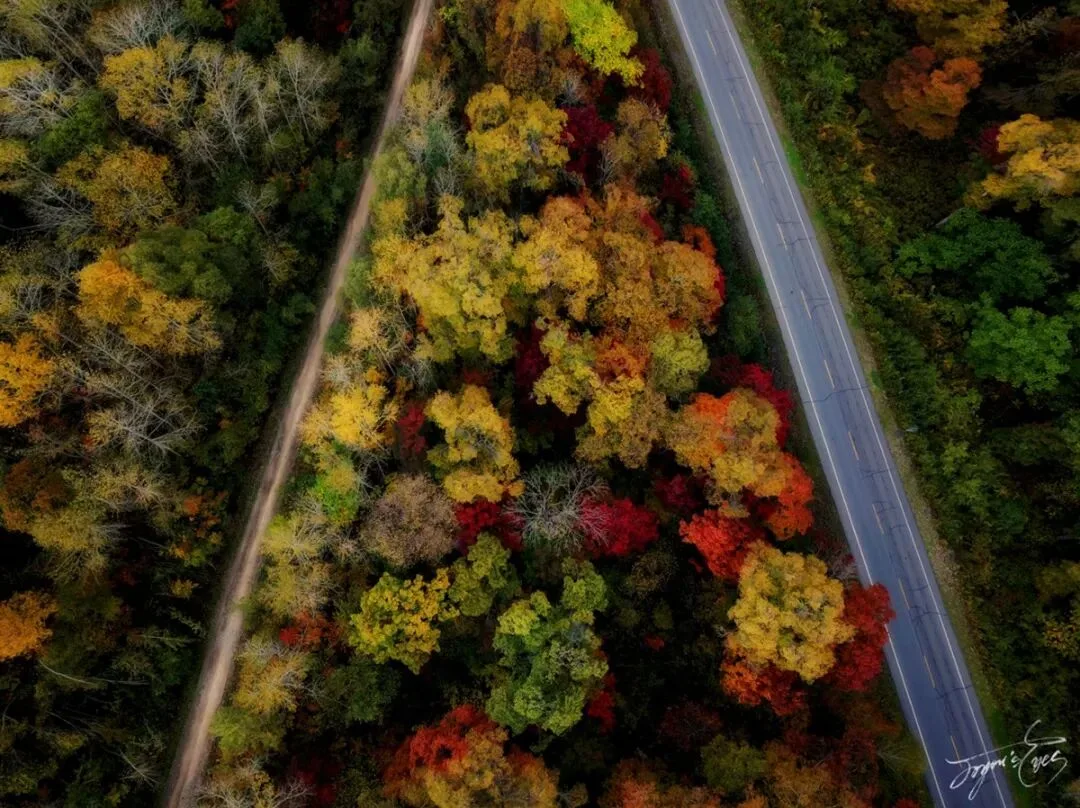
Beyond that, aerial shots offer a 'God's-eye view'. Below is an aerial work by AdventureX member Zhou You.
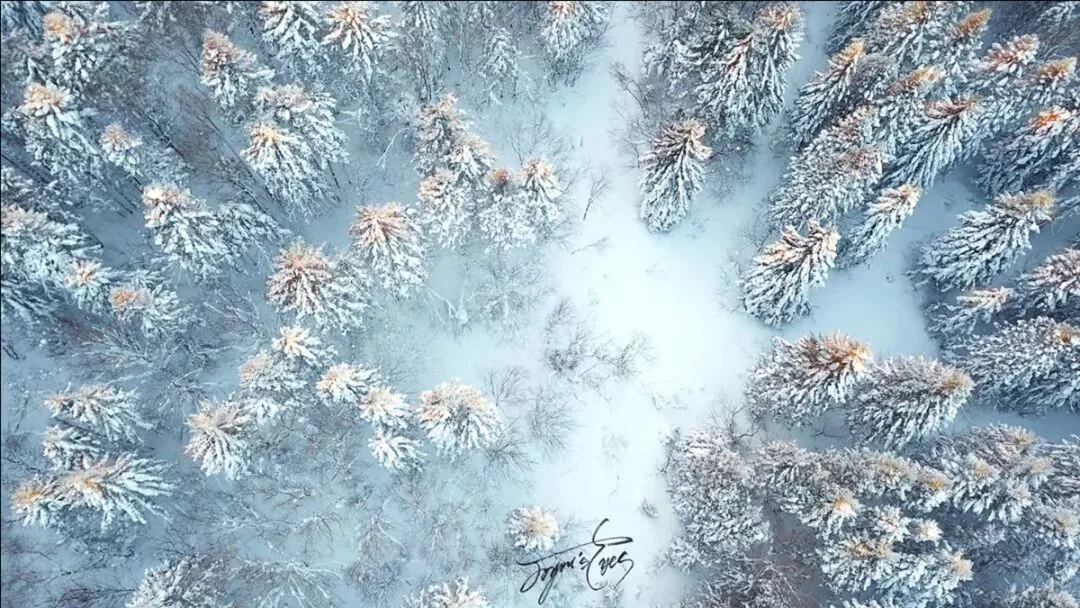
For 'Ten Thousand Arrows Fired at Once' — to capture the treetops lit up by the sun — he entered the snowy forest sea three times; it was so cold that only on the third attempt, warming his phone with a heat pad, did he finally succeed.
4
Forms of Artistic Expression
Using 'Abrupt Change' as a Focal Point

Abrupt change is a core aesthetic principle of graphic composition: within repeating, similar elements, an alien element or a large variation suddenly appears, contrasting with everything else — differing in form or in color.
The mutated element is usually intriguing and very effectively draws the viewer's attention to that spot.
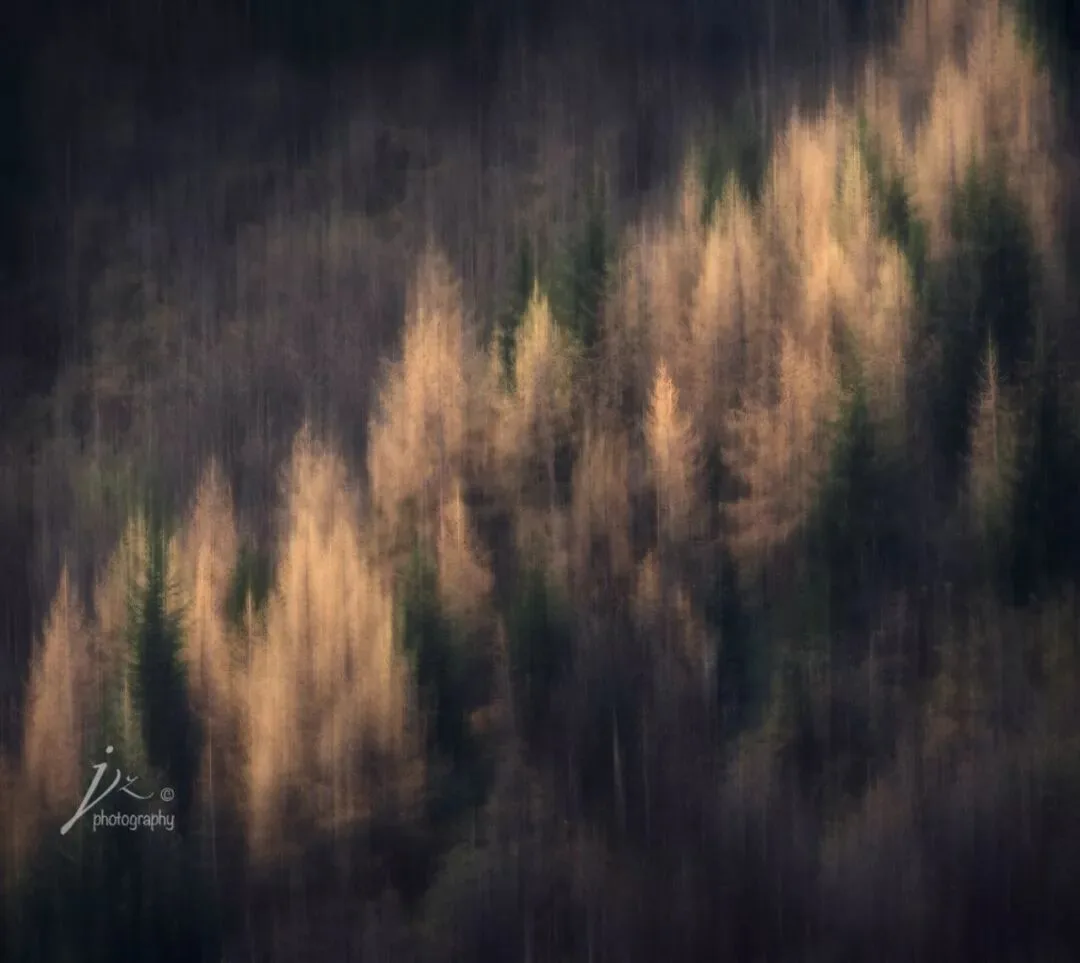
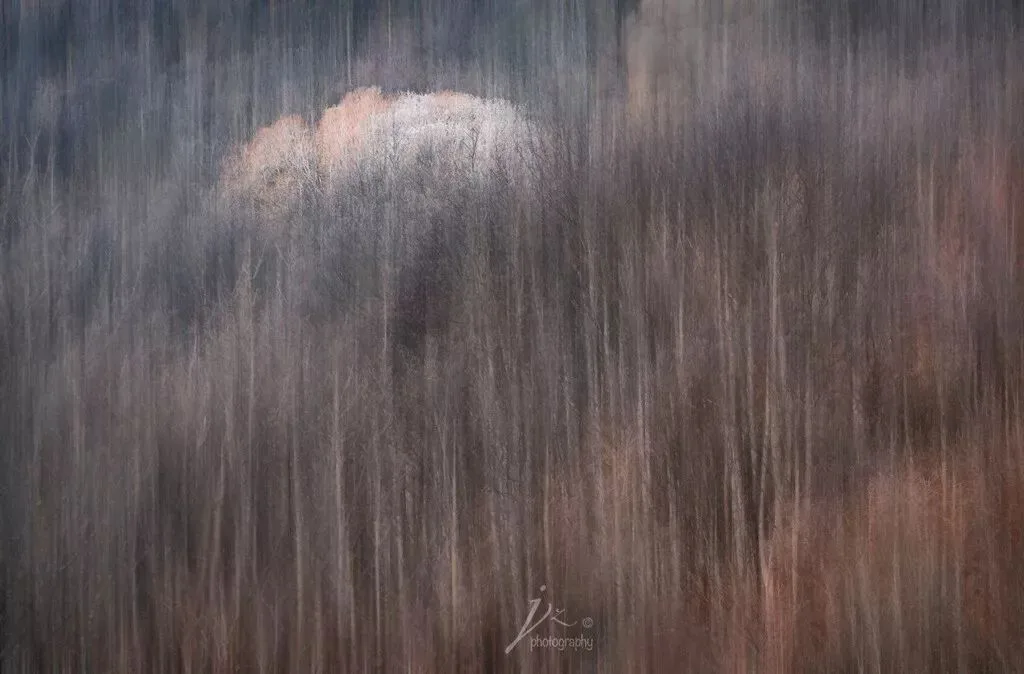
The image above uses this 'abrupt change' technique — finding a different form and color within an entire forest. For the editing process, see the case-study chapter of my new book 'The Road of Chasing Light': 'Five Steps to a Dreamlike Forest' lists screenshots and parameters for every step, with a RAW download link.
Abstract Images
Sometimes the scene is so cluttered that no amount of careful framing can exclude the distractions. In such cases, try a telephoto lens to capture a distinctive detail — simplifying complexity into an abstract image.
This approach doesn't need a concrete subject, but it must have an eye-catching highlight — a special texture or a leaping color.
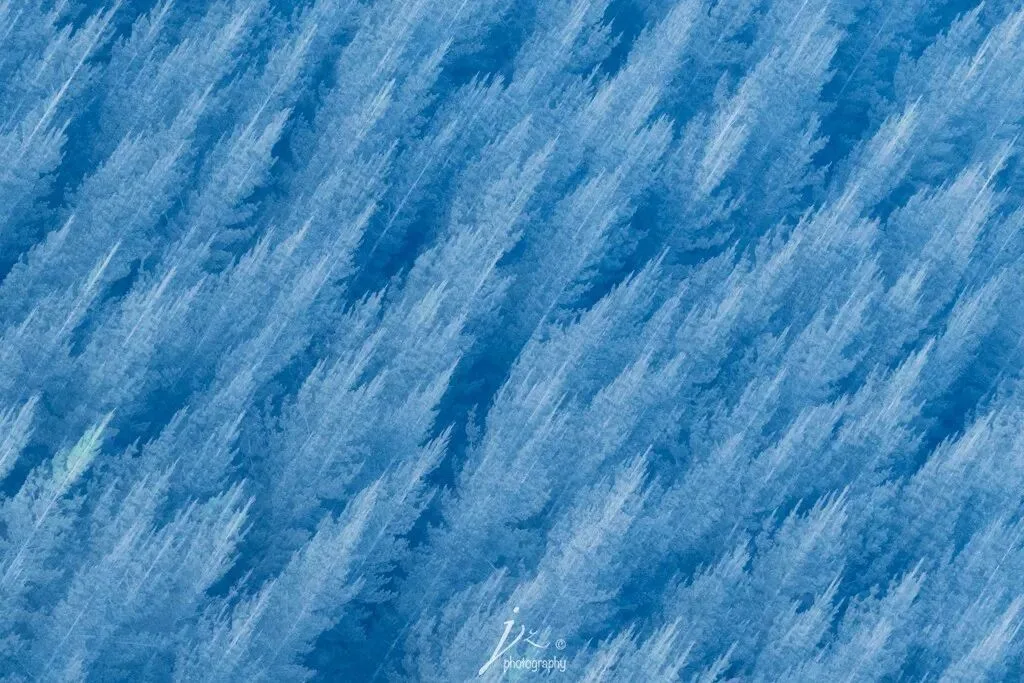
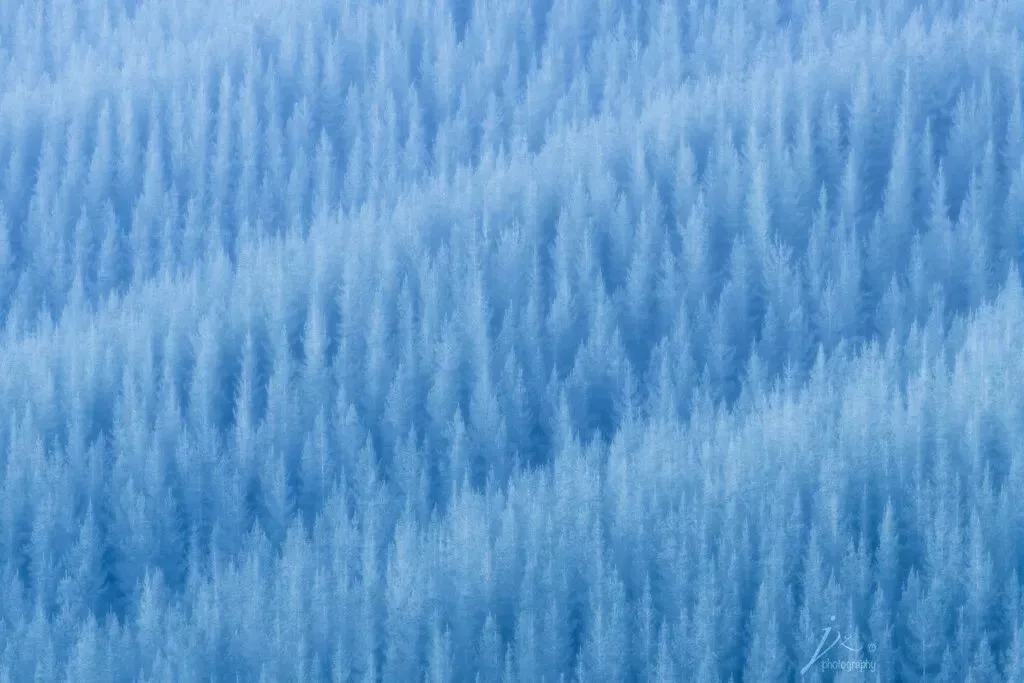
'Colors of Winter' uses a telephoto to capture a locally regular pattern. Although shot in daytime, the cloudy sky made the light very soft. In post I adjusted the white balance to a cool tone, unifying the colors to emphasize the forest's texture. The photo won first place in the abstract category of the Sony Alpha Awards 2018.
Finding Points of Interest
Forest scenes are full of randomness — with eyes trained to find beauty, you'll spot particularly interesting frames.
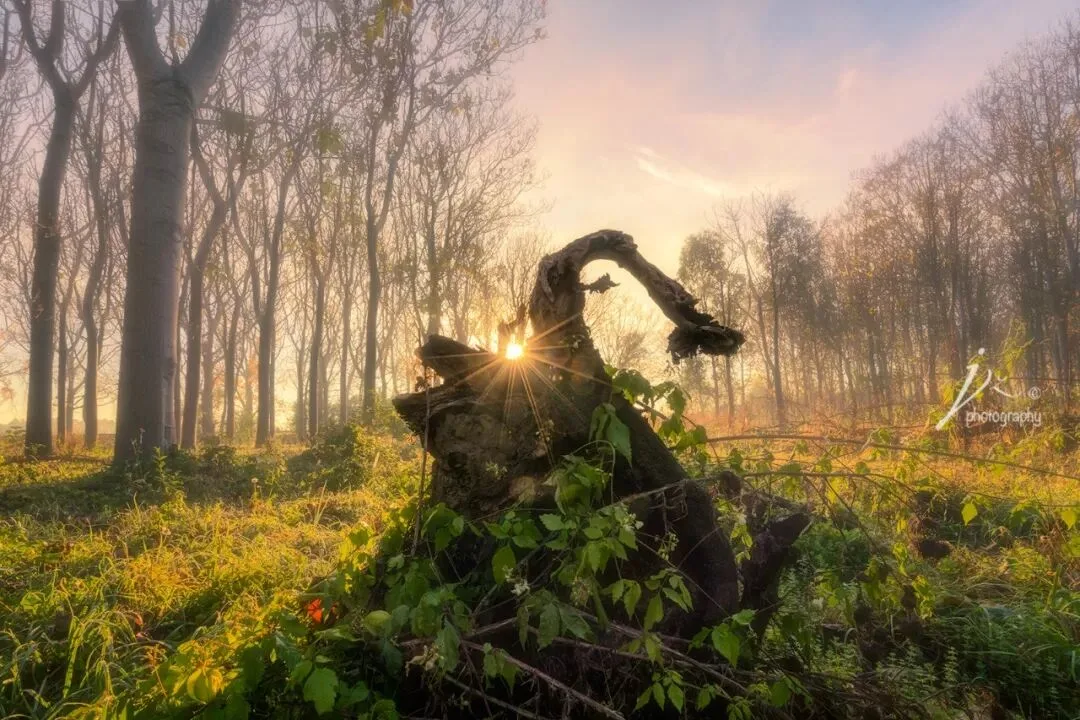
In the image below, the foreground is a dead branch shaped like a swan; its unique form and the sun's glow lock the viewer's gaze on the foreground, while the distant woods play a supporting role.
Discovering Rhythmic Lines
Regular arrangements of points, lines and planes in nature are fascinating, and capturing such patterns is a common technique in intimate landscape work. The challenge lies in spotting these rhythms amid chaos — a real test of observation.
5
Intimate Forest Scenes
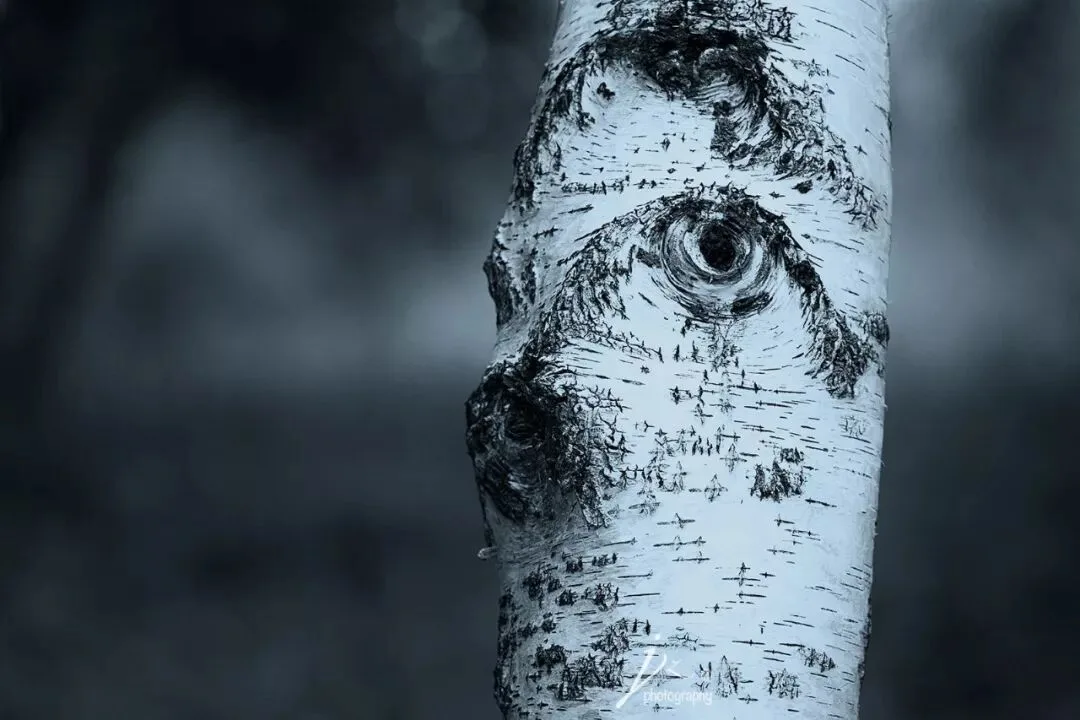
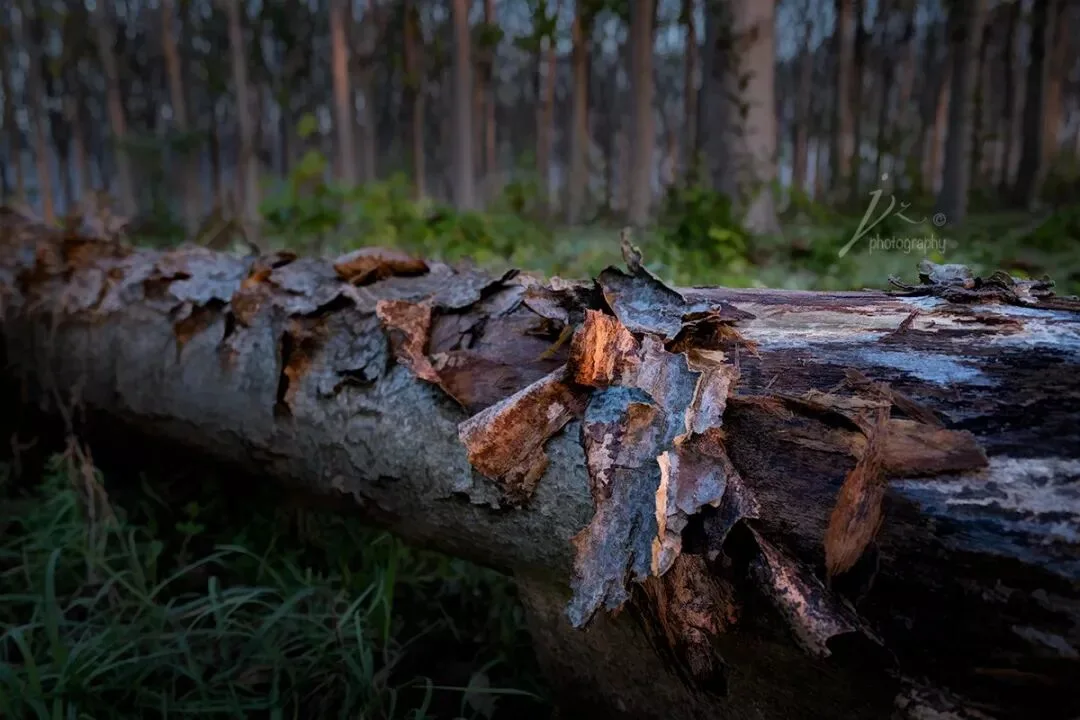
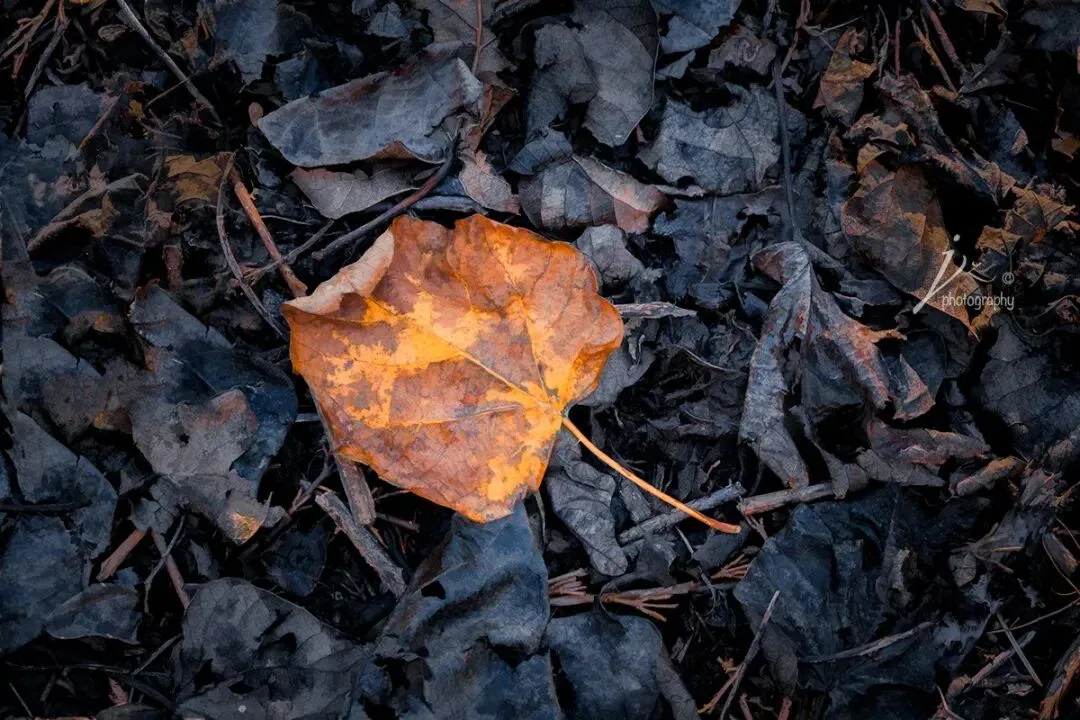
Observe carefully in the woods: beyond the towering trees you'll find special patterns and textures — mottled bark, trunk patterns, withered leaves — all worthwhile intimate subjects.