Photography Tutorial · 2024-12-01
How Is the Golden Statue Award Won? A Post-90s Photographer Shares His Creative Approach!
In today's photography sharing, Thomas will draw on the application materials from my recent China Photography Golden Statue Award to share my creative approach to Chinese landscapes, my sources of inspiration and portfolio, and a 2,000-word essay "Telling China's Story of the Times Through Landscape Photography" (《如何用风景摄影讲述中国时代故事》).
Video
▶ Watch the video tutorial on Bilibili
This is the fully illustrated companion to the video above. Last week Thomas — a post-90s photographer — won the China Photography Golden Statue Award, and in this video he lays out his entire submission: the 2,000-word essay, 30 works, career record and the association's recommendation letter, plus a full reading of his essay "Telling China's Contemporary Story Through Photography" — from China Different to Windows of the Qinghai-Tibet Railway, from Glimmers in Unfinished Buildings to New Towers of China. Every material screenshot here is a key frame from the screen recording; read it as a sample application.
01 The Golden Statue Award: A Portfolio of Achievement
The China Photography Golden Statue Award, run by the China Federation of Literary and Art Circles together with the China Photographers Association, is one of the country's top national photography honors, ranked alongside the Golden Rooster, Golden Eagle and Plum Blossom awards (at 0:07 in the video). Thomas's first tip: never enter blindly. Study past winners to gauge the competition's style and orientation, then prepare deliberately — his research showed the award judges not just images but a comprehensive personal achievement of works plus career record.
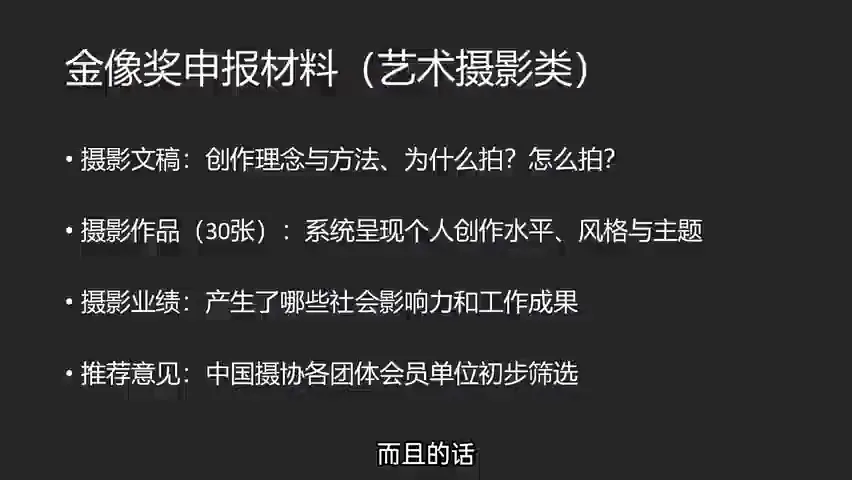
The application has four parts (at 1:14 in the video): an essay of up to 2,000 characters stating your creative thinking and method — why you shoot this way and why these subjects; 30 works, a volume broad enough to judge both craft and artistry; a career record — the awards, publications, papers and public-interest work your photos have earned; and a recommendation letter from a provincial-level body or an organization directly under the China Photographers Association, which mainly serves as an endorsement.
02 The Essay: Telling China's Contemporary Story
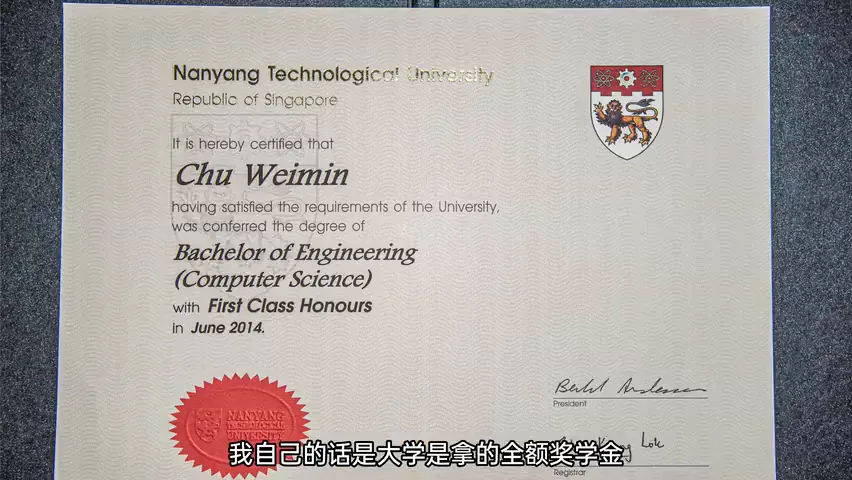
His essay is titled "Telling China's Contemporary Story Through Photography" — a theme he has explored since turning professional in 2017 (at 2:22 in the video). With a full scholarship he studied computer science at Nanyang Technological University in Singapore, where exchanges with international classmates and teachers revealed how many misconceptions surround China, especially the China of today. Going professional, he chose photography as the artistic language to dissolve those misconceptions and tell the country's contemporary story.
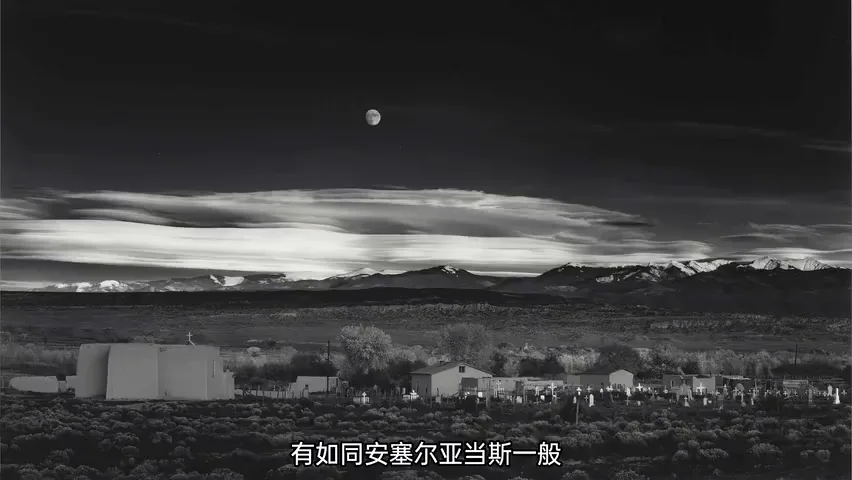
The essay first maps contemporary landscape photography's schools: Ansel Adams's grandeur and sublimity of nature; Lang Jingshan and Michael Kenna's zen stillness of Eastern landscape; the Bernd and Hilla Becher pairing with Andreas Gursky's cool, objective industrial scenes; Stephen Shore and Joel Sternfeld's ordinary street vignettes; and social-media favorites like Benjamin Everett and Max Rive, whose saturated styles are tailor-made for the phone-era feed (at 3:25 in the video).
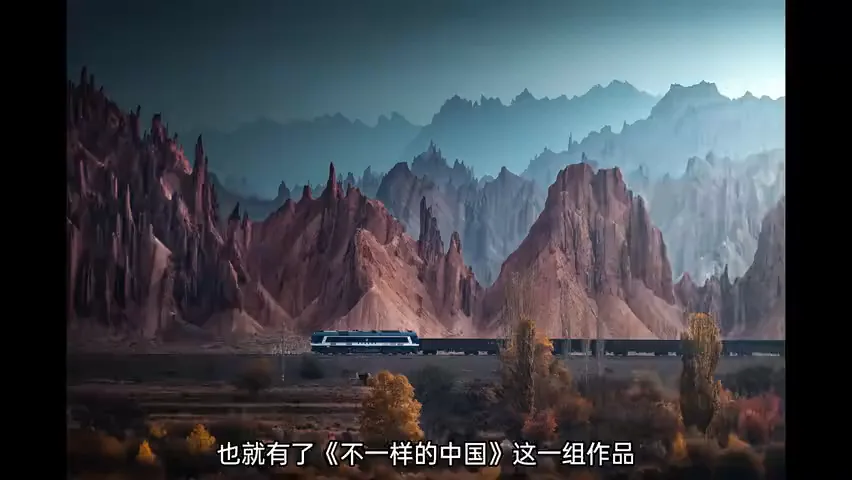
Every school offers something to learn; only by taking the best of each and filtering it through your own understanding can you make work that is personally distinctive yet speaks an international visual language. Since blending so many influences is hard, Thomas started from what he knew best — the internet's popular style — producing his first series China Different: applying Western color aesthetics eastward, with drones, satellite maps and 3D models, to portray China's natural and urban scenery (at 4:31 in the video).
These tools are already standard among Western landscape photographers: 3D models and satellite maps allow meticulous remote scouting (his viewpoints at Naqu in Tibet, Kuche in Xinjiang and Dunhuang in Gansu were all original satellite-map finds); apps like PlanIt compute exactly where the moon or Milky Way will sit relative to a peak or building at any hour; on site, a drone does the fast reconnaissance — efficiency multiplied (at 5:02 in the video). At viral spots like Huangshan, Guilin, Inner Mongolia and Chongqing, he instead personalizes: his rainy-night Bund photograph treats towers and neon as mere surface, seeking the fashionable commuters hurrying past, eyes on their phones — the real state of modern urban life (at 5:58 in the video). The series traveled well on Weibo and Instagram alike.
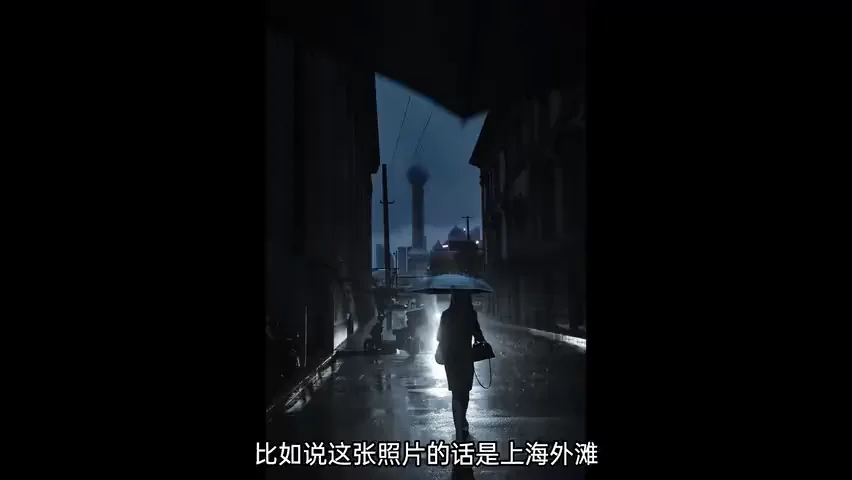
Yet the limits were obvious: these landscapes never touched China's contemporary condition — its development, its problems. In today's discourse, foreign audiences don't lack knowledge of Xi'an and Beijing's ancient history or Shanghai and Shenzhen's modernity; they hold biases about how ordinary Chinese people actually live (at 6:23 in the video). So he turned to classic documentary photography for inspiration — ordinary people's viewpoints, stories and everyday objects — while recognizing that documentary itself fights audience fatigue in an ocean of images, making a distinctive visual language equally essential.
03 Trainscape China: Windows of the Qinghai-Tibet Railway
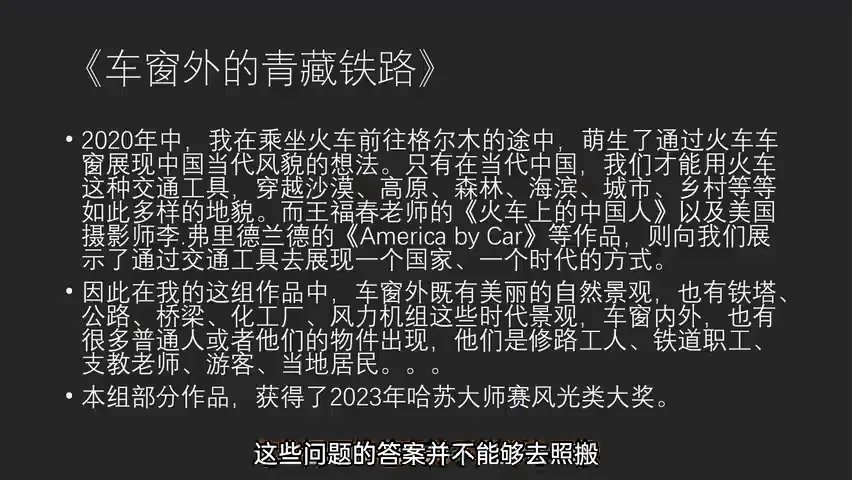
The next inspiration came from the New Topographics photographers, whose social landscapes vividly record a nation and an era — usually via road trips and large-format cameras. But their America is a nation on cars. What shooting mode and what symbol belong to today's China? How to spread the work through internet media? None of these answers could be copied wholesale (at 7:10 in the video).
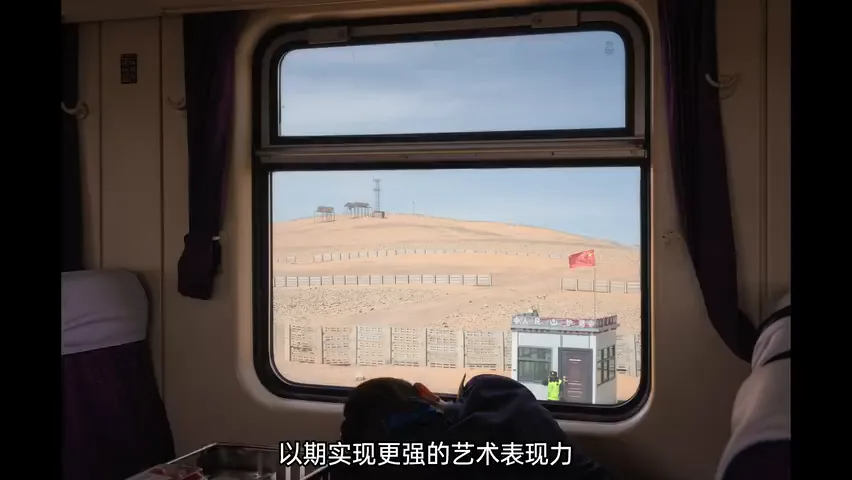
In mid-2020, riding the train from Xining to Golmud, watching the northwestern Gobi and its dense factories slide past the window while life's joys and sorrows filled the carriage, Thomas conceived of showing contemporary China through train windows (at 7:45 in the video). Why trains? Because only in today's China — the country with the world's longest high-speed and passenger rail mileage, across 9.6 million square kilometers — can a train window stream past such range: plateaus, rainforests, snow mountains, lakes, water towns, the sea, mega city clusters and tiny villages.
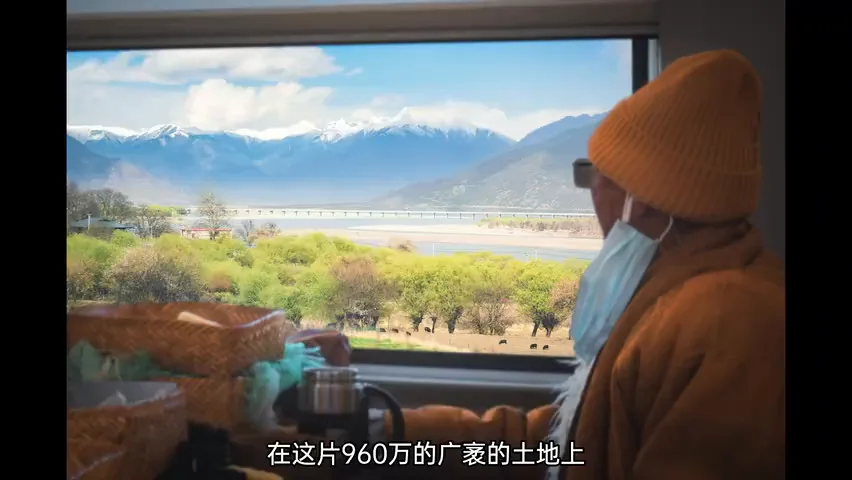
Two exemplars lit the way: Wang Fuchun's "Chinese on the Train" and American photographer Lee Friedlander's "America by Car" — both showing how a mode of transport can portray a nation and its era, an enormous reference for this series (at 8:39 in the video).

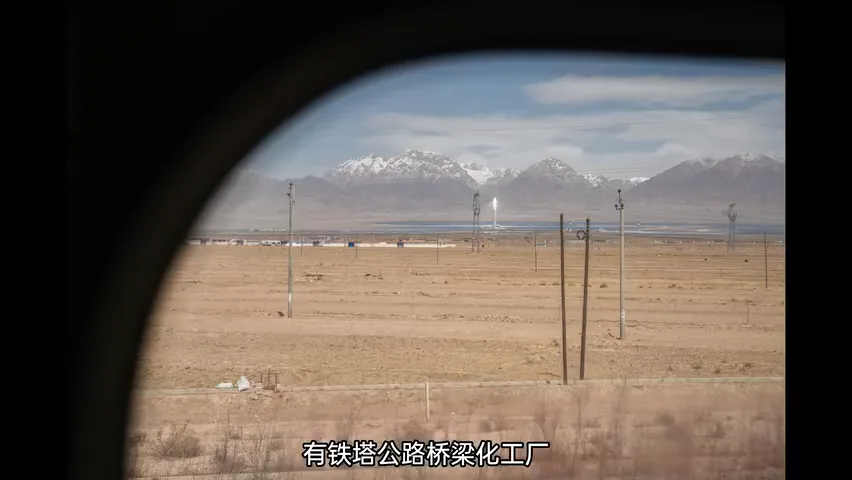
Outside these windows ride both beautiful nature and the era's landmarks — pylons, highways, bridges, chemical plants, wind turbines: the road and fiber-optic lines beneath snow mountains at Hoh Xil, the dense sand fences outside Tuotuohe station, a lone cell tower on the Gobi — attaching a 2020s memory to the country's staggering mountains and seas (at 8:57 in the video).
In and around the windows float ordinary people and their things: road crews, railway staff, volunteer teachers, travelers, villagers; an ethnic-patterned suitcase answering a worker on a crane outside; a CRRC engineer napping at his tray table against farmers toiling in the fields; an elderly local in the Fuxing Hao's modern business seat set against traditional snow mountains and a highland market (at 9:22 in the video). Their clothes, objects and stories narrate the grand saga of high-speed rail infrastructure in a way that stays close to life.
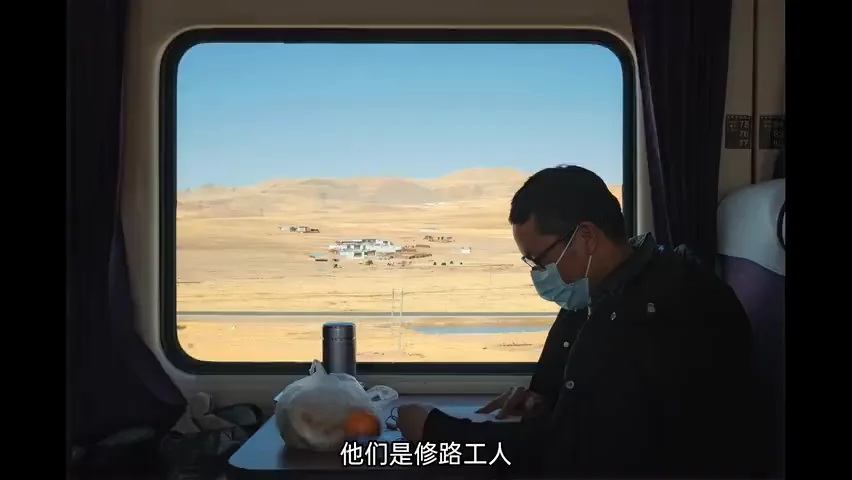
Showing inside and outside at once only became possible with modern ultra-high-dynamic-range sensors, powerful AI denoise and convenient multi-frame blending — hence the Sony A7R4, A7CR and Hasselblad X2D (at 9:58 in the video). His artistic creed is not instant physical truth but the truth of an era and of depth: with the constraint that every window scene truly came from the same rail line, he allows subjective, personal rendering — the frame with a rainbow and the national flag outside and a red ribbon plus paper flower on a suitcase inside was shot at different moments on the same train and merged later, so red flower, red flag, ribbon and rainbow answer one another (at 10:45 in the video).
"Windows of the Qinghai-Tibet Railway" passed 100 million reads online, drew follow-up coverage from People's Daily, Xinhua and CCTV, and shortlisted for that year's Hasselblad Masters (at 11:23 in the video). The page below is the submitted essay itself — 19 of the 30 entered works come from this series.
04 Glimmers in Unfinished Buildings and New Towers of China
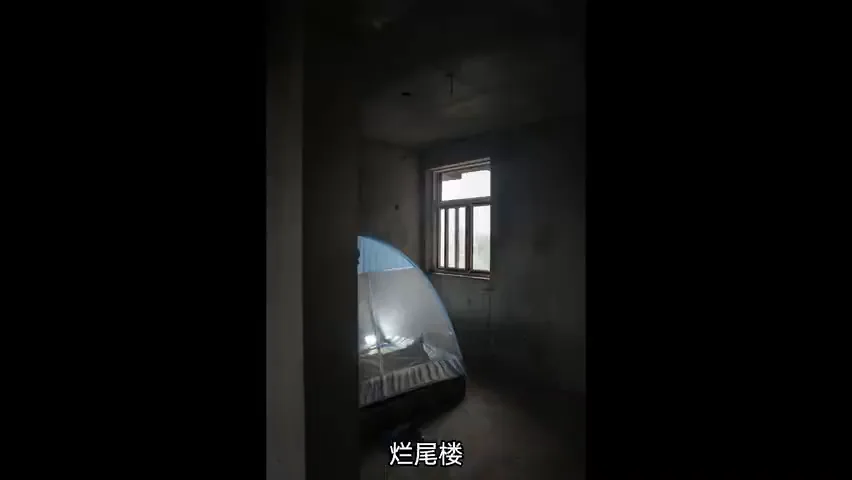
"Trainscape China" showed development in full stride, but development carries problems too. Begun in 2022, "Glimmers in Unfinished Buildings" focuses on a distinct facet of China's sprinting property market, probing the hazards of unregulated capital — shot across stalled projects in Xi'an, Zhengzhou and Qingdao, its visuals referencing Todd Hido's nocturnal, sodium-lamp aesthetic (at 11:47 in the video). The series earned hundreds of millions of views at home, interviews including China Youth Daily, and an Asia honorable mention at the 2023 World Press Photo; several of the abandoned towers, after the attention and official support, resumed construction and were completed — proof of how landscape photography, fused with documentary, can genuinely move society.
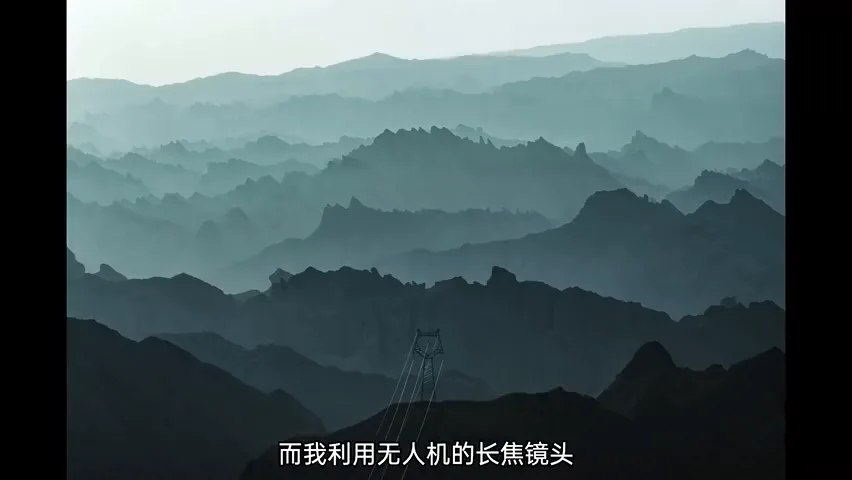
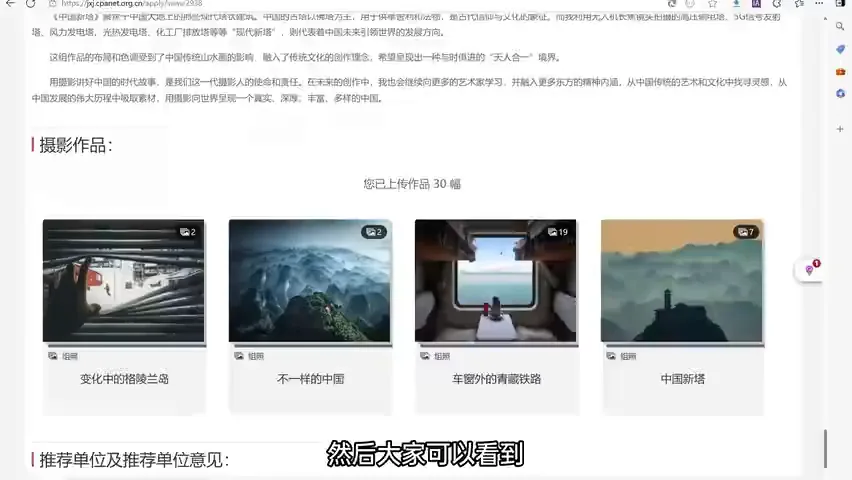
From late 2023 he turned to the industries of new productive forces — renewables, 5G, advanced materials — summarizing them through the symbol of the tower in his "New Towers of China" project (at 12:37 in the video): China's ancient pagodas, mainly Buddhist, housed relics and scriptures as symbols of faith and culture; the modern towers he shoots with a drone's telephoto — high-voltage lines, 5G masts, wind and solar-thermal towers, plant stacks, construction cranes — stand for the country's future direction and possible answers to its environmental questions. Their composition and palette draw on traditional Chinese landscape painting, aiming beyond imitation at a contemporary "unity of heaven and humanity." Next he plans industrial drones with medium-format cameras to rival contemporary giant-format landscape work, offering layered viewing: a painting from afar, reality up close.
05 Thirty Works and the Career Record
That completes the 2,000-plus-character essay (lightly edited after submission: the Hasselblad Masters entry has since become a win). The 30 submitted works echo the essay's structure (at 14:41 in the video): group one, just two singles showing standalone strength — the 2019 National Geographic Global Awards grand-prize image and a 2020 Huawei Next-Image award winner; group two, two frames of "China Different" from popular viewpoints in Guilin and Shanghai, proving he can compose distinctively at crowded spots; then 19 frames from "Windows of the Qinghai-Tibet Railway," unrolling a modern "Along the River During Qingming" scroll for the jury; the last few from the newest "New Towers of China" series, shot on a drone telephoto.
The career record lists his domestic and international awards, the magazines his photos and articles have appeared in, the books published, his 5-million-plus followers and long-running photography education, and lectures at many secondary schools and universities including Peking, Tsinghua, Fudan, Jiao Tong and Zhejiang — his contribution to promoting photography (at 16:07 in the video). Finally the recommendation letter: meeting staff of the Chongqing Photographers Association at the 2020 Bashu Photography Exhibition, he found the association actively welcomes young photographers; he joined it this year and plans to apply to the China Photographers Association next. Not yet a national member when he entered, he thanks the Chongqing association for the recommendation and the national jury for the recognition — and the readers and course students whose support carried Thomas to where he stands.
1. Research before entering the Golden Statue Award: it honors combined achievement, and the file has four parts — a 2,000-character essay, 30 works, a career record, and an association's recommendation letter. 2. The essay's spine is "telling China's contemporary story through photography": from the Western-meets-Eastern "China Different," to the Qinghai-Tibet Railway narrated by ordinary people inside and outside the windows, to unfinished buildings and new towers — every series answers its era. 3. The train-window method: truth is the baseline (same rail line), subjective merging and rhymes are built on it, and modern sensors' latitude, AI denoise and multi-frame blending carry the expression. 4. The 30 works must echo the essay — singles, personality at popular spots, a 19-frame window scroll, the new towers — while the career record and recommendation letter complete the endorsement.
Sharing the Application Materials
See "How the Golden Statue Award Was Won | The Works Chu Weimin Submitted for the China Photography Golden Statue Award"