Photography Tutorial · 2024-03-10
Six Layovers to a Fairytale Arctic Fishing Village: Greenland Culture and Landscape
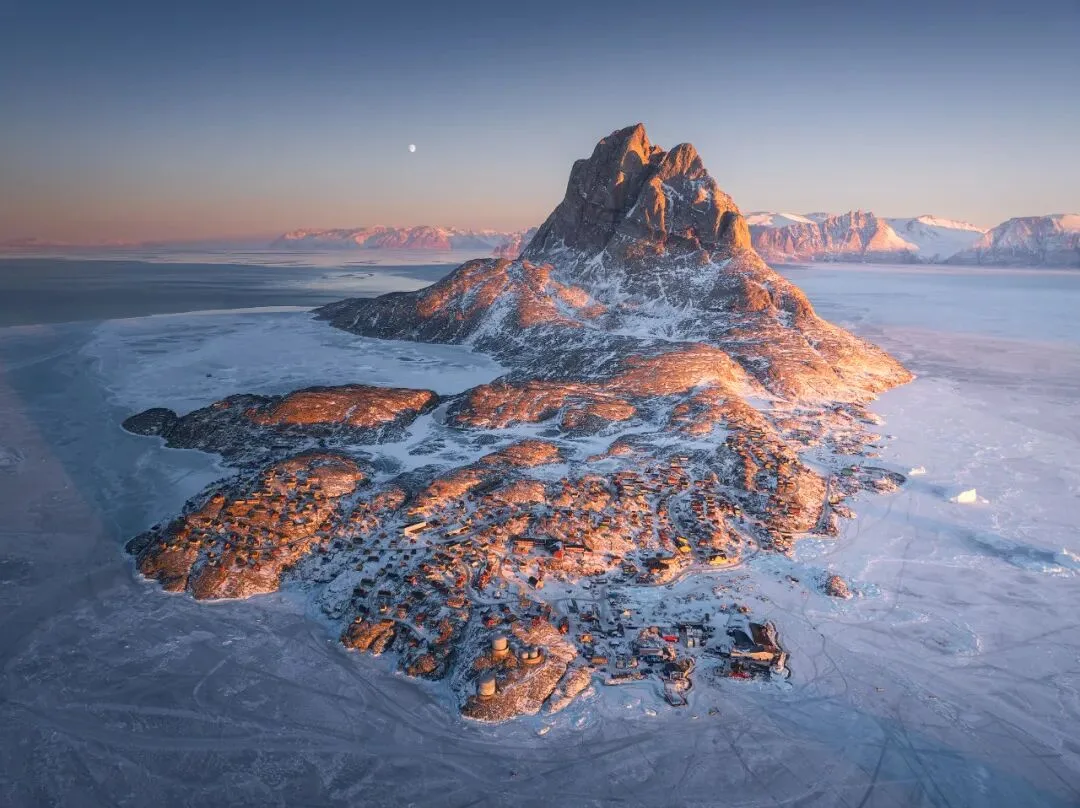
After six connecting flights, we arrived at Uummannaq, a Greenlandic town beneath a sacred mountain.
With continuous snowfall, we captured a fairy-tale white world — and also ran into five consecutive days of flight cancellations that stranded us here.
To pass the time while stranded, we turned our attention to the even more remote villages nearby — fishing villages of dozens or hundreds of residents that see almost no tourists and have very little information online.
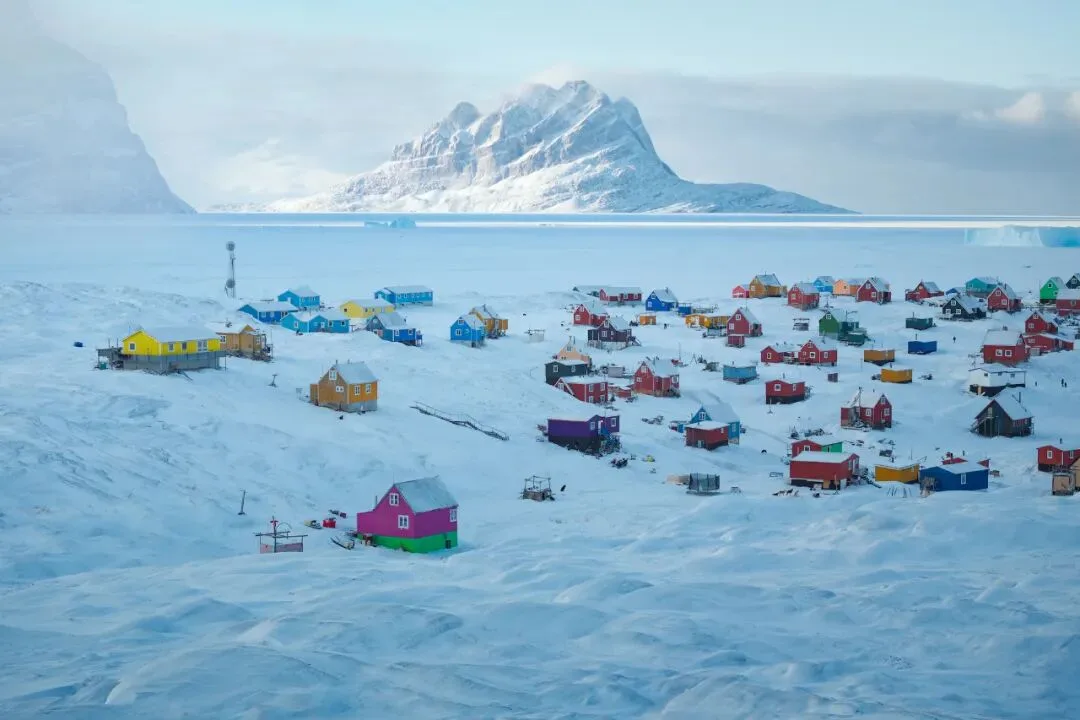
Unexpectedly, this led us to a chance encounter with Saattut, an Arctic village straight out of a fairy tale.
Video
▶ Watch the video tutorial on Bilibili
This is the fully illustrated companion to the video above. After six flights, Thomas reached Uummannaq in Greenland; stranded by continuous blizzards, he turned his attention to the more remote settlements nearby and finally crossed the frozen sea by snowmobile to Saattut, an Arctic fishing village with almost no tourists and hardly any information online. The text follows the video's arc, with screenshots of the drone-controller screen from the composition lesson — read this first, then feel the sub-zero wind in the video.
01 Six Flights and the Last 25 Kilometers Over Sea Ice
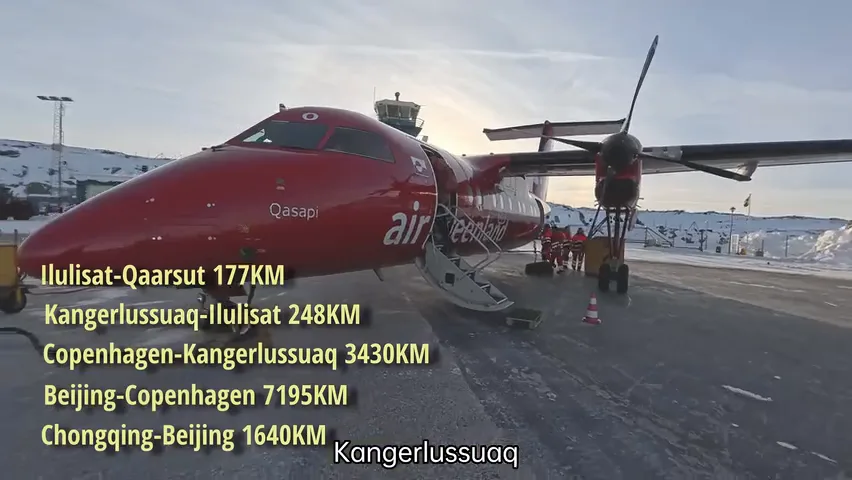
The route of this trip is overlaid on the opening frames: Chongqing, Beijing, Copenhagen, Kangerlussuaq, Ilulissat, Qaarsut, and finally a helicopter hop down to Uummannaq (at 0:00-0:13 in the video). And even arriving there does not end the journey — 25 kilometers remain, to be covered by the most Greenlandic winter transport there is: a dogsled, or its more modern cousin the snowmobile, across the frozen winter sea (at 0:14-0:26 in the video).
02 Uummannaq: an Arctic Fishing Town of 1,400
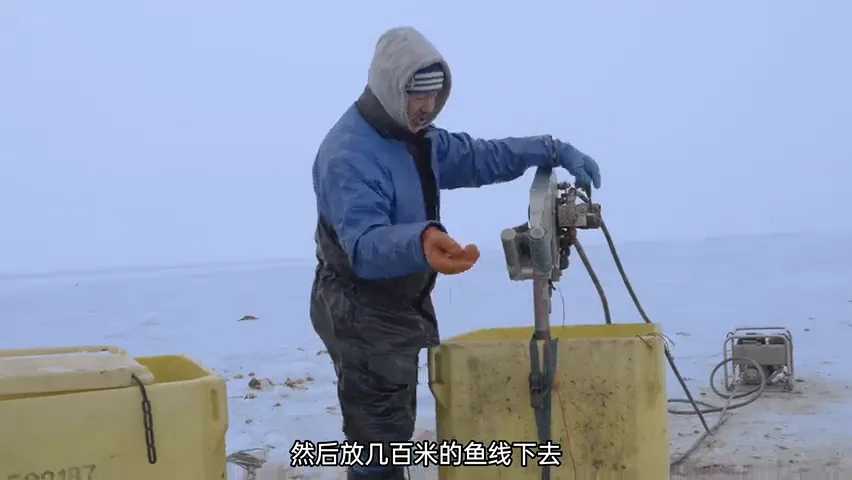
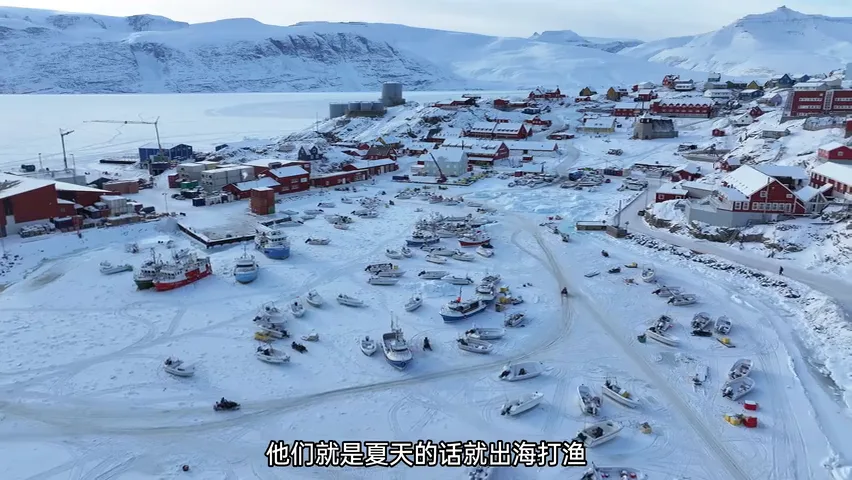
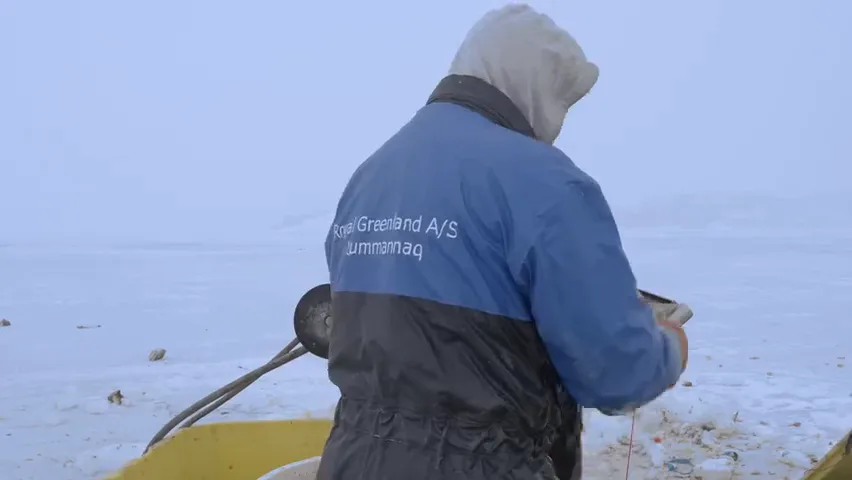
Uummannaq has roughly 1,400 residents — a large town by the standards of the lands above the Arctic Circle (at 1:12-1:18 in the video). Visitors often wonder what people live on up here: in summer the harbor fills with small fishing boats and the townsfolk fish at sea; in winter the sea freezes over and figures appear on the distant ice — they drill holes through it and drop fishing lines hundreds of meters long (at 1:30-1:53 in the video).
03 Snowbound, and a Discovery on the Map
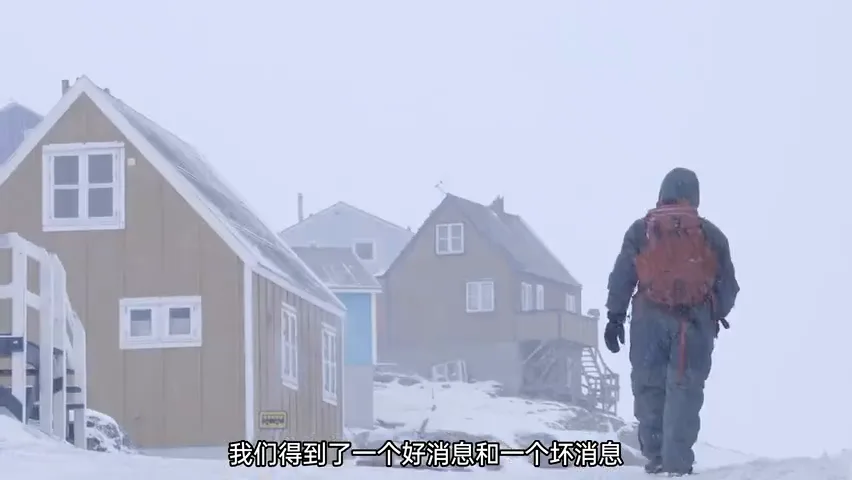
The plan had been to explore Uummannaq from the 20th to the 23rd, then fly north to Qaanaaq. On the 22nd, Thomas received good news and bad news at once: the good news was that snow had finally fallen and turned the whole town into a beautiful white world; the bad news was that every helicopter flight for the next five days was cancelled by weather — the team would spend eight days in a little red cabin by the sea (at 2:20-2:53 in the video).
Over the following days they walked and flew their drone over nearly every corner of Uummannaq and were running out of fresh angles. So Thomas turned his attention to the surrounding settlements, screening them one by one on an online map that afternoon (at 2:53-3:18 in the video): Qaarsut was the helicopter transfer stop but effectively out of reach; Ikerasak was a bit too far; and then he spotted a tiny settlement called Saattut — with the sunrise in the east, looking back from the morning light the village would have the sacred mountain of Uummannaq behind it, lit up by the first sun (at 3:29-3:43 in the video).
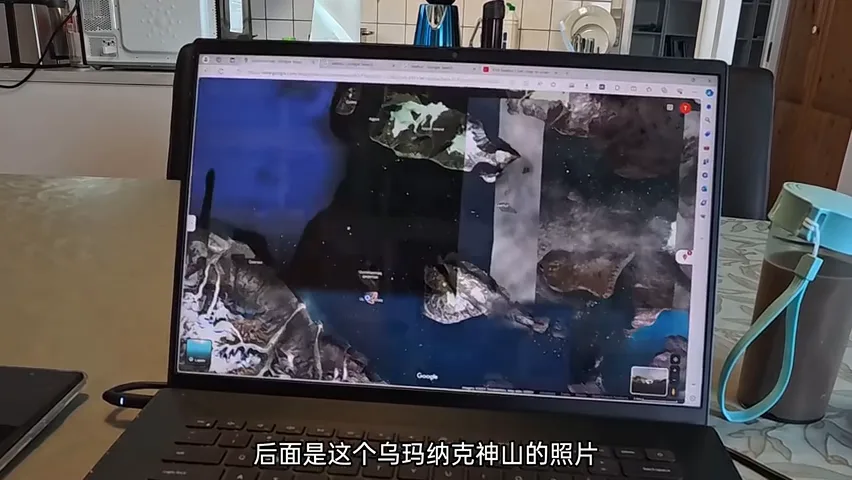
The sacred mountain still lay 25 kilometers from Saattut, and almost nothing about the village could be found online — no information, barely any photos. The harder it was to find, the more compelling the place became. Over the internet they found a local guide, Paluk, willing to carry them across the frozen sea by snowmobile (at 3:43-4:07 in the video). Riding a snowmobile in the Arctic is genuinely brutal: even in the thickest down gear, the cold slowly seeps in through the air. After an hour in that deep freeze, they finally stood before the mysterious fishing village (at 4:10-4:35 in the video).
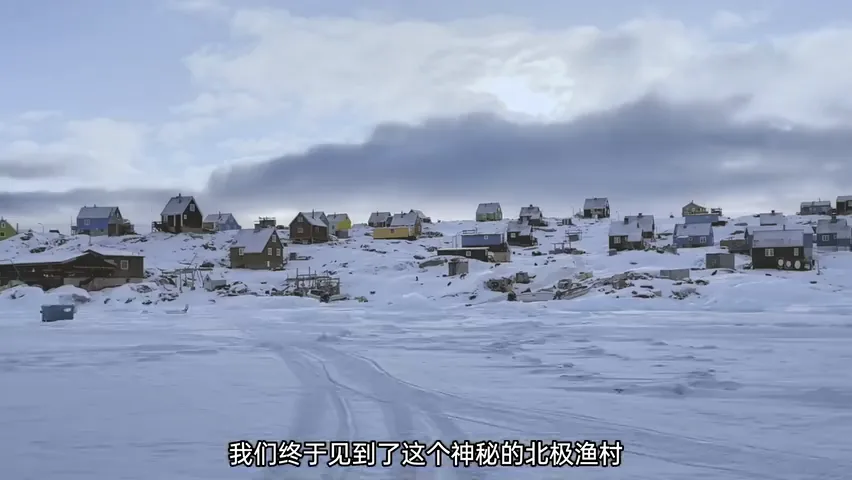
04 The Composition Lesson After the Drone Takes Off
From the ground, Saattut looks unremarkable; once the drone rises, everything changes (at 4:36-4:41 in the video). Thomas then switches the camera to his drone controller's screen and walks through how he searches for a composition (at 5:15 in the video): first he flies toward the other side of the village, where the peaks are round-topped and plain and a jumble of rock sits behind the houses; so he moves to the village's flank, where the mountain behind is majestic and the light is good — but the framing is too high. He needs to fly closer and lower to take in the full peak, and dropping a little more yields breathing room in the frame (at 5:21-5:58 in the video).
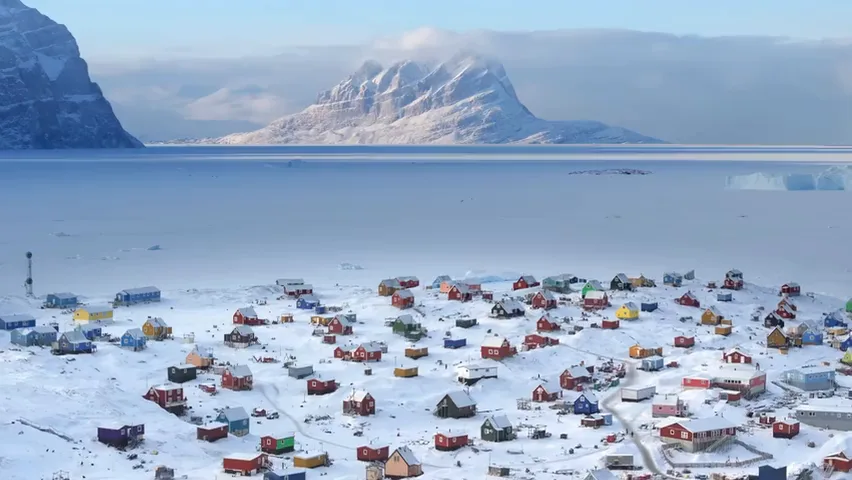
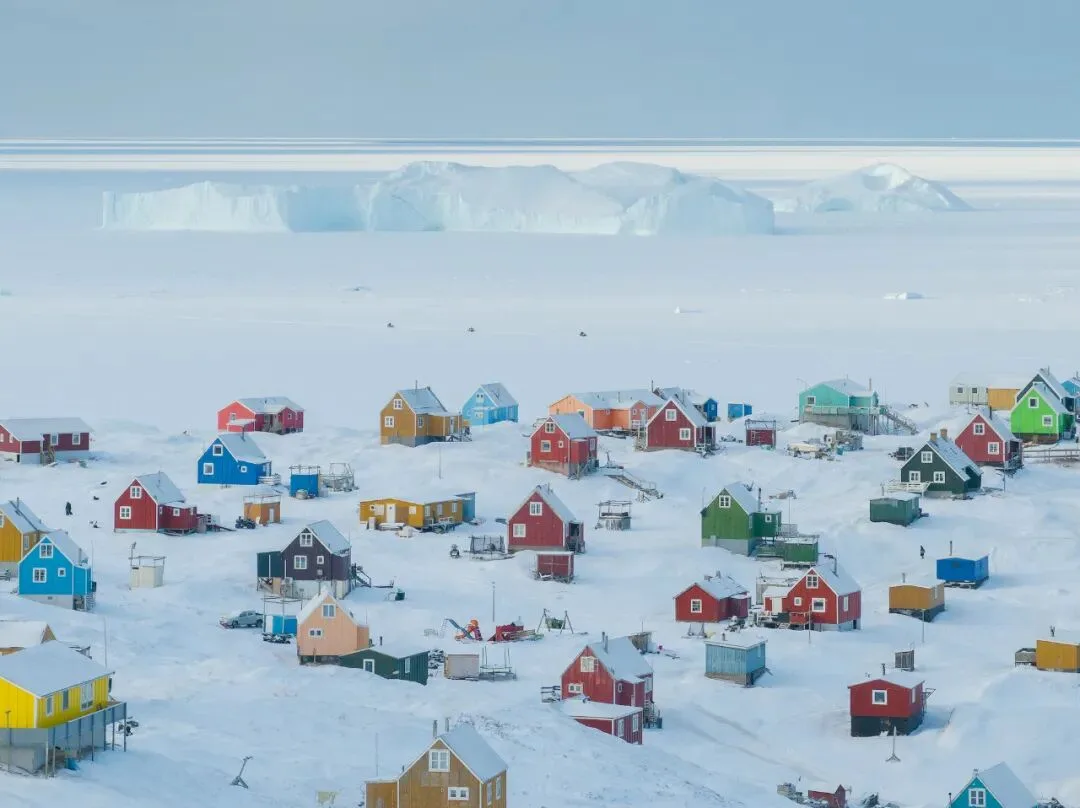
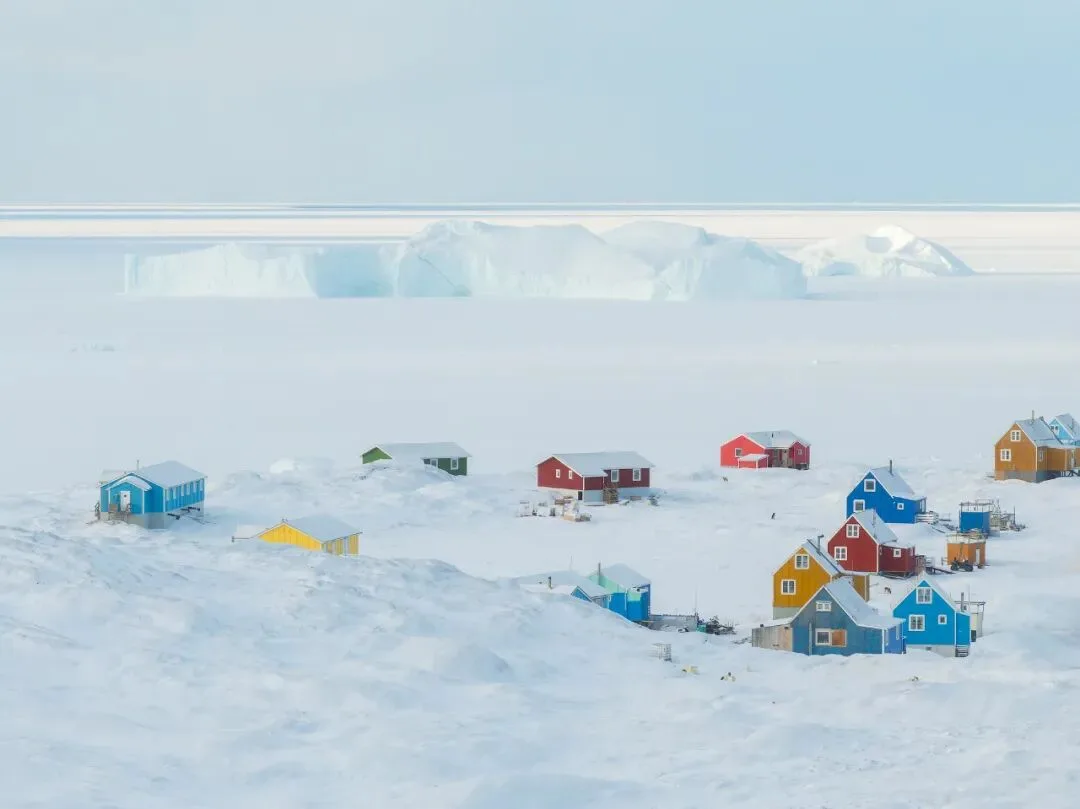
Next he switches to the 7x telephoto lens: a field of icebergs sits grounded in the bay, locked in by winter sea ice, a fascinating sight; together with the riotously colored houses, he frames it all through the 7x telephoto (at 6:05-6:29 in the video). The longer the focal length, the larger distant objects appear and the scale between near and far shifts — exactly the compression advantage of a telephoto (at 8:54-9:04 in the video).
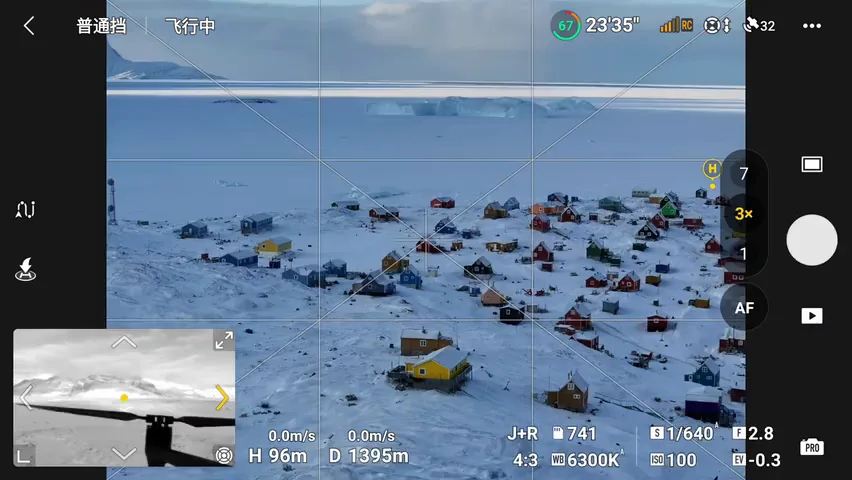
Swinging the view further right, the sacred mountain of Uummannaq enters the frame, 25 kilometers away — precisely the composition he had envisioned on the map before setting out; impossibly distant, and truly spectacular (at 6:32-6:48 in the video). Now he hunts for balance: the snow mountain at center, an antenna tower on the left, the yellow house and the town on the right — more balanced, yet the town still weighs too heavy on the right, so he keeps easing rightward. Along the way he spots a house painted in an odd green-purple complementary scheme and wants it at the right third, the yellow house at the left third, all while keeping the mountain balanced — and the frame settles into something much better (at 6:50-7:46 in the video).
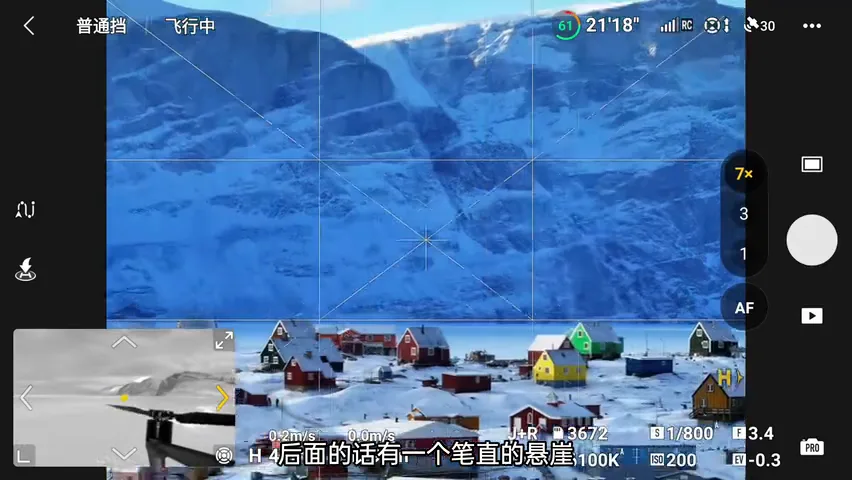
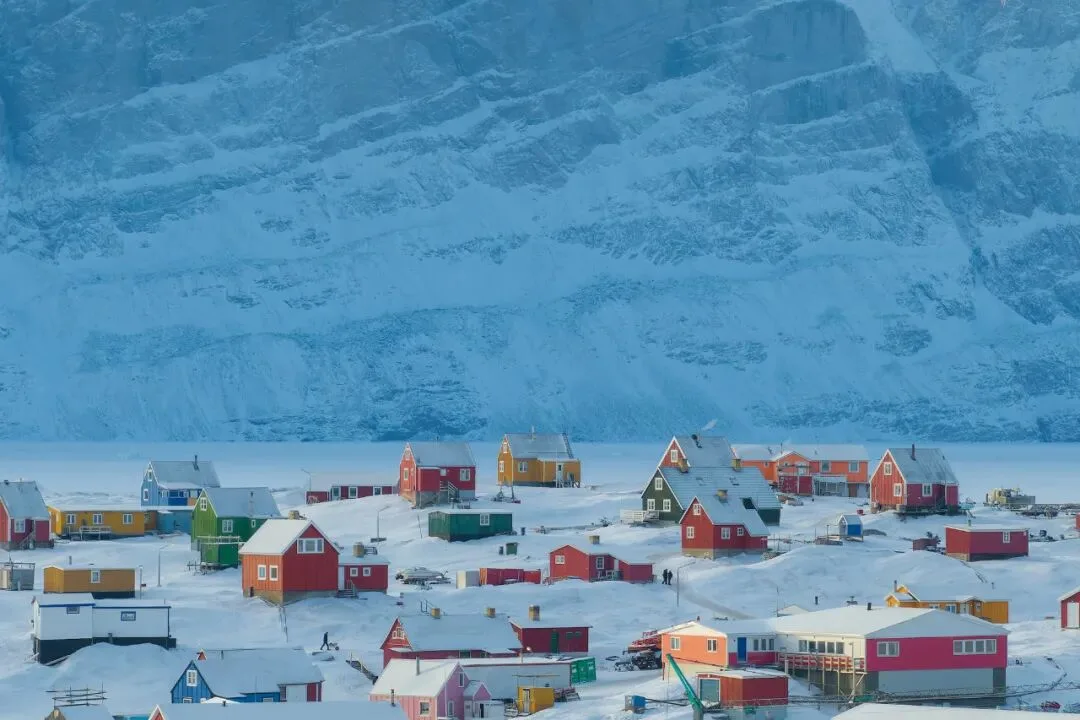
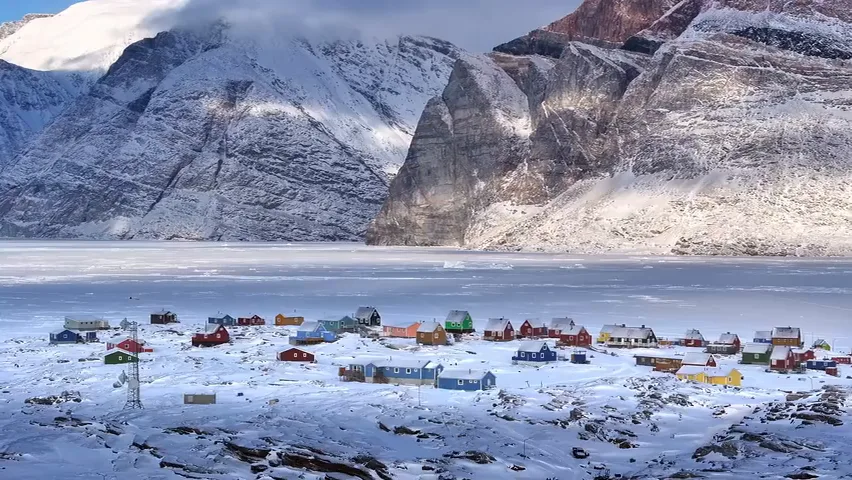
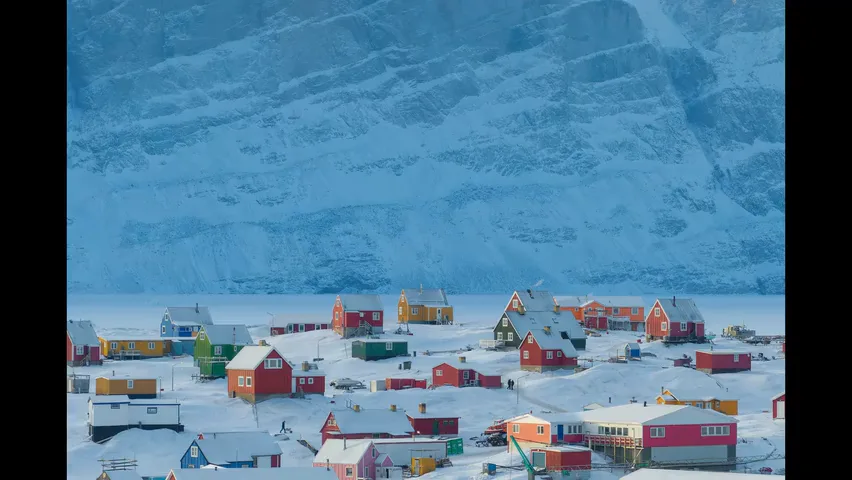
One last angle: behind the village rises a sheer cliff. The sun lights the colorful town in front while the cliff behind stays fully backlit, creating a beautiful warm-cool contrast — warm houses against a cold giant, a gift unique to the Arctic's low sun (at 9:11-9:24 in the video).
05 The Color Code, and Why We Photograph
Greenland's colorful houses hide a practical manual: this was once a Nordic colony, and since the locals then had no written language, house colors marked their functions — supermarkets and commercial buildings were red, green buildings usually communication facilities, and a large yellow house was typically the clinic or hospital (at 8:16-8:43 in the video). Modern Greenlanders, of course, are far more individual and no longer follow the color code to the letter.
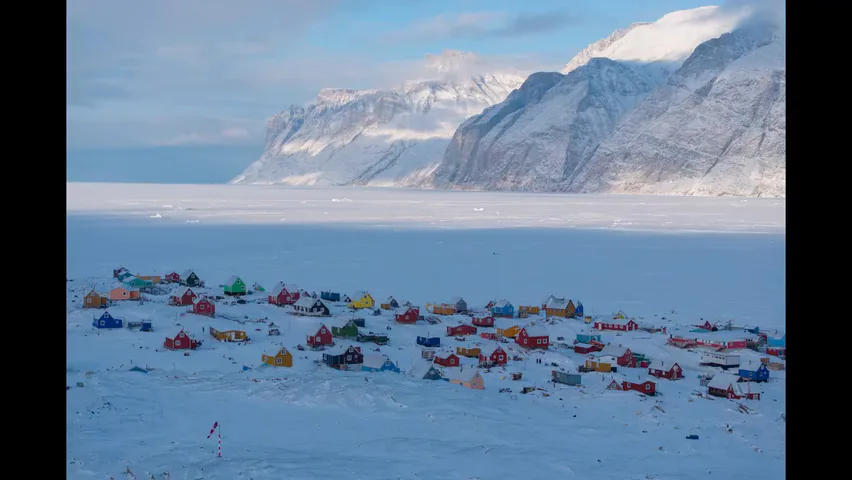
The hour-long ride back across the ice to Uummannaq left Thomas frozen through. Saattut normally sees no visitors and has no guesthouse, so regrettably they could not stay to experience its quiet, gentle side more deeply (at 9:42-10:05 in the video). Before this trip, the village was all but absent from the internet — an Inuit community that has fished and hunted here for generations, a Shangri-la of the ice (at 10:07-10:26 in the video).
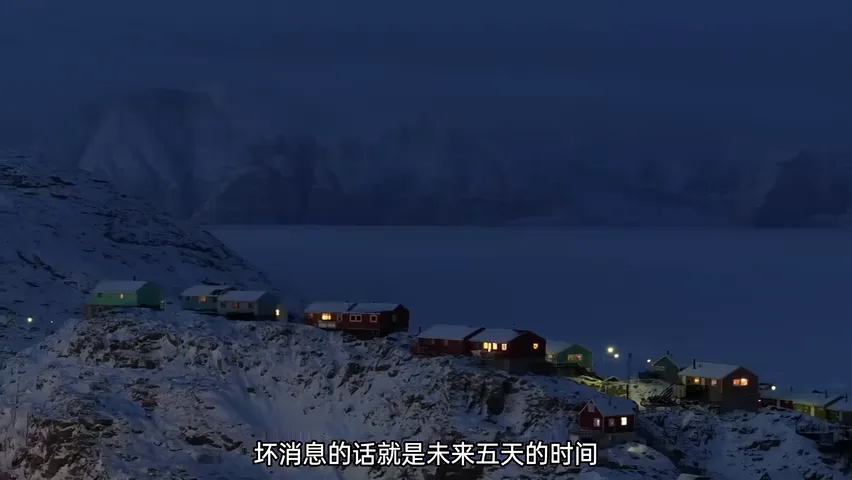
"To discover lives that have never been explored, and to show sides of the world that no one knows" — that, Thomas says, is part of what it means to work as a professional photographer (at 10:28-10:34 in the video). Perhaps someone will one day reach this frozen sea because of a single photograph from Saattut, arriving with more curiosity and respect.
1. Inspiration can start on the map: sunrise direction, background peaks, distances and angles — envision the composition before you leave; 2. A village that looks plain from the ground may be another world once the drone lifts — change direction, fly to the flank, drop lower, leave negative space; a composition is approached step by step; 3. Telephoto compression magnifies the distant sacred mountain, putting a 25-kilometer backdrop in the same frame as the village; 4. Warm-cool contrast is a polar photographer's weapon: sunlit warm houses against a backlit cold cliff — two temperatures in one frame.