Photography Tutorial · 2017-04-30
Great Photography Guides the Viewer's Eye
Photography is a visual language. In a good photographic work, the viewer's gaze is held on the subject and points of interest — not drawn to clutter unrelated to the theme.
In today's tutorial, Thomas discusses in detail the in-camera and post-processing methods photographers can use to guide the viewer's vision within a photo.
1
Guiding with Contrast
In life, what catches the eye is always the people and things that stand out. Likewise, in a photographic work, elements with obvious contrast against the rest of the frame will attract the viewer's special attention.
In an overall dark-toned work, the bright areas of the frame stand out especially.
Take this Patagonia scene through Max Rive's lens, for example: shot at night, the whole photo is very low in brightness. The perfectly timed capture lets the distant Cerro Torre be lit by moonlight, noticeably brighter than everywhere else in the photo.
Further dodging and burning in post then uses brightness contrast to guide the viewer's gaze. I believe that the moment you first saw this work, you too immediately noticed the bright main peak.
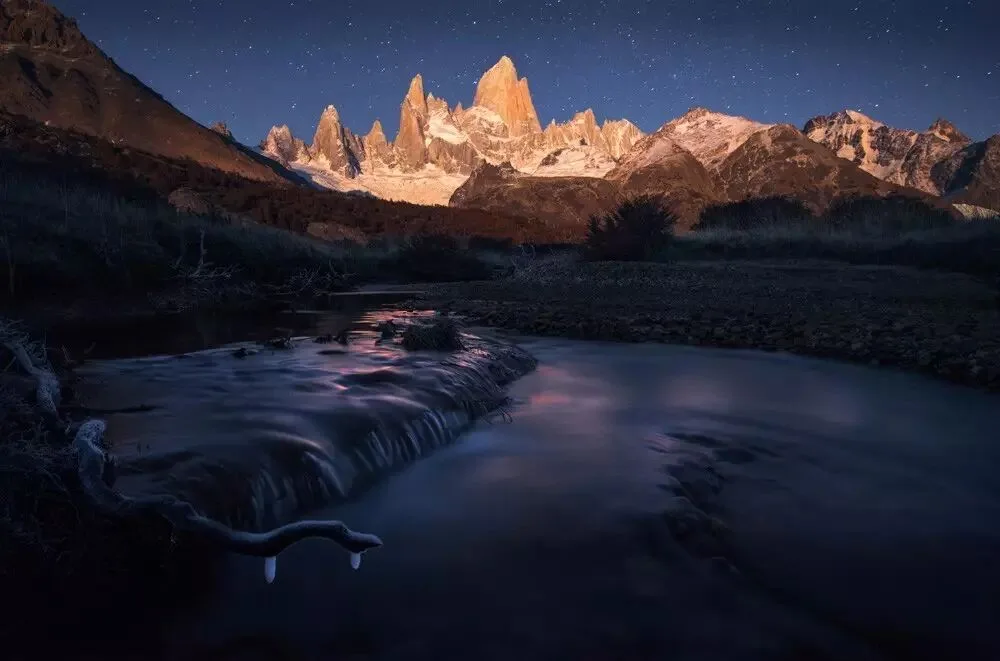
Author: Max Rive, maxrive.tuchong.com
In a dark-toned photo, bright objects stand out more. By the same token, in an overall bright work, the finishing touch comes from the dark objects in the frame.
For example, in this high-brightness snow scene below, what attracts the eye most is still the 3 darker figures.
Besides the light-dark contrast, this photo also contains a hidden but important contrast: that between people and nature. Through thousands of years of natural selection, humans have developed sharp eyes for spotting living things in nature. A photo with a person in the frame, through the contrast between human and nature, attracts considerable attention.

Author: Thomas, thomaskksj.tuchong.com
Beyond bright and dark, there is another brightness-related property called contrast. In a work whose overall contrast is low, the high-contrast spots become the viewer's focus.
In the image below, for instance, the boundary between the aurora and the mountain silhouette is the highest-contrast spot in the whole picture — and also its visual center.

Author: Max Rive, maxrive.tuchong.com
Every property that can form contrast can be used to guide the viewer's vision, serving to highlight the subject and add the finishing touch.
In the image below, for instance, the warm yellow light of the street and the cool blue tones of the rainy evening form a sharp contrast, grabbing the viewer's gaze and making the photo more expressive.

Author: Thomas, thomaskksj.tuchong.com
A common mistake among photography beginners is making the whole photo high-sharpness, high-clarity, HDR-like and stuffed with every kind of detail.
A photo full of detail equals a photo with no detail, because those details conflict with each other, all competing for the viewer's precious attention.
A good work, by contrast, often strengthens the crisp texture at the points of interest while weakening the detail and grain elsewhere in the frame.
In the image below, for example, only on the light-struck clouds and rocks did I apply heavy texture enhancement and detail sharpening; everywhere else I left untouched, even reducing clarity and contrast.
This way the viewer's gaze naturally focuses on the part of the rock with the most detail.
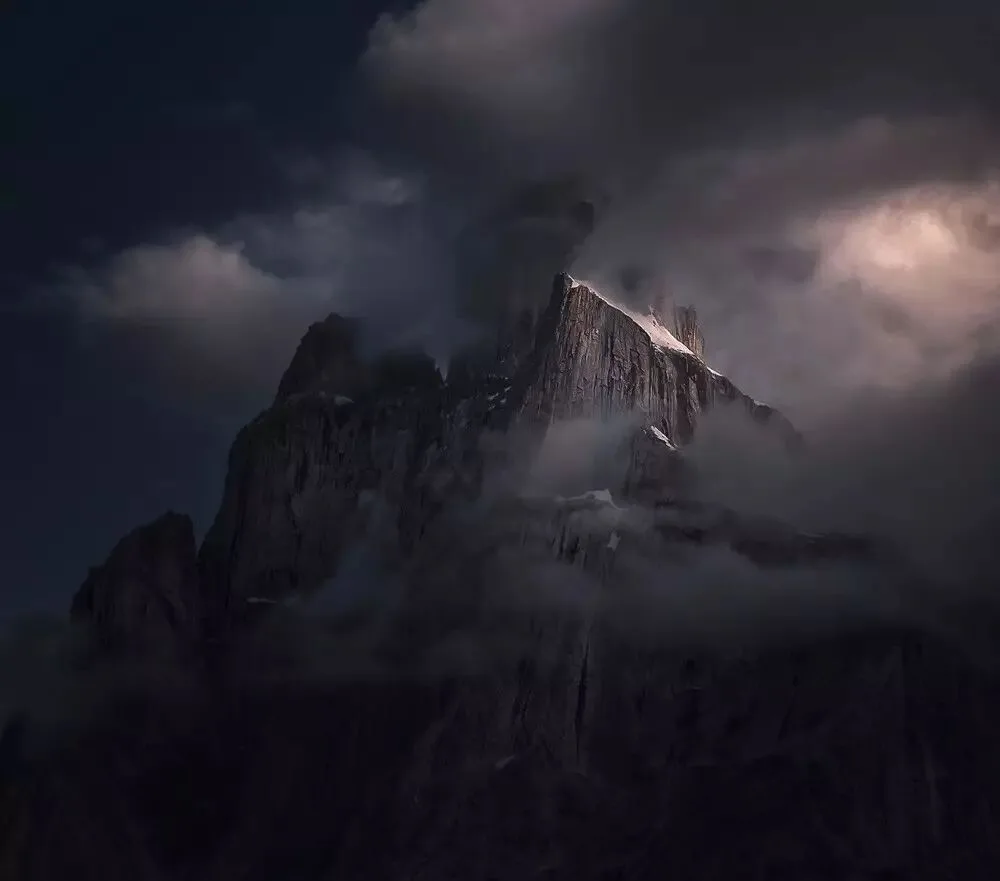
Author: Thomas, thomaskksj.tuchong.com
2
Guiding with Leading Lines
The viewer's gaze habitually moves along the lines in a picture. So if we can capture natural lines when framing in the field, or deliberately strengthen some lines in post-processing, pointing toward our subject, those lines become excellent leading lines.
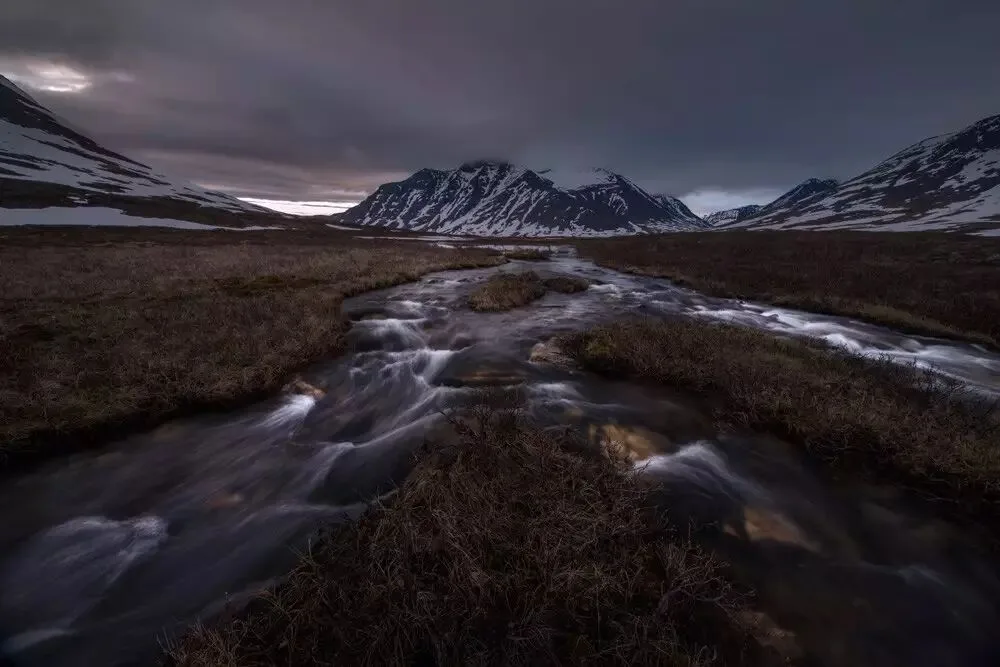
Author: Max Rive, maxrive.tuchong.com
In this photo by Max Rive, for instance, the river flowing into the distance serves as a leading line, guiding the viewer's gaze toward the distant snowy mountains.
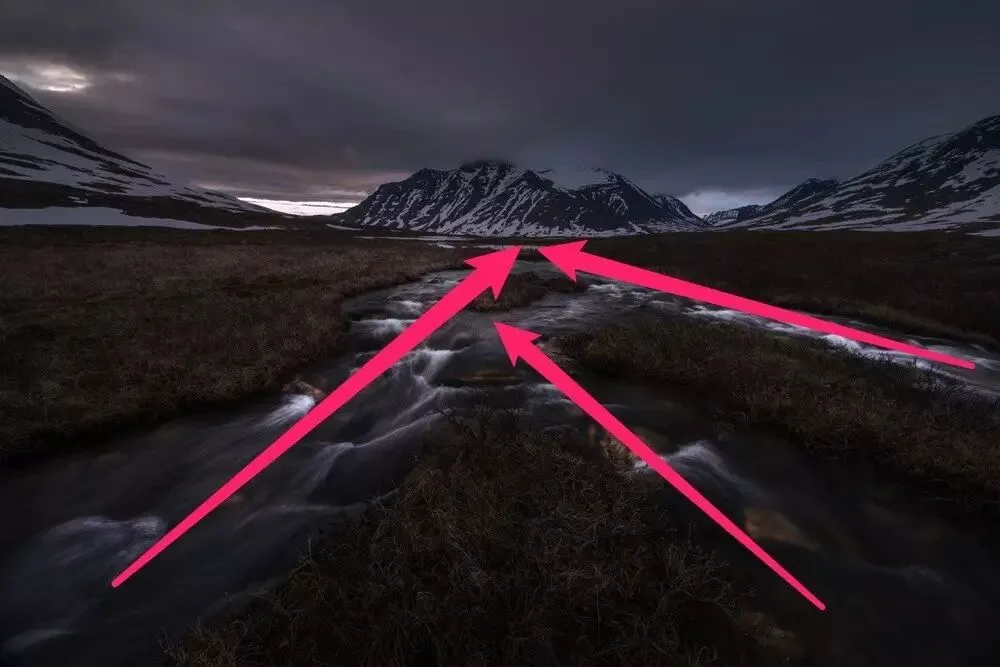
Lines formed by paths, rivers, and vegetation in nature all make excellent leading lines. In the image below, for example, Jiying AX (极影AX) photographer 史炎冰 used rocks as natural leading lines.

Author: 史炎冰, bangbing.tuchong.com
Beyond obvious lines, leading lines can also be implied directional relationships — such as light, a person's gaze, or the direction a finger points.
In the image below, the viewer's gaze follows the direction the person's finger points, moving toward the scenery in the distance.
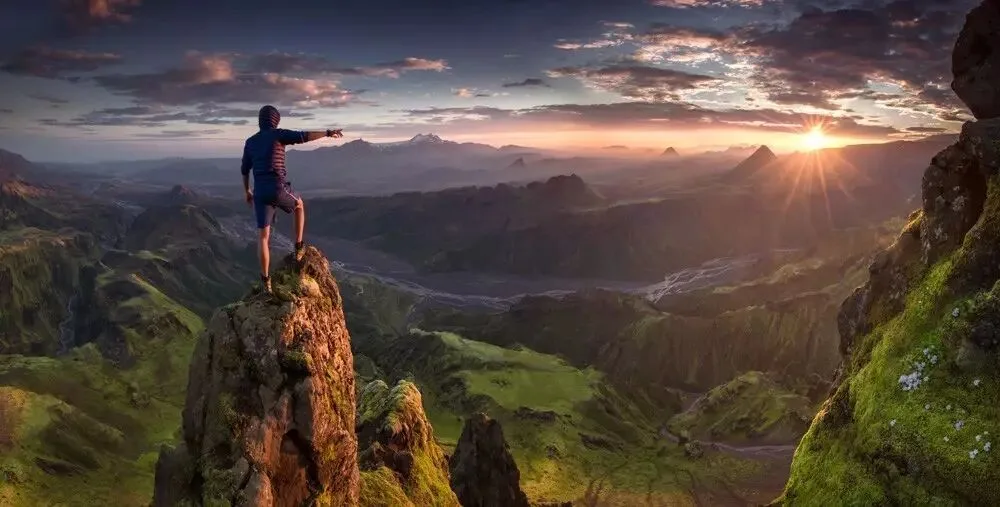
Author: Max Rive, maxrive.tuchong.com
Although light is not a set of explicit lines, it also has strong directional power. In a photo with a light source, the parts illuminated by light all receive the viewer's extra attention.
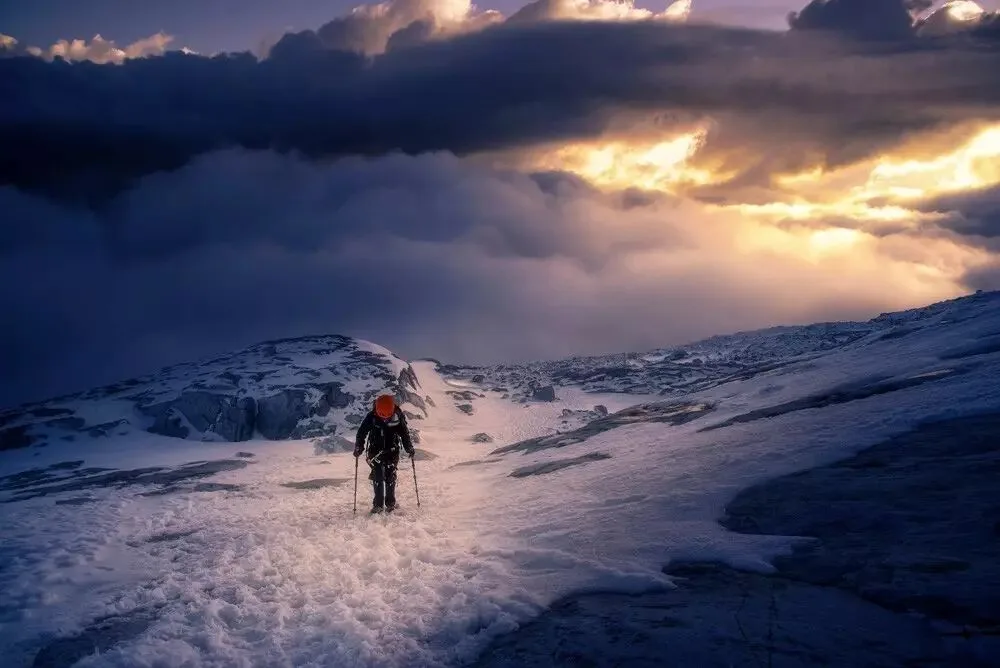
Author: Thomas, thomaskksj.tuchong.com
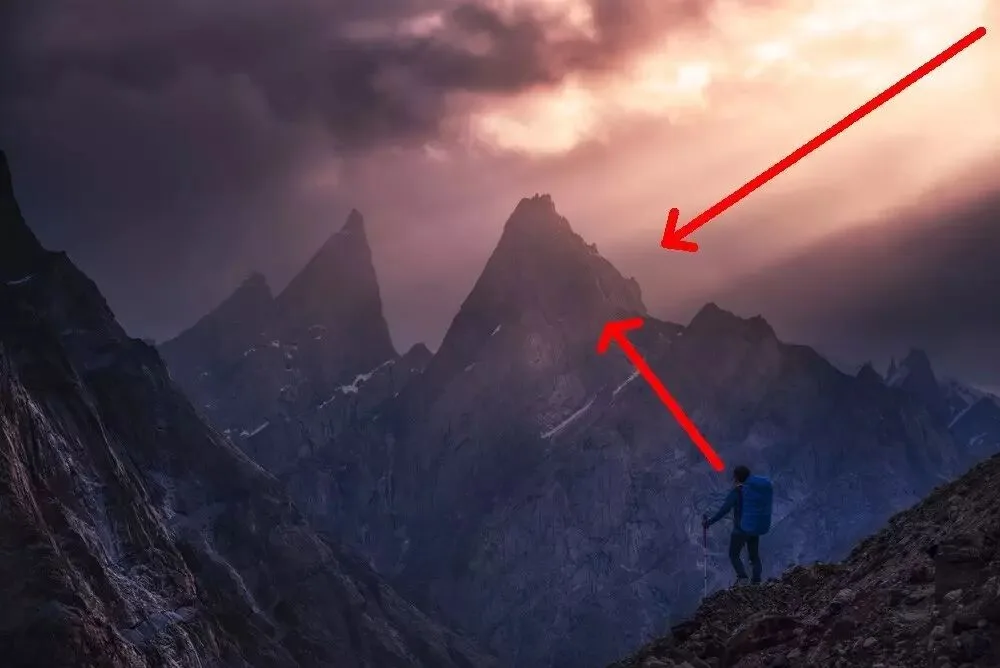
In the photo below, two leading lines point toward the peak — can you tell which two?
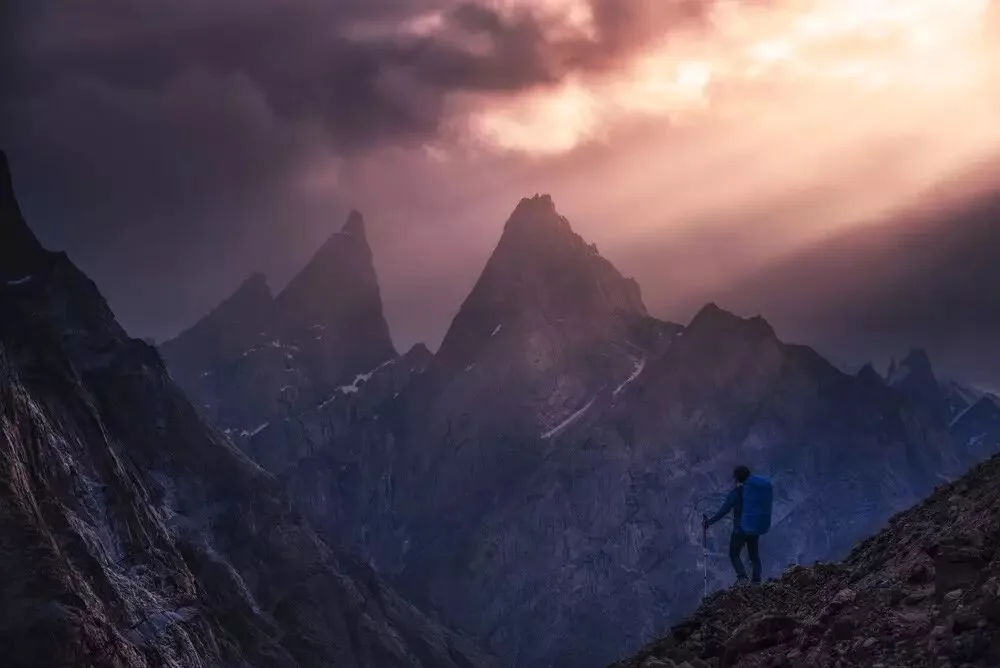
Author: Thomas, thomaskksj.tuchong.com
One is the hiker's gaze; the other is the light pouring down — both lead the viewer to the strangely shaped peak.
3
Guiding with Frame Composition
Frame composition can confine the viewer's gaze to the middle of the frame, forcing the viewer to focus on the subject within it.

Author: Max Rive, maxrive.tuchong.com
Max Rive is a master of frame composition: trees distorted by the wide-angle lens become both a visually tense foreground and a frame that confines the viewer's gaze, keeping it from wandering outside the picture.

Author: Max Rive, maxrive.tuchong.com
Frames are everywhere in nature — they take a careful eye to discover and find.

Author: Pan Weihao, panweihao.tuchong.com
Even the ever-shifting clouds and mist can sometimes serve as a frame.

Author: Thomas, thomaskksj.tuchong.com
4
Combined Guidance
A good work with a clear subject and prominent points of interest often employs several of the guidance methods mentioned above at the same time.

Author: Max Rive, maxrive.tuchong.com
The work above simultaneously uses frame composition plus light-dark and warm-cool contrast, making even the tiny-looking distant peak remarkably prominent.

Author: Max Rive, maxrive.tuchong.com
In the work above, light-dark contrast, warm-cool contrast, leading lines (the river, the branches), and frame composition (the trees) are all employed — a perfect-score work on 500px that truly lives up to its reputation.
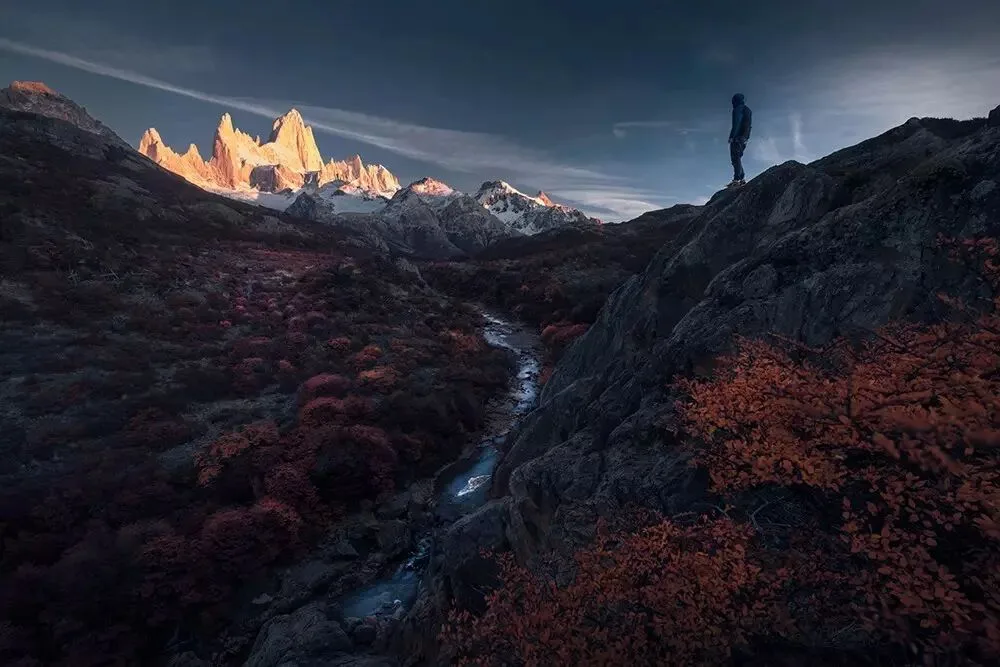
Author: Max Rive, maxrive.tuchong.com
In this excellent photo above, besides warm-cool and light-dark contrast, as many as 3 leading lines are used: one on the left formed in post by boosting the saturation of some shrubs, the curve of the river in the middle, and the backpacker's line of sight on the right.
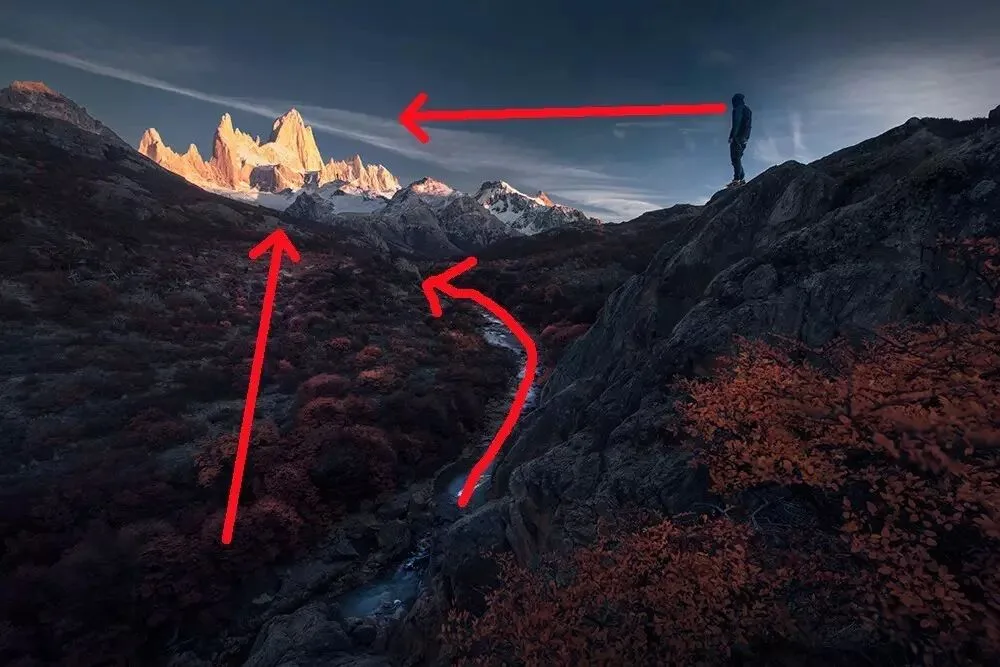
In short, properly applying the three methods — contrast, leading lines, and frame composition — to guide the viewer's vision onto the photo's points of interest will make our photographic works better.
Follow @Thomas Chu Photo, and learn one photography skill every week.