Photography Tutorial · 2023-04-30
Guizhou from Above: Drone Telephoto Composition Tutorial
How do you shoot grand landscape photos with a drone telephoto lens?
In today's tutorial, Thomas takes you to Xingyi, Guizhou, to show on location how to compose with a telephoto from the air and create distinctive landscape shots at popular spots!
Video
▶ Watch the video tutorial on Bilibili
This is the illustrated companion to the video above. Thomas brought the Mavic 3 Pro to Xingyi, Guizhou, and demonstrated over rolling karst peaks how to compose with a drone's telephoto: the fierce 7x compression, the grand 3x layering, an on-location case at Kilong Castle, and the telephoto mindset of "finding a foreground for distant mountains." The article arranges it all into five chapters, pairing remote-controller screenshots with final frames so ground and aerial views can be read side by side.
01 Three Telephoto Steps: Compression First
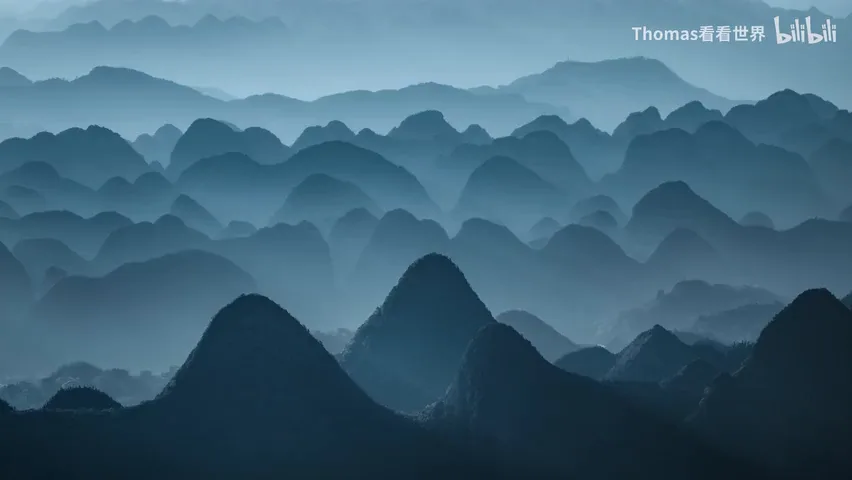
At 7x, near and far are pressed hard together. However the drone advances — spiraling upward from low to high, say — the distant peaks loom especially large, and that "mountains rushing at you" impact takes over. Tracking a person at this focal length also amplifies foreground motion, adding obvious tension to the frame (at 0:46 in the video).
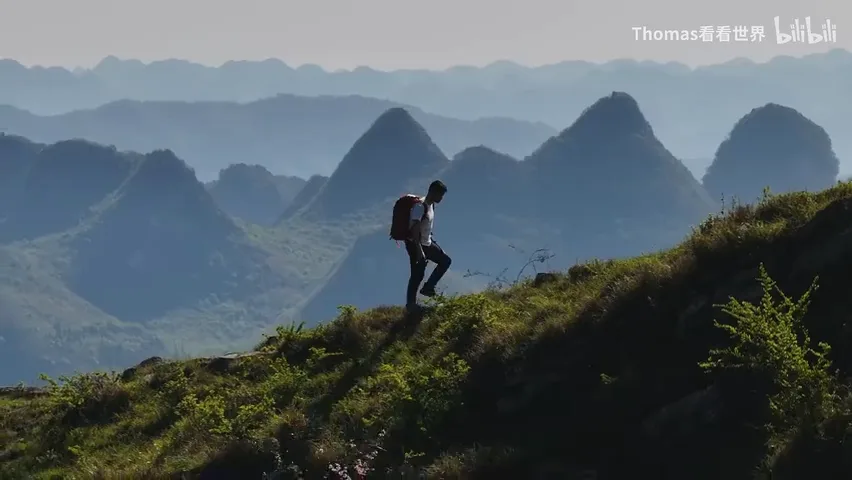
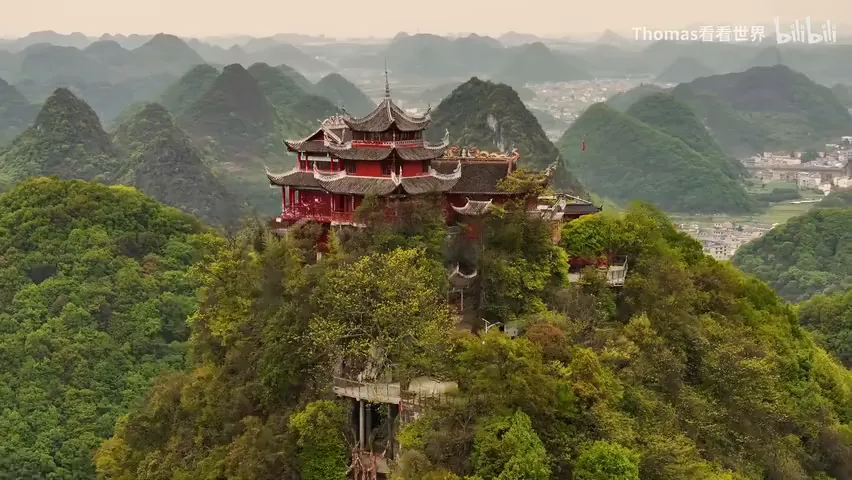
The 3x setting sits between 7x and the 1x wide angle: the frame stays grand while keeping the stacked layers of distant peaks (at 1:15 in the video). Telephoto composition also has one prerequisite — find a subject in front of the scene, whether that's Thomas himself in the demo, or this temple on a hilltop (at 1:28 in the video).
02 Kilong Castle in the Field: Classic and Critical Angles
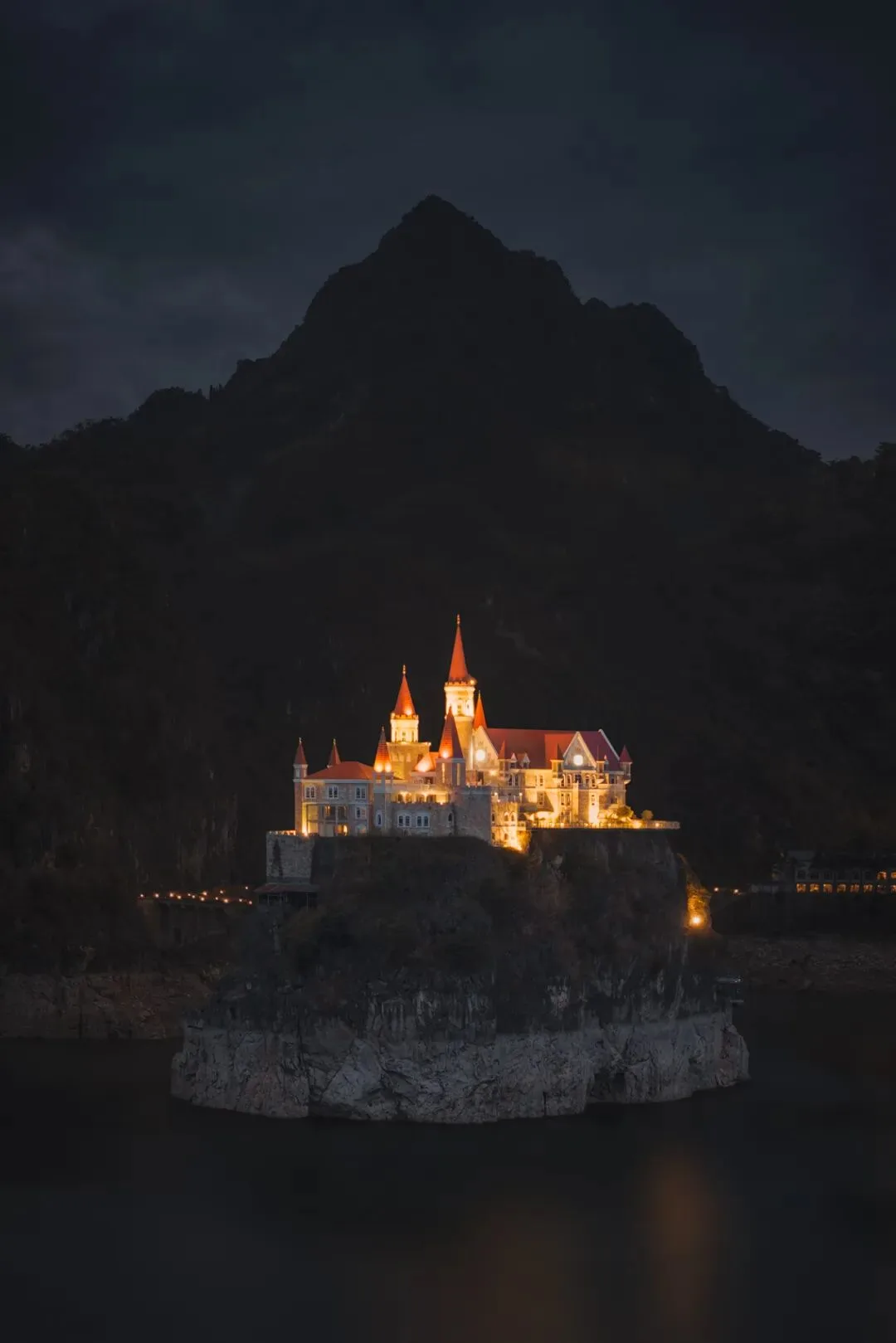
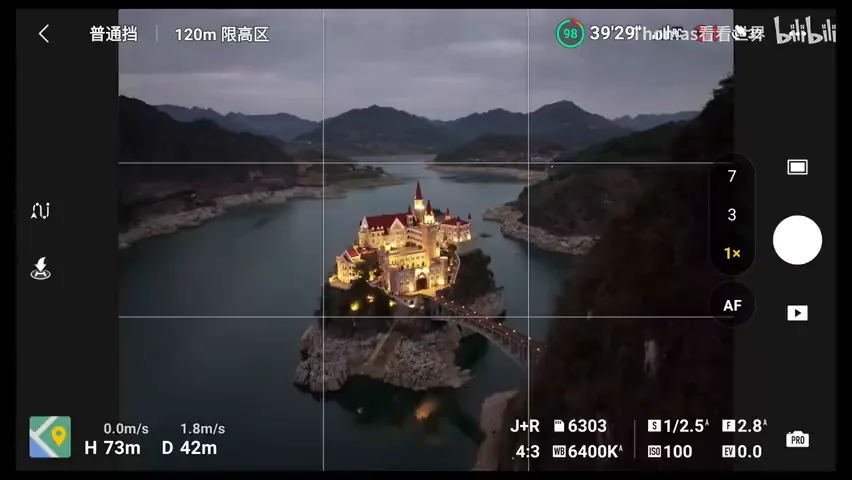
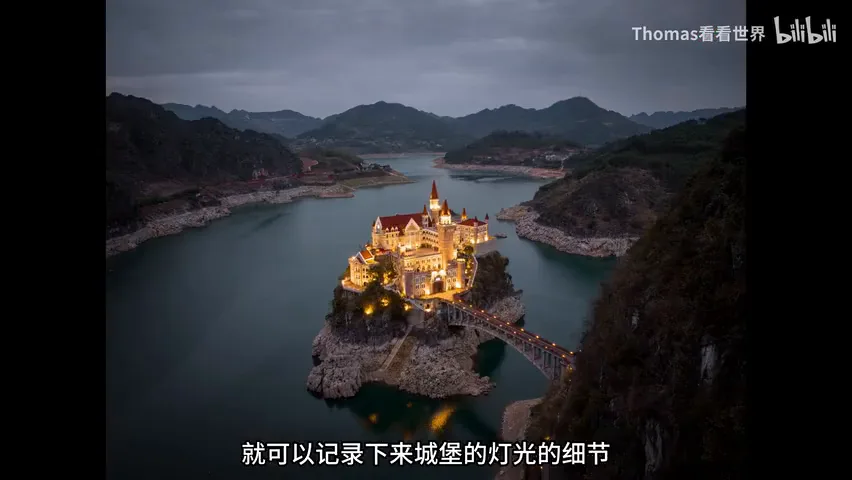
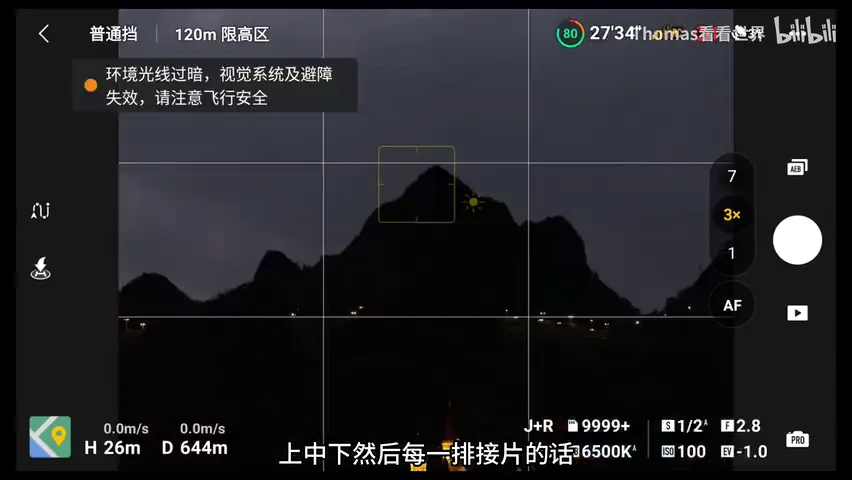
At Kilong Castle in Xingyi, start with the classic angle: simply switch the drone to AEB exposure bracketing and it will capture the detail of the castle lights — stunning (at 1:41 in the video). The controller screenshot shows the exposure readouts and histogram; the blue-hour lights are fully preserved.
After the classic shot, Thomas flies onward hunting for different angles. He notes he always flies forward while scouting — away from the shore, toward open space — which prevents accidents (at 1:53 in the video). Far enough from shore, a look back reveals a genuinely different viewpoint.
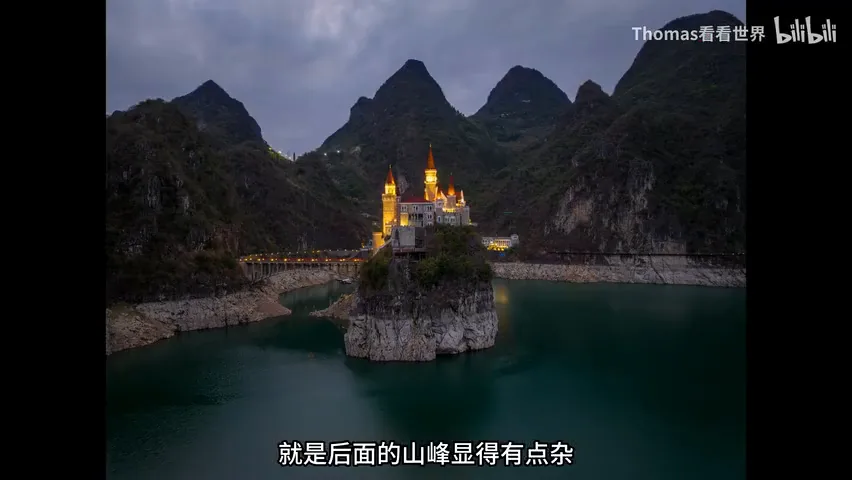
But that viewpoint has flaws: the peaks behind feel cluttered, and the castle's side profile is unflattering (at 2:05 in the video). So keep moving: present the castle from its side or a diagonal — a wider reading of the building — so architecture and mountains interlock with rhythm. That's what makes the frame hold up.
03 The Wide-Angle Trick and the Three-Row Panorama
The controller recording exposes the wide angle's weakness here: with near things big and far things small, the distant peaks shrink and lose all their majesty (at 2:23 in the video). The fix isn't forcing it — back away, perspective compresses, and the far peaks "grow." And once backing up isn't enough, reach for the 3x telephoto.
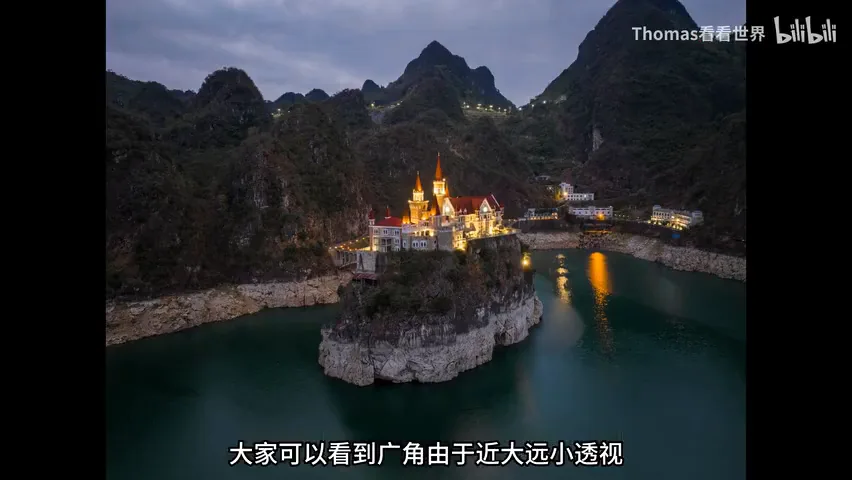
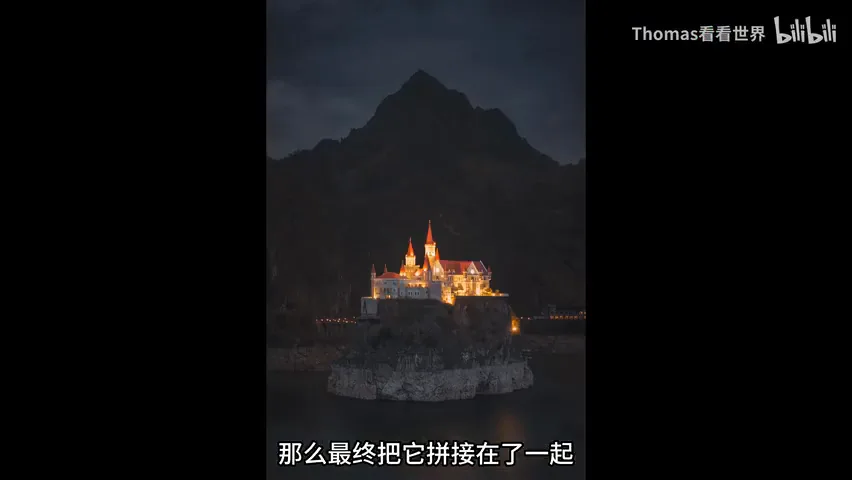
The final image is a three-row panorama — top, middle and bottom rows, each row a 5-frame AEB bracket — stitched into one photograph that feels grand while the telephoto compresses the distant peaks beautifully (at 2:43 in the video). The vertical three-row structure exactly fits the castle near and the entire peak forest far.
04 The Telephoto Mindset: A Foreground for Far Mountains
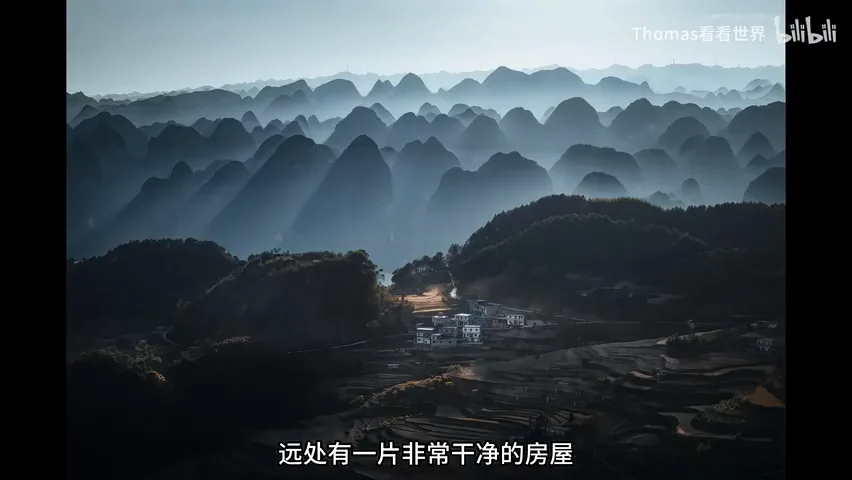
Once your drone has a telephoto, keep one habit in mind: hunt for a foreground, and for the near-far relationship as the telephoto renders it (at 3:01 in the video). Say countless spectacular peaks stand in the distance — find a small house, a village in the near ground, and let them answer the mountains. The frame turns epic at once (at 3:12 in the video).
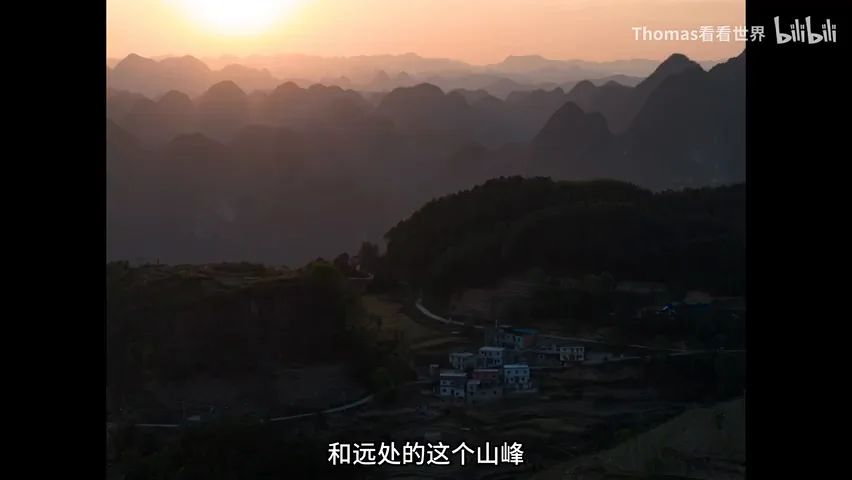
The same idea, another landing spot: at 3x, a patch of very clean houses ringed by fields, with spectacular peaks behind (at 3:30 in the video). A larger village sits nearby, so pull back a little more and take in foreground and background together — the whole frame settles into a wondrous "heaven-and-earth-in-one" feeling (at 3:40 in the video).
05 From 1x to 7x: Landscape Painting in the Air
At 1x the view is broad and somewhat flat (at 4:02 in the video); switch to 3x and the whole distance compresses at once, layers rushing forward. For China's peak-forest terrain — Guizhou, Guilin and the like — a drone telephoto is extraordinarily effective, unlocking compositions no one has reached before (at 4:14 in the video).
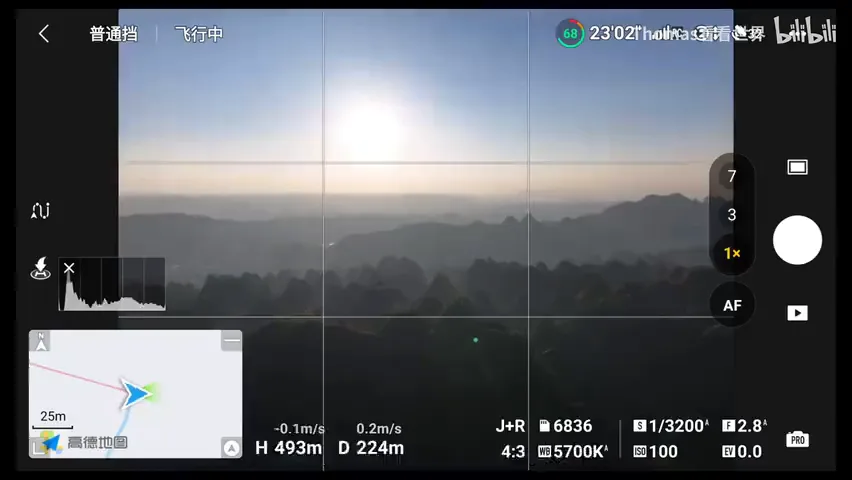
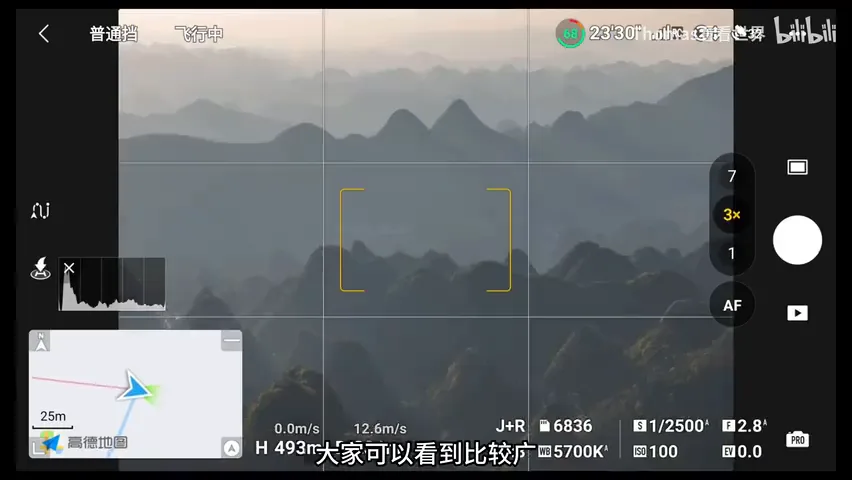
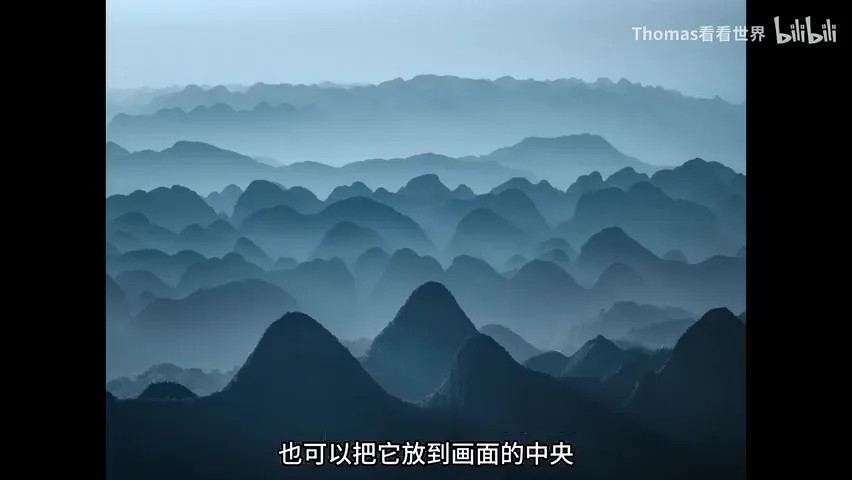
Then go to 7x: a distant antenna tower becomes the core subject; or when two peaks rise with special grandeur, place them dead center as the motif (at 4:30 in the video). Under the 7x telephoto's spell, the mood of a Chinese landscape painting emerges — truly exquisite (at 4:47 in the video).
1. Use drone telephoto in three steps: 7x for fierce compression and mountains rushing forward, 3x for grandeur with layering — and always find a subject in front of the scene. 2. Shoot the classic viewpoint with AEB bracketing to preserve the lights, then keep flying for new angles, presenting architecture from a wide side or diagonal reading. 3. Wide angles "eat" distant mountains via near-big-far-small perspective — back up to flatten perspective, then switch to telephoto; a three-row panorama with 5 AEB frames per row yields both grandeur and compression. 4. Fly with the telephoto mindset: pair spectacular far mountains with a village foreground — between 1x and 7x lies an aerial vision of Chinese landscape painting.