Photography Tutorial · 2024-06-27
My Photos of China Won a Hasselblad Masters Award! Here Are the Details~
Good news for all my friends following me: three photos I took of China's railway landscapes have won this year's Hasselblad Masters Award.
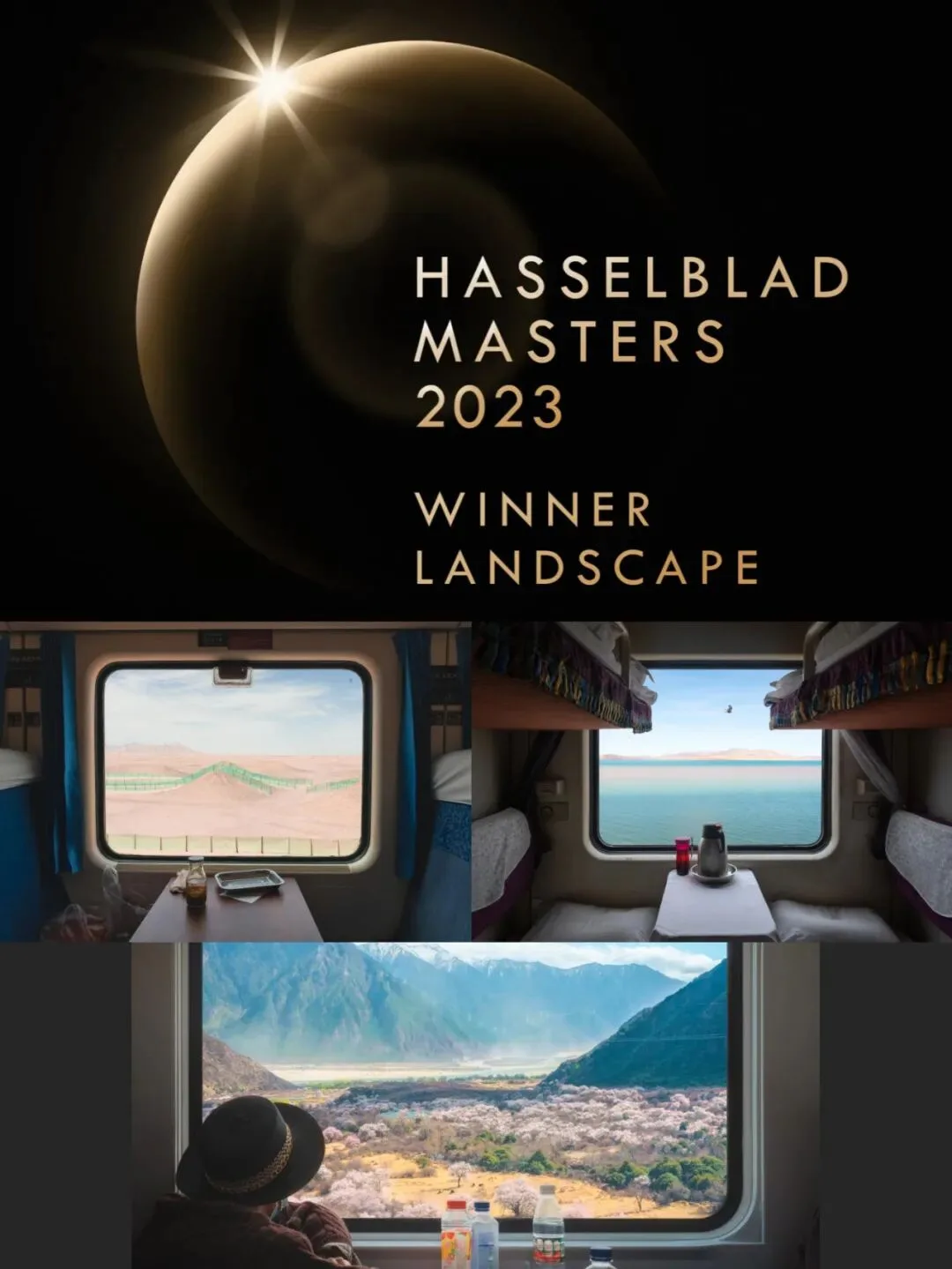
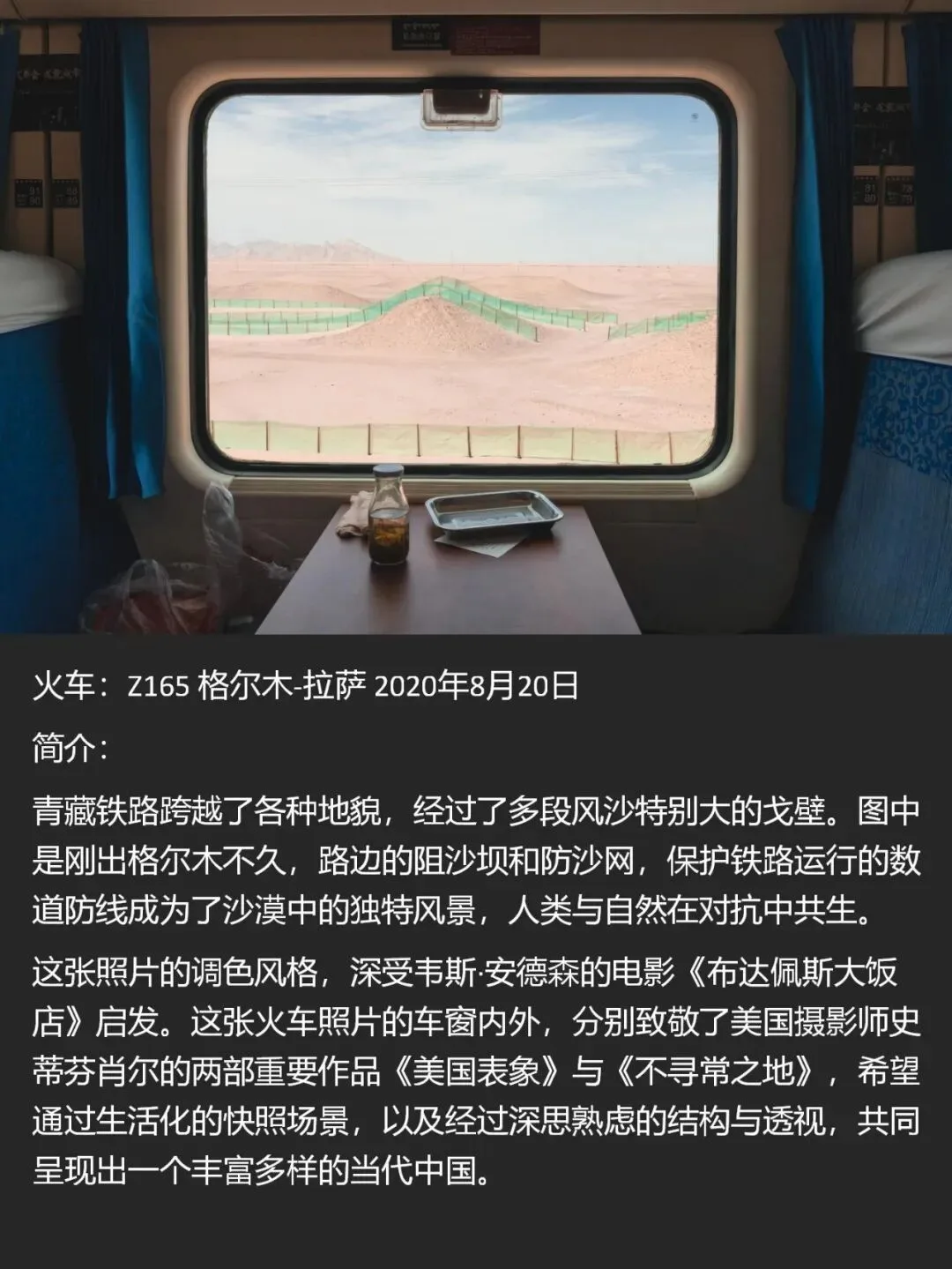
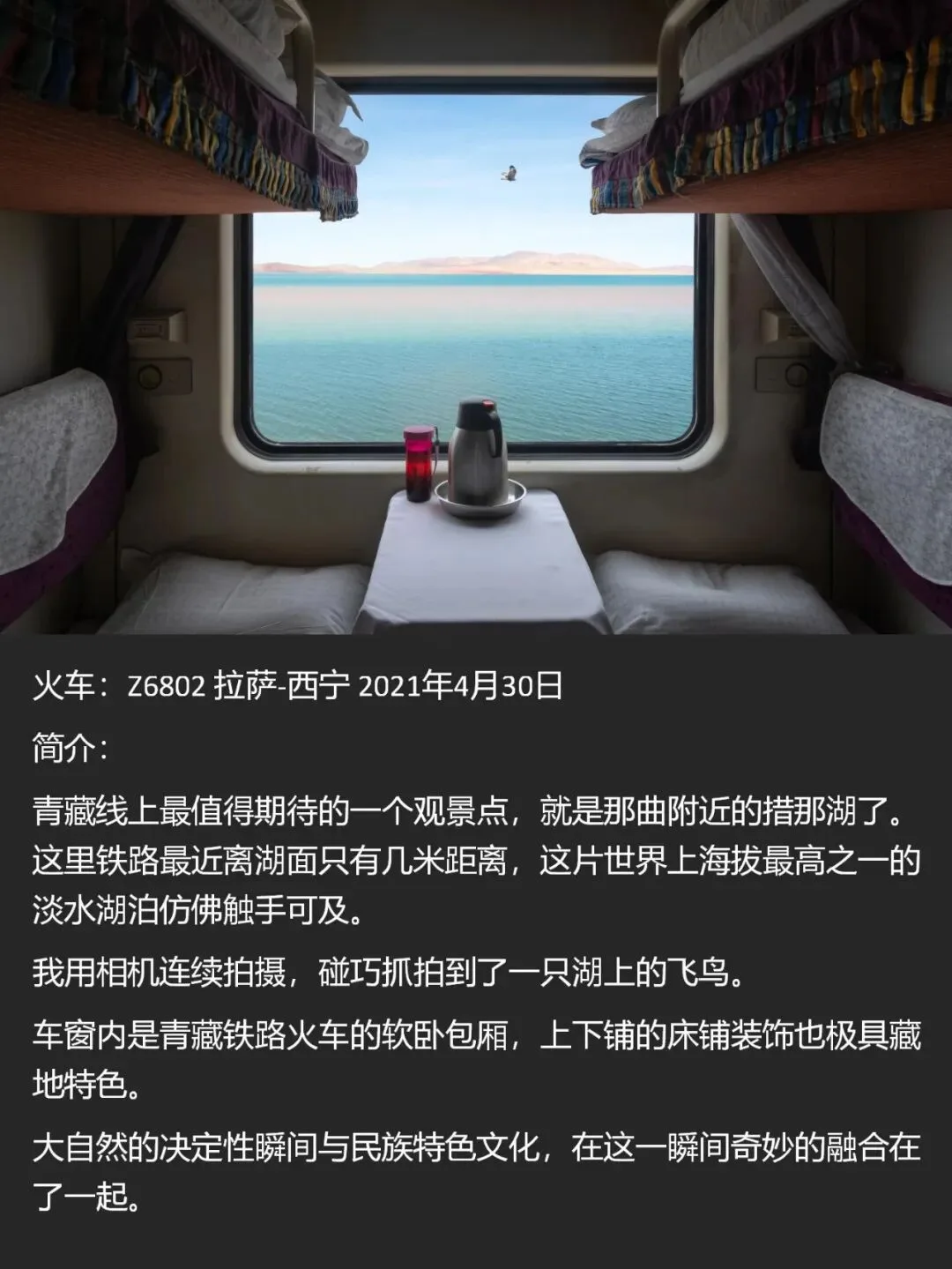
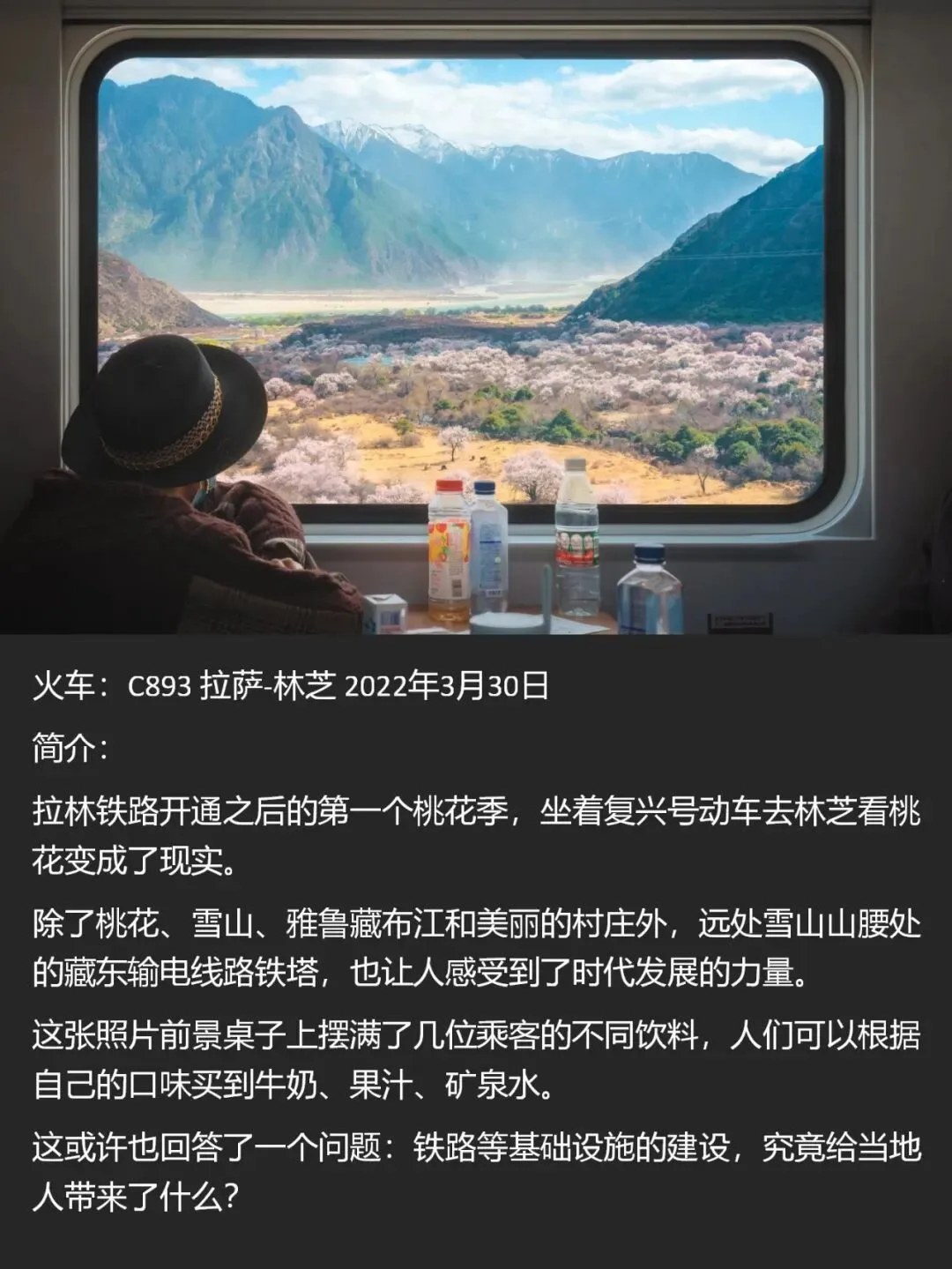
These three photos come from my series "The Qinghai-Tibet Railway Seen from the Window" (《车窗外的青藏铁路》). The series began in 2020. After riding nearly 40 highland trains, I've taken over 100,000 original frames in total. These three photos are the most representative, selected again and again from among them.
For more of my commentary on other finalist works in this year's Hasselblad Masters competition, see "Appreciating the 2023 Hasselblad Masters Finalists! How Do Professional Photographers Shoot?" (《2023哈苏大师赛入围作品鉴赏!专业摄影师们都是怎么拍照的?》)
For the complete list of this year's Hasselblad Masters winners, see "Winners Announced | Hasselblad Masters 2023" (《获奖者公布|哈苏大师赛 2023》)
The post-processing and color grading process for these winning works will be updated in "The Color Course for Photography Enthusiasts" (《给摄影爱好者的色彩课》) Lesson 41, "Post-Processing the Hasselblad Masters Winning Works" (《哈苏大师赛获奖作品后期》). Stay tuned:
A Complete Introduction to the Series "Seeing China by Train - The Qinghai-Tibet Railway Seen from the Window" (《火车看中国 - 车窗外的青藏铁路》)
"The Qinghai-Tibet Railway Seen from the Window" (《车窗外的青藏铁路》) is the first sub-series of "Seeing China by Train" (《火车看中国》). It focuses on several railways in China's Tibet and Qinghai — the Qinghai-Tibet, Lhasa-Shigatse, Lhasa-Nyingchi (Sichuan-Tibet), Golmud-Korla, and Dunhuang-Golmud lines. Through the train window, it unfolds a modern "Along the River During the Qingming Festival" scroll, showing the landscapes along the rail lines and people's ways of life.
In mid-2020, while riding a train to Golmud, I watched the northwestern Gobi Desert and dense factories outside the window, as well as the joys and sorrows of ordinary people inside. This gave birth to the idea of presenting contemporary China through a train window.
Many people wonder why I shoot scenery through a train window. It's because I want to use a technique that only now can be realized to present a subject unique to present-day China.
Only in contemporary China — the country with the world's longest high-speed rail mileage and passenger railway mileage, on this vast land of 9.6 million square kilometers — can you see such a rich variety of landscapes by rail: plateaus, rainforests, snow mountains, lakes, water towns, and enormous urban clusters.
Works like Wang Fuchun's "Chinese People on the Train" (《火车上的中国人》) and American photographer Lee Friedlander's "America by Car" showed me how to present a country and an era through a means of transport, providing a huge reference model for this series.
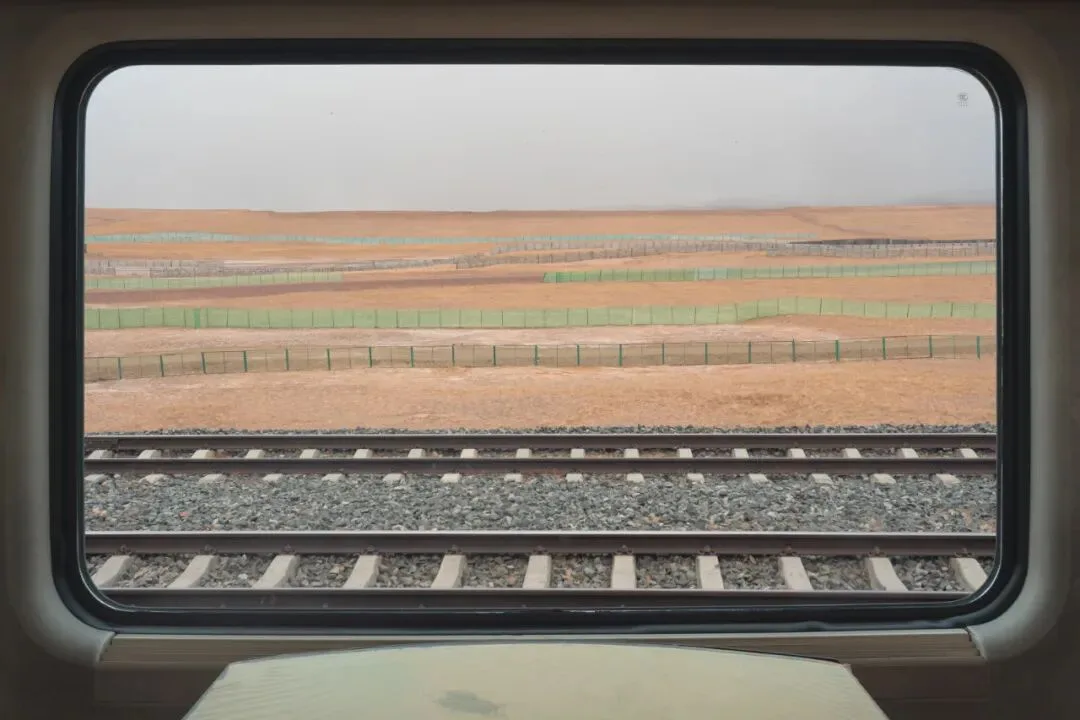
Therefore, in this series, outside the window there are not only beautiful natural landscapes but also markers of the era — transmission towers, highways, bridges, chemical plants, and wind turbines. In the photos, the road and fiber-optic cables beneath the snow mountains of Hoh Xil, the dense sand-control mesh walls outside Tuotuo River Station, and the lone 4G signal tower on the Gobi Desert — these awe-inspiring infrastructure facilities show China's solutions in poverty alleviation, ethnic unity, sustainable development, and more, while adding the stamp of the present era onto the beautiful mountains, rivers, lakes, and seas.
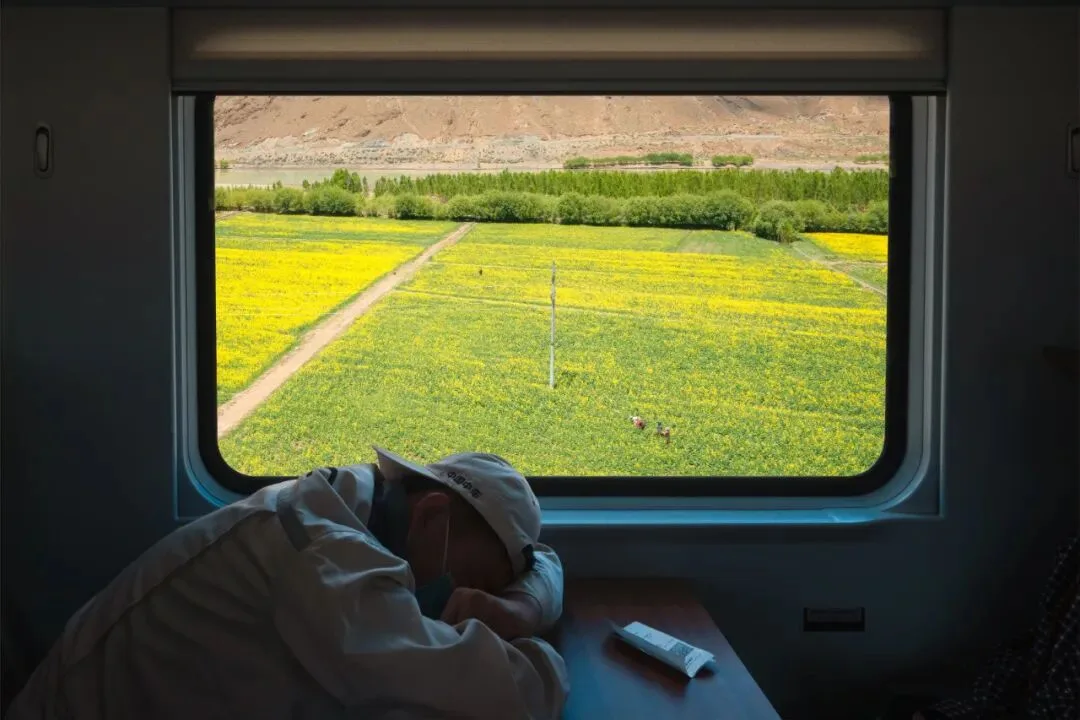
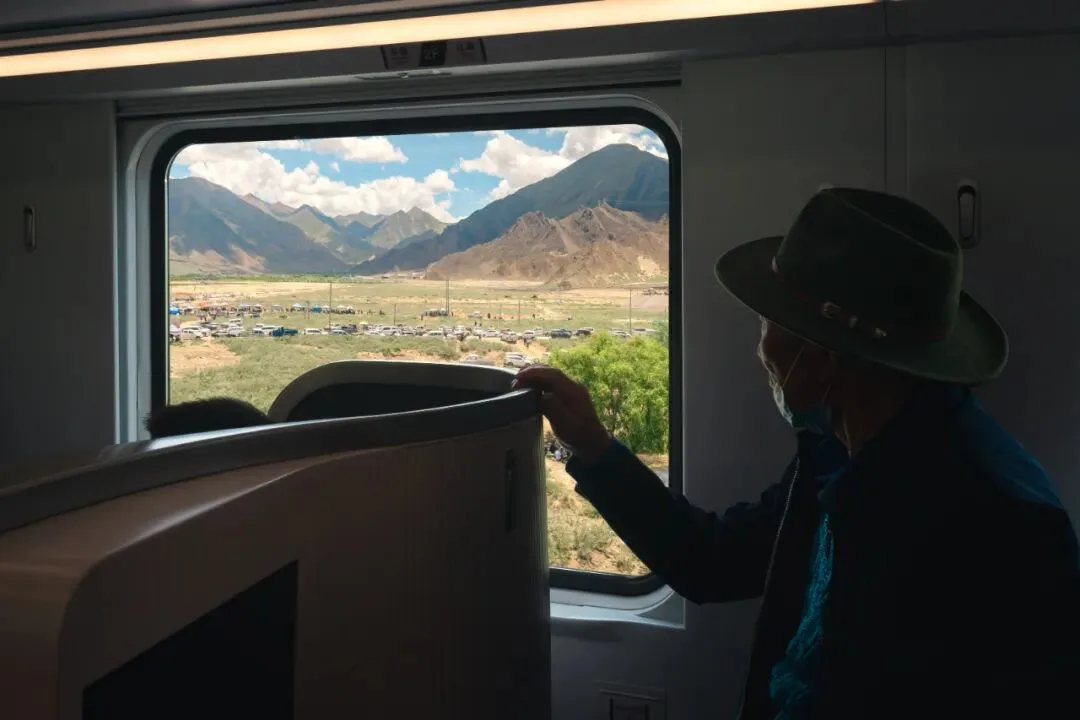
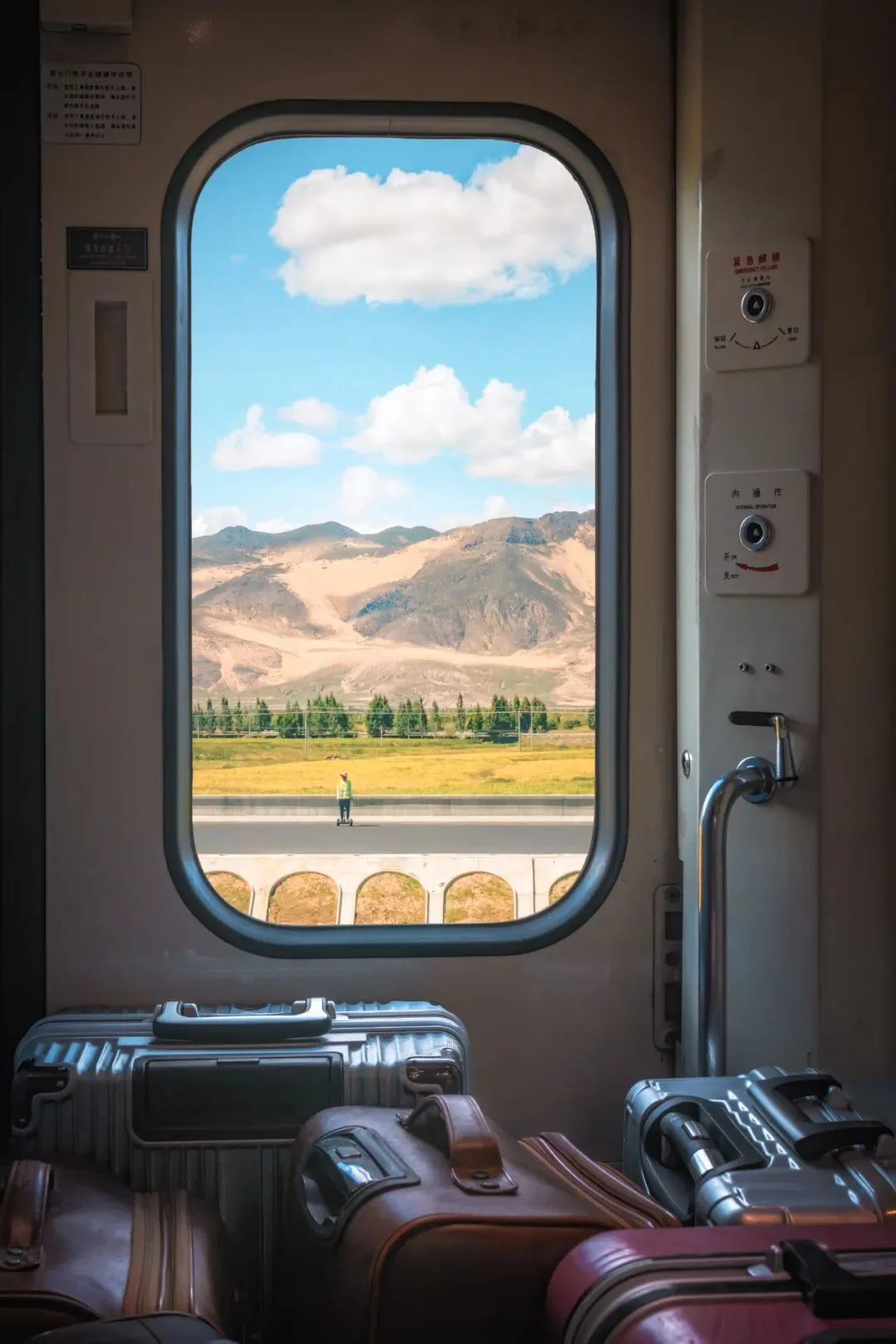
Inside and outside the window, many ordinary people or their belongings also appear in my photos — road workers, railway staff, volunteer teachers, tourists, and local residents. The ethnic-style suitcase and the road worker on a self-balancing scooter outside the window; the CRRC technical engineer dozing at the table and the Tibetan farmers working in the fields outside; the local elderly man in the modern business seat of the Fuxing bullet train inside and the traditional highland market outside. The clothing, belongings, and stories of these ordinary people tell the grand narrative of high-speed rail and infrastructure in a way that's closer to everyday life.
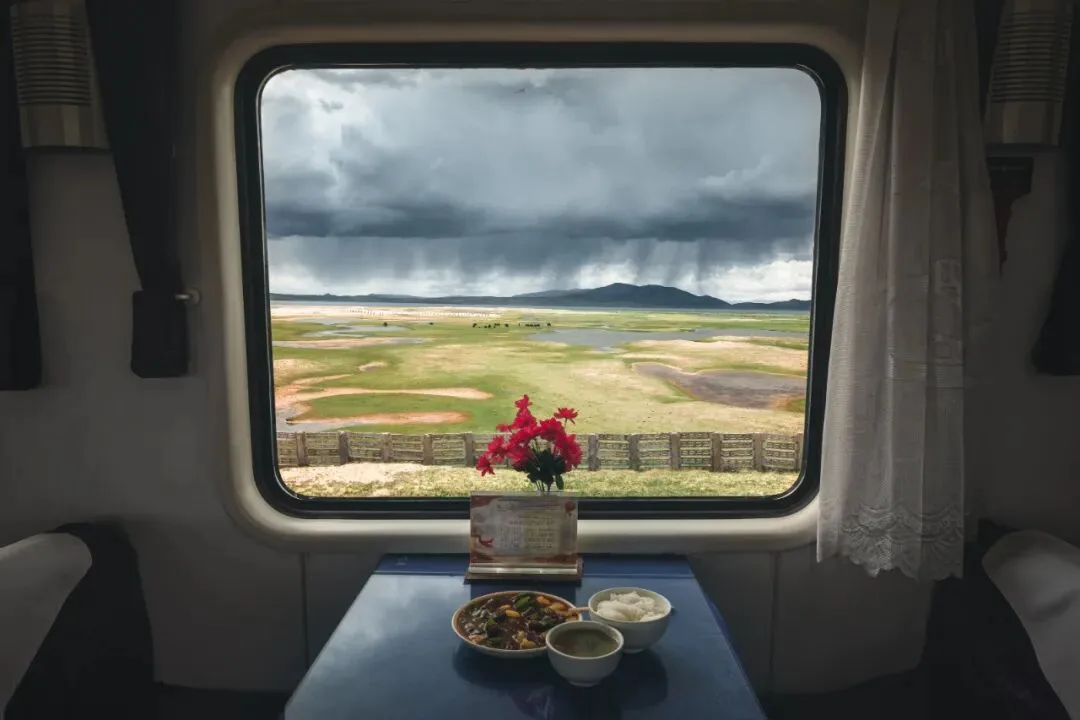
These images include single shots as well as those shot separately inside and outside the window and composited in post. My personal artistic philosophy isn't to pursue the objective physical truth of a single moment, but to present the truth of an era and a deeper truth. Therefore, in this series, on the premise that both the scenes inside the window and the scenery outside were genuinely shot on trains of the same route, I also make some personal subjective presentations to achieve stronger artistic expression.
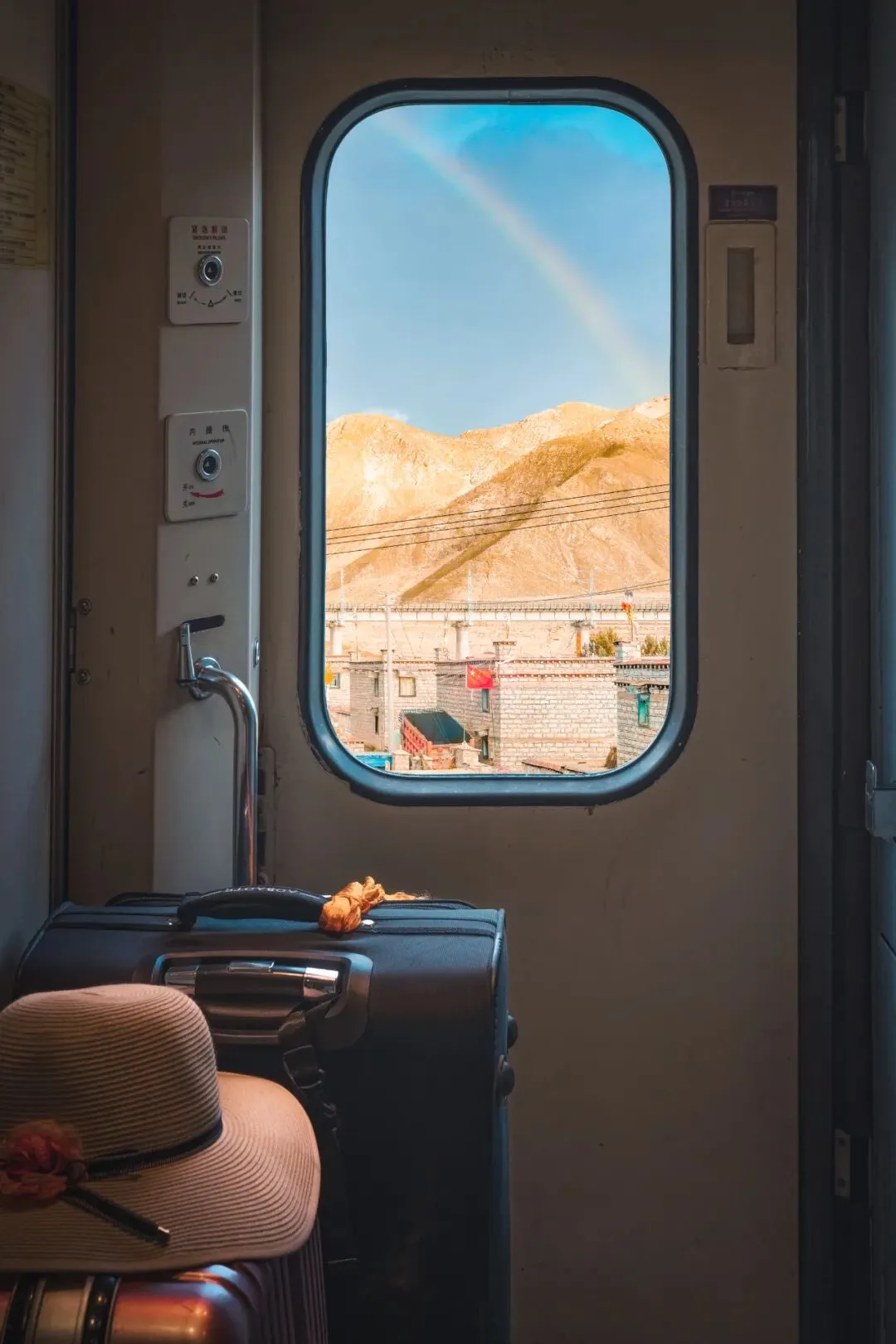
For example, the red ribbon on the suitcase inside the window and the rainbow over the new Tibetan countryside outside — these two scenes were shot at different moments on the same train, but I combined them in post to create a visual echo between inside and outside. Similarly, the suitcase inside the window and the road worker outside share a strong meaningful interaction, so I presented them together to deepen the photo.
Building subjective innovation on the foundation of objective documentation, presenting with a visual style close to the times, blending documentary photography into landscape photography, and exploring themes of humanity and nature, tradition and development, the ephemeral and the eternal — together these form this series, "Seeing China by Train - The Qinghai-Tibet Railway Seen from the Window" (《火车看中国 - 车窗外的青藏铁路》).