Photography Tutorial · 2024-05-07
Stunning Aurora and Blue Hour in Greenland: Hasselblad XCD 25V Field Test
In today's photography sharing, Thomas talks about shooting techniques for a wide-angle large-aperture lens in scenarios like city night scenes, starry skies and auroras, architecture interiors, and backlit sunsets — for example, how to focus in night conditions?
Thomas also does field testing in Greenland, bringing you hands-on experience with Hasselblad's latest XCD 25V lens paired with the X2D camera.
Video
▶ Watch the video tutorial on Bilibili
This is the fully illustrated companion to the video above. Thomas turned the 11-minute Greenland field vlog into text and paired it with keyframe screenshots — from where a medium-format 25mm fits, to the blue-hour cabins of Siorapaluk, the northernmost village, the aurora night in Tasiilaq, and the lens's everyday behaviour for night focusing, architecture and sunstars. Skim it here for the framework, then go back to the video for the atmosphere.
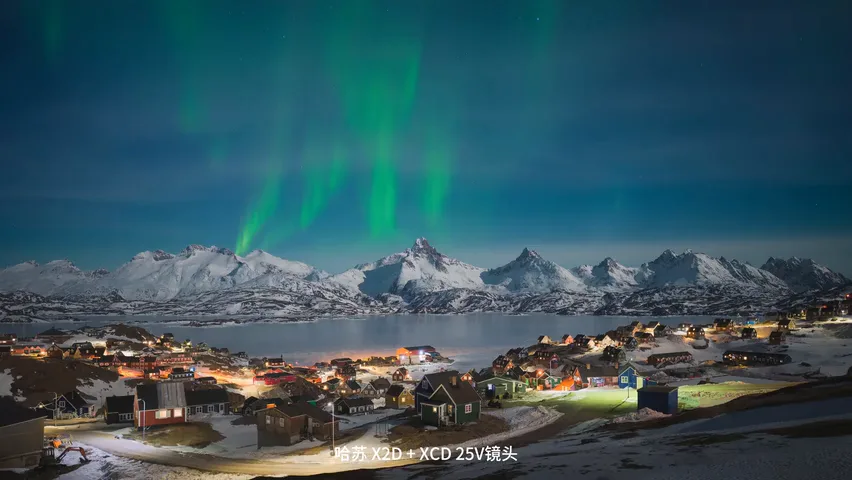
Start with a finished frame. Captured at 7:37 in the video, this is the aurora over Tasiilaq shot with the Hasselblad X2D and XCD 25V — and it holds the four threads of the whole episode: the low-light reach of a fast wide-angle, exposure strategy for blue hour and aurora, choosing a vantage point and composition, and whether this lens really holds up at night. Each is unpacked below.
01 Gear and Focal Length: Why a Medium-Format 25mm Earned a Trip to the Arctic
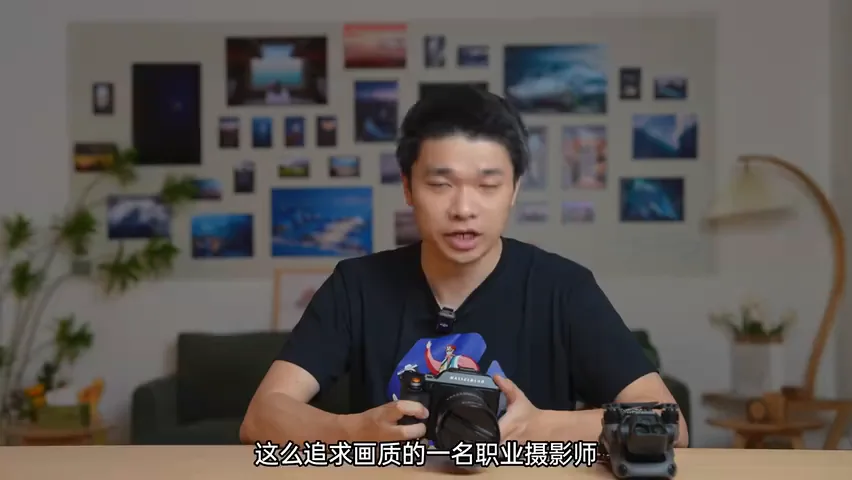
Most of the Greenland photos came from just two tools: a DJI Mavic 3 Pro drone in the left hand and a Hasselblad X2D with the XCD 25V in the right (at 1:22 in the video). People often ask Thomas why a professional landscape photographer obsessed with image quality rarely shoots medium format. The answer is the lens lineup — compared with full frame, medium format has long been thin at the two ends landscape shooters care about most: telephoto and wide-angle.
This medium-format 25mm covers the familiar 20mm full-frame-equivalent wide angle, and crucially it opens to f/2.5. That fast aperture is what makes high-quality, high-resolution results possible in low light — city nights, dim portraits, low-light street and documentary work, and the landscape shooter's favourites: night skies, the Milky Way and the aurora (at 2:00 in the video). Below, Thomas walks through how he used it in Greenland, scene by scene.
02 Blue-Hour Cabins: Dawn in Greenland's Northernmost Village
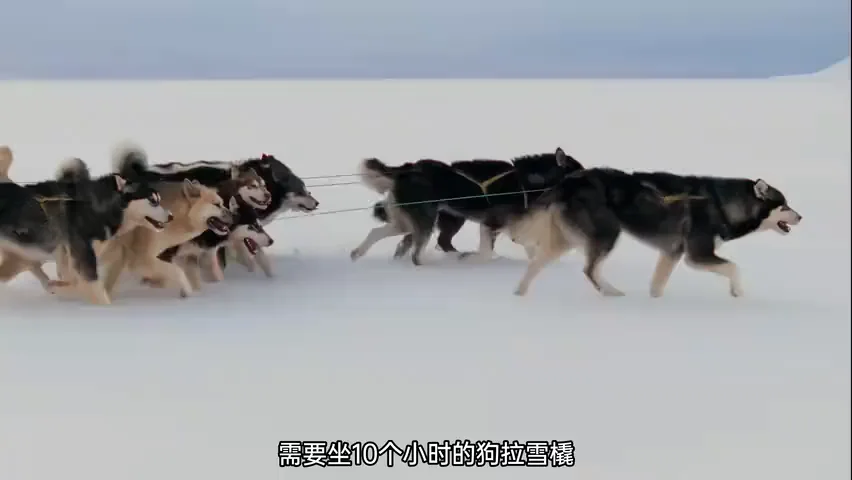
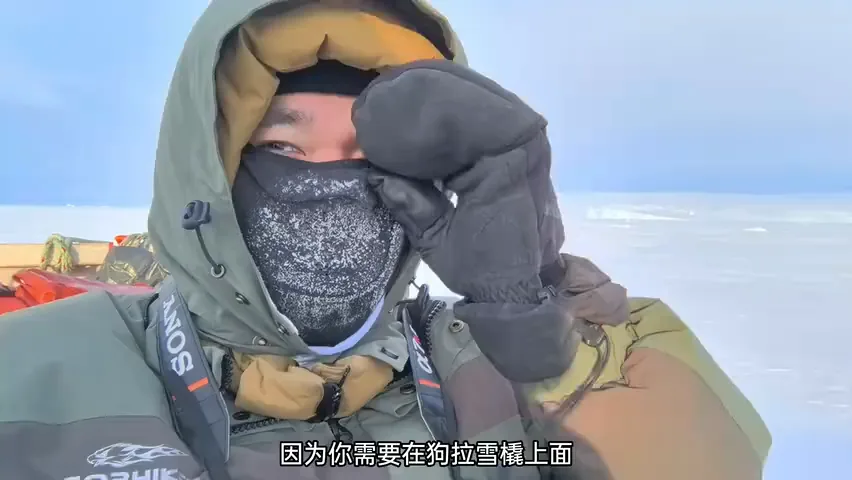
The first set is city-night and night-documentary work, all shot in Siorapaluk, the northernmost village in Greenland. Getting there is brutal: ten hours by dog sled in minus 30 degrees, and even in a down onesie with several layers on top Thomas was freezing (at 2:53 in the video). It is not a tourist town, so there are no hotels — the two of them slept on the floor of a local hunter's house, Thomas in the kitchen and his friend in the living room. Next morning they were out shooting at the blue hour.
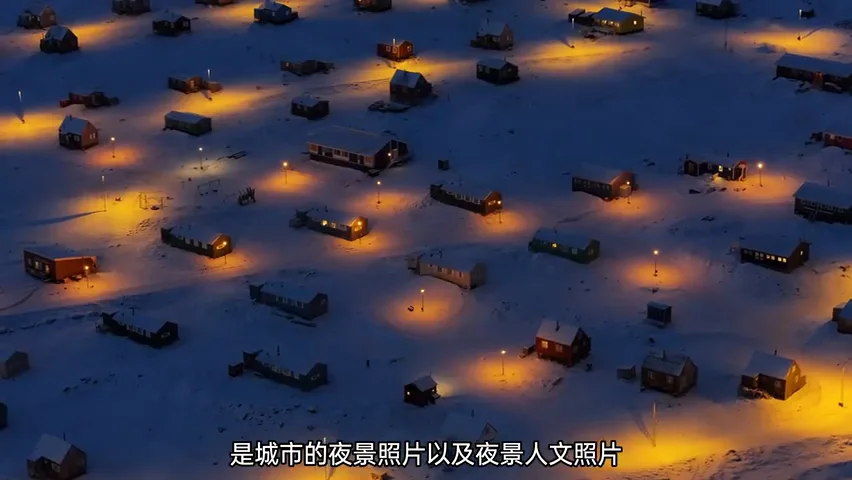
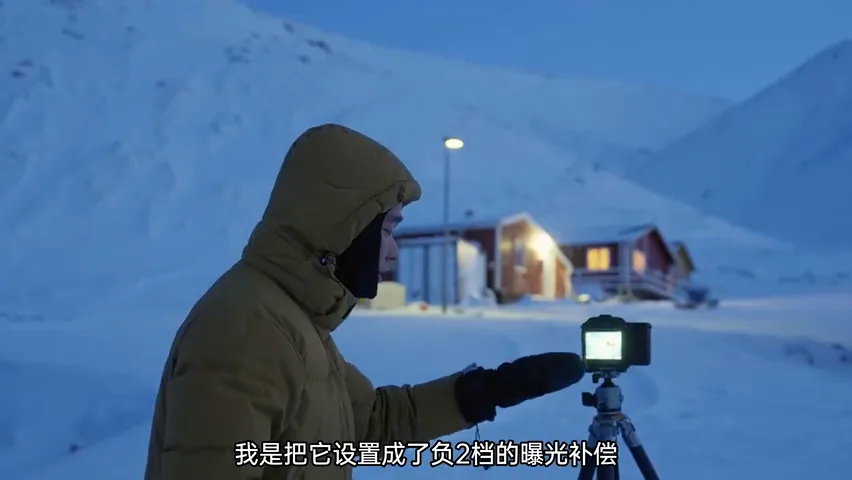
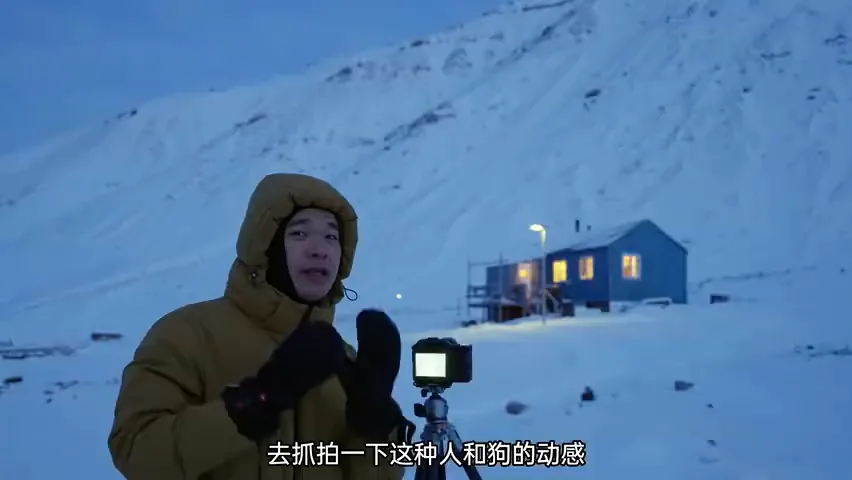
After a loop around the village, Thomas found a strong angle: a cluster of houses with a mountain peak directly behind them, ready to shoot as the blue hour slowly brightened (at 4:07 in the video). The best subject turned out to be the blue house they had slept in — the shape of the peak behind echoes the shape of the house, a street lamp stands in front, and every light inside was on, making the scene wonderfully warm.
On exposure, the blue hour is a quiet, gentle light, but test frames showed that even a single shot at -0.3 EV still clipped the highlights — the two lamps by the door. So Thomas set the exposure compensation to -2 EV and added a three-frame bracket at two-stop intervals, giving -4, -2 and 0 (at 4:37 in the video); that locked down the highlights completely.
Here he opened the lens to f/2.5 and raised ISO to 800 (at 5:17 in the video) — a dog kept moving around nearby, and dogs and the occasional passer-by are exactly the human element that defines daily life in Greenland, so Thomas wanted them in the frame too. The fast aperture paired with a high ISO is what lets you catch the motion of people and dogs.
03 Aurora Night: Vantage Point and Exposure in Tasiilaq
Going to the Arctic in winter, the aurora was naturally the headline project. Thomas photographed it both in the capital Nuuk and in Tasiilaq on the east coast, and the video follows one night in Tasiilaq: a very strong geomagnetic storm was forecast to begin at 10 pm, and by 9:50 he was already at a pre-chosen spot — a vantage point scouted in daylight by flying the drone over the nearby hilltops (at 6:22 in the video).
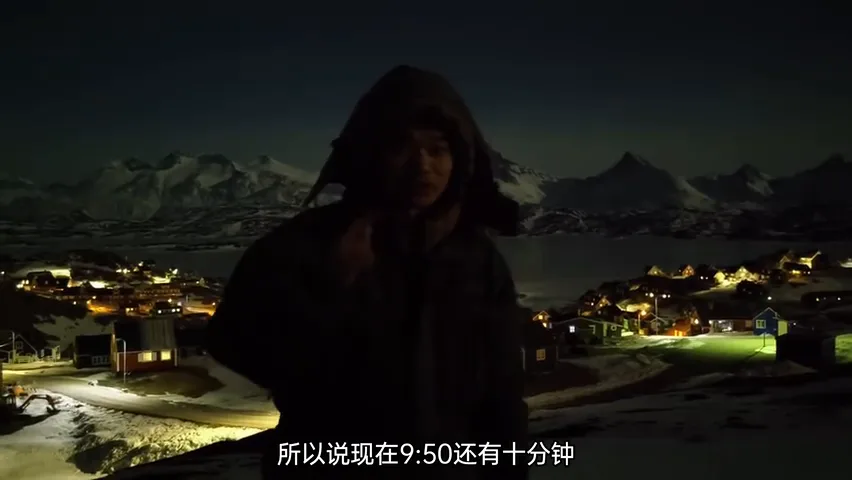
Why this spot works: the whole town spreads out as a panorama below, a winding bend of road sits in the immediate foreground, and snow mountains rise further back; the land takes only about a quarter to a third of the frame, leaving plenty of sky for aurora and stars (at 6:28 in the video). Just after ten the aurora arrived — one band on the left, one on the right, and the middle one landing right on the highest peak.
For settings, the town lights on the ground would still clip in a single normal exposure, so Thomas ran a three-frame bracket at three-stop intervals on the X2D with the 25V (at 7:17 in the video); for focus he simply used the 25V's autofocus on the distant town buildings, wide open (at 7:44 in the video). The aurora was already vivid on the camera's screen — clear even in the video shot on a Huawei phone.
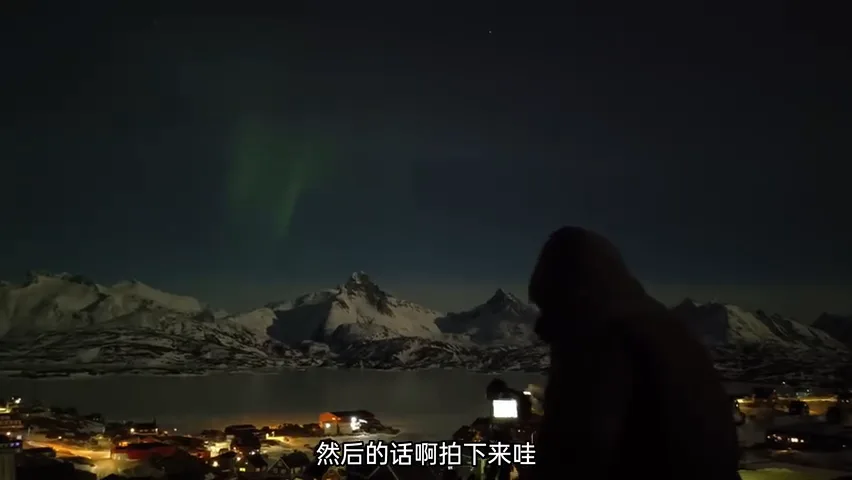
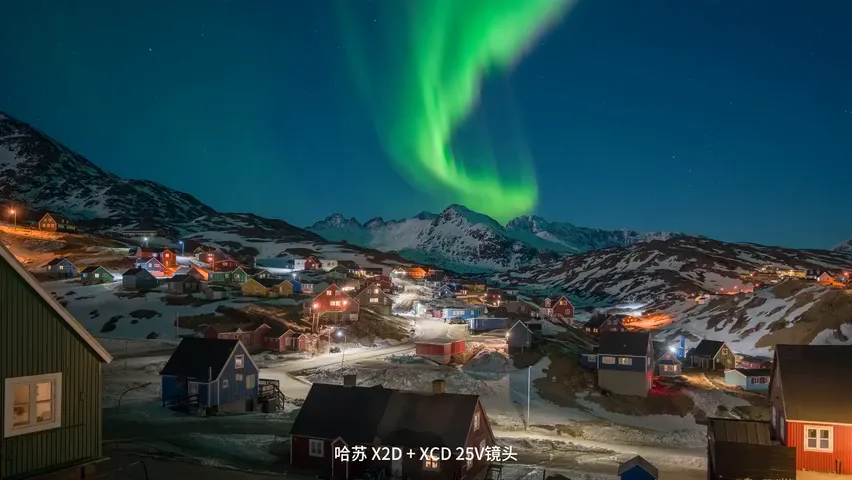
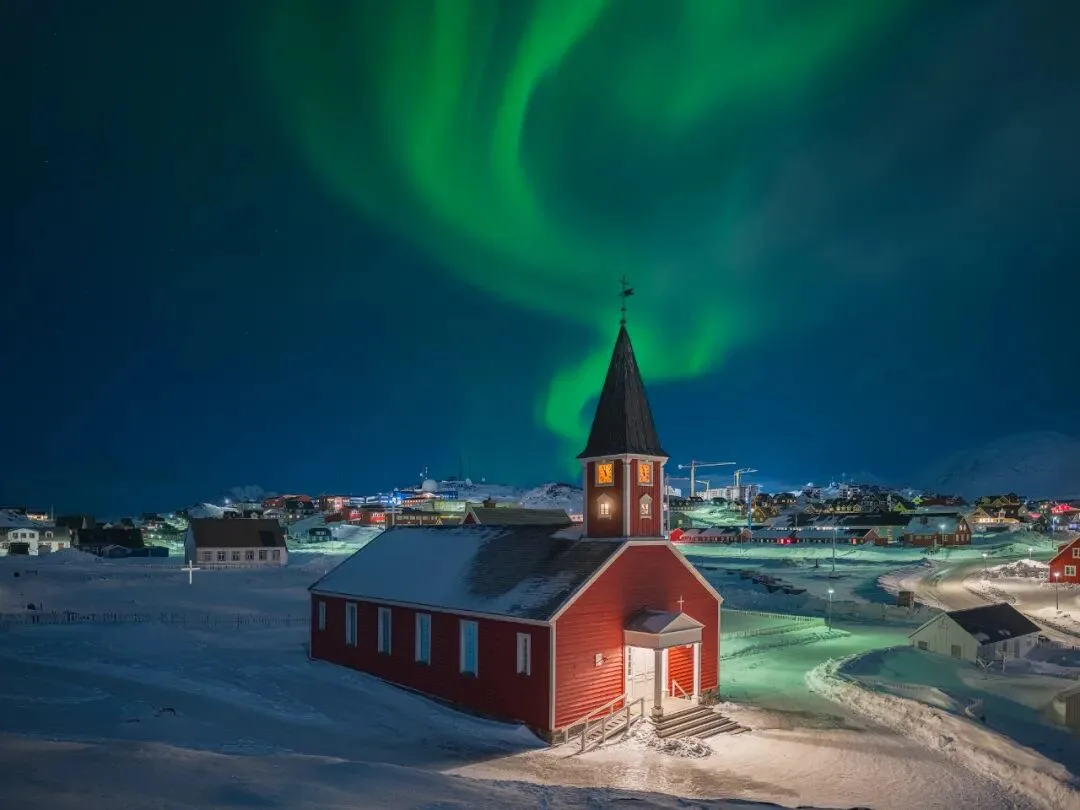
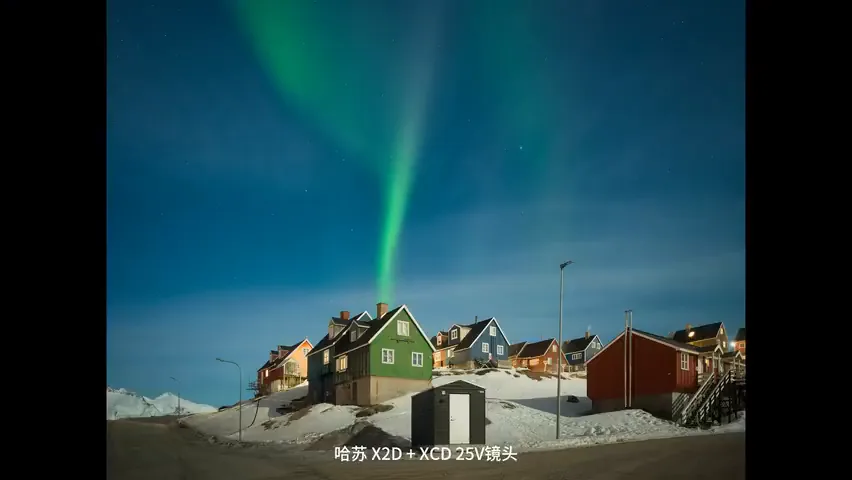
They then climbed the hill behind the church — with the church roof as the foreground it turned out spectacular: the aurora formed a huge arc and the camera could barely keep up. From another angle, the aurora looked as if it were pouring out of a house chimney (at 8:43 in the video).
04 Night Focus, Architecture and Sunstars: How the Lens Behaves Day to Day
What about focusing at night? Thomas splits it into two cases: with moonlight or bright city lights, just autofocus on a distant light and it works fine; when it is truly dark, switch to manual focus. This 25mm on the X2D also has one very handy feature — a one-touch jump to infinity focus, which is especially useful for night work (at 8:49 in the video).
Beyond the Milky Way, aurora and city nights, Thomas found in daylight that this 20mm-equivalent is excellent for architecture, indoors and out: the wide angle takes in a generous environment, and the resolving power is so high that with the X2D's 100 megapixels every detail of a building is rendered crisply (at 9:25 in the video). He shot many interiors on this trip, especially framing snow mountains or small houses through a window — a lot of fun.
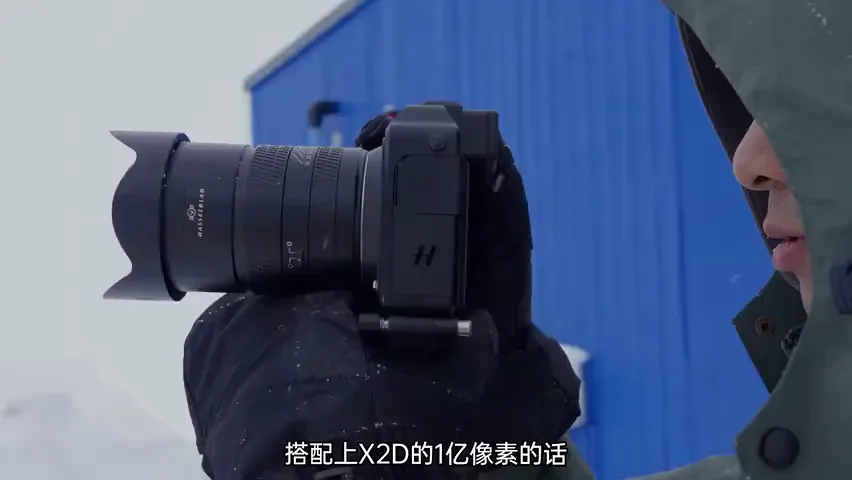
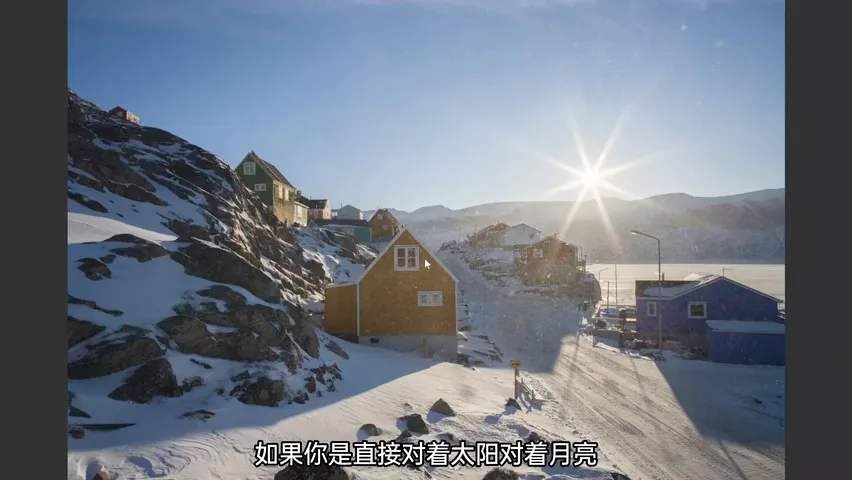
He also tried the other situations where landscape shooters reach for a wide-angle, such as sunrise and sunset, and image quality was never an issue; the flare and ghosting that so often plague backlit scenes are well controlled too. One more bonus: point it straight at the sun, the moon or a street lamp, stop down slightly (a higher f-number), and the sunstars are gorgeous (at 10:16 in the video).
1. The medium-format XCD 25V (20mm full-frame equivalent, f/2.5) fills the fast wide-angle gap landscape shooters need most; 2. Blue-hour cabins: a single frame at -0.3 EV still clipped the door lamps, so switch to -2 EV compensation plus a three-frame two-stop bracket (-4/-2/0), and use f/2.5 with ISO 800 to catch people and dogs; 3. Aurora: scout the hilltops by drone in daylight, keep the land to a quarter or a third of the frame, protect the town lights with a three-frame three-stop bracket, and autofocus on distant buildings; 4. Night focus depends on the light — autofocus on lights when bright, manual or one-touch infinity when dark; in daylight the 100-megapixel resolving power suits architecture, and stopping down rewards you with beautiful sunstars.