Photography Tutorial · 2024-07-07
Street Photography in Fog Is Amazing: First-Person POV in Ilulissat, Greenland
How amazing is street photography on a foggy night?
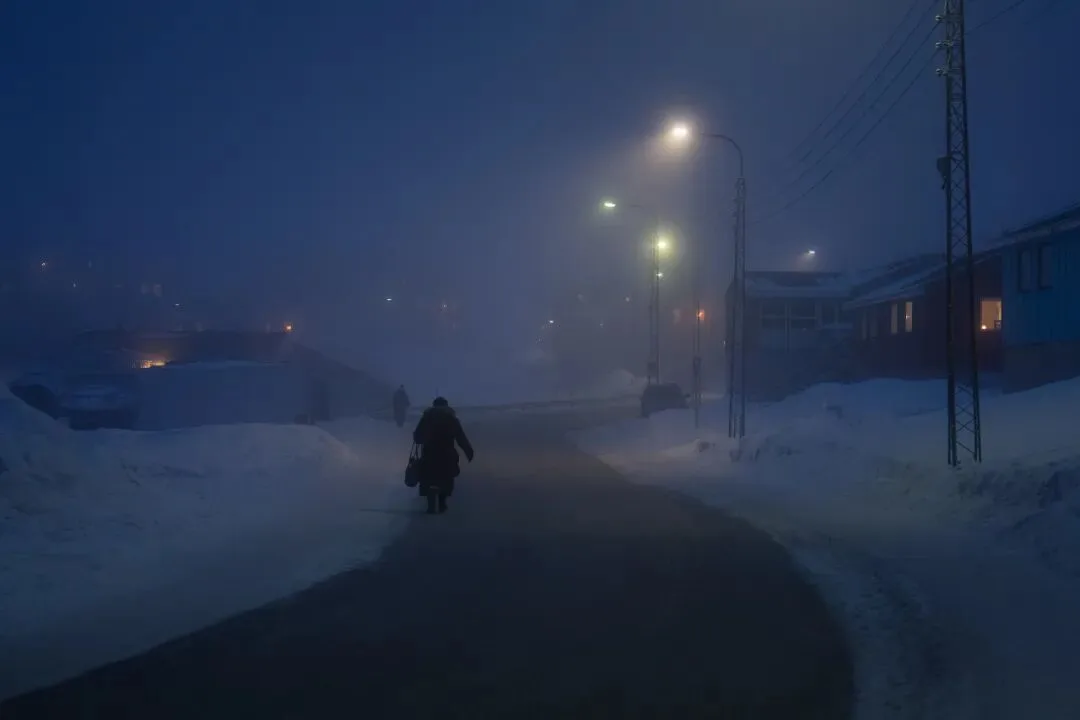
In today's photography tutorial, Thomas takes you in first-person view to the streets of Ilulissat, Greenland, trying to capture a different kind of street atmosphere.
Video
▶ Watch the video tutorial on Bilibili
This is the fully illustrated companion to the video above. Thomas turned the 8-minute first-person street-photography vlog into text and paired it with keyframe screenshots — why fog needs the blue hour, how fog "isolates" a subject from its background, settings and trade-offs while shooting on the move, and the mystery created by bright-against-dark contrast. Skim it here for the framework, then go back to the video and walk the streets of Ilulissat through the lens.
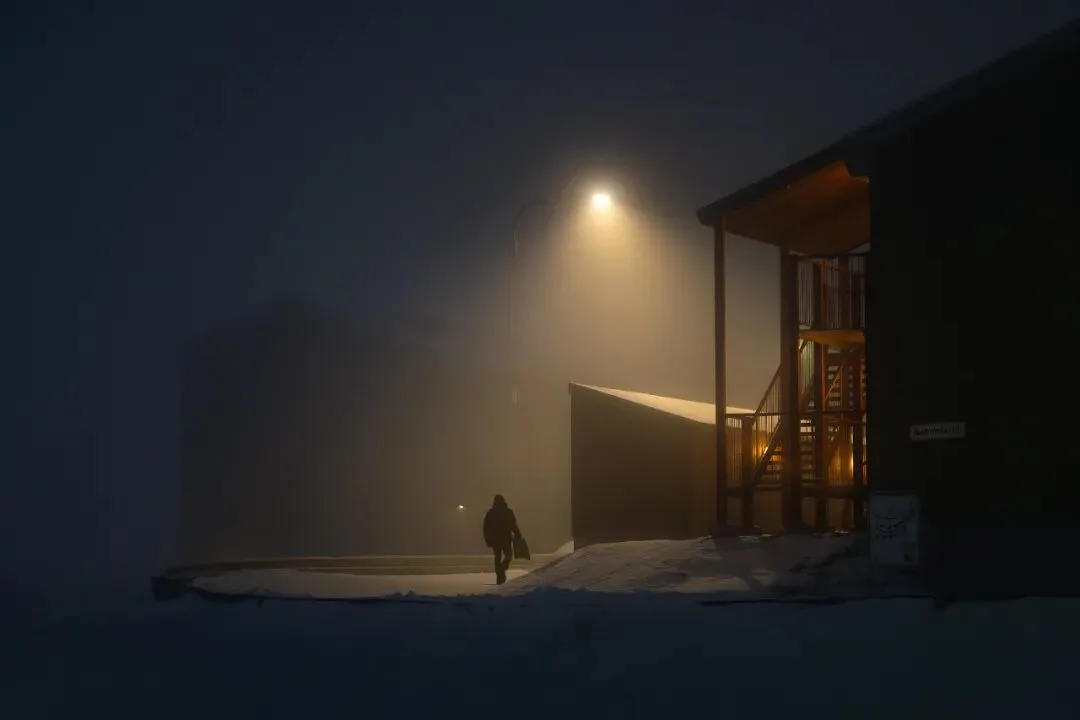
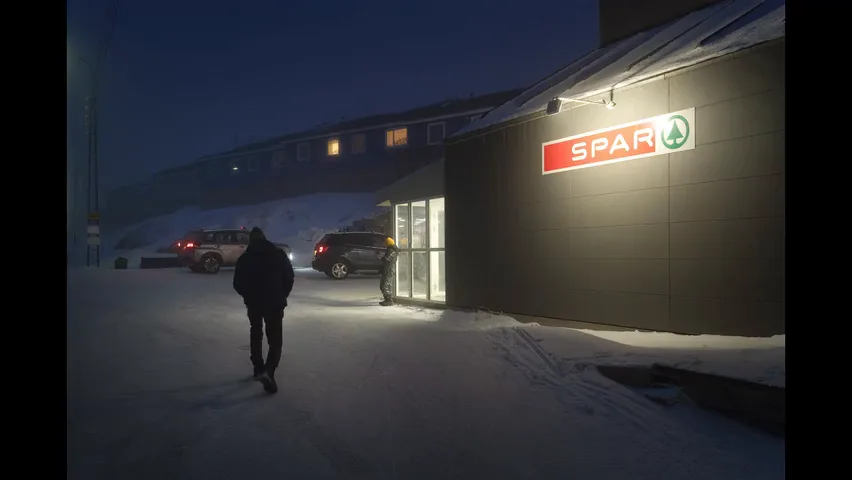
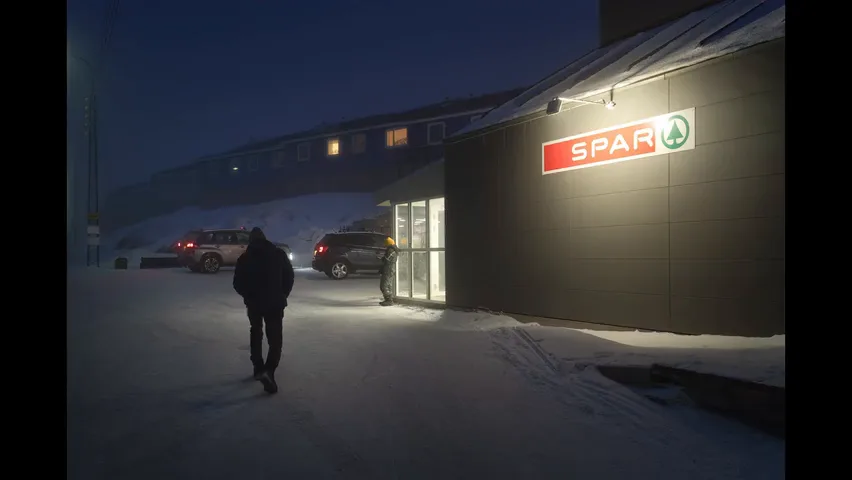
Start with a finished frame. Captured at 0:07 in the video, this image sums up the foggy night walk: a pitch-dark building, a glowing SPAR supermarket sign, and a lone figure walking into the fog — the whole "foggy street atmosphere" the video is about. Below, the walk unfolds section by section along Thomas's route.
01 Why Fog Needs the Blue Hour
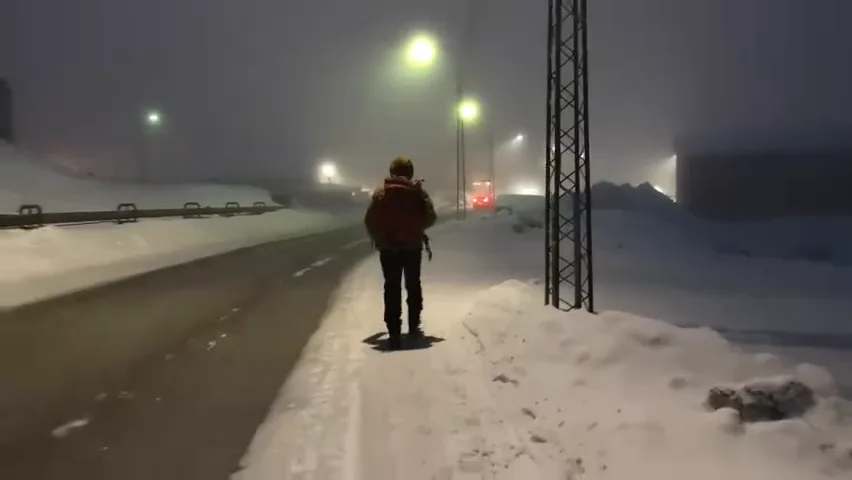
It was a foggy day in Ilulissat, Greenland. Thomas's experience: fog in daylight usually photographs flat, but at the blue hour it becomes remarkable — every light comes on, and streetlights and headlights scatter through the fog, giving the whole scene a hazy, uncanny quality (at 0:25 in the video). Fog like this is ideal for street photography, so he decided to walk the streets and look for scenes that felt different.
Fog's first gift is a sense of distance. A far-off streetlight, the bright windows of a distant house — in the haze they become strikingly special, and they were the subjects Thomas kept looking for along the way (at 0:45 in the video).
02 The Lonely House: Using Fog to Isolate the Background
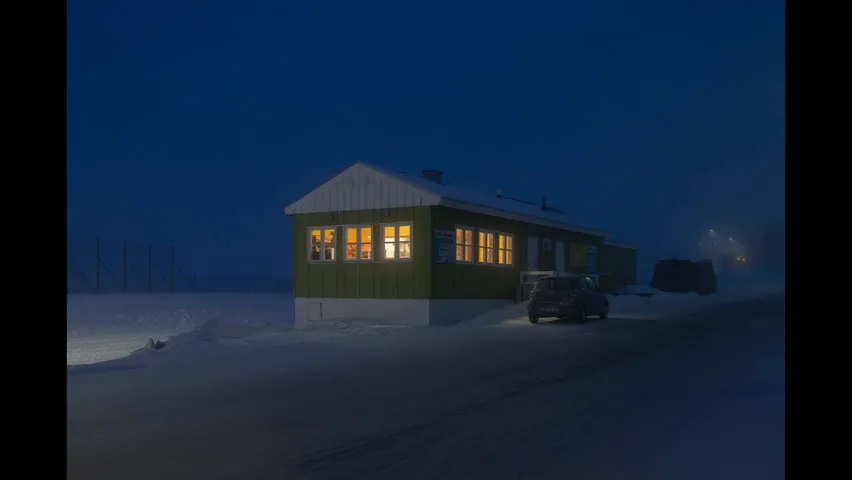
The first stop was a small house. On a clear day there is a rocky hillside behind it — quite ugly; but now the fog had completely cut it off from that background, turning the house into a solitary subject and instantly creating atmosphere (at 1:17 in the video). This is the core idea of foggy street work: let the fog erase the clutter behind so the subject stands alone.
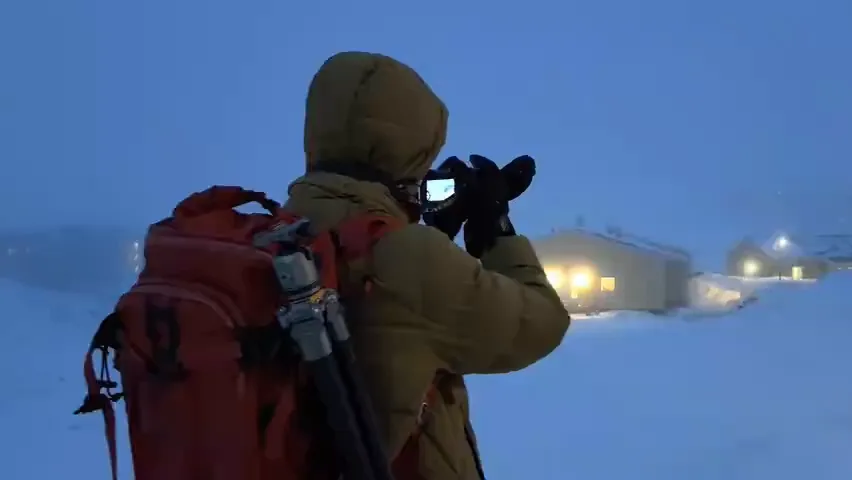
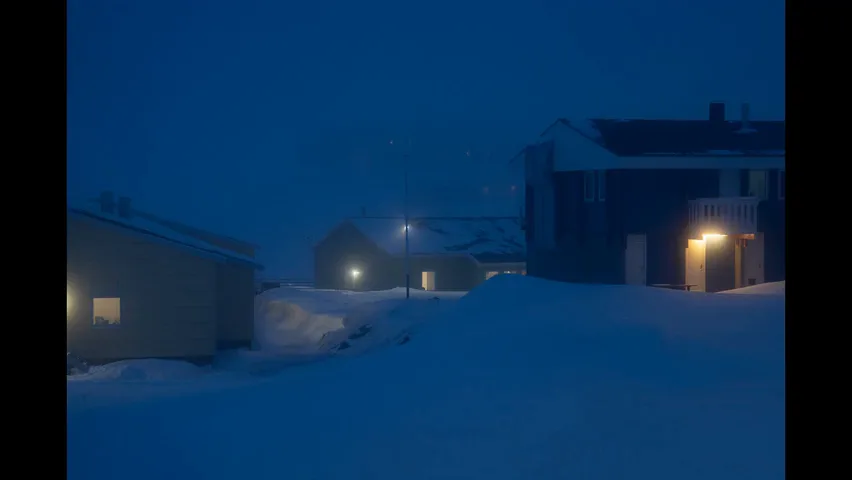
For settings, Thomas shot handheld at ISO 800, f/3.2 and 1/80 s, with exposure compensation pulled down to -1.7 EV to hold the highlights of the lamps and keep the moody blue tone (at 1:26 in the video). Just as he shot, smoke drifted from the chimney and added another layer — a great result. Walking on, he marvelled that in fog almost every frame has a cinematic feel (at 2:05 in the video).
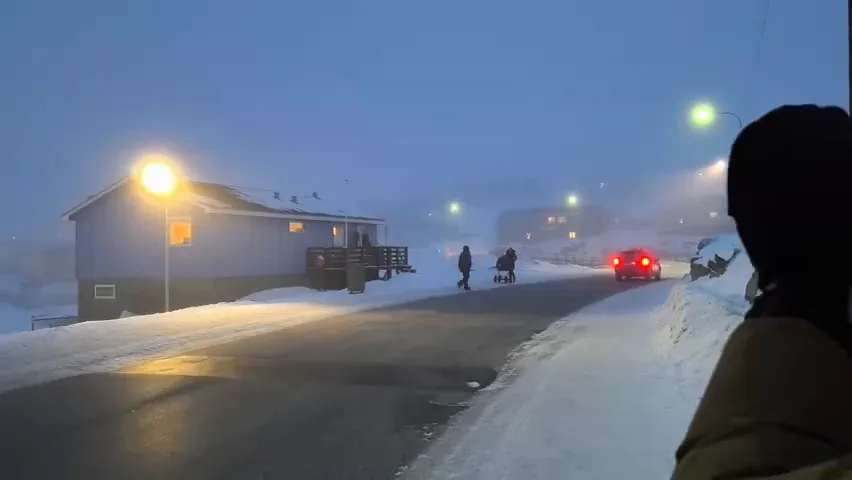
03 Shooting on the Move: Corners, Passers-by and a Snowmobile
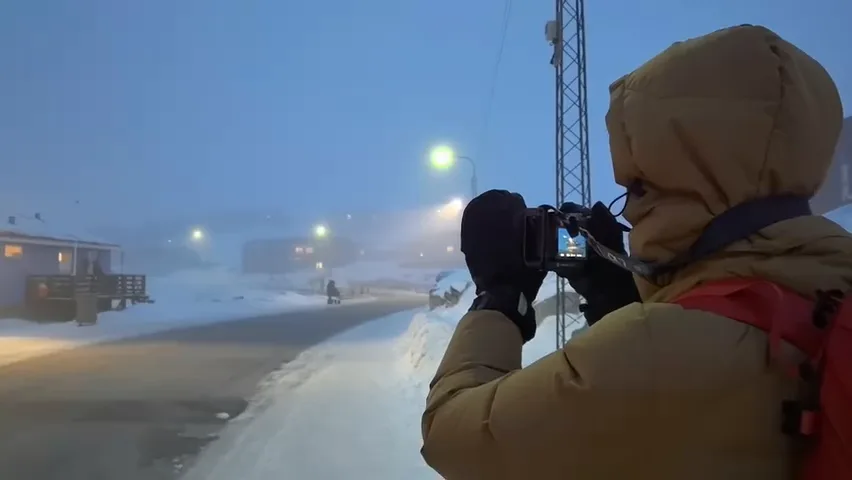
At the junction Thomas could have set up the tripod and shot a cleaner frame at ISO 100, but with so many opportunities that evening he judged it more important to keep walking and cover more scenes (at 2:39 in the video). For handheld efficiency he opened up to ISO 800 and f/2.8 and carried on (at 2:58 in the video).
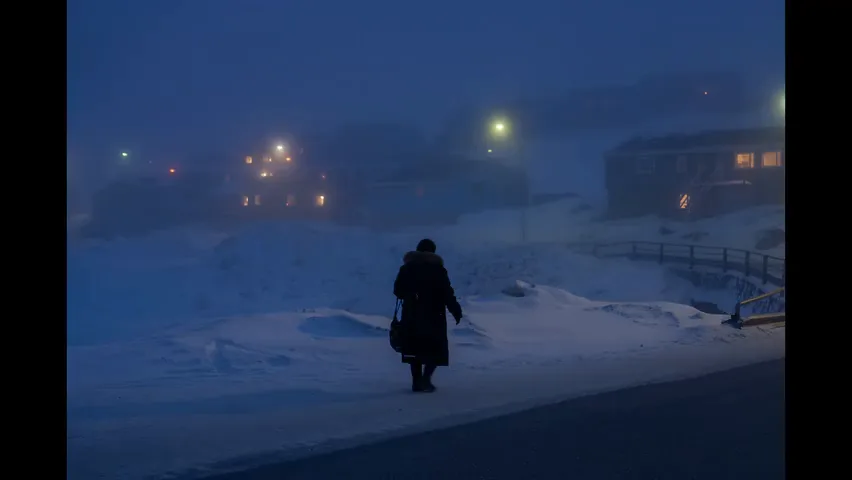
Here a road stretched into the distance, streetlights and lit windows receding layer by layer, with people coming and going behind — full of character. He shot a lot at this corner (at 3:08 in the video).
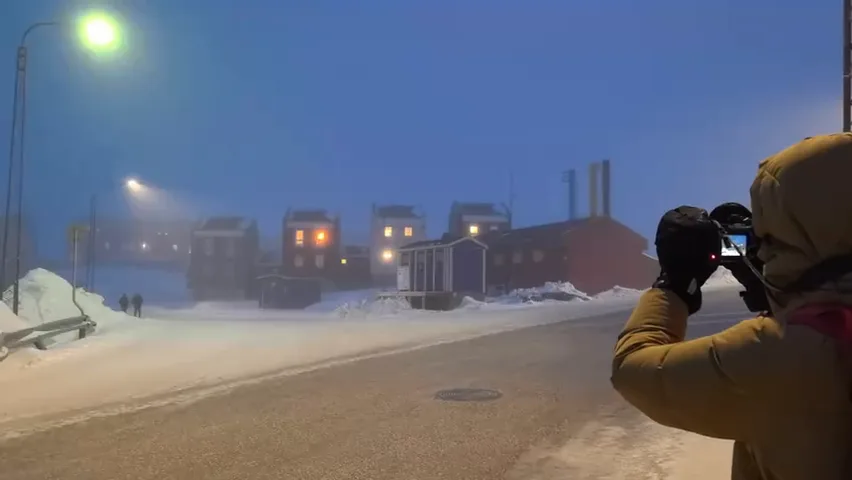
Further along, the tall, narrow apartment blocks behind are new construction in Greenland, and Thomas felt they say something about how the place is changing (at 4:04 in the video). In this street scene he waited for locals to walk through, and a snowmobile happened to pull up — snowmobiles are a distinctive form of winter transport in Greenland, and waiting for such elements is what gives the scene a sense of local life.
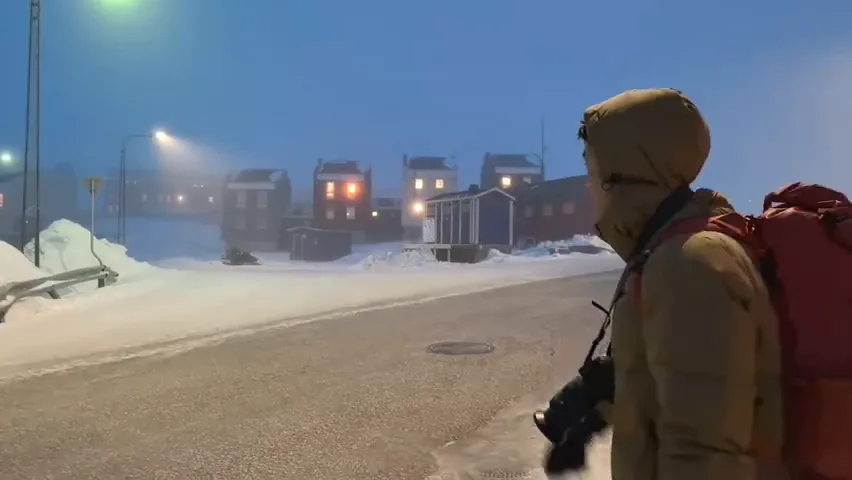
04 Bright Against Dark: the SPAR Sign, a 70mm Detail and Calling It a Night
Back to the SPAR supermarket: the whole building on the right is dark except for the sudden glow of the SPAR sign; on the left he could wait for headlights to pass before pressing the shutter; in the middle the road is black on both sides with a single lamp emerging — a scene Thomas found mysterious, uncanny and dreamlike (at 4:55 in the video). A bright building in dark surroundings, wrapped in fog, makes a street feel enigmatic (at 6:13 in the video).
Next came another neighbourhood, again with a streetlight. Seeing someone walk past, he quickly raised the camera and grabbed a frame — a figure in the fog carries real mystery (at 6:45 in the video). The lens was a 24-70mm f/2.8, so here he used the 70mm end to isolate just a small section of a building, another frame with strong feeling (at 7:22 in the video); the streetlights on the hill are heavy, and the fog traces the shape of their beams beautifully.
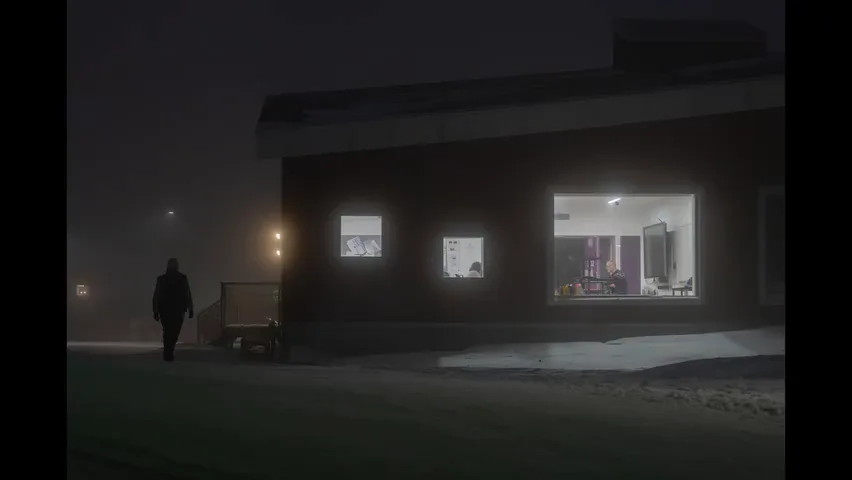
The last stop was a building with a large floor-to-ceiling window, apparently a lecture going on inside, which Thomas also photographed. By then the sky was getting darker and contrast was growing — the best window for foggy street work had closed, and the shoot ended there (at 7:56 in the video). His verdict: city streets in fog are extraordinarily atmospheric.
1. Foggy street work needs the blue hour: only once every light is on do streetlights and headlights scatter into that hazy, uncanny, cinematic look; 2. Let the fog isolate the background — an ugly rocky hill vanishes and a small house becomes a solitary subject; 3. Shoot handheld on the move: ISO 800, f/2.8-3.2, around 1/80 s, with -1.7 EV compensation to protect the lamps, and don't stop for a tripod when opportunities are plentiful; 4. Look for bright-against-dark contrast (a glowing sign, a single streetlight), wait for passers-by and snowmobiles, isolate details at the 70mm end, and wrap up once full dark pushes the contrast too far.