Photography Tutorial · 2020-05-31
Imitation in Photography: How Copying Truly Improves You
Thomas Chu Photo
Imitation is a controversial topic in photography — some people scoff at it, while others see it as a necessary stage of learning.
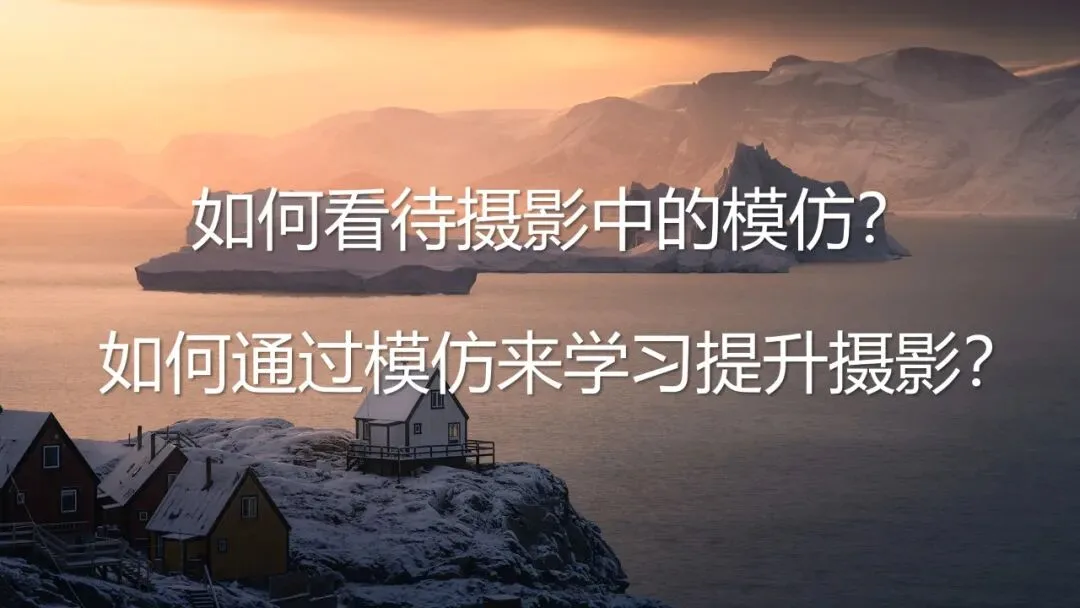
This video explores the following questions:
Is imitation a good or bad way to learn photography?
Is imitation just simple copying? How do you capture not only the form but also the spirit?
How should you imitate to improve your photography quickly?
Why is fusion the highest realm of imitation?
Video tutorial
▶ Watch the video tutorial on Bilibili
This is the fully illustrated companion to the video above. Using his own work from Fitz Roy in Patagonia, the Indonesian volcanoes, the Dolomites and Greenland, Thomas turns the controversial topic of imitation into a clear learning path: from formal copying to capturing the spirit, and finally to fusion. Keyframe screenshots and video timestamps are included — skim here for the framework, then dive into the video for the details.
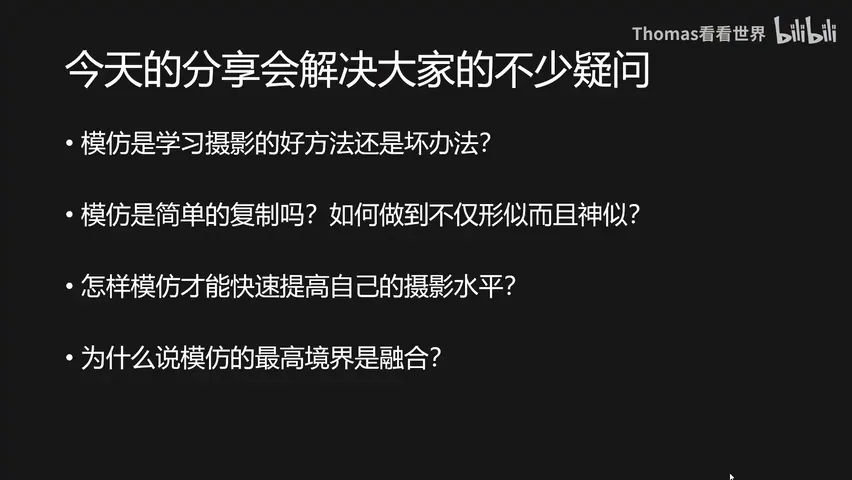
Start with the overview. This slide, captured at 0:11 in the video, lists the four questions the whole video answers: is imitation good or bad? How do you go beyond formal similarity to spiritual similarity? How does imitation speed up improvement? And why is fusion its highest form? Each is unpacked below.
01 The Three Stages of Imitation: Form, Spirit, Fusion
Imitation is not mere copying. Thomas breaks it into three stages (at 0:59 in the video). Stage one is form — reproducing a photographer's composition, angle and color exactly. Stage two is spirit — once you truly understand the photographer's thinking, you can create work of the same caliber in places they have never been. Stage three is fusion — gathering the strengths and signatures of many photographers, adding your own innovation, and forming work that is genuinely yours.

Form is the beginner stage, and genuinely useful: at the start you have no feel for framing, composition or color, and copying classics is a fast way to improve. But staying at the form stage long-term is, in effect, plagiarizing one photographer — which is exactly why imitation gets a bad name (at 1:26 in the video). The simplest check-in shots at classic angles all belong to this level.
02 Practicing Form: Imitating Marc Adamus at Fitz Roy
The first case comes from Mount Fitz Roy in Patagonia. Thomas recreated one of Marc Adamus's autumn-tree frames on location (at 2:24 in the video). Even though this is pure angle-copying, the process taught him a lot: in this scene Adamus's tree really is one of the very best foregrounds — its shape, position and pointing direction are all excellent. Only standing in the real environment confirmed the reasoning behind that choice.
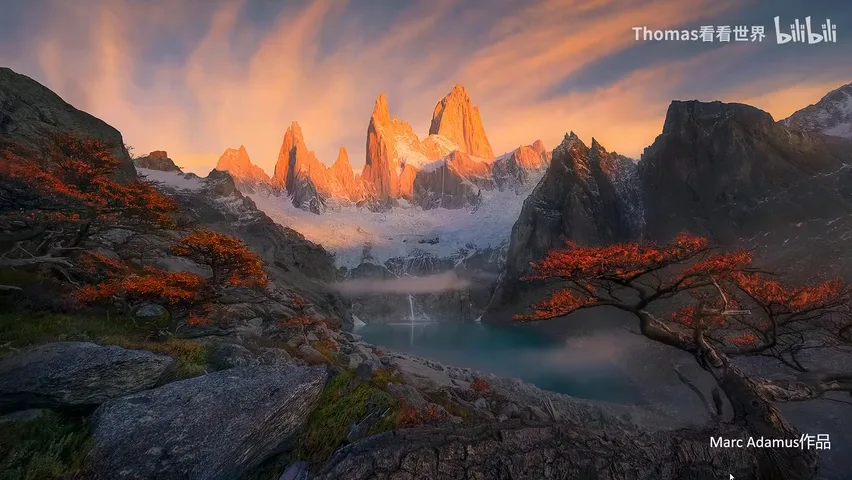
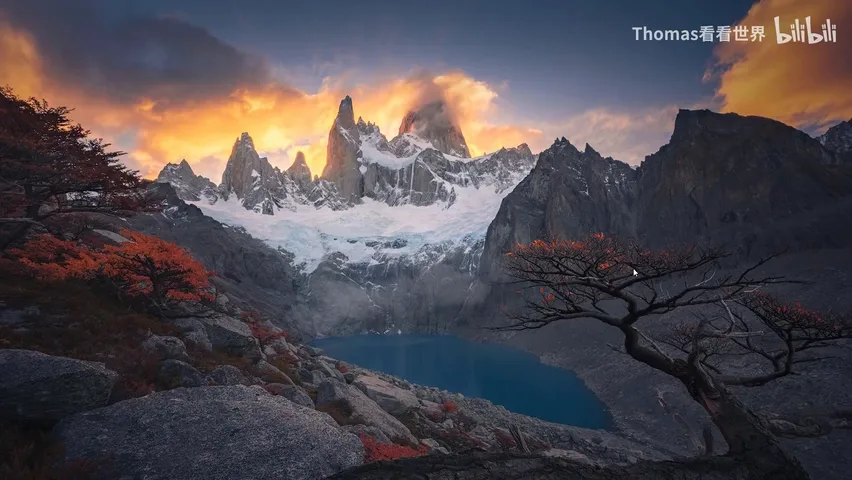
The edit can be reasoned out the same way. The leaves in the original are dull; Adamus lifted them, and so did Thomas — but not all of them: brightening the edge leaves steals attention, so he lifted only the center, accepting slightly inconsistent saturation and brightness between leaves (at 2:58 in the video). Copying the angle gets you a decent shot on the spot; but reasoning step by step through composition and post, you discover thoughts like 'the leaves can be lifted on their own' — that kind of imitation is superb learning in itself.
03 Questioning the Backlight: Decoding Max Rive's Choices
The second case is a backlit river-valley shot with a human figure by Max Rive. Why does this scene demand backlight? When Thomas scouted it the evening before, he saw that under front or side light the water turns near-black, never trailing out of the frame, losing all line and layering (at 4:16 in the video) — exactly the kind of question imitation makes you ask.
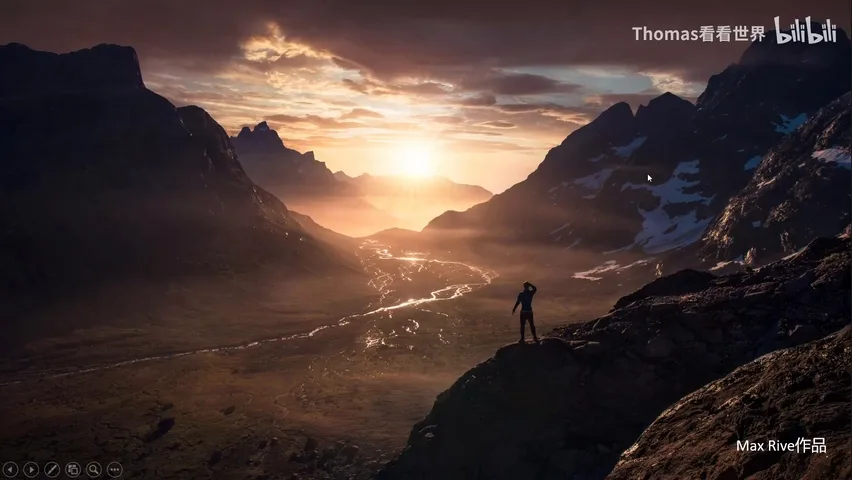
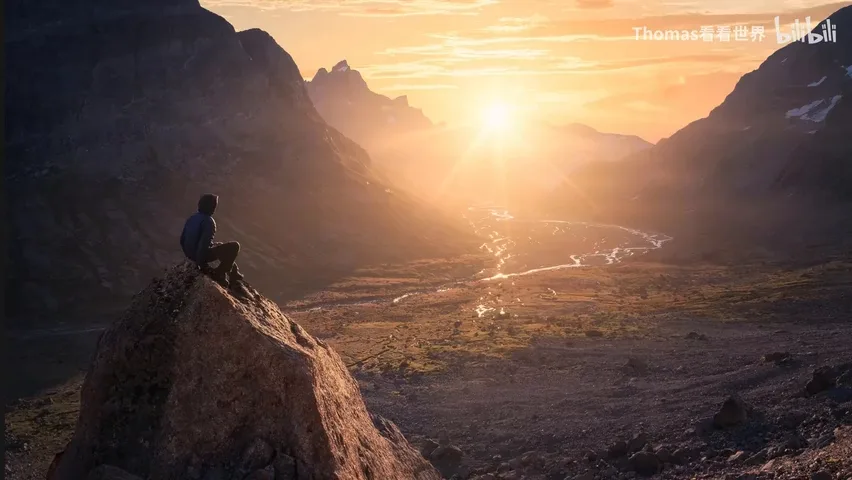
Keep asking: why does the person stand right there, in that pose? In post, should the figure stay a silhouette or be lifted with detail? Try it and you'll see that brightening the figure and refining its texture only kills the atmosphere and depth; and how did he render the dimensional edge of the mountain? (at 4:44 in the video.) Answering these questions is how form-level imitation earns its keep.
04 Capturing the Spirit: Carrying the Ideas into New Scenes
Above form comes spirit: if you can summarize the patterns, analyze the causes, and understand the choices behind a photographer's work — why shoot it, why shoot it this way, why arrange the frame like this — you can produce work of similar character in completely new environments, even with personal twists and innovations (at 5:14 in the video).
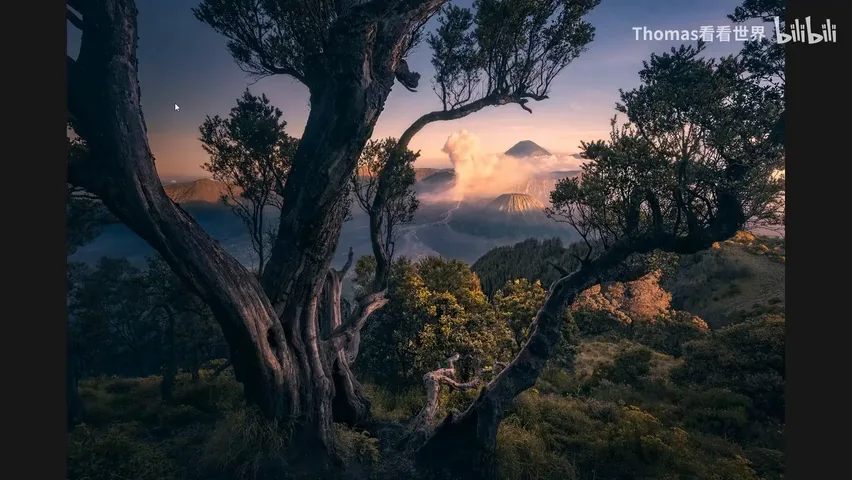
A first spirit-stage example: after repeatedly studying how Max Rive uses trees as framing devices and directional leading lines, Thomas carried the 'find a tree' idea to Indonesia. In front of a volcano he found a gnarled, full-of-life crowned tree — its trunk builds the frame and its branches point straight at the distant volcano, forming a visual guide; in post he darkened the edges, brightened the center, lifted the tree's dimension, detail and texture, and separated it from the background (at 6:20 in the video). Without that deep study of the original, he would never have had the awareness on site.
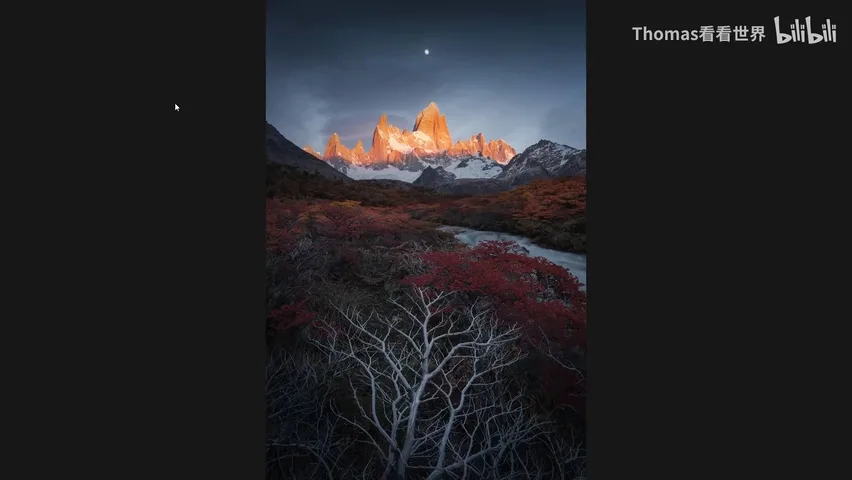
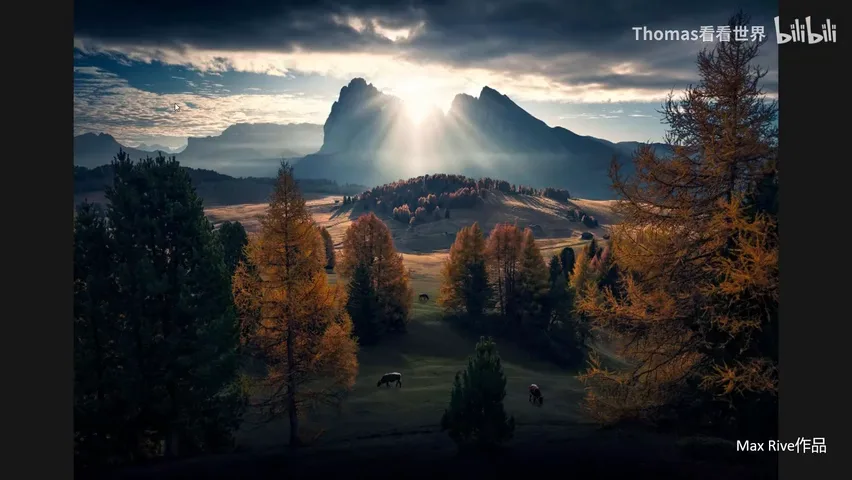
The second example is about color. Why do Max Rive's photos hit so hard? Part of the answer: warm, sunlit peaks glowing inside overall cold tones. Thomas applied the same logic, deliberately grading an originally gray-white sky cold — and the golden snow mountain immediately leapt out of the frame (at 7:42 in the video).
The third example comes from the Dolomites: he arrived at the border of autumn and winter — no flowers, no trees, no proper foreground, only bare grass and snow. So he brought a person into the frame as a scale reference and a source of story; the early-morning palette and overall color orchestration likewise drew on everything learned before (at 8:12 in the video). Achieve spirit and you become a 'mini Max Rive' — though his shadow is still clearly visible in the frame, which is why one more step remains.
05 Fusion: Borrowing From Many, Internalizing Your Own Style
One step beyond spirit is fusion: draw inspiration from many photographers and artists, imitate only certain elements of each, then blend in your own ideas, innovation and experience (at 8:53 in the video). Thomas offers an analogy: isn't a USB drive just portable storage plus a USB plug? Combine the two and you get something new — much invention in science and engineering is exactly this kind of fusion. At the fusion stage, the traces of imitation are essentially gone, because they have been internalized.
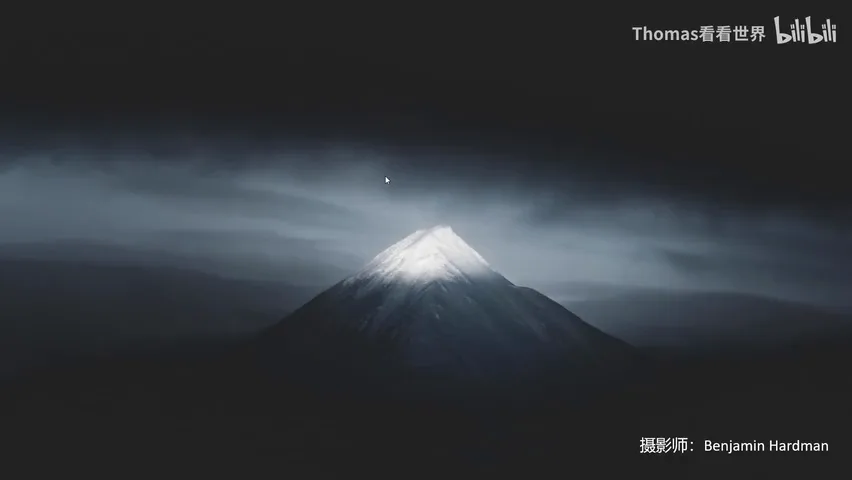
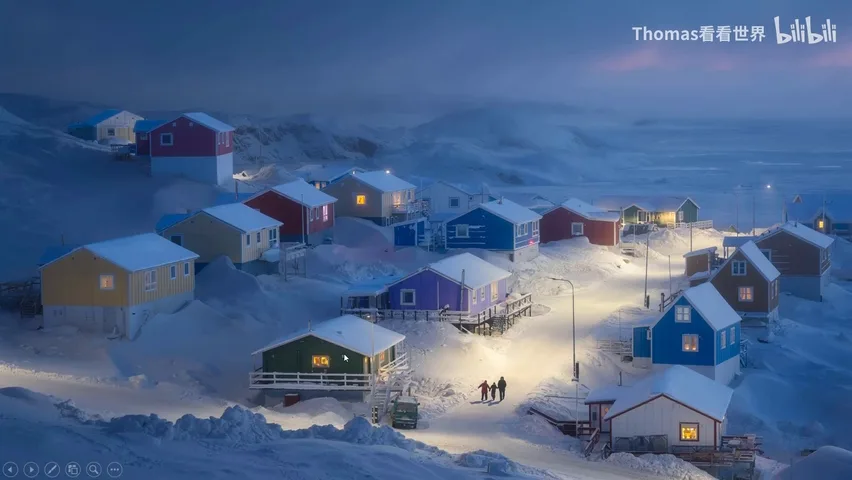
In the final case study you can pick apart each influence (from 10:11 in the video). From Max Rive, Thomas first learned of Greenland as a grand location, plus the pivotal role a human figure plays in a frame and the crafting of layering; from the Nordic photographer Benjamin Hardman he learned simple, quiet snow scenes — snow both cleans the frame and sets the mood.
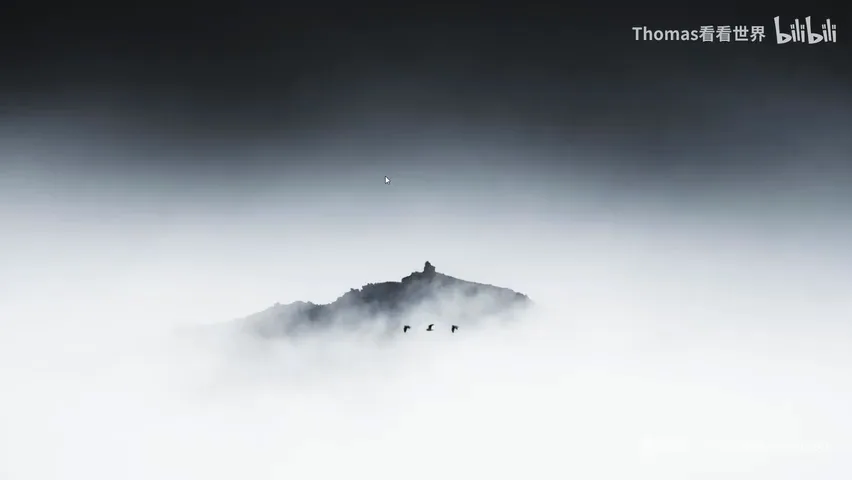
From Daniel Kordan he learned dreamy, soft grading — no pure blacks anywhere, colors vivid yet veiled in a comfortable haze; from Todd Hido, moody night shooting and the power of artificial light — on foggy nights, streetlamps and lit windows are decisive for lifting light and atmosphere (at 11:31 in the video).
The final image holds all of it (at 11:53 in the video): the scene is Max Rive's Arctic Greenland, the quiet mood is Hardman's snow, the strong rendering of streetlamps and window light comes from Hido, the soft dreamy palette is Kordan's homework, and the layering — a soft background with foreground elements overlapping and separated tier by tier in light and dark — is Max Rive's signature craft. Add Thomas's own angle, composition and ideas: each photographer contributes a piece to a work that is finally, fully his own.
1. Imitation has three stages: form copies composition and color, spirit creates in new scenes once you grasp the thinking, fusion absorbs many influences into your own style; 2. The key to form is deep questioning — verify the master's foreground choice on site and reason through why the frame and the edit work; 3. Spirit means summarizing patterns and causes — trees as frames, cold tones lifting a golden peak, a figure for scale all transfer to new places; 4. Fusion means taking one element each from several photographers — location, mood, palette, light — and blending in your own experience and innovation.
HD video:
https://www.bilibili.com/video/BV1wf4y127cg/