Photography Tutorial · 2016-12-27
Recommendation | What Makes a Good Photo? The Way of Photography Is Like the Way of the Sword.
Photography without technique is casual recording; photography without conception is mechanical recording.
As an international photography judge, Teacher Fan's article once resolved many of my confusions and brought me immense inspiration! With Teacher Fan's authorization, I finally have the chance to share it with everyone.
Besides serving as a competition judge for the Chicago Photographic Society over these years, I've also judged some competitions for the Photographic Society of America and received some judging training. Starting this year, I've also become a judge for the world-class photography website 1x.com. So I have some experience in judging photos.
So this teaching series, "The Language of Photography," begins by discussing what makes a good photo. In fact, we are all judges every moment — judging our own photos and judging others' photos. Judging is very important for every photographer; only by knowing the strengths and weaknesses of your own photos can you keep improving.
There's no absolute standard for what makes a good photo, but to some extent there are guidelines. Let me start with the PSA judging rules to see how a PSA judge determines the quality of a photo.
PSA uses a five-point scale:
1 point: a bad photo. The image has major problems — for example, severely inaccurate focus, overexposure, or a chaotic, disordered frame. This is the kind of bad photo that should have been deleted by the photographer, let alone entered in a competition.
2 points: the photo has no major technical problems, but there's nothing worth looking at. The focus is something any autofocus system can achieve, and the exposure is something any modern camera's auto-exposure can handle. This is a judge's minimum requirement for a photography enthusiast.
3 points: a decent photo. The technique is basically correct, and there's at least one point of interest. This should be an enthusiast's minimum requirement for themselves.
4 points: a good photo. No obvious technical problems, and the technique overcomes difficulties caused by the environment. All elements don't conflict, and any flaws don't detract from the theme. If conventions are broken, it's to increase impact.
5 points: a masterpiece. The technique is perfect, and all elements echo one another to highlight the theme. If conventions are broken, it's also to increase impact.
Having said a lot of ambiguous nonsense, it really just means 1 point is a bad photo and 5 points is a masterpiece. How many points to give is up to the judge; the author's protest is useless. But a judge's thinking when evaluating is after all guided by some basis. On what aspects is the quality of a photo judged?
1. Impact. Impact is the most important but also the most subjective. What strikes one person may be tasteless to another. But if it can capture the judge's or viewer's eye, many deficiencies in other aspects can be masked. The purpose of technique and composition is nothing more than a work's impact.
2. Creativity. Whether there's your own new idea, or a new perspective on things others have photographed to death, rather than repeatedly copying others' labor.
3. Composition. All elements are arranged reasonably, echoing one another to highlight the theme.
4. Presentation technique. Whether digital or film, whether HDR or focus stacking, all are appropriate choices to highlight the theme — not technique for technique's sake, conflicting with the theme. Content determines form.
5. Harmony of color or monochrome tones. This is also to highlight the theme rather than conflict with it. The impression a work leaves on the viewer should be its content, not an artificial color cast.
6. Point of interest. A successful photo needs a point of interest to hold the viewer's gaze. Of course, there's a type of photo without a specific point of interest that deliberately guides the viewer's eyes to wander through the image — but this by no means equals chaos.
7. Light. Without light there's no photography. Mastering light and shadow is one of the most important aspects of photography.
8. Storytelling. To move the viewer, whether animal or landscape, street or portrait, there must be substance.
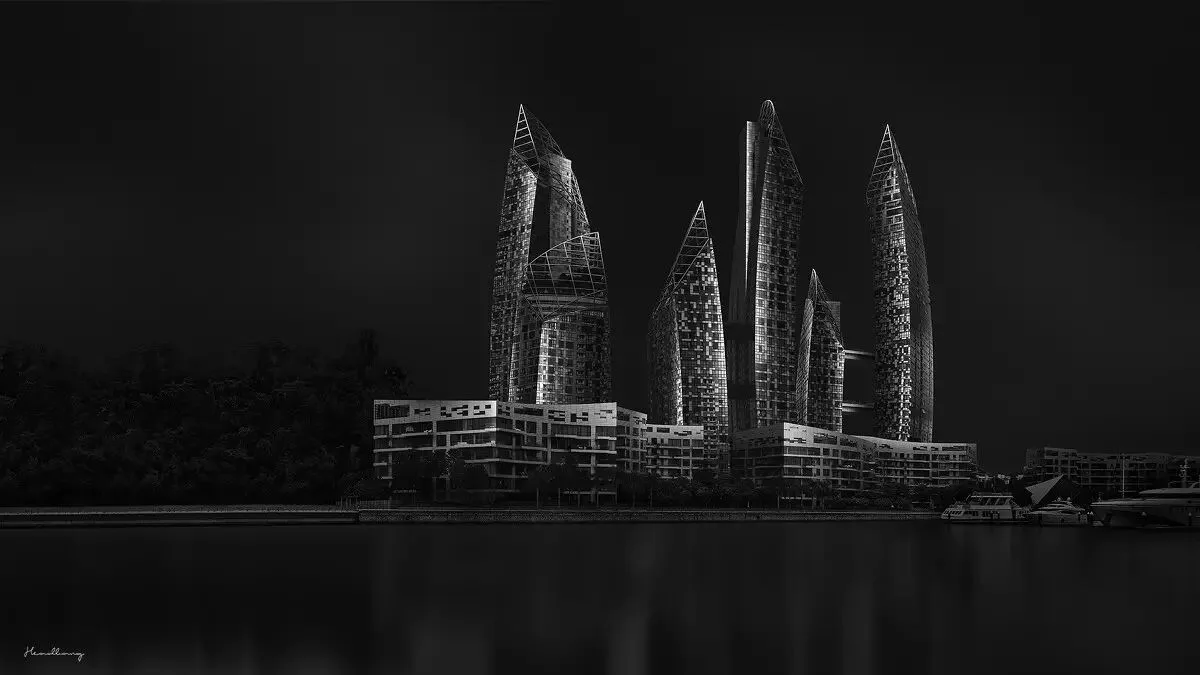
(Image by Headbang, IPA Photographer of the Year award work, headbang.tuchong.com)
At this point you might ask: don't judges first consider technical parameters and post-processing methods? A photograph is presented to viewers as the author's final product. Who cares how your product was produced? What's being judged is the finished product — as long as someone likes it, that's enough.
Defects in the production process will ultimately cause flaws in the finished product. A buyer only investigates production defects after seeing flaws in the finished product. Only at this point does a judge consider what technical problems occurred. And once it gets to this stage, whether you give one point or three, the result is the same.
The salon format is very helpful for beginners, because its rules are clear. Whether or not they're completely reasonable, they at least give people a standard for judging photos, and give beginners a direction for improvement. But these become constraints for the truly top masters. A great photograph is a work of art. And where does art get its rules?
Among world-class websites where all photos are decided by judges are 1x.com, earthshots.org, and so on. Now that I'm also a judge on 1x.com, let me talk about a common question: why are other people's rejected photos published while my masterpiece is rejected? Of course it couldn't be my own problem — I used to feel this way too. Gradually, I saw the pattern.
In fact, there's only one standard for judging: impact. A judge sees hundreds of photos a day, and when there are too many, they all become tasteless — everyone is chasing novel creativity. To catch a judge's eye, you must innovate. In this internet age, isn't it the same for every viewer? For example, with Xiapu and Yuanyang photos: a foreign judge who'd never seen our "heavenly country's" grandeur would occasionally take a look and praise them marvelously. But two months later, dozens of Yuanyang and over a hundred Xiapu photos arrive — genuinely shocking the foreign judge.
So photography, like any artistic creation, shouldn't have you following whatever others shoot. You should have your own ideas and shoot your own photos.
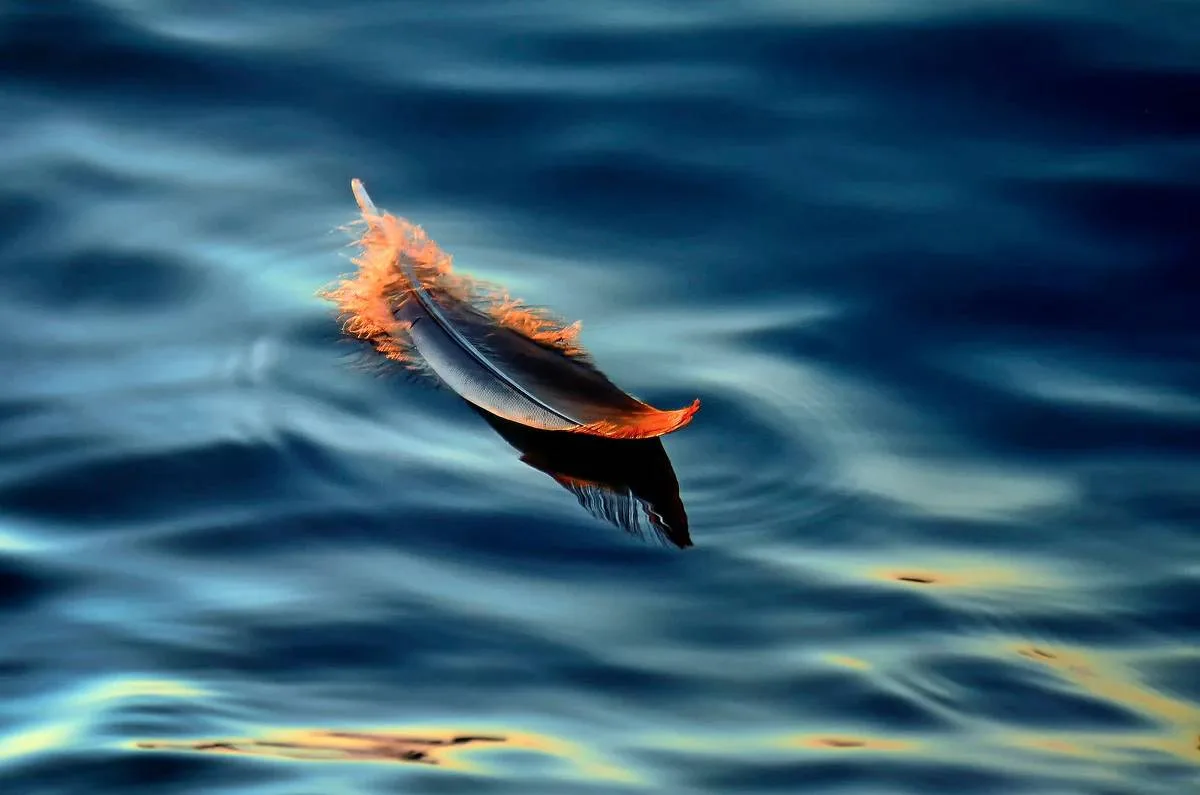
(Image by LarryDeng2008, tuchong.com/1145421/)
Photography is a visual language that brings visual experiences. And language originates in the brain — it's a tool for the exchange of thoughts between author and reader. So before discussing language, let's talk about the brain. The human brain is divided into left and right hemispheres.
According to a very general account, the left brain is more logical and the right brain more intuitive. That is, the left brain emphasizes technique and the right brain emphasizes art. So which side of a photographer's brain is more important? This question of technique versus art has been debated for decades without end, and will continue. It's like the Huashan School in Jin Yong's novels, where the Sword Sect and the Qi Sect fight to the point of drawing blades on each other.
A few years ago, during a difficult journey with Teacher Yunman in the New Mexico wilderness, an idea struck me: to gather the top masters of the world's Chinese photography community in one place. Later, several like-minded friends and I founded the 4Aperture photography team (4aperture.com). Today, 4Aperture has gathered many masters and has become a leading team in Chinese landscape and nature photography, holding a place in the world photography community. Yet the team's greatest gain is being able to continuously spar with the world's top masters through it. This 4Aperture is the platform for the "Huashan sword forum."
Sparring with masters, I've always wondered: why do masters become masters? For quick success, should one train the Qi Sect or the Sword Sect?
Photography is first a technique. Light emitted directly from a subject, or reflected from it, is focused by the lens onto a chemical (film) or electronic (digital) sensor, then processed in the darkroom or software to form an image. This is entirely a physical and chemical process. Photography is inseparable from technique. A correctly exposed image requires a correct set of parameters: focus, aperture, shutter speed, ISO, and so on. Beyond that, appropriate post-processing techniques are also needed.
Modern technology has simplified these complex technical parameters, greatly benefiting every photographer. In the old days, mastering the art of accurate exposure could make you a master; today, a glance at the histogram makes it clear. These technological advances have, to some extent, driven the trend of photography for everyone. The basic techniques of photography are no longer the exclusive domain of experts. Any enthusiast with a camera in hand can pursue their dream of mastery.
But technological progress has also created huge obstacles on many beginners' photography paths. The responsibility for creative decisions often no longer rests with the photographer's brain, but has been handed over to the machine's computer. Before learning photography, when we see a work, we often think: "This photo is so beautiful — his camera must be very advanced." After studying photography for a few years, such a basic question probably won't arise. But habitual thinking is hard to change; it just becomes a bit more high-sounding. "Leica flavor," "bokeh," pixels, resolution, and dynamic range have become fashionable buzzwords.
These technical indicators are of course important, but what determines the success of a photograph isn't simply an impeccable set of parameters. The more important aspects of photography are hard to measure with a precise set of parameters: composition, contrast, light and color, feeling, and concept. These belong to the artistic dimension of photography.
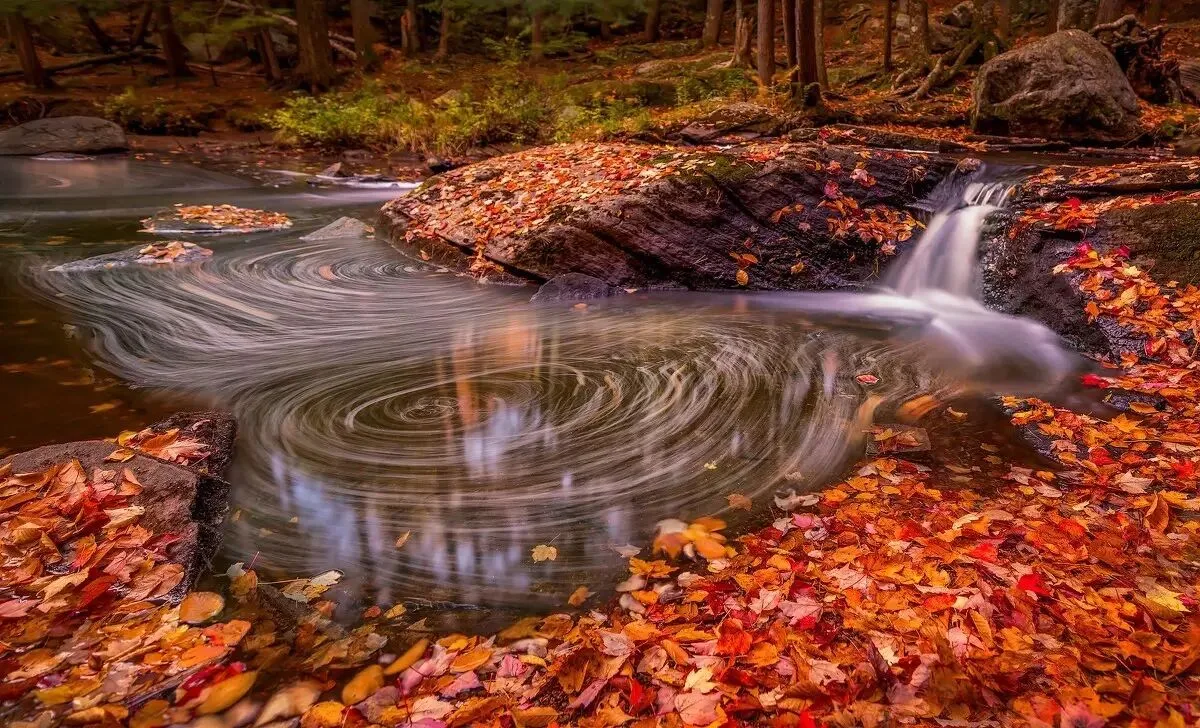
(Image by LarryDeng2008, tuchong.com/1145421/)
What is art? The Encyclopaedia Britannica defines it thus: "Art is the expression or application of human creative skill and imagination, typically in a visual form such as painting or sculpture, producing works to be appreciated primarily for their beauty or emotional power."
Such a tongue-twister simply says that art is the crystallization of skill and creativity, and a tool for exchanging emotions and consciousness. Technological progress was supposed to free photographers from complex techniques and let them invest more in the creative process. On the contrary, because modern photography technology brings more parameters, more beginners get trapped in technique and neglect creation. We often see photography that is technically perfect and scenically beautiful yet lacks creativity.
Arnold Newman gave photography a great definition: "Visual conception + photographic technique + personal feeling = photography. Every factor is crucial; none can be missing." A photograph is the crystallization of technique and art, an exchange between author and viewer. Adams also once said: "A great photograph is a full expression of what one feels about what is being photographed in the deepest sense, and is, thereby, a true expression of what one feels about life in its entirety." To break free from mechanical recording, a photograph must evoke an emotional resonance in the viewer.
Photography in the internet age isn't easier but harder. Every photograph is instantly presented before people worldwide and judged by millions. Before an unrelated viewer, a work has at most one second to hold their gaze. For a photographer who wants their work to reach a world-class standard, pursuing the balance between technique and creativity is all the more necessary.
Photography without technique is casual recording; photography without conception is mechanical recording. Which is more important, the left brain or the right brain? A successful photographer must have their entire developed brain working at full capacity. Aren't today's photography masters all cultivating both the sword and the qi?
Author
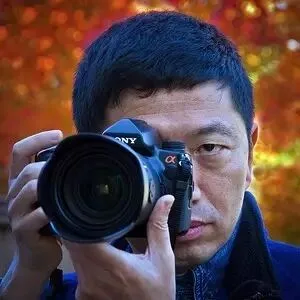
▲ John Fan (范朝亮)
Renowned Chinese landscape photographer residing in the US
Judge of the top photography website 1x.com
Member of 4Aperture
Personal website: johnfanphotography.com
Teacher Fan's new book "The Dynamic of Reason" (《理性的灵动》) will be published and released soon — please stay tuned.
Thanks to Teacher Fan for the wonderful article, and to friends LarryDeng and Headbang for providing the stunning accompanying photos. I hope everyone gains a clearer understanding of mainstream photo judging standards, as well as the artistic and technical aspects of photography.
Of course, not every photographer seeks others' recognition or winning competitions. Shooting what's in your heart is also a form of love.
Follow @Thomas Chu Photo, and learn one photography skill every Sunday.
If you find this article useful, please share it with more friends.