Photography Tutorial · 2025-02-23
The Four Schools of Landscape Photography! Appreciating the Winners of the 2024 International Landscape Photographer of the Year
The winning photos of the 2024 International Landscape Photographer of the Year (ILPOTY) have been announced, and they happen to fall into four of the most popular landscape shooting styles today. Which one is your favorite?
Video
▶ Watch the video tutorial on Bilibili
This is the fully illustrated companion to the video above. Thomas turned the 4-minute review of the 2024 International Landscape Photographer of the Year (ILPOTY) winners into text and paired it with keyframe screenshots — the top three photographers happen to represent the three most popular approaches to landscape photography today: minimalist abstraction, complex layering, and drone aerials, plus the black-and-white school that swept the top three single images. Skim it here for the framework, then go back to the video to study each image.
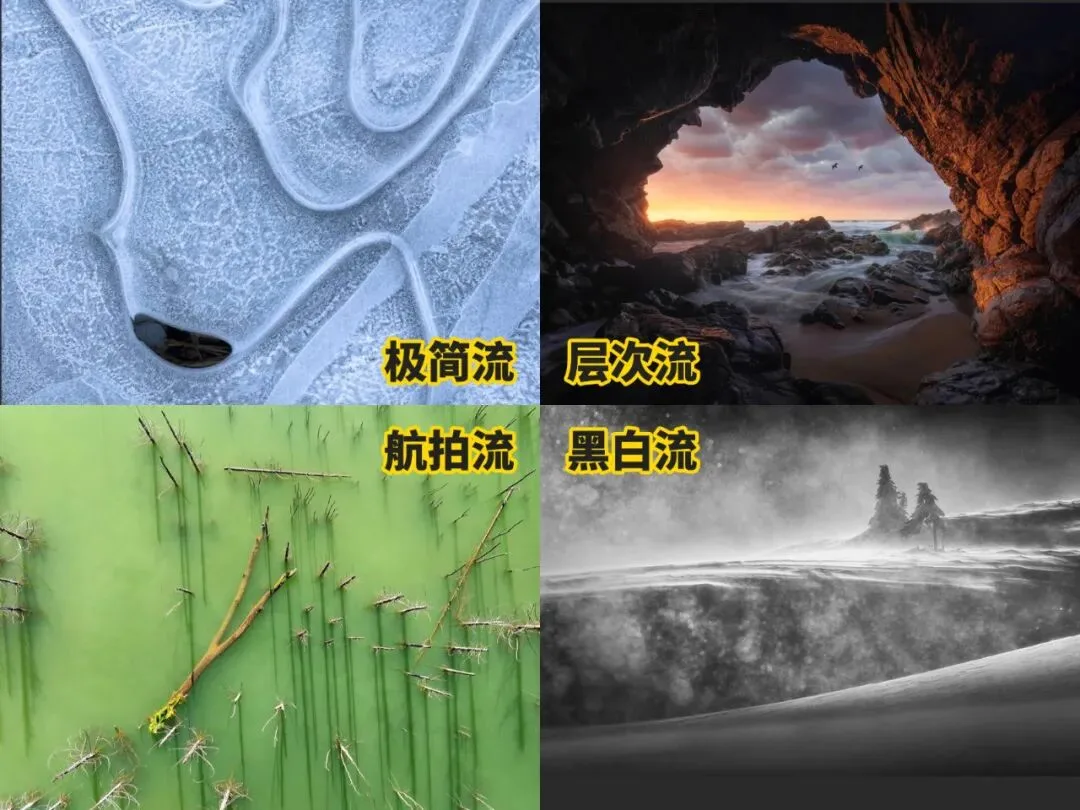
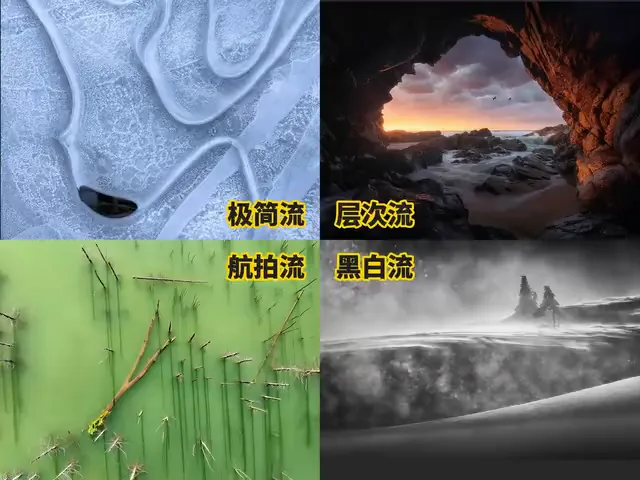
Start with the overview. Captured at 4:12 in the video, this is the closing summary card: four representative images labelled minimalist, layered, aerial and black-and-white — the four schools of contemporary landscape photography as Thomas sees them. The 220 finalists on the official website almost all fall into one of these four; each is unpacked below.
01 Minimalist Abstraction: The Four Images That Won the Year
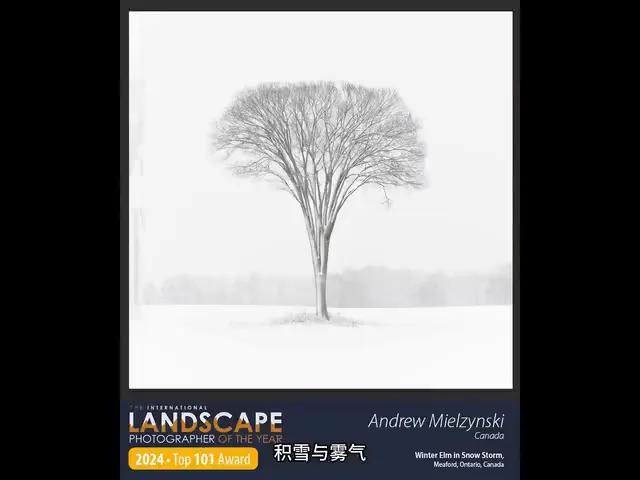
Most of the work by Photographer of the Year Andrew Mielzynski belongs to the minimalist-abstract school (at 0:10 in the video). Two forest images were shot in winter with snow and fog — the snow and mist hide the clutter of a garden, leaving the frames clean and refined; the ice-pattern photograph was taken in an unremarkable roadside puddle, beauty found in everyday life that most people never notice (at 0:27 in the video).
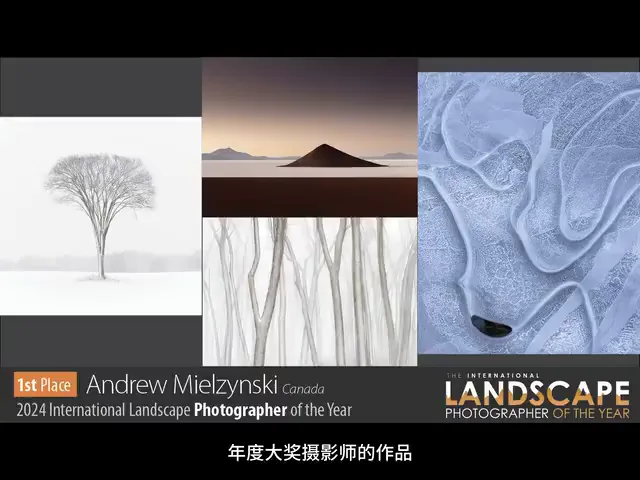
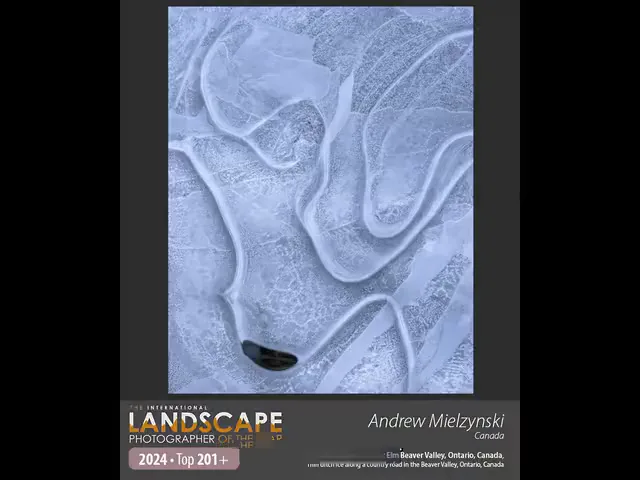
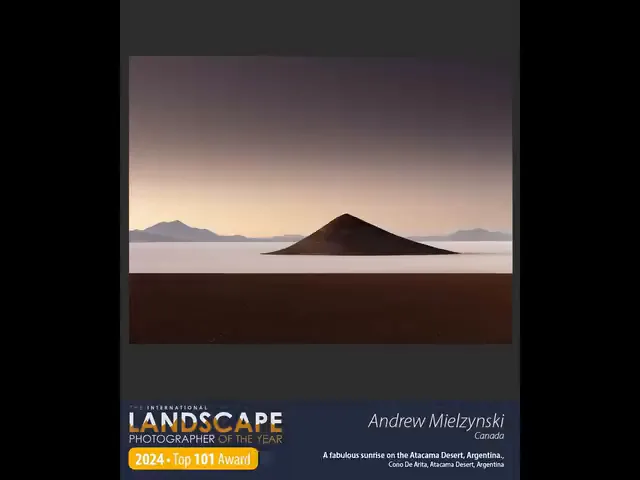
The last, a telephoto landscape, can be shot under a flat, cloudless sky — the frame reads as a few triangles and rectangular blocks of colour, real and surreal at once (at 0:36 in the video). Minimalist abstraction is one of the hottest styles in landscape photography abroad right now: the work is drawn from nature yet carries the refined texture and unreality of abstract painting, and it suits today's clean interiors perfectly as wall art — hence its strong market appeal (at 0:48 in the video).
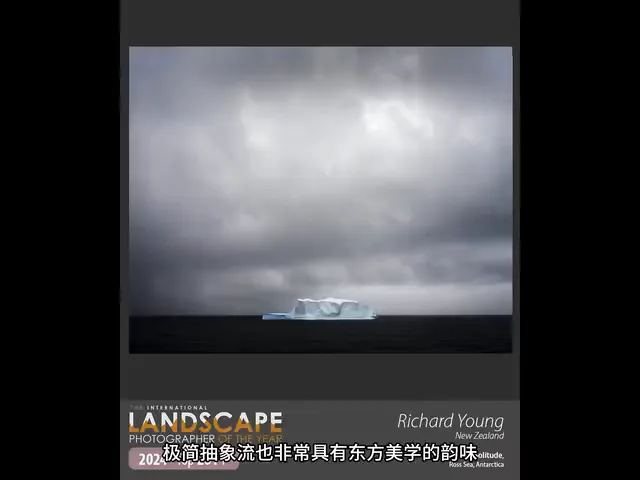
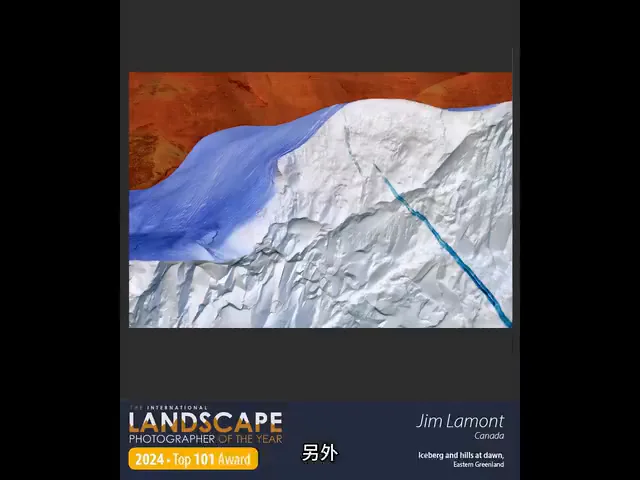
Minimalist abstraction is ideal for showing off a subject: here the clean background of sky and snow throws the vitality of the tree into relief. It also carries an Eastern aesthetic — a tiny iceberg beneath a vast sky, with generous negative space conveying the immensity of heaven and earth (at 1:20 in the video). And the style tests a photographer's eye: at first glance you cannot tell what this frame even shows — in fact the photographer used a telephoto to capture the local texture and blue shadows of a distant iceberg together with the bright red block of a rock face behind it, a genuinely creative rendering (at 1:33 in the video).
02 Complex Layering: Second Place and Its Two Pitfalls
The work of second-place photographer Ignacio Palacios represents the complex-layering school that was all the rage a few years ago: cattle and pasture up close, rainbow-hued Danxia peaks in the middle distance, lightning and coloured clouds in the background — the frame is packed from front to back and the eye can hardly keep up; foreground, middle ground and background are each beautiful in themselves, and stacked together they heighten the sense of depth (at 1:48 in the video).
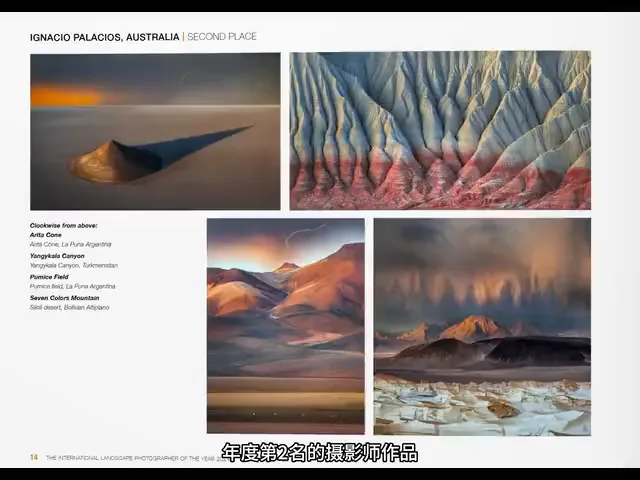
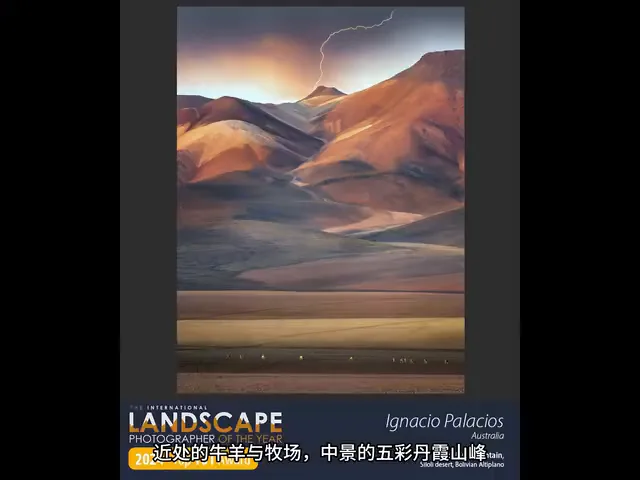
Plenty of strong finalists work the same way: cliff plus seascape plus afterglow, flowers plus snow peaks plus stars, stream plus forest plus mist plus distant mountains, seabed plus waves plus island (at 2:20 in the video). These layered landscapes hit hard visually, but they carry two risks: first, the style has been so popular in recent years that the foreground-midground-background recipe has become a formula, and fatigue sets in; second, many images overdo it — every part pushed to maximum strength — which can tip the frame into visual chaos and leave the subject and theme unclear (at 2:36 in the video).
03 The Aerial School: Alternative Perspectives from the Drone
Third-place photographer Gheorghe Popa works with today's ubiquitous drone in search of an alternative view of the landscape: shot from the air, these images show lakes and forests from another angle, combining the lines of tree shadows, the negative space of snow and lake surface, and the textural detail of ice into compelling compositions (at 2:57 in the video).
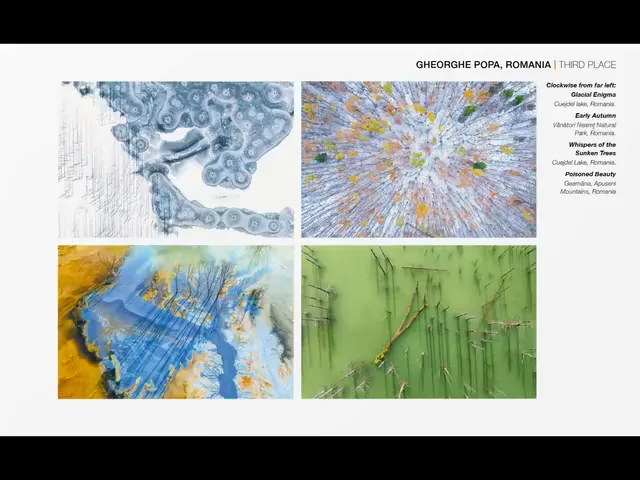
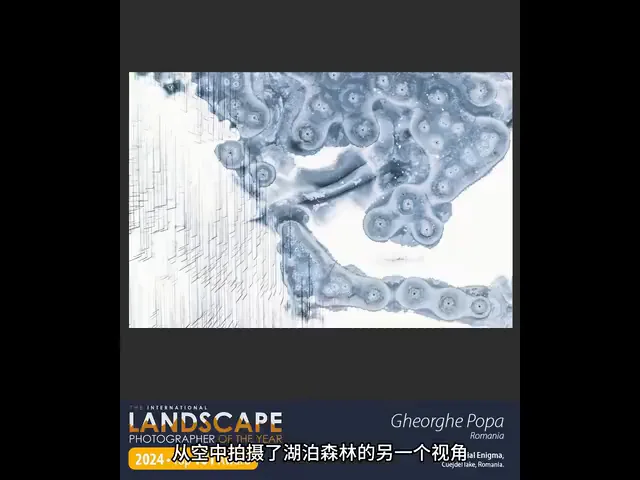
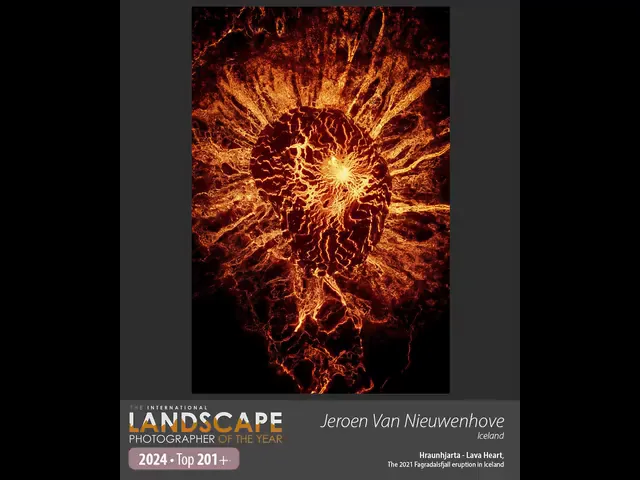
Other finalists likewise used the drone's unique vantage point to describe the textures of rivers and mountains, the light and dark layers of volcanic lava, the sculptural light and shadow of deserts, and the geometry of farmland (at 3:18 in the video). New tools really do open new possibilities.
04 The Black-and-White School: All Three Top Single Images
Three further photographs were chosen as the first, second and third best single images — and, surprisingly, all are black and white or very nearly so: by Ryohei Irie of Japan, Justinus Sukotjo of Indonesia and Himadri Bhuyan of India (at 3:37 in the video).
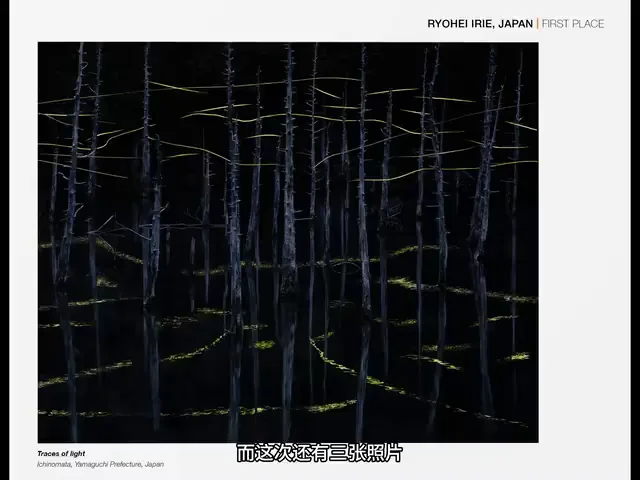
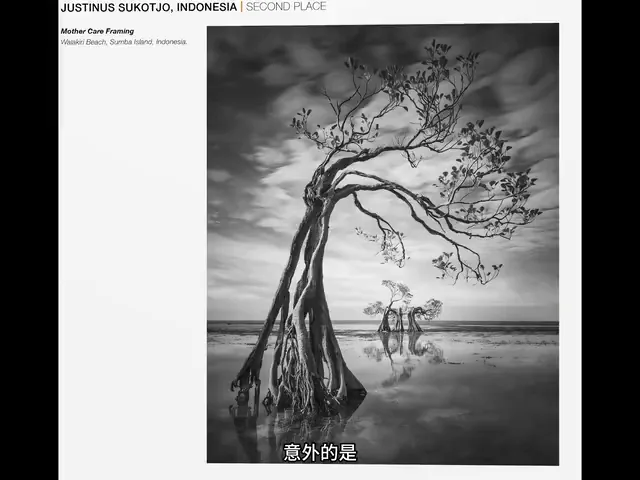
Black and white strips away colour to concentrate on light and shade, opening unlimited possibilities in post while lending an image both realism and abstraction — long a secret weapon for many photographers (at 3:49 in the video). Those are the winners of the 2024 International Landscape Photographer of the Year; Thomas encourages everyone to browse all 220 finalists on the official site. They belong to four schools of landscape photography that are all thriving right now — which one do you like best (at 4:08 in the video)?
1. Minimalist abstraction: snow, fog, flat sunny skies and telephoto lenses turn nature into abstract painting, negative space isolates the subject with an Eastern flavour, and it sells best as wall art — Photographer of the Year Andrew Mielzynski works this way; 2. Complex layering: foreground, middle ground and background stacked for maximum impact, but the formula breeds fatigue and overworked parts blur the subject — runner-up Ignacio Palacios is its exemplar; 3. The aerial school: third-placed Gheorghe Popa uses a drone to find tree-shadow lines and ice textures over lakes and forests, new tools bringing new perspectives; 4. Black and white: all three top single images drop colour to focus on light and shade, with unlimited room in post and a blend of realism and abstraction.