Photography Tutorial · 2017-09-26
The Masterpieces You See Every Day Are Only the Tip of the Iceberg of Landscape Photography
Landscape photography is diverse and personal — it's by no means only the red-cloud, sunset-glow, and Milky Way masterpieces we often see online, nor is it exclusively the realm of exaggerated wide angles, panoramic stitching, and magical post-processing.
Teacher Shi Yanbing's fine article introduces us to many distinctive landscape photography works. Let's open our minds and create our own landscapes.
The State of Landscape Photography
Landscape photography has entered an era of a hundred flowers blooming.
As photography gear becomes more affordable, more and more enthusiasts hold equipment equal to or even better than professional photographers'. Beginners who go from taking selfies with their phones straight to buying a Canon 5D4, Nikon D810, or Sony A7R2 are everywhere.
Even without flagship DSLRs, many entry-level DSLRs today have performance specs — in pixels, high ISO, dynamic range, and so on — that already match professional DSLRs from a few years ago. Photography is no longer a field only accessible to a few professional artists.
At any popular tourist spot, crowds of "little masters" and "old masters" hauling tripods, big cameras, and filters shoot in total absorption. At a glance you can't tell who's a professional, who's an enthusiast, who's a master, or who's a beginner — because their gear is identical and their stances all look convincing.
Yet in stark contrast to the rapidly growing number of landscape photographers, landscape photography works themselves have fallen into an unprecedentedly monotonous predicament. The most obvious manifestation of this monotony is on the major photo-sharing platforms familiar to every enthusiast: 500px, Flickr, Tuchong (图虫), and so on.
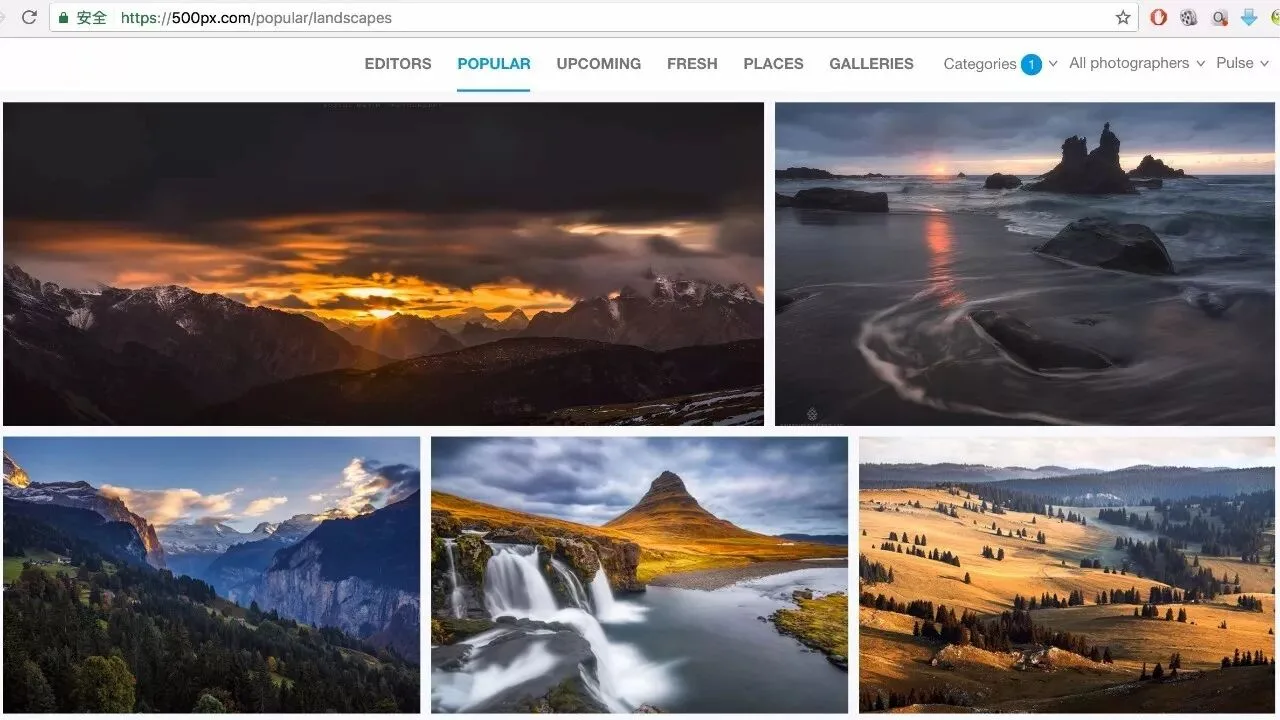
I wonder if readers feel the same way: open the homepage of any of these sites, set the category to landscape, and the photos all look stamped from the same mold. Some are more refined, some rather crude, but their common traits can almost be summed up in a few words: exaggerated and intense, heavy and noisy, heavily templated.
Their shooting conditions are often red clouds in heavy backlight, as if that's the only condition for producing a great photo; their locations are usually those crowded hot spots; their compositions are often copied from each other until no one can trace the original; their post-processing often resembles Korean plastic surgery, producing heavily made-up "painted ladies" indistinguishable from one another. Even so, in this fast-paced age, when people spend on average no more than 2 seconds viewing each photo, such works win wave after wave of homepage popularity as "first-glance beauties."
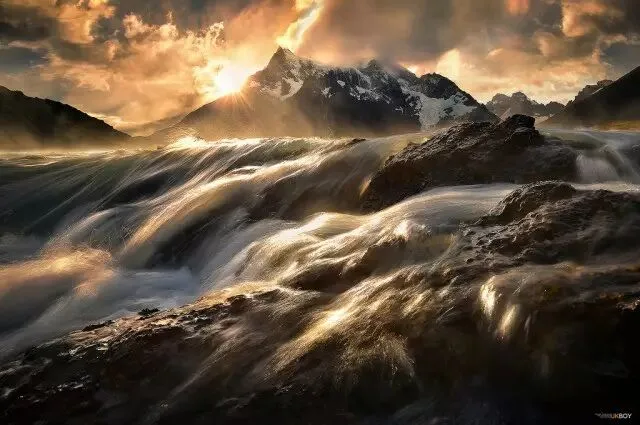
A typical 500px-style example: "Aggression" - Jkboy Jatenipat
The bombardment of this monotonous, uniform social-media aesthetic has a huge influence on enthusiasts, especially beginners. Many enthusiasts' appreciation of photography originates from these sites, and they have no other channel to encounter photographers of different styles. As a result, a fixed mindset forms in many enthusiasts' minds: that 500px-style landscape works are good photos, are masterpieces.
The Dreamscape school led by Marc Adamus and Max Rive
I don't want to interpret the above phenomena too radically, because popularity and photographic skill aren't opposed.
Among the popularity kings of photo-sharing sites are genuine masters. Marc Adamus and Max Rive are the two most typical examples. The two share very similar experiences: both have excellent outdoor abilities, enabling them to reach rarely visited places and pioneer unknown yet breathtaking shooting spots. Both are best known for ultra-wide-angle grand scenes.
Marc is the originator of several classic landscape post-processing techniques — focus stacking, perspective compositing, and multi-step sharpening all embody Marc's talent and innovation. Max stands out with his signature panoramic stitching. In photography experience and technique, Marc is more comprehensive and seasoned, while Max is younger and more adventurous, with his photos often exuding the spirit of "the finest views are only to be found on perilous peaks."
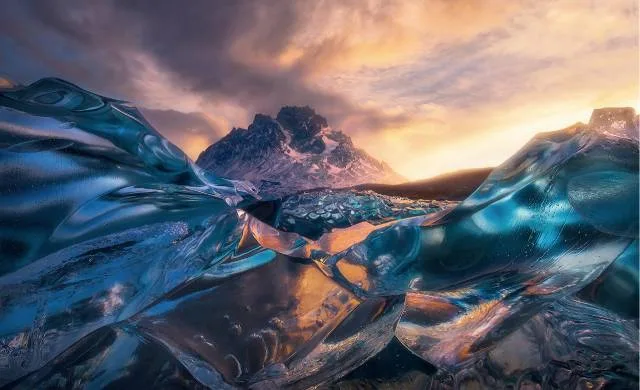
Cool the Flames - Marc Adamus
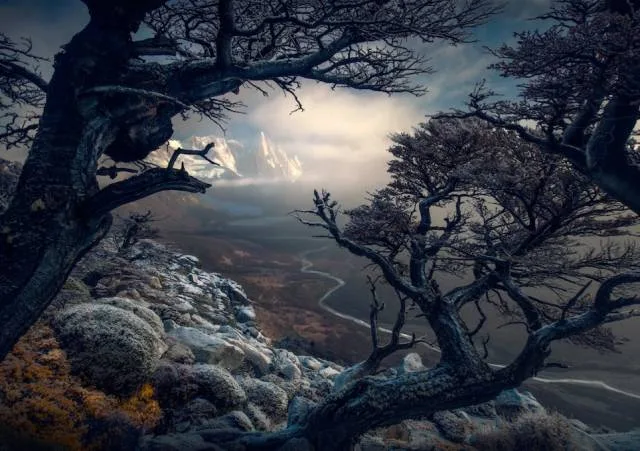
Persevere - MaxRive
Marc and Max's styles and compositions have been imitated endlessly but never surpassed. Yet their success on photo-sharing sites actually benefits from their style itself. In a sense, Marc and Max's works are also "first-glance beauties," because their works carry enormous visual impact, which lets them grip viewers' interest in a single brief glance.
Yet unlike the typical 500px style I criticized earlier, Marc and Max's works remain beauties after the second glance, third glance, and Nth glance — because both have their own signature, distinctive traits that familiar viewers recognize at a glance. At the same time, their works are highly original, and many shooting locations remain unknown to this day.
I've grouped Marc and Max into one school, calling it "Dreamscape" (梦幻风光). The school pursues a dreamlike pictorial quality that, at its extreme, carries a hint of CG effects. This school actually includes many other excellent photographers — such as Ted Gore, Alex Noriega, Chip Phillips, and Ryan Dyar, whom you may already know.
Landscape Photography Is Diverse
If you think the Dreamscape school is the whole of landscape photography, you'd be very wrong. All art has diversity, and that's exactly the charm of art.
Oil painting is solemn and realistic, but solemn realism isn't the only good painting. The simplicity, restraint, and freshness of ink-wash painting can equally refresh and enchant. By the same logic, the Dreamscape school led by Marc Adamus and Max Rive is only a single boat on the vast sea, the tip of the iceberg of landscape photography. Landscape photography is far more than this!
Introducing every school of landscape photography in one short article is probably unrealistic. And I'm far from the level of defining, summarizing, and sorting out the various schools — a task as difficult as writing a history of landscape photography art.
This article will briefly introduce several landscape photographers I admire. Their styles are all very different from the Dreamscape school, and many of their works lack strong visual impact. Yet their works reveal thinking, wisdom, vision, and understanding that set them apart from ordinary people as photographic artists. I hope to cast a brick to attract jade — through introducing them, to broaden readers' horizons in appreciating photographs, break fixed aesthetic patterns, and expand their own shooting ideas.
Floris Van Breugel
http://www.artinnaturephotography.com
Floris is one of the 10 photographers Marc Adamus has publicly said he most admires. The two once explored Patagonia together, on the border of Argentina and Chile. Marc Adamus's "Cool the Flames," quoted earlier in this article, came from that joint trip.
What's less well known is that Floris is a doctoral graduate of Caltech — and in the US, Caltech's standing is no less than that of the famous MIT. Young and accomplished, Floris isn't a full-time photographer. He now lives in Washington State, where I live too; his main job is a researcher at the University of Washington, with landscape photography as his side career.
Completely different from Marc Adamus's dreamlike style, Floris's works are fresh and realistic, yet full of wisdom and spirit. Below I list and comment on several works that impressed me deeply and made me return to them again and again.
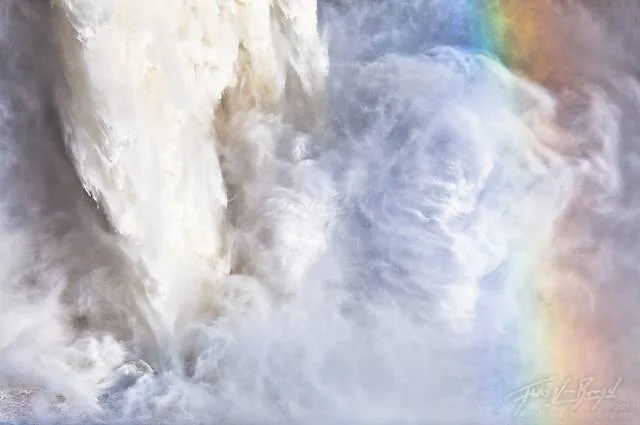
White Water Spirits - Floris Van Breugel
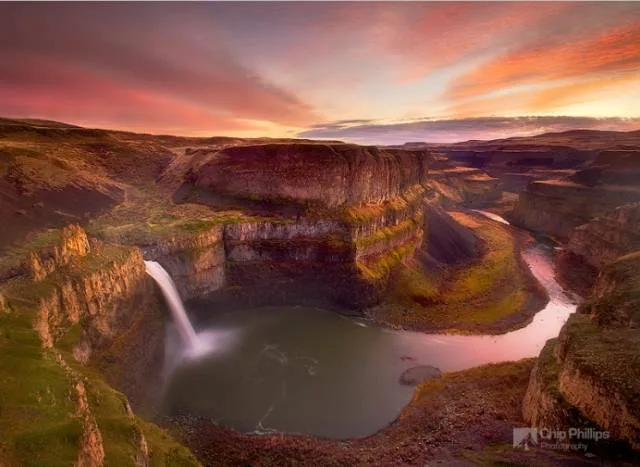
Palouse Falls Sunset – Chip Philips
"White Water Spirits" was shot at Palouse Falls in Washington State. The full view of Palouse Falls is as magnificent as shown in Chip Philips's work below. That work by Chip Philips may be the pinnacle of the Dreamscape school for this scene — weather conditions and post-processing are both near-perfect, so much so that enthusiasts have since raced to imitate it, making it the scene's almost standard, singular composition.
Yet it's Floris's "White Water Spirits," shot from above the waterfall's crest, that truly made my eyes light up and left an unforgettable impression — slapping my forehead and exclaiming that a waterfall could be shot this way.
This work uses a detail to suggest the entire waterfall's cascading power, restrained yet evocative. In terms of execution, the exposure control precisely depicts the churning, exploding motion of the spray. In terms of timing, my field research shows that only the sun's direction in a specific season allows the rainbow formed in the spray to enter the frame from this overhead angle. So I believe Floris also did some careful design and calculation before shooting. The work's unique perspective and novel conception reflect the photographer's exceptional intelligence.
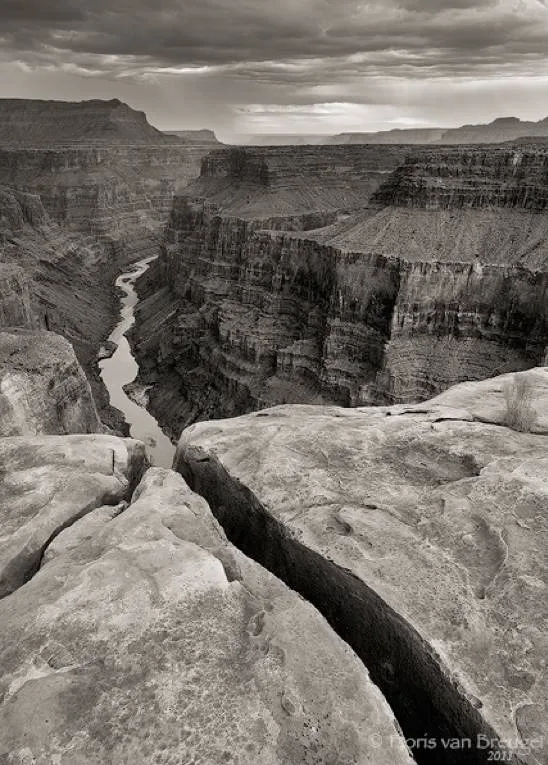
The Rift – Floris Van Breugel
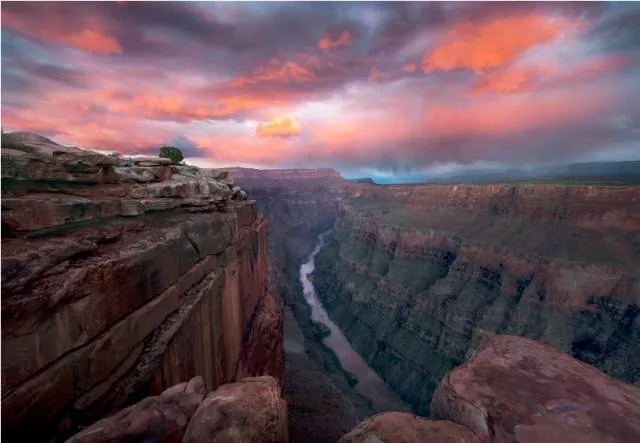
Toroweep Skies – Marc Adamus
"The Rift" was shot at Toroweep, the most breathtaking overlook of the Grand Canyon in Arizona. This spot is a typical place for producing "great photos." The most perfectly timed and positioned work I've seen from this spot is Marc Adamus's "Toroweep Skies."
Compared with the stunning red-cloud sky in Marc Adamus's photo, Floris's black-and-white "The Rift" at first glance seems plain and unremarkable. But after closer looks, its subtle brilliance emerges. The only flaw of the Toroweep scene is that, limited by the cliff terrain, the Colorado River below tends to be cut off by the foreground no matter the camera position. Marc Adamus's approach was to introduce a small amount of directional foreground as a faint leading line — a technique many enthusiasts know and imitate.
But Floris, through careful camera positioning, cleverly used the direction of the cracks in the foreground ground to continue the Colorado River in the distance! If you observe the light-dark transitions even more closely: the sunlit river in the distance connects to the cracks in the shaded foreground; the shaded cliff in the distance transitions to the sunlit ground up close. This intricate interweaving of light and shade is truly astonishing!
Below are a few more representative works by Floris, each with its own clever, distinctive quality. Readers may want to look at them several times and savor them. Overall, Floris's works aren't easy to catch the eye at first, but they hold up well. Once you grasp their brilliance, you often marvel at the intelligence and talent of this Caltech graduate. I think that's why, at a young age, he's admired by long-established masters like Marc Adamus.
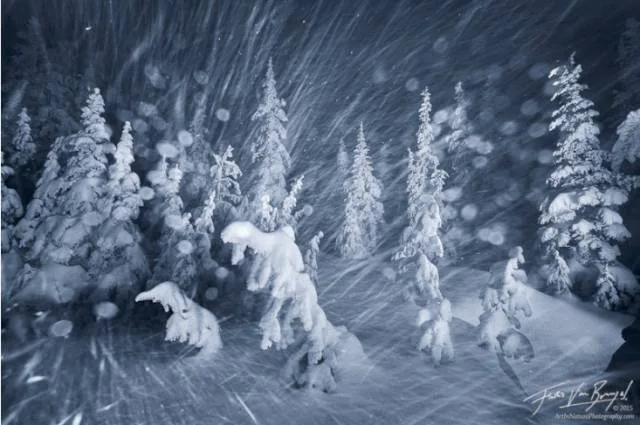
Flurries - Floris Van Breugel
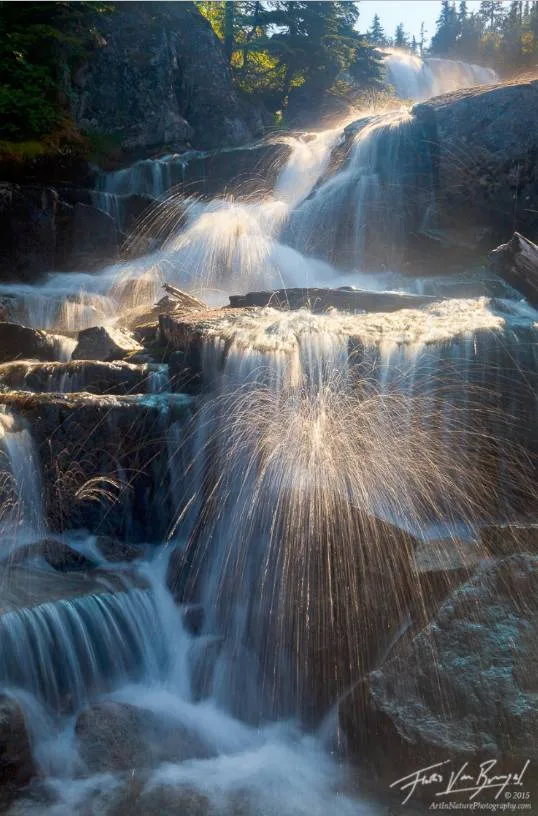
Cascade Fountain - Floris Van Breugel
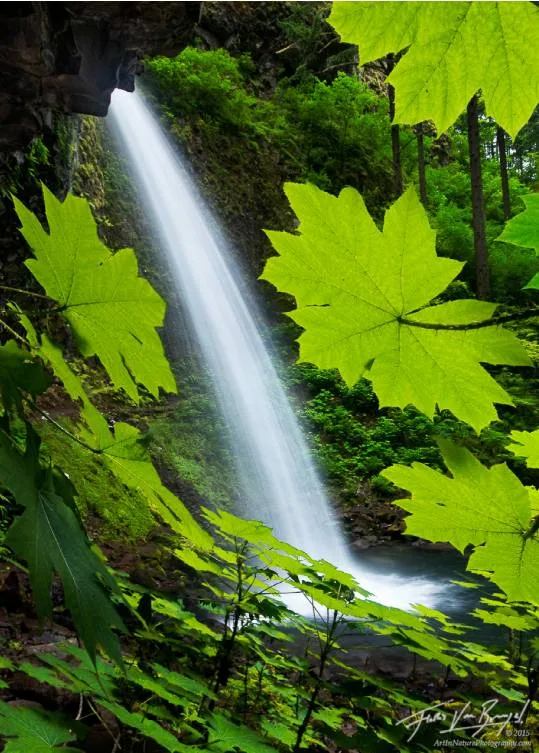
Secret Paradise - Floris Van Breugel
Guy Tal
https://guytal.com
Also on Marc Adamus's list of his 10 most admired photographers, Guy Tal is a seasoned "old master." Unlike the engineering whiz Floris, Guy Tal is more of a literary youth — no wait, a literary elder. Besides shooting, he's also a writer, recording many of his insights and understandings of photographic art through his blog. Over the years, these classic essays were compiled into books, among which "The Good Badlands" is my favorite bedside reading.
Unlike photographers like Marc Adamus and Max Rive, who travel widely discovering new shooting locations, the subjects of Guy Tal's works all come from his own doorstep. To better explore the beauty of the American Southwest, Guy Tal made his home in the desert of the Colorado Plateau and has lived there for many years. Beyond exploring shooting locations, Guy Tal's works focus more on expressing his meticulous observation of climate, seasonal change, and natural transformation.
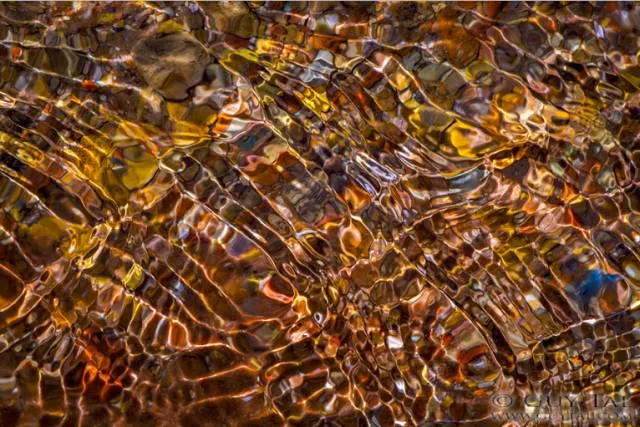
Secret Knowledge - Guy Tal
"Secret Knowledge" is a typical example. An unremarkable oil slick or ice layer on the water (I'm actually not entirely sure what it is), illuminated by sunlight and reflecting the colorful pebbles beneath the riverbed, forms translucent, glittering patterns. Scenes that many passing tourists might overlook come alive with unexpected vividness and charm under Guy Tal's lens.
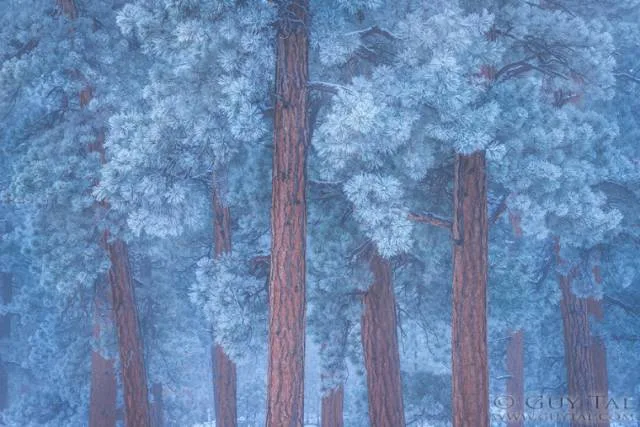
Ponderosa in Blue - Guy Tal
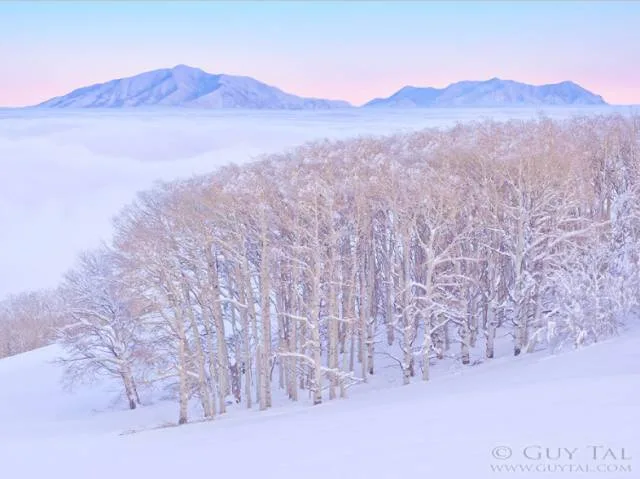
Wintry Pastels - Guy Tal
Guy Tal's post-processing style is also very distinctive. His post-processing doesn't use very strong light-dark contrast, nor does it darken the whole frame to emphasize light, yet the finished works are full of "texture," often giving an impression of oil paintings. The two works above are typical representatives of this style.
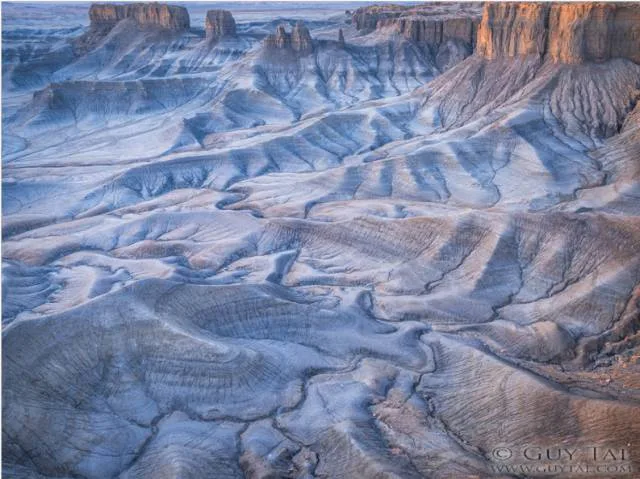
Convolusions – Guy Tal
Although the light-dark contrast isn't strong, Guy Tal is a master of the subtle transitions in warm-cool color contrast — whether in choosing light in the field or enhancing color in post, he renders this contrast naturally and without affectation.
Remarkably, Guy Tal organizes his works into series by theme, location, and season. Appreciating a series often provides more context than a single image and makes his intended meaning clearer. This may be the advantage of persistently shooting in one place.
Sarah Marino and Ron Coscorrosa
https://www.naturephotoguides.com
Sarah Marino and Ron Coscorrosa are a married couple of professional landscape photographers. Their specialty lies in intimate landscapes. They could be called my "founding teachers" of intimate landscape photography. Many of the ideas in my earlier article "Seeing the Great in the Small — The Secret Manual of Delightful Intimate Landscape Photography" came from this couple's book "Beyond the Grand Landscape."
In my view, specializing in intimate landscapes is very difficult, because every successful intimate landscape embodies long periods of searching and experimentation. A successful grand landscape often only needs effective scouting, ideal weather, and correct pre- and post-processing techniques. Intimate landscapes require more patience, more careful observation, and also favorable time and place.
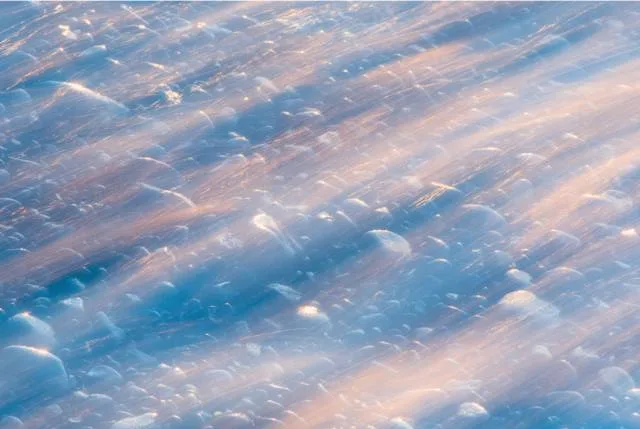
Blue and Gold - Ron Coscorrosa
Ron's "Blue and Gold" is one of my all-time favorite intimate landscape works. A scene that couldn't be more ordinary: a shallow stream over pebbles. Under Ron's lens, the water flow reddened by the setting sun looks like rippling golden threads, while the pebbles on the riverbed appear and disappear — the interplay of motion and stillness, of cool and warm, sets the imagination wandering over the streamside scene and the sky of that moment.
Compared with grand landscapes that seek to "stumble upon" perfect weather, rendering an ordinary scene brilliant through the photographer's subjective agency is the charm of intimate landscapes and the photographer's strength. Sarah Marino and Ron Coscorrosa prove this again and again with their stylistically distinctive intimate landscape works.
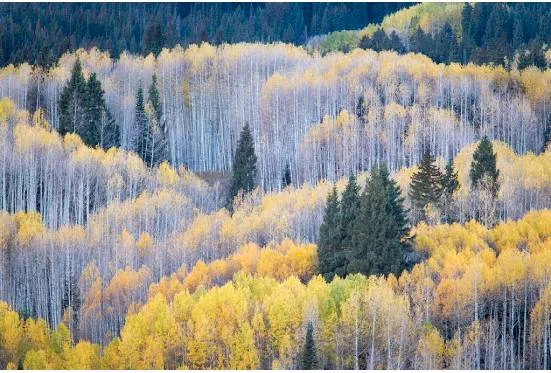
Hillside Layers - Sarah Marino
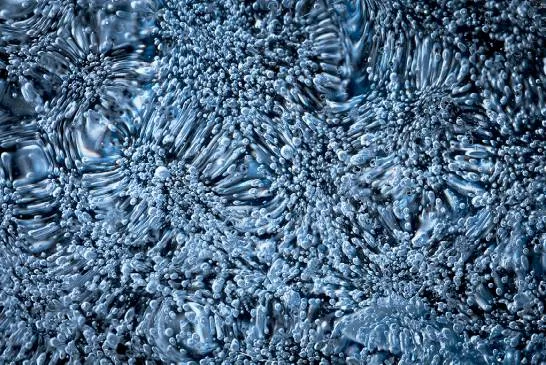
Ice Abstract, Iceland – Sarah Marino
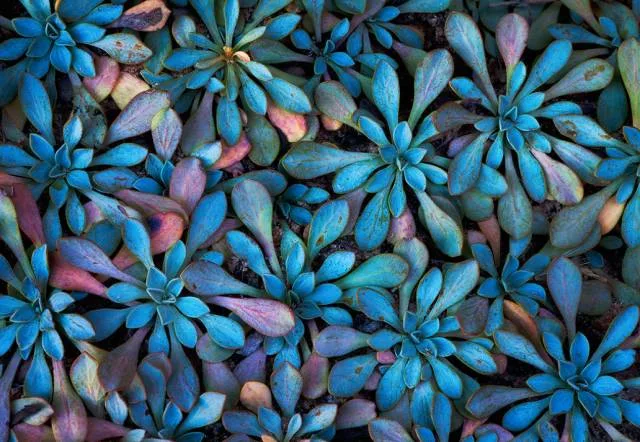
Autumn Pastels - Sarah Marino
Summary
The four photographers featured in this article have styles completely different from today's popular landscape photography. Their works don't capture viewers' first glance through strong visual impact, but move and influence viewers' hearts plainly through something more substantial. Their styles represent merely another corner of the landscape photography iceberg.
As photography enthusiasts, we should appreciate works by photographers of different styles to help open and expand our ideas for in-camera shooting and post-processing, ultimately forming our own distinctive personal style. If we merely settle for imitating popular styles and make gaining popularity the sole goal of photography, we're ultimately just enthusiasts copying a gourd.
Jiying AdventureX (极影AdventureX)
Push the Limits
Ultimate Imagery
Geek Sharing
http://www.theadventurex.com
Thanks to Teacher Shi of the AdventureX team for the wonderful article,
Thomas is still trekking in Greenland,
and will update photos and articles irregularly over the coming month,
Thank you all for your attention and sharing.
Click "Read More" to follow Thomas's Tuchong and view my new Greenland photos.