Photography Tutorial · 2018-09-23
So That's How It's Shot! Video Walkthrough of a Landscape Photography Workflow
Thomas Chu Photo
One tutorial a week — making photography easy to learn
I'm AdventureX photographer Joyous (Zhou You)
Introduction
More and more photographers are 'obsessed' with post-processing — as if Photoshop in hand means owning the world, as if editing is omnipotent! Many others simply 'copy' existing viewpoints without any 'creative' thinking about landscape photography!
Using this work from Torres del Paine National Park in Chile as an example, let me walk through the on-location workflow of landscape photography.
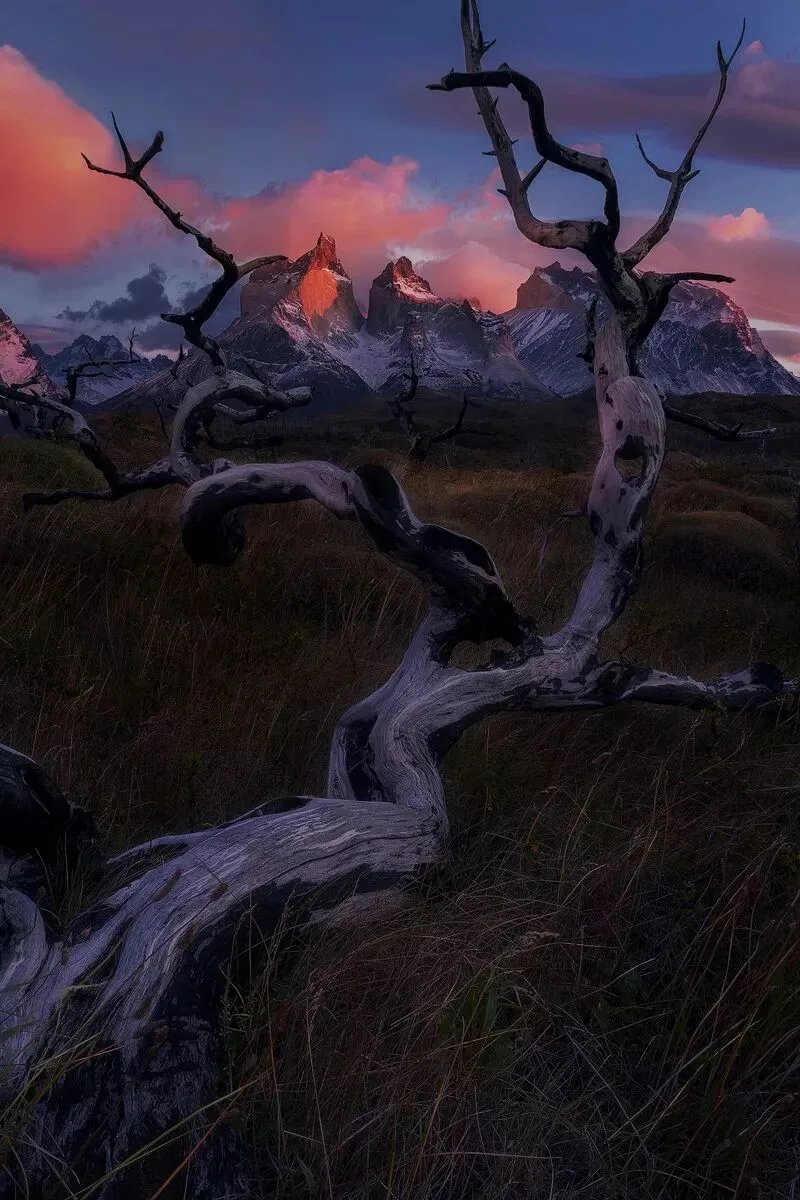
Part
1
How to Explore for Vantage Points?
Before today's content, a question to ponder: if photographers A and B go to the same region or national park at the same time, will their photos look the same?
In mountain photography, a peak looks different from different angles, but the peak is always the subject and the midground. With the subject fixed, we seek variation in the supporting foreground elements and the weather elements!
Landscape photographers do live at the mercy of the sky — we don't decide the weather. But the foreground we pair with the midground (subject), their spatial dialogue and size relationship — that we CAN decide. It's a measure of a photographer's exploratory ability.
Arriving somewhere unfamiliar, the most efficient approach is to study photos and vantage points from accomplished shooters of that area and learn the local geography. A PhD thesis has references — but remember the keyword is 'reference', not 'copy'.
For the Torres del Paine trip, I referenced Vincent_chen's travel article 'Photographing Southern Chile — the Stunning Torres del Paine'.
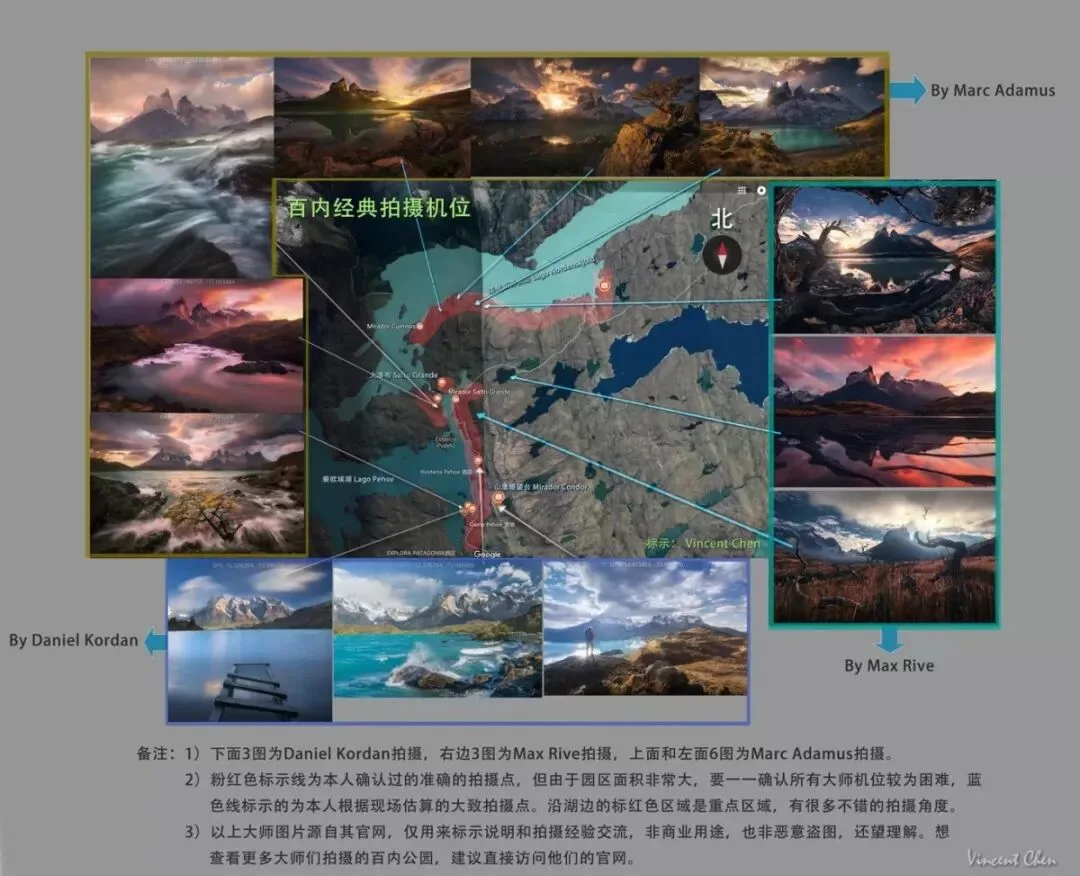
Vincent summarized photos taken in the park by world-class landscape masters (Marc Adamus, Max Rive, DK).
At the bottom right, Max Rive once made an epic shot of a dead tree with the Cuernos peaks. Such gnarled trees are a local signature of Patagonia — as the saying goes, 'here the birds fly backwards, and the trees grow sideways' — Patagonia's fierce winds created this magical sight.
Seeing Patagonia's magical trees, I felt Max Rive's concept could be pushed further and more refined — provided I found 'the tree of my mind'. It had to be distinctive, and I wanted an embracing composition of tree and peak. All of this was sketched in my head long before; I just needed to find the scene matching that 'drawing'.
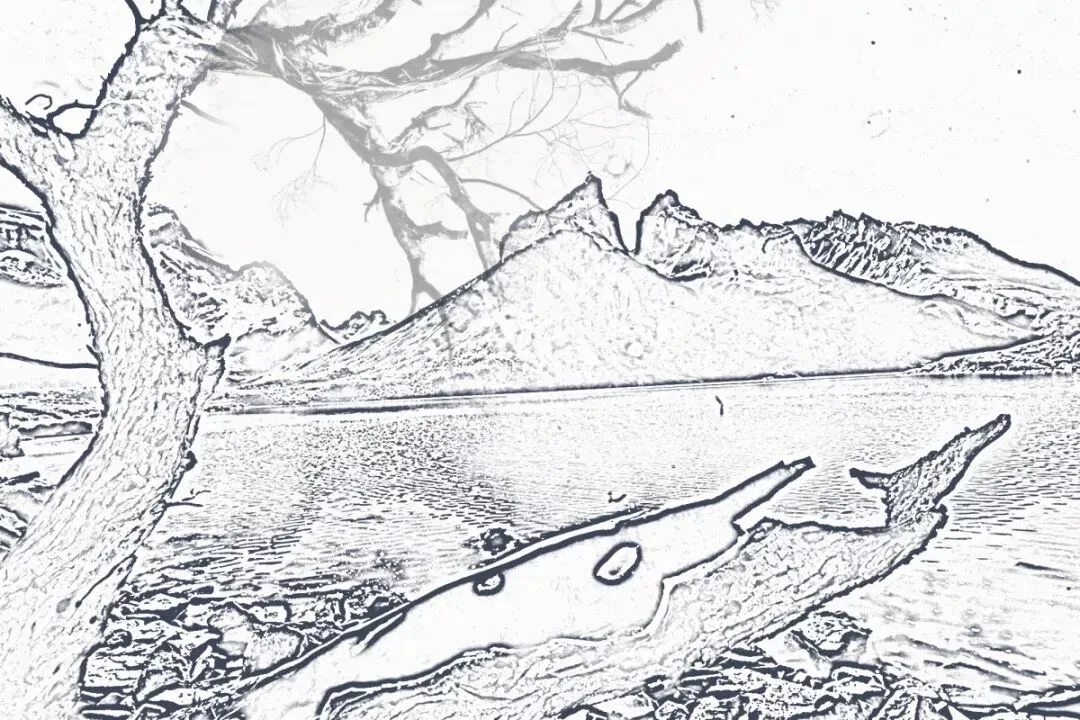
Sketch in my mind (from a soulful doodler)
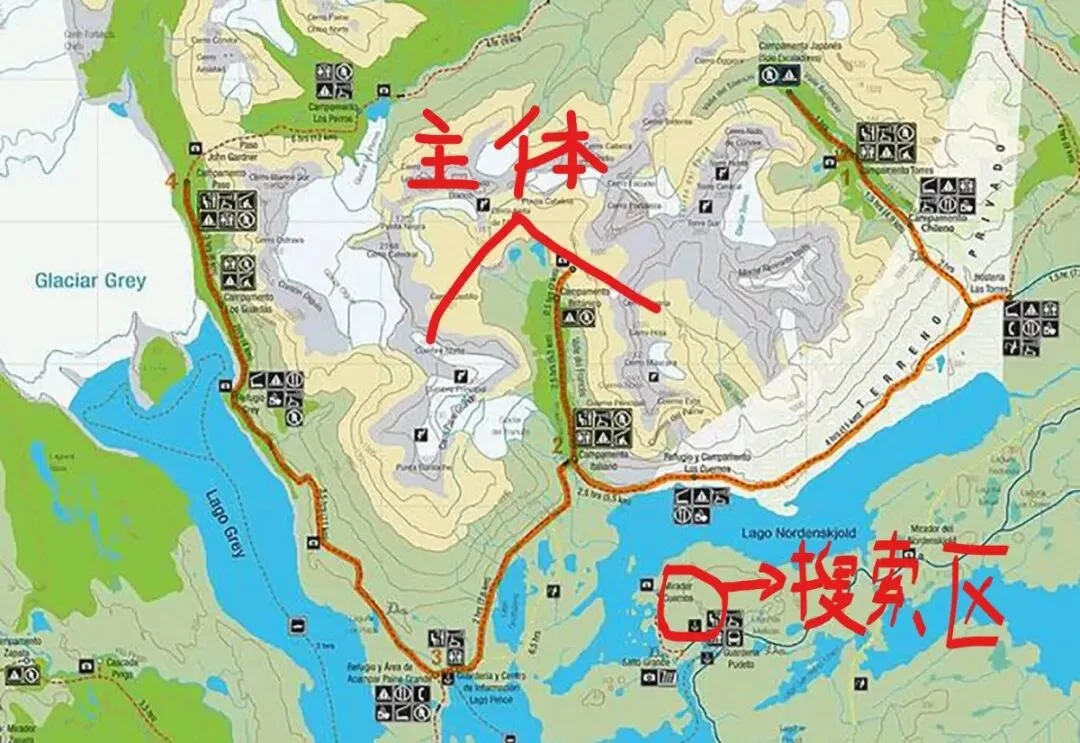
Then I marked on the map the areas where my desired scene might exist — the rough search range for my tree. From the contour lines, I had to get far from the main peaks; the W trek near them was out. As the old poem goes: 'deep in the clouds, somewhere in these mountains' — you can't shoot the mountain from inside it.
So the vantage point for a mountain is never inside that mountain, but somewhere across from it. I first searched along the lakeside road marked with the red dotted line for suitable trees.
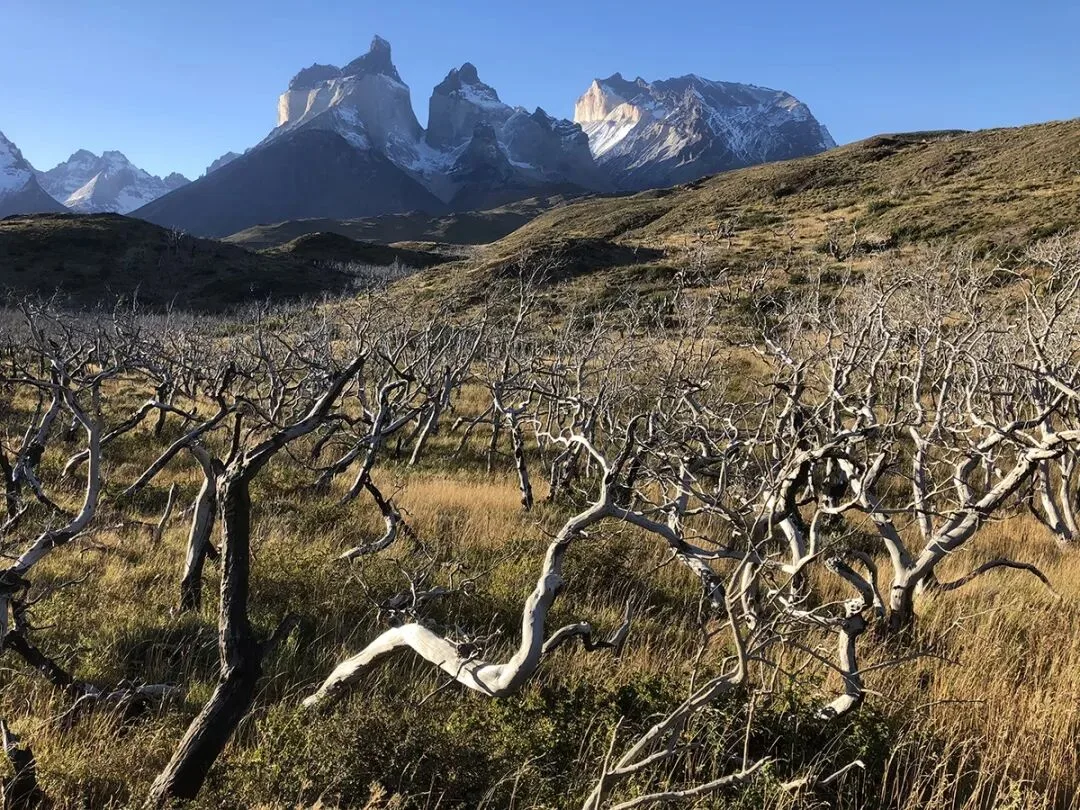
The roadside trees were all messy — unsatisfying in both form and the ethereal mood I wanted. Growing in low gullies, they sit too low, and the Cuernos are partly blocked by hills — it all feels unfinished.
So I decided to explore the high ground of the red-circled hill on my map. Only a tree growing at the leading edge of a summit has no obstructing elements — and from up there, the whole snow mountain is visible.
The red area I circled looks small on the map but is actually huge, and exploring it means climbing. Every past tutorial was text, so you couldn't feel how hard the exploration is. This time I made a landscape-photography exploration documentary — follow a landscape photographer's perspective to experience the heartache, leg-ache and foot-ache behind a single photo.
After watching the video, you surely have the answer to the opening question: with different exploratory abilities, two photographers produce completely different photos.
Part
2
Choosing the Mode of Expression
Let's think further: if photographers A and B stand at the very same spot, are their photos then identical?
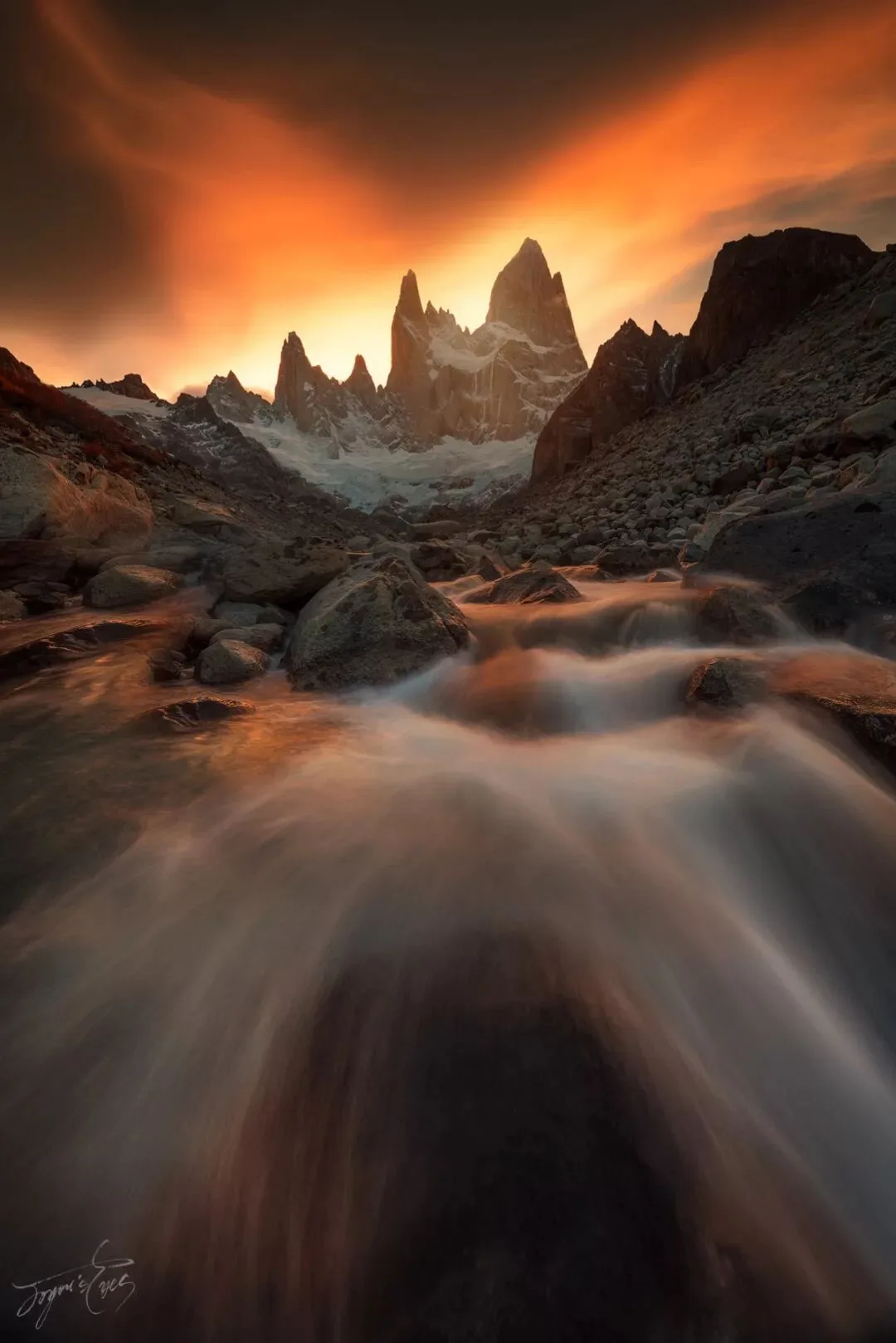
Many people ask how I made the water in 'X Time' above look so beautiful. Adjusting shutter speed, aperture, ISO and other parameters to change how scene elements appear — that's what I call the image's 'mode of expression'.
My earlier article 'Five Expressions of the Long-Exposure Seascape' introduced splash, mist, mirror, transparency and streaking — achieved by varying shutter speed and using a CPL. The same sea, five different effects: the photographer becomes a magician of waves!
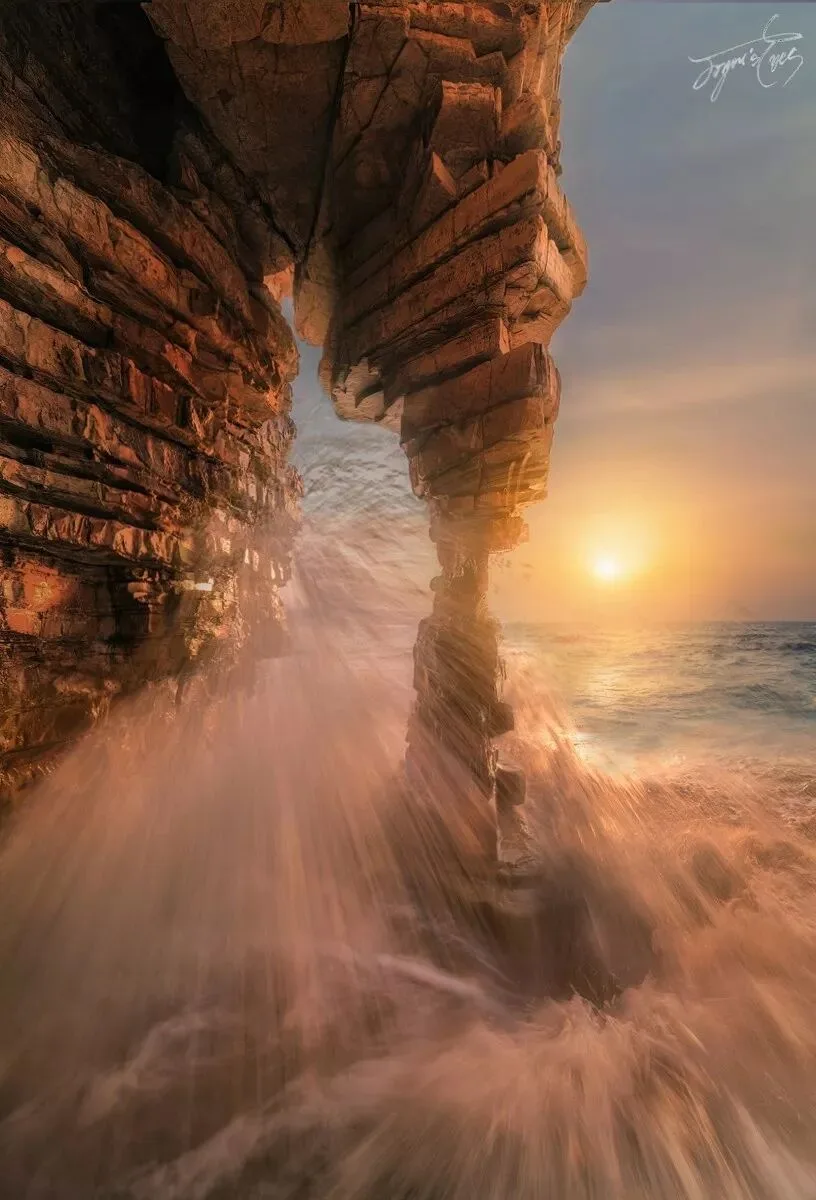
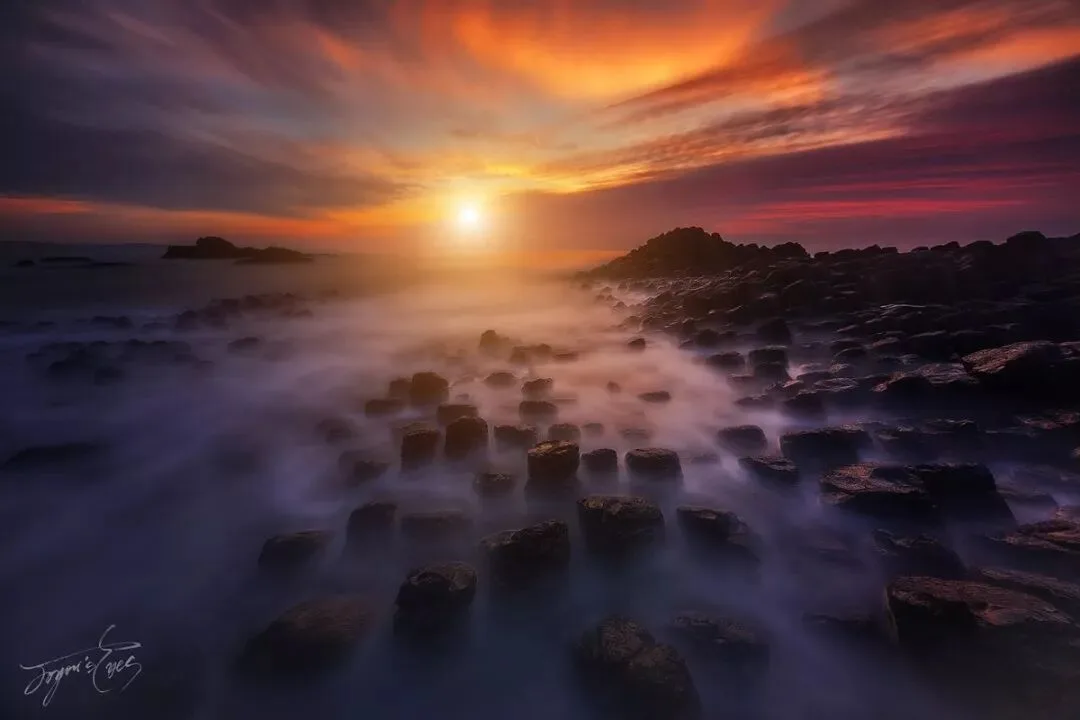
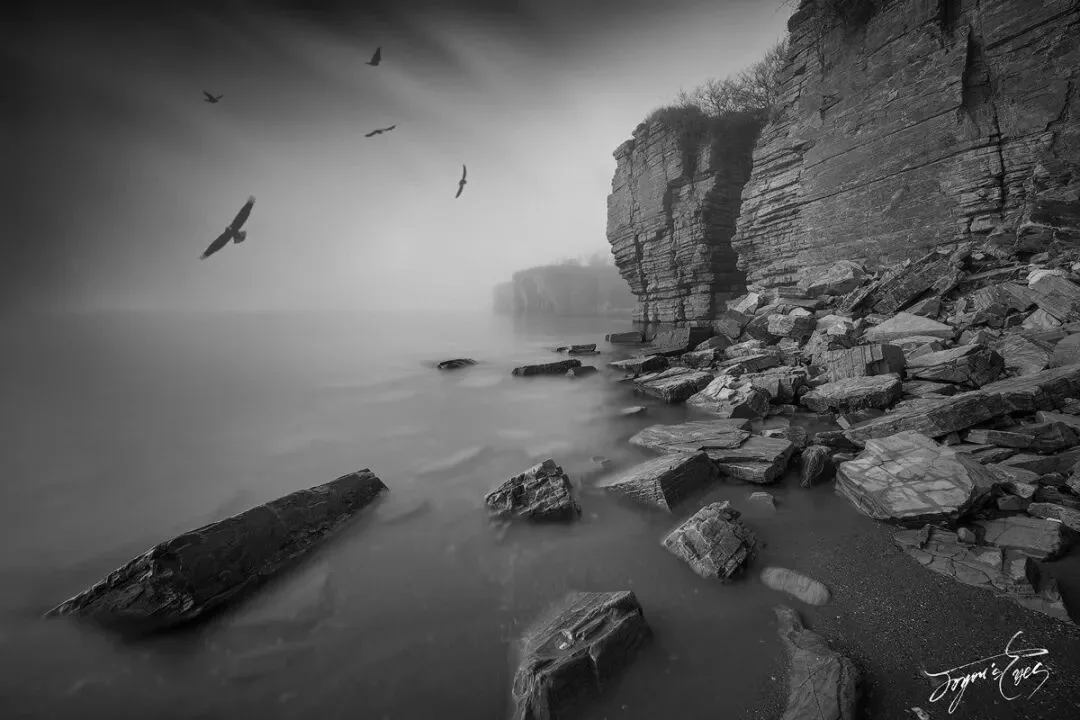
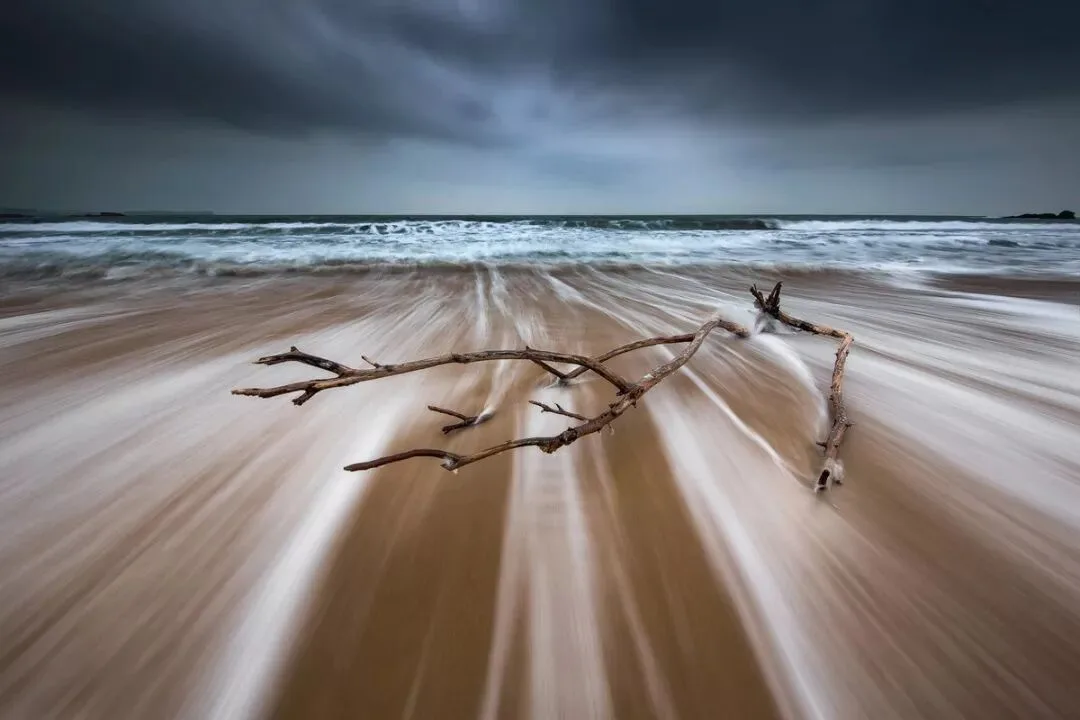
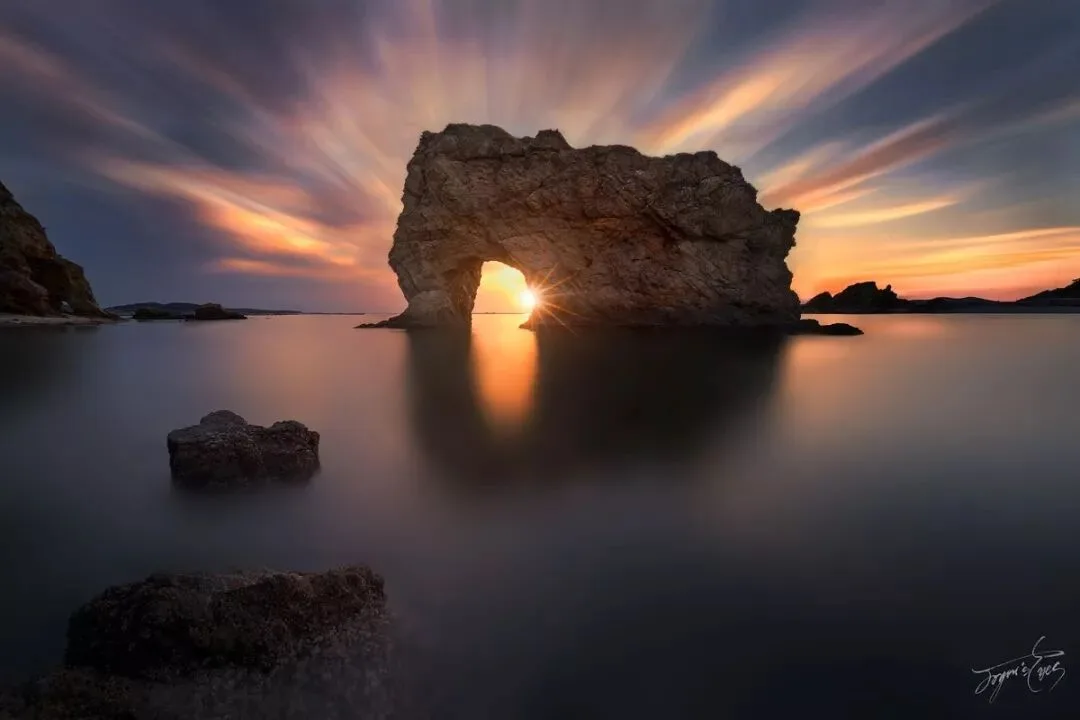
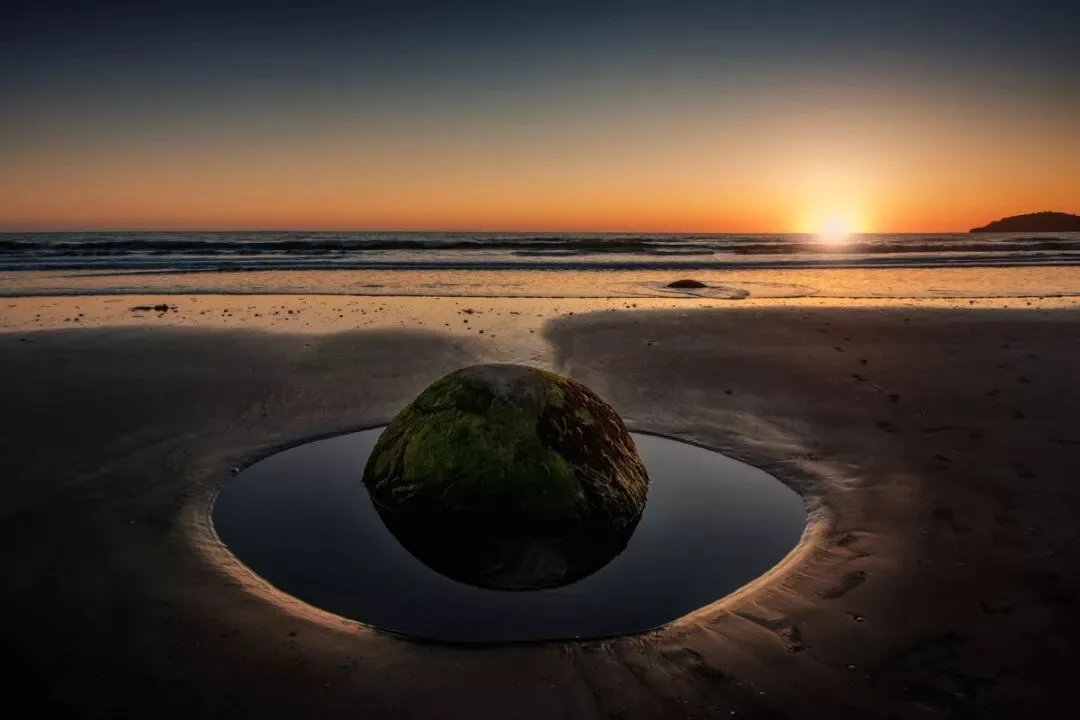
Of course, expression changes derived from parameters are just the tip of the iceberg — double exposure and the like are also common forms. Don't be rigid about it.
With different modes of expression, even two photographers at the same spot will produce completely different results.
Today's case study, by the way, used no special expression — just a straightforward capture.
Part
3
Choosing the Capture Technique
Let's go one step further: photographers A and B at the same spot, same composition, identical camera settings — are the two photos now identical?
To improve image quality, perfect a composition or remove flaws, we often push beyond the camera's limits with composite capture techniques: focus stacking, exposure blending, panorama stitching, image stacking, focal-length blending and so on.
So we must consider: under the current natural conditions, what could be improved to make our image even better?
Take today's case. To exaggerate the foreground, I got as close to the tree as possible, using the wide-angle's perspective distortion to emphasize the gnarled tree's 'clawing' posture.
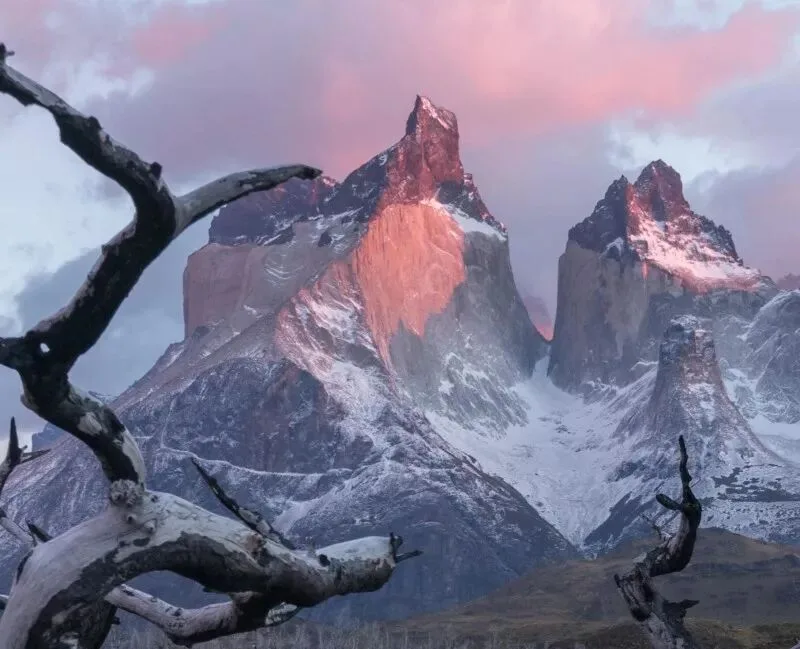
If I focus on the mountain, its texture is crisp — but the foreground trunk's detail goes soft.
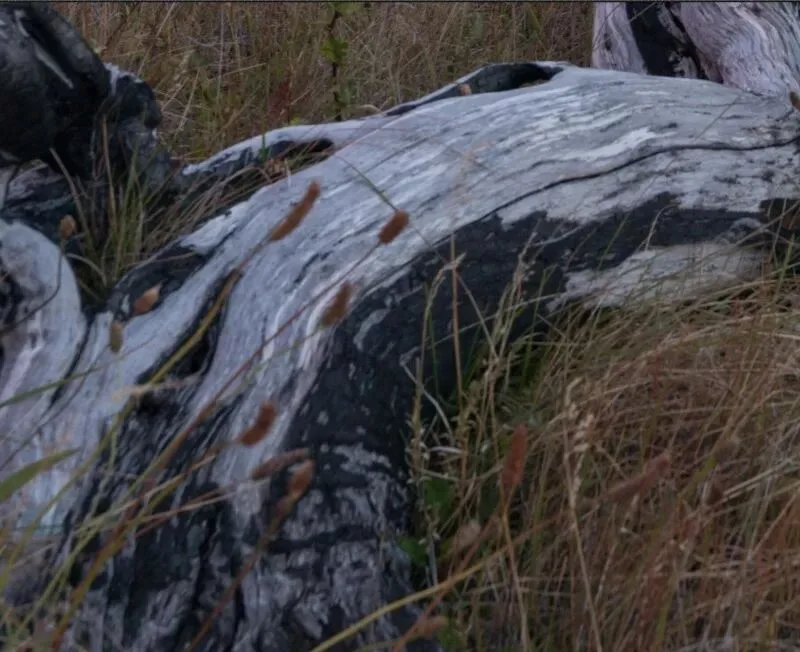
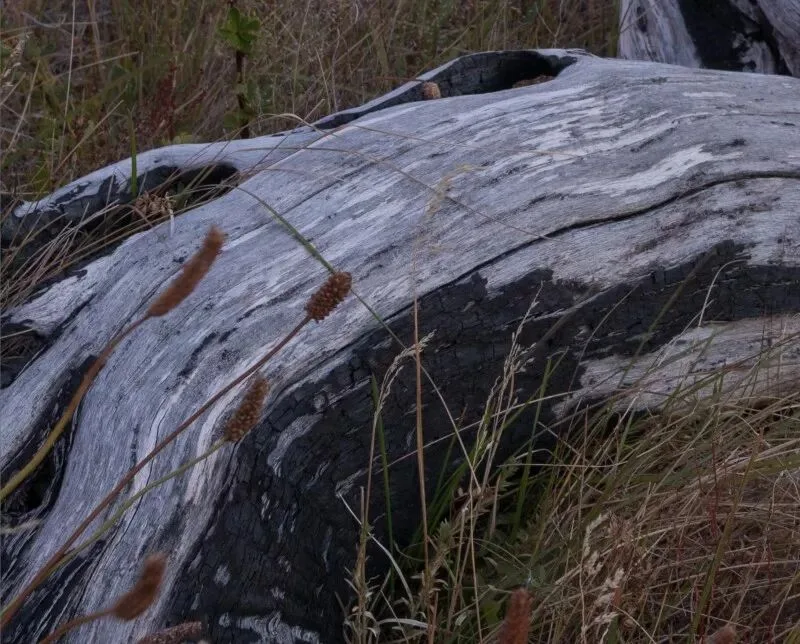
Conversely, focusing on the base of the foreground trunk leaves the mountain blurred.
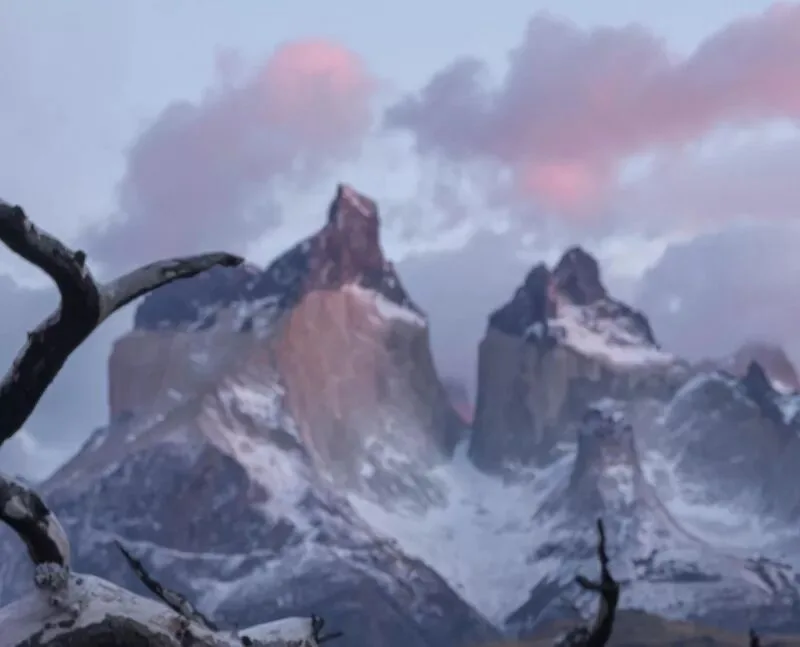
In grand landscape work we usually want every detail razor-sharp, so on location we use 'focus stacking' to break through the optical depth-of-field limit.
By moving the focus point, you shoot a series of frames focused on different depths, then blend them in Photoshop into a full-depth image — maximizing detail in every part of a grand scene.
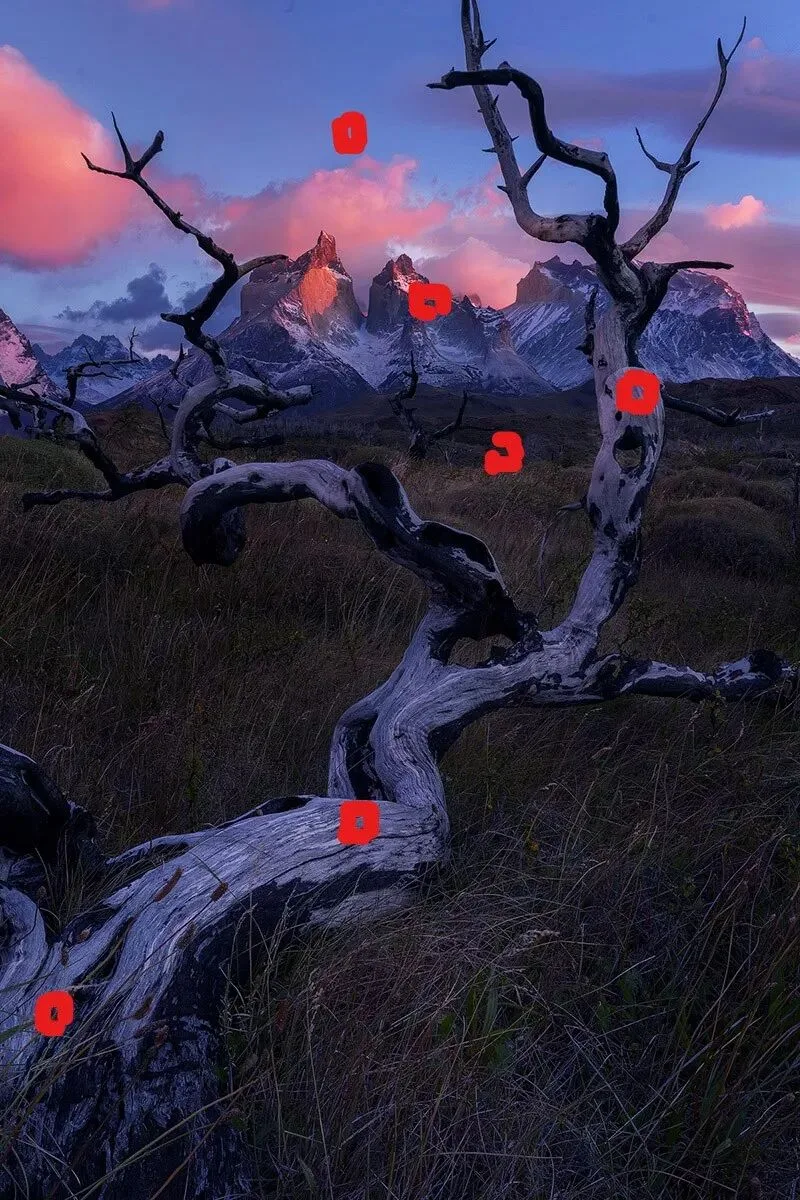
So the choice of capture technique also creates detailed differences between two photographers' work. And even with the same spot, composition, expression and technique, different artistic cultivation and aesthetics in post will still make the works feel different.
Conclusion
On-location work composes the score; post-processing performs it. After today's tutorial — especially the video — you'll better understand the words AdventureX keeps repeating:
We believe the true gestation of a work is not the few seconds of exposure, but the long exploration, thinking and experience on the journey before you arrive at the location and open the shutter.