Photography Tutorial · 2023-06-18
Beyond Grading: Light and Color in Photography
When we talk about color in photography, most of us immediately think of color grading in post-processing.
In fact, the light in the shooting phase plays a decisive role in how colors appear in a photo.
In today's video tutorial, Thomas analyzes 4 types of natural light and their respective effects. Get the light right in camera, and your color grading in post becomes twice as effective with half the effort!
Video
▶ Watch the video tutorial on Bilibili
This is the fully illustrated companion to the video above. Mention color in photography and everyone thinks of grading — but it is the light at capture that lays the foundation. Thomas sorts natural light in landscape work into four color types — cool, warm, white and neutral diffused — and analyzes what each is good for. Skim the annotated keyframes below for the framework, then hear the details in the video.
Start with the overview. This summary slide from the opening frames sets up the whole article: an object's rendered color comes from both its inherent color and the light's color; to change the color of a scene you can swap the subject, clothing or background — or simply change the light; and natural light in landscape photography falls into four color types — cool, warm, white and neutral diffused — each unpacked below.

01 Where Color Comes From: Inherent Color and Light
Color cannot exist without light, and two things decide an object's color: its own physical properties — the inherent color — and the color of the light source (at 0:16 in the video). The stupa in this forest photo is not itself golden, yet under the golden rays of the sun the whole frame turns gold (at 0:34 in the video).
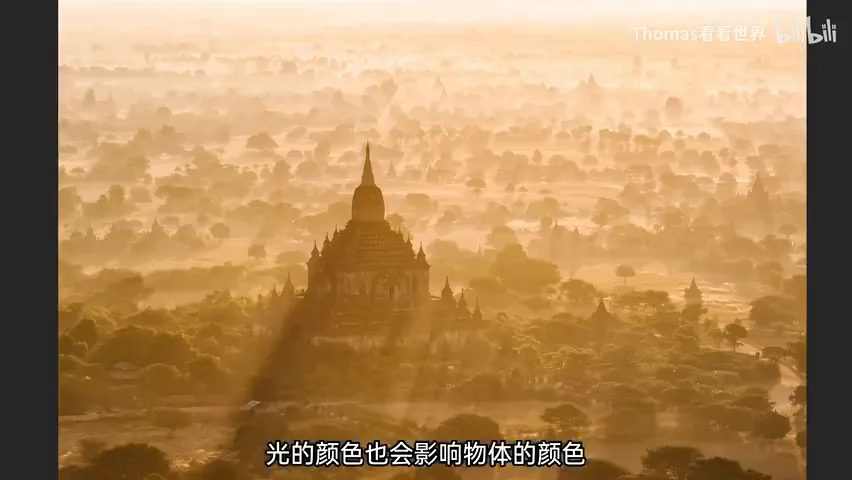
To change an object's color in a photo you can change the object itself — different clothing, different background — or change the light; when the light's color shifts, so does the color of the photograph (at 0:52 in the video). For landscape photographers, natural light is as changeable as artificial light; the key is recognizing its four color types.
02 Cool Light: Blue Hour, Moonlight and Shade
Nature offers three main kinds of cool light: the skylight of blue hour, moonlight, and the shadows at sunrise and sunset — shadows are lit not by the sun but by skylight reflected in, so they read as cool (at 1:25 in the video).
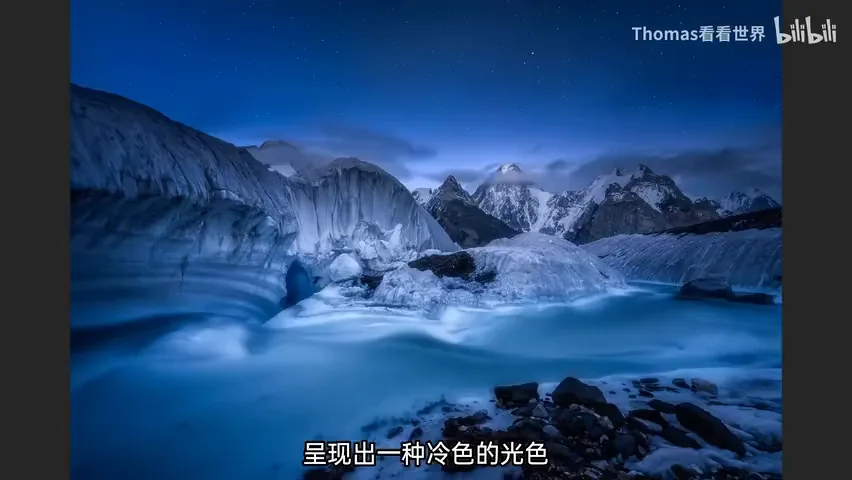
To convey the cold of a glacier, blue hour is the moment — the ten-to-thirty minutes after sunset before full darkness, when the sky is a pure skylight blue that suits austere, frigid palettes (at 1:45 in the video). In this small-town morning, the mist is not black but blue, playing against the golden street lights for an instant warm-cool contrast (at 2:09 in the video).
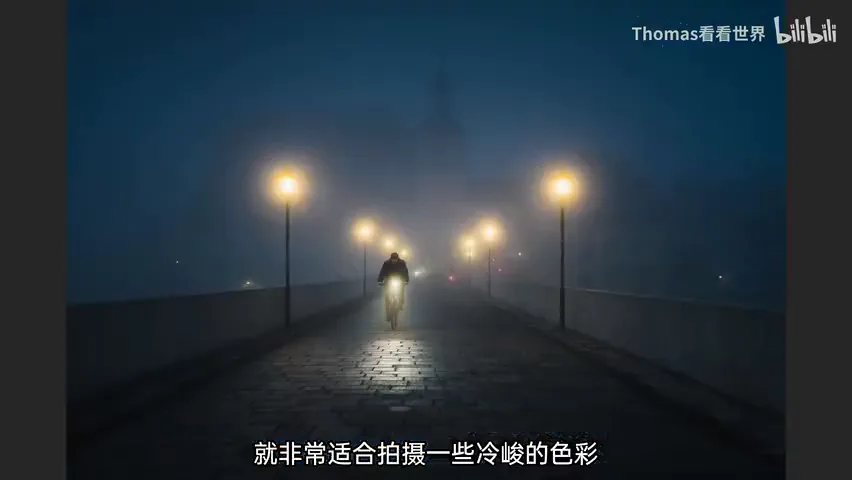
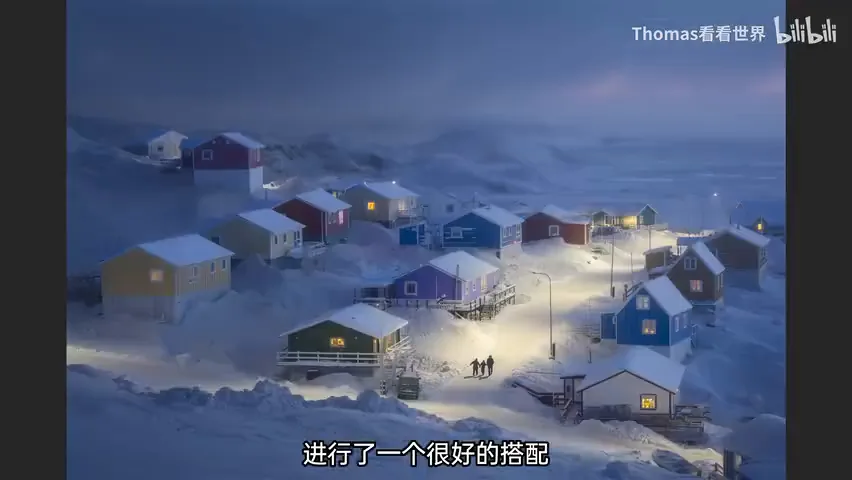
Classic European town rain-scene photos work the same way: shoot in the afternoon at normal exposure and you get a grey-black image; wait for blue hour after sunset and the skylight turns blue, setting off the town's warm lights (at 2:27 in the video). Thomas's National Geographic Global Awards photo was also made in blue hour — its theme is people living through unity in an extremely cold, harsh environment, and only the all-blue earth of blue hour can carry that sense of extreme cold (at 2:51 in the video).
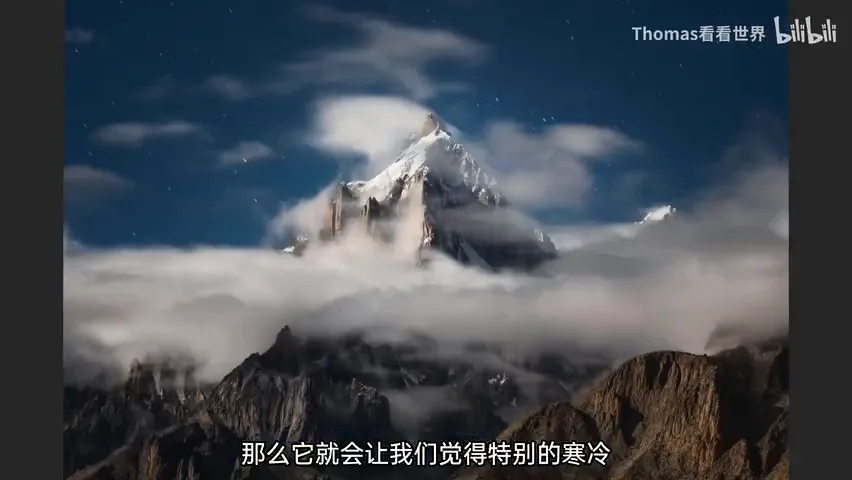
Moonlight is a neutral-to-cool light — that refers to a moon already well up; at moonrise and moonset, moonlight is actually warm (at 3:39 in the video). And note the shadows at sunrise and sunset: lit by reflected skylight, they carry a blue cast worth watching for (at 3:52 in the video).

03 Warm Light: Sun and Moon at the Horizon
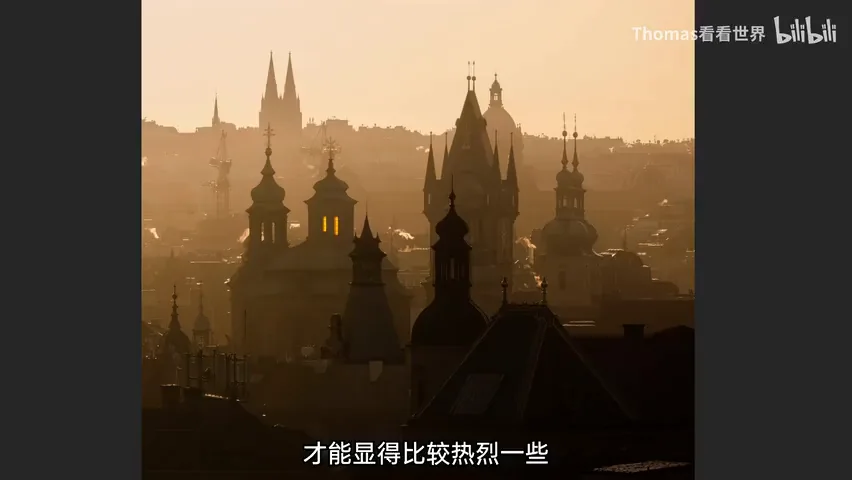
Natural warm light appears at sunrise and sunset, and at moonrise and moonset, bathing the scene in passionate oranges, golds, yellows and reds. For cozy, warm, hopeful moods, seek these windows; cool tones feel calm and quiet, and only warm tones feel fervent (at 4:17 in the video).
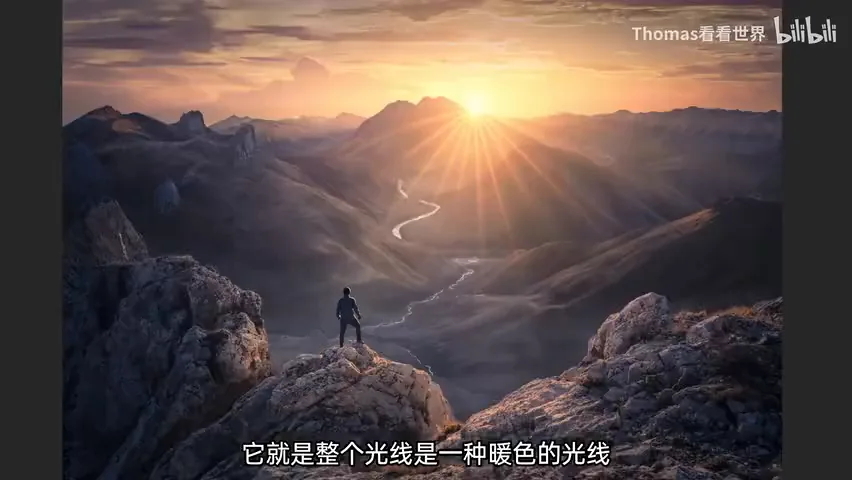
Long exposures at moonrise and moonset also come out warm: in the video's side-by-side pair, the right frame was shot at sunset, the left at moonrise — and stars still dot its upper-right corner (at 4:43 in the video). There is a bonus with moonlight: a newly risen moon tints whatever it strikes gold, while the moonlit sky stays blue — a natural warm-cool contrast for free (at 5:20 in the video).
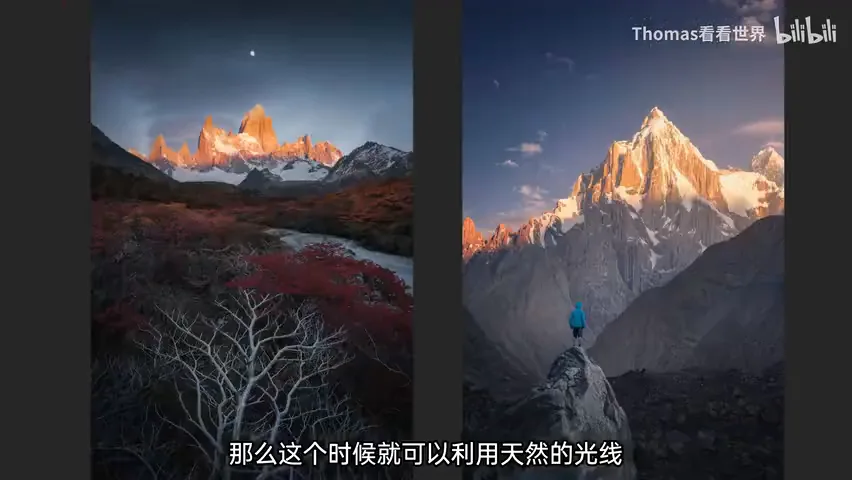
Alpenglow on a golden peak works identically: sunlit faces glow warm while the shadows carry a cooler cast — push the shadows cooler in post and the warm-cool contrast of the photograph completes itself (at 5:37 in the video).
04 White Light: Noon Reveals True Colors
Natural white light is simply daylight. It makes objects show their inherent colors, so it suits clean, colorful scenes — a beach-and-sea frame like this one is best shot at high noon (at 6:06 in the video). Midday light is harsh, yet for inherently saturated subjects its color boost is unmistakable (at 6:16 in the video).


05 Neutral Diffused Light: Overcast, Rain, Fog and Snow
The light of overcast, rainy, foggy or snowy days is also white light, but clearly different from clear noon: dimmer, softer, carrying a subdued mood, and without the hard sun's talent for making colors pop — on such days objects' colors are inherently pale (at 6:34 in the video).

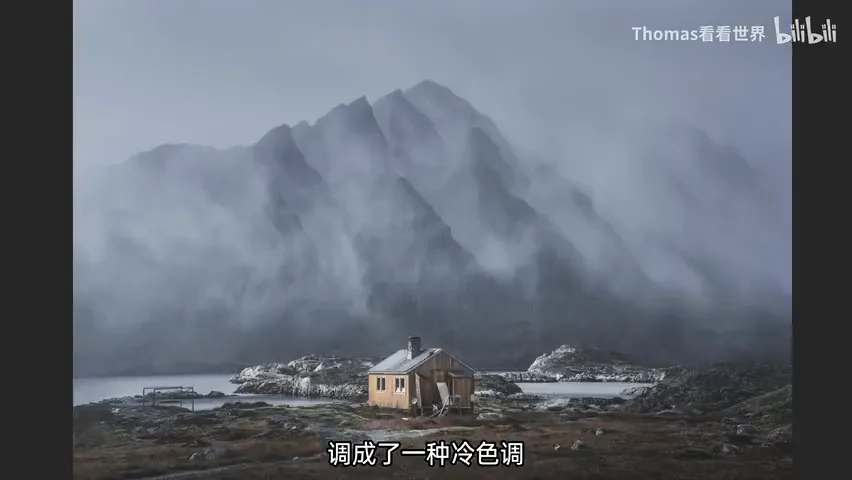
Two ways to handle it: lean in with a low-saturation, subdued mood across the whole frame, or do what Thomas does — shift the neutral grey-white palette toward cool in post; many of his rain-fog and overcast images land on this austere cool tone (at 7:20 in the video). One practical boundary: clear-noon white light does not take well to a cool grade, while the grey-white light of overcast weather turns cool without feeling forced (at 7:44 in the video).
Studying color in photography means more than grading: using natural and artificial light up front to lay a solid foundation for color matters just as much. Get the light right, and grading becomes twice the result with half the effort (at 8:01 in the video).
1. Rendered color comes from inherent color plus the light's color — changing the light changes a scene as surely as changing the subject; 2. Cool light comes from blue-hour skylight, moonlight and skylit shadows, perfect for cold, quiet, austere moods; 3. Warm light comes at sunrise, sunset, moonrise and moonset — oranges and golds for warmth, paired with cool shadows for a natural warm-cool contrast; 4. Clear-noon white light reveals true colors for bright, rich scenes, while the diffused light of rain, fog and snow suits subdued low-saturation moods or a cool grade in post.
HD video:
https://www.bilibili.com/video/BV1Us4y1v7oh/