Photography Tutorial · 2017-12-01
Five Ways to Shoot Long-Exposure Seascapes
I'm AdventureX photographer Zhou You
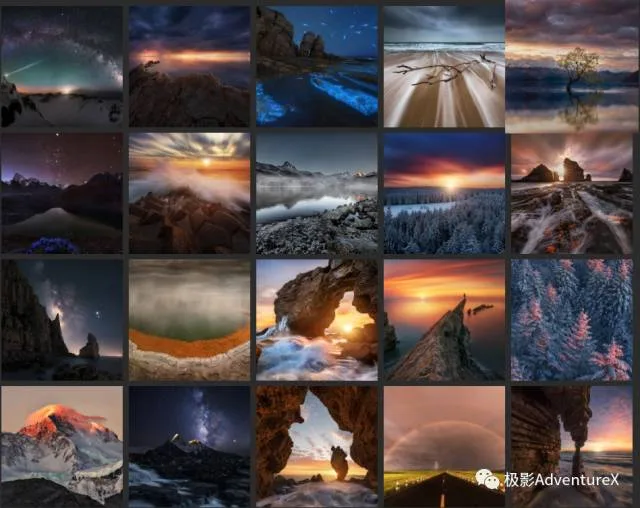
In 2012 I watched 'TimeScapes', a film about America's national parks made with time-lapse and high-speed photography — clean, delicate imagery with astonishing sharpness, and an equally beautiful score. Any random frame could be a desktop wallpaper! These techniques recorded the parks' wheeling stars, day-and-night skies and surging seas in a way that was 'dreamlike yet real'. I've been captivated by that way of seeing ever since, and decided to pick up a camera to record these dreamlike scenes that truly happen yet exceed what the eye can see.
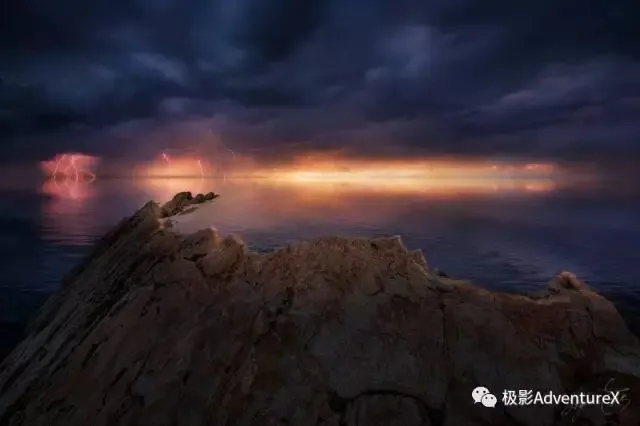
'Thunder's Fury'
When long exposure is applied to the sea, the ceaseless waves turn to mist or clouds, to streaks like latte art, to a mirror reflecting a sky full of red glow, or to splashing spray like threads of water. The clouds above also morph into different shapes. None of these effects are visible to the naked eye — the scenes are by turns stunning, serene, beautiful and impactful…
Even from the same spot, different long-exposure expressions produce completely different results — that's the charm of long-exposure seascapes. Below are the five expressions in detail.
1
Splash — reference shutter speed 1/10 s
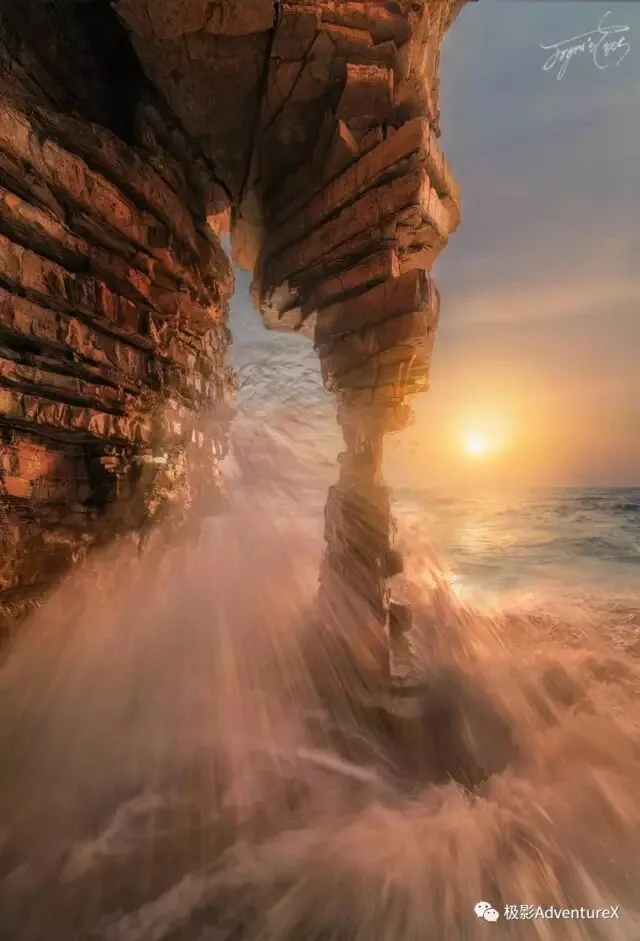
'Silken Threads Like Water'
Waves rush in fast, strike the rocks and burst apart like fireworks — this is 'splash' photography. Splash is also a dangerous expression, so don't try it lightly: put a rain cover on your camera to keep corrosive seawater off the circuit boards. I once destroyed a 5D Mark III shooting splash on a volcanic island.
2
Streaking — reference shutter speed 1/4 s
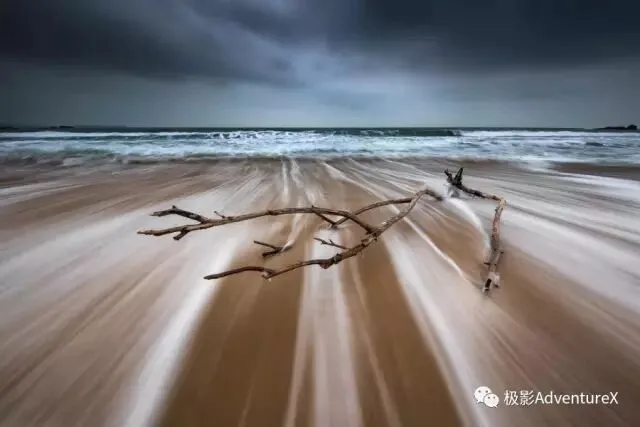
'A Lone Tree in the Vast Sea'
The waves also rush in fast, but unobstructed by rocks they sweep across flat sand, leaving willow-like, hair-thin traces — this is 'streaking'. Streaking is very tricky: no single shutter speed fits all. The 1/4 s here is only a reference; the ideal speed depends heavily on wave velocity and terrain and must be found by trial and error on site. In New Zealand, where beaches slope gently and waves are calm, I've used 1 s. So treat 1/4 s as a starting point and experiment. Remember two keywords for the best streaking: 'silky'. The result must look like interlocking silk threads — never a chaotic mess — and as smooth as a peeled lychee, never broken or disjointed.
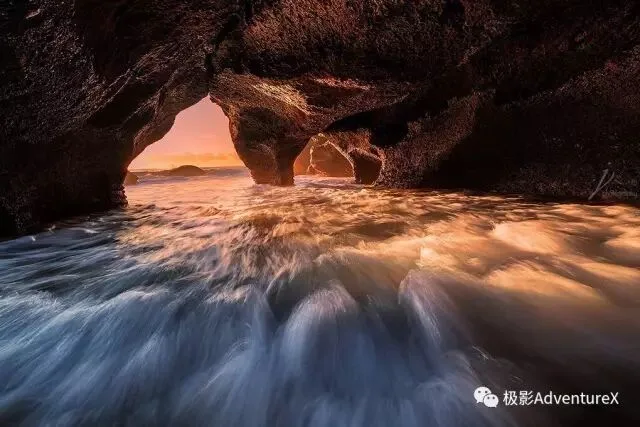
'Mysterious Sea Cave' by Zhu Jingshu
Streaking subdivides into 'surge' and 'retreat'. Surge means anticipating the moment the sea charges toward the lens and pressing the shutter just before it arrives — capturing the most powerful instant. Surge needs violent waves free of large obstacles, and the timing demands prediction that tests your seascape experience. Both 'A Lone Tree in the Vast Sea' and 'Mysterious Sea Cave' use the surge expression.
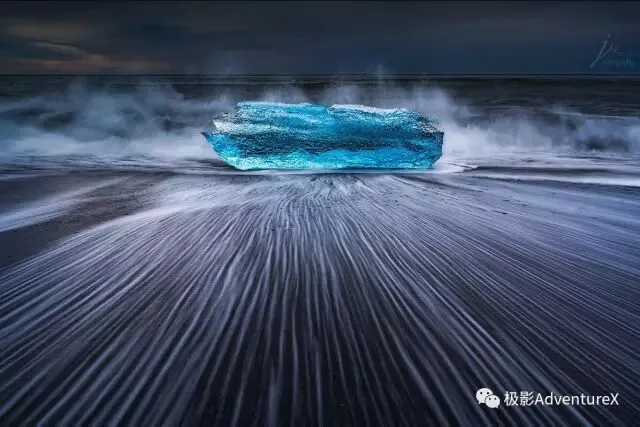
'Ice Crystal' by Zhu Jingshu
'Retreat', as the name suggests, records the wave sliding back into the sea under gravity. Retreat is terrain-dependent too: on a smooth beach it's best to have small pebbles, shells or ice fragments as accents, so the retreating water meets tiny resistance — split into silky threads by gravel, or drawn into a romantic heart shape around a larger obstacle.
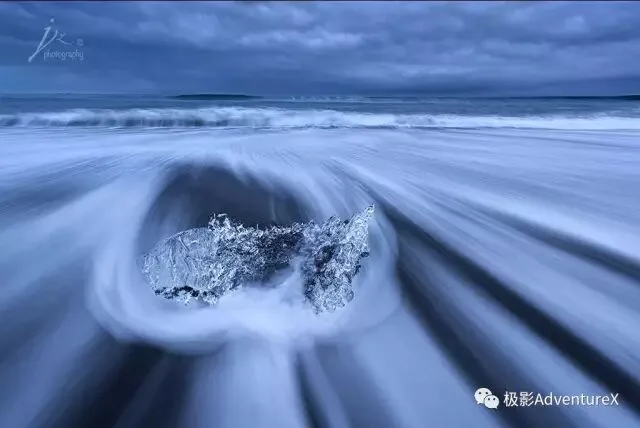
'Heart of the Ocean' by Zhu Jingshu
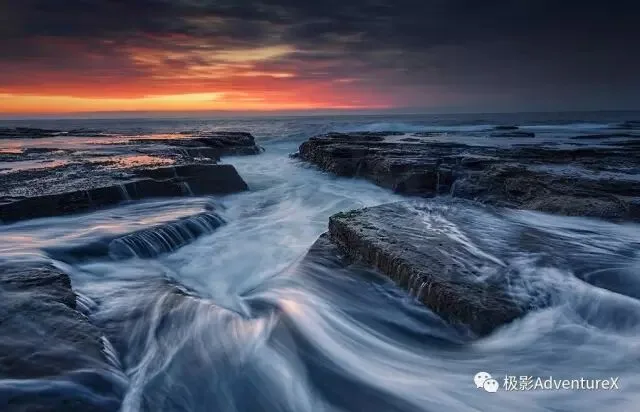
'Rising Tide' by Zhu Jingshu
When shooting retreat over low-relief rocks, the backwash is far weaker and slower than the incoming surge, and the gentle flow stretches into satin-like streaks. With taller rock steps, retreat can look like small waterfalls.
3
Mist — reference shutter speed 30 s
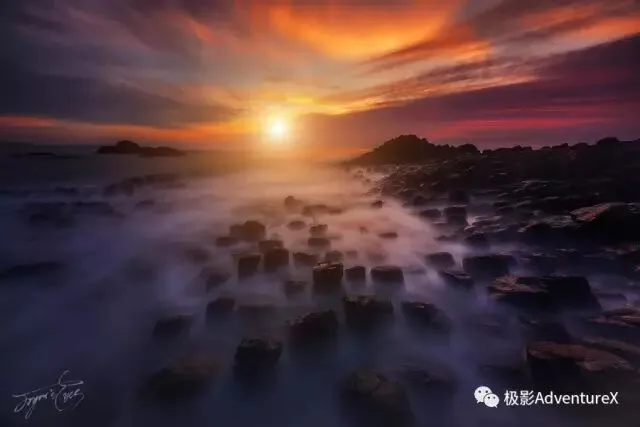
'Seeking Plum Blossoms Over the Waves'
When the waves are less violent but still thread through rock crevices, a shutter longer than 30 s makes the rocks look as if they stand in drifting clouds — this is 'mist'.
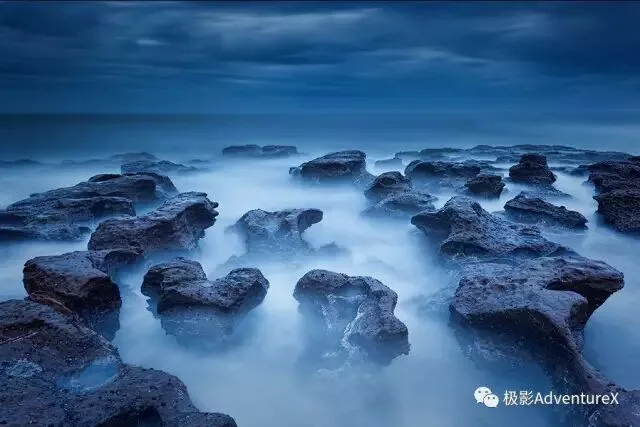
'Rock Island' by Zhu Jingshu
4
Mirror — reference shutter speed 30 s
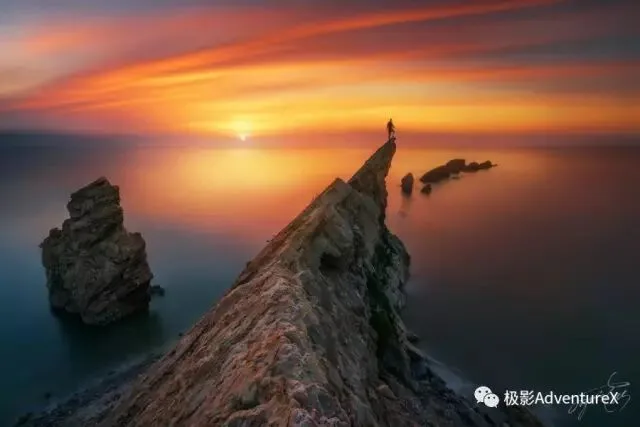
'Dance on the Knife's Edge'
During slack tides or in enclosed seas (like Bohai Bay), the water barely moves and feels like a lake. A 30 s exposure renders it as a mirror reflecting the sky's rosy light — this is 'mirror'.
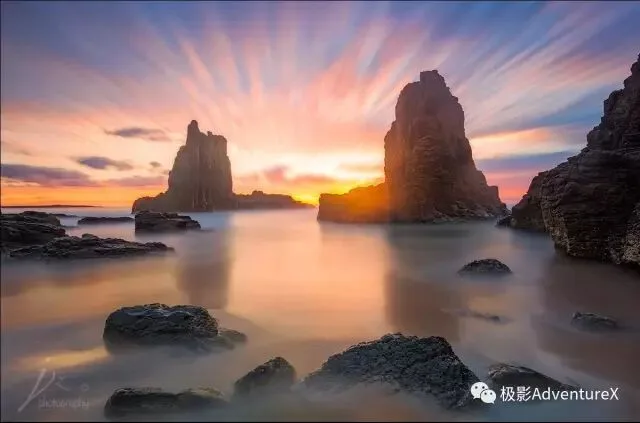
'Clouds Flying, Clouds Dancing' by Zhu Jingshu
5
Transparency — required accessory: CPL polarizer
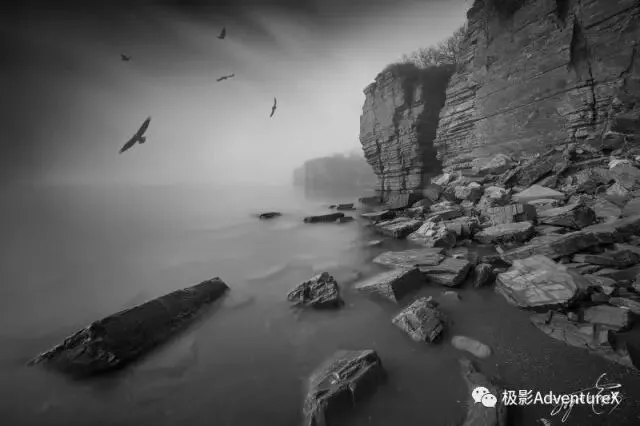
'Ripples on a Dream Sea'
When the sea is calm and crystal-clear with beautifully arranged rocks on the seabed, use a CPL polarizer to express that transparency: rotate it to adjust the polarization angle and kill the surface reflections. If you also want the long-exposure look, combine CPL with stacking — avoid stacking a CPL on top of an ND filter, which badly damages image quality. A CPL naturally cuts about two stops; paired with stacking, it's the best way to simulate a long exposure. This reflection-killing CPL can even make boats look as if they're floating in mid-air.
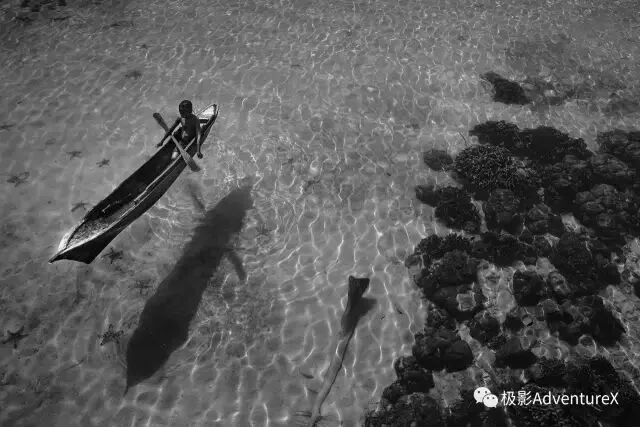
'Floating'
Expanding the Idea
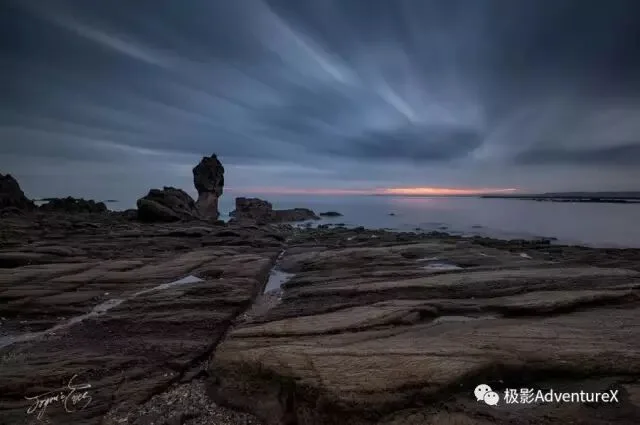
'Buddha Head Gazing at the Sea'
In strong wind with fast-moving clouds, an exposure longer than 30 s can also streak the clouds while the water turns to mist or mirror. If you want streaked or splashing water together with streaked clouds, use stacking: shoot a sequence, then combine the two effects in Photoshop with masks for an even more dramatic, incredible result.
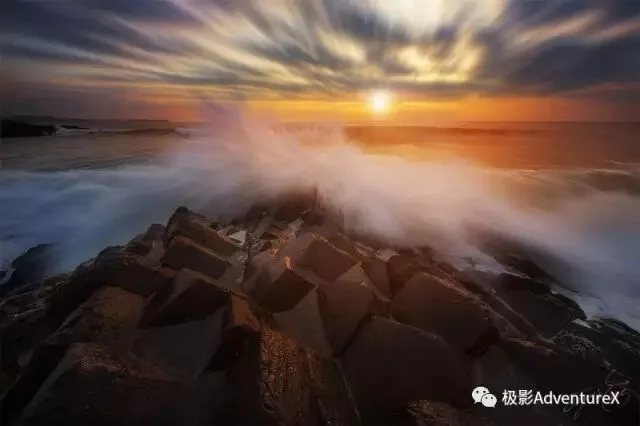
'Angry Waves Beating the Shore'
This is the scene where I destroyed that 5D Mark III shooting splash, as mentioned earlier. A 1/10 s shutter obviously can't streak the clouds — but with stacking, I shot 100 consecutive frames, averaged the sky portion in post, and masked in the single frame with the best splash. The result is far more impactful.
Conclusion
These five seascape expressions usually call for the right filters: ND16 is the go-to for splash and streaking; ND1000 is the common choice for mist and mirror; a CPL is essential for transparency; and a reverse GND is often used to balance the light. Never pile on every filter just because you have them — adapt to the scene and the wave forms. Filters are only aids for particular long-exposure expressions; don't put the cart before the horse. Master the five expressions, pair them with the right filters, and every photographer can make images like these.