Photography Tutorial · 2023-02-26
How Else Can You Shoot Cityscapes? Michael Wolf Photography Works Recommended~
Cityscapes are a subject everyone photographs often.
But if you only go to the usual rooftop and check-in spots, it's indeed easy to produce photos that all look the same.
Today's recommended photographer, Michael Wolf, shot urban landscapes with style and depth in a different way, which helps broaden our thinking.
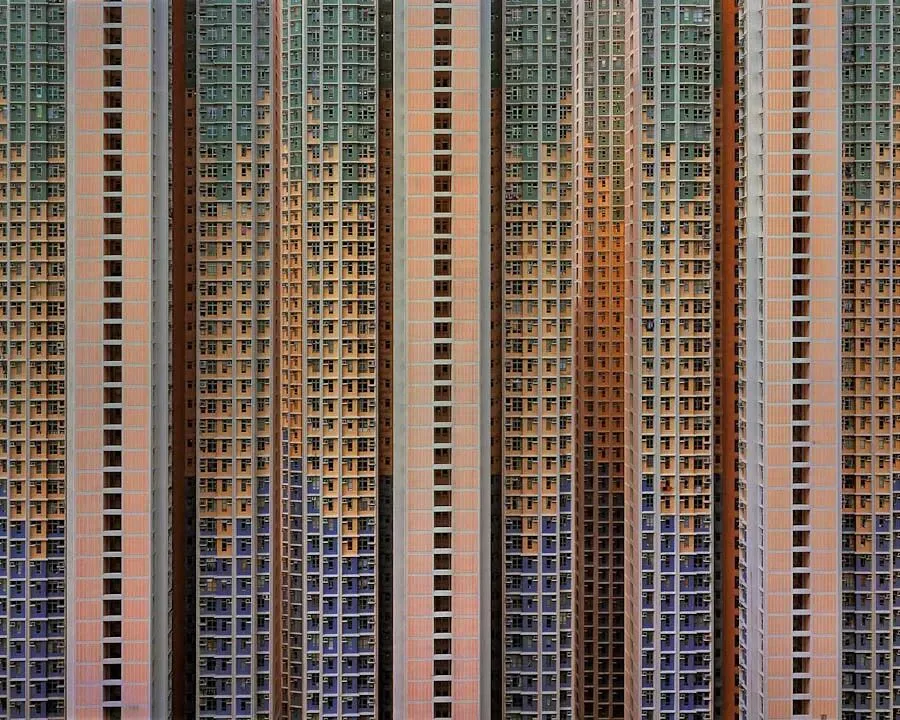
Video
▶ Watch the video tutorial on Bilibili
This is the full illustrated write-up of the video above. In five minutes, Thomas walks through two celebrated Hong Kong series by German photographer Michael Wolf — Architecture of Density and Corner Houses — showing how he captured one city with more depth and variety, without rooftop climbing or landmark checklists.
Start with the title card at 0:16: beyond rooftop panoramas and postcard shots of commercial landmarks, how else can a city be photographed? Michael Wolf's answer is two series with radically different, yet highly unified, perspectives.
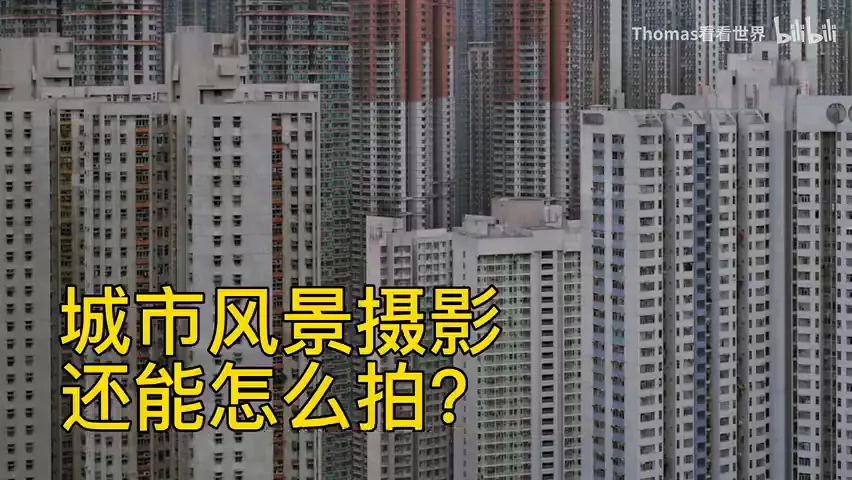
01 Urban Density: the Telephoto Compression
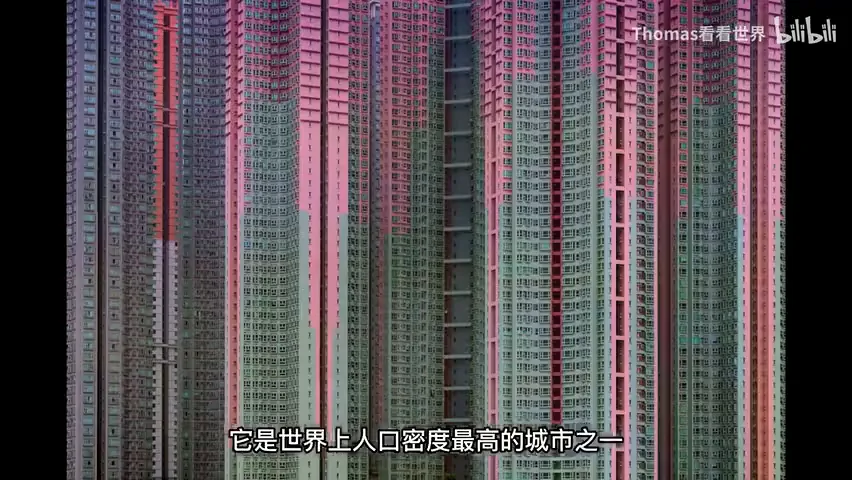
The first series is Architecture of Density. Its form is highly unified, yet it is nothing like the conventional cityscape approach: instead of a wide angle that sweeps in skyscrapers, sky and ground, Michael Wolf shot super-telephoto — Thomas, who has imitated this style, notes it takes 100-400mm or longer (around 0:50-1:09 in the video).
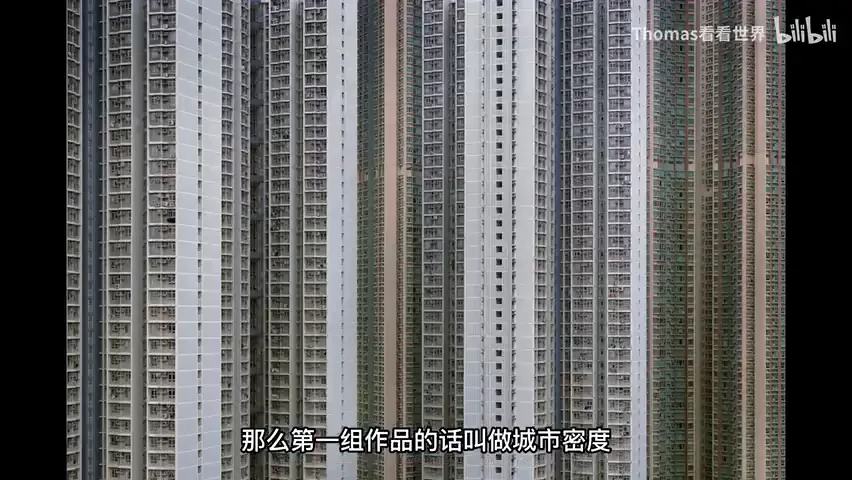
The telephoto flattens stacked towers onto a single plane, creating an intense sense of compression. He deliberately sought out scenes where buildings pile upon buildings — and such scenes are not unique to Hong Kong; cities like Chongqing offer them too (1:21-1:25). The result is a city of extreme density, almost oppressive.
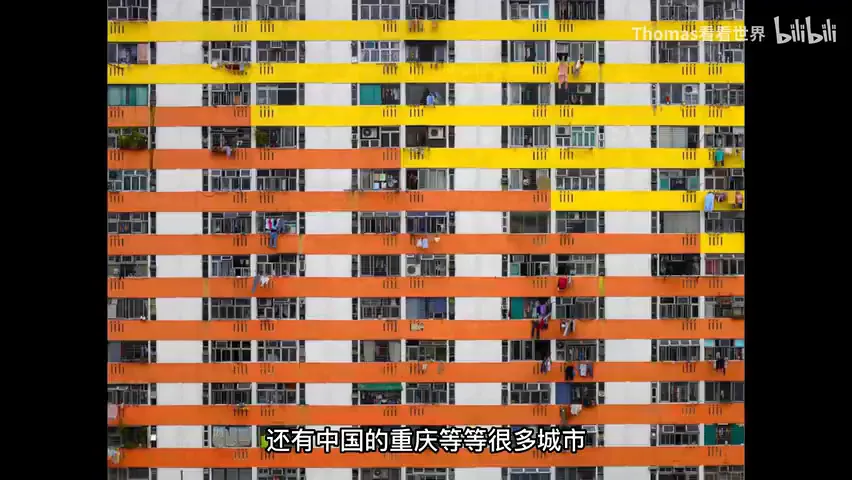
02 Radical Framing: Fragments Only
The second hallmark of the series is its radical framing: Wolf focused only on fragments of the buildings, letting in neither sky nor ground (1:44-1:51). With nothing but facades filling the frame, the viewer is forced to confront the very texture of the city.
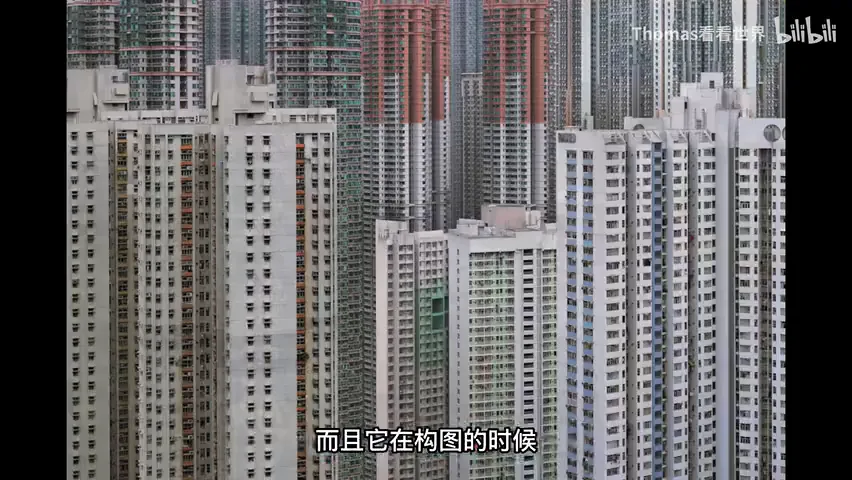
Through this fresh perspective and framing, he captured precisely what defines Hong Kong — one of the most densely populated cities on earth (1:57-2:04). Thomas reminds us that a city is not only glamour and beauty; it can also be warm, oppressive, tense. Capturing that diversity demands a photographer's powers of observation and imagination to find unfamiliar angles.
03 Corner Houses: Unity of the Typology
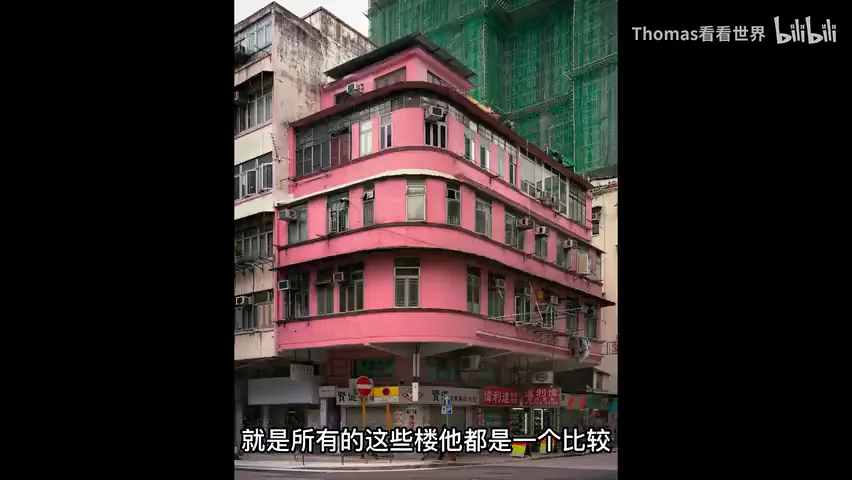
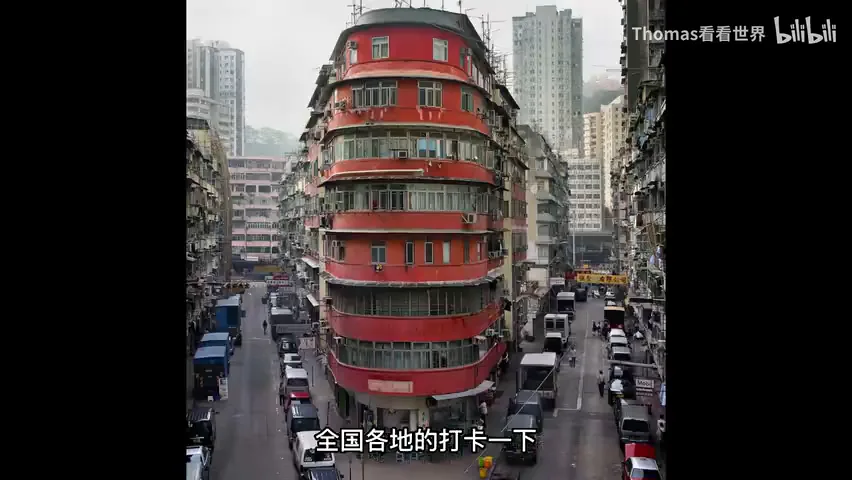
The second series, Corner Houses, is a true photographic typology: every frame depicts the same subject — the old buildings at Hong Kong street corners. These corner houses often have distinctive shapes, and the entire series was shot from a highly consistent angle (2:32-2:57).
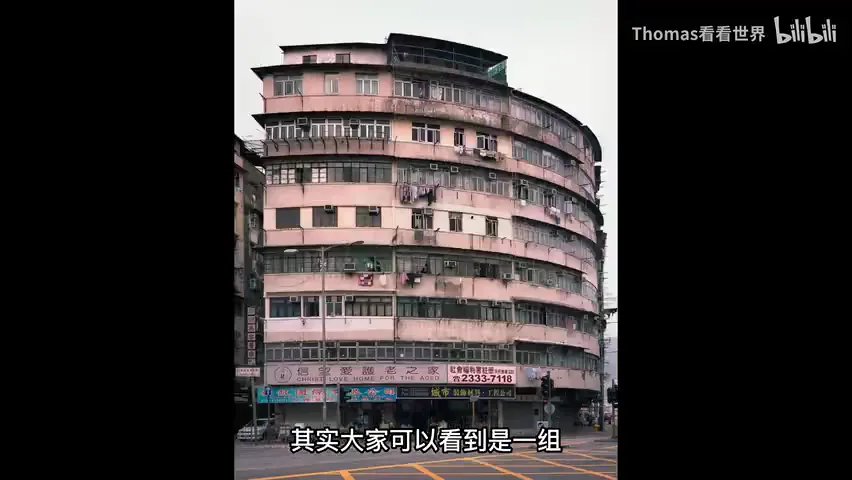
Equally crucial is the consistency of weather: the whole series was shot on overcast days. As a German photographer influenced by the Düsseldorf school, Wolf favored this deadpan, dispassionate presentation. Overcast skies also guaranteed consistent light — had some buildings been shot at noon, others at dawn or night, the series would feel visually chaotic, and the typological harmony would collapse (2:57-3:35).
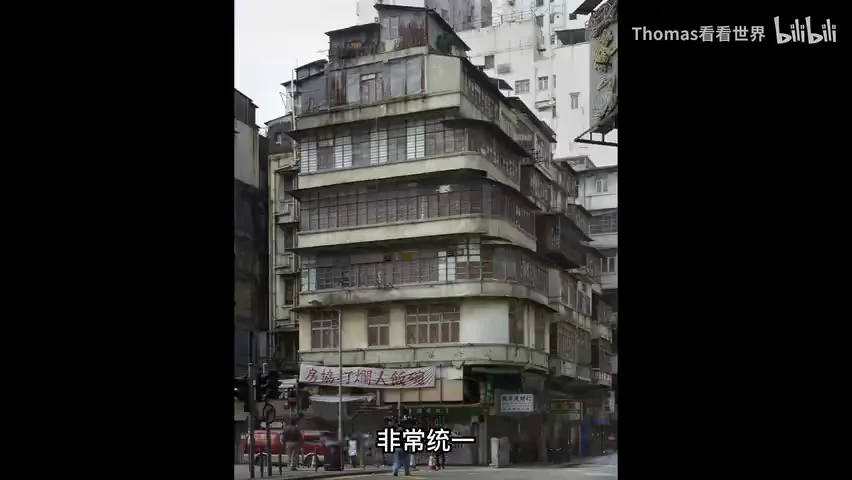
Overcast light wraps every building in even, diffuse illumination — no harsh shadows, every detail and color resting in the same calm atmosphere (3:15-3:21). Each frame alone is a street record; together they form a visual archive of Hong Kong's street corners.
04 Documentary Value, and Extending the Idea
Beyond their artistic value, such photographs carry strong documentary weight: ten or twenty years on, as the city transforms and the old buildings in these frames are demolished one by one, the images grow only more resonant — they become the city's memory on film (3:38-3:53).
The idea scales readily: if you travel often for work, you can apply the same method to railway stations, opera houses and other structurally similar buildings across the country — similar weather, similar angle, steadily building a typology (4:00-4:22). Assembled as a series, the results can be remarkable.
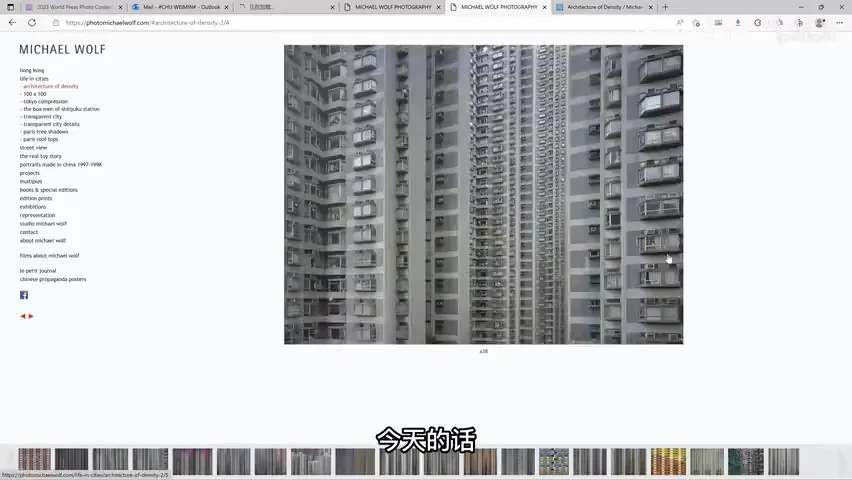
Thomas closes by recommending Michael Wolf's official website (photomichaelwolf.com), where many more of his sharp-eyed urban series await — including portraits shot through taxi windows (4:41-4:51). Both Hong Kong series are easy to imitate, yet full of inspiration for photographing our own cities.
1. Compress facades with a 100-400mm telephoto, framing only fragments — no sky, no ground — to convey urban density; 2. One subject, one angle, one overcast diffuse light: typology is what makes a series cohere; 3. A strong urban project is both art and document — as the city changes, the photographs grow more precious; 4. Extend the idea: railway stations, opera houses and other kin buildings can all become your typological subjects.
HD video:
https://www.bilibili.com/video/BV1PA41127Mo/