Photography Tutorial · 2022-06-26
Is Minimalist Photography Just Simple Composition? 99% Get It Wrong
Minimalist photography is hugely popular on the internet these days.
Many enthusiasts mistakenly believe that the core of minimalist photography is finding simple scenes and clean compositions. That is actually a common misconception.
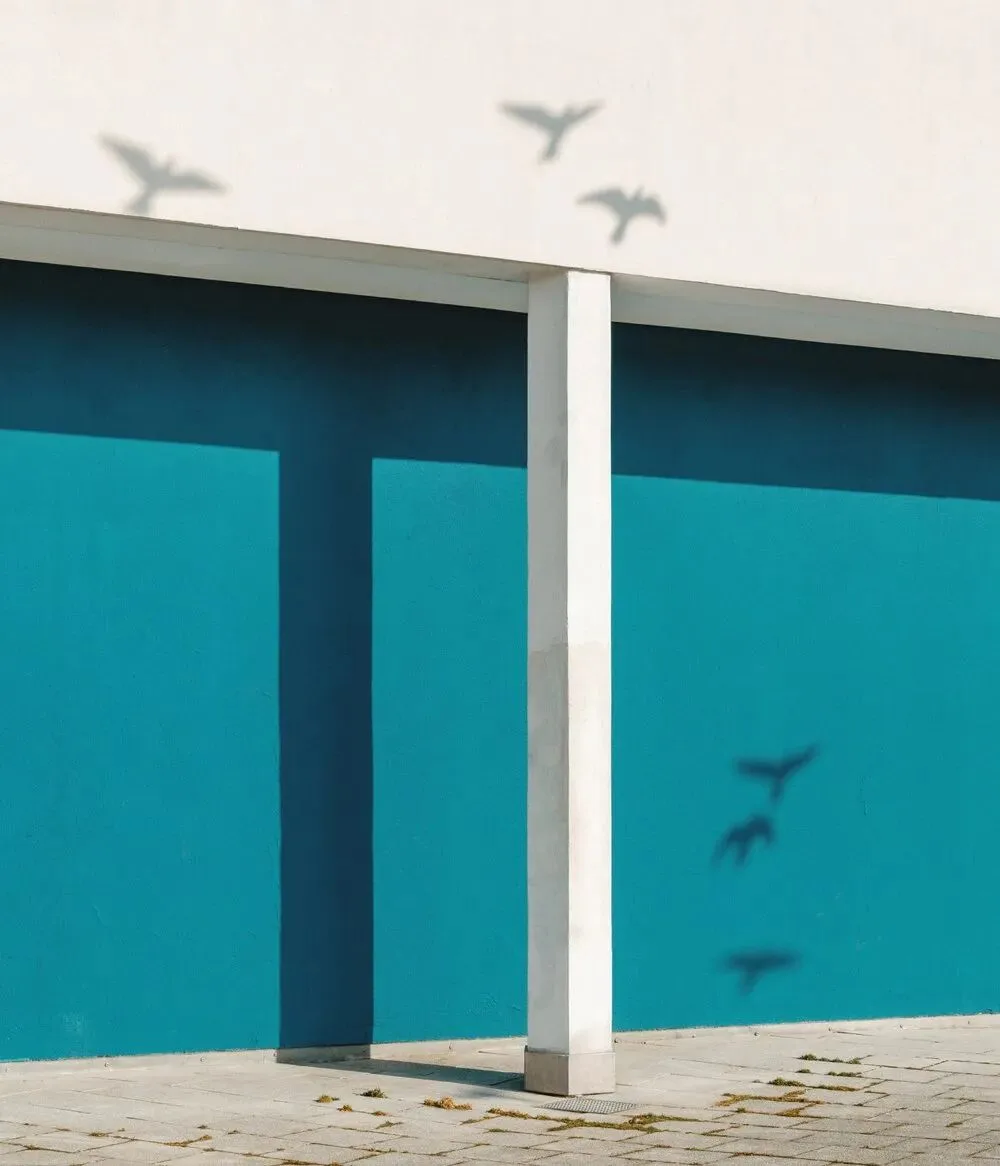
In today's tutorial, Thomas shares the true core creative thinking behind minimalist photography, along with common composition techniques.
Video
▶ Watch the video tutorial on Bilibili
This is the fully illustrated companion to the video above. In 13 minutes Thomas breaks down the core creative thinking behind minimalist photography and its most common misconception: why “jian” (simplify) does not mean simple, and how to find and use the four most common points of interest — geometry, color pairings, tonal layers, and subjects or decisive moments. The article pairs the video's summary cards and keyframe screenshots with the full text, so you can build the framework here and hear the details in the video.
Start with the overview. This summary card comes from 0:54 in the video, and its one-line version reads: the core of minimalist style is finding the point of interest first — subtraction comes second.
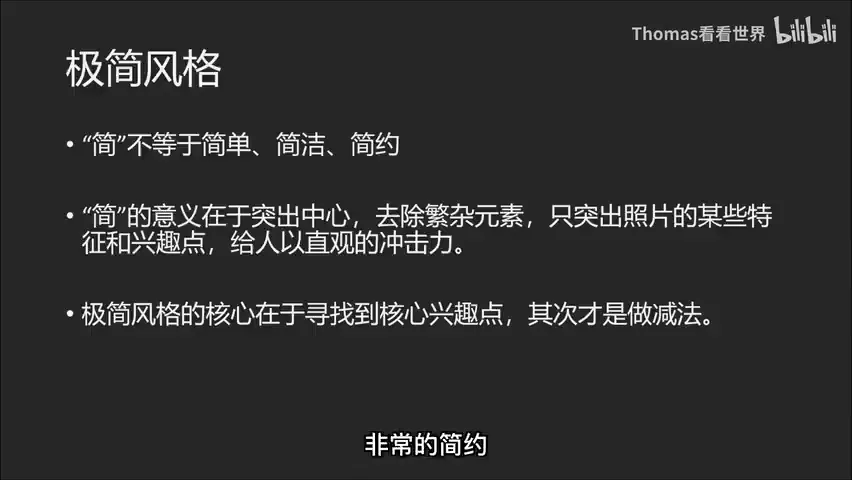
01 Minimal Does Not Mean Simple
Many people see the character for “simple” and conclude that minimalist photography must be easy photography — clean, spare frames with generous negative space, hunted down wherever a blank wall presents itself. At the start of the video (0:57) Thomas points out that this reading is inaccurate, and that it regularly leads beginners astray.
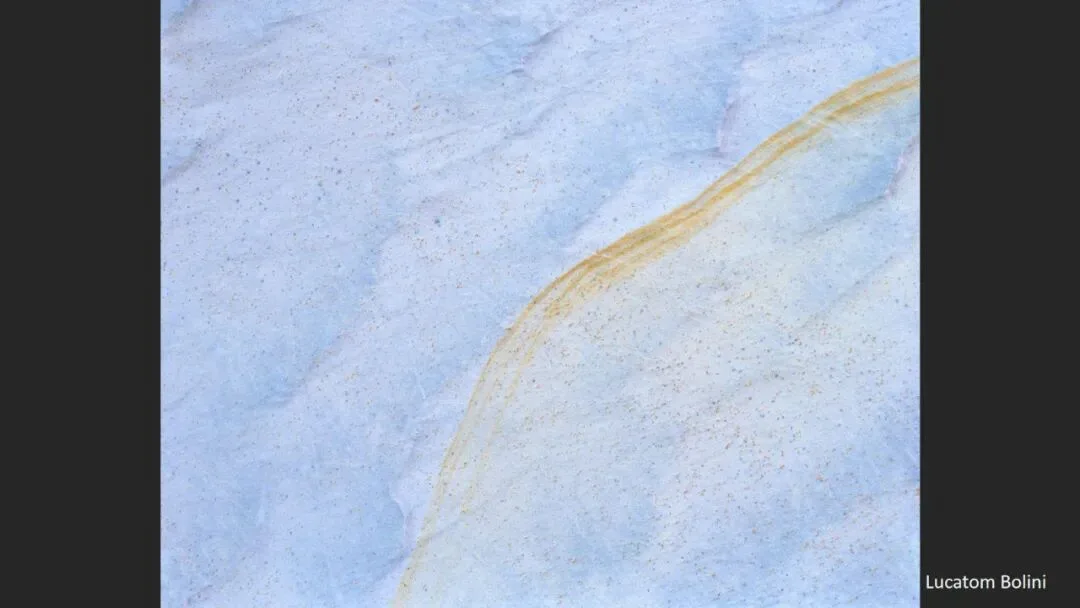
The real meaning of “simplify” is emphasizing the center: removing clutter so that only certain features and points of interest remain, hitting the viewer directly. Simplification is a method — its job is to strip away the redundant so the most interesting, most geometric, most story-laden elements stand out (at 1:20 in the video). The creative core of minimalist style is not hunting for simple or sparse scenes; it is finding compelling elements, striking moments, beautiful geometric structures and color collisions first, then subtracting everything unrelated around them (at 1:41 in the video).

02 Point of Interest No.1: Geometry
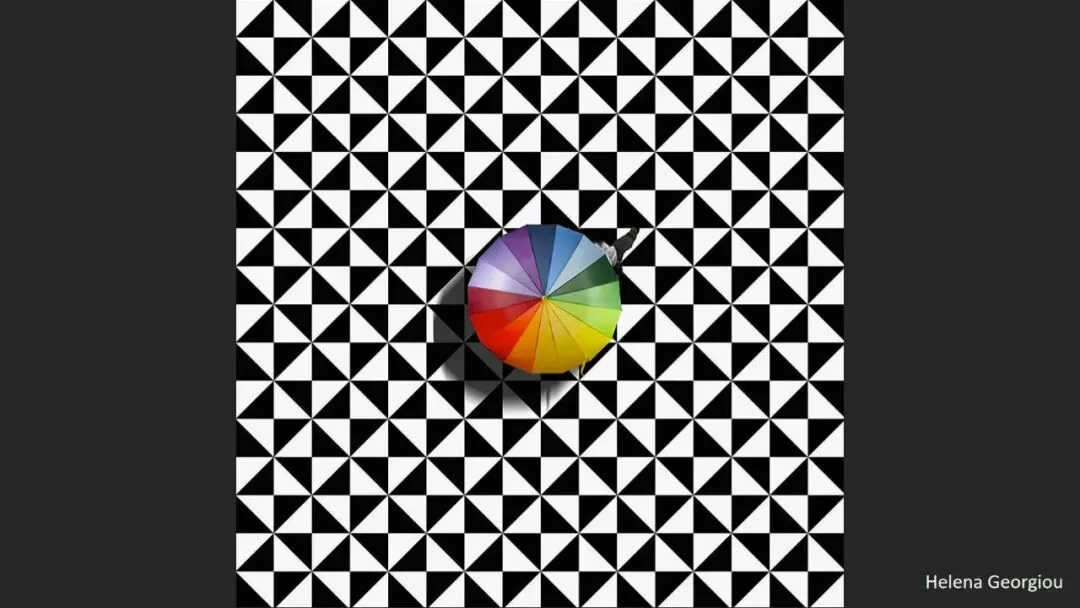
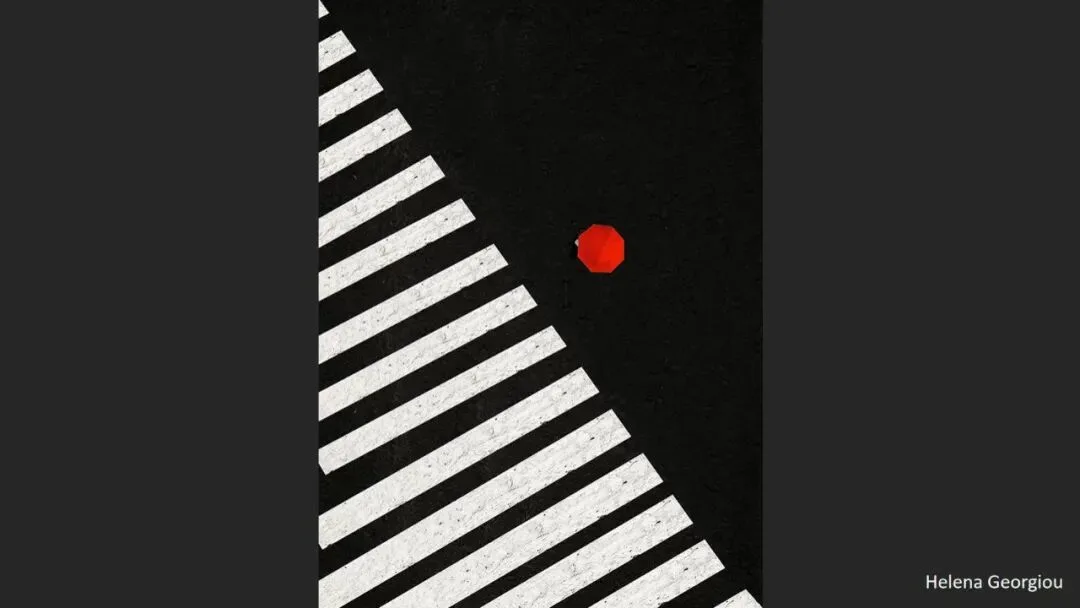
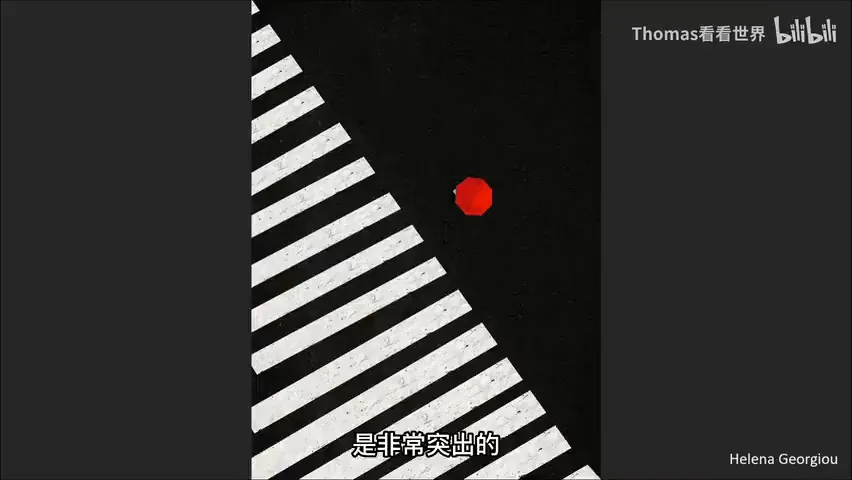
Thomas sorts popular minimalist photographs into several common types of points of interest, the first being geometric structure (at 2:27 in the video): lines, color blocks, shadows, repetition, echoes, contrasts and the like. Take the work at 3:55 in the video: a zebra crossing is already one of the city's most familiar geometric patterns; shot diagonally so the black-and-white stripes flood the frame, then paired with a red-clad pedestrian passing through, it gains both contrast and echo.
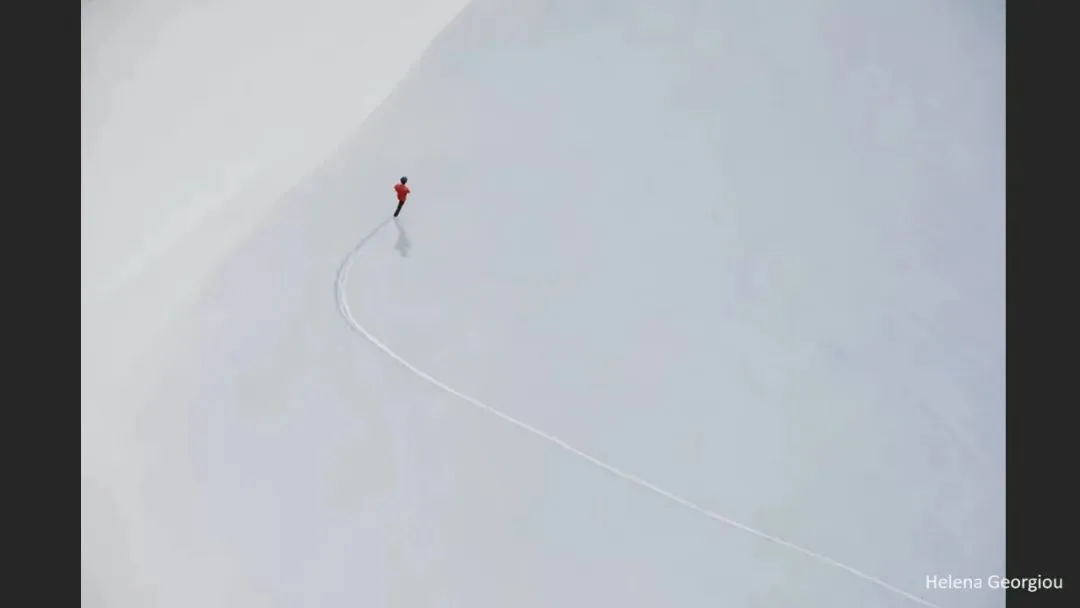
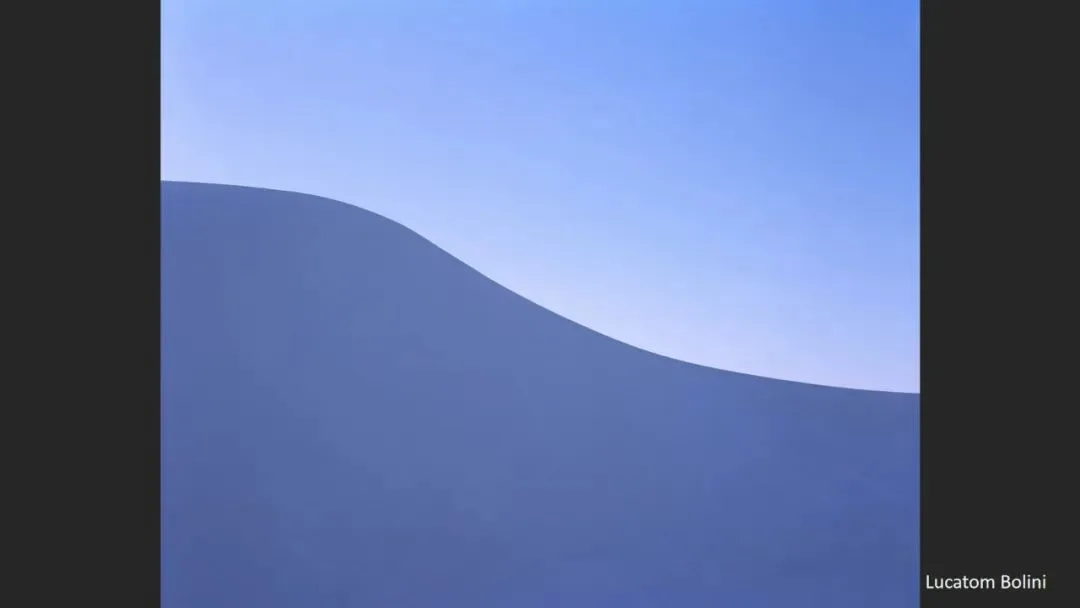
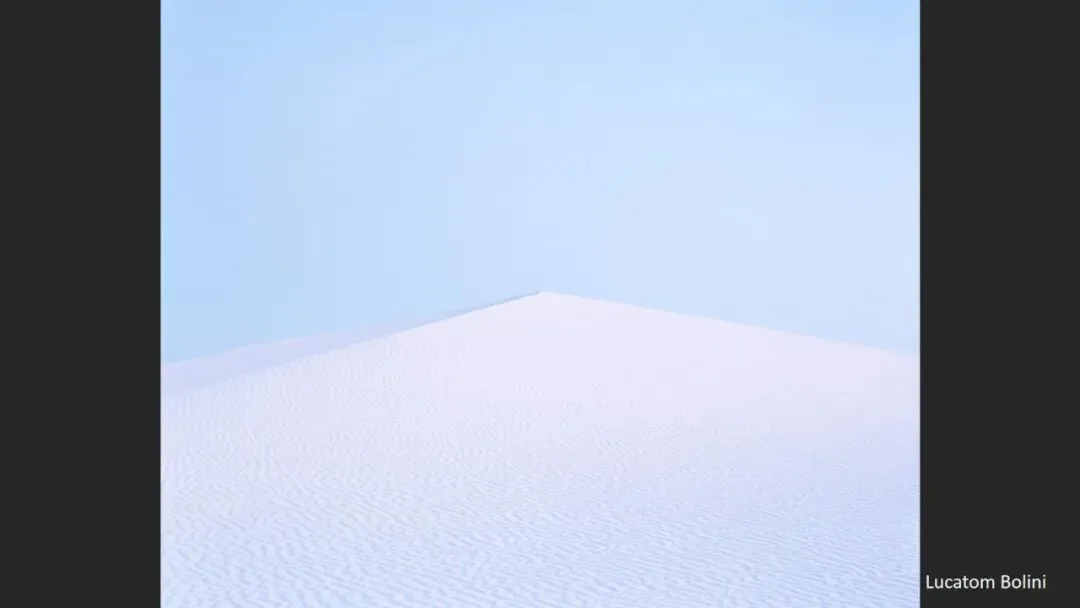
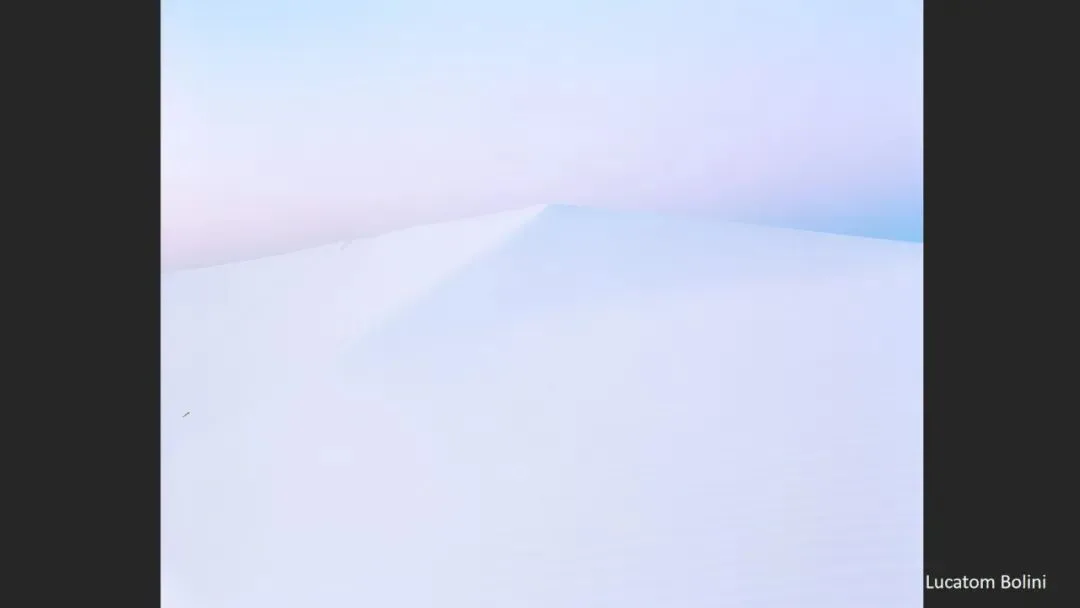
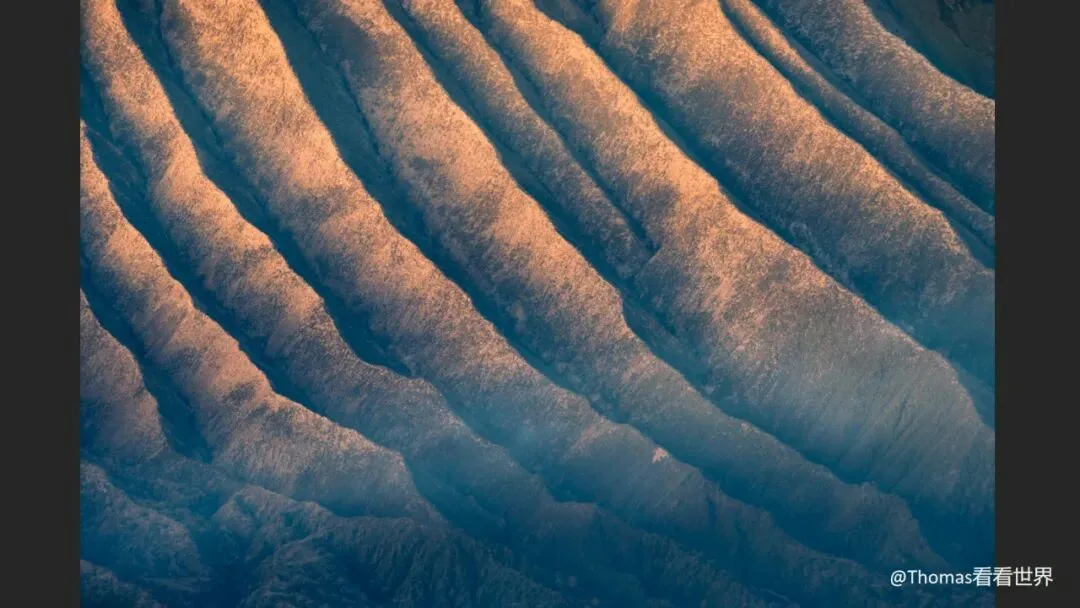
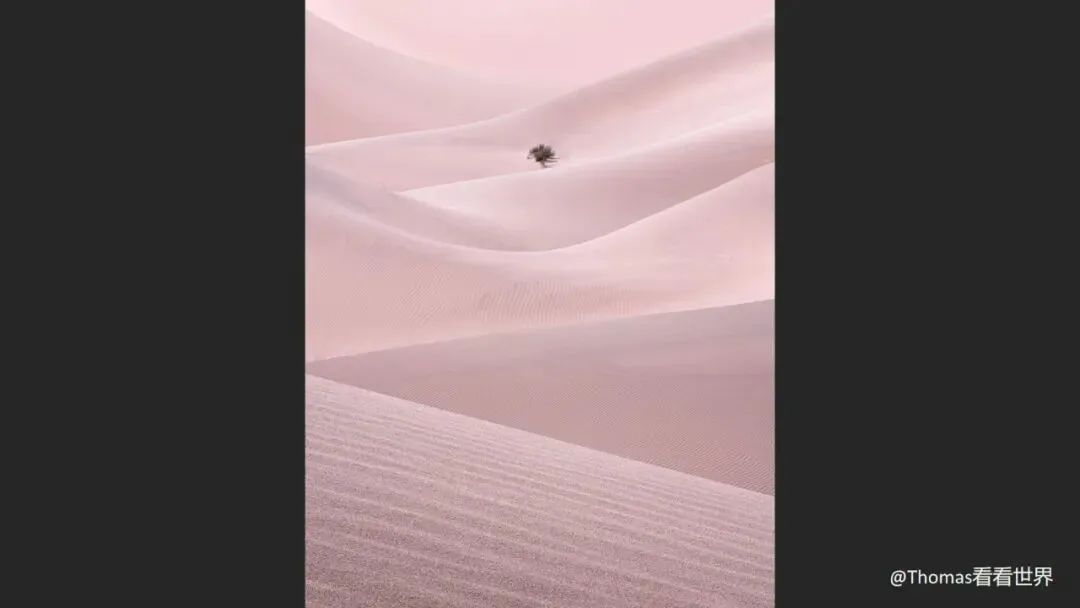
Geometry works just as well in nature. The desert photograph at 4:20 in the video does nothing but photograph the lines of a dune, yet because the curve itself is beautiful and the light-dark division adds contrast, it looks simple and is lovely. People walking across snow or sand leave geometric lines too — the trail they trace weaving with the dune's own contours is a ready-made picture.
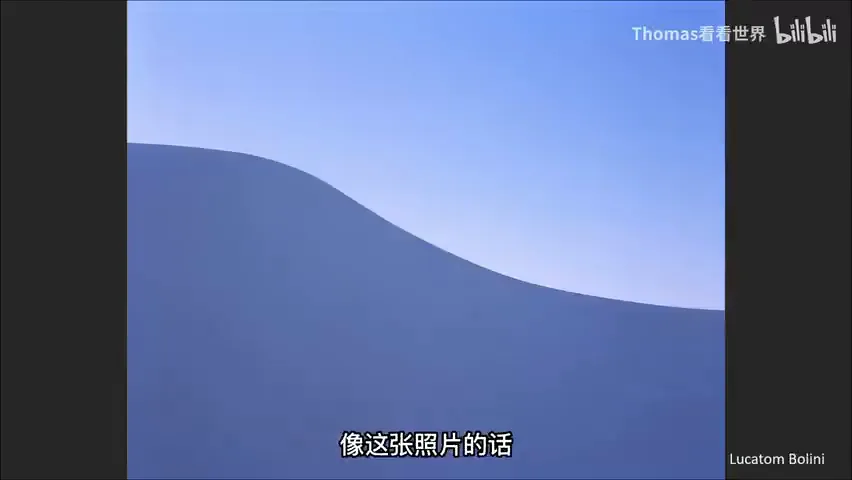
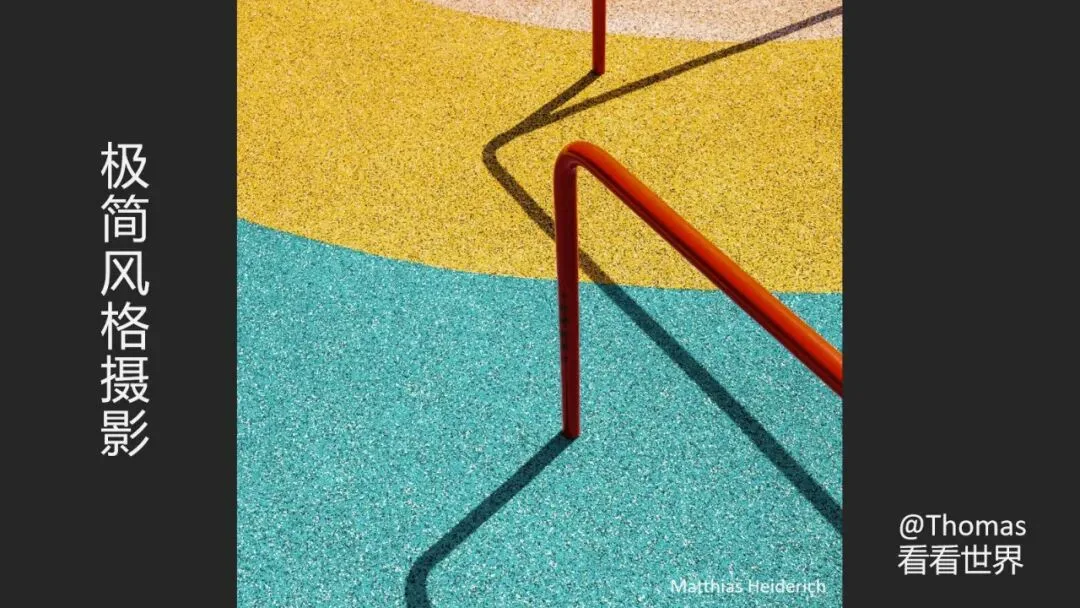
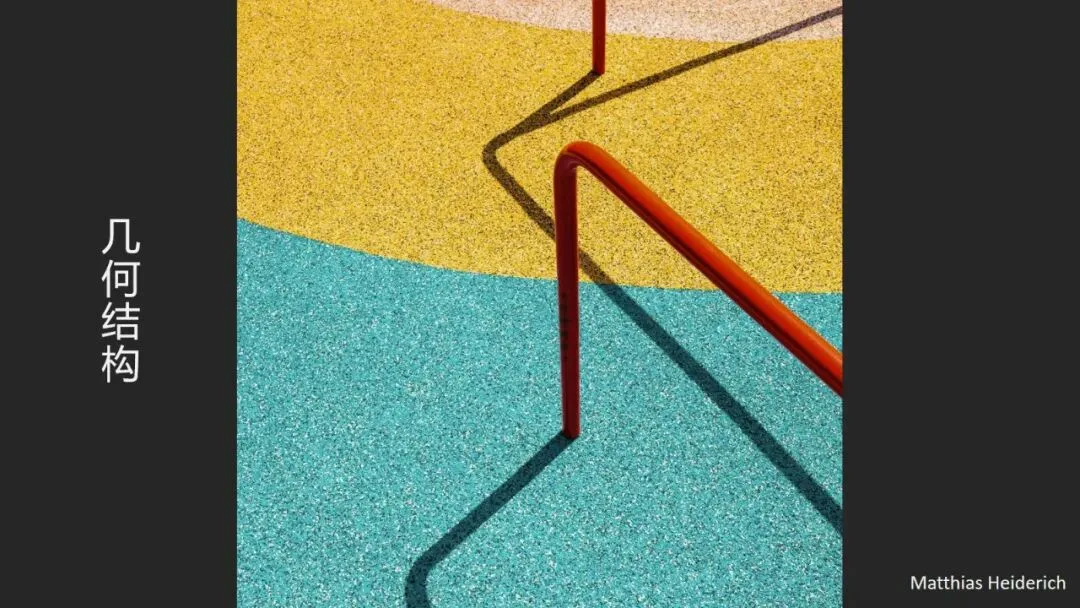
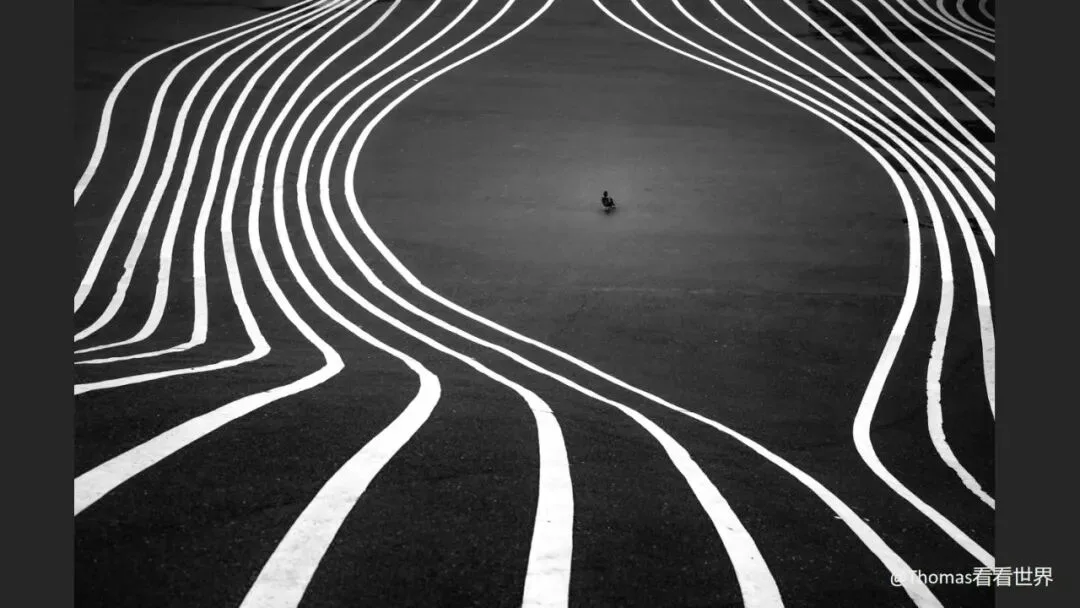
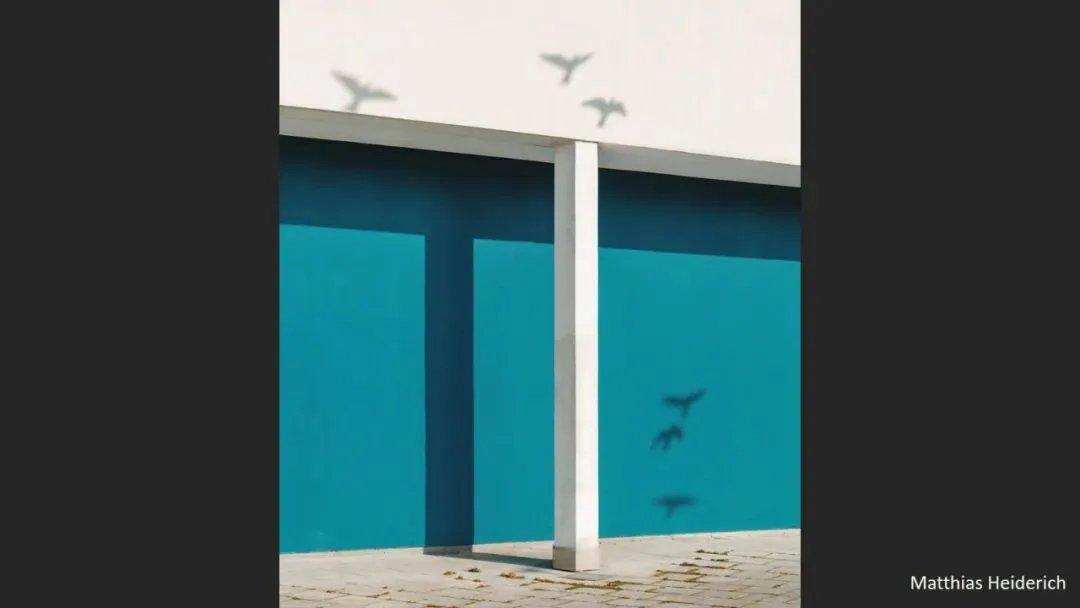
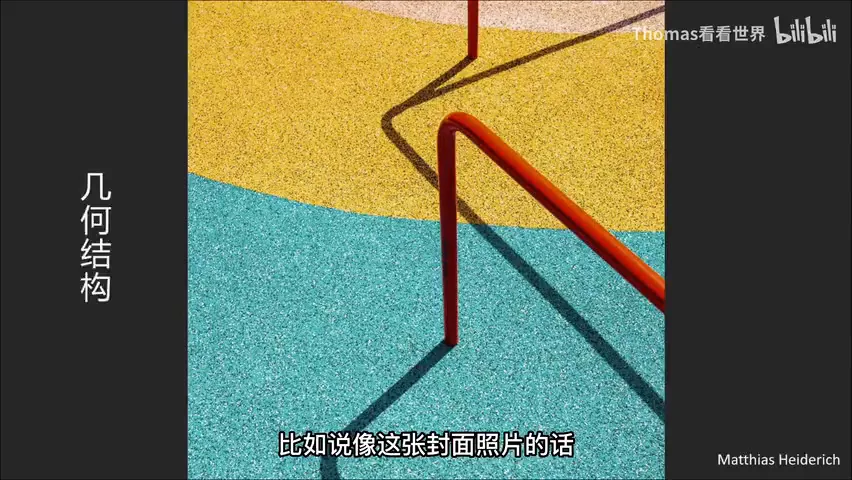
The key is holding onto the core: minimalist photos are not beautiful because they are simple, but because you noticed an interesting geometry. In the frame at 5:15 in the video, a pigeon landing amid an elegant line of light plays the finishing-touch role. As a rule, a good minimalist photo combines several interest elements at once — the cover photo of this episode needs both the yellow-cyan-red color clash and the line formed by a railing and its shadow (at 3:19 in the video), and finding that viewpoint is anything but easy.
03 Point of Interest No.2: Color Pairings
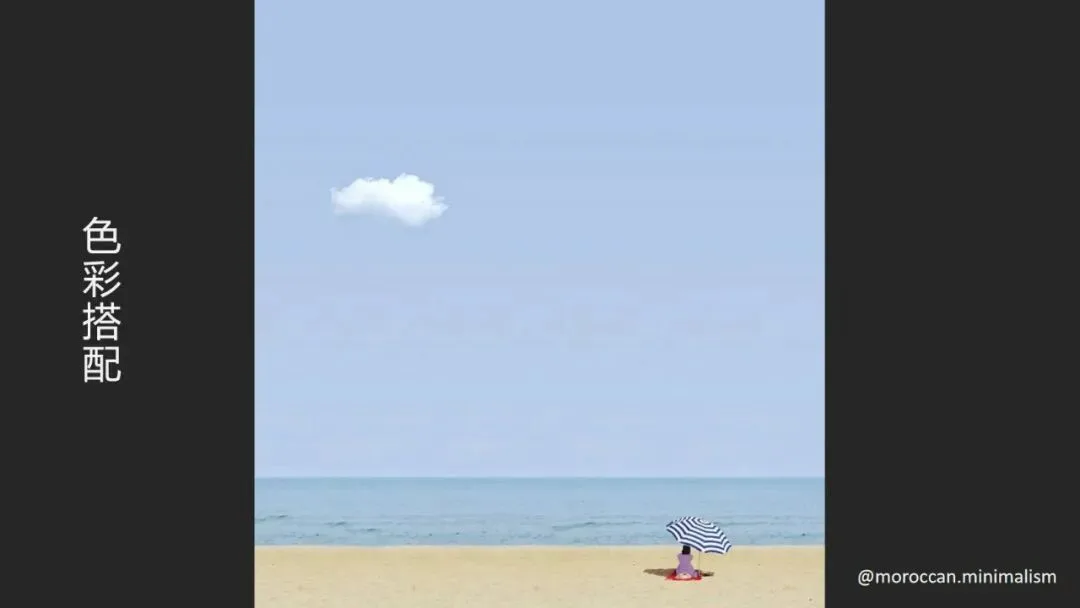
The second common point of interest is the pairing and clashing of colors (at 2:35 in the video). The usual elements come from two directions: man-made ones such as clothing and architecture, and nature's broad fields of color — sky, desert, ocean, snow and ice, salt flats. Post-processing can also build color pairings deliberately. The classic recipe is a huge sweep of sky or beach plus one dotted cloud and a single figure — instantly a textbook minimalist frame (at 5:29 in the video).
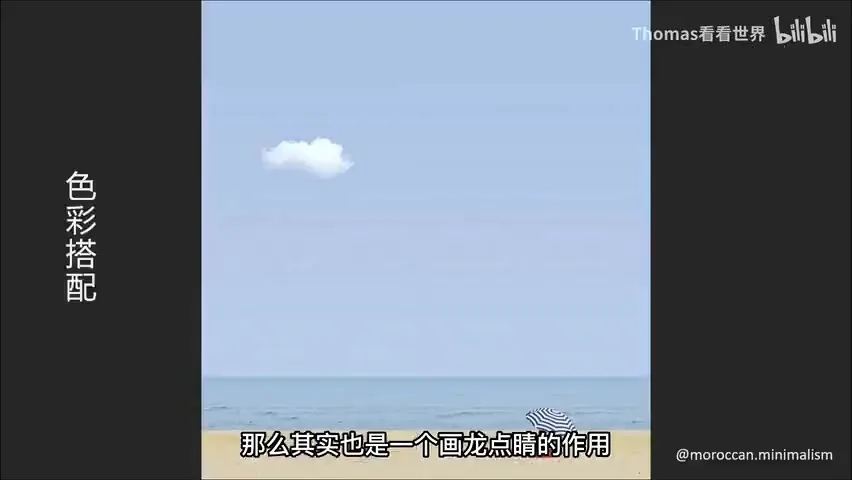
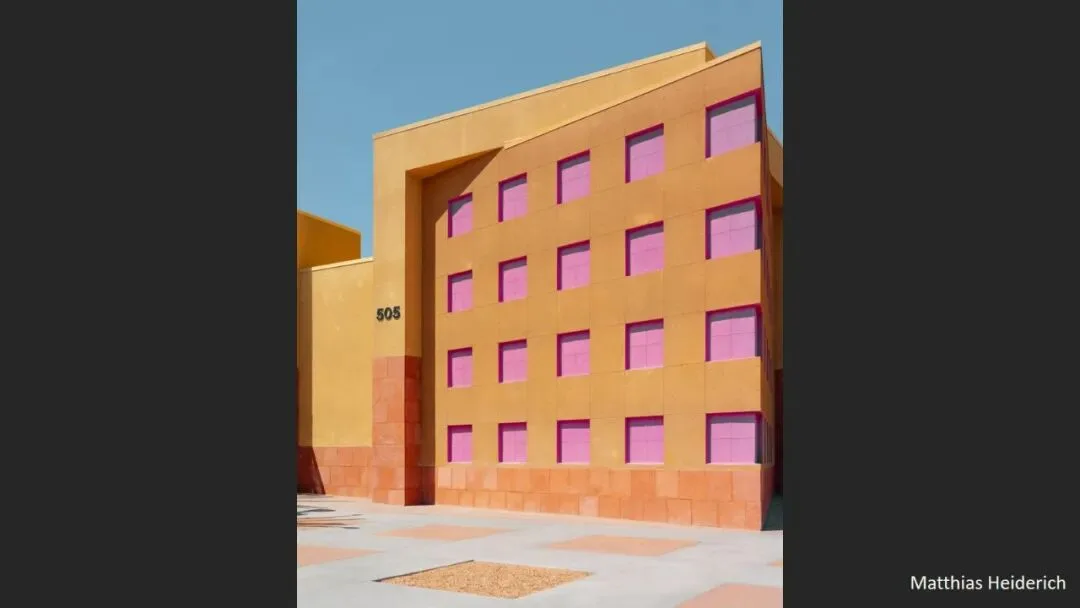
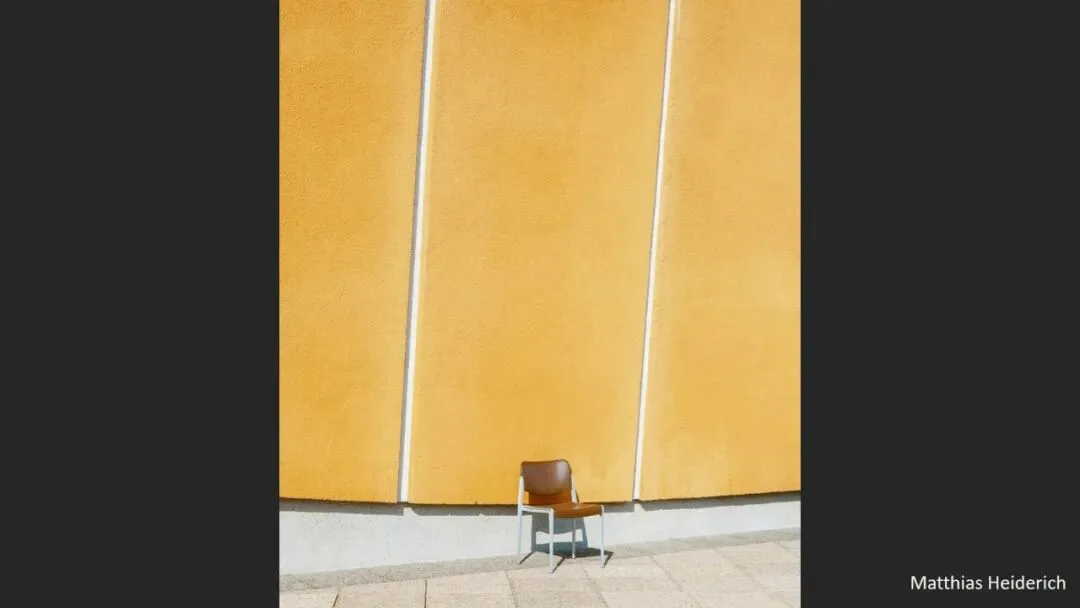
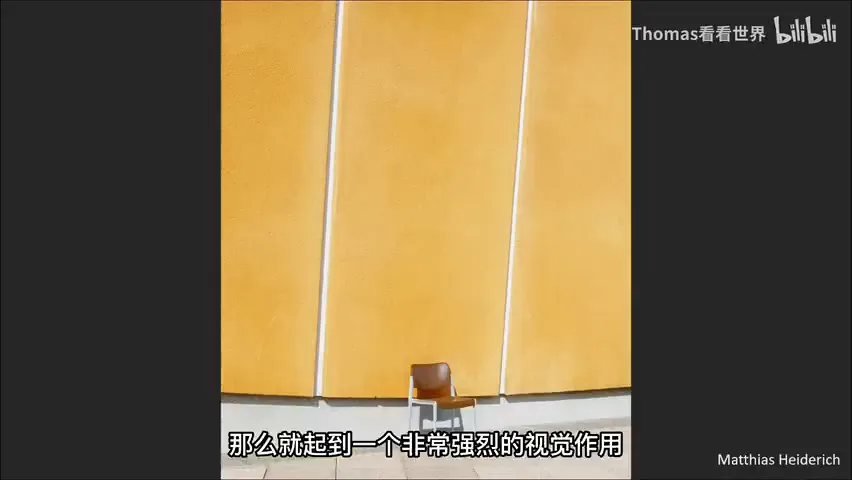
In practice the workhorses are warm-cool contrast, plus the harmonious palettes of sunrise, sunset and the blue and purple hours (at 5:46 in the video). Another high-frequency move: place a single differently-colored element — often a person — inside a large field of white, black, gray or any other color, and it becomes a powerful visual center. In the work at 6:08 in the video, the background wall supplies the geometry, and the broad yellow plays off a foreground earth tone that is similar yet distinct — a genuinely intriguing pairing.
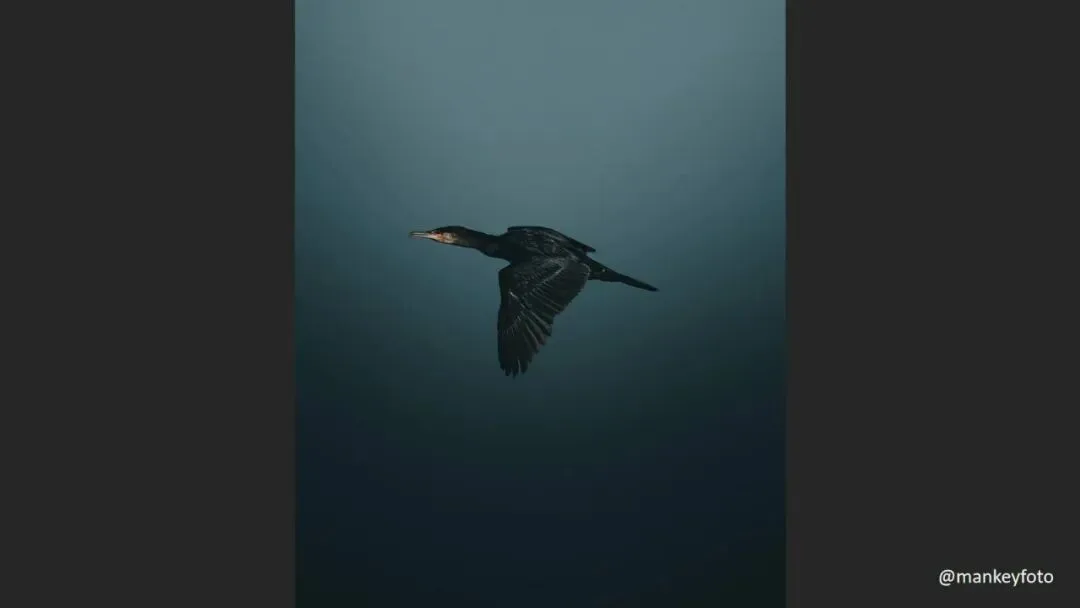
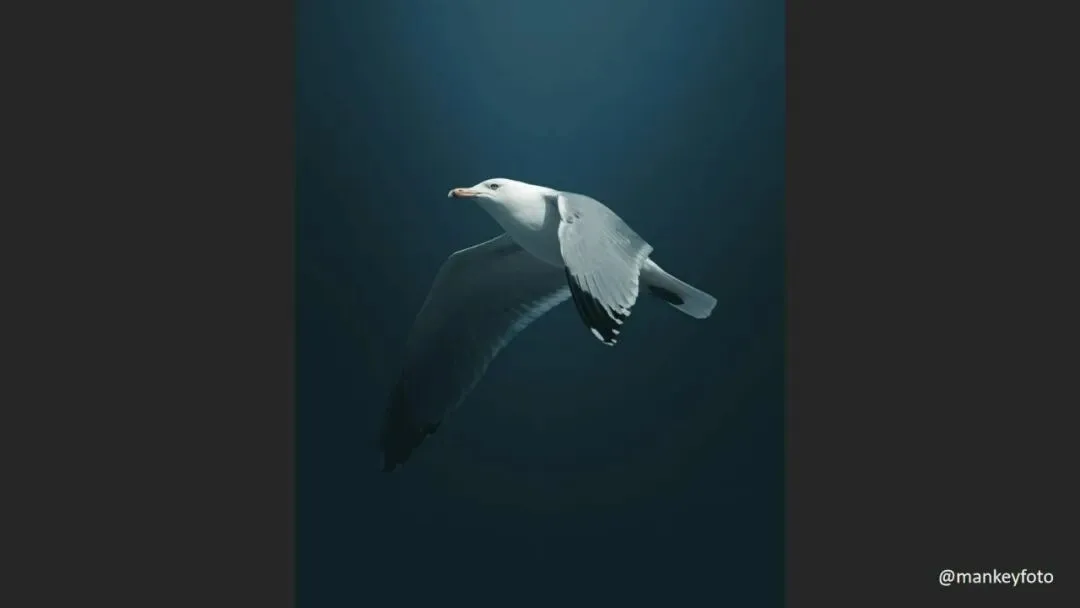
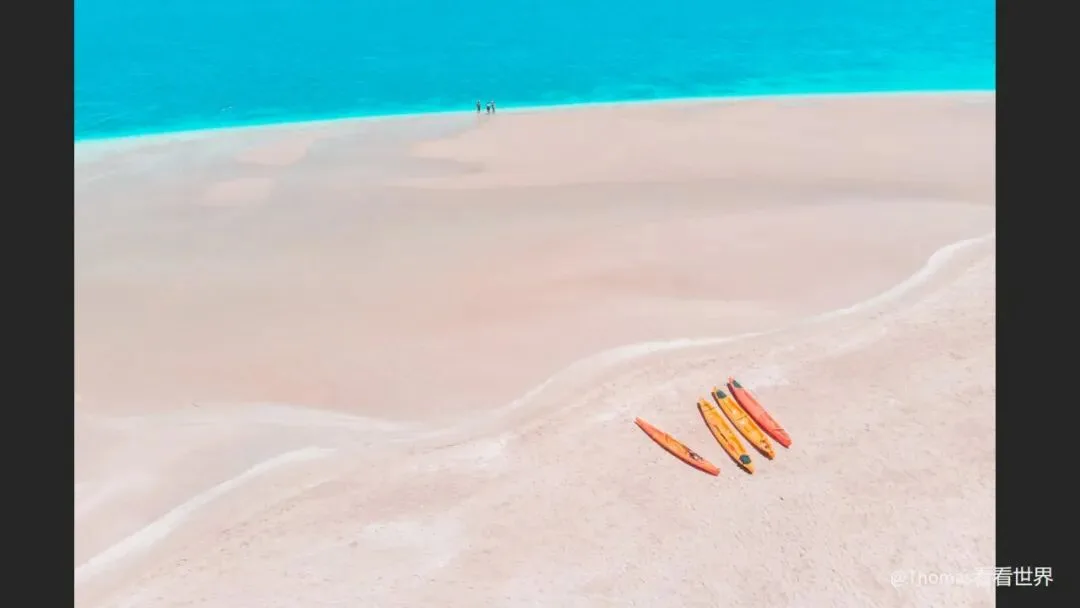
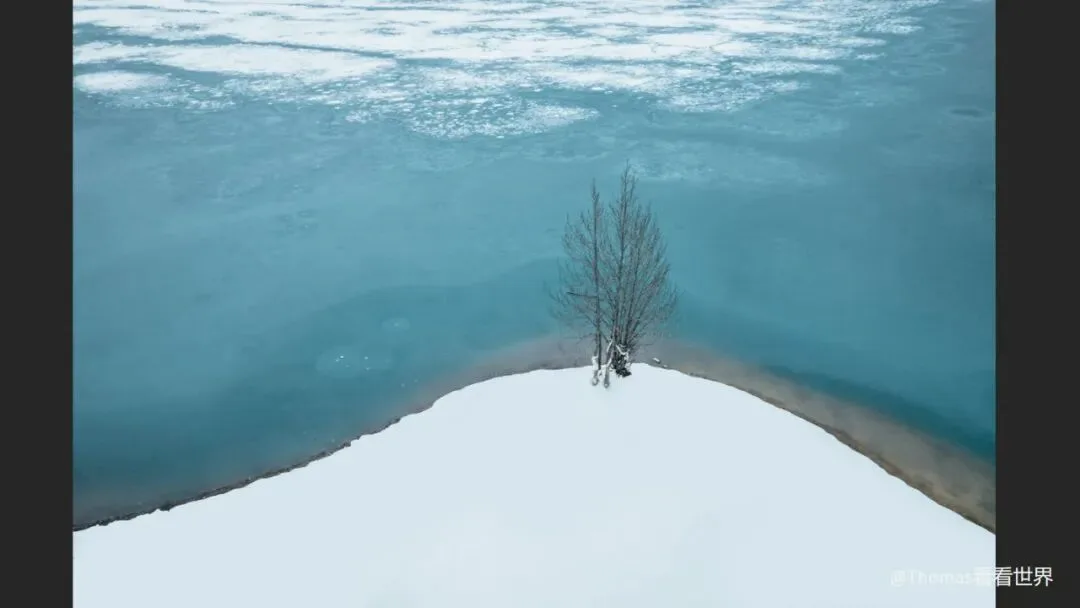
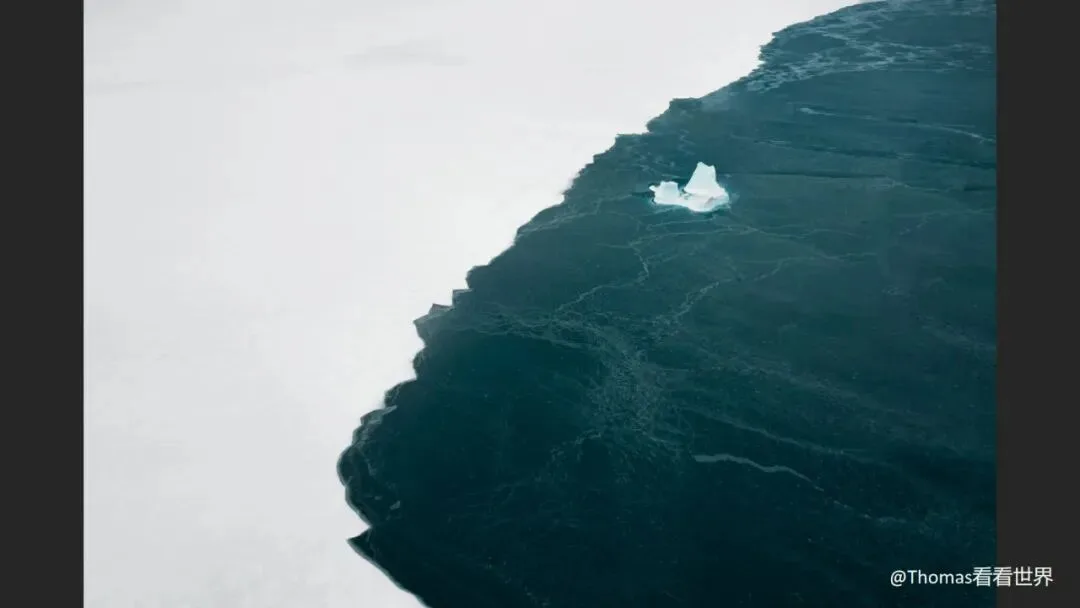
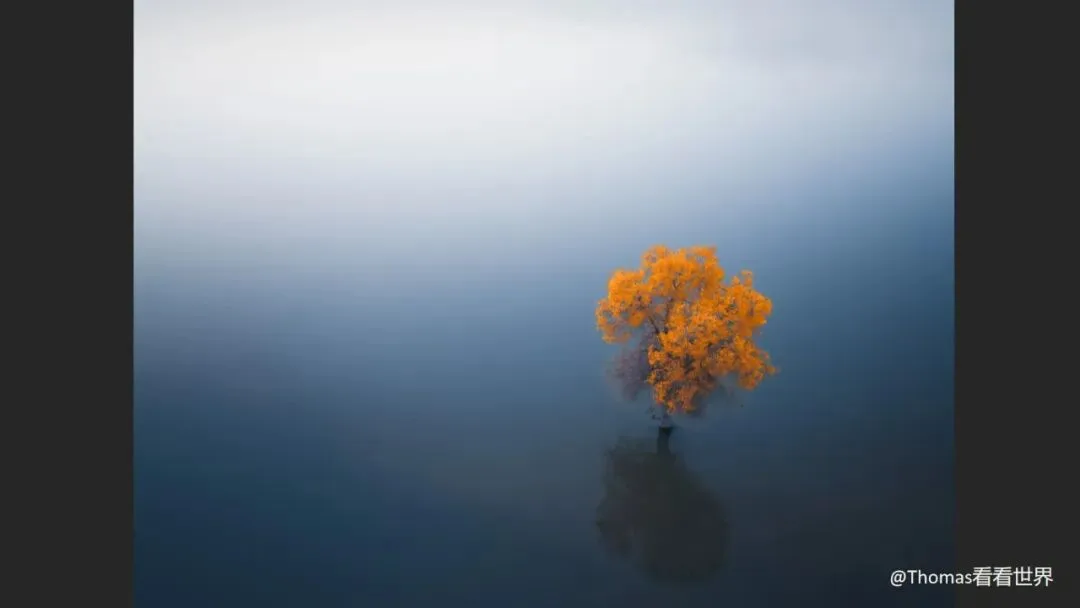
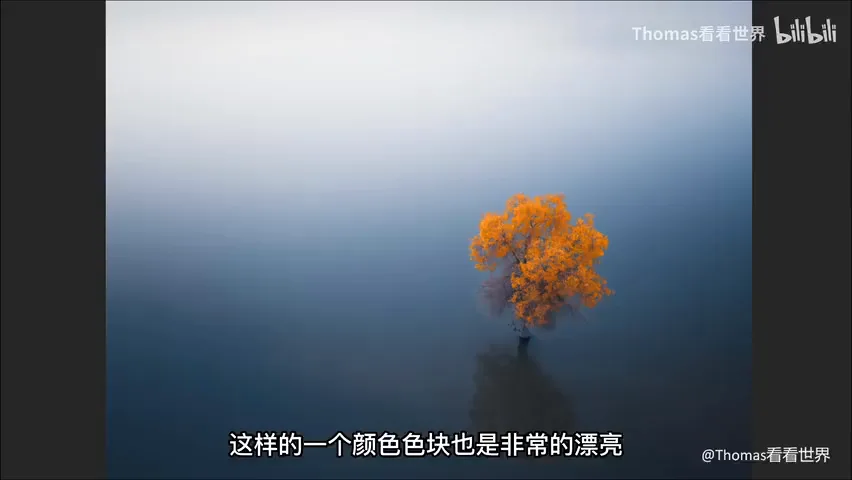
Unifying tones in post is another route. At 6:27 in the video Thomas shows a wildlife photographer whose animals look much like everyone else's — the edge comes from darkening the frames in post and applying the currently fashionable teal cast, which makes viewers feel they are seeing something fresh. Thomas's own frame follows the same logic (at 6:49 in the video): under a vivid blue sea and sky, several shirtless men in colorful swim trunks, with an inflatable boat and beach in front enriching the palette, all held in an extreme crop. Icy water turning teal-blue gives you blue-versus-white color blocks (at 7:09 in the video); and at 7:20 in the video a poplar in autumn — its orange foliage set against the blue of the water for a warm-cool collision that pulls the eye straight in.
04 Point of Interest No.3: Tonal Layers
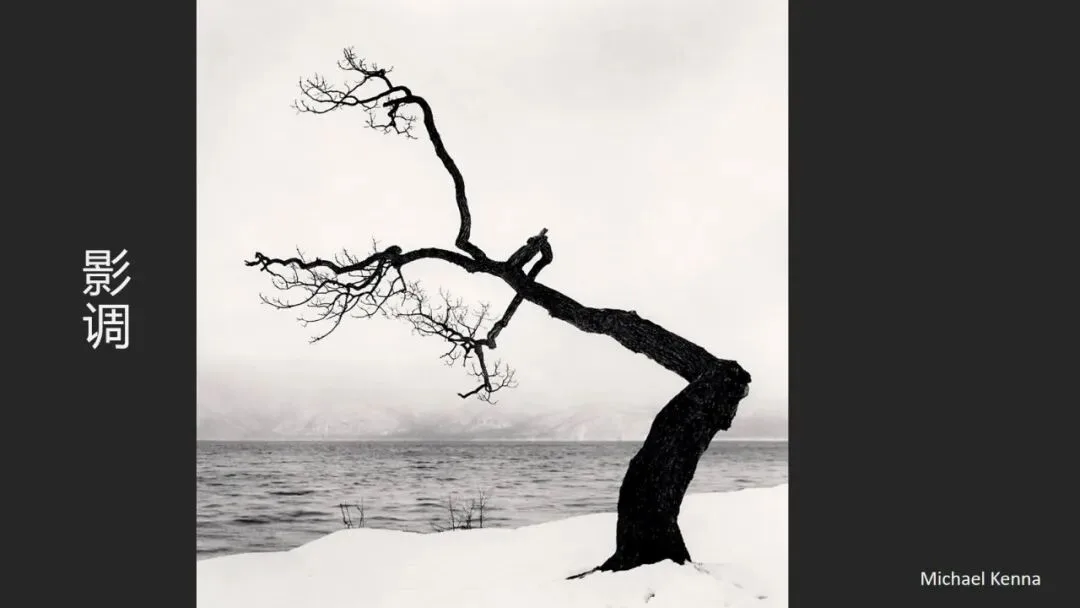
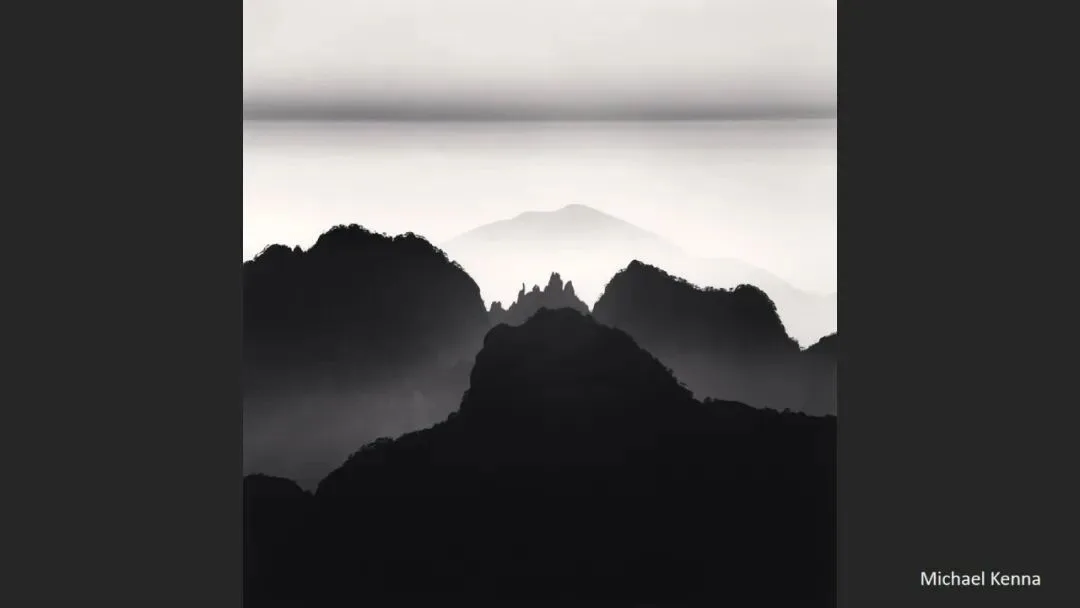
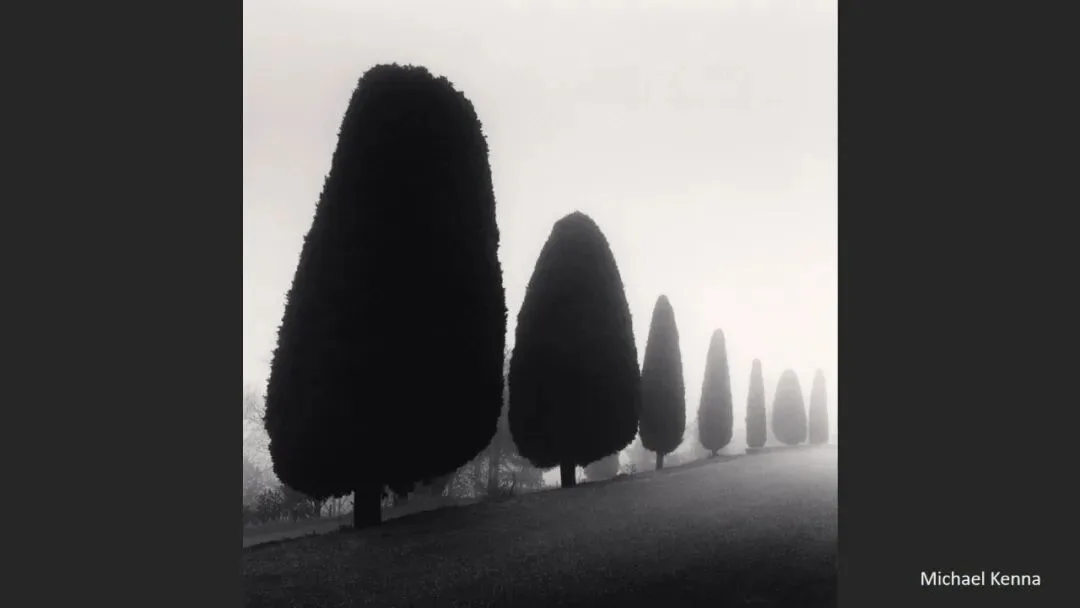
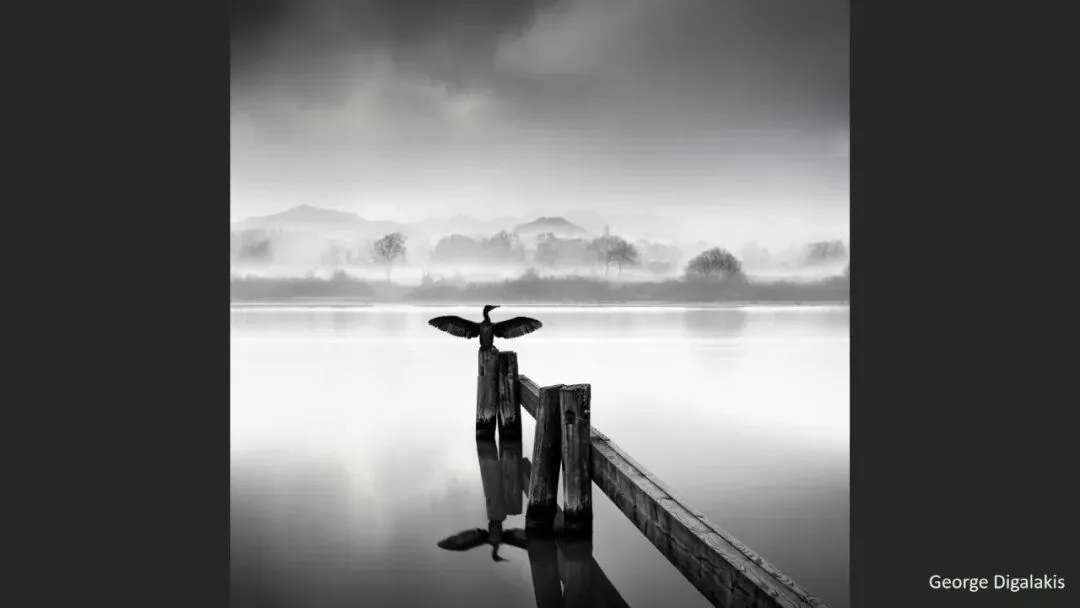
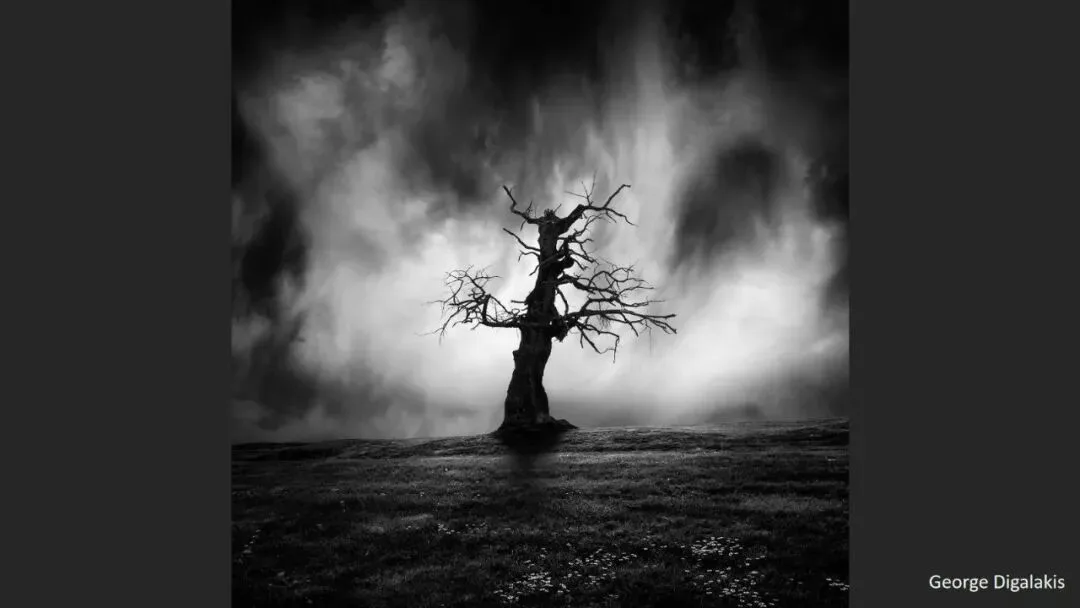
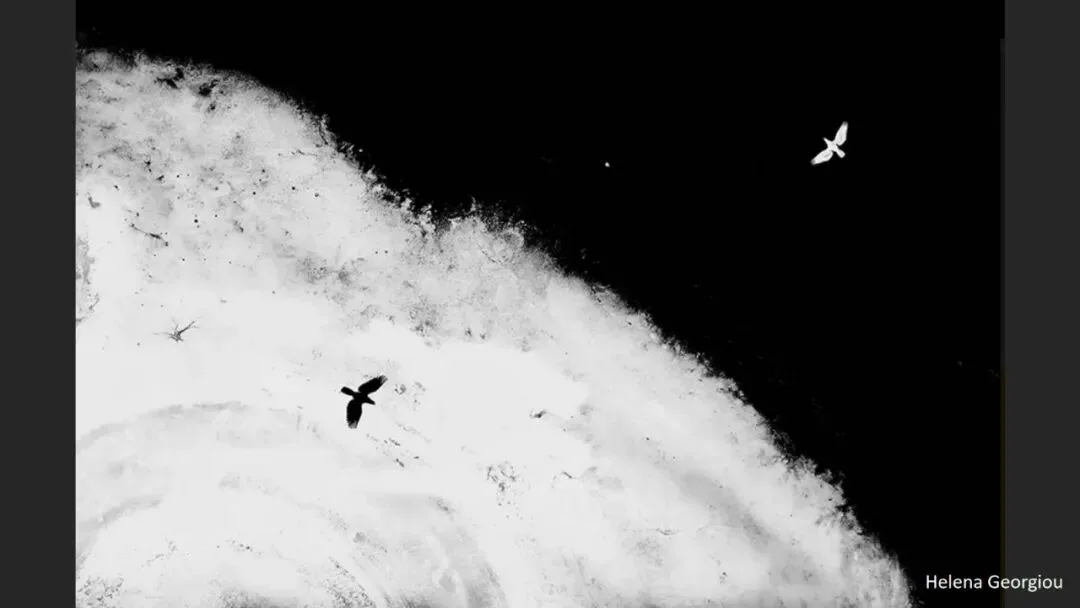
The minimalist approach also thrives in black and white, where the emphasis shifts to tonality (at 7:32 in the video). Michael Kenna's photographs are a fine model: in many of them a deep black tree stands against a field of white, or the foreground is darkest and each layer behind grows lighter, building a clear tonal hierarchy. Note that Kenna is never only about tone — his frames also carry the geometric structures and repetition described above, along with shifts in brightness and sharpness.
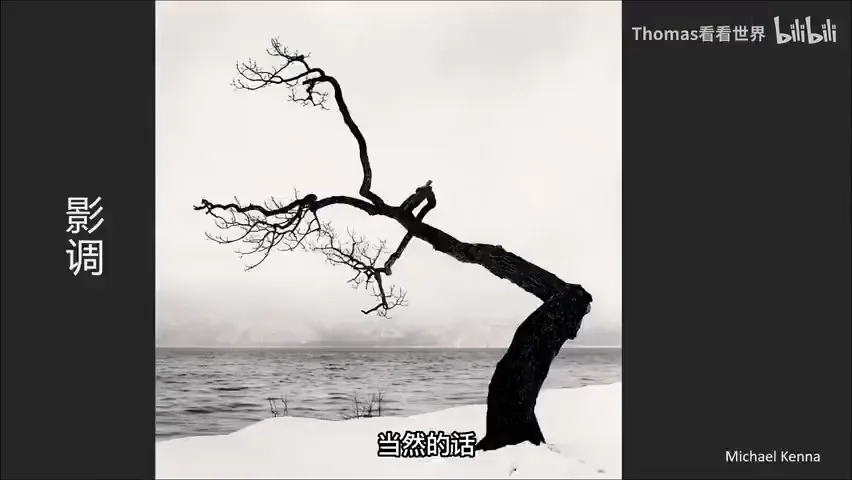
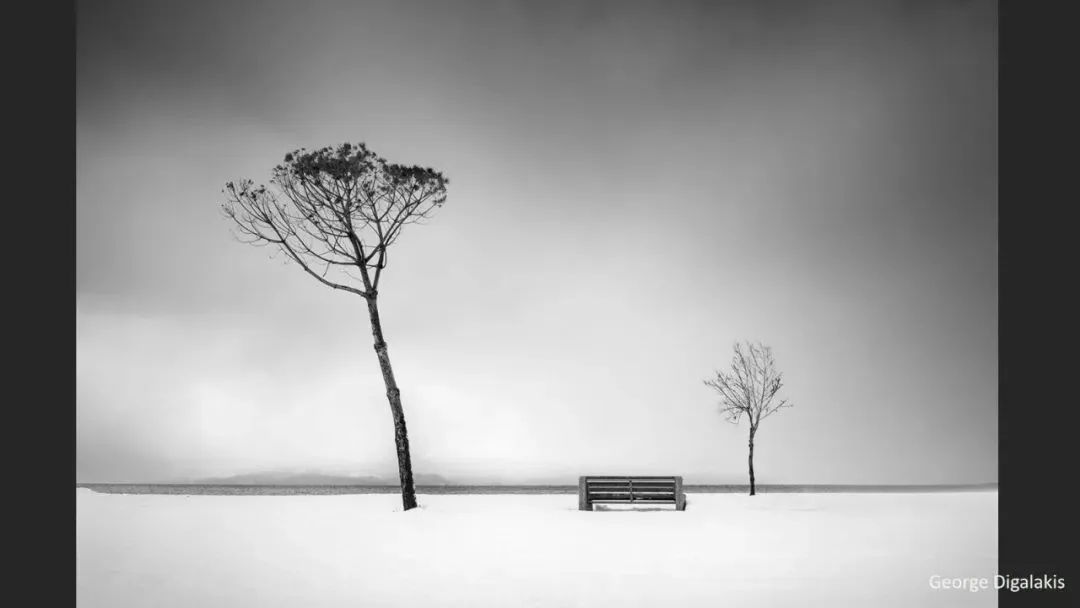
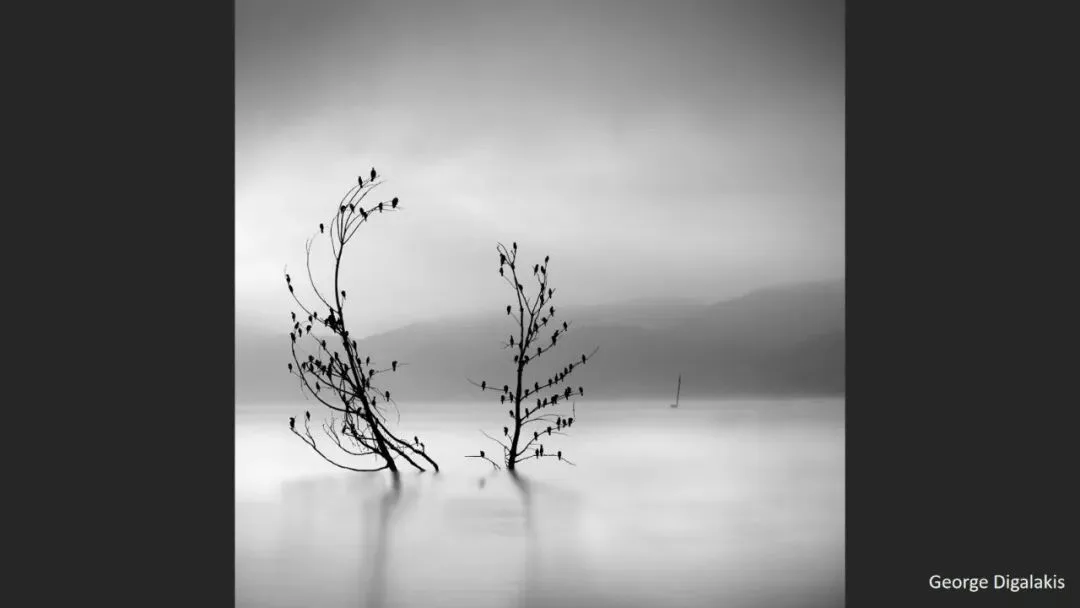
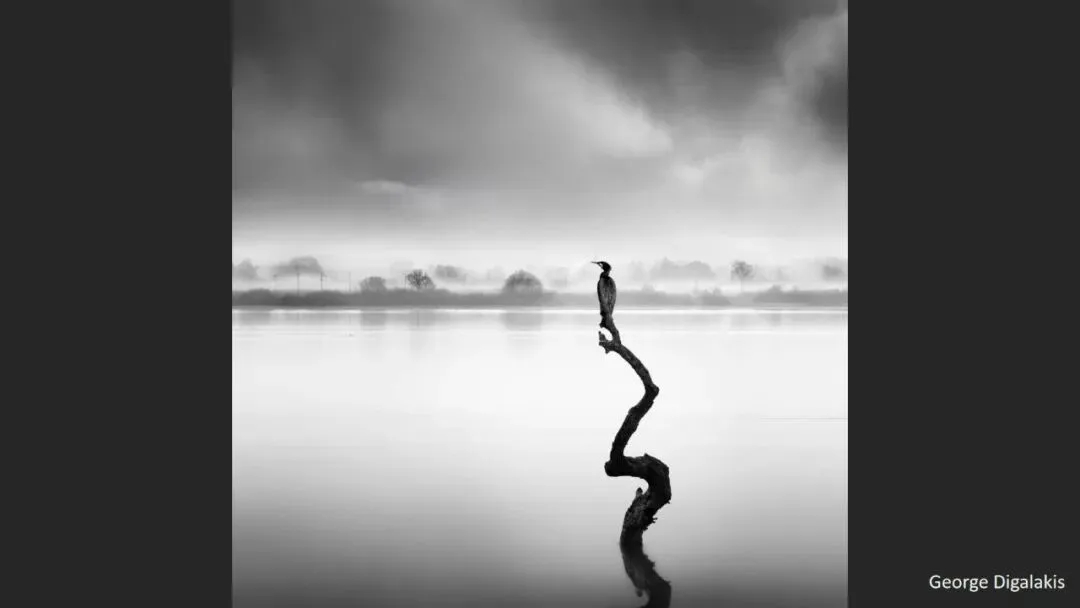
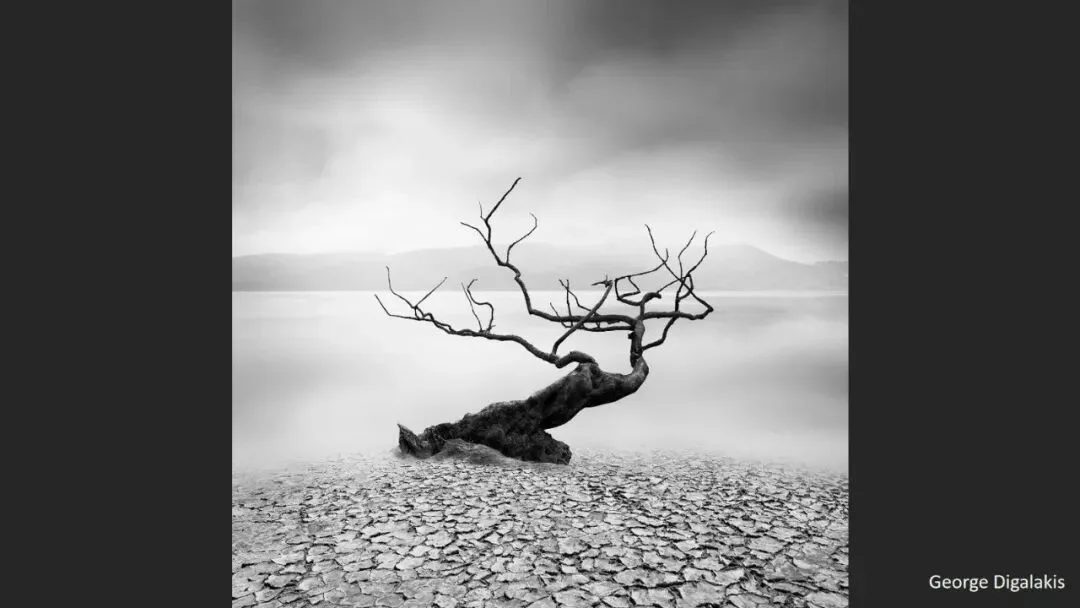
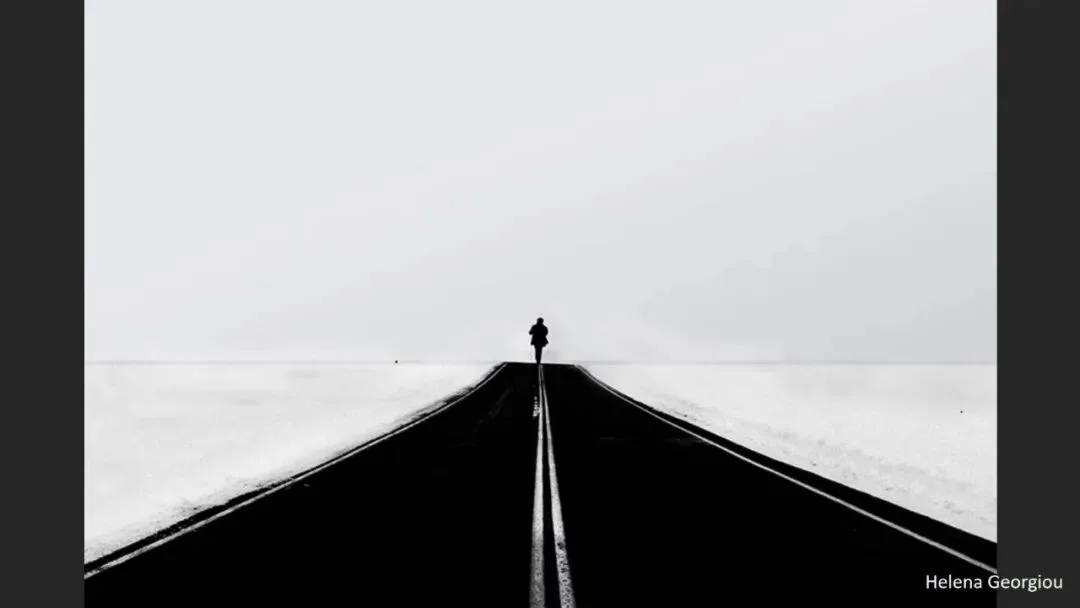
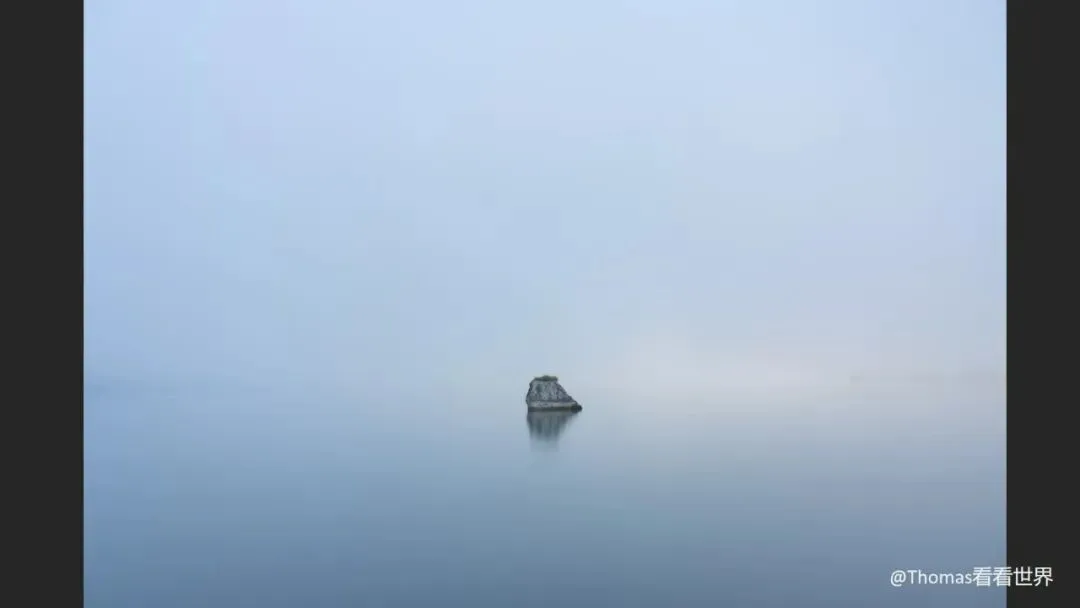
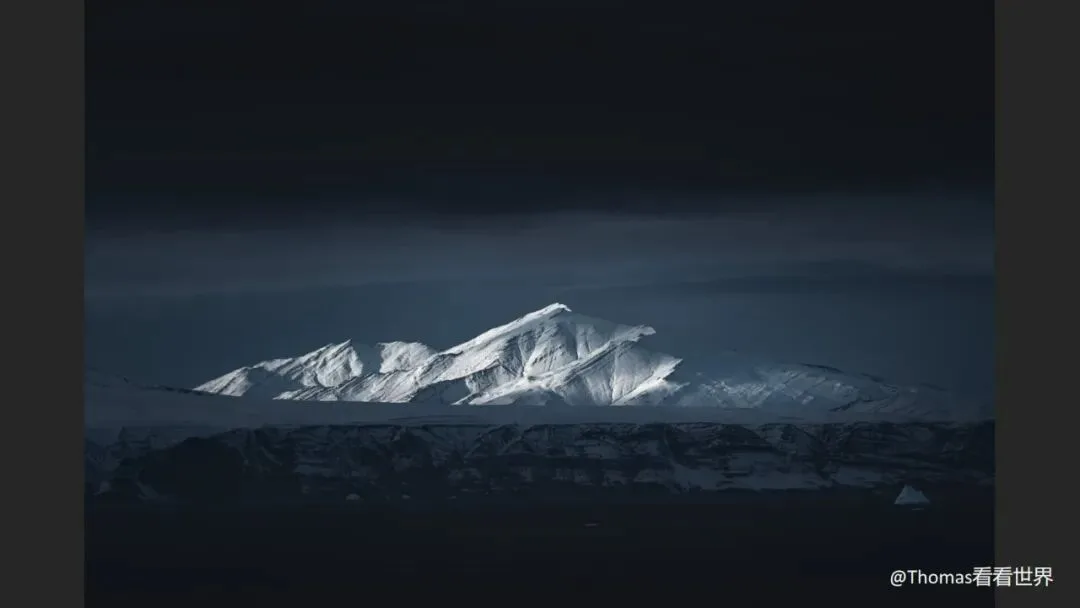
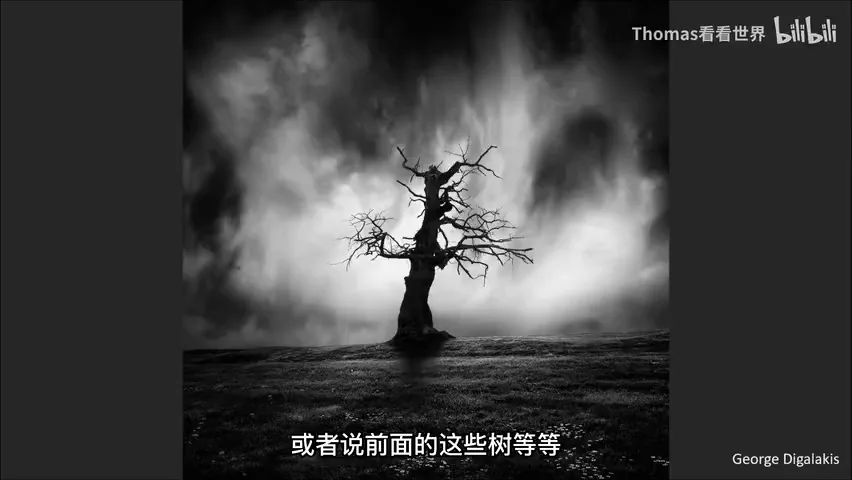
Many photographers love long-exposure water and fog, and Thomas offers a caution (at 8:11 in the video): these frames need something in front that can hold the picture down — the texture of sand, a strangely eroded rock, or, as George Digalakis often arranges, birds and gnarled trees in the foreground, finished with tonal work in post. The result looks genuinely distinctive. The pull of the photograph at 8:29 in the video is not that it is spare, but that the textures of the tree and the water are fascinating in themselves, with sky and water smoothed into calm to supply contrast and support. Snow scenes work the same way: clear the clutter off the snow and out of the sky, crush people and ground into silhouette, and the tonal contrast becomes dramatic (at 9:09 in the video). The method transfers to monochrome color photos too — a snow mountain lit from one side, everything beside it darkened (at 9:25 in the video).
05 Point of Interest No.4: Subject and Moment
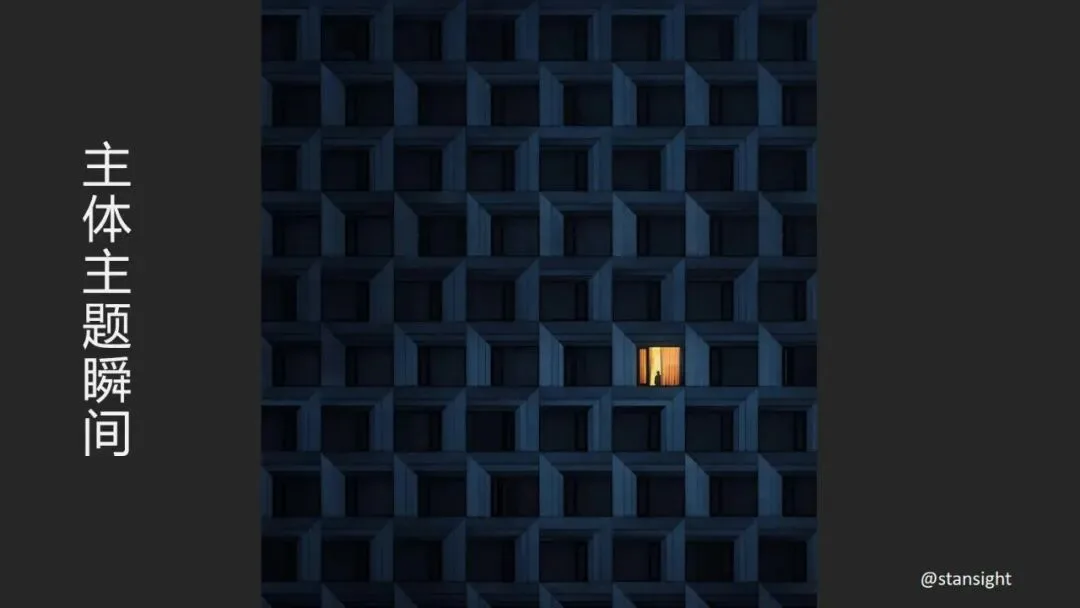
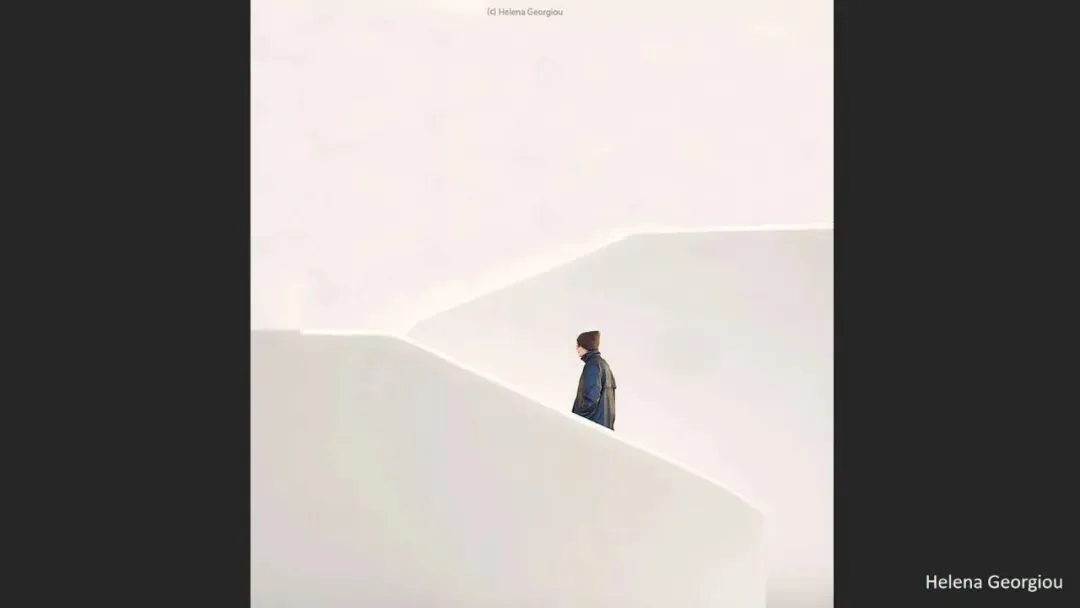
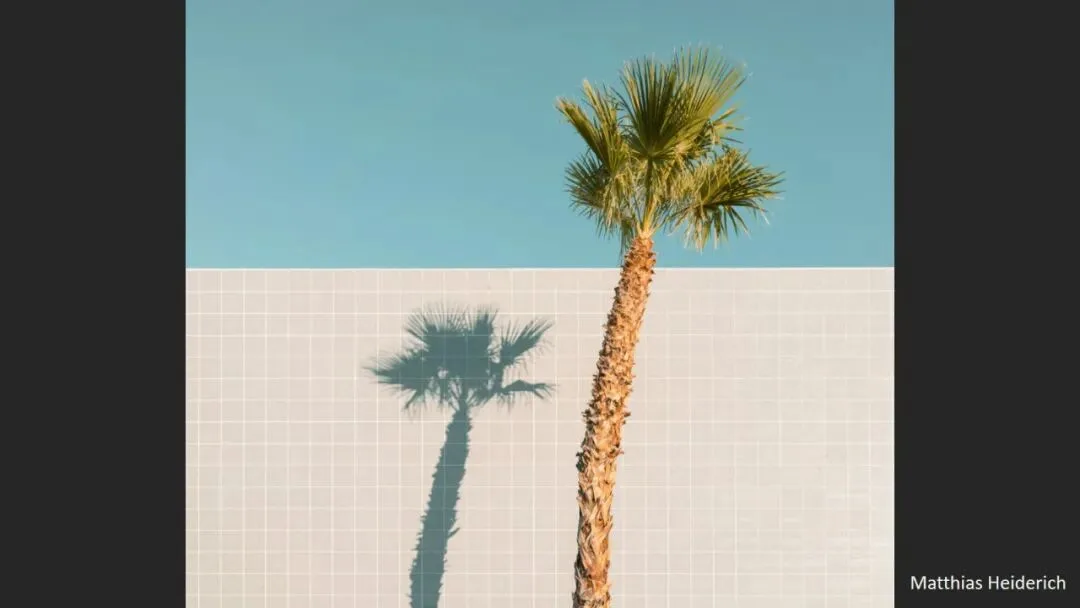
The final category: if your subject is genuinely compelling, or you have caught a truly unique decisive moment, then expressing it through minimalist means outright is perfectly legitimate (at 9:45 in the video). The photograph at 10:01 in the video is a clean frame with one person walking through a geometric structure — instantly a fine minimalist image. Another works by seeking out the colors and geometry first — big blocks and small blocks, warm tones against the color of tile — then waiting for a tree and its shadow to enter position (at 10:22 in the video).
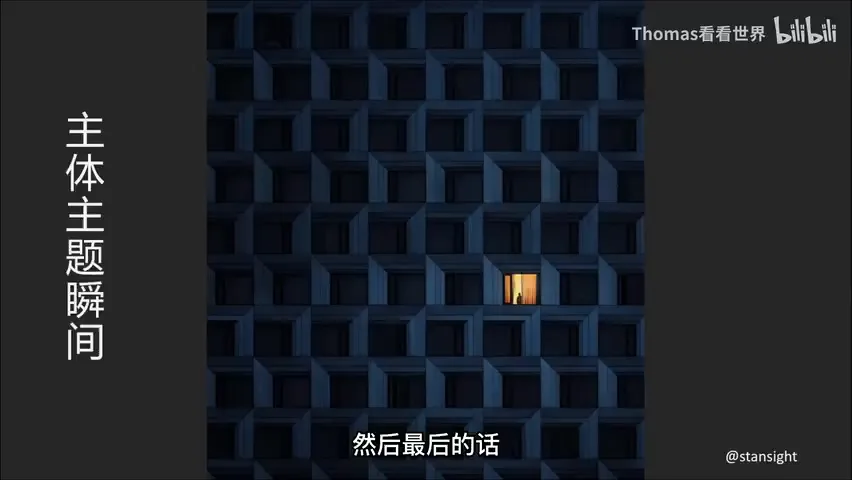
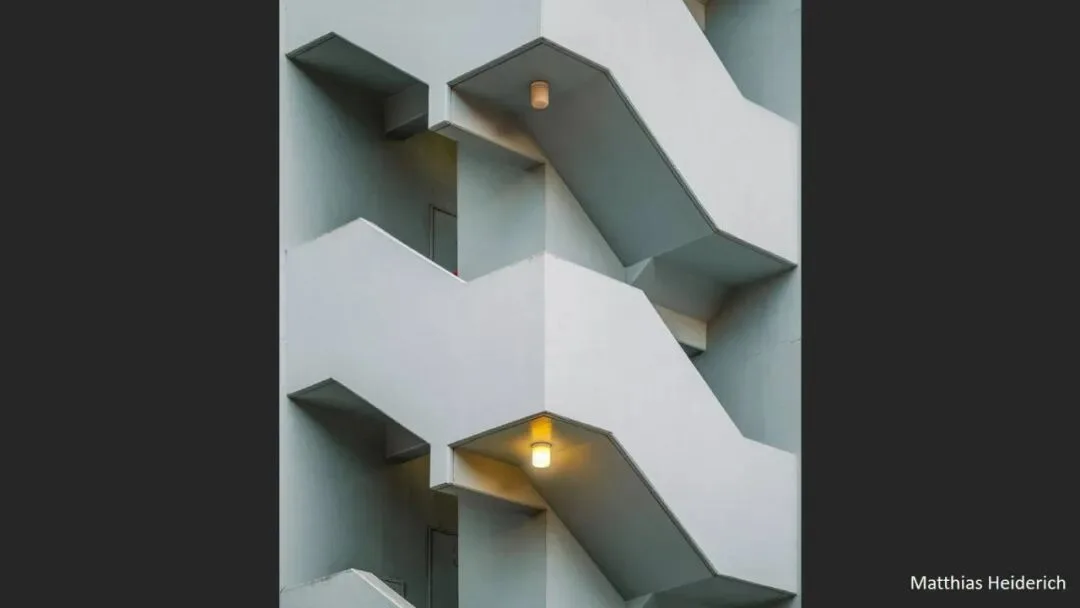
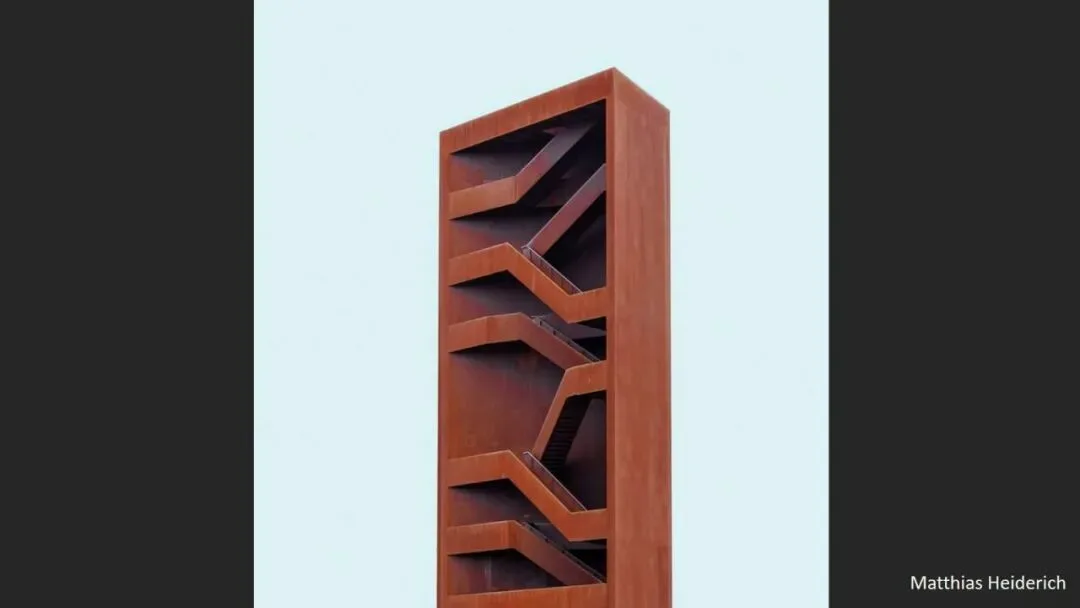
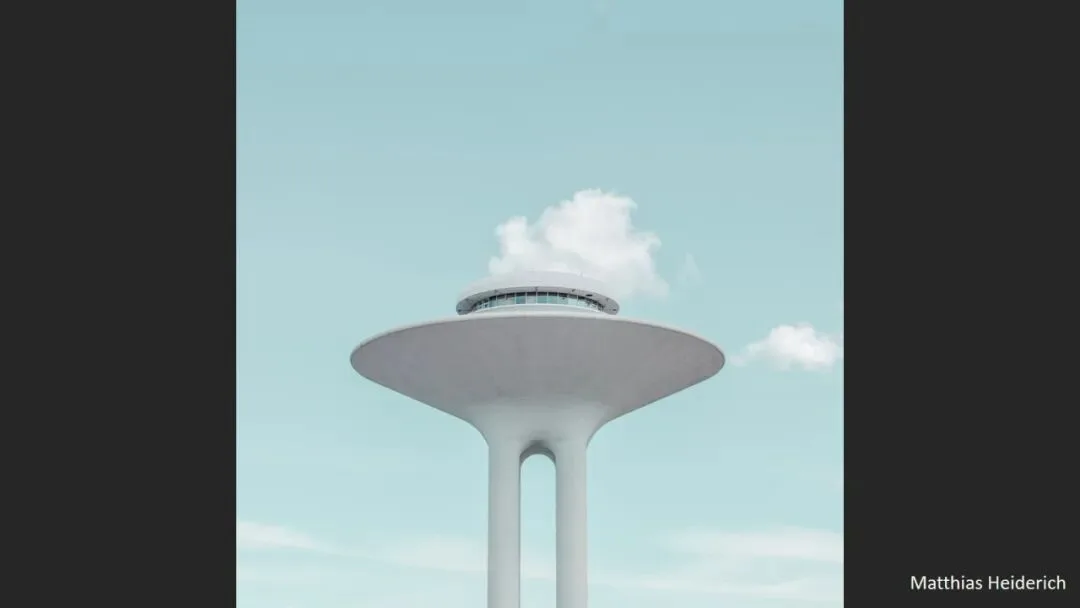
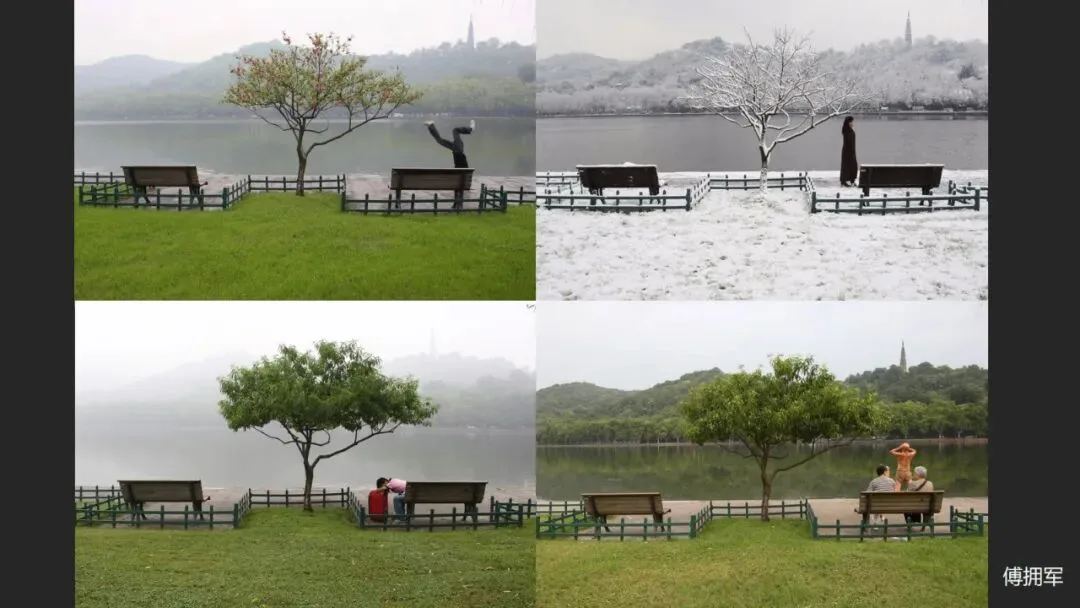
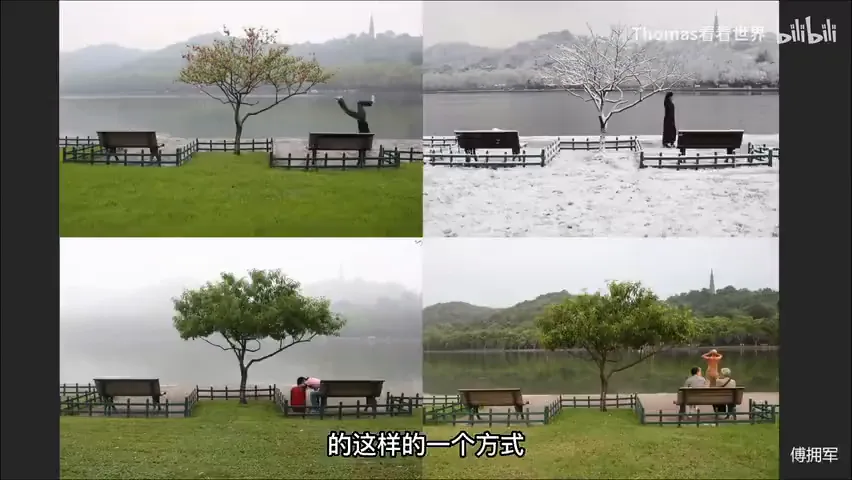
Details of buildings are minimalist staples: television towers and other eccentric structures, and contemporary architecture with strong design, are very often photographed in close crop (at 10:52 in the video). Fu Yongjun's West Lake pictures count as minimalist too (at 11:05 in the video): the frame holds a single tree, but it carries a superb theme — through that one tree he shows the turn of the four seasons and the enormous variety of people passing through their lives. A severely simple composition carrying deep meaning is exactly where minimalist photography is at its most powerful.
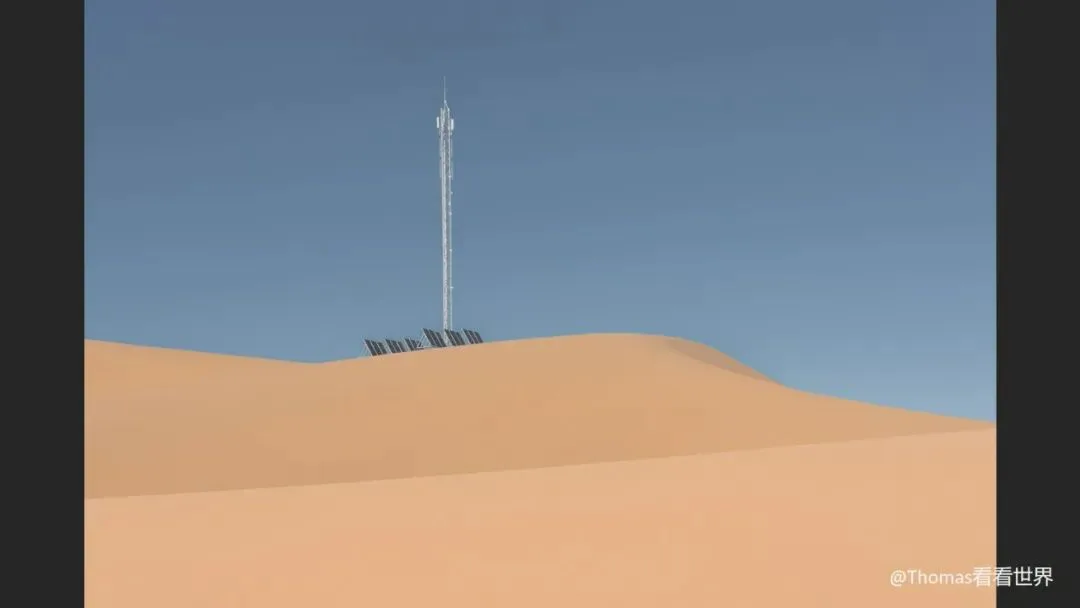
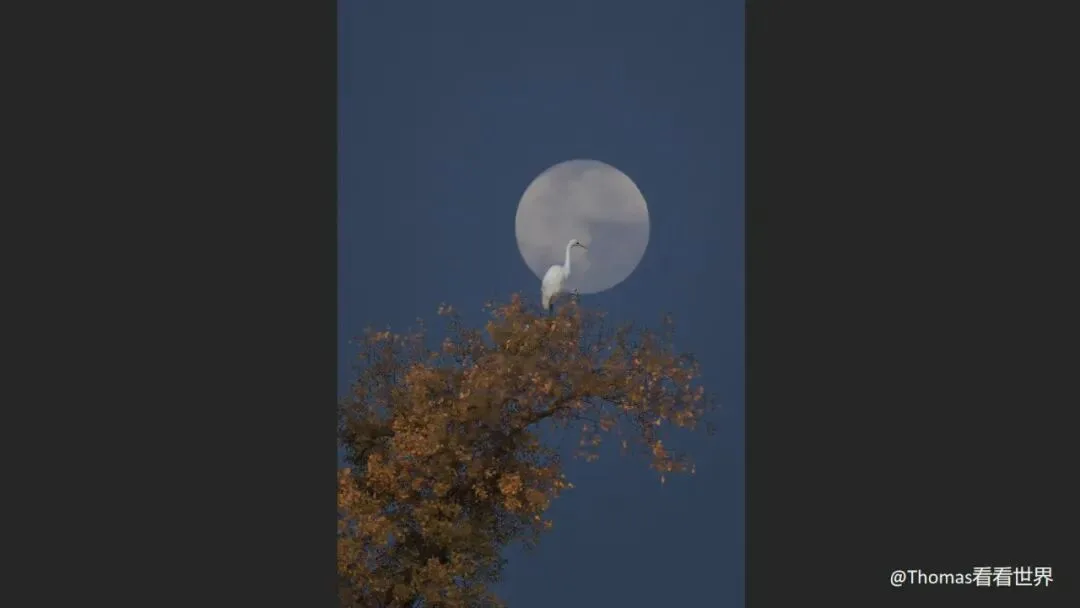
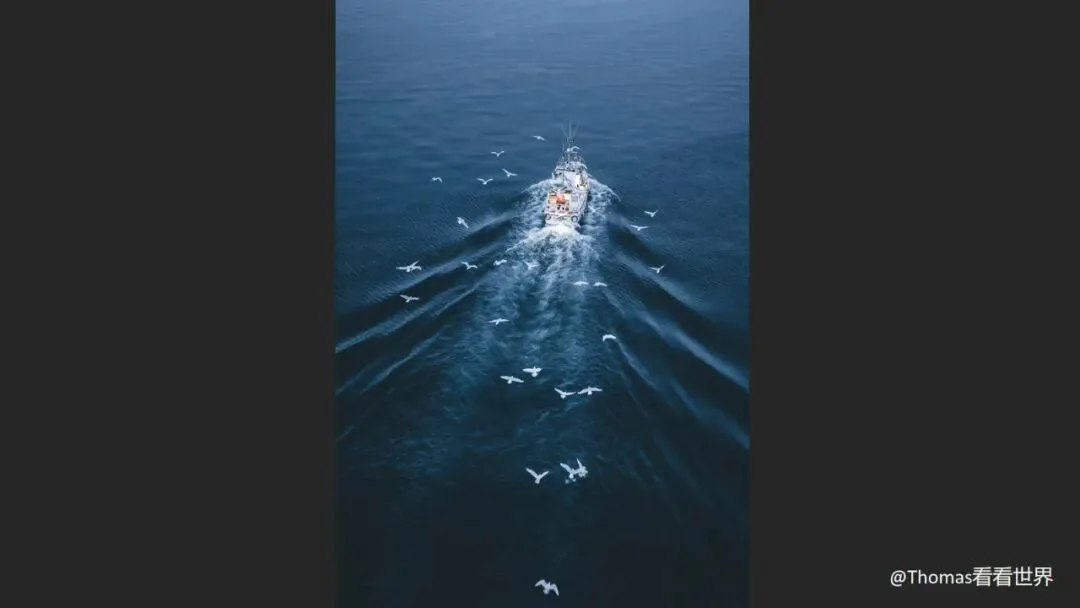
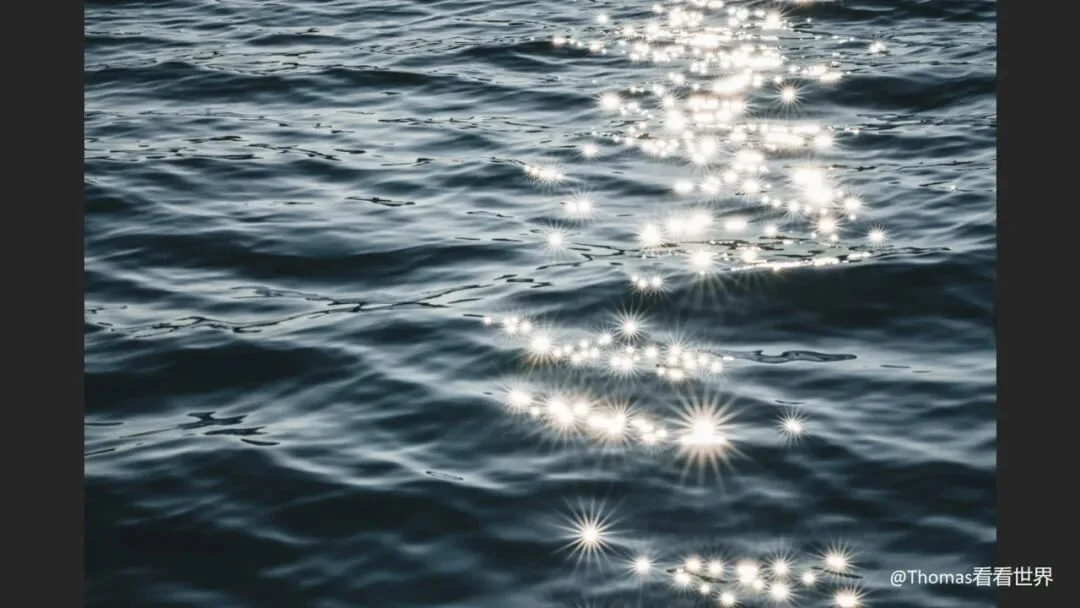
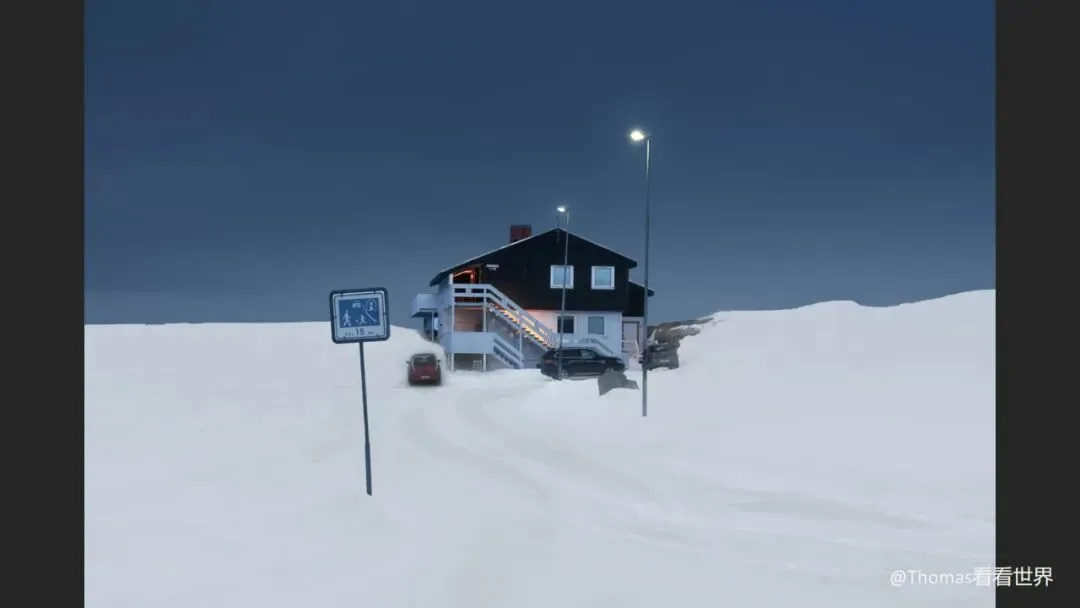
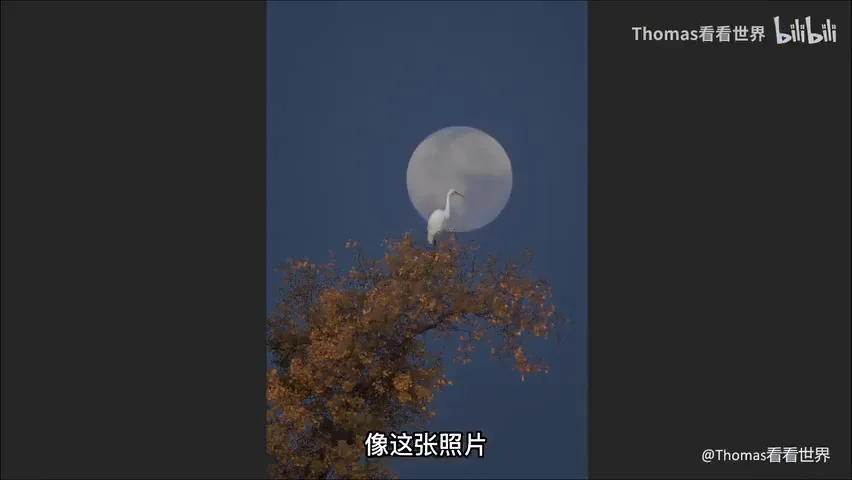
Thomas demonstrates with his own work (at 11:43 in the video): to spotlight a signal tower in the desert, he built a severely spare composition around it — minimal frame, straight to the core subject. The photograph at 11:56 in the video waits for a stunning moment — an egret flying right across the moon — and needs no wealth of layers: place egret and moon together and the picture already works. Gulls chasing a fishing boat over a sea sparkling with light (at 12:12 in the video) comes down to either a unique moment or a strong theme; even a bland sea becomes interesting when you stop down to a small aperture and capture starbursts first (at 12:27 in the video). And in a snowfield, finding a characterful house, using the lines before its lamp as the skeleton, then photographing nothing but snow and sky, yields a minimalist portrait of a building that needs no embellishment at all (at 12:33 in the video).

1. The core of minimalism is not hunting simple scenes; it is finding the point of interest first and subtracting second. 2. Four common points of interest — geometry, color pairings, tonal layers, and strong subjects with decisive moments — and good work usually combines several at once. 3. For color, favor warm-cool contrast and an off-color accent inside a large field; for tone, darken backgrounds, use silhouettes, and calm water with long exposures. 4. Observation plus minimalist composition — land the decisive point of interest or wait for the decisive moment — is what makes simplicity meaningful.
HD video:
https://www.bilibili.com/video/BV1BY411N7kK
Click here to browse the directory of 400 other photography tutorials
PPT