Photography Tutorial · 2021-08-15
What Do Top Black-and-White Photos Look Like? Appreciation and Analysis of the Monochrome Photography Award Winning Works
Thomas Chu Photo
What advantages do black-and-white photos have over color photos? What techniques are there for black-and-white photography in framing, composition, shooting, and post-processing?
In today's photography tutorial, Thomas will share some winning works from the 2020 International Monochrome Photography Awards, and reflect on and analyze the photographers' thinking and techniques in constructing black-and-white tonality.
Video tutorial
▶ Watch the video tutorial on Bilibili
This is the fully illustrated companion to the video above. Thomas opens the winners' gallery of the 2020 Monochrome Photography Awards and analyzes award-winning black-and-white works one by one: the contrast advantage of B&W, a complete parameter breakdown of a rainy street scene, the mindset of clean tonal blocks, standard tonal-shaping moves, and the mood rendering of fog and rainy nights. Keyframe screenshots throughout make the ideas easy to follow.
Start with the overview. Thomas saved the works directly from the awards website's winners gallery and reopened them in Camera RAW for analysis — the photographer's name and EXIF parameters printed on each file are exactly the clues unpacked below (at 0:21 in the video).

01 The Contrast Advantage of Black and White
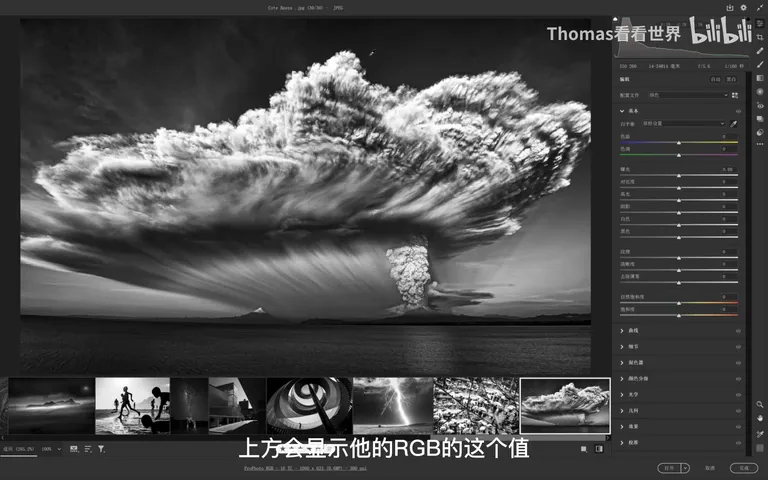
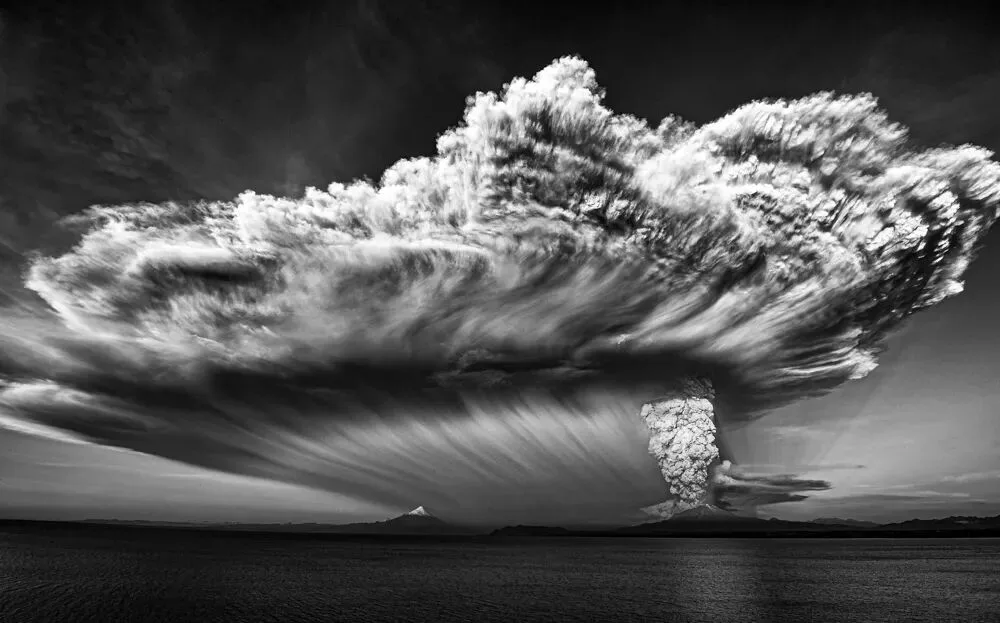
Take the erupting-volcano photograph at 0:56 in the video: black and white can do something color cannot — push contrast to extremes. In a color photo, darkening the blue sky this much would look thoroughly unnatural; a B&W image carries no color at all and is by nature an abstraction of the real world, so far more extreme, exaggerated tonal adjustments still read as credible to the eye (at 1:16 in the video).
Sampling with the eyedropper, the RGB readout appears above the histogram (at 1:37 in the video): the sky in this frame sits at only 19-20 — a very deep black — while the cloud jumps straight to 225, near pure white. The contrast is so wide that the cloud leaps out of both the sky behind it and the sea below at first glance.
02 The Thinking Behind the Settings
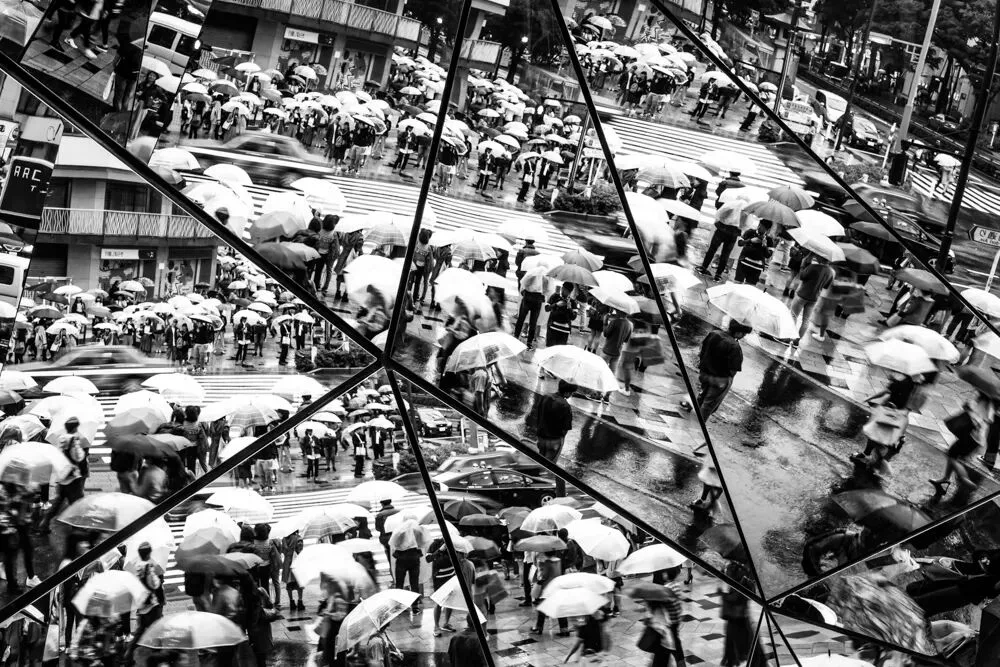
The rainy street scene at 2:02 in the video is full of lessons. Shot head-on at the intersection the scene would be unremarkable, but the photographer used a glass building nearby, slicing the scene into a multitude of reflective facets — and the spatial structure of the photograph instantly becomes fascinating (at 2:17 in the video).
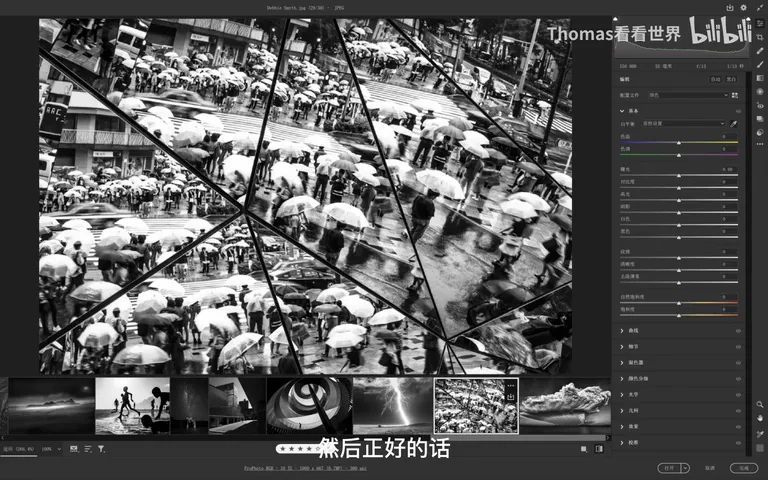
The settings are ISO 800, 35mm, F13, 1/13 s (at 2:30 in the video) — odd at first glance, but every number has a reason. Why ISO 800? Rainy days are dim. Why F13? The glass facets only appear to lie in one plane but are actually tilted, and an insufficient f-stop would leave some reflections mushy.
And why 1/13 s? Thomas reads it as a deliberate motion contrast (at 3:06 in the video): too long an exposure smears the crowds into one blur; at 1/100 s everything freezes sharp. Here the car is blurred while pedestrians are a mix of soft and crisp — that interplay of stillness and movement conjures the busy rainy-day atmosphere, all held in a high-contrast light-and-dark scheme.
03 Tonal Blocks and Separating the Subject
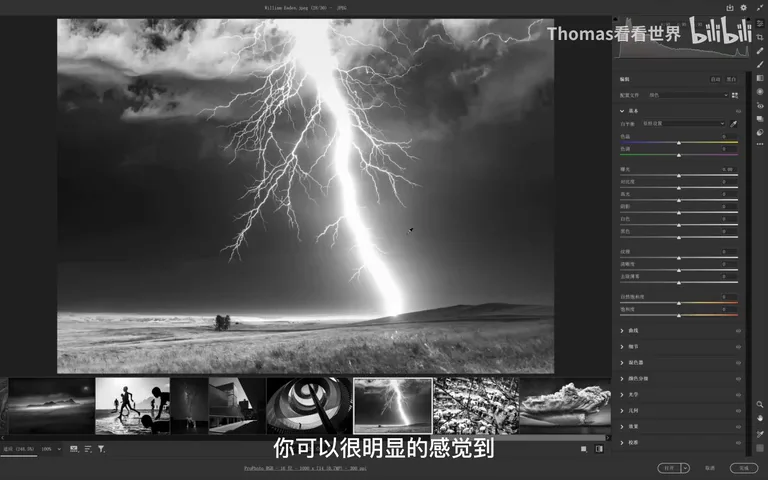
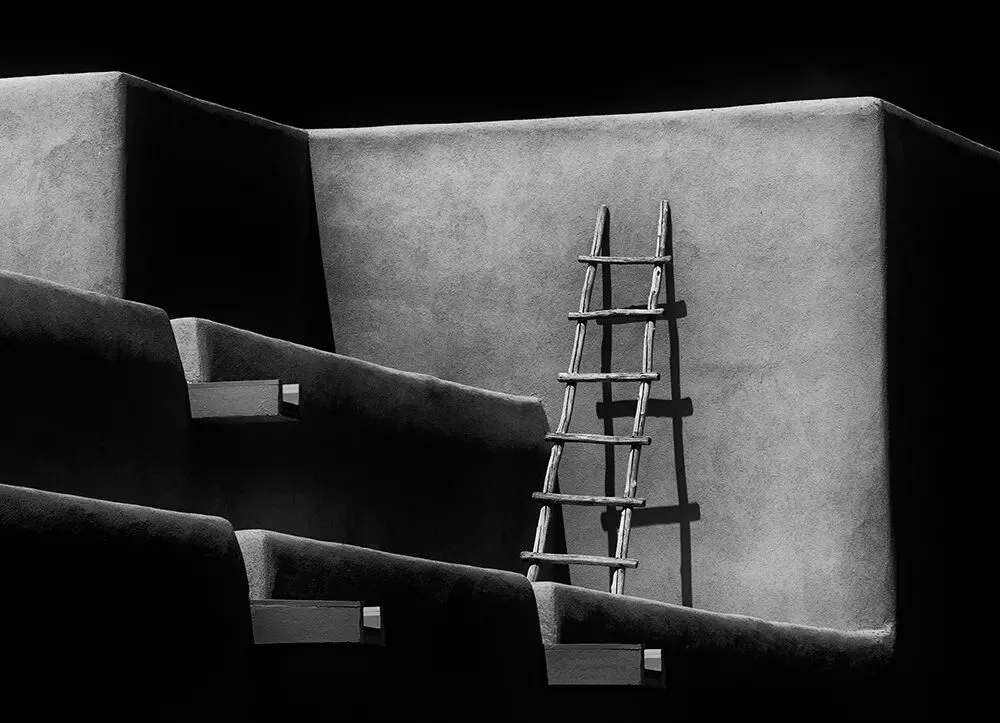
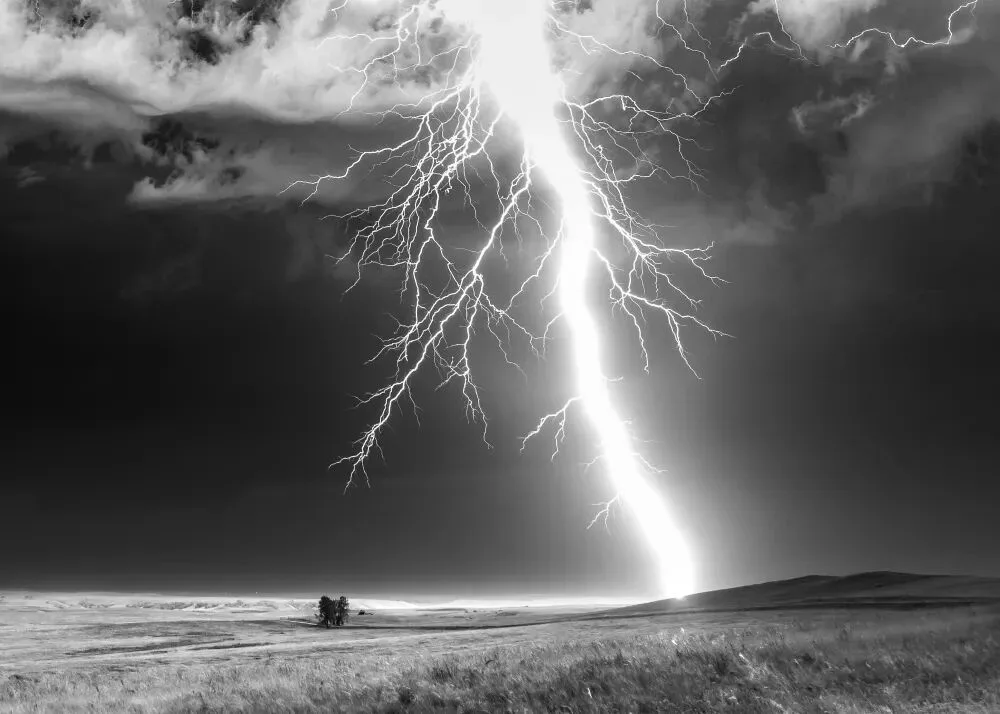
Shrink great black-and-white photos into thumbnails (at 3:51 in the video) and one trait leaps out: blacks, whites and grays stay clearly separated, each forming coherent blocks with clean boundaries. The lightning photograph at 4:13 in the video is the clearest case — the bolt itself sits near pure white at around 250, flanked by the graduated gray of the sky, light-gray cloud above, and the ground below holding together as one mass. The whole picture is essentially four or five large tonal blocks with unmistakable distribution of light and dark.
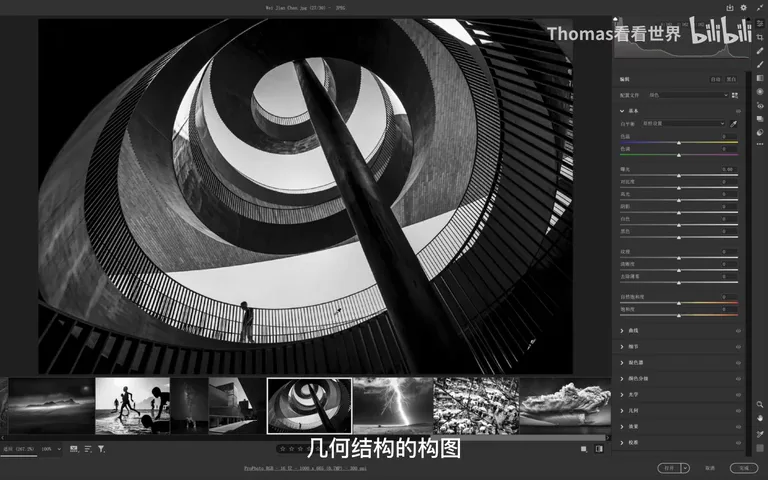
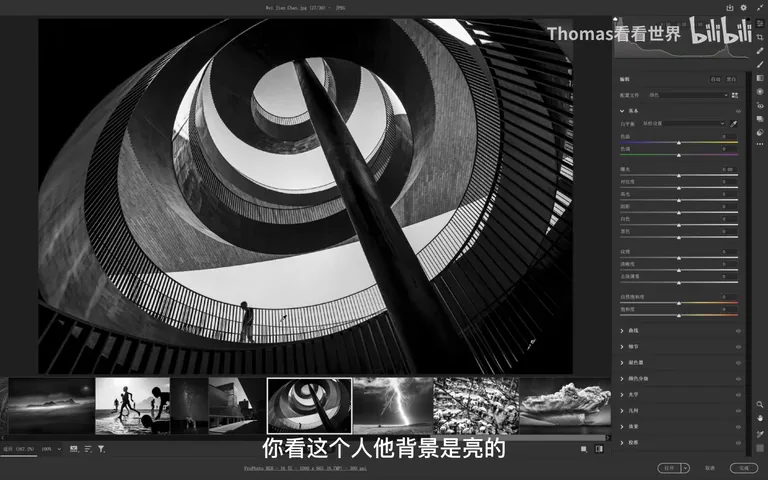
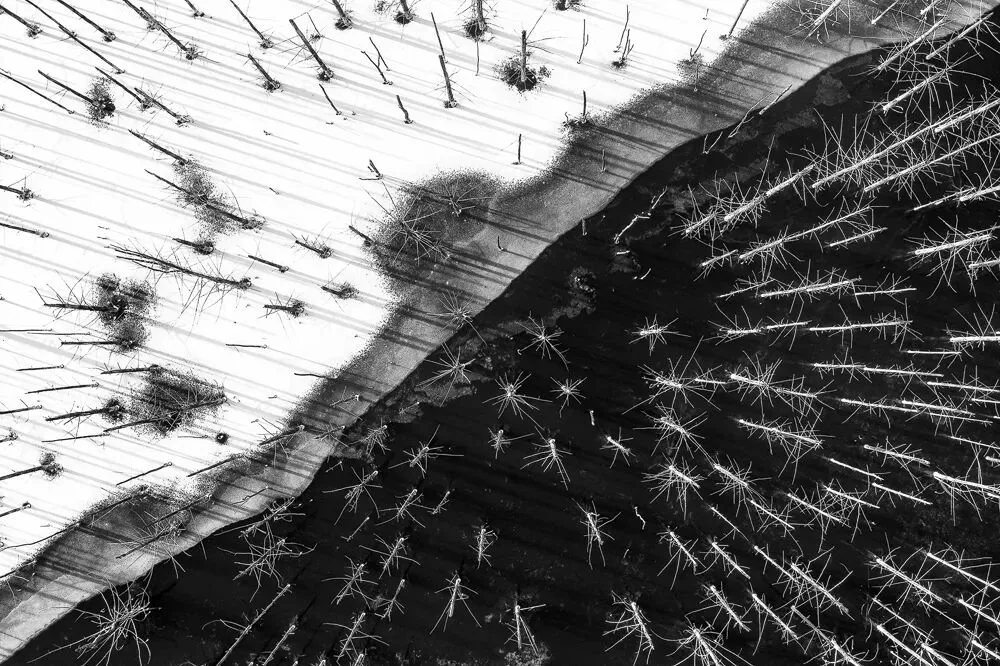
The work at 4:50 in the video builds on an excellent geometric composition: dark fields, bright fields and the transitional bands where they meet stack in sequence, light and dark alternating — deeply layered to the eye.
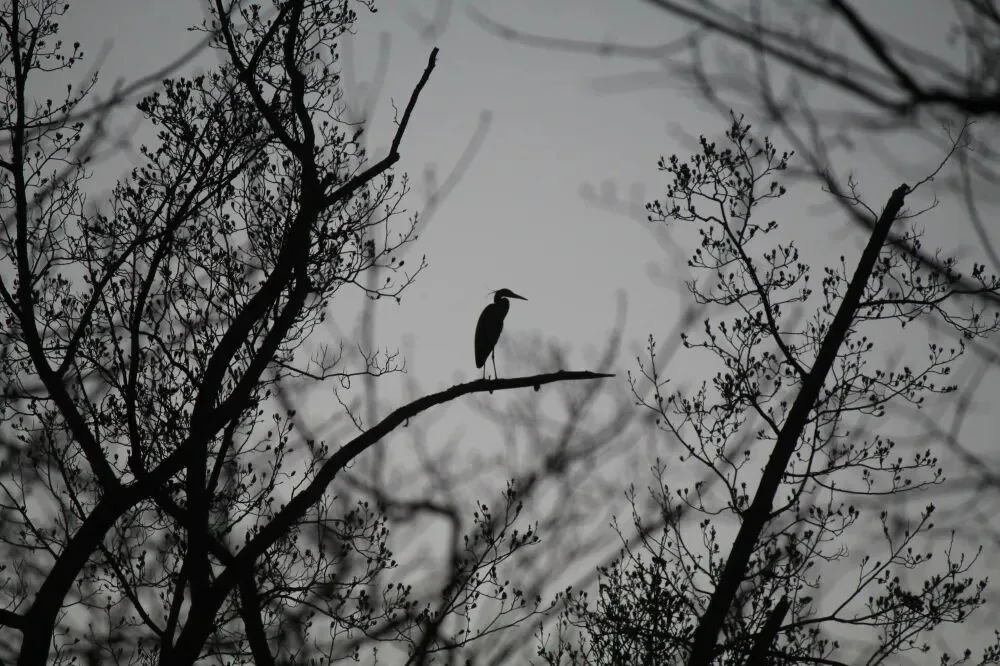
Separating the subject from its background is the key to layering in B&W (at 5:12 in the video): a figure against a bright background pops instantly; a black tree in front of a light backdrop stands out at once; a snow-capped summit glows precisely because the sky behind it is dark. At 5:50 in the video, a tree lit by a lamp reads 96 while its surround sits at 3 — separation carried to the extreme. The starry-night silhouette at 6:00 in the video runs on the same principle.
04 Shaping Tone in Post
Tonal shaping in post is essential to black and white — as true for the film darkroom as for digital (at 6:49 in the video) — and B&W's greatest advantage is that its brightness range can be even more exaggerated than color's. Shoot in sidelight so your subject has lit and shadowed faces; then in post press the whole frame into a low-key base and lift what you want to feature — that is how layering emerges (at 7:02 in the video).
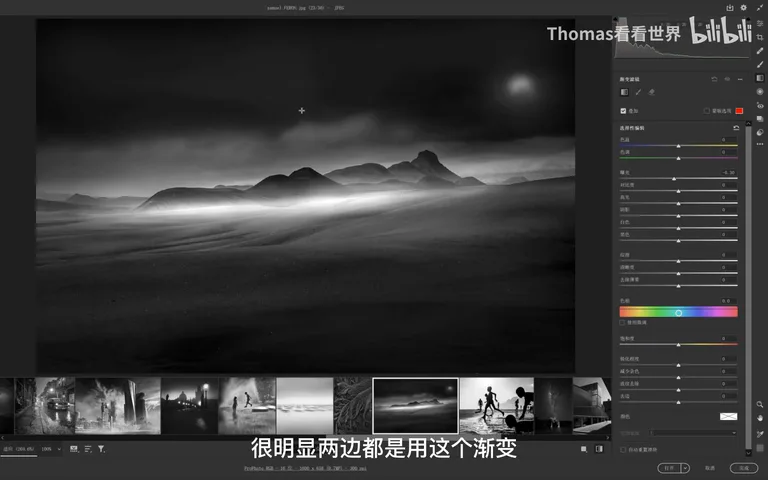
The inverse works too: keep the background globally bright — a light gray — and make the subject very dark; the gap between light and dark must be pulled wide (at 7:19 in the video). At 6:15 in the video Thomas demonstrates the mechanics on a low-key snow mountain: darken both sides with gradients or HSL, lift the bright center with a radial gradient, and nudge the area near the sun a touch brighter to make it sing — stressing that this is only a demonstration, since the original values were already the most pleasing. He has published many low-key mountain case studies before, worth searching out.
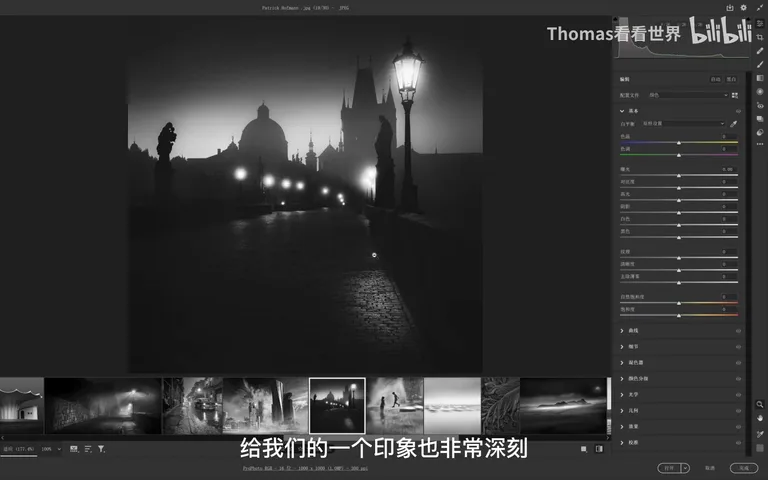
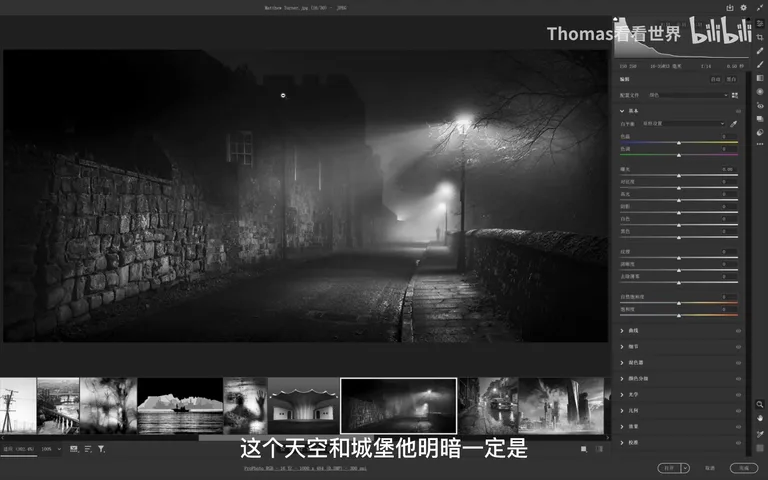
The Prague photograph at 7:39 in the video is a model of low-key layering: countless people have shot from that same spot, yet this frame is dark with genuine depth — the deepest blacks in the foreground architecture and lamps, mid-grays dotted with bright points, the lamps themselves the brightest element, and the deep gray behind reading lighter than the statue in front yet darker than the sky. The tonal block carving at the light-dark boundaries is unmistakable. The work at 9:24 in the video applies the same logic: sky and castle are both dim grays, but the castle sits darker than the sky — and that difference is the layering. This school of processing is known as luminosity architecture; Thomas has covered it in earlier tutorials.
05 Mood Rendering: Rain, Night and Fog
Black and white leans on fog and weather to set its scenes (at 8:20 in the video), and nothing pays off like a city in night rain. Why do faces carry light? Beyond the ambient light on site, post-processing deserves much of the credit (at 8:34 in the video). Keep the whole frame low-key, then selectively render and lift what matters — streetlamps, headlights, raindrops, the texture of a face — and the mood of the night materializes (at 8:52 in the video).
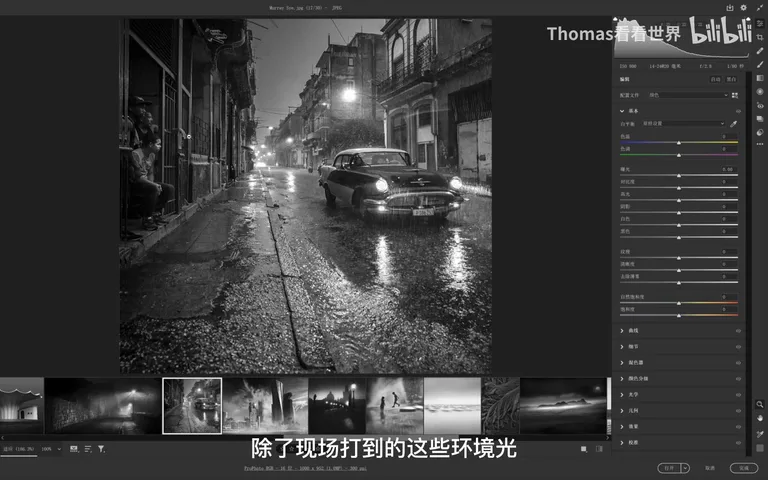
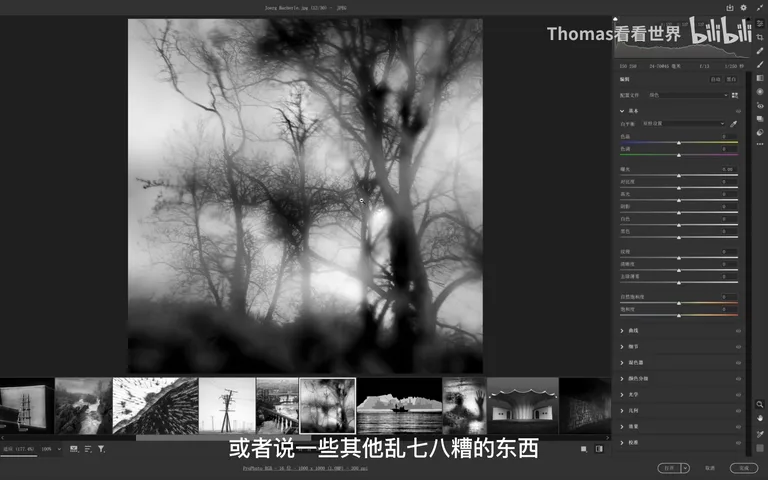
Go further and degrade the lens on purpose: a few water drops, or a dab of petroleum jelly smeared on the front element, softens the whole frame — shoot rain and fog through it and the mood is immediate (at 9:53 in the video). Fog, rainy nights, grain, bubbles on glass — haze in all its forms is prime material for emotional rendering in B&W.
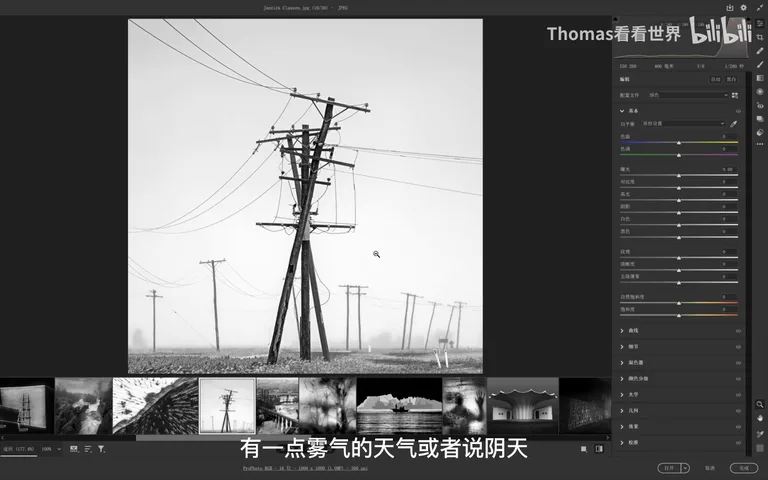
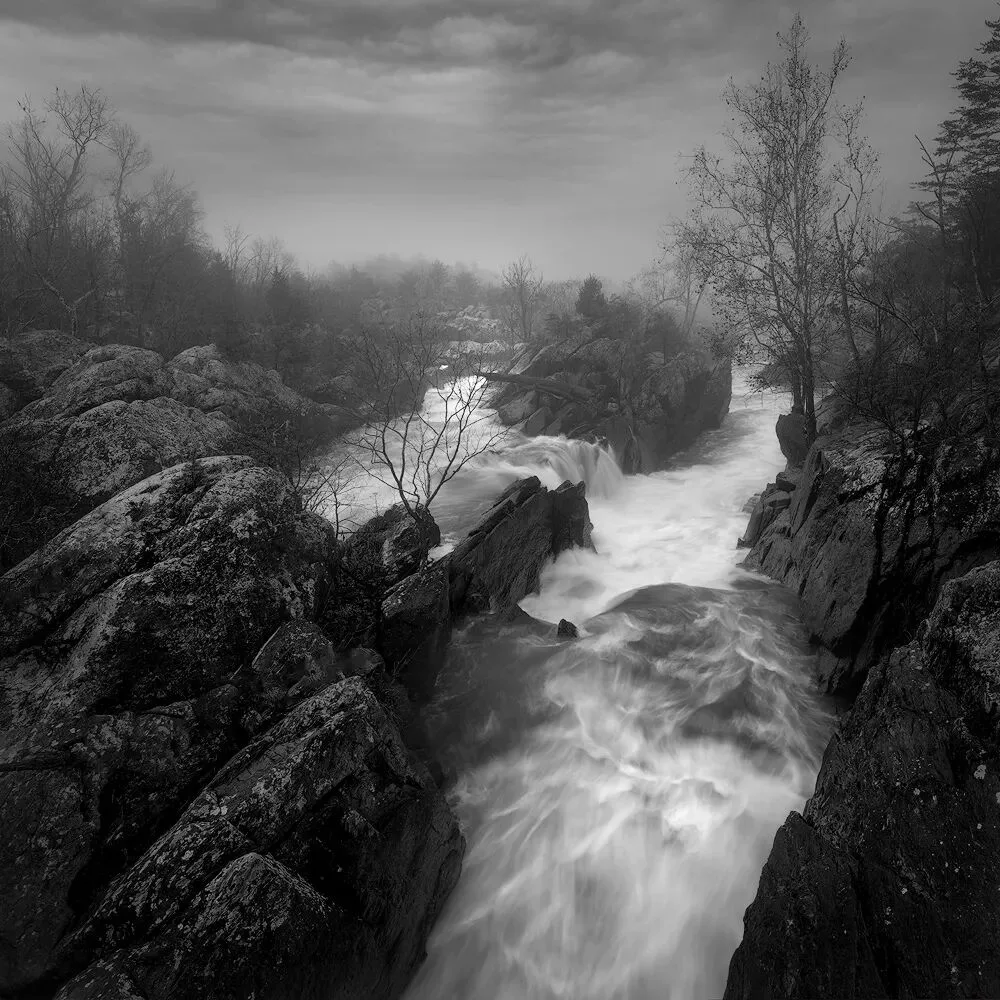
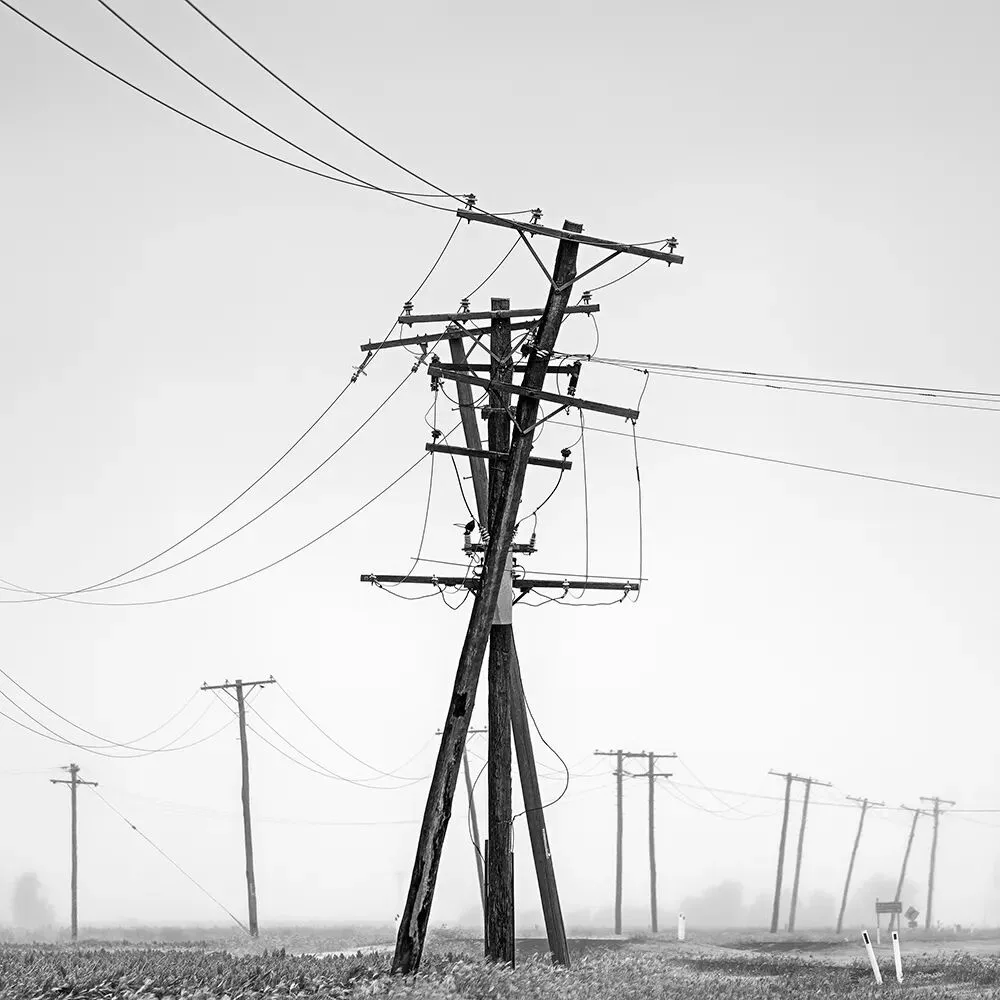
The foggy power-line photograph at 10:07 in the video is above all a lesson in observation: from any other angle the scene would be utterly ordinary, but the photographer spotted how three poles align — one leaning right, one upright — chose a misty overcast day, and built a dark-to-bright progression in post: the foreground is always blackest, the farther poles fade into hazy mid-gray, the distant trees a faint light gray, the sky the brightest gray of all, with the brightest element in frame reserved for contrast (at 10:44 in the video). The rushing-water frame at 7:32 in the video follows the same spirit, folding motion blur and depth of field into one very creative image.
When browsing award-winning work, Thomas's advice is to always analyze the composition, ask why the photographer chose rain or fog, and study the technique (at 11:06 in the video). When a file keeps its EXIF, interrogate it: why ISO 800, why F13, why 1/13 s. Think hard, uncover the principle behind each decision and the contrast work done in post — that is what actually improves your own photographs.
1. Black and white is an abstraction of reality — its brightness range may exceed color's, and high contrast is its sharpest weapon. 2. When a great photo keeps its EXIF, interrogate every value — ISO, aperture, shutter — because the settings hide the shooting strategy. 3. Judge B&W work at thumbnail size: blacks, whites and grays as distinct blocks with clean borders, subjects separated from backgrounds by tonal gap. 4. In post, set the global key first (low-key or bright gray), lift the subject, then use fog, rain, night and a smeared lens to render mood.
HD video:
https://www.bilibili.com/video/BV1Kv411T7Dw/
2020 Monochrome Awards Selected Works
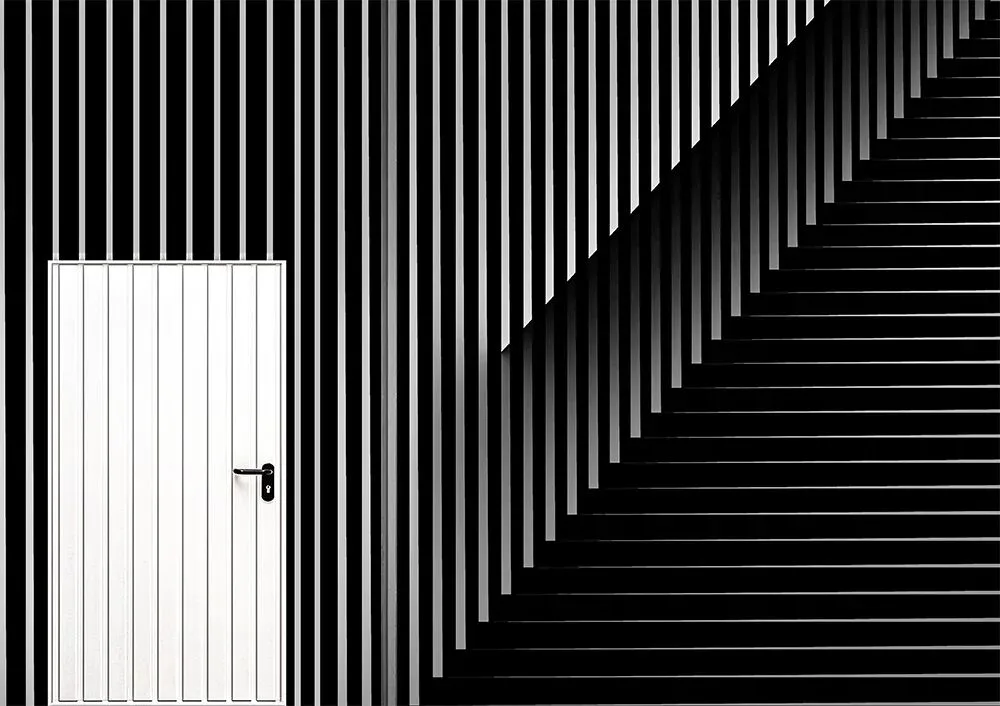
Ahmad Kaddourah
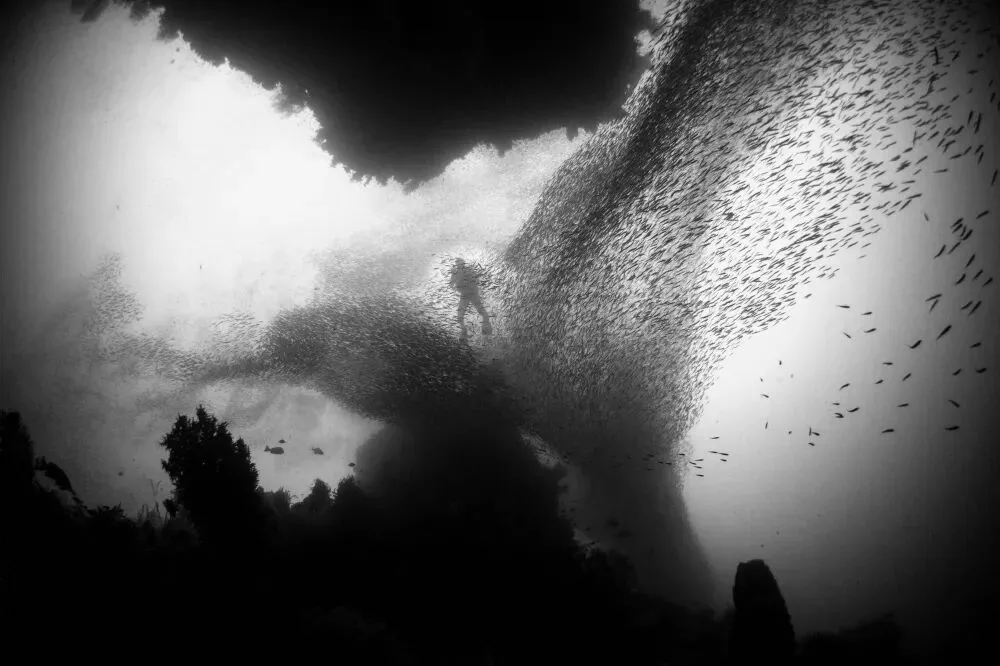
Alex Rose
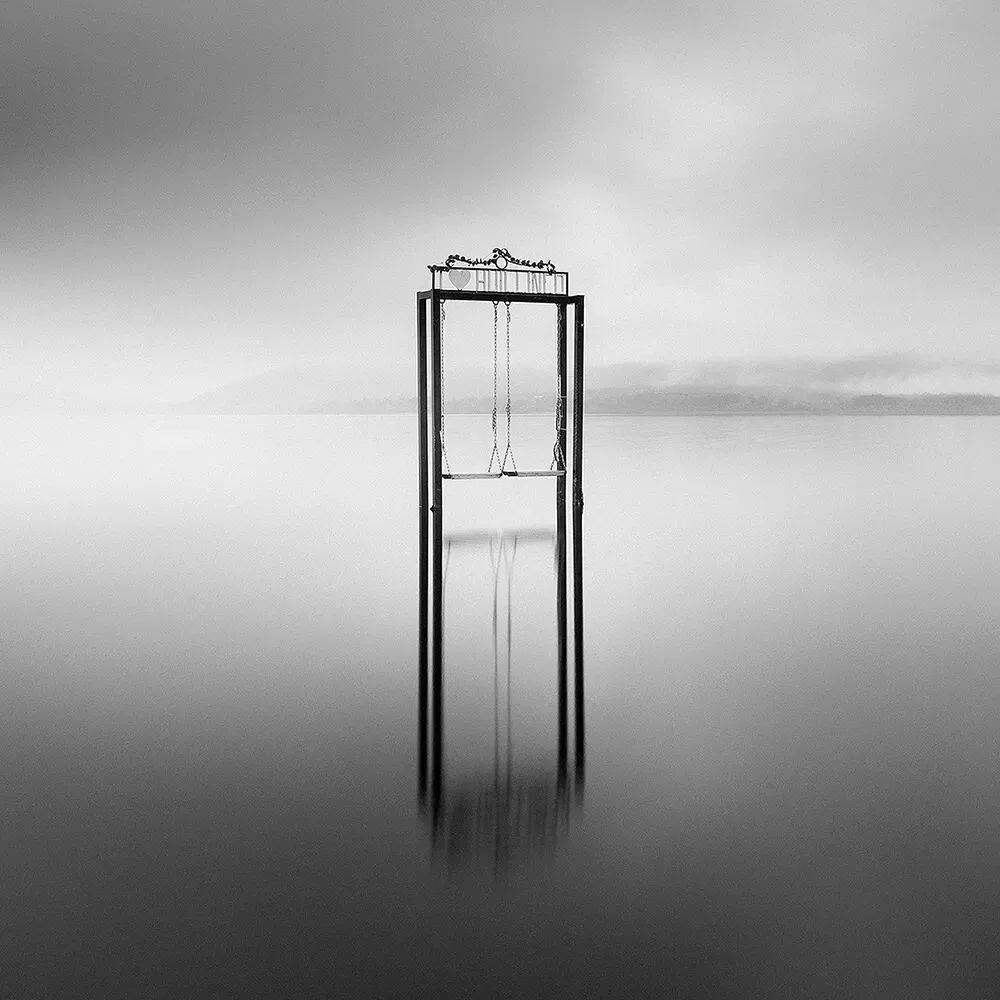
Benjamin Briones Grandi
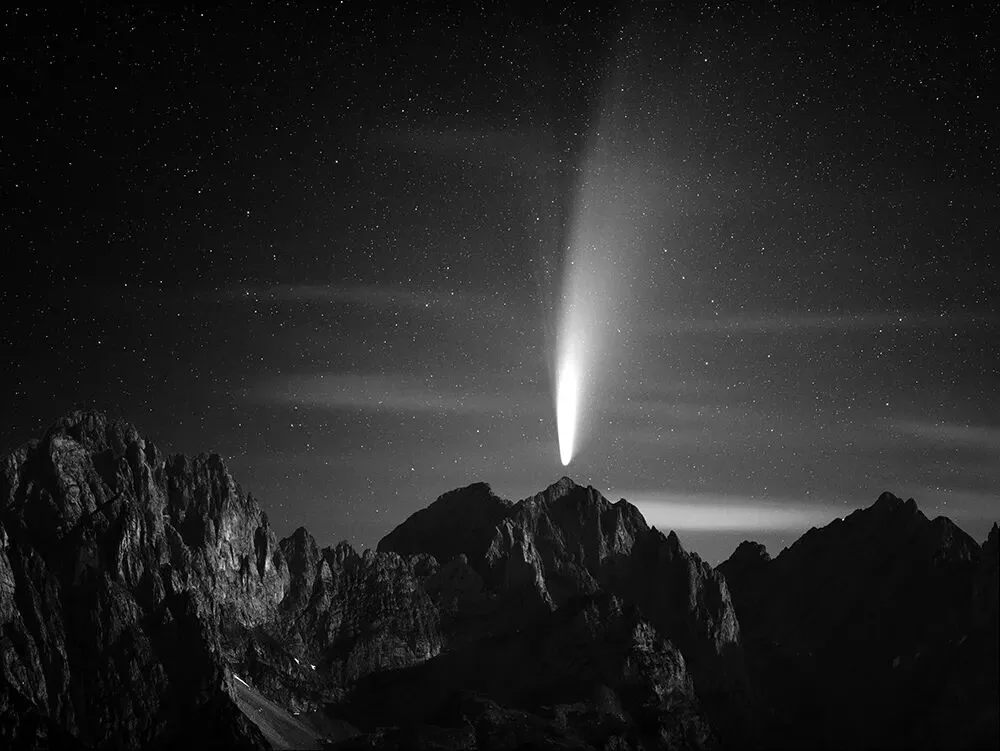
Bernd Willinger
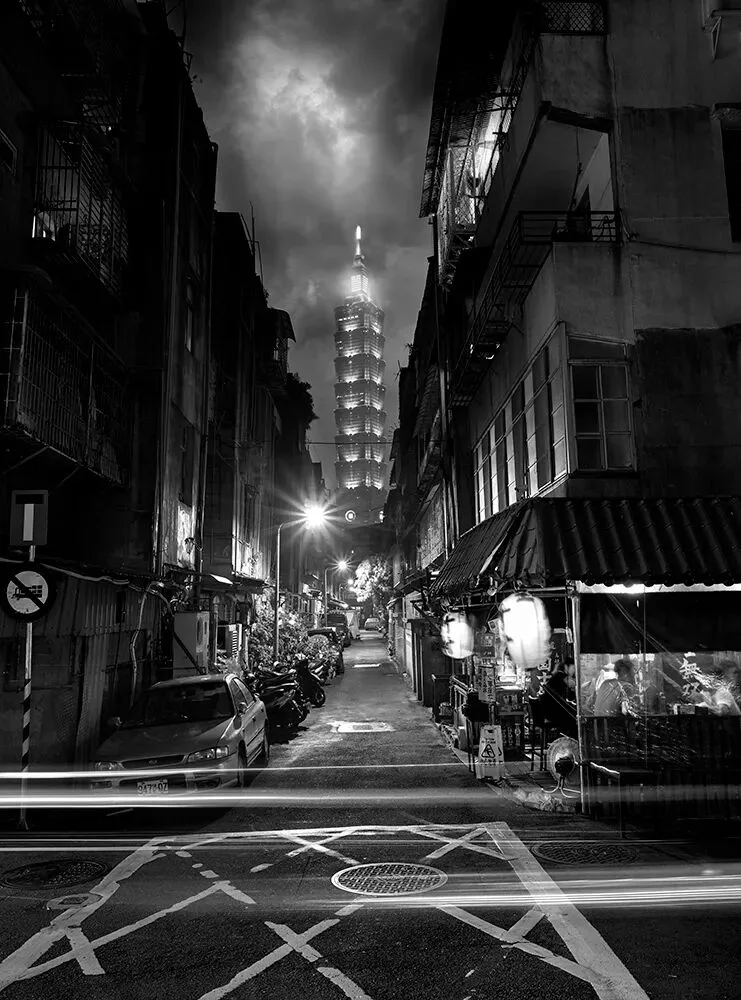
Cheyne Walls
Cote Baeza
CRAIG SLAYBAUGH
David Douglas
Debbie Smyth
G.B. Smith
Gheorghe Popa
Jannick Clausen
Joe Szurszewski
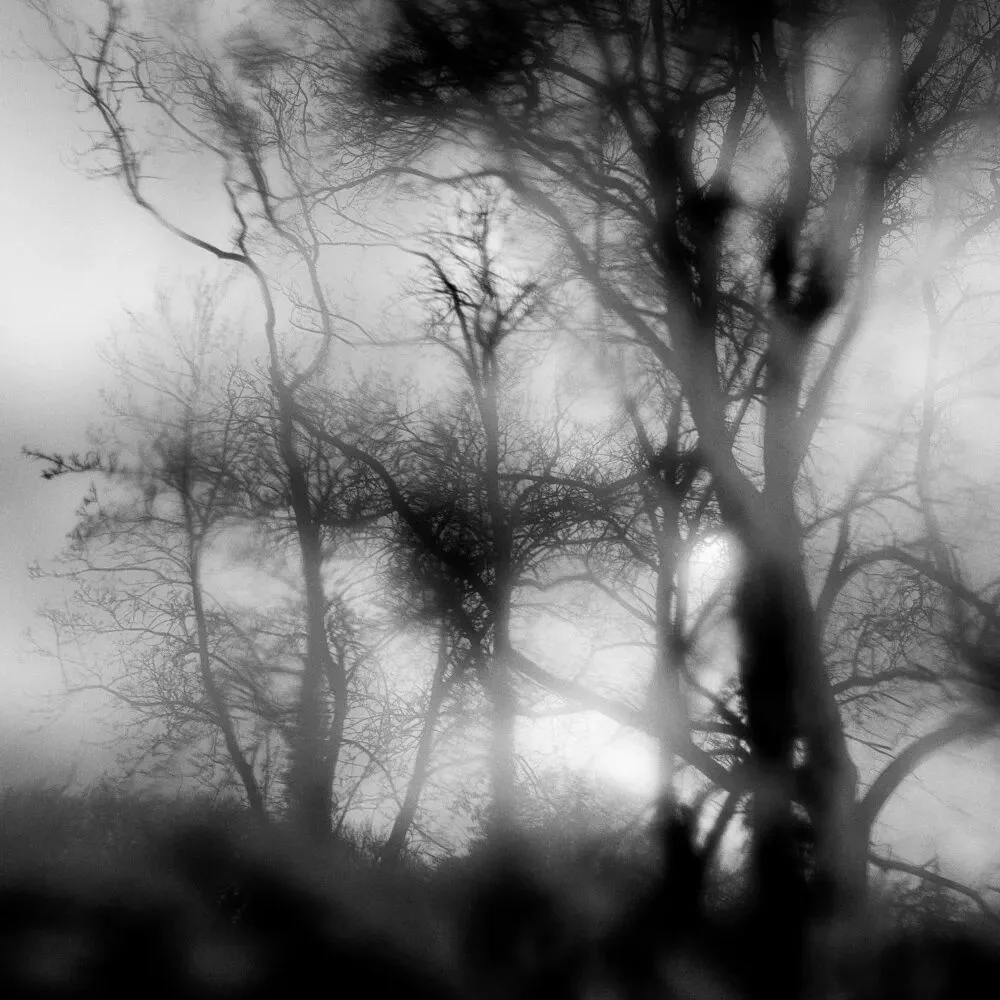
Joerg Bacherle
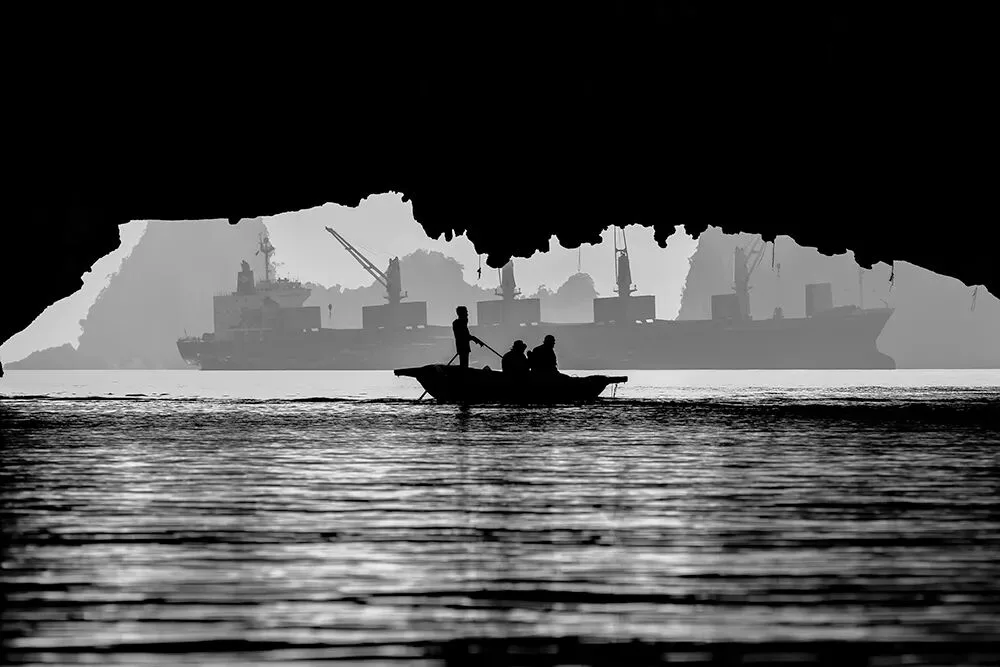
Mark Beyermann
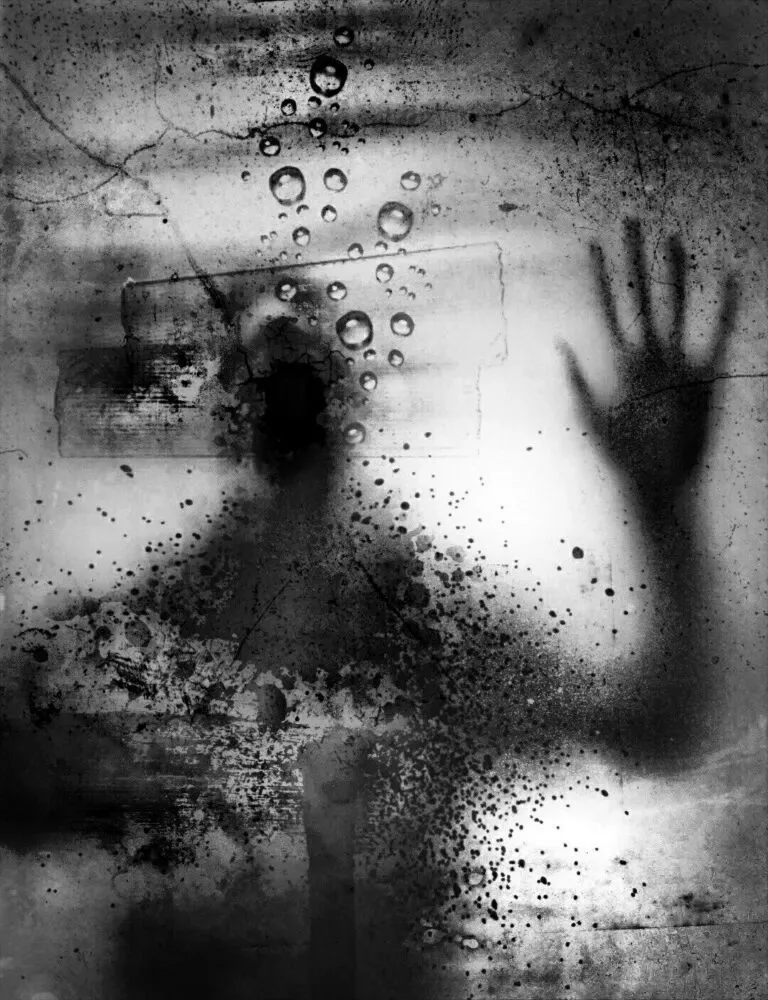
Massimiliano Balo
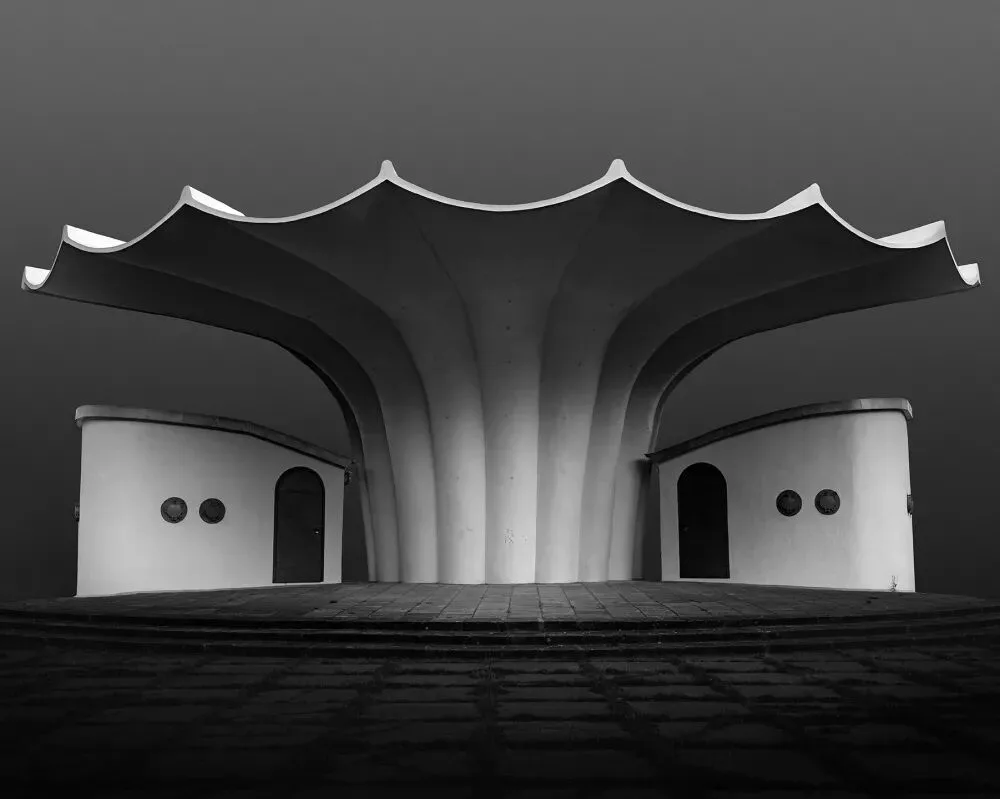
Mathias Brych
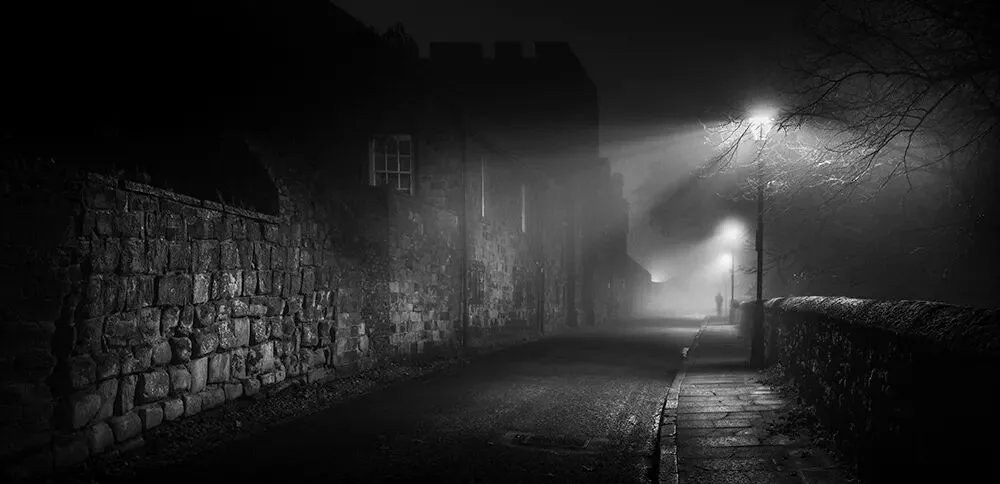
Matthew Turner
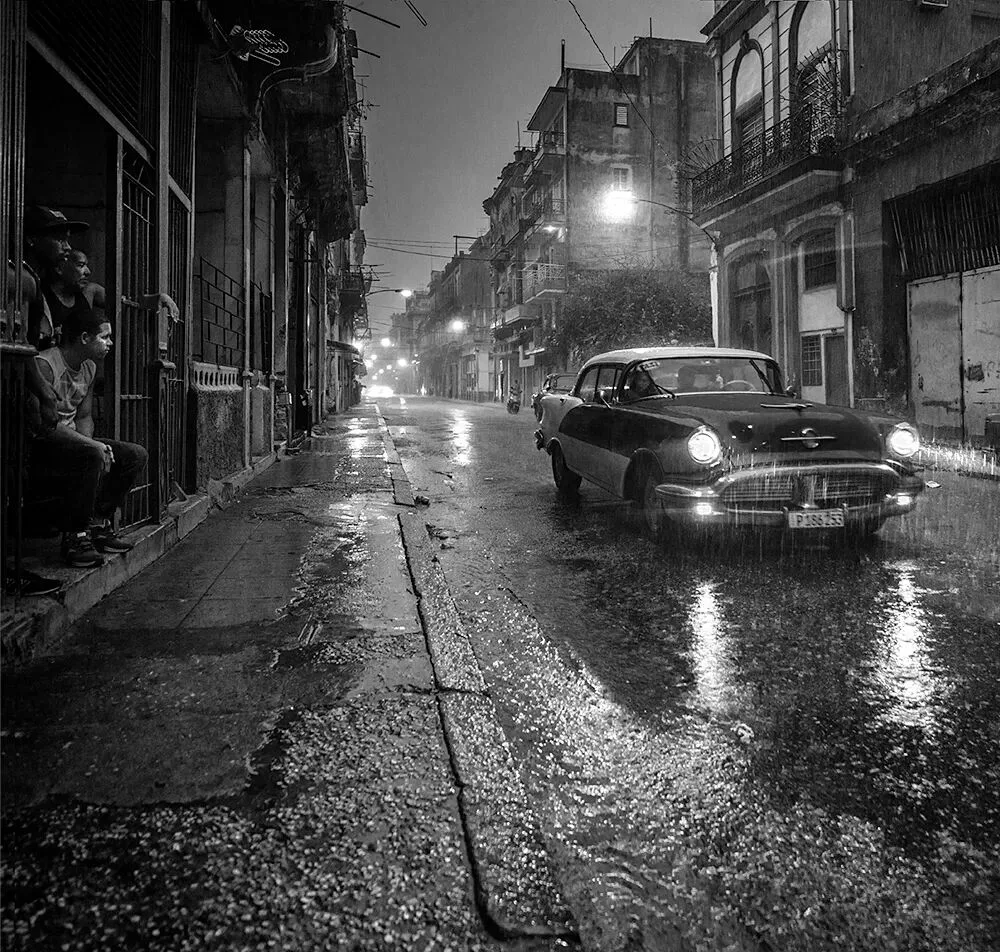
Murray Sye
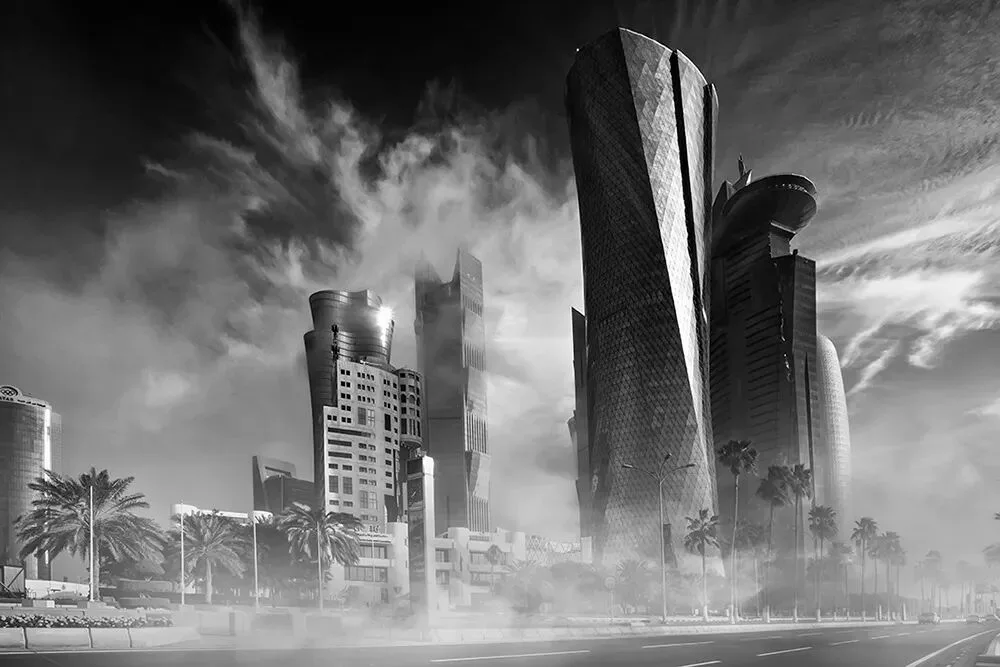
Oscar Rialubin
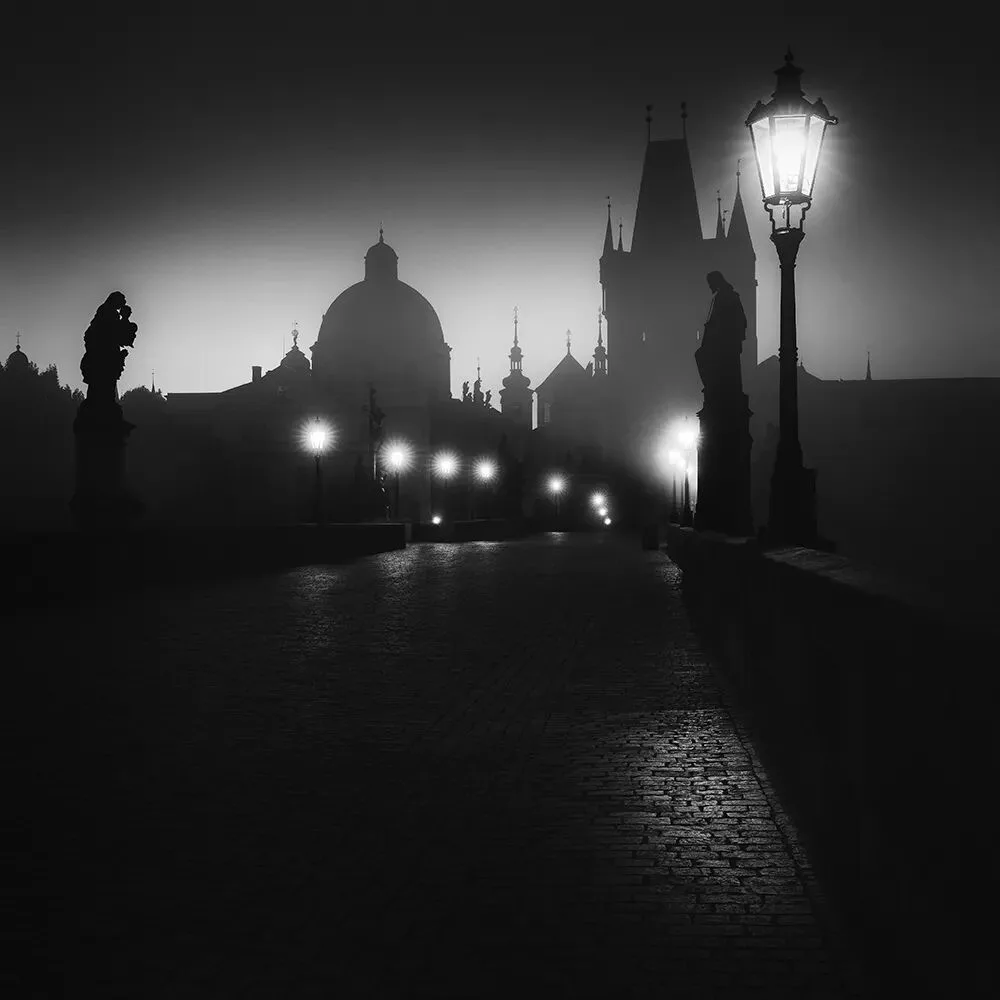
Patrick Hofmann
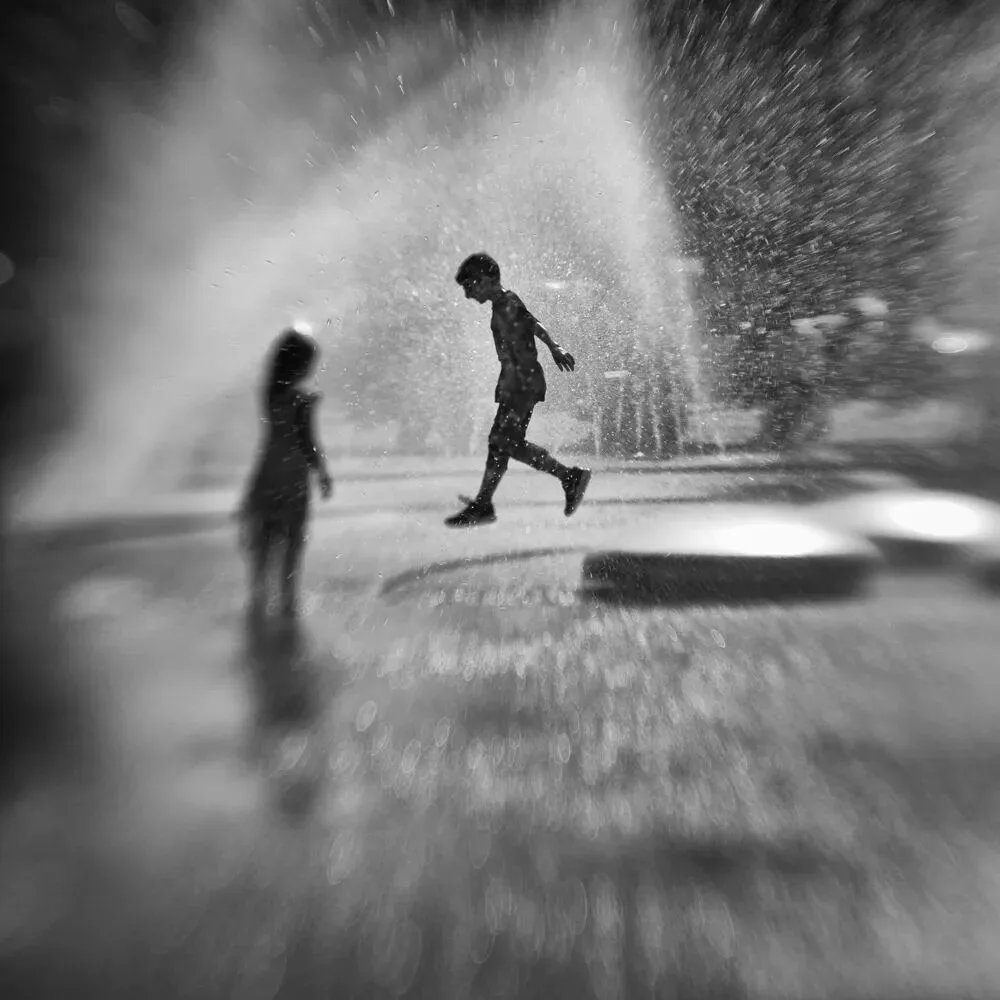
Peter Wingerter
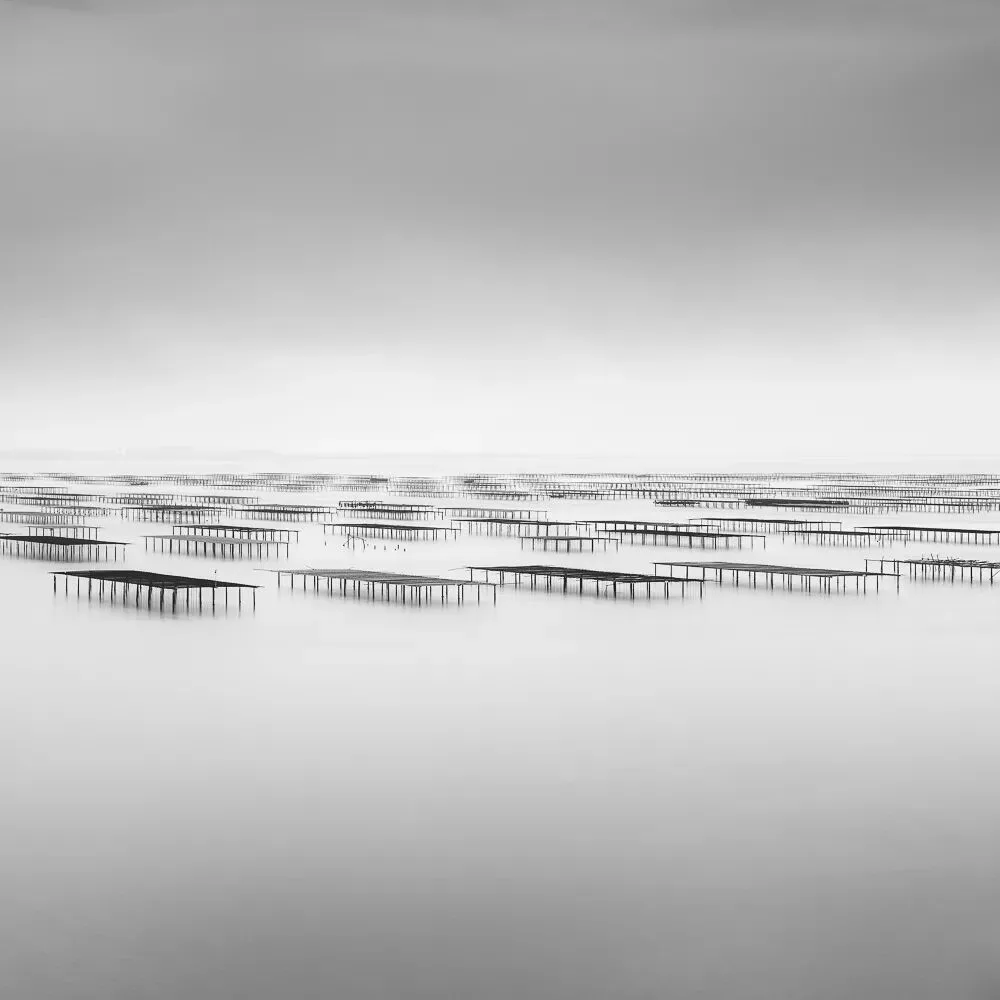
Robert Bolton
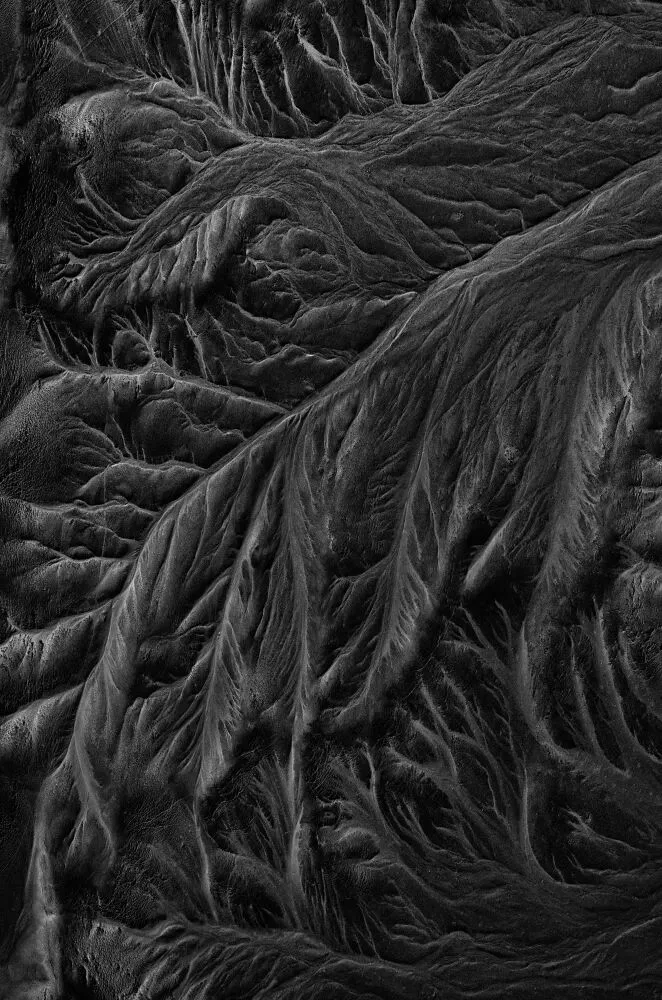
Roland Blum
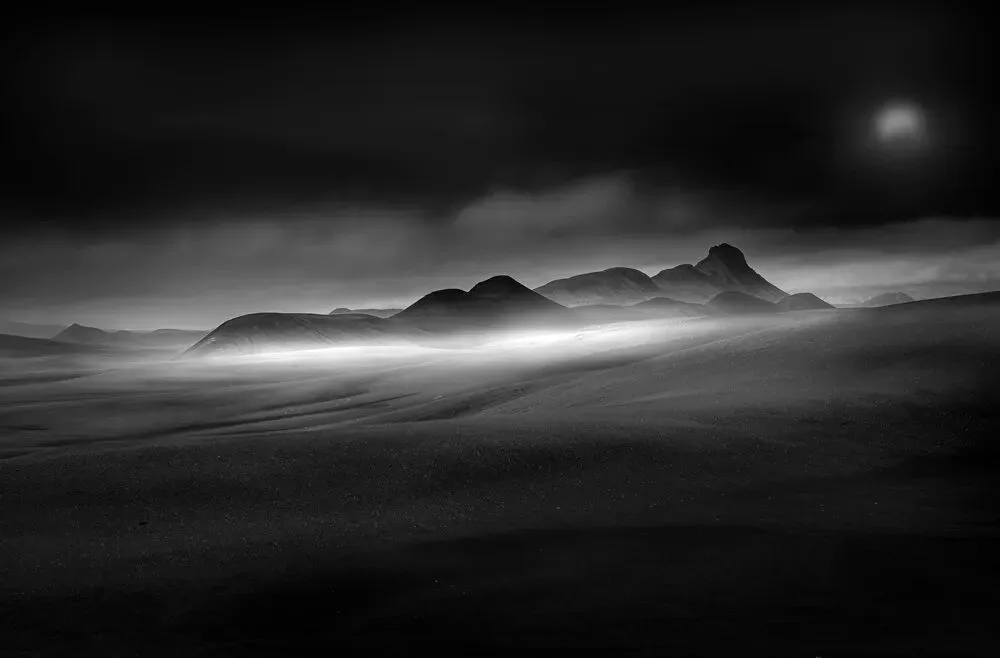
Samuel FERON
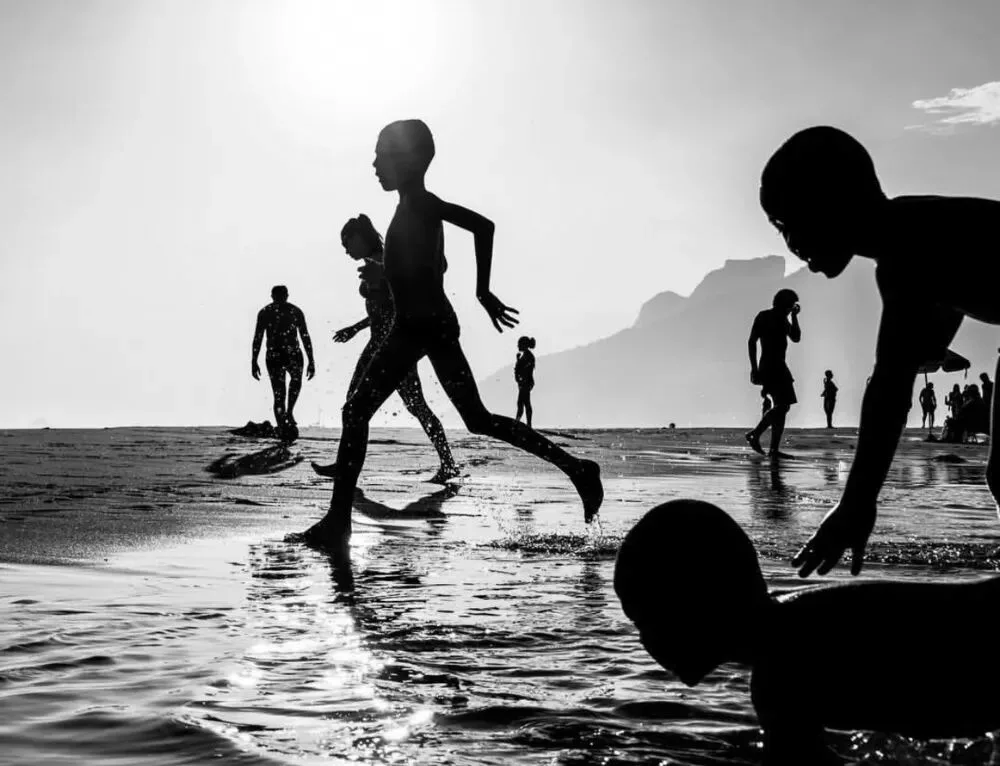
Sandra Cattaneo Adorno
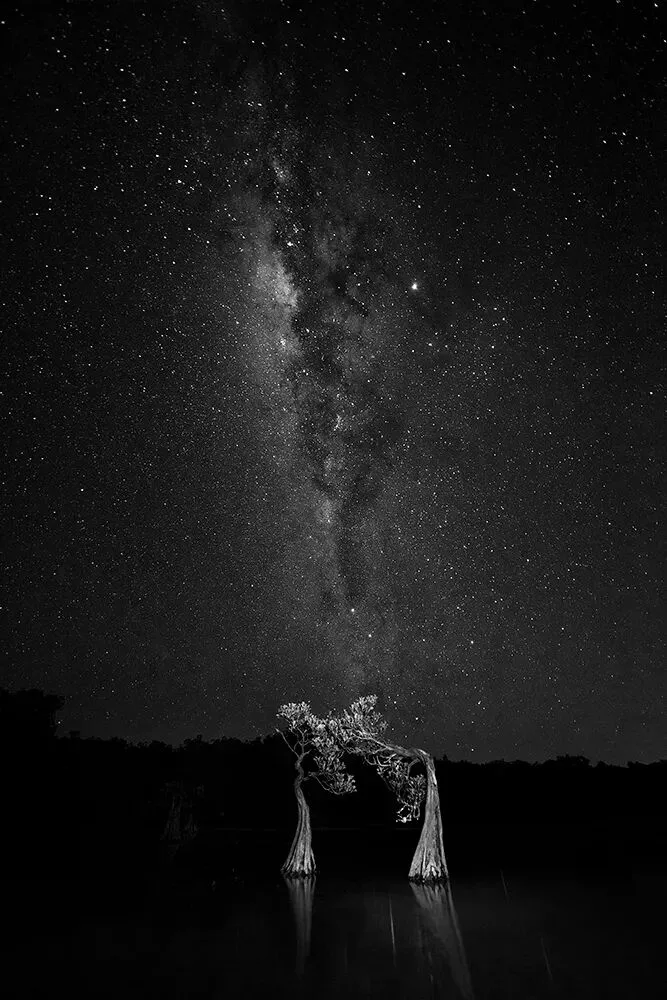
Vincent Lim
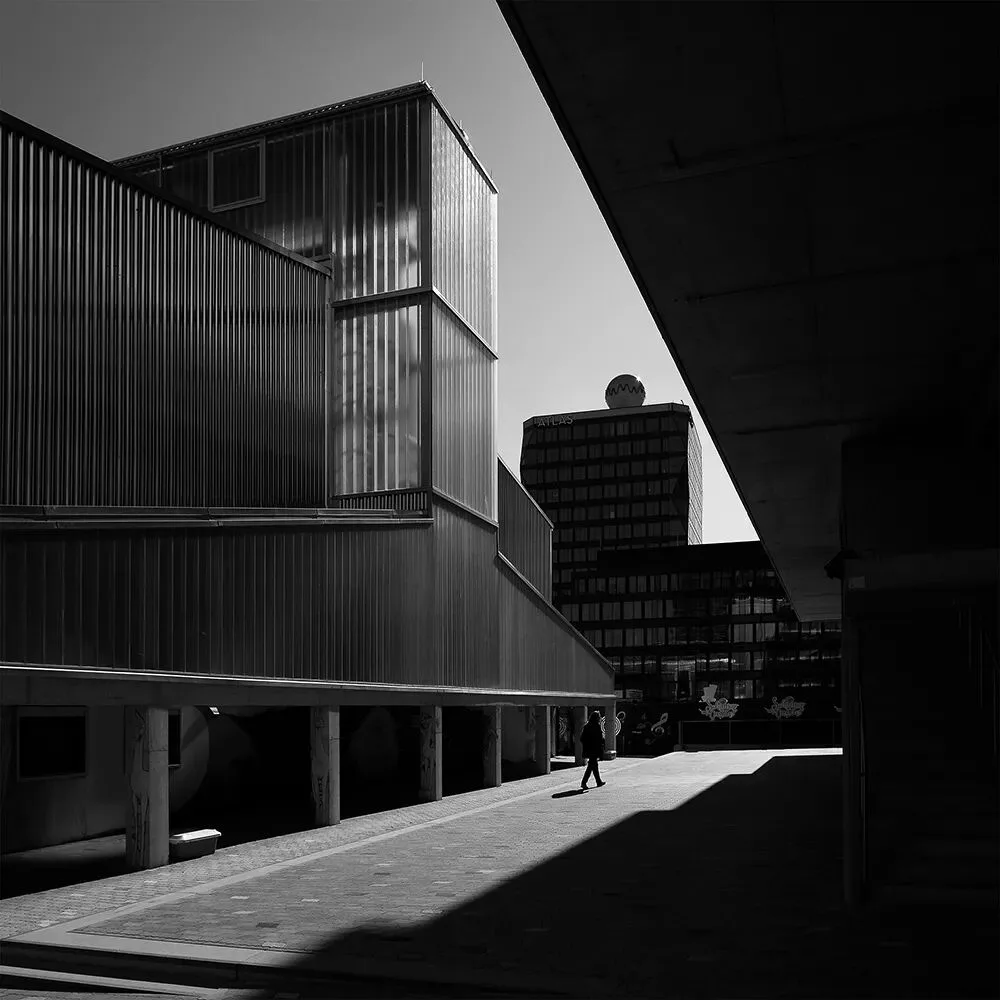
Tilo Schügner
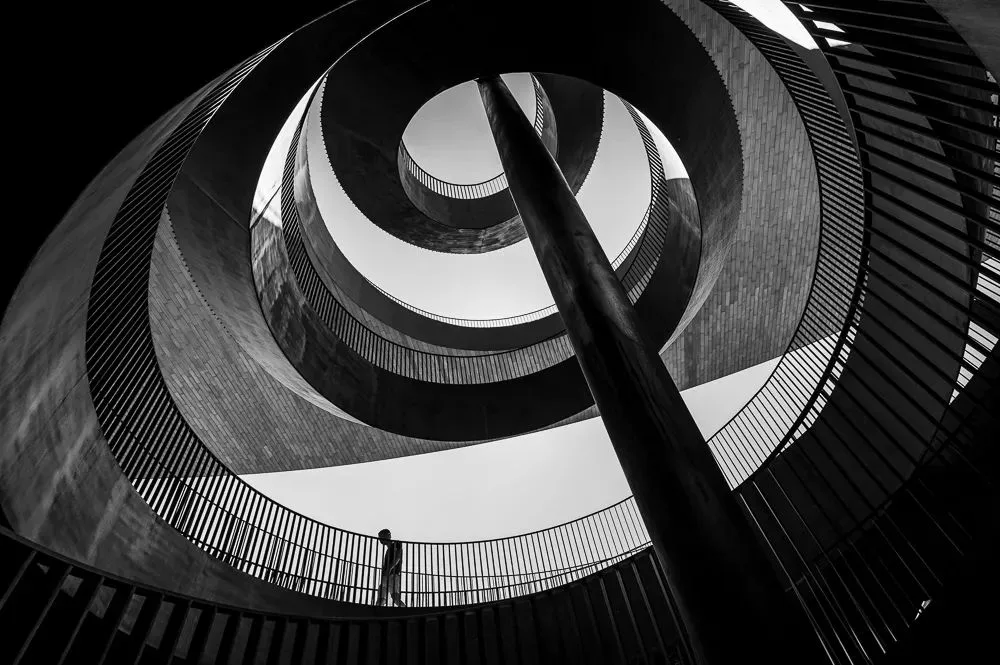
Wei Jian Chan
William Eades
Everyone is welcome to post videos and photos on Kuaishou, Mepai, and Weibo platforms to join the #Star Cluster Project# photography contest~