Photography Tutorial · 2017-02-05
2016: My Most Unforgettable Photo
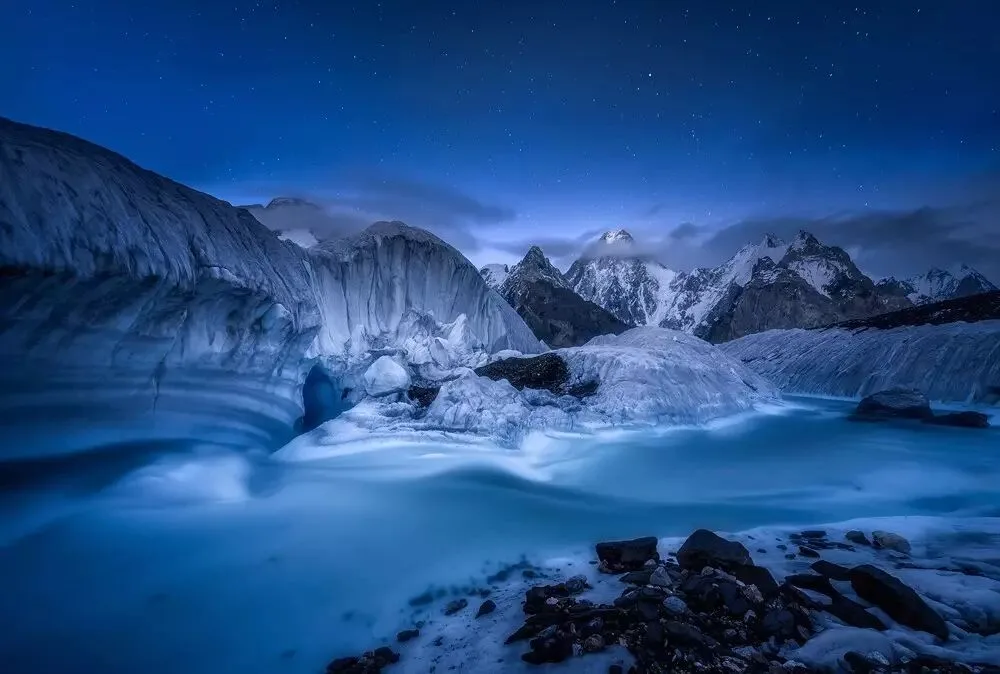
"Dream of the Ice River" (《冰河之梦》)
Shot beside a glacial river deep in the Karakoram range, at the junction of Pakistan and China's Xinjiang. The foreground ice river and background starry sky were shot separately. The foreground was shot at 7:23 p.m. after sunset, at ISO 200, f/11, with a 116-second exposure. Shooting the starry-sky foreground before total darkness ensures a high-quality, low-noise landscape. An ND1000 neutral density filter was used to completely fog the water details.
The starry sky was shot at 8:17 p.m. after it was completely dark, at ISO 800, f/5.6, with a 30-second exposure. In post, luminosity masks combined with brushes were used to blend the two exposures.
The finished photo is only the final sense of achievement. More important are the unforgettable experiences and sights along the road of constant exploration.
Below are the shooting story and behind-the-scenes notes for this image:
After two bumpy days, my 5 teammates and I drove from Islamabad to Skardu along the China-aided Karakoram Highway. This China-Pakistan friendship road is stunning — in many places, precipitous cliffs on one side and rushing rivers on the other. Landslides and rockfalls are severe among the mountains; more than 600 people lost their lives during the road's construction. Our respects to them!
Of course, along the way we also personally experienced the enthusiasm of our "Iron Brothers" (Pakistanis) toward Chinese people. Warm greetings and hospitality from all kinds of Pakistani people, and even the treatment of being escorted in turns by armed police — they even followed us to the restroom.
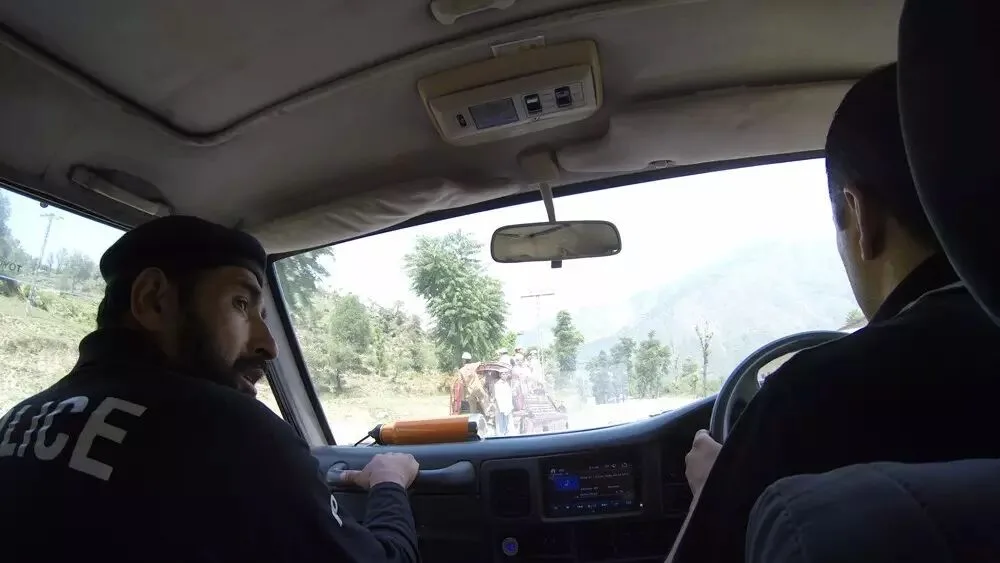
After leaving the Karakoram Highway, there was still a long and dangerous mountain road.
GoPro footage, the road is super narrow! From the car you can see the valley floor hundreds of meters below at a glance — everyone can imagine the feeling of sitting there...
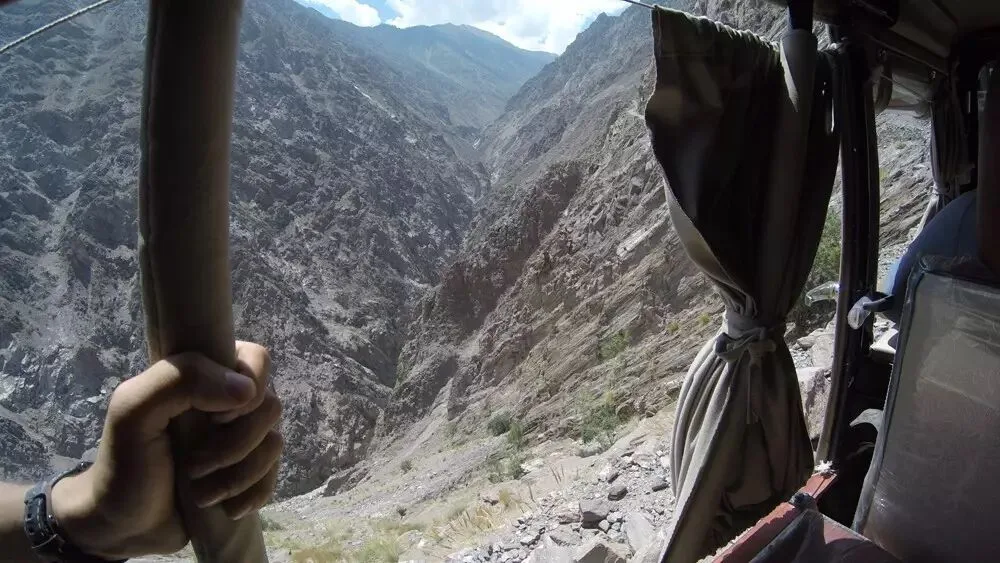
The driver played a pumping Pakistani version of "The Most Dazzling Ethnic Style" while driving — it was really exciting, right?! (⊙o⊙)!!!
Although the mountain road looks terrifying, the car drove very slowly, so it was actually less dangerous than people imagine. No major accidents have occurred here, and the accident rate is even lower than on a smooth highway.
On this trip, we met Zhang Liang's team, who had come to climb K2 and Gasherbrum I. Zhang Liang has already completed 12 8,000-meter climbs and is now the most promising candidate to complete the incredible 14+7+2 challenge (climbing all 14 8,000-meter peaks + reaching the highest summits of all 7 continents + trekking to both the North and South Poles).
The soldier uncle who escorted us on the trek, carrying the group's lunch tomatoes...
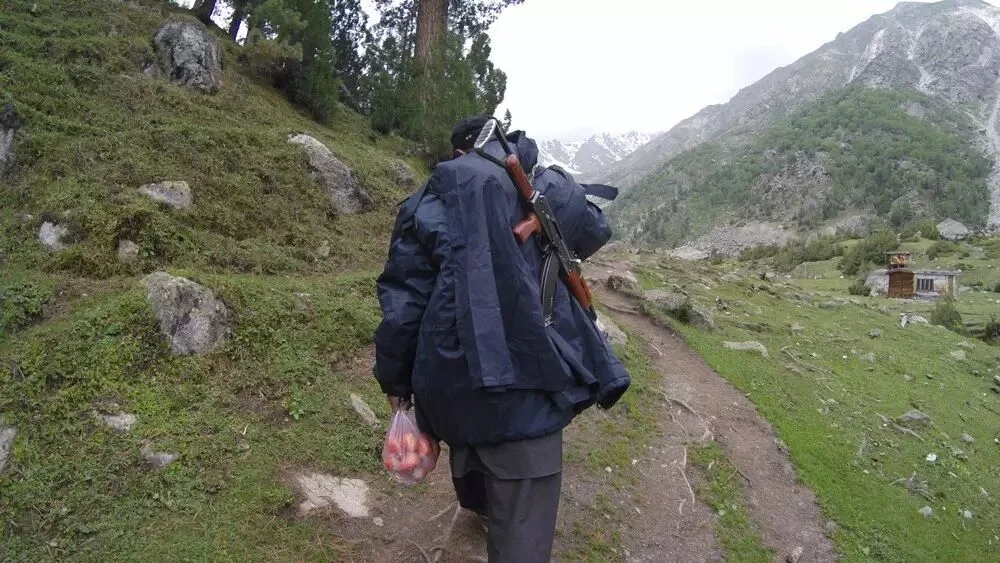
The trek started in the valley, where the weather was hot and vegetation sparse.
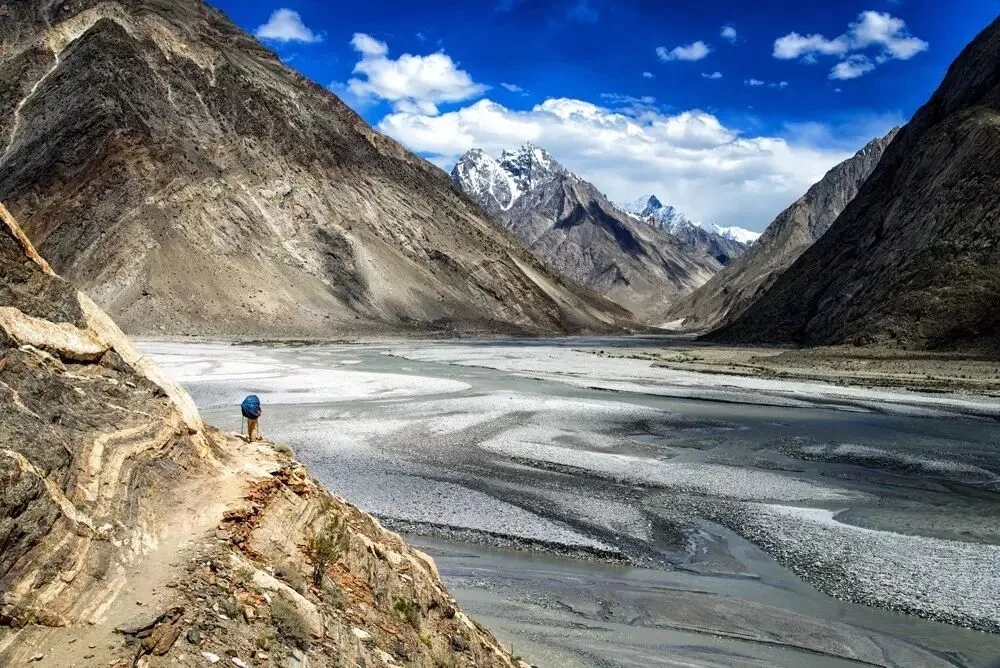
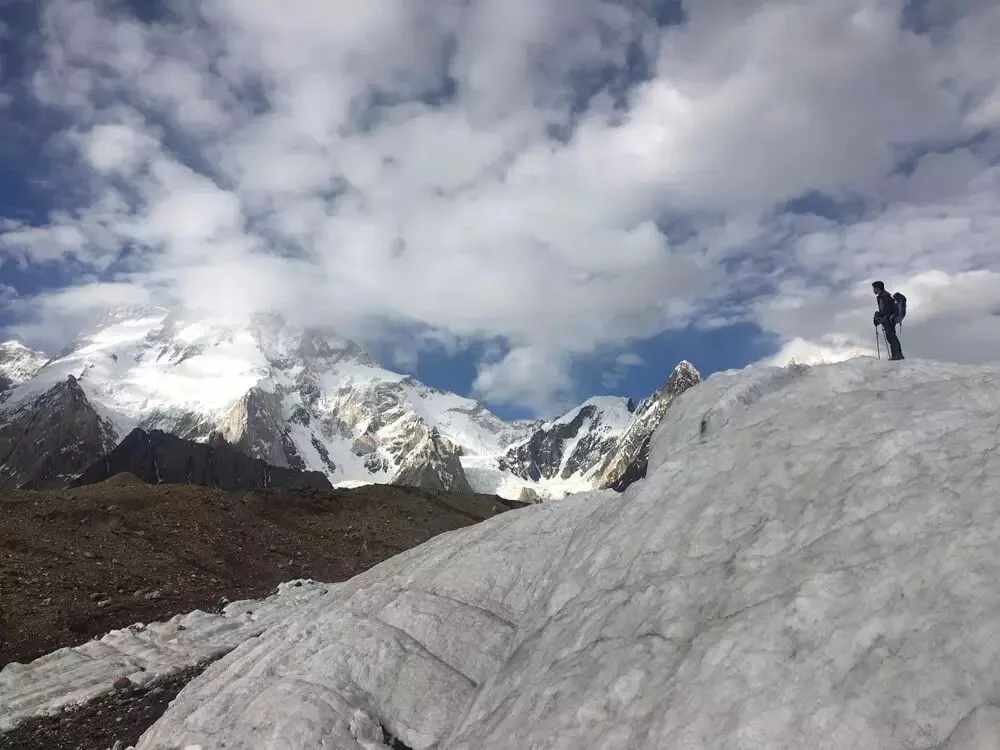
Later we came alongside the glacier, and the scenery was spectacular. Ice river, ice river — it truly winds down like a river.
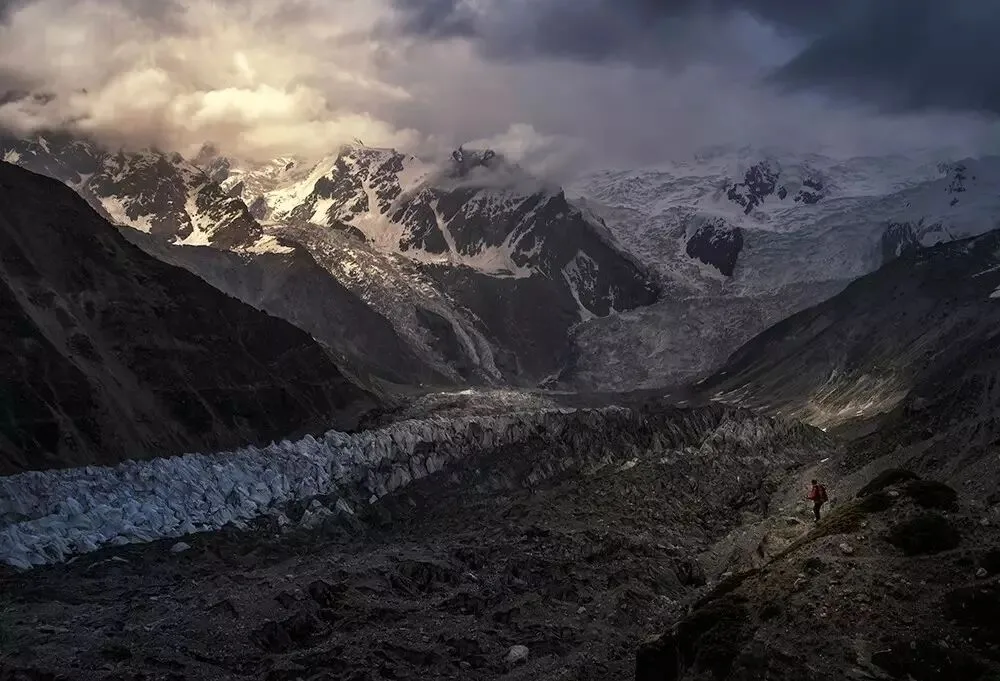
Later we walked directly on the glacier!
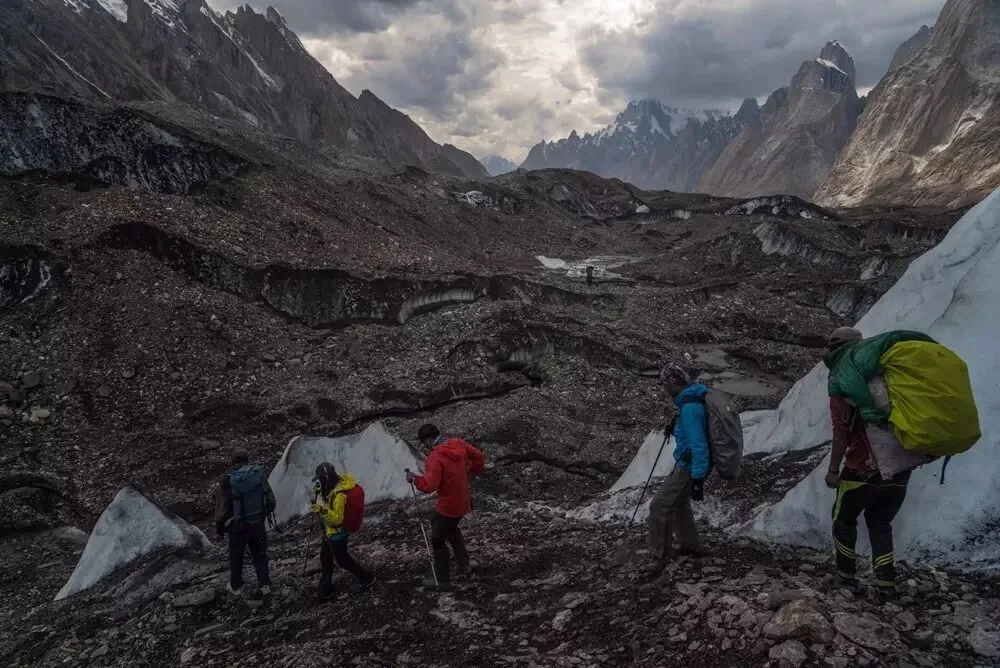
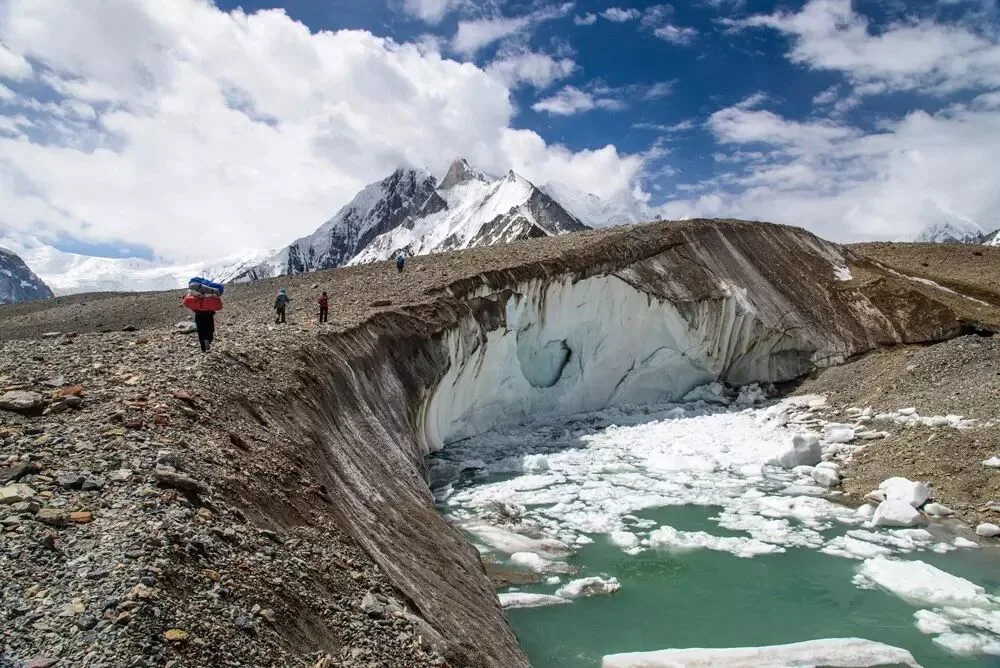
Most of the glacier is covered with yellow-gray rubble, with only small portions revealing its natural white-with-a-hint-of-blue appearance.
Although the mountain road looks perilous, this is an exceptionally busy route. Every year from May to September, large numbers of foreign climbers and trekkers enter this mountain region, bringing brief prosperity to this beautiful yet barren land. Pictured: a pack-horse team shuttling supplies along the road.
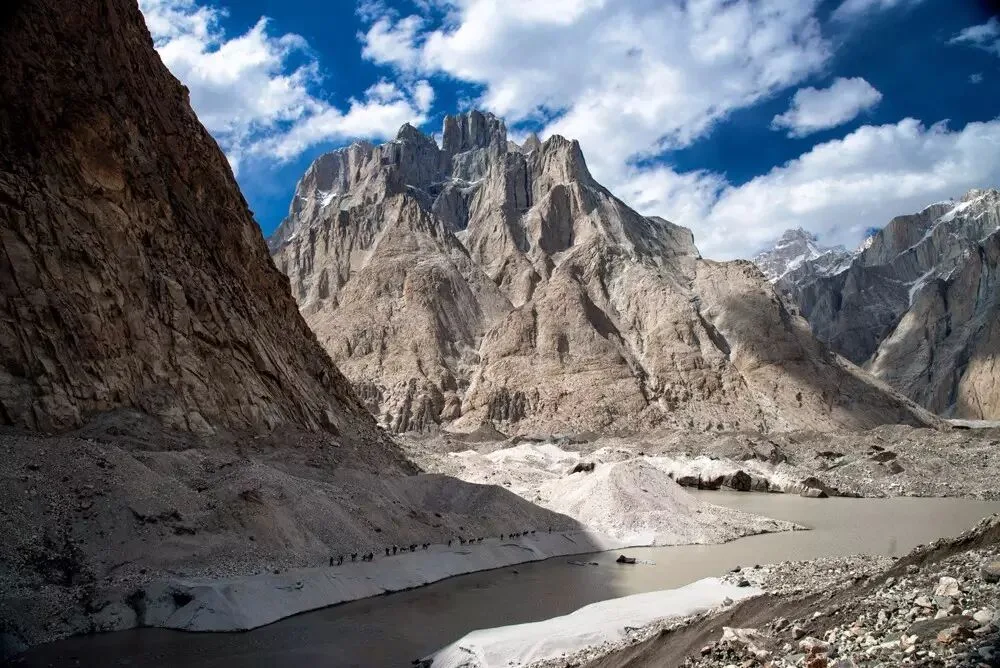
In the image below, the river passes directly through the glacier beneath our feet.
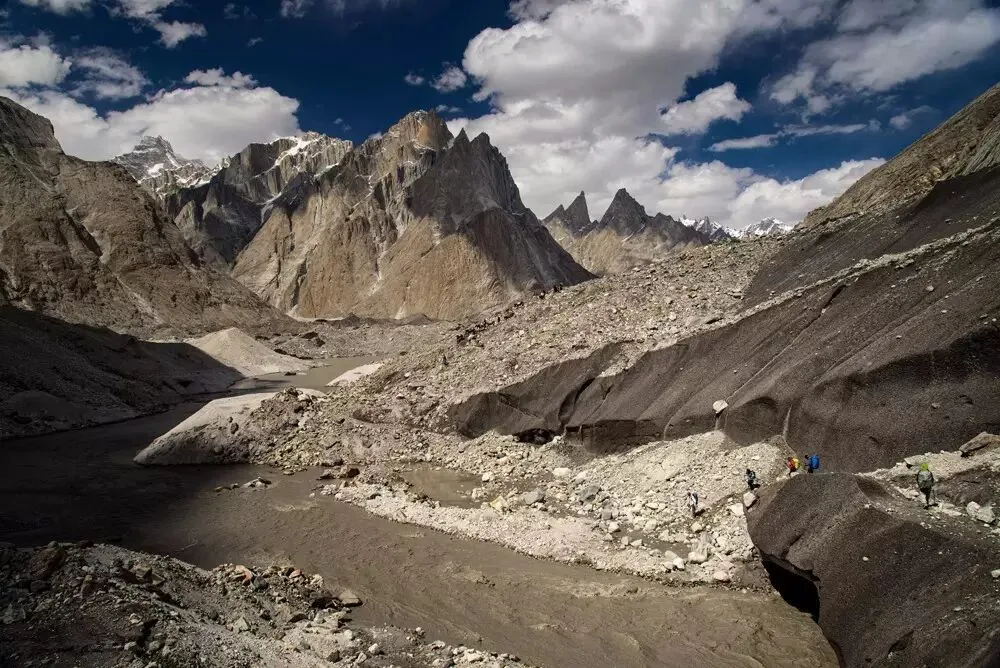
Most of the glacier is covered with rubble, so no professional tools like crampons are needed. Even the exposed white glacier is pitted and fairly easy to walk on.
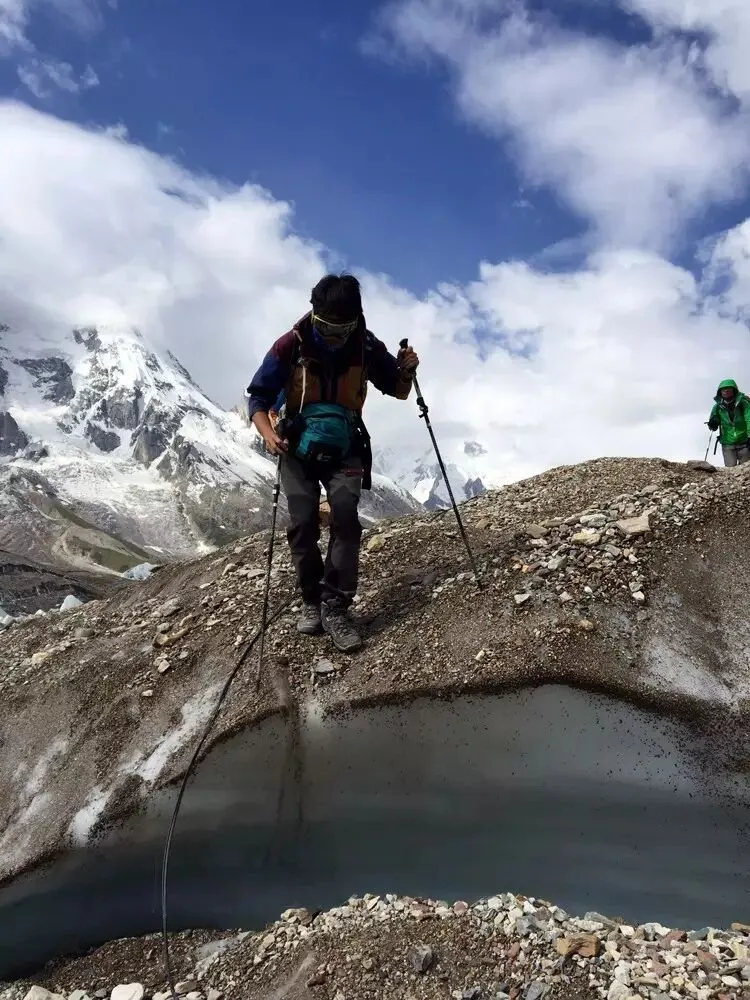
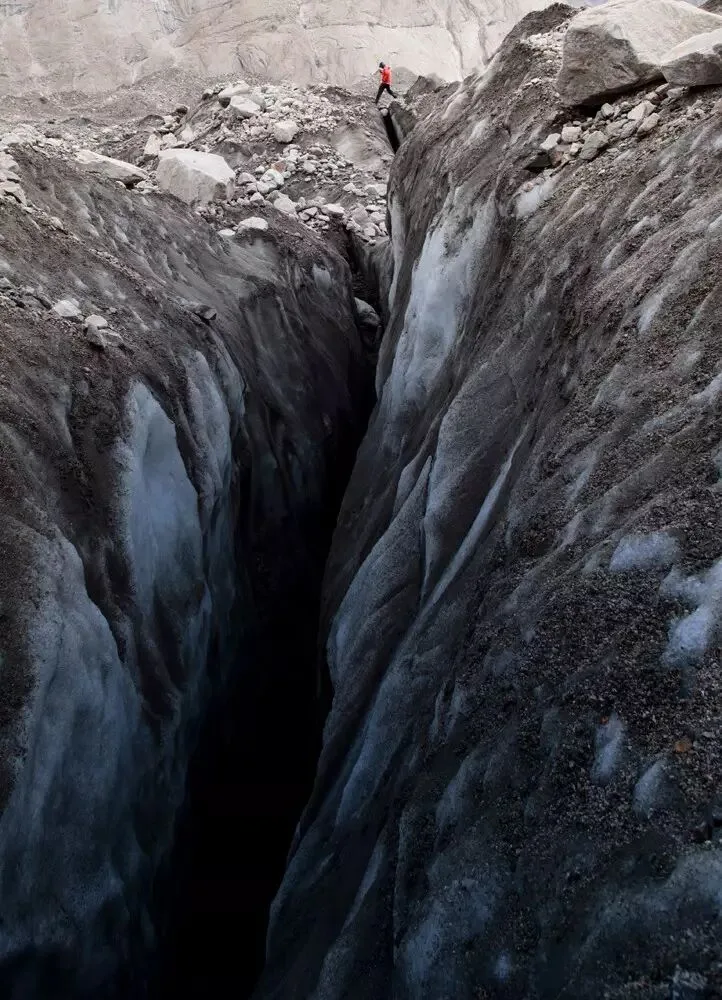
Along the way, we crossed ice crevasses of all sizes. Some we detoured around, some we crossed by finding wedged stones to step on, and the more narrow ones we simply jumped over.
Many crevasses were bottomless — drop a stone in and it would still be clattering after more than ten seconds. So at first, jumping felt psychologically stressful. Later... we got used to it!
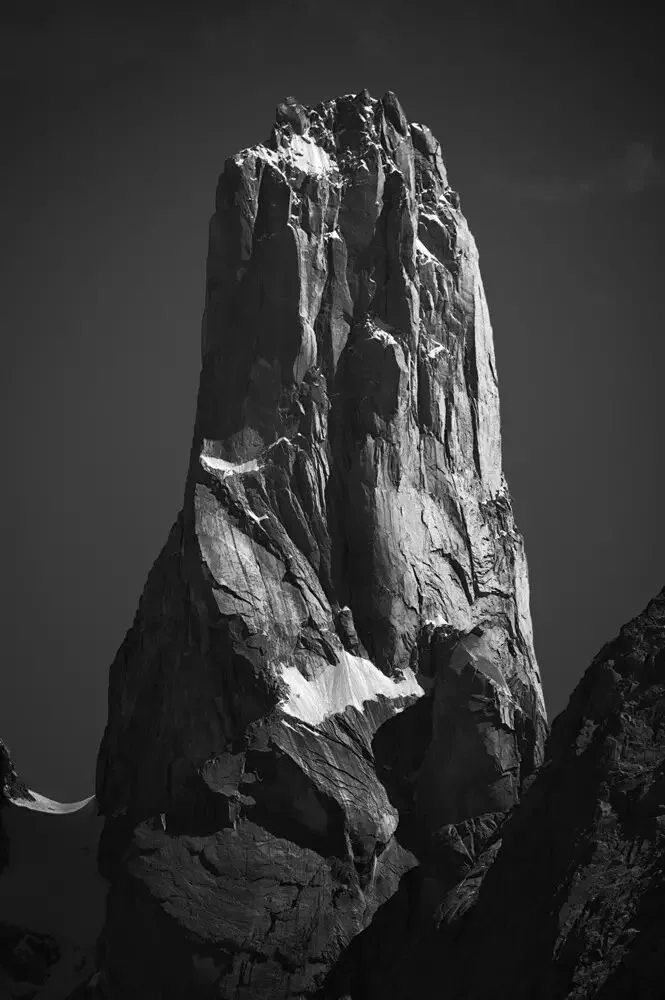
The Trango Towers are very famous in the mountaineering world. For sheer elegance of form, the only comparable places I know are Patagonia and the Dolomites — but the peaks here are all 6,000-meter class!
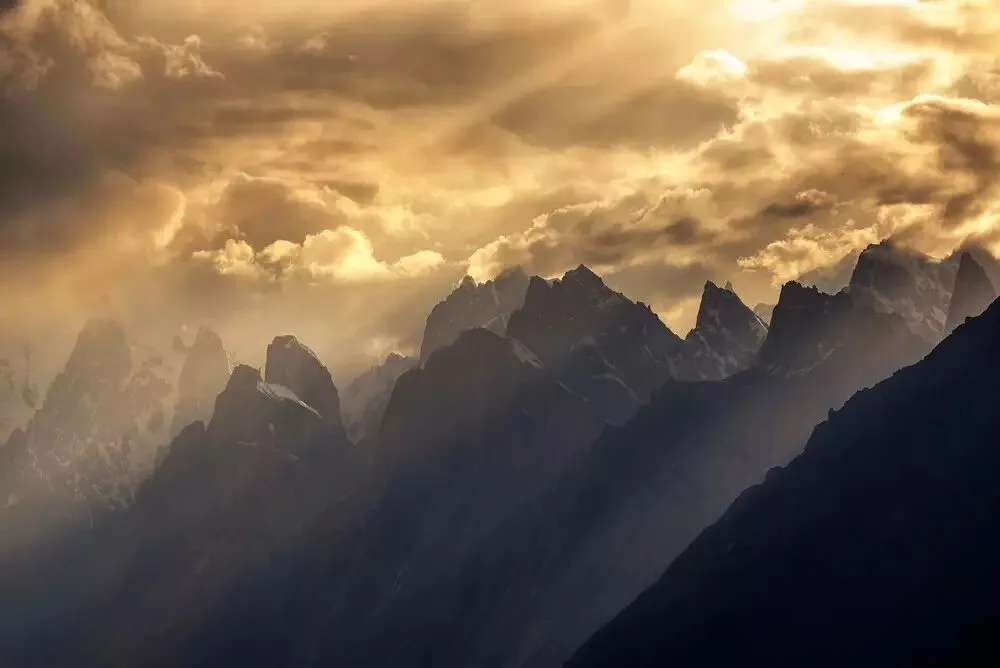
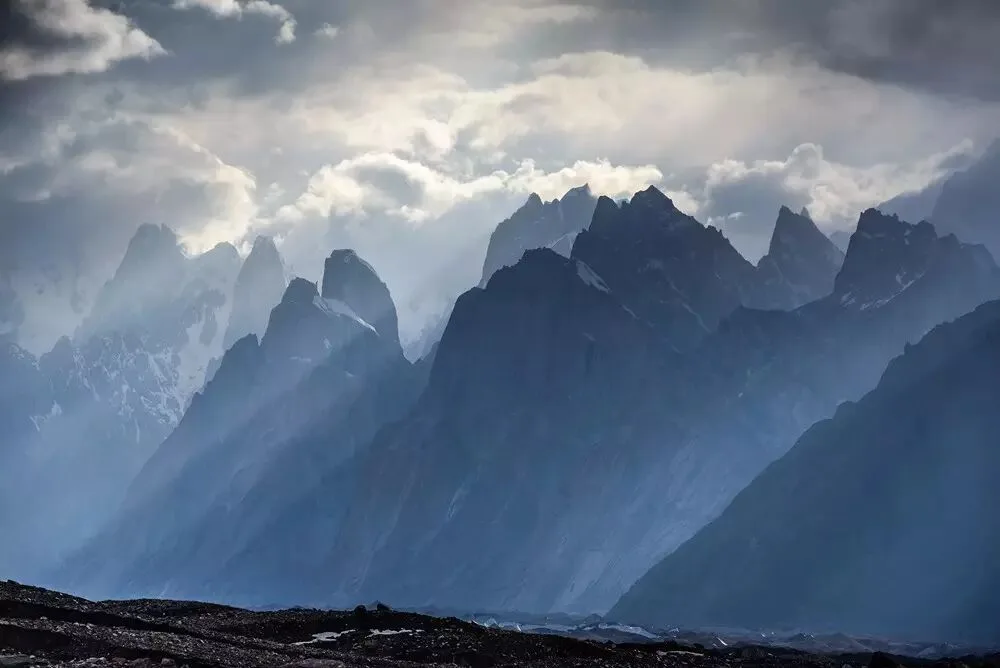
A close look at the Trango Nameless Tower, one of the ultimate goals of expert climbers.
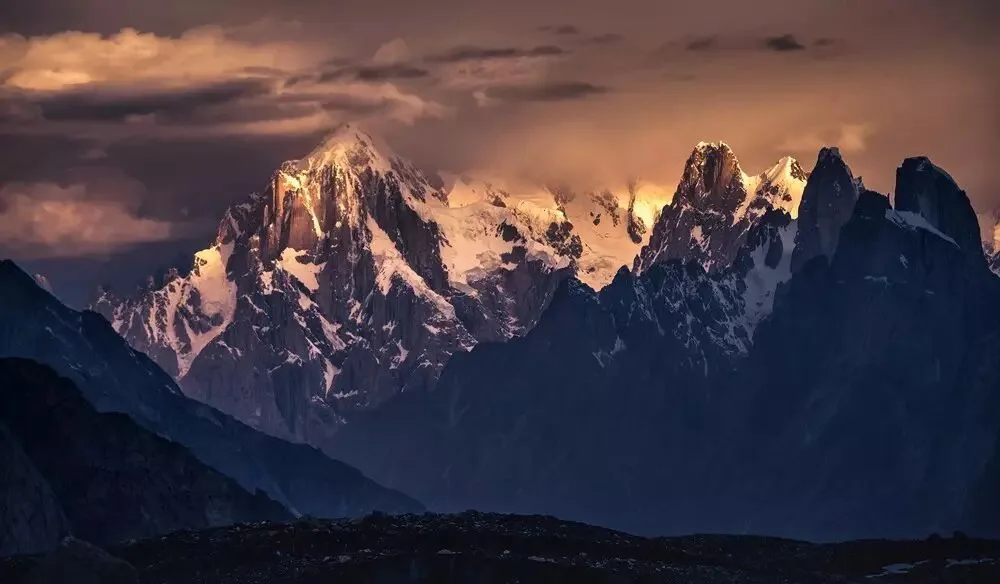
The scenery at sunrise.
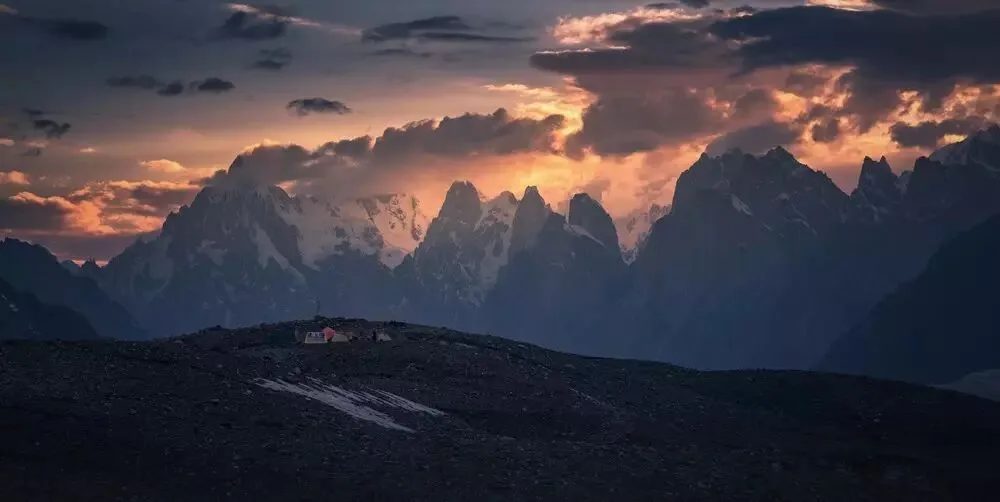
Our camp at sunset.
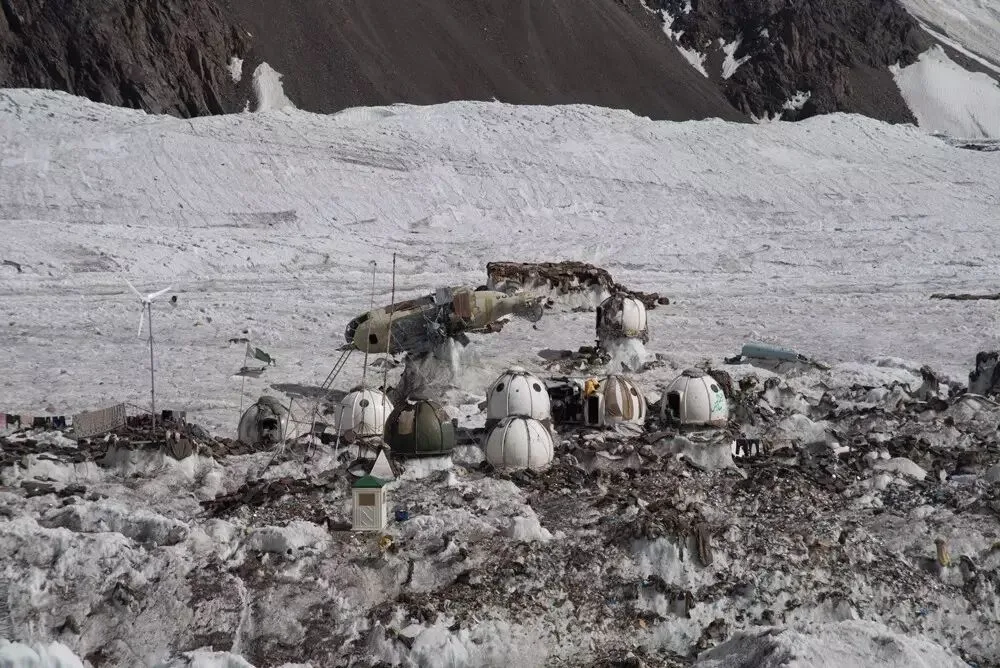
Hard to imagine that in this uninhabited area at 4,000-5,000 meters, there are still large numbers of military camps. Tents like alien fortresses, a crashed helicopter on the open ground, and barrels of fuel and ammunition piled everywhere made us feel like we'd traveled to an alien colony.
This is the world's highest battlefield, where thousands of soldiers from both India and Pakistan have perished — most not in battle, but forever left above the snow line by weather, altitude sickness, and disease.
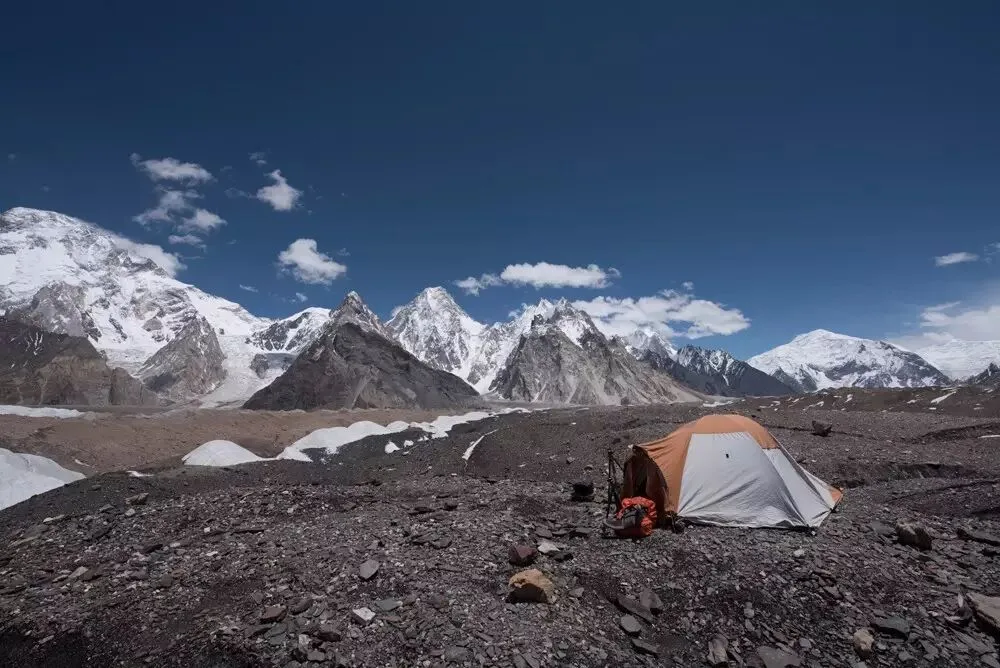
This is the tent we stayed in — it looks a bit desolate by day... truly a place where even birds don't drop droppings!
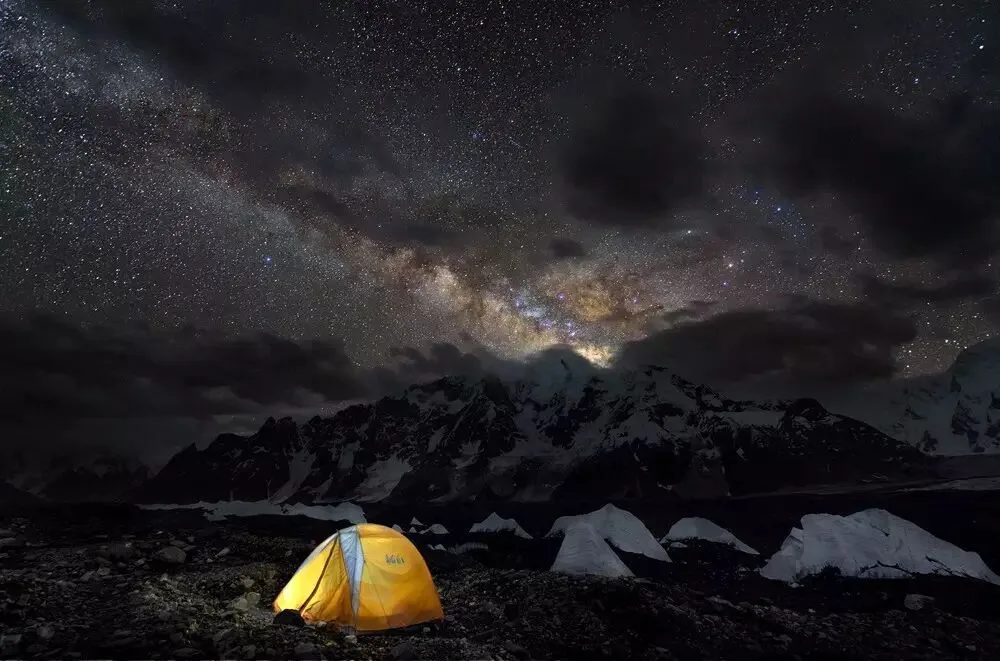
But at night it transforms into a 10-star ultra-luxury hotel, with glaciers as the bed and snow mountains as the blanket! Gazing at the starry sky and talking about life!
At the end of the trek is the world's second-highest peak, K2, known in Chinese as Qogir Feng (乔戈里峰). It lies on the China-Pakistan border, with Xinjiang's Shaksgam River Valley behind it.
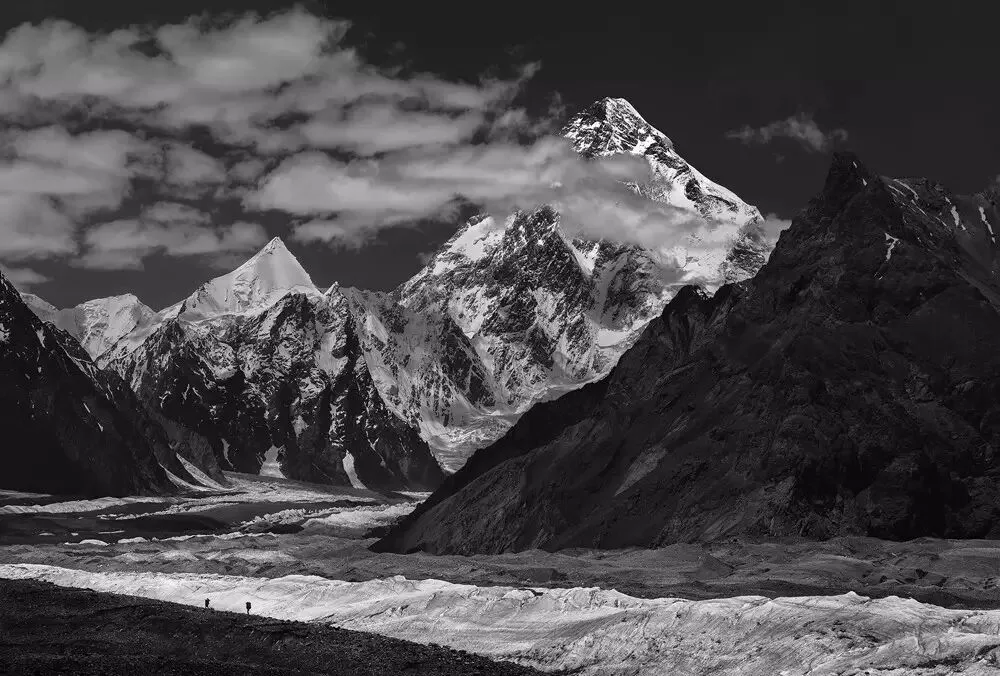
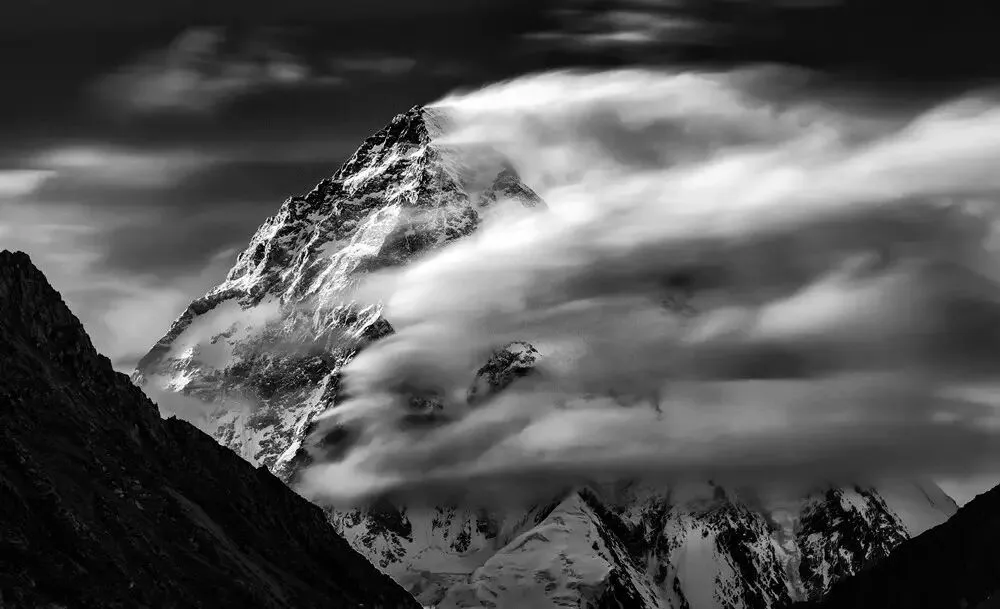
The goal of many professional climbers isn't the relatively commercialized Everest, but this pyramid-shaped, climate-unpredictable, death-rate-extraordinary 8,611-meter world's second-highest peak.
Here we discovered a great bend in the ice river, where glacial meltwater looped around and plunged into a deep ice cave. The snow mountain in the background is Broad Peak — as its name suggests, an 8,000-meter peak with a broad summit.
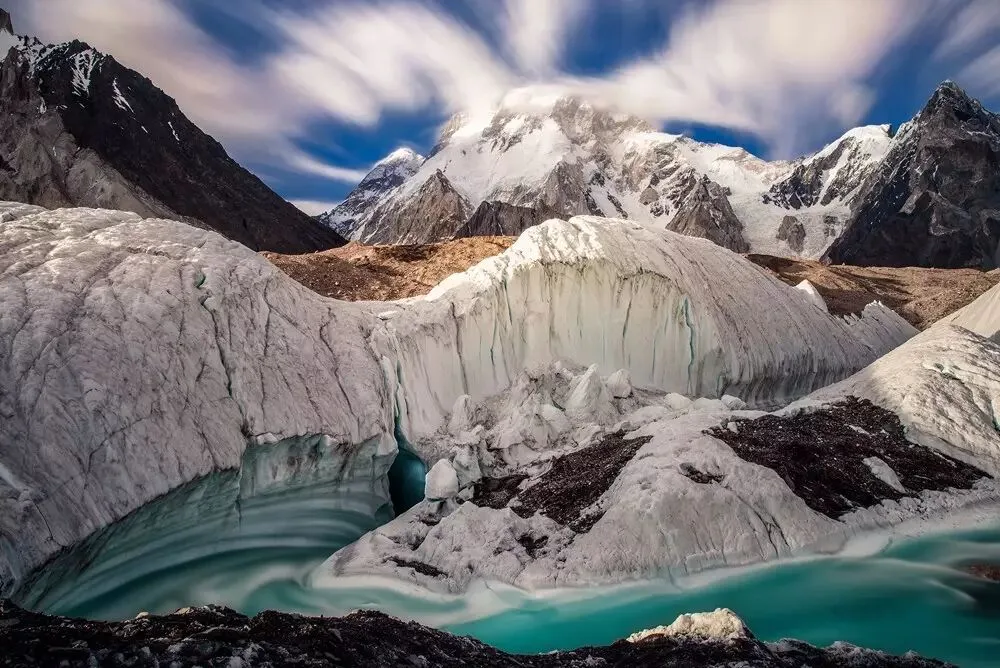
While shooting and exploring near the great bend, we found a small riverbank beneath the ice wall.
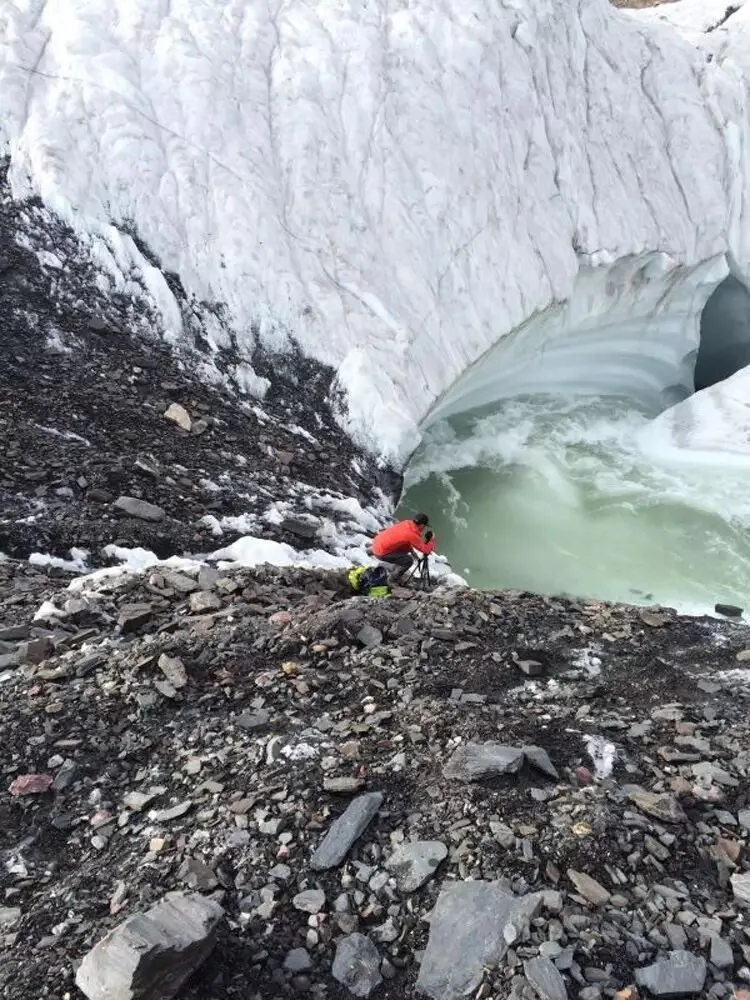
To descend to the valley floor to shoot the ice river and starry sky, we tied ropes to several large boulders with the guide's help.
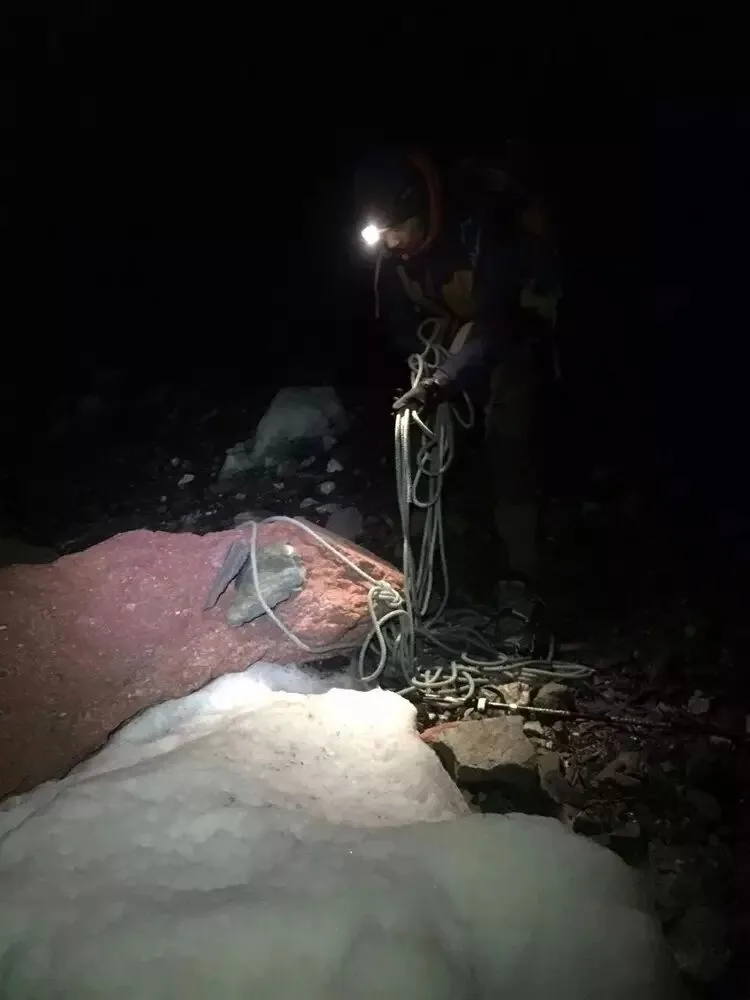
Our trekking guide had once climbed Gasherbrum II, over 8,000 meters, and had outstanding skills.
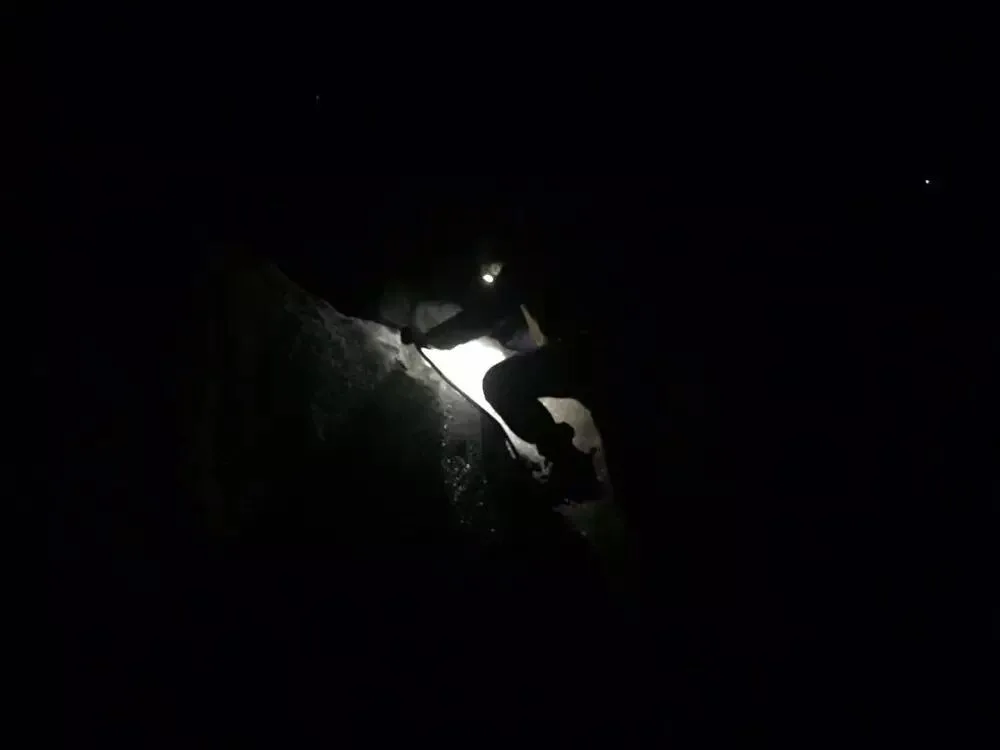
The scene beneath the glacier: smooth ice walls on both sides, with only this small patch of open ground.
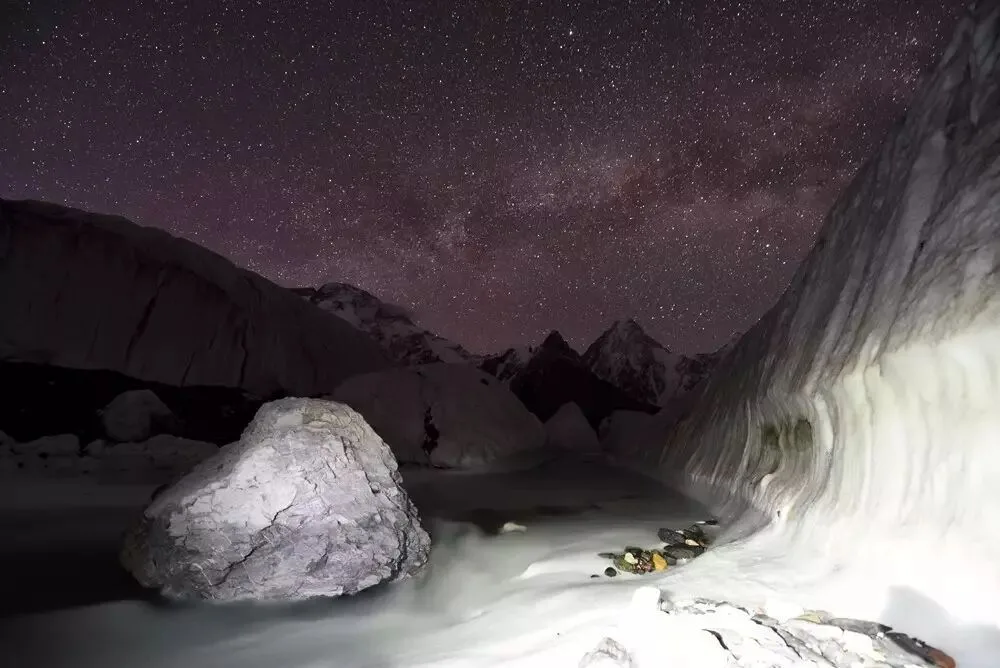
At night the Milky Way rose, along with the Perseid meteor shower.
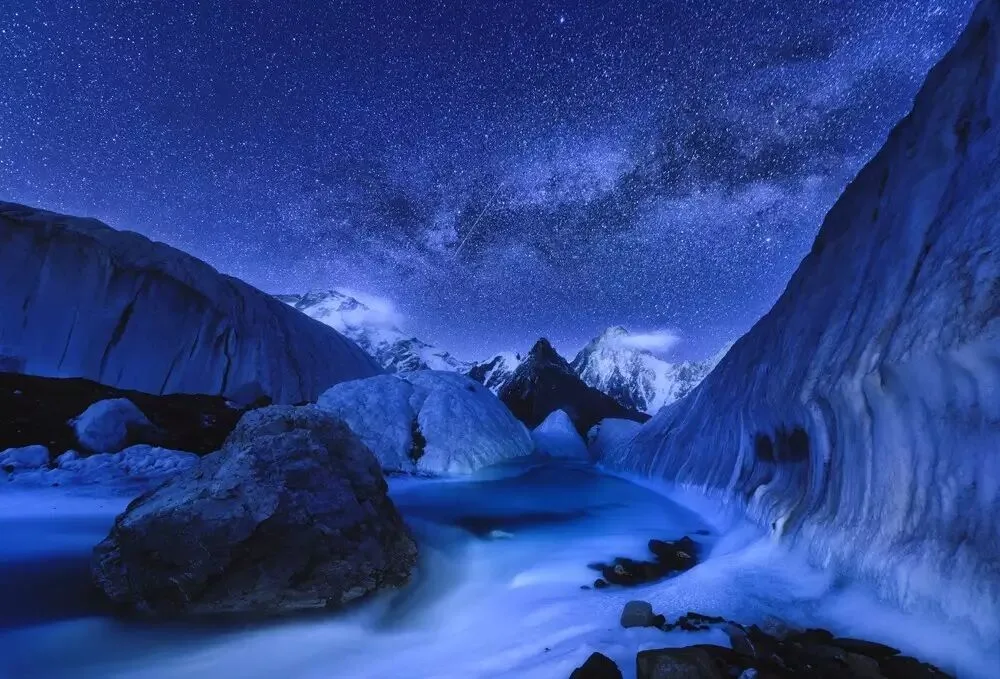
I've shared the 5 RAW files of the image below for everyone to practice star stacking and color grading... Follow my official account thomaskksj and reply "download" in the backend to get them.
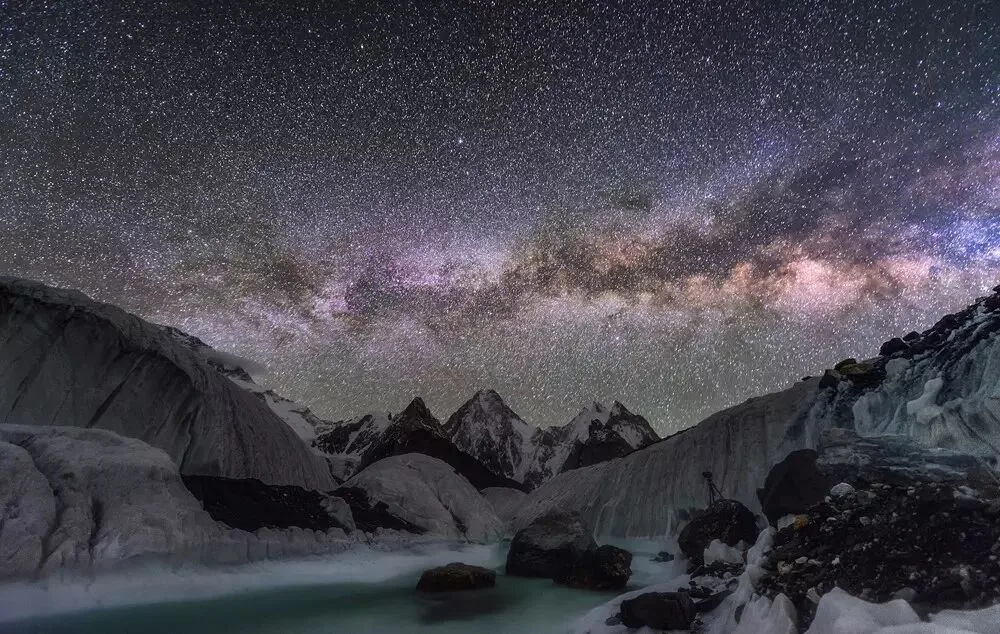
My favorite photo is "Dream of the Ice River" — compared with the grandeur of the Milky Way shots, I prefer this one's tranquil, cool atmosphere.
Follow @Thomas Chu Photo, and learn one photography skill every week.
Read 50 Photography Tutorials in One Article (Thomas's 2016 Summary)
I answered a question on Zhihu about how to reduce noise in starry-sky post-processing — feel free to click "Read More" to view it.