Photography Tutorial · 2022-05-22
Appreciating the Grand Prize Works of Past National Geographic Photo Contests! Do Good Nature Landscape Photos Have Common Traits?
In today's video tutorial, Thomas will appreciate the global grand prize works of the National Geographic photo contests from 2011-2019 with everyone, and try to find their common traits and characteristics. (After 2019, the National Geographic photo contest was temporarily suspended due to the pandemic and other reasons.)
To stand out from tens of thousands of photos, unique geographical features, brilliant moments, attention to human society, and harmonious aesthetics are all very important!
Video
▶ Watch the video tutorial on Bilibili
This is the fully illustrated companion to the video above. Thomas places the grand-prize winners of the National Geographic Photo Contest and Travel Photo Contest from 2012-2019 side by side to answer one question: do great nature and documentary photos share common traits? The answer comes down to four keywords — distinctive geographic character, spectacular moments, revealing our relationship with the human world, and harmonious composition. With summary cards and winner screenshots throughout, it doubles as a reference for entering photo competitions.
Start with the overview. This summary card from 2:31 in the video lists the four traits of National Geographic's aesthetic that Thomas distills.

01 Contest Background and Entry Strategy
Thomas reviews every grand-prize winner of the National Geographic Photo Contest and the Travel Photo Contest from 2012 to 2019 (at 0:40 in the video). Finding their common threads yields rich inspiration for future work — and since different contests carry different aesthetic temperaments, always check whether a contest's character matches your own before entering, and submit work that fits it; that alone materially raises your odds (at 1:18 in the video).
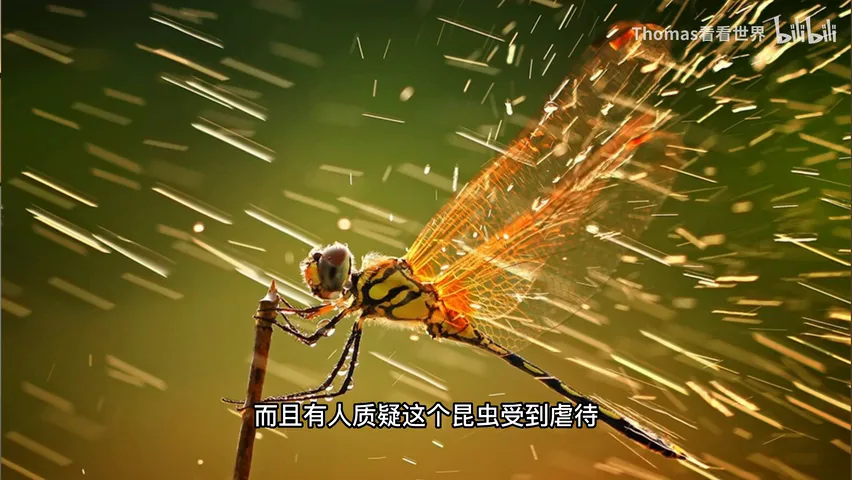
The survey starts at 2012 because the 2011 winner ignited a huge controversy: the dew on its wings was reportedly applied with an eyedropper by the photographer's friend, and others questioned whether the dragonfly had been mistreated, even tied to the twig (at 1:43 in the video). National Geographic responded by rewriting its rules: no photographs made by harming animals, and no staged or performative shooting of people or wildlife whatsoever. The survey ends at 2019 because the contest was discontinued after that year, partly due to the pandemic — though we can look forward to its return.
02 Trait One: Distinctive Geographic Character
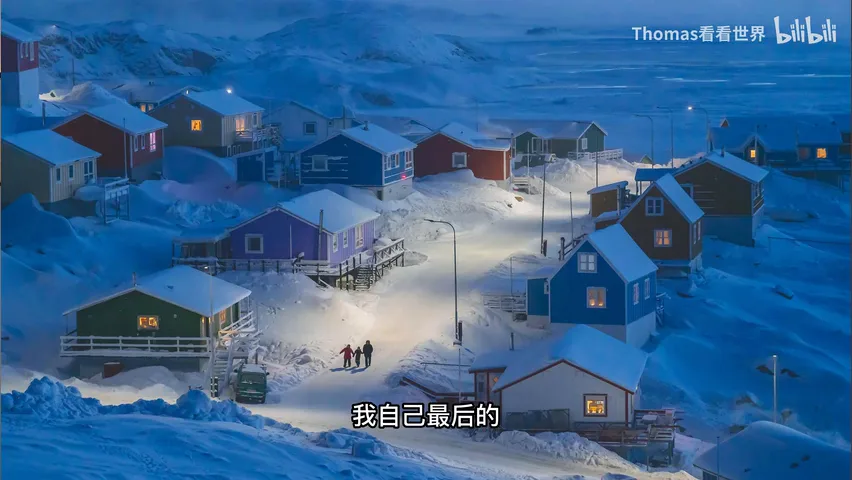
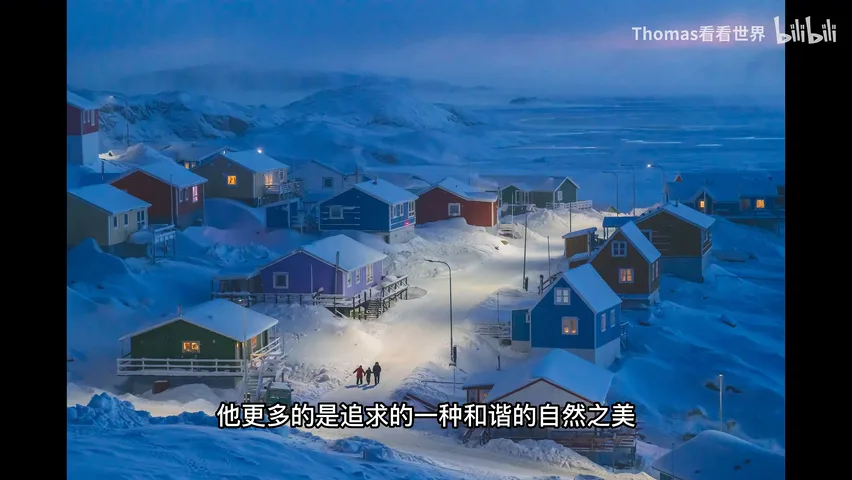
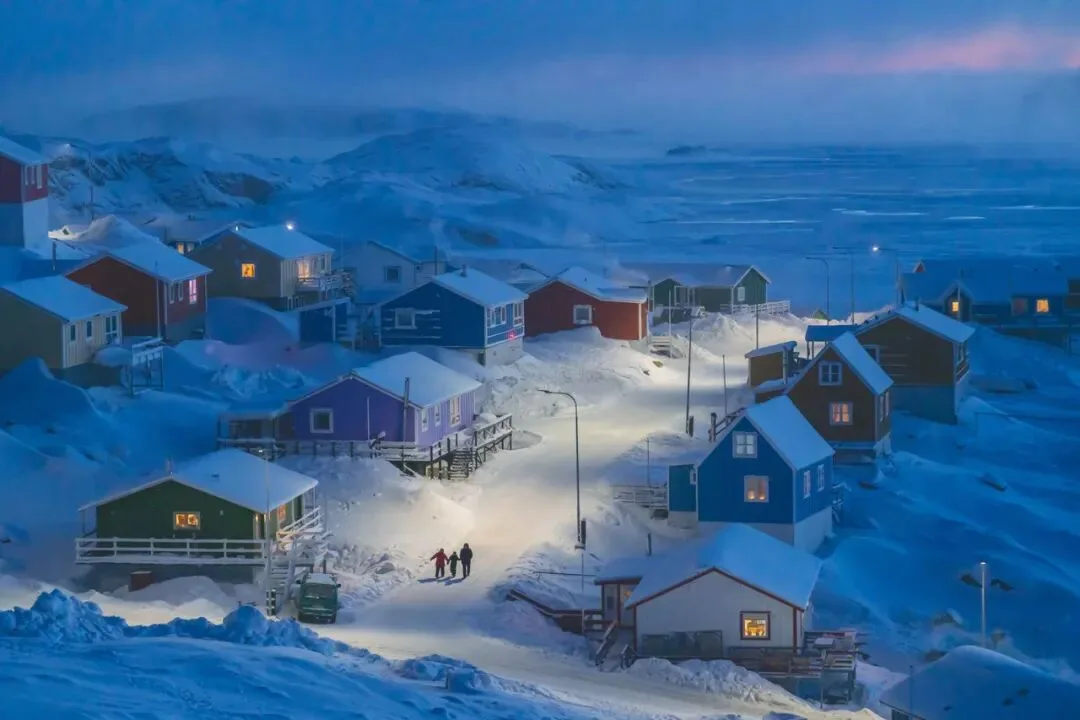
National Geographic is, after all, a magazine of geography, exploration and discovery, so the first trait is distinctive geographic character (at 2:34 in the video): whether your subject is wildlife or a city, you must reveal an environment that is unmistakably its own. Sometimes that distinctiveness is nature-given — as in Thomas's own photograph from Greenland in the Arctic, where winter freezes the sea solid and the local town glows with colorful houses (at 3:02 in the video).
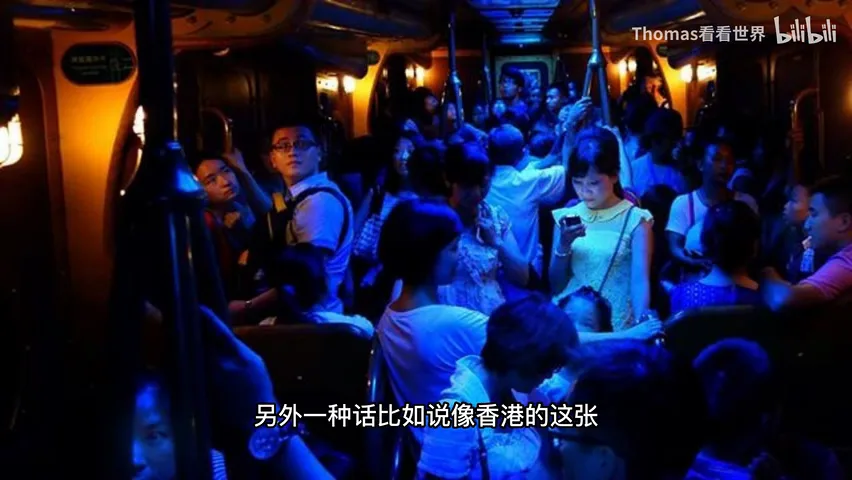
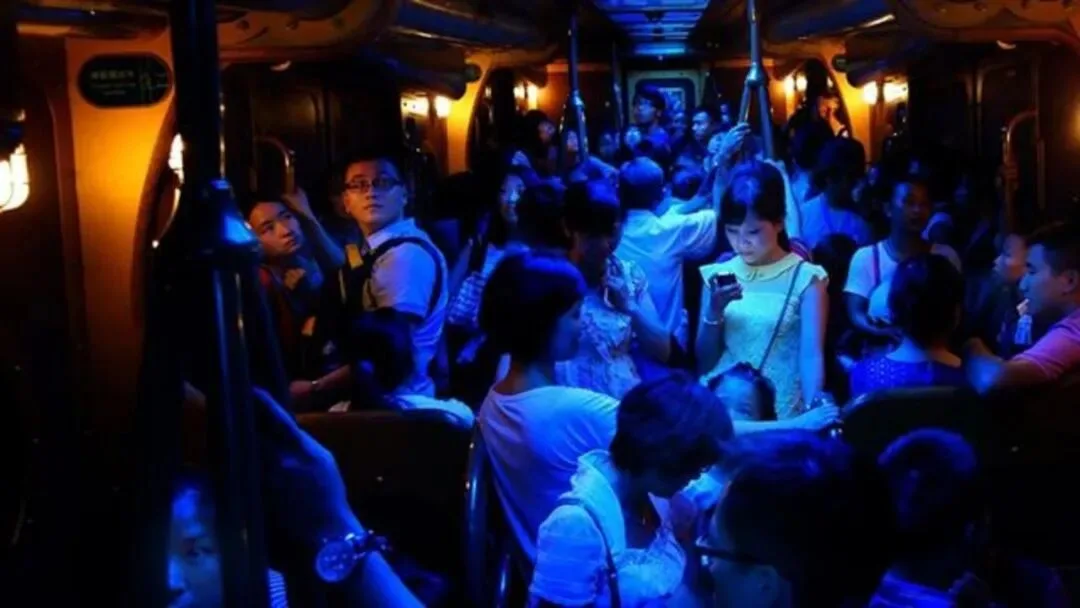
Other times the distinctiveness comes from seizing what is most particular to a place, as with this train in Hong Kong's Ocean Park (at 3:13 in the video): sea creatures are painted across the carriage ceilings, and the light inside naturally splits into warm and cool tones. Photograph “everyone staring at their phones” in any city's ordinary subway and the result is forgettable; stage the same statement on this extraordinary train and the impact is entirely different — a photo gains identity by locking onto what makes its location unique.
03 Trait Two: Spectacular Moments
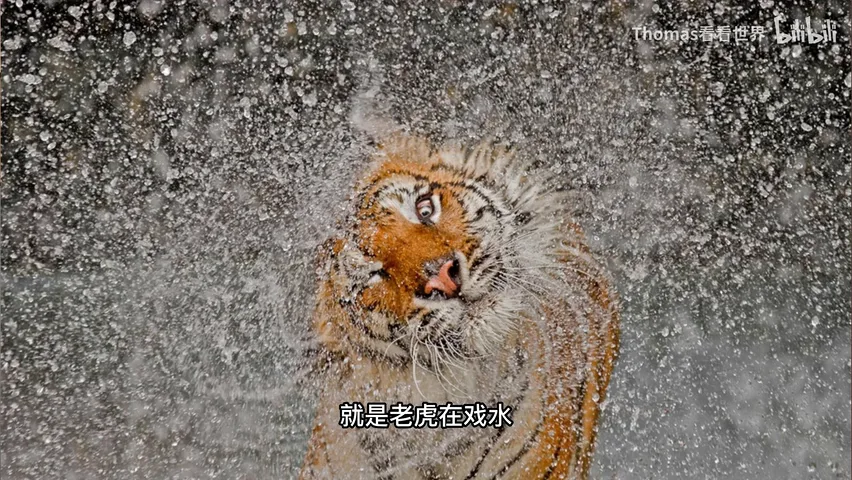
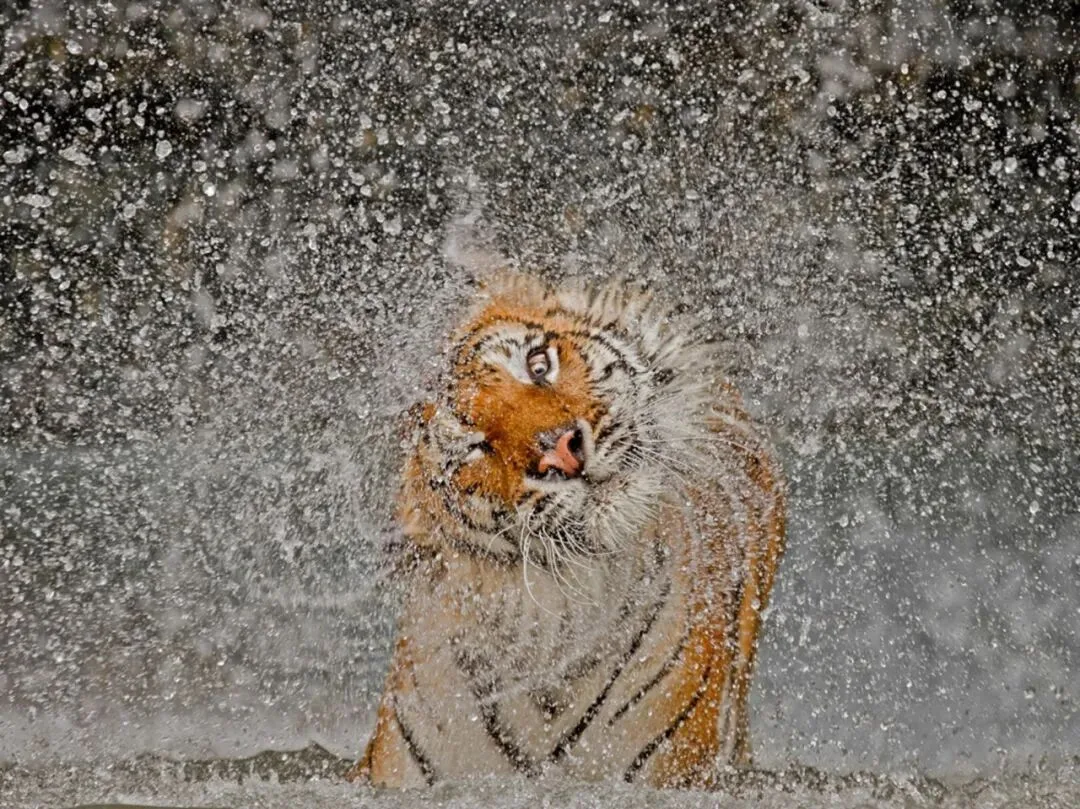
Nearly every National Geographic grand-prize photograph seizes a spectacular moment (at 3:51 in the video). That immediacy — a slice of time — is precisely what separates photography from film, painting and the other arts: in narrative it loses to video, in metaphor to painting, so it wins by pushing the decisive instant to its extreme. In the 2012 winner, a tiger shaking itself dry in a pool sends water exploding outward like a burst of fireworks (at 4:41 in the video).
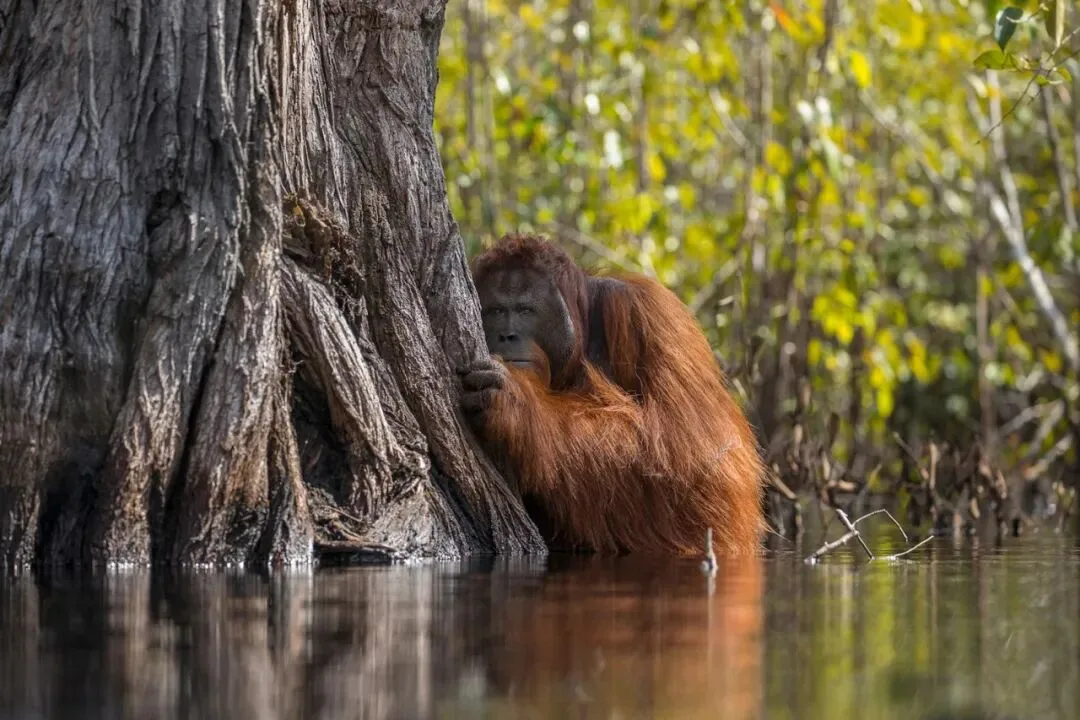
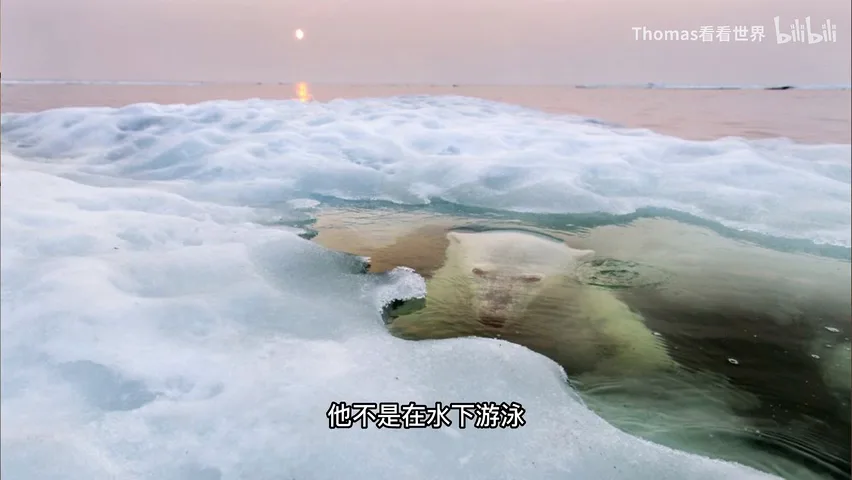
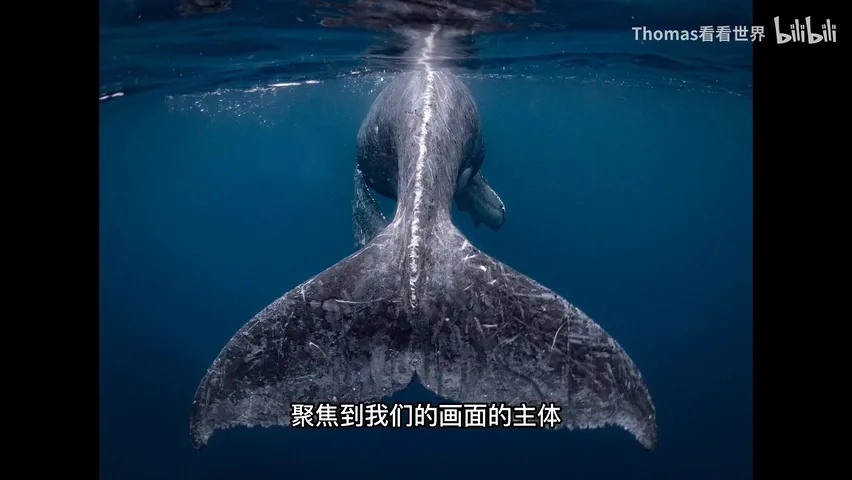
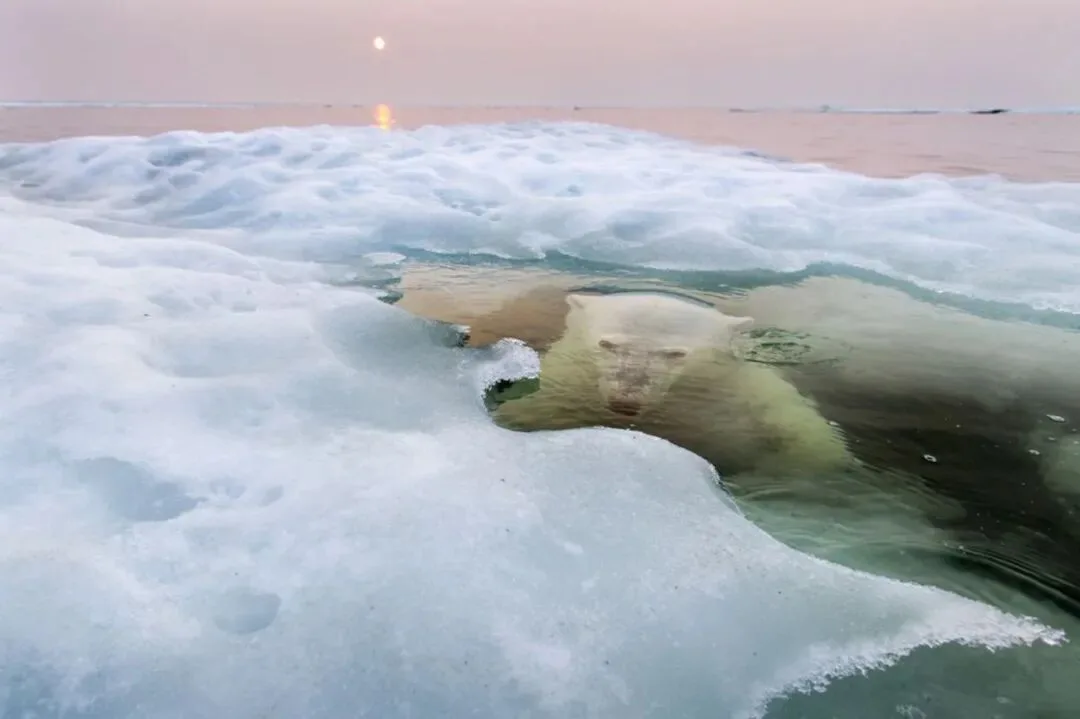
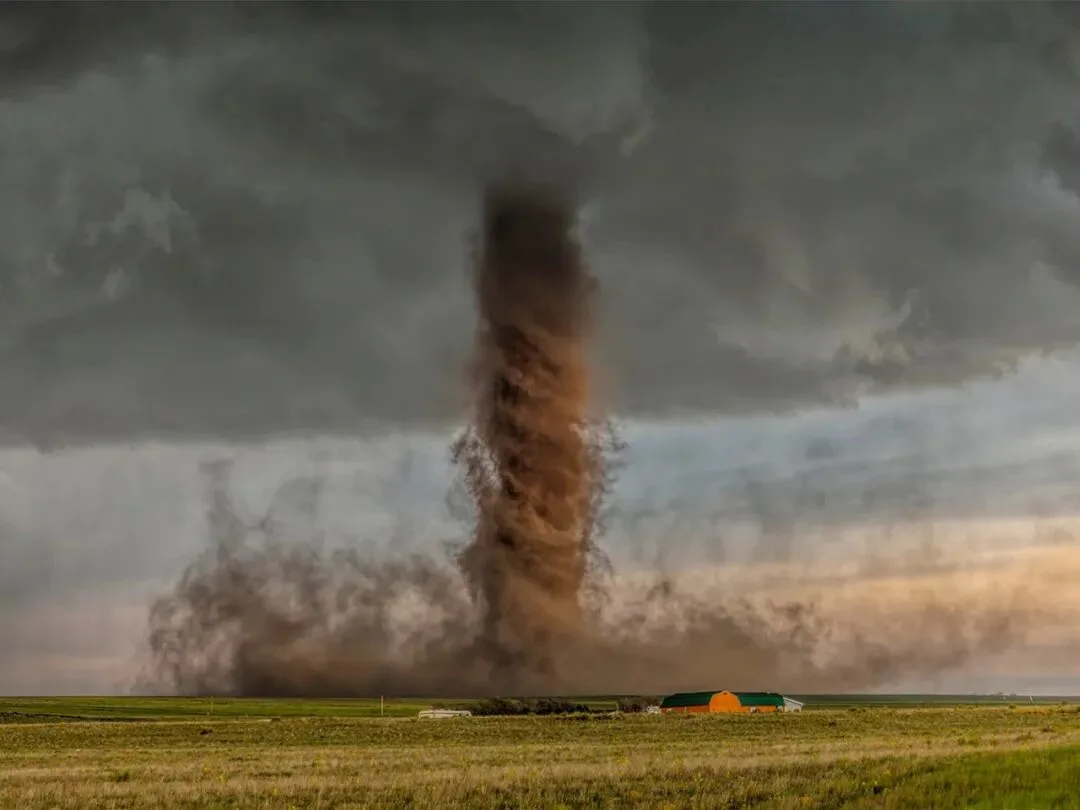
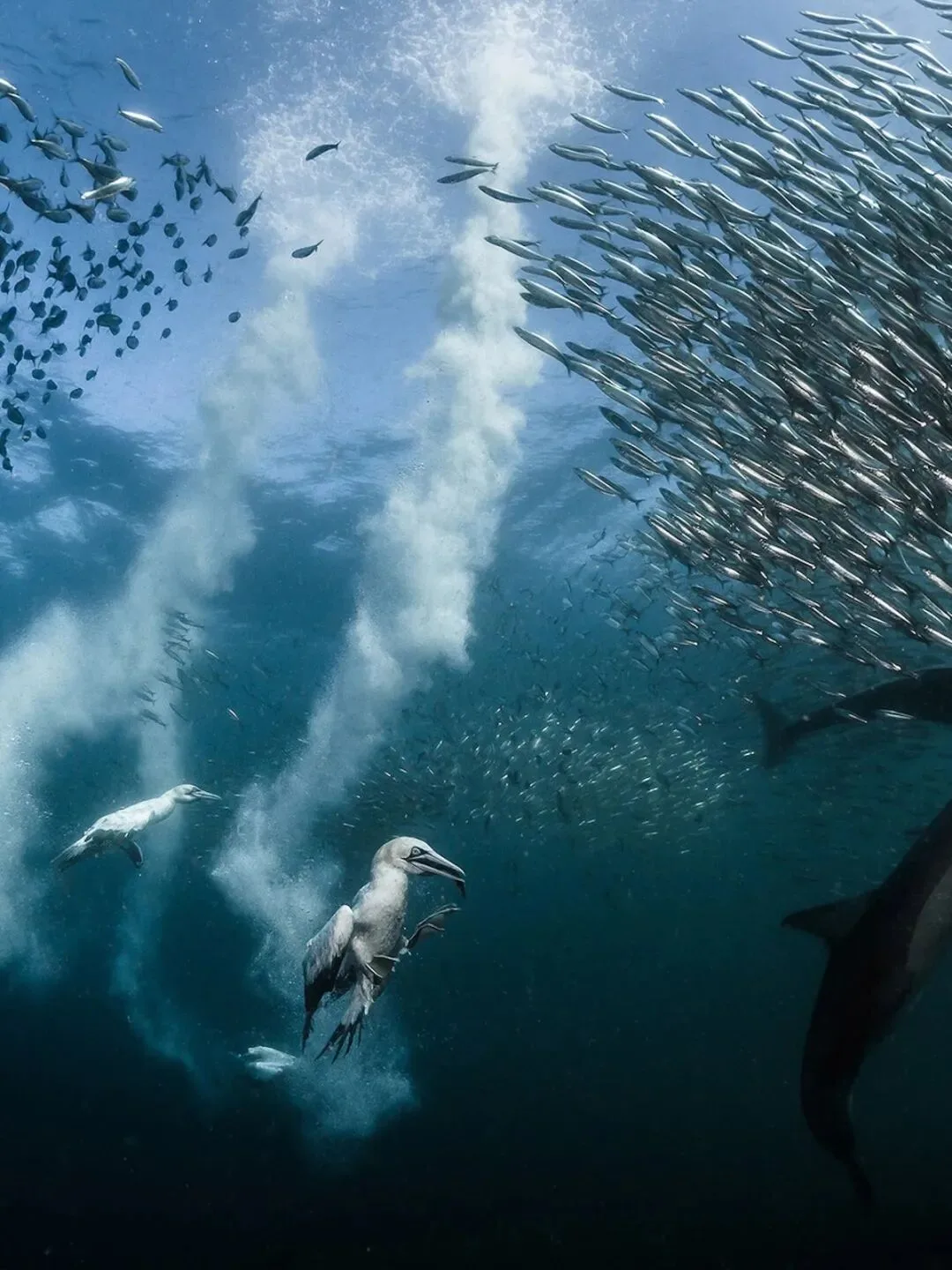
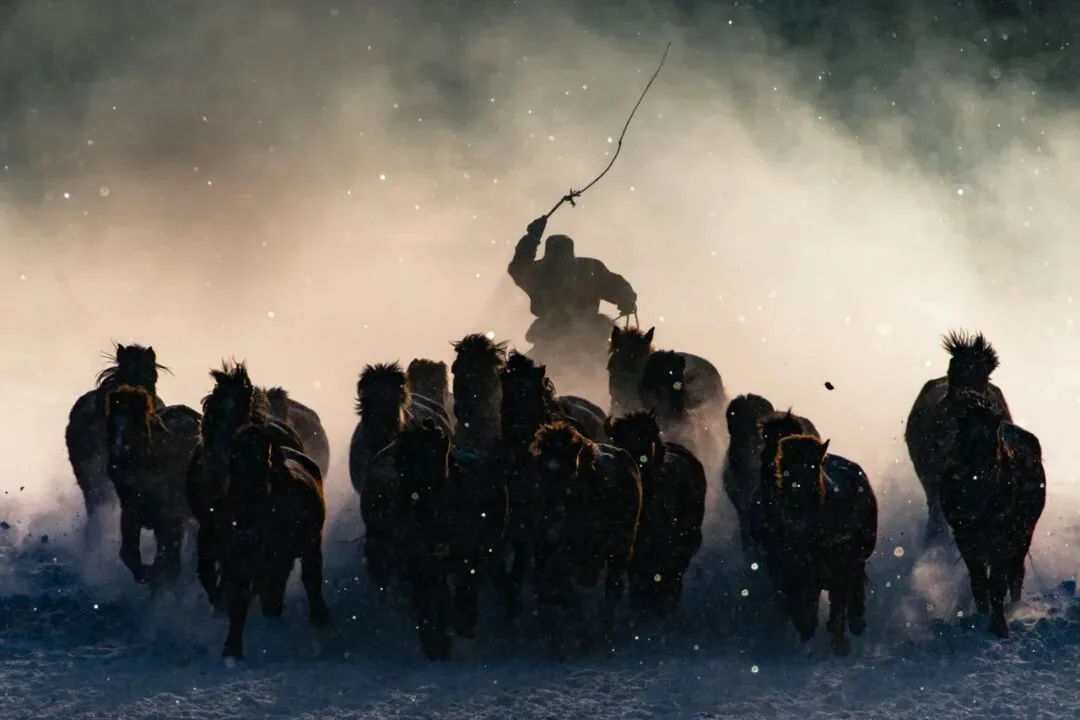
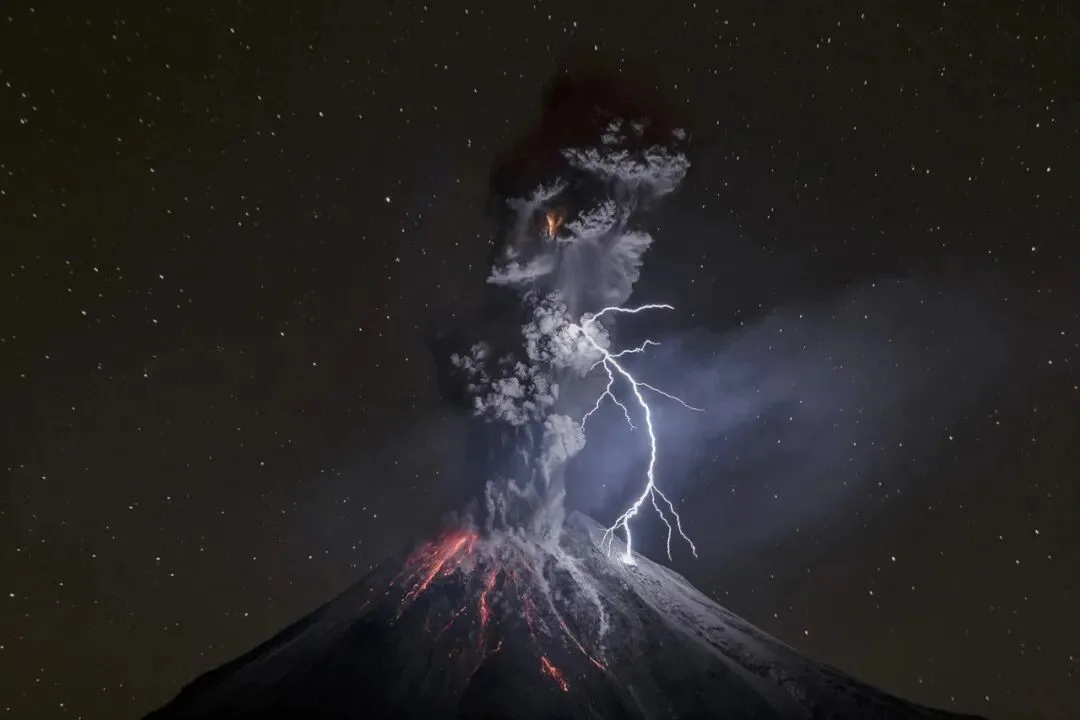
The 2013 grand-prize image catches the exact instant a polar bear is about to surface (at 4:57 in the video) — not swimming, not yet on the ice; that in-between state gives the photo its singular power. The same applies to the Hong Kong frame where every head is bowed to a phone except one face turned to the camera; to storms and tornadoes as extreme weather; to a seabird diving onto a shoal; to a herder arriving among his sheep; to an orangutan's wary, peeking gaze toward the distance; and to the rare coincidence of eruption, lava, lightning and starry sky in one volcanic frame (at 6:16 in the video) — all unrepeatable moments.
Thomas's own photograph works the same way (at 6:54 in the video): without the family of three it would be an honorable-mention image at best; catching them hand in hand, setting out through the freezing landscape, transforms the picture's entire mood. He certainly fired many frames and kept the finest one. To win top prizes you must capture that unique instant — whether it is extreme weather, a bowed head, a family stepping out, or a tiger shaking off water.
04 Trait Three: The Human Connection
National Geographic's mission is revelation, hence the third trait (at 7:37 in the video): whether the subject is animal or city, most winning photos reveal their relationship to human life and the impact we have on it. It is not obligatory — sometimes nature's moment is spectacular enough — but the great majority of winners carry this layer one way or another. The Hong Kong photograph, portraying modern people's head-down bustle with an idea conceived as early as 2013, feels remarkably prescient.
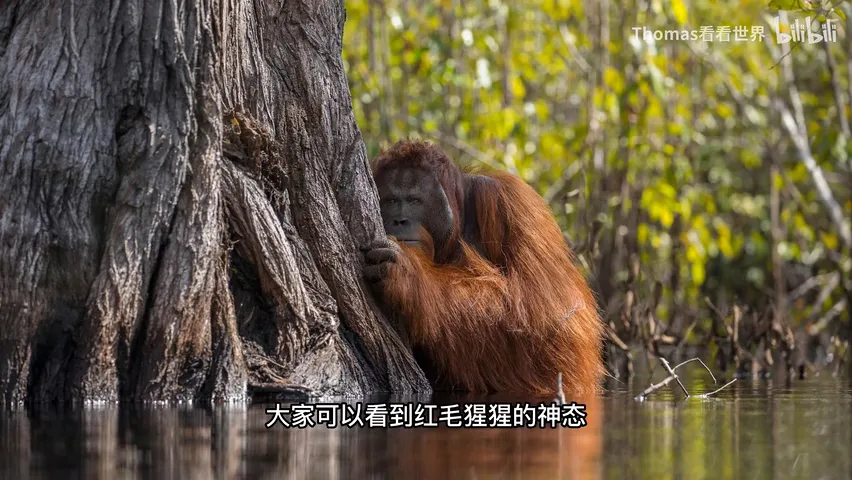
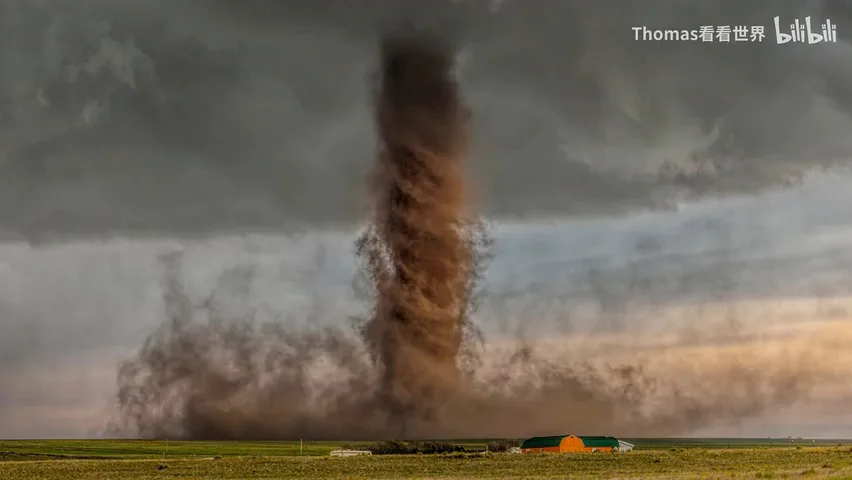
With so many excellent storm photographs out there, why did this one rise to the grand prize (at 8:11 in the video)? Largely because of its human connection: a ranch sits directly below, the tornado brushing past it — and that juxtaposition deepens the picture's meaning. The two wildlife frames contain no visible humans, yet the orangutan's wariness and the paper-thin ice beneath the polar bear speak of humanity's encroachment on wild territory and the trend of global warming (at 8:36 in the video) — a meditation on the human-nature relationship all the same.
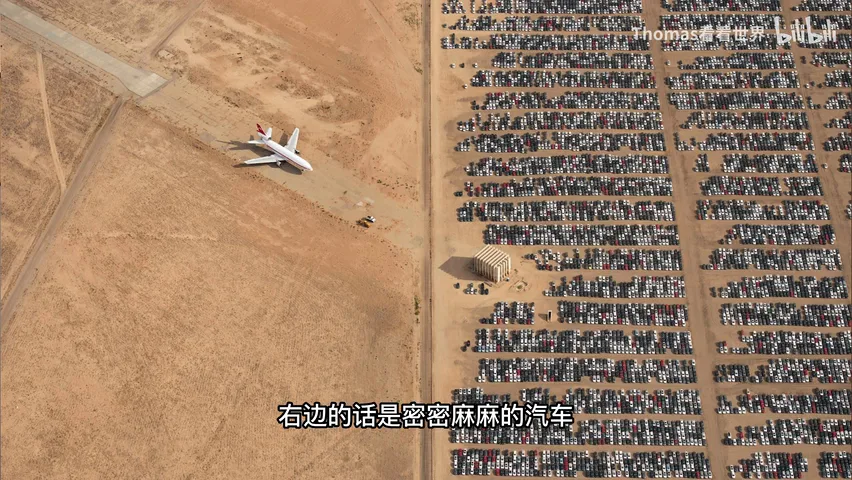
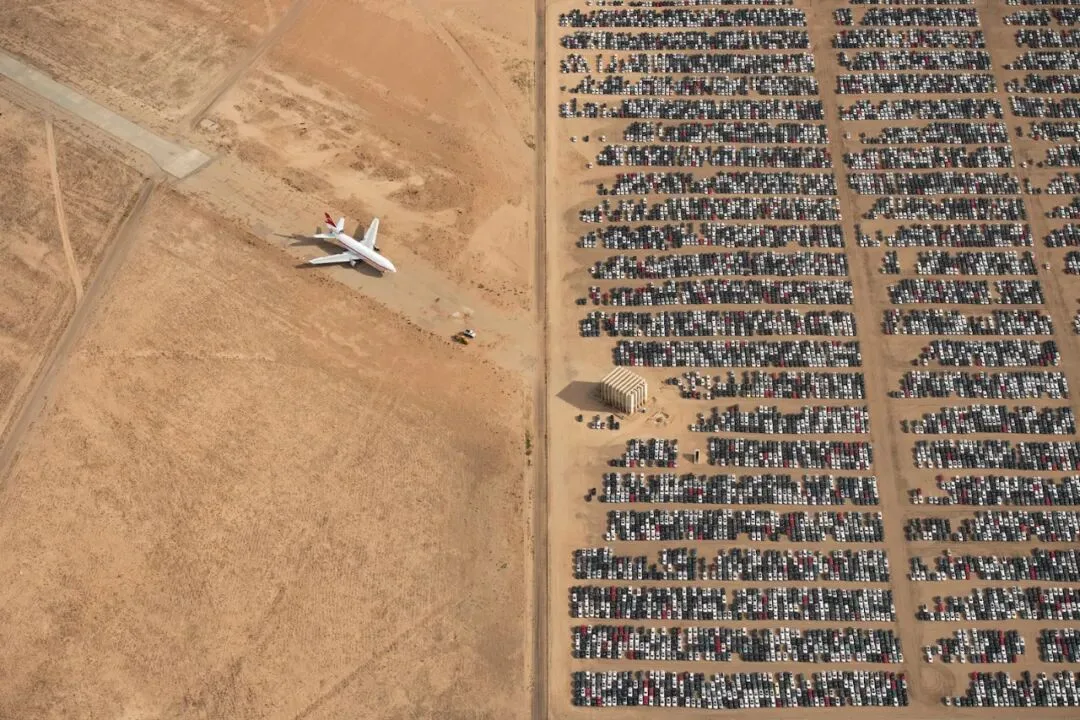
The aerial photograph tackles a concrete news subject (at 9:07 in the video): Volkswagen's emissions-cheating scandal and the resulting mass recalls. The photographer's entry point was the lot where the recalled cars were stacked — thousands upon thousands of vehicles beside a single airliner, a composition of overwhelming visual impact that tells the story plainly. The many-versus-one contrast and the plane's precise position surely came from bursts of frames and a ruthless final edit.
05 Trait Four: Harmonious Composition
The final trait (at 9:38 in the video): these winners are rarely wild or fantastical spectacles. In a word, what National Geographic pursues is harmonious beauty — no exaggerated effects, no bending its aesthetic to chase internet trends. Many of the photos use centered, diagonal or symmetrical compositions (at 9:57 in the video) that funnel the eye to the subject, and nearly all are severely simple frames expressing a harmonious beauty of the natural world.
Looking back over those eight years (at 10:29 in the video): distinctive geography, spectacular moments, the human connection, and harmonious visual structure — four intertwined traits that form National Geographic's aesthetic foundation. What do you think of these winners, and which one do you like most? Join the discussion in the comments.
1. Study a contest's aesthetic temperament before entering; submit work that matches the organizers' character and your odds rise. 2. Distinctive geographic character is National Geographic's bedrock — show the local environment, and lock onto what makes the place singular. 3. The instant is photography's core competitive edge: whether extreme weather or everyday life, capture a moment no one else can. 4. Great work often reveals our relationship with the human world, while composition stays harmonious and spare — never spectacle for its own sake.
HD video:
https://www.bilibili.com/video/BV1ct4y1s7TW/
Click here to view the index of 400+ other photography tutorials

Other tutorials:
"How Were the National Geographic Grand Prize Works Made? The Photographer Personally Reveals All!"
"What Do the Original Files of National Geographic Grand Prize Photos Look Like? Shooting and Post-Processing Process Videos Shared!"
"Unveiling the Making of 'Texture City' Style Urban Masterpieces — How to Post-Process Cool-Toned Low-Key Buildings?"
"How to Capture the Complexity of Shanghai, the Magic City? An Attempt at Street Shooting Using Time Compositing!"
"Plain Street Scene Turns Into a Magical Street Masterpiece in Seconds? The Photographer's Shooting and Post-Processing Thinking Revealed!"
"Unveiling the Shooting Thinking and Post-Processing Process of IPA Photography Contest Winning Works"
"How Do Those Extreme Landscape Masterpieces Come to Be? Unveiling the Shooting and Post-Processing Behind the Photos"
"How Was This Award-Winning Photo Shot and Post-Processed? AdventureX's Shi Fei Shares His Creative Thinking"
"Greenland Original Files Revealed! Sharing Landscape Photography Pre- and Post-Processing Thinking"
"How Did a Professional Photographer Turn a Tiny Ditch Into a Great Waterfall? The Contrast Is Simply Huge!"
"Three Hours for One Photo? Star-and-Car-Trail Photos Can Be Shot Like This!"
"How Was the 'Sky Eye' Starry Sky Photo Planned and Shot? Completing Effects Impossible In-Camera Through Day-to-Night Post-Processing!"
"Seascapes Can Be Shot Like This Too? A Brief Talk on Applying Time Compositing in Seascape Photography"
"Planning Thinking and Shooting Process Revealed — How Did Two Photographers Shoot the Same Scene Differently?"
"Shooting the Sun Directly! A 1000x Dynamic Range — How a Professional Photographer Completed a Complex Landscape Shoot with 15 Original Frames!"
"This Photo Really Isn't a Painting? Sharing the Shooting and Post-Processing Thinking Behind 'Egret Under the Moon'!"
"How to Subtract From a Photo? Cloud-and-Mist Rendering Has This Effect Too!"
"What Was Done to a Photo Retouched for 4 Hours? Landscape Masterpiece PSD Revealed, Layer-by-Layer Thinking Analysis!"
"How to Post-Process an Ultra-Magical Low-Key Snow Mountain Photo? PSD Layer-by-Layer Thinking Analysis Is Here!"
"How to Light a 10-Meter-Tall Glacier? Milky Way and Iceberg Masterpieces Are Shot Like This!"