Photography Tutorial · 2019-05-05
No Red Clouds? The Front-and-Back-End Ideas Behind Three Landscape Photos
Thomas Chu Photo
In photography, both in-camera and in post, technique is often just the foundation — ideas are the key.
Different photographers have different ideas about framing, composition and grading. If you cannot feel their creative thinking and only imitate mechanically from the surface, you can hardly grasp the core, let alone innovate further.
Today Thomas will share the shooting ideas behind several of his photos taken without red clouds — hopefully helpful for landscape photography beginners.
1. Rainy Day: A Castle in Late Autumn
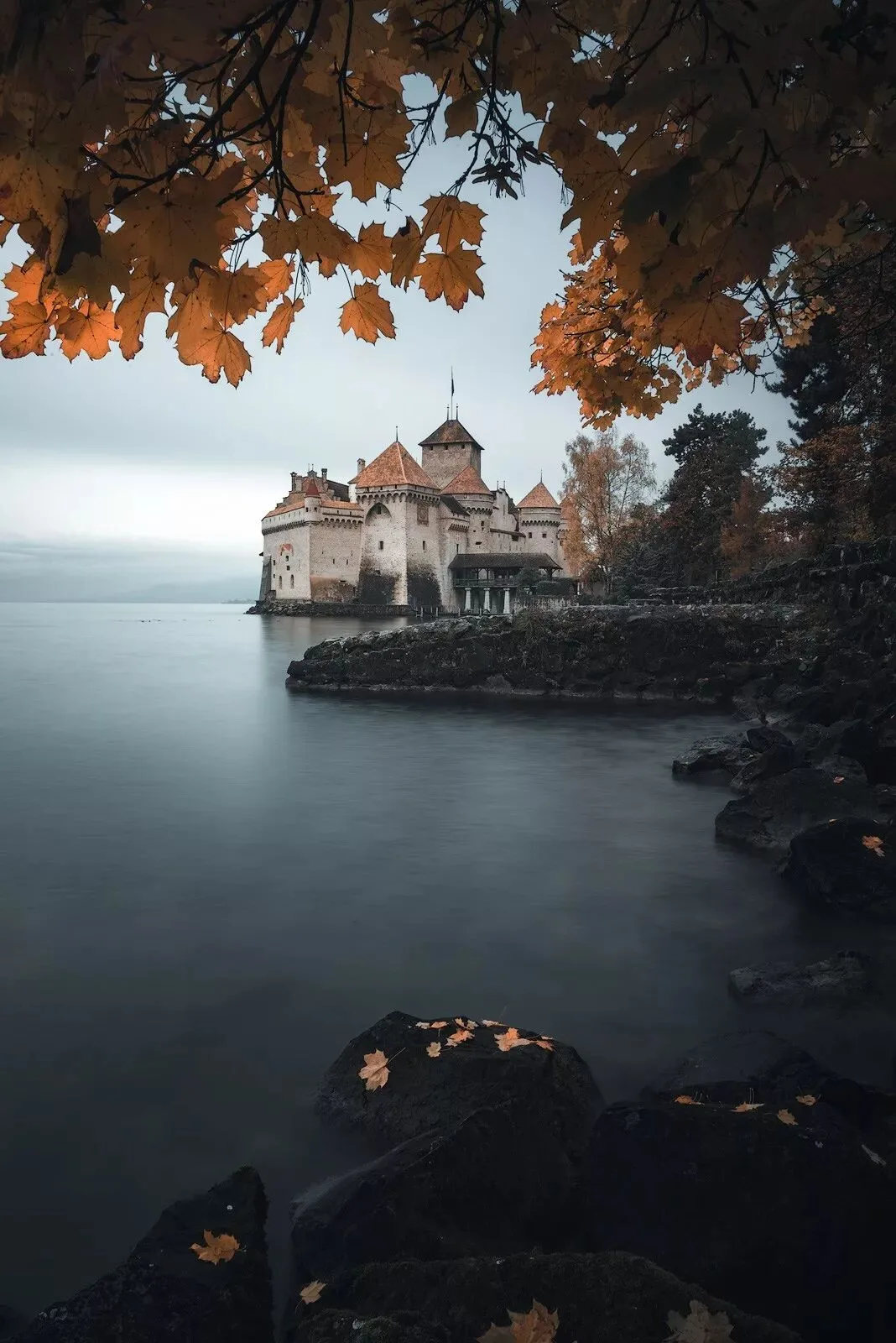
Shooting ideas:
Overcast, rainy weather may not be everyone's favorite for photography, but rain has its own unique moods — quiet, bleak, or subdued.
Because rainy scenes are inherently clean, using a 1000x ND filter and a tripod for a long exposure can further remove excess detail from sky and water, making the picture simpler and cleaner.
The image below shows the weather on the day I shot — drizzly and gray. With an ordinary composition, the photo would have been very plain.
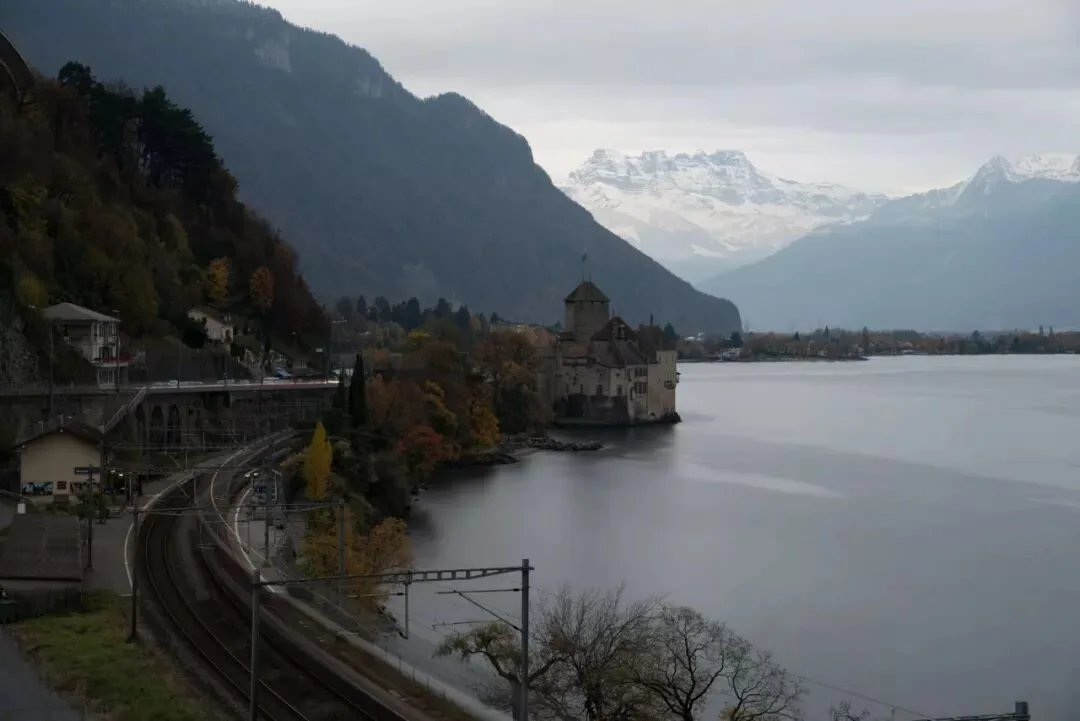
With a postcard-style classic composition, it is hard to bring out a photographer's personal perspective and ideas — and with bad weather on top, the work struggles even more to stand out.

So I tried to include richer elements in the composition. It was autumn, and many trees beside the castle had turned yellow and red.
Including these plants not only frees the photo from mechanically copying the classic composition, but also adds layering and information to the frame.
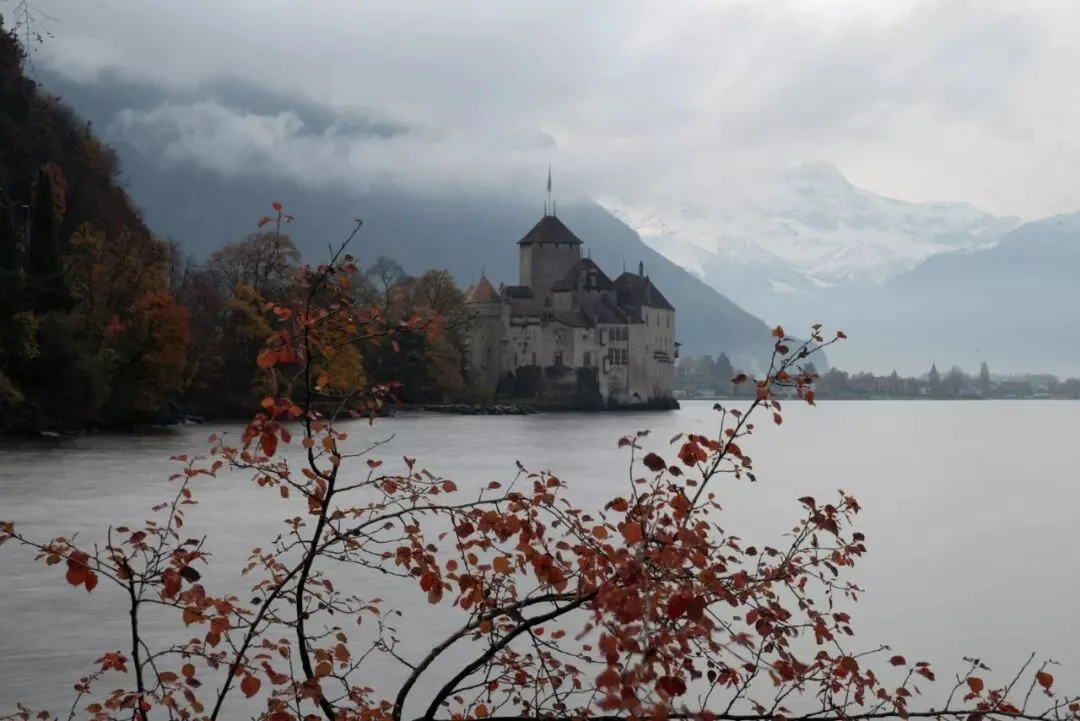
Compositions like the one above include autumn colors, but something is still missing.
First, the overcast rainy sky looks monotonous. Second, the bushes included are slightly messy.
So I explored around the castle and found this different angle.
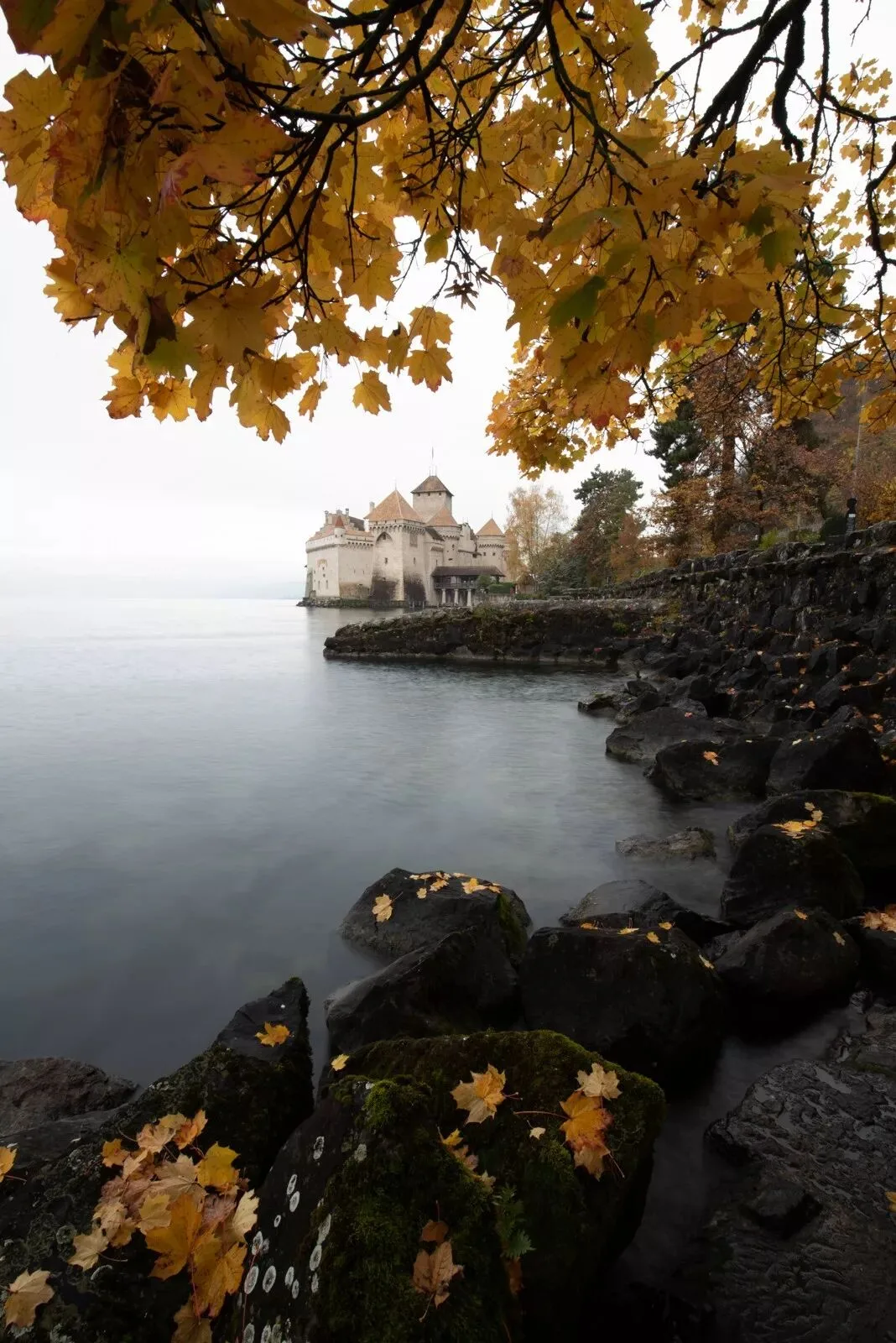
In this composition, the branches above and the rocks below enrich the content and make the space more three-dimensional.
The frame composition not only preserves the castle's role as the subject, but also cleverly hides the monotonous rainy sky.
What I love most about this composition, though, is the yellow leaves on the tree echoing the fallen leaves on the rocks — clues that beautifully convey late autumn.
The fallen leaves also seem to make the castle in the rain feel even more forlorn.
Shooting parameters:
Nikon D750, Haida ND1000 filter, 24mm, ISO 50, 5-second exposure.
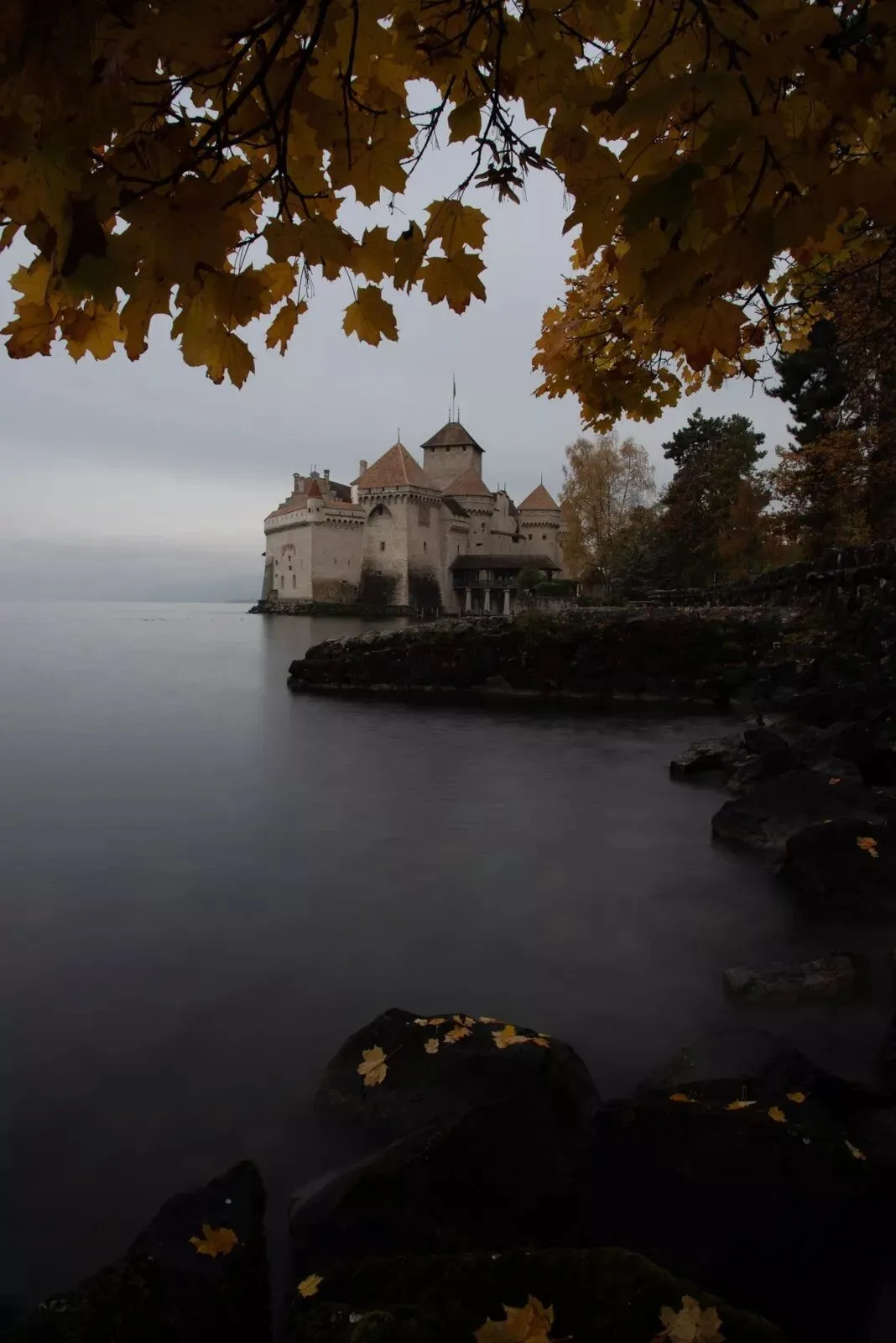
In post, using my laptop, I mainly adjusted the colors of the raw file.
First, I unified the colors of the yellow leaves and the castle so they echo each other visually.
Second, I added teal-blue tones to the sky and water — on one hand rendering the cold, rainy mood, on the other adding a warm-cool contrast to the picture.
2. Sunny Noon: A Fairytale Town
Shooting ideas:
Noon on a sunny day is also a time landscape photographers don't much like. The midday light is very harsh, the contrast is strong, and the various reflections and shadows easily make the image look messy.
But noon is not useless — the strong light brings saturated colors, especially when using a polarizer.
The drawback of strong tonal contrast can be solved in post by lifting shadows and holding down highlights.
The flaw of a messy scene can be handled through framing — trying to shoot clean, tidy compositions.
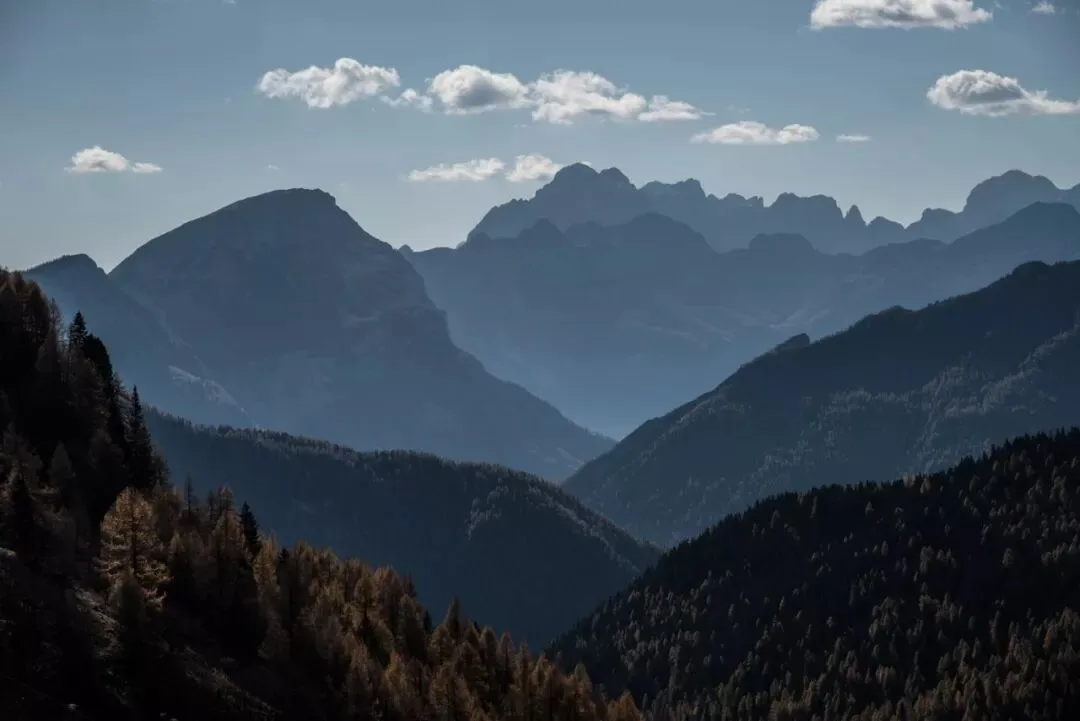
The composition above was an attempt I made that noon — emphasizing the layering and lines of the distant mountains to avoid the tonal weaknesses.
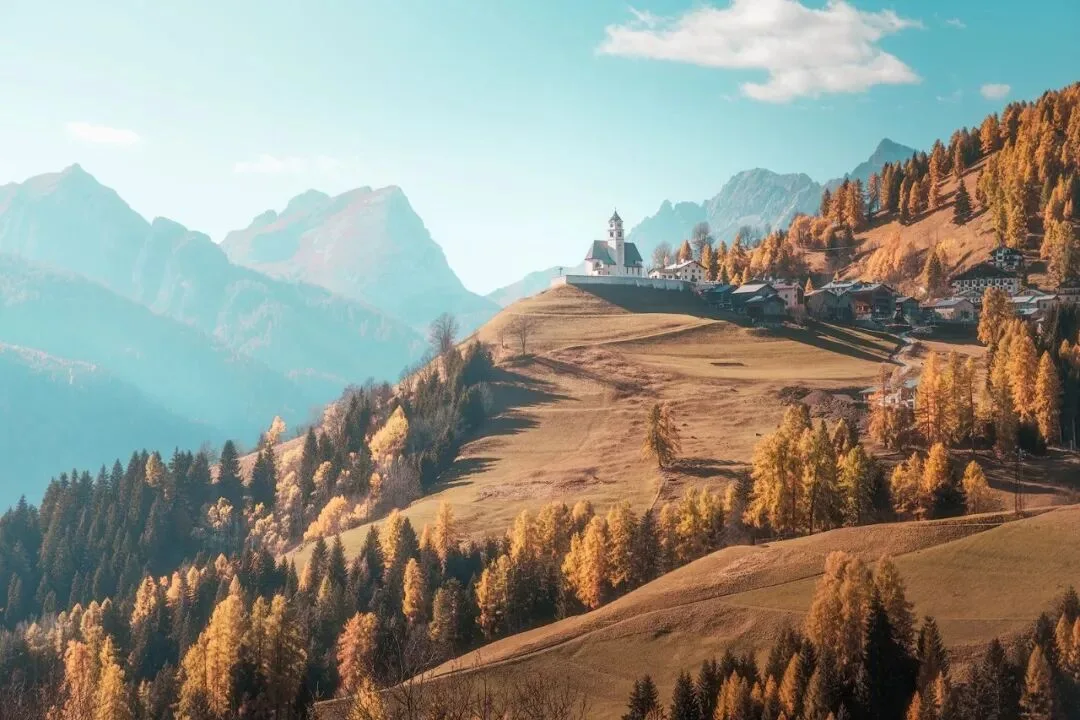
Later, as we drove to an unknown little town, I suddenly spotted a church on a distant hillside, surrounded by golden autumn woods, with majestic snow mountain silhouettes beyond — the building blended beautifully with its natural surroundings.
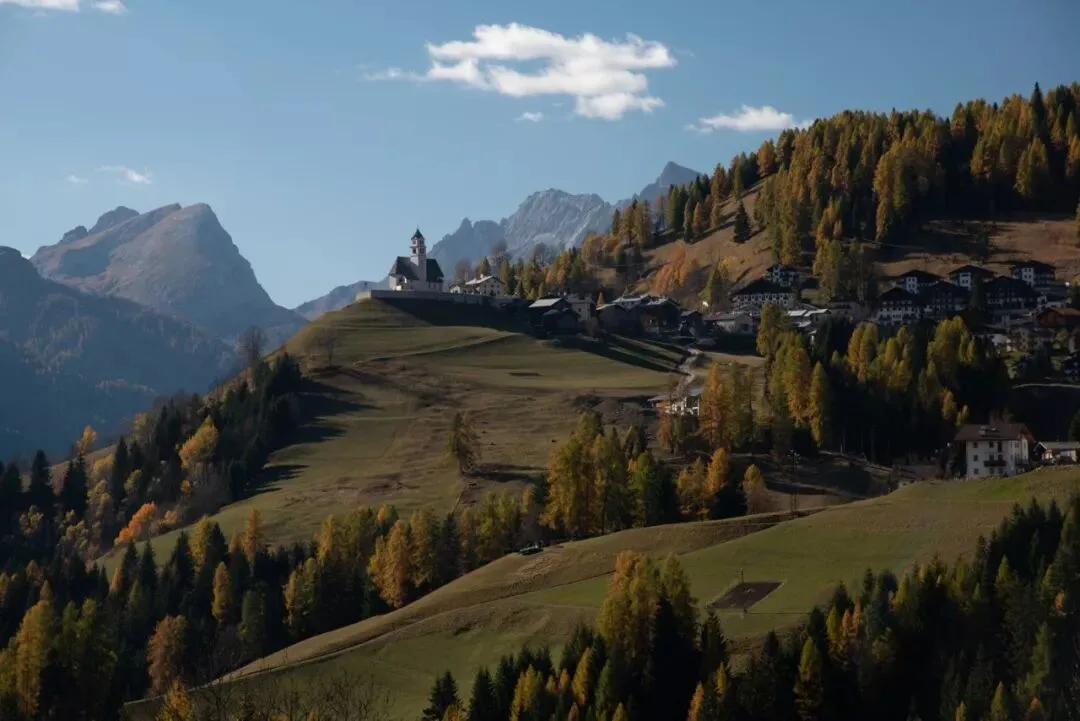
I quickly asked my friend to stop the car, took out my Nikon D750 and 24-120mm lens, and captured this mountain church.
Because the midday light was harsh, I used a Haida polarizer in-camera to remove reflections from the vegetation and boost color saturation.
For composition, I placed the church at the upper right of the frame, letting the hillside cross diagonally, and included as little as possible of the messy houses and trees on the right.
Shooting parameters:
Nikon D750, Haida polarizer, 100mm, ISO 100, f/8, 1/80s.
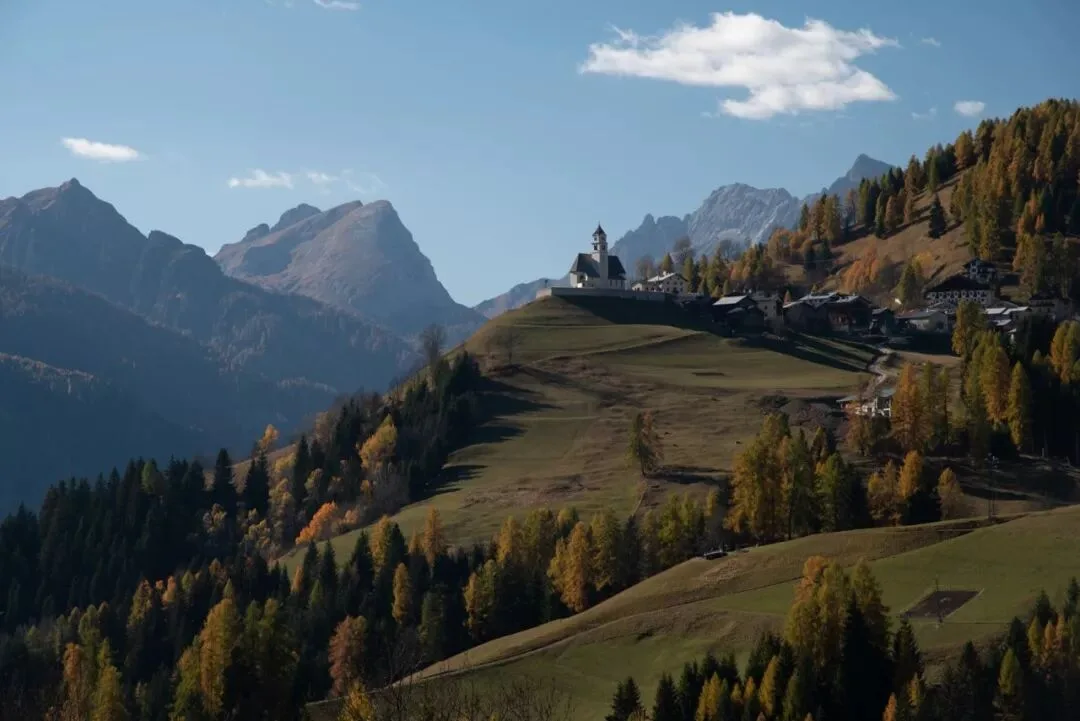
In post I made the following adjustments:
First I applied a teal-and-orange grade to highlight a dreamy feel in the sunlight. The land colors were unified toward orange to keep the foreground from looking messy.
The distant mountains were appropriately blurred to strengthen aerial perspective. Local contrast was raised where the ridges meet, enhancing the sense of depth.
I used the radial filter in Camera Raw to create the effect of light shining from the left side of the frame.
The final image is as follows:
3. Snowstorm: An Arctic Street
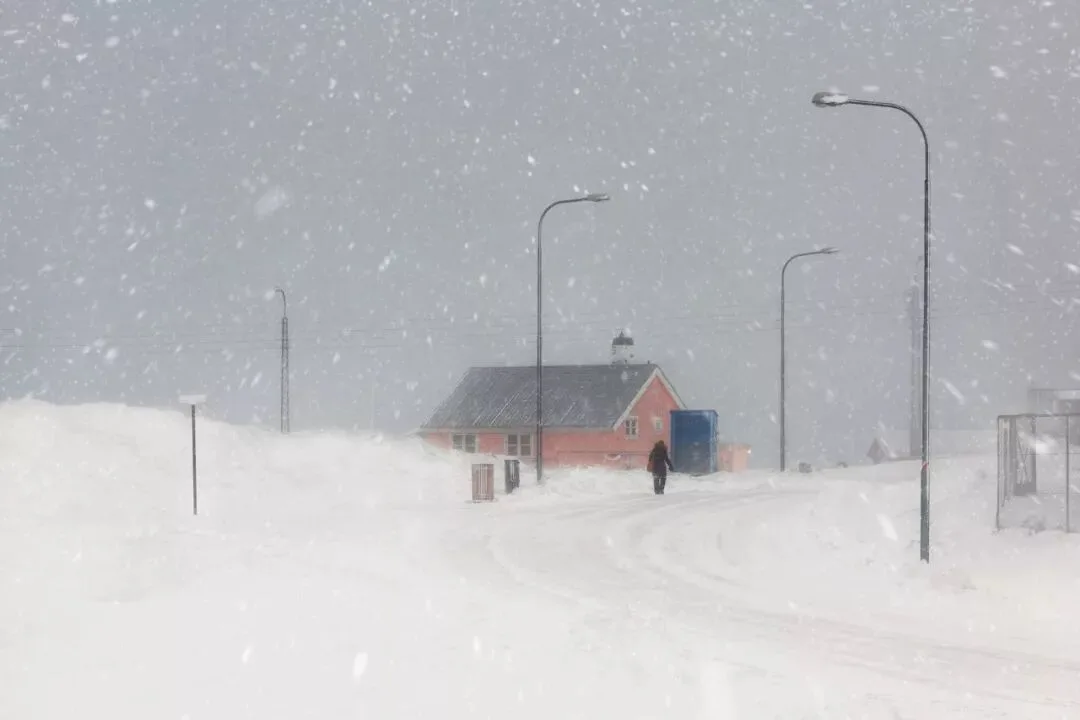
Shooting ideas:
When a snowstorm hits, should you hide indoors — or go out and shoot?
A snowstorm is an almost uniformly gray scene with very low clarity and poor layering — not suited to particularly grand scenes.
But snowstorms have their own unique emotion — icy and harsh, or cut off from the world.
Besides, snowy ground is relatively clean, and scenes that look mediocre in other weather can reveal a fascinating side in the snow through contrasts of color or geometric structure.
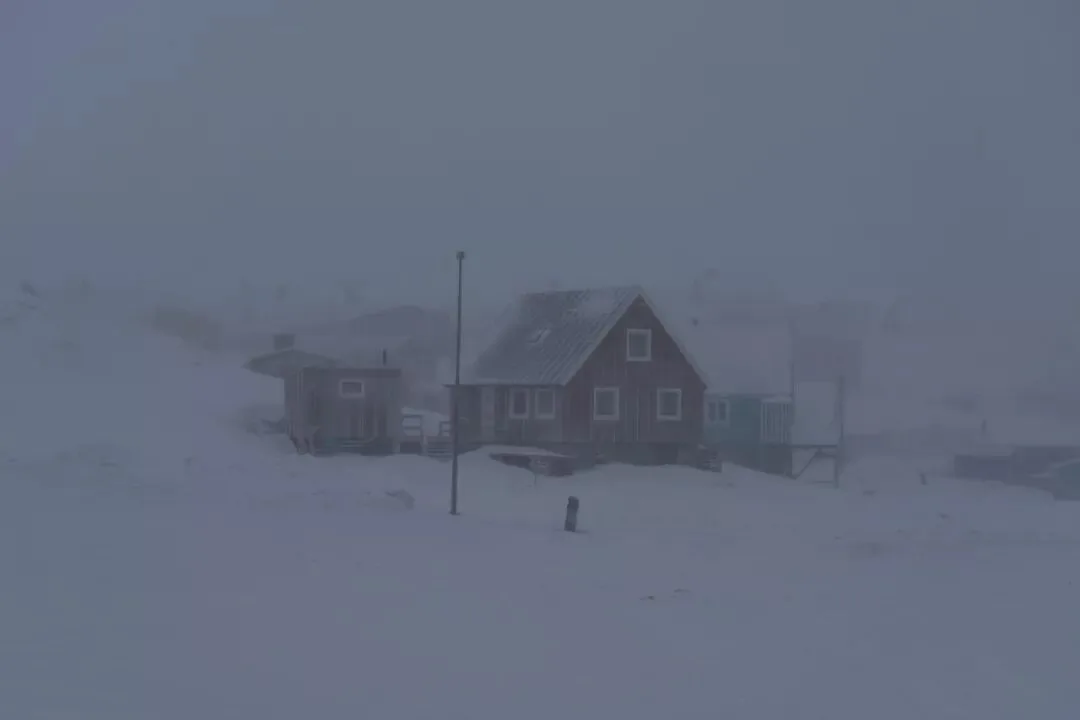
This March in Greenland, I ran into several snowstorms.
Visibility in a snowstorm is very low; all the messy backgrounds in the distance disappear, and only nearby objects remain visible.
The objects scattered on the ground are all covered by snow, becoming a pure white baseboard.
What we need to do then is extract tonal layering, color variation and structural patterns from the clean snow scene, to express its beauty.
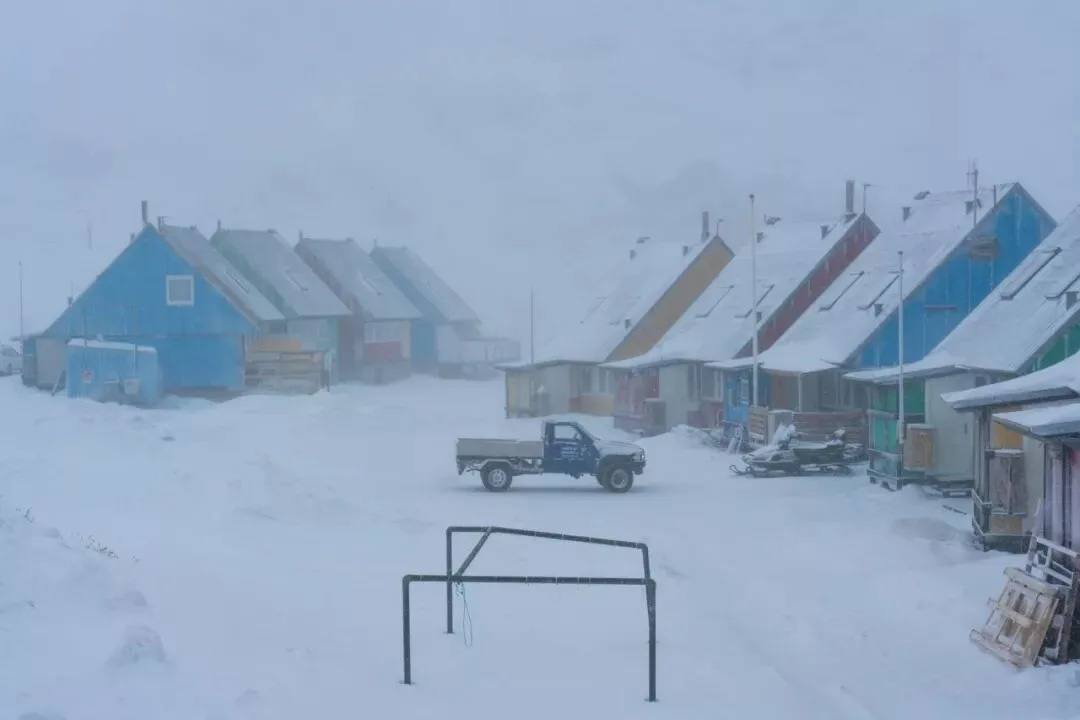
In the image above, I mainly noticed the progression of the buildings' structure and the variation of color.
In the next scene, I loved the structural beauty of the rows of utility poles on the ground and the colors of the distant houses. And of course, the pedestrian crossing the frame adds a lot to the picture.
Ordinarily, this street scene would be very messy. But the snowy weather gave me the chance to distill beauty in structure and color from it.
Shooting parameters:
Sony A7R3, 94mm, ISO 200, f/7.1, 1/125s.
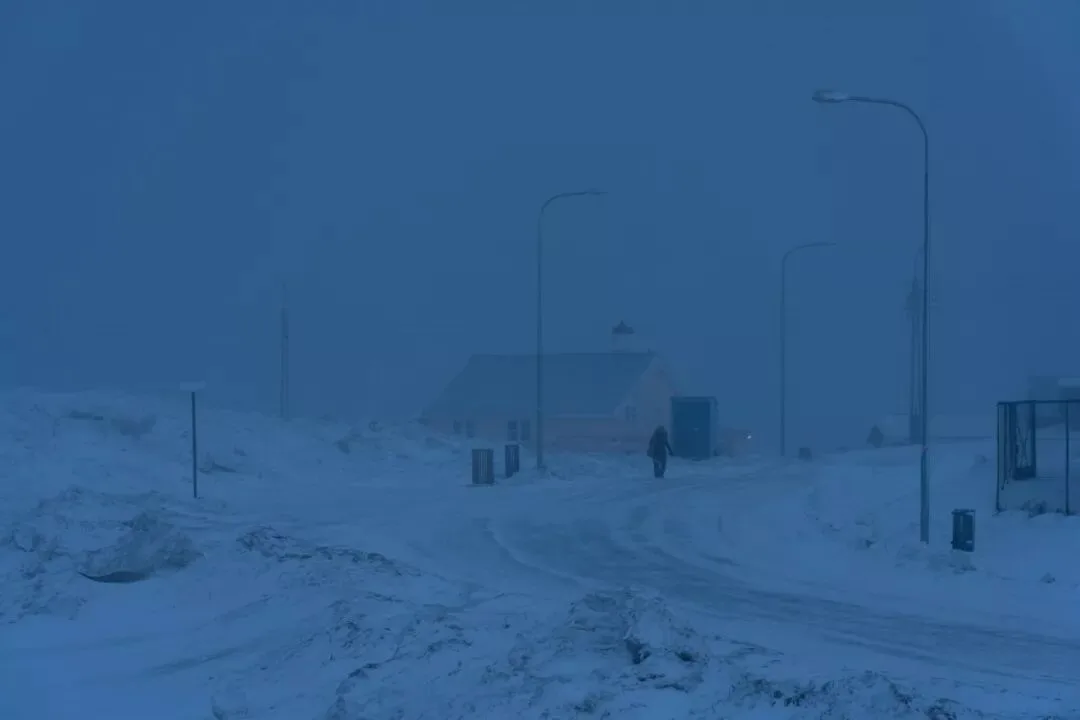
In post, I first restored the white balance. Only accurate white balance keeps every object from carrying a blue cast, so the scene's rich colors can show.
I brightened the ground substantially and used the clone stamp to remove a lot of clutter, making the foreground cleaner — a clean picture better highlights what I want to express.
For the utility poles and houses I wanted to emphasize, I strengthened tonality and color so they stand out in the frame.
It was actually snowing in the raw file, but the snow grains were too small to carry much atmosphere. So I painted larger snowflakes with the brush myself to strengthen the snowstorm mood.
The final post-processing result is as follows:
I hope the ideas shared above are helpful to you.
Of course, Thomas surely has things to improve — or overcooked — in both shooting and post. Feel free to share your views in the comments.