Photography Tutorial · 2018-06-03
Finding Landscape Photography Inspiration in Painting
Thomas Chu Photo
One piece of solid insight every week — making photography easy to learn
Drawing inspiration from landscape paintings does not mean imitating painting, nor returning to the old path of pictorialist photography. It means learning excellent expressive techniques from different art forms, combining them with photography's own characteristics, and creating more brilliant landscape photos.
In this article, Teacher Weihao Pan (潘玮浩) of Jiying introduces several landscape painters he admires, and discusses what in these paintings is worth borrowing.
First, let's look at the works of several American realist landscape painters (the images of paintings below are all obtained from the internet).
Thomas Cole (1801–1848)
Founder of the 19th-century American landscape school known as the "Hudson River School." In his hands, landscape became a formal subject, painted with solemn grandeur — in spirit no less than Europe's "grand paintings" of history and myth. It was because of him that landscape painting became a fully independent and popular genre in 19th-century America.
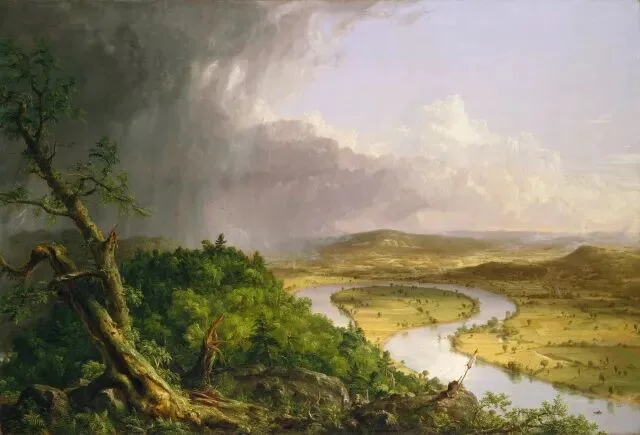
"The Oxbow," 1836
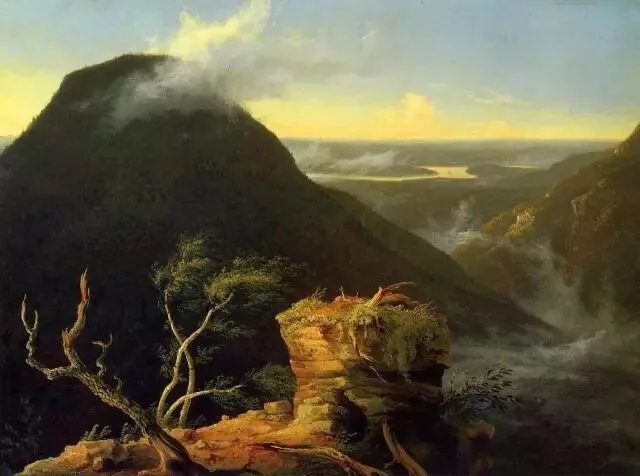
《Sunny Morning on the Hudson River》
1827
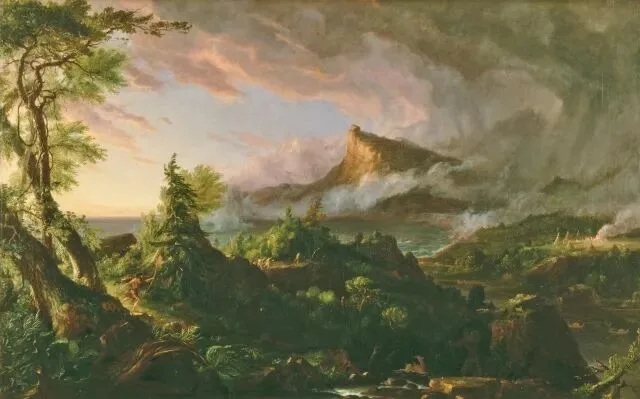
One piece from "The Course of Empire" series
1833–36
Albert Bierstadt (1830–1902)
A renowned landscape painter who enjoyed great fame in 19th-century America, also a member of the Hudson River School. With realist technique he vividly depicted the magnificent and beautiful natural scenery of the American West, from the Rocky Mountains to California on the Pacific coast.
Most of his works use huge canvases about 2 meters high and 3 meters wide to create theatrical panoramic effects, fully expressing the majesty and splendor of the American West.
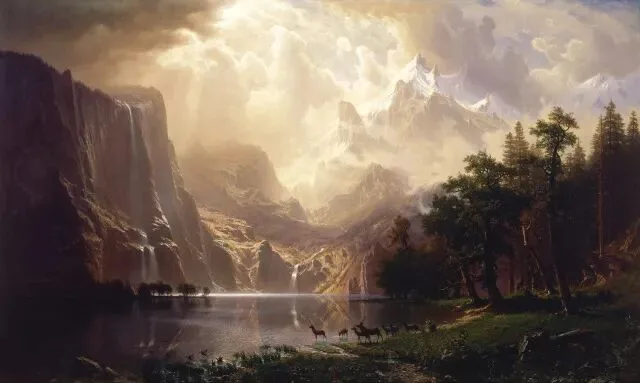
"Among the Sierra Nevada Mountains, California," 1868
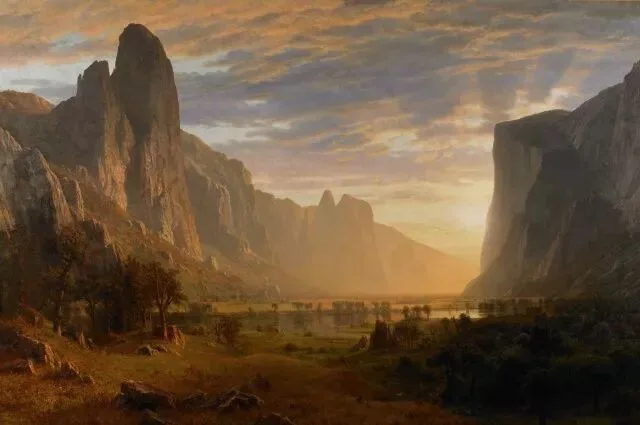
"Looking Down Yosemite Valley, California," 1865
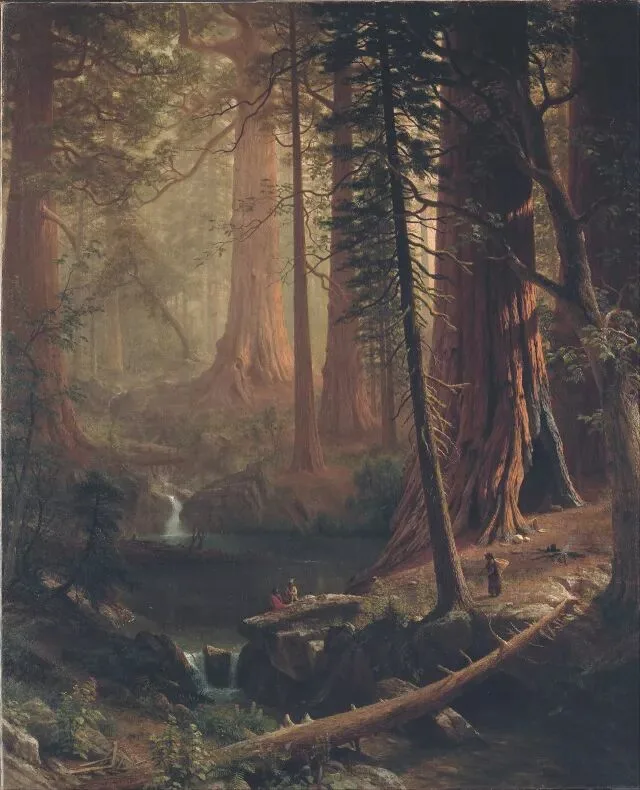
"Redwood Trees of California," 1874
Thomas Moran (1837–1926)
A Hudson River School painter and artist whose works often involve the scenery of Yellowstone Park and the Grand Canyon. It is fair to say he was among those who made Yellowstone Park possible — his paintings convinced members of the U.S. Congress that this place was truly beautiful enough to be worth protecting.
His painting "The Grand Canyon of the Yellowstone" was purchased by Congress at a high price and hung in the Capitol — he was the first American painter to receive this honor.
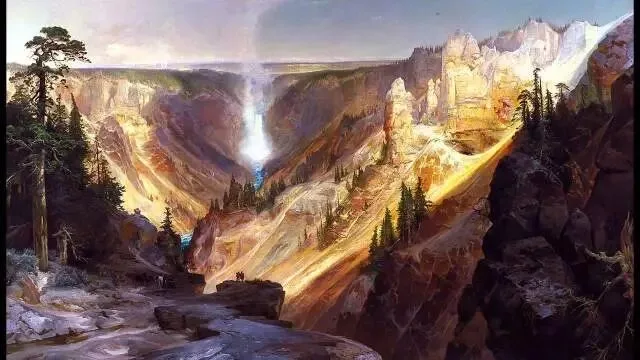
《The Grand Canyon of the Yellowstone》
1872
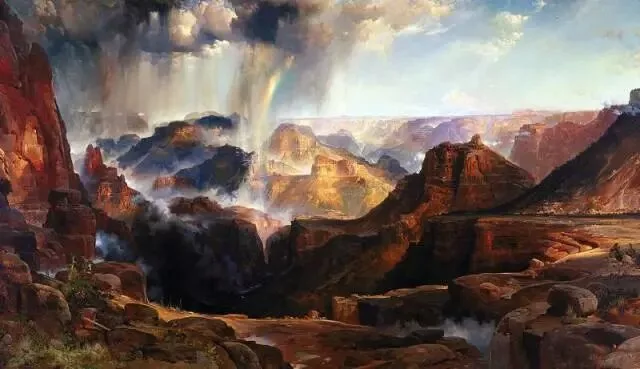
"The Chasm of the Colorado," 1874
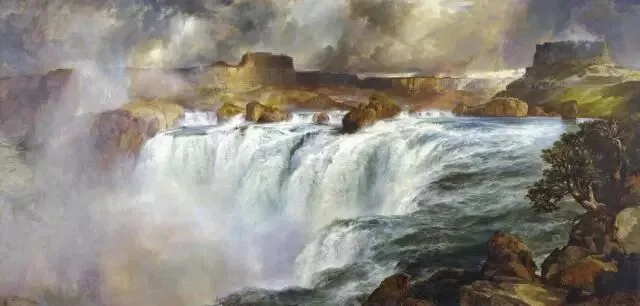
"Shoshone Falls on the Snake River," 1900
You may have noticed that the works of these three painters are close to one another to a certain degree — all are representative painters of the Hudson River School. The reason I chose these three is that their works all contain expressive techniques commonly used in today's landscape photography — very close in composition as well as in color and light.

Creating Three-Dimensional Space

In terms of creating three-dimensional space, all three painters used foreground, middle ground, and background. At the same time, by shaping shadows, light, transitions of warm/cool and light/dark, and the sense of distance between far and near, they built a three-dimensional spatial feeling. In fact, whether painting or photography, both use a two-dimensional flat medium to express a sense of three-dimensional space.
In reality, when a person walks into a scene — say, into a forest — the eye quickly adjusts focus, seeing both far and near, and the eyeballs keep moving to observe, which reveals the three-dimensional structure better than a flat image can. So on a flat surface — whether a landscape painting or a landscape photograph — what we must create is a three-dimensional space.
Take an apple sketch as an example.
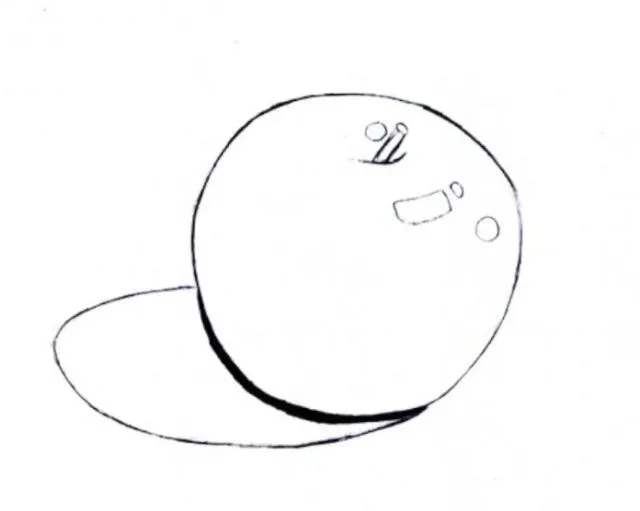
In this sketch the apple has uniform brightness, with only dots and lines — it is flat.
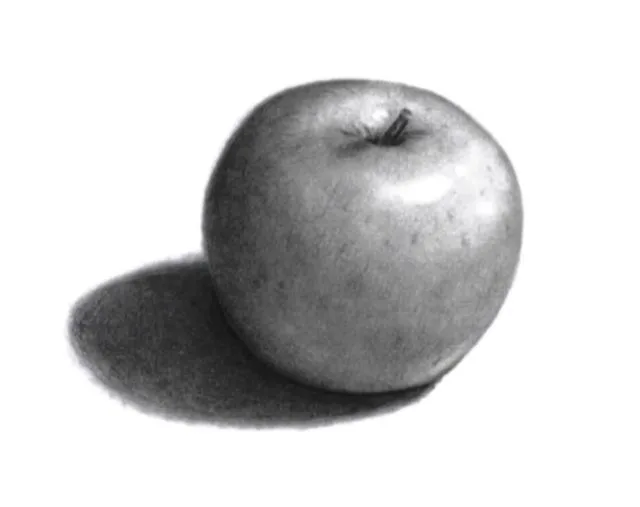
But in the image above, the apple gains light and shadow, adding tonal contrast — and immediately a sense of three-dimensionality emerges.
Back to the paintings of the three artists.
- Composition
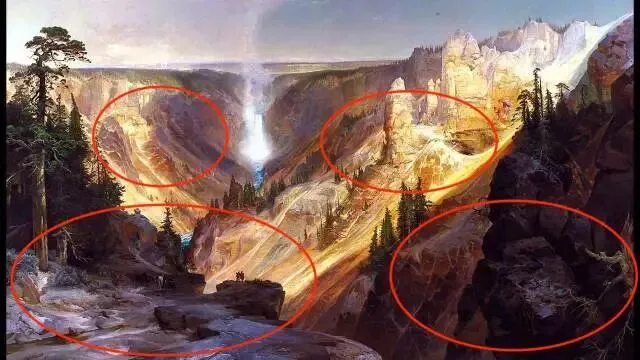
(Take this painting by Thomas Moran as an example.)
The whole picture is very full, with elements advancing layer upon layer in well-spaced order. Although the scene is grand and rich in elements, the viewer does not find it chaotic. Many who have taken painting courses know that teachers often emphasize one point: simplify.
Generally speaking, the more detail in an image, the more complex it appears to the viewer. So if a picture has no direction guiding the viewer, viewers often don't know how to look at it; without a center and a direction, the picture appears chaotic and complex. The same is true of photography. How to arrange picture elements reasonably is the top priority in composition.
Generally one must guide the viewer's visual direction, and that direction must remain consistent. If the viewer's visual direction is chaotic, the picture's subject appears unclear. Of course, a picture usually has 2 to 3 points of interest that move the viewer's eyes. If you can arrange these 2 to 3 points of interest reasonably, the quality of the whole picture rises a level.
Suppose we split the picture into left and right halves: we can consider arranging the 2 to 3 points of interest in an alternating left-right-left-right pattern. Just as in Thomas Moran's painting above, the scenic elements inside the red circles are arranged alternately in pairs, left and right.
Attentive friends may notice that many paintings in this article arrange scenic elements in alternating left-right pairs without mixing them together. The benefit of this arrangement is very strong layering, and the sense of space is easily presented.
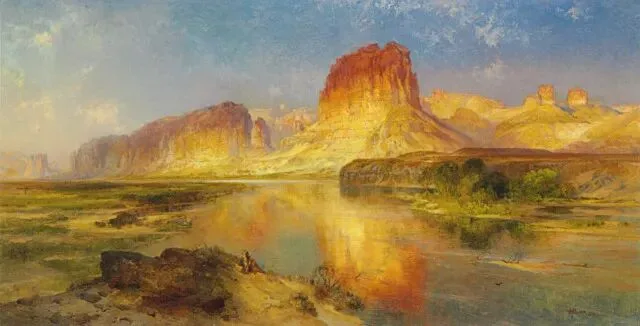
Thomas Moran's "Green River of Wyoming"
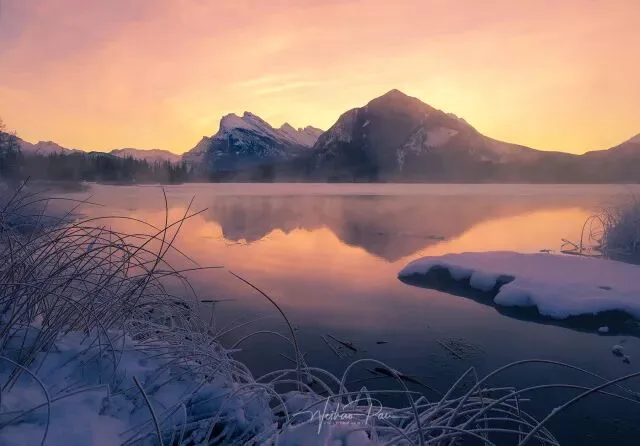
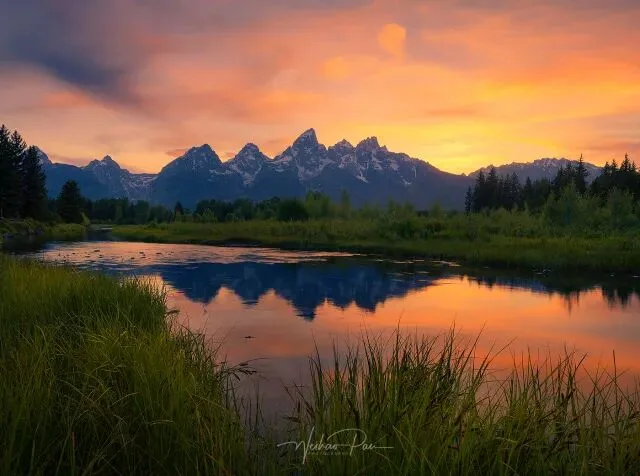
A simple example using reflections: when leading students shooting outdoors, one point I often mention is that shooting a reflection alone looks like a flat plane.
But if you pay attention to including foreground and middle ground, and mind their positions in the frame — ideally in alternating left-right pairs that don't block each other — the whole picture can create a three-dimensional sense of space. Just as in Thomas Moran's reflection painting above: he did not paint a mere reflection, but used the addition of foreground and middle ground to build three-dimensional space.
- Color
In many paintings, the painter has in fact decided on the main colors from the very start, then selected other colors accordingly for reasonable color combination. The concept of a dominant color in a combination refers to the color occupying a larger share of the picture. When a picture has a dominant color, the viewer naturally focuses on the objects of that color — giving the picture a focal point rather than disorder.
Take Thomas Moran's "The Chasm of the Colorado": the whole picture's tonality takes red-brown as the dominant color, paired with neighboring tones according to differences in light and shadow. The viewer easily fixes their gaze on the magnificent scenery of this grand canyon.
And increasing the contrast between warm and cool tones likewise significantly enhances the three-dimensional sense of space.
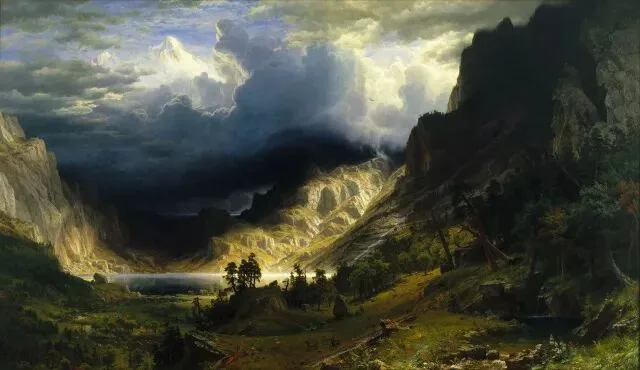
Albert Bierstadt's "A Storm in the Rocky Mountains" fully demonstrates the contrast of warm and cool color tones. Sunlight within a storm is inherently a scene of strong contrast, full of drama. The painter wants the viewer's gaze to rest on the warm-toned area — quite like seeking light within darkness.
- Lightness and Darkness
Careful readers should have noticed that all three painters pay great attention to the contrast between light and dark, highlighting the subject and the bright spots.
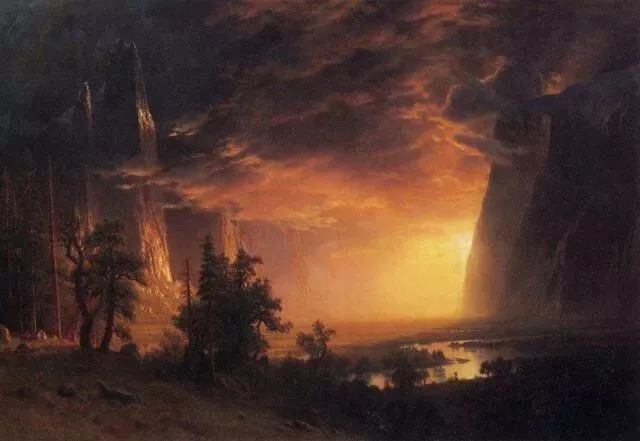
Albert Bierstadt 《Sunset in the Yosemite Valley》
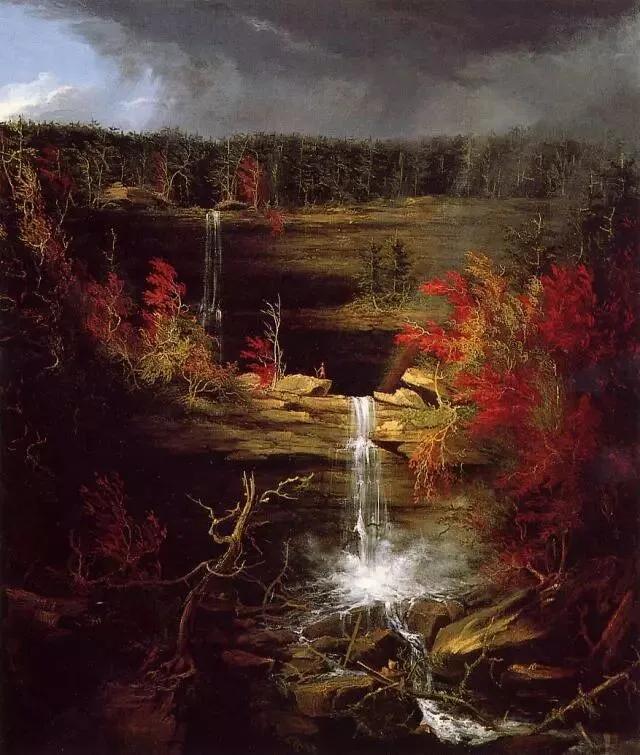
Thomas Cole《Kaaterskill Falls》
Take these two paintings by Albert Bierstadt and Thomas Cole as examples. Both have a very strong sense of light — the viewer's gaze is drawn to the illuminated subject at first sight.
In fact, human vision is often attracted to bright things, just like stage lighting: we tend to notice only the lit spots where light falls on stage, not the dark areas. Providing a light-dark contrast gives the viewer a viewing direction — a direction of light and dark.
So both when shooting landscapes in the field and when processing in post, we should pay attention: is the subject of our shot illuminated by the light I want? Which places need strengthening and highlighting in post? These are all worth thinking about when we shoot landscapes.
- Contrast of Sharpness and Blur
Take two paintings by Albert Bierstadt as examples.
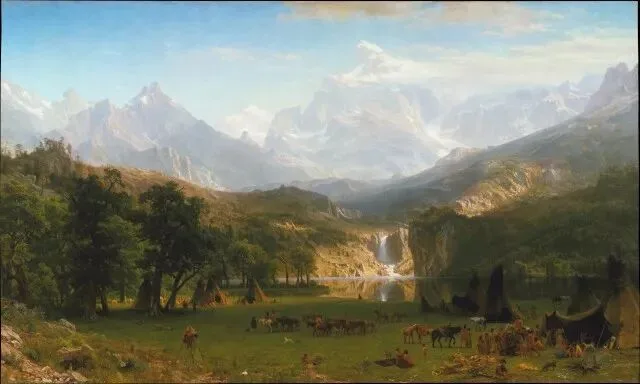
《The Rocky Mountains, Lander's Peak》
1863
"Among the Sierra Nevada Mountains, California," 1868
Whether in landscape painting or landscape photography, not all elements of the picture actually need to be crystal clear. A certain contrast of sharp and blurred can create a sense of distance and space. It can be said that long ago in painting history, painters noticed this contrast and earlier employed methods like "Gaussian blur," making distant views less sharp so viewers can feel the sense of distance — further strengthening the three-dimensional sense of space.
Some friends may ask: what about Chinese landscape painting (shanshui)? What can we absorb from it and apply to landscape photography?
If the above is still mostly about technique, what we discuss next may be something deeper — the mood and emotion of a work. Whether painting or photography, mood and emotion often enable a qualitative leap in a work.
First, a brief account of the difference between Chinese and Western landscape painting.
Note: this is not about judging which of Chinese and Western landscape painting is better or worse — merely stating my own views on the characteristics of these two genres. Art is not about pursuing who is better than whom, but about pursuing diversity and one's own character.
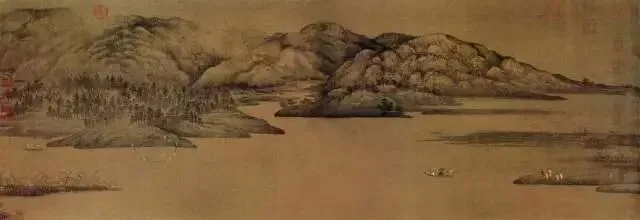
Dong Yuan, "The Xiao and Xiang Rivers" (《潇湘图》)
What Chinese scenery and shanshui painting express is a mood and atmosphere — the emphasis is on creating an overall artistic conception, unlike Western painters' imitation of nature. By overall conception we mean that Chinese shanshui painting does not, like Western landscape painting, cut out a scene fragment or one aspect of the landscape to depict; rather, taking the painter's own feeling as primary, it absorbs certain objects through contemplation of the mind to compose scenery and artistic conception.
This unique way of aesthetic contemplation determines that Chinese shanshui painters do not directly seize a subject from nature to compose the picture, but instead cultivate stillness within nature, induce inspiration, and create atmosphere and mood to embody the author's spiritual character — this is the spirit of Chinese landscape painting.
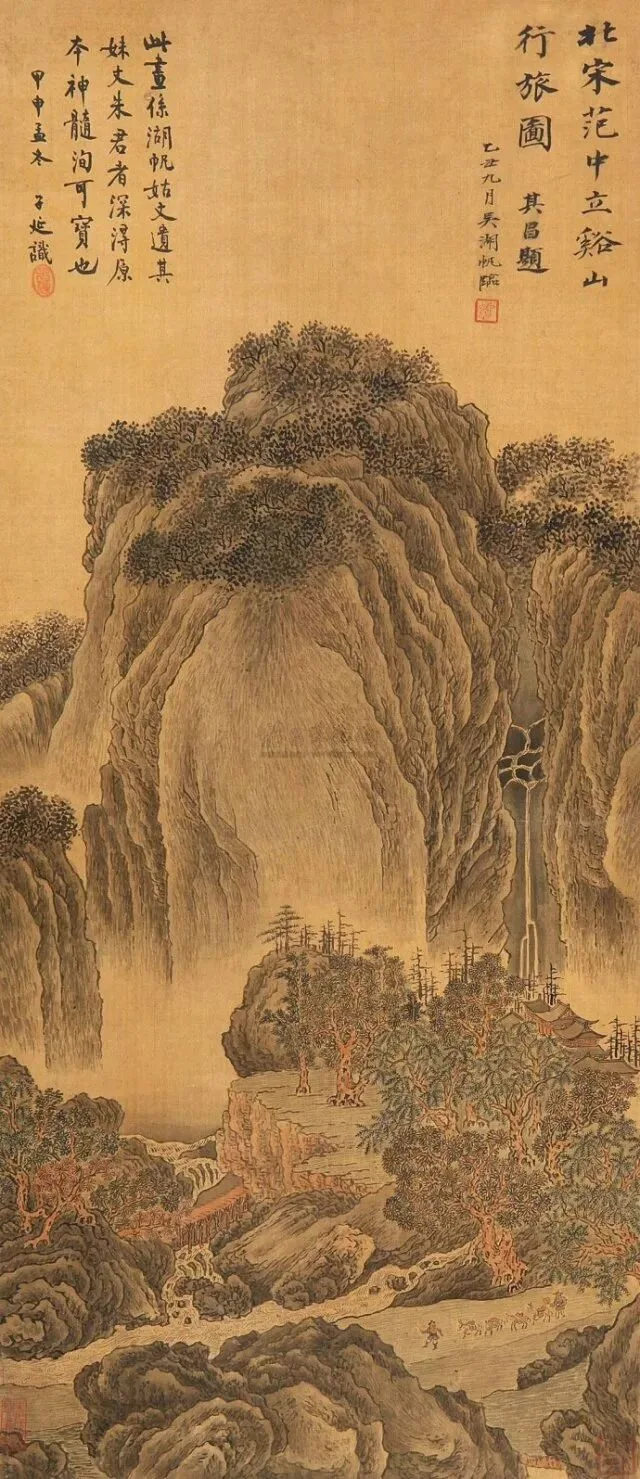
Fan Kuan, "Travelers Among Mountains and Streams" (《溪山行旅图》)
The artistic charm of Chinese shanshui painting also has much to do with its form of creation. Speaking of ancient China, we often think of poetry and calligraphy.
To a great extent, Chinese shanshui painting paints with the mindset of composing poetry. What it expresses are artistic conceptions the painter draws from poems — this is exactly what "poetic feeling and pictorial sense" (诗情画意) means. It is not confined to sensory impressions from the visual world, but often goes beyond the visual range — though a visual art, it can reveal content beyond the visual.
As the saying goes, "there is painting in poetry, and poetry in painting" — this has become a tradition in Chinese shanshui painting. Calligraphy, meanwhile, requires that the brushwork in a painting possess calligraphic skill and charm, because traditional Chinese shanshui painting takes calligraphic brush-and-ink as the foundation of its method. In these two points alone it is already fundamentally different from the Western landscape painting tradition.
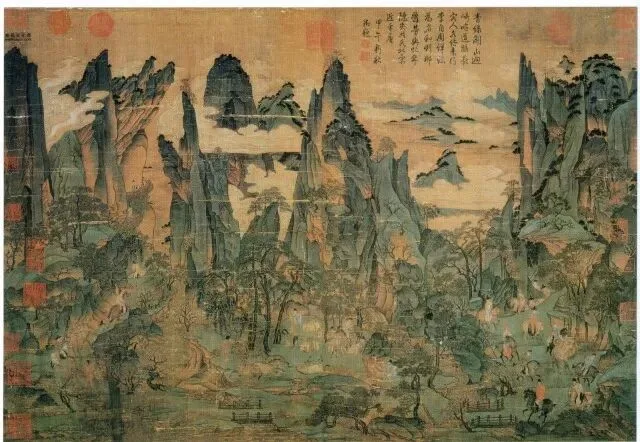
Li Sixun, "River Boats and Pavilions" (《江帆楼阁图》)
After the Western Renaissance, landscape painting became more about scientifically reproducing the objective world — pursuing harmony and perfection of form, pursuing the expression of things' own characteristics, and emphasizing unfolding in space; pursuing a lifelike natural space and reflecting real landscapes became the focus of Western landscape painting.
Western painters stood outside nature to study and describe it. With realist aesthetics and the oil painter's palette they recorded natural scenery stroke by stroke, paying more attention to painterly techniques like geometric proportion, color, and light — mood and emotion were often only added to the painting to a greater or lesser extent.
Back to photography: although it lacks painting's enormous freedom — what the camera captures is a record of reality — how to use different in-camera and post techniques to recreate the scene in one's mind is, in my view, the same as painting.
In landscape photography we can, in the Western style, emphasize techniques like geometric proportion, color, and light; we can equally, like Chinese shanshui painting, emphasize the expression of artistic conception — or even combine the two.
Personally, I believe mood, emotion, and artistic conception are the hardest parts to express in landscape photography. Many things can only be sensed, not spoken, and different people interpret them differently. On this point perhaps we can refer more to Chinese shanshui painting and emphasize the expression of artistic conception.
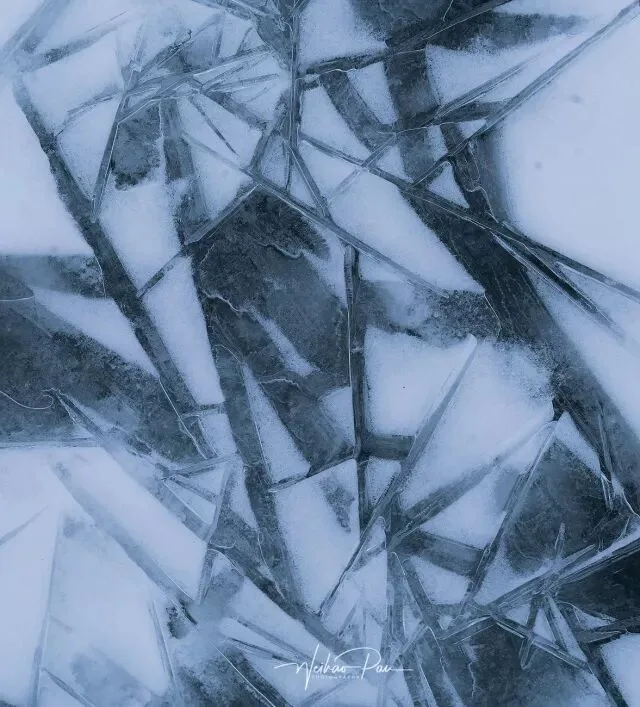
"Ice Bamboo" (《冰竹》)
This is a unique abstract image I captured in the Canadian Rockies early this year. It shows ice crystals on a frozen lake: after snowfall, wind blew snow into these ice crystals, and the snow trapped behind the crystals formed this scene.
After observing closely, I found this part closely resembled the ink-bamboo paintings I had seen in Chinese art — so I took this work. It is a photo of unique status for me, and it carries unique emotional meaning.
The symbolism of bamboo is known to many friends: the qualities a noble person (junzi) should possess — integrity, uprightness without flattery, fearlessness before coercion and temptation, persistence in being oneself. The ancients said, "One cannot live without bamboo," meaning one differs from the worldly fame-and-profit chasers, pursuing only the ideal in one's heart. Bending without breaking is a life principle of firmness within gentleness. Bamboo's tall uprightness and elegant grace are also the character pursuit of Chinese literati.
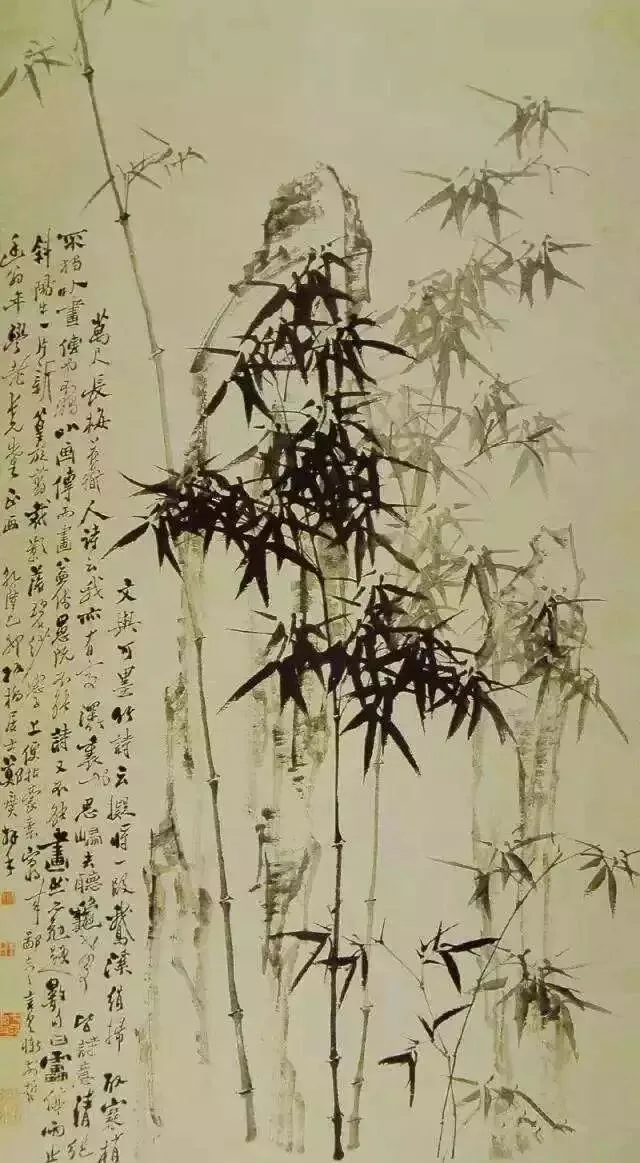
Zheng Xie (styled Banqiao), "Ink Bamboo" (《墨竹图》)
In fact, whether landscape painting or landscape photography, very often the work exists only to express the feeling of a certain moment — it can carry a joyful mood, a deep and heavy mood, and it can likewise express one's spiritual character.
This hazy, inexpressible feeling is exactly the charm of these landscape paintings and landscape photographs, because different viewers can have different interpretations — and that, precisely, is the charm of art.
Finally, I strongly recommend that friends who love landscape photography look at more paintings — not necessarily only realist landscapes, but also other abstract works. In the process of viewing these paintings, I believe you will gain no little inspiration.