Photography Tutorial · 2019-07-01
Photography Contests: The Most Detailed Beginner's Guide
Thomas Chu Photo
Photography contests are a topic photographers care deeply about.
If you follow — and even enter — quality contests with the right mindset, it helps enormously with both improving your craft and growing your reputation.
But contests are also murky waters, tangled with commercial interests. For some photographers they do more harm than good — turning them into obsessive 'award hunters' and cash cows for certain organizations.
Today Thomas will share some personal experience from three angles: the right mindset for entering, how to tell trustworthy contests from money traps, and how to actually enter.
(This article is about 10,000 characters — consider saving it before reading.)
1. Why follow photography contests? Mindset matters
When it comes to following and entering contests, mindset matters.
A scandal recently hit the photography community: a copycat organization named over a hundred 'Global Chinese Photography Masters,' and among the winners were contestants who collect 2,000+ 'gold medals,' 'ribbons' and 'certificates' a year. That is not a healthy way to compete.

The right mindset is the prerequisite for growth. Obsessing over 'harvesting awards' in low-level contests only leads you astray.
A healthier mindset is to use great contests to learn the industry's cutting edge, spark new ideas, and find your own gaps; to push yourself to create more mature work through entering; and to let winning motivate you to create on bigger stages.
Generally, people follow and enter contests for two purposes: learning and motivation.
First, learning.
Following the winning works of photography contests is a great channel for enthusiasts to improve their aesthetics and skills.
Not everyone has easy access to exhibitions, photo books or workshops. And the quality of photos online is uneven — hard for beginners to judge.
Following the winners of established, high-quality industry contests is a genuinely good learning process — the works are hand-picked by juries, so a baseline of quality is guaranteed.
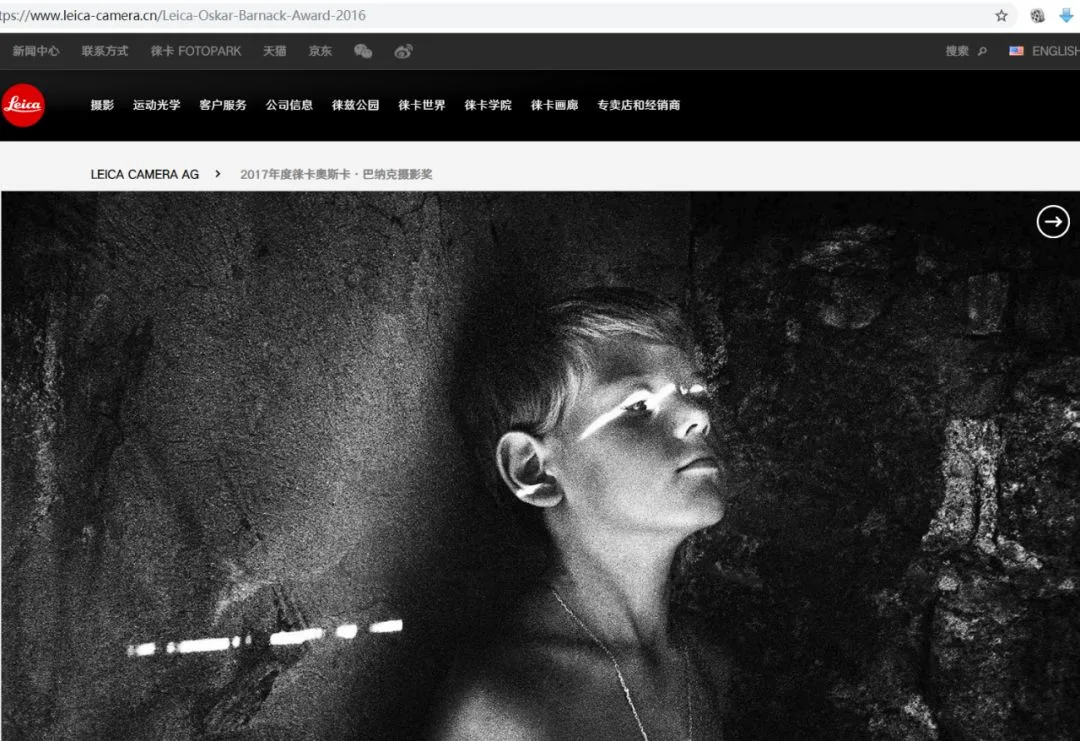
Different contests favor different things: some value depth of meaning, some formal beauty; some require a series, stressing comprehensive project-making ability, while others need just a single image — the decisive moment.
To improve the beauty of your images and form a distinctive personal style, follow the more commercially oriented contests.
The Hasselblad Masters Awards, for example — its winners reach remarkable heights of formal beauty and stylistic identity.
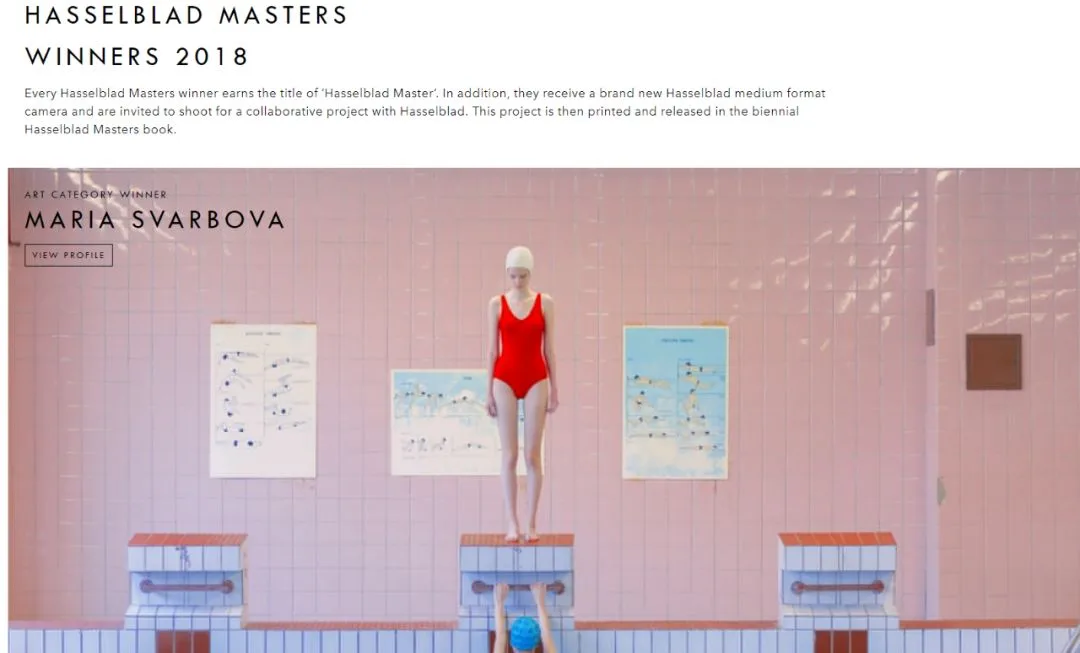
If you care more about the thinking behind photos and want to learn planning, editing and presentation, follow the documentary and art contests that work with photo series.
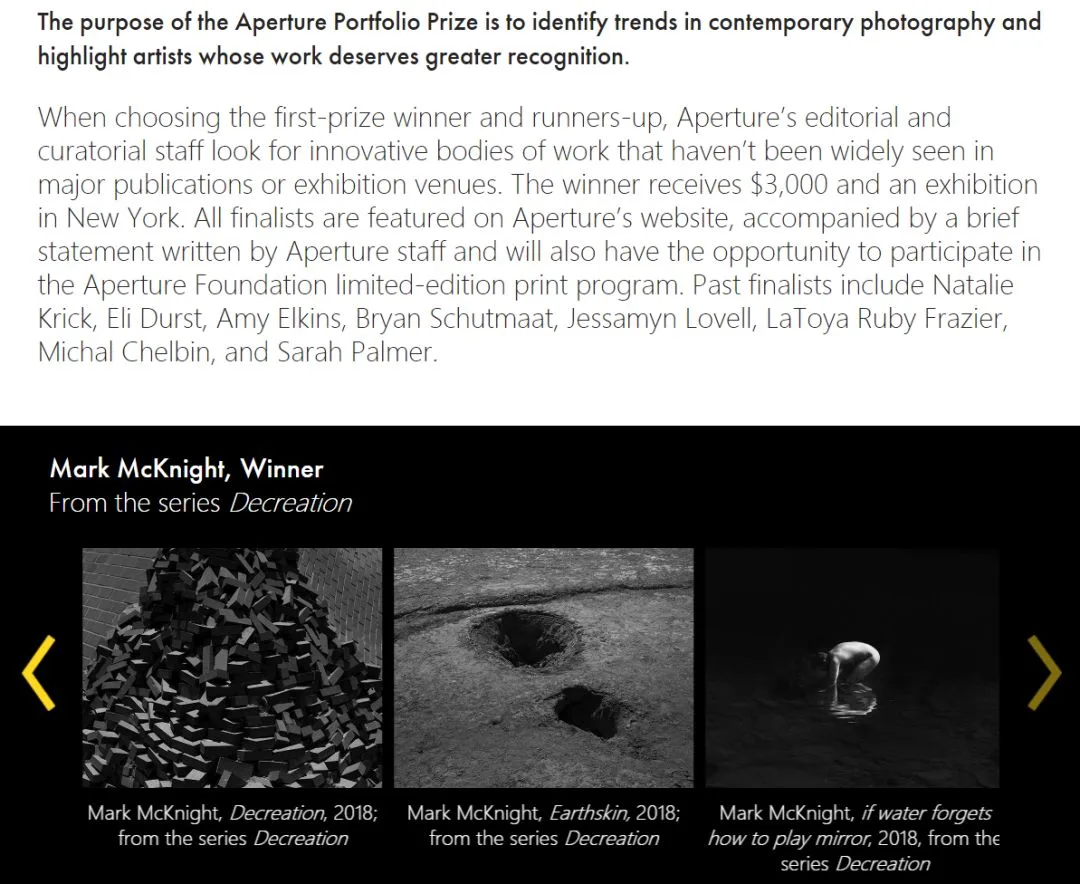
Following contests is learning — and entering them yourself is another way to learn.
Analyze the gap between your entry and the final winners: did you lose on innovation, on presentation, or on the angle of the topic and the depth of execution? All of this can be reviewed and summarized over time.
Beyond learning, winning is also a form of recognition — 'fame and gain' — the industry's acknowledgment of a photographer, and one of the motivations that keeps enthusiasts and professionals improving.
Thomas himself, for example, never imagined his photos would one day land on the homepages of BBC and CNN through winning contests.

That media exposure let more people see the work he labored over, raised his profile, and helped him win more collaboration opportunities.
Many contests also offer gear support and travel sponsorships, sometimes generous prize money or creation grants. Photography is undeniably an expensive hobby — earning some of it back is wonderful.
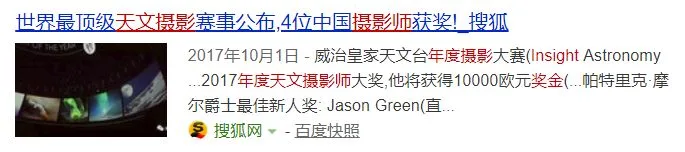
Winning is something to be proud of, but two emotions must be kept in check.
One is complacency. There is always a higher mountain. Win a city contest and there are provincial and national ones; win nationally and you can compete with photographers worldwide; win internationally and there are still higher-tier awards. And contests are never the sole measure of a work — completion, innovation and social impact are what ultimately count.
The other is creating for the contest. Photography should first please yourself and express your personality and strengths. Create good work first, then choose suitable contests — even optimizing slightly for a specific one. Never invert this and create for awards, obsessing over pleasing the jury like exam-oriented education.
Where there is fame and gain, there is maneuvering. Strong commercial incentives breed rigged operations and money-trap contests. Which brings us to the second question: how do you identify trustworthy contests?
2. How to identify trustworthy photography contests
There are countless contests today. As photographers pay more attention to them, some businessmen have moved in, turning contests into a business — luring people into unknown, low-quality contests and profiting from hefty entry and exhibition fees.
Entry fees aren't necessarily bad. Many quality contests use them as a threshold so entrants select their best work instead of bulk-submitting meaningless photos.
So which are the 'scam awards' and which are trustworthy? You can screen them on three criteria: exposure and rewards; the organizer's credentials and history; and the professionalism of winning works and photographers.
1) Exposure and rewards
The most important reward of winning is psychological joy and motivation — but worldly fame and gain matter too.
If a contest charges a high entry fee, then gives winners only a token 'medal,' little prize money, and no industry attention or public exposure, it's very likely a money trap tailored for certain photographers.
Beyond an initial sense of satisfaction, there's little reason to keep entering such contests.
Specializing in these awards — collecting hundreds of 'gold medals' a year — borders on obsession. They are good for nothing except showing off to uninformed friends.
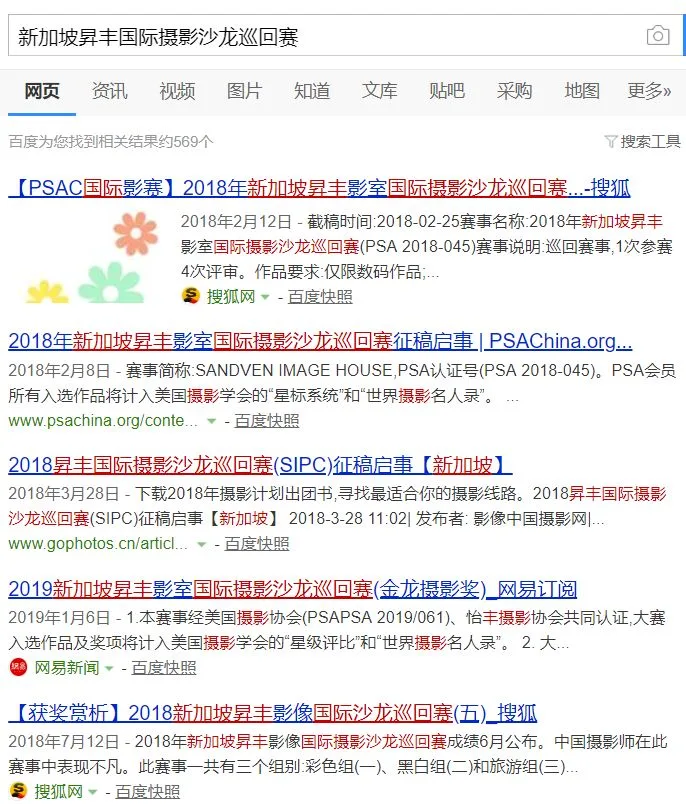
Some contests have intimidating names full of 'World,' 'Top Ten Masters,' 'Art,' 'Tour' — yet a web search returns only a few hundred results, mostly official press releases, agency promotions or winners' own testimonials. Their credibility speaks for itself.
Any contest with no entry fee (and no follow-up fees) is at least not a money trap, whatever its prestige. These contests are extremely friendly to enthusiasts.
The Sony World Photography Awards, Nikon Photo Contest and Huawei Next-image Awards are all high-level contests with no entry fee.
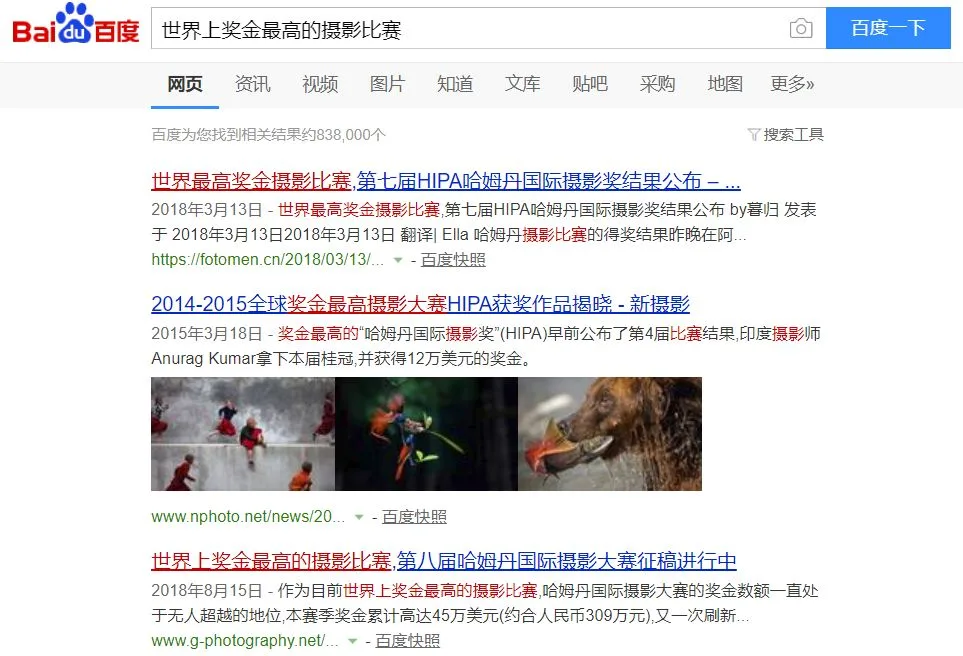
HIPA (Hamdan International Photography Award) has embarrassed itself with some winning selections, but it charges no entry fee and offers prize money totaling over 3 million RMB — billed as the world's richest photo contest, it's worth following.
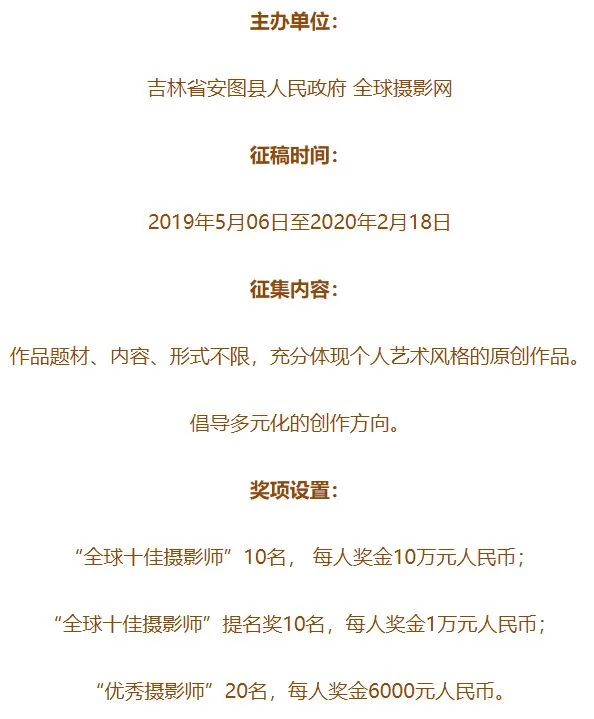
Many contests run by government bodies or commercial organizations also charge no fee while offering very high prizes — worth a try too.
Likewise many online commercial contests on Tuchong, 500px and Mepai offer prizes with no entry fee — worth trying for enthusiasts.

If a contest charges a fee but carries real prestige — especially major media exposure and industry opportunities — then for ambitious veterans and professional photographers it's worth curating your work and taking on the challenge.
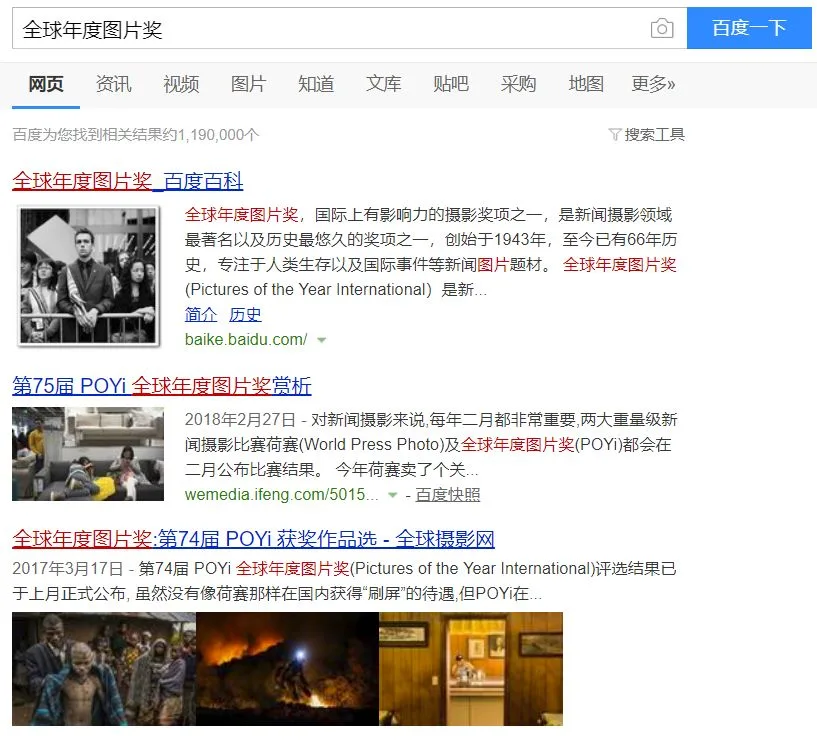
Exposure comes in two kinds: public and industry. Contests like World Press Photo, POYi (Pictures of the Year International) and the Sony World Photography Awards (professional categories) are top-tier in both prestige and public exposure. In China, contests of comparable influence are almost all state-level, such as the China Photography Golden Statue Award and the China International Press Photo Contest (CHIPP).
The Sony World Photography Awards (open categories), the National Geographic Photo Contest and the National Geographic Travel Photo Contest have very high public exposure but slightly less industry weight. All three are famous and friendlier to ordinary enthusiasts.
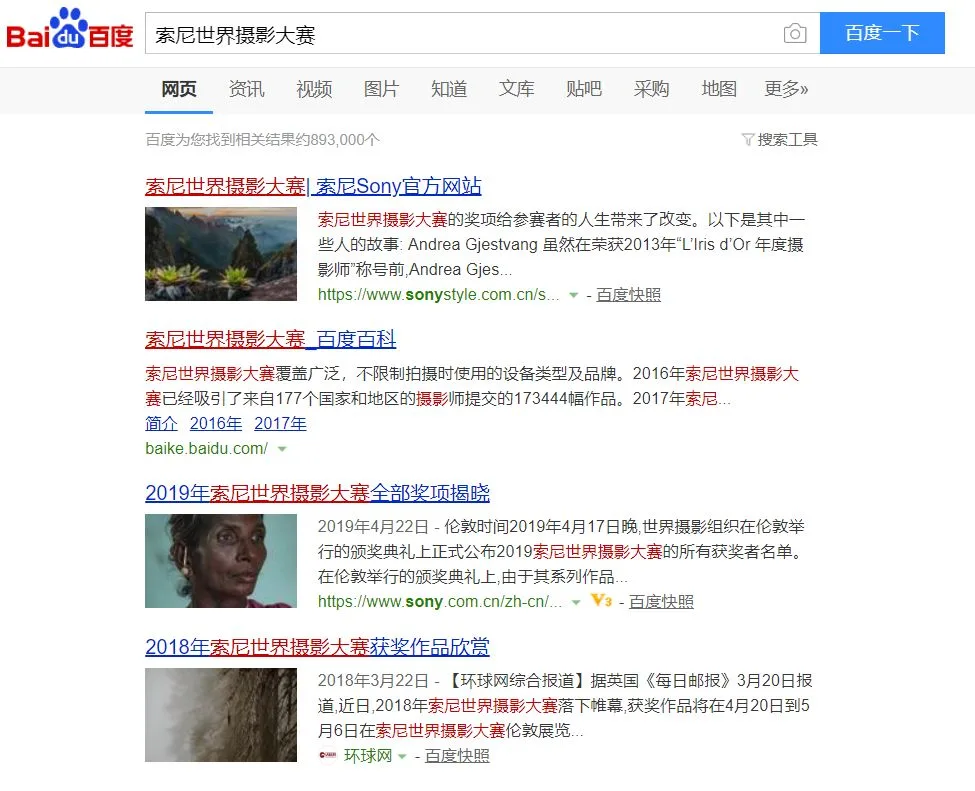
Every year, the moment results are announced, major websites and newspapers repost the news and self-media swarm in. Winning these contests brings not only a large public following but also attention from commercial organizations — more contracts and shooting opportunities.
Identifying such contests is easy: search Baidu or Google — hundreds of thousands or millions of results with blanket media coverage means real fame. If industry professionals actively interpret, discuss or even criticize the winning photos, the contest is influential within the industry too.

More contests may get little mass-media exposure yet carry high prestige among professionals.
Winning these usually comes with a decent grant to continue your project, plus more industry opportunities — commissions, publishing, exhibitions, signings. They also make a photographer's résumé far more convincing.
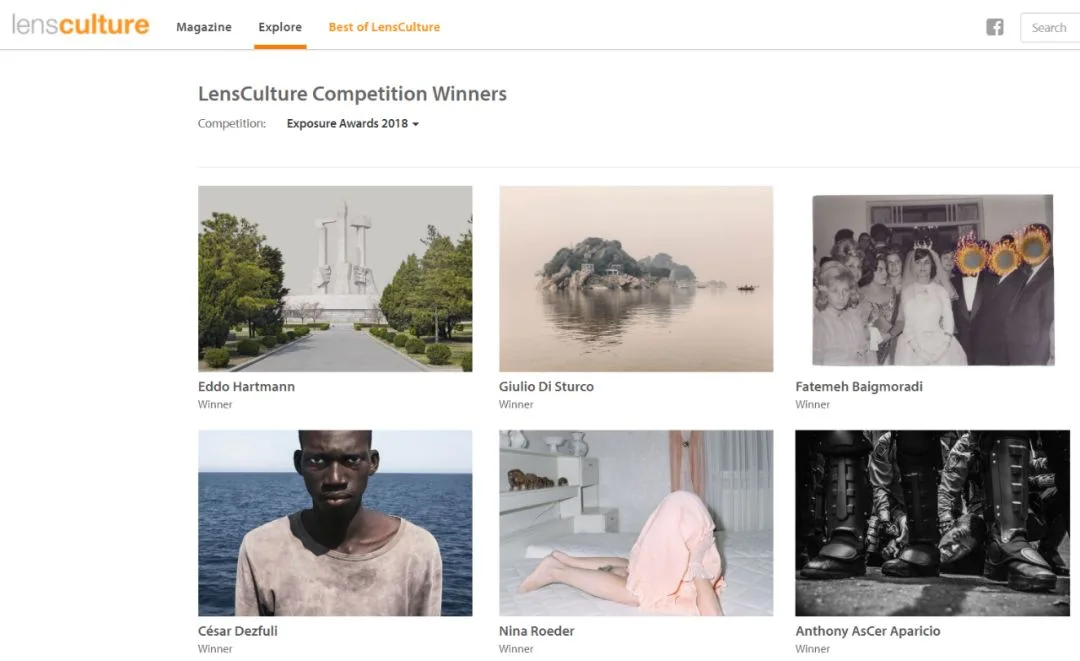
Some top-prestige professional contests run on nomination — you need a recommendation from a recognized industry figure to enter, such as the Hasselblad Foundation International Award, the Lucie Awards, and the Prix Elysée. Ordinary enthusiasts need not apply.
Other contests — especially those run by professional institutions, galleries, art museums, professional media, photo festivals and industry associations — carry prestige while remaining open to ordinary creators.
To tell these prestigious professional contests apart from the 'scam contests,' you need the next two criteria.
2) Organizer credentials, history, and jury
If the organizer is an influential industry manufacturer, professional institution or foundation, photo festival, art media or gallery, or professional association — or the contest is named after a famous figure in photography history — it's generally trustworthy. For example:
High-level contests run by industry manufacturers:
Sony World Photography Awards,
Leica Oskar Barnack Award,
Hasselblad Foundation International Award in Photography,
Hasselblad Masters Awards,
Nikon Photo Contest,
Huawei Next-image Awards, etc.
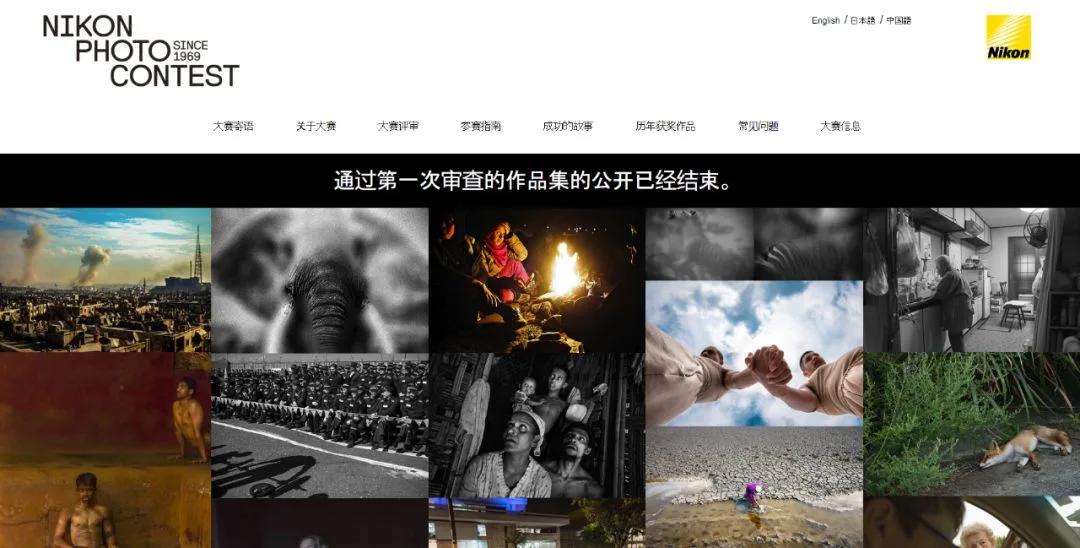
High-level contests run by professional institutions or foundations:
Magnum Photography Awards,
World Press Photo Contest,
POYi — Pictures of the Year International,
Wildlife Photographer of the Year,
Insight Astronomy Photographer of the Year (Royal Observatory Greenwich),
National Geographic Photo Contest,
National Geographic Travel Photo Contest,
IPA — International Photography Awards,
Px3 — Prix de la Photographie Paris,
Tokyo International Foto Awards,
Moscow International Foto Awards,
Taylor Wessing Photo Portrait Prize, etc.
High-level contests run by photo festivals, photography media, galleries or museums:
Rencontres d'Arles,
Pingyao International Photography Festival,
Three Shadows Photography Award,
Foam Talent Call,
LensCulture Exposure / Street / Portrait / Emerging Talent Awards,
Aperture Portfolio Prize,
BJP Breakthrough Award,
PDN Photo Annual,
Infinity Awards (ICP),
ND Awards, etc.
Contests named after famous figures in photography history:
W. Eugene Smith Grant in Humanistic Photography,
Henri Cartier-Bresson International Award,
Kimura Ihei Photography Award,
Hou Dengke Documentary Photography Award, etc.
Contests run by associations:
Here I only recommend the official contests and exhibitions of the China Photographers Association — the three major state-level events.
My knowledge is limited, so this list is not exhaustive. Some contests target professionals; others are friendly to enthusiasts. Find the ones that match your interests and learn more about them.
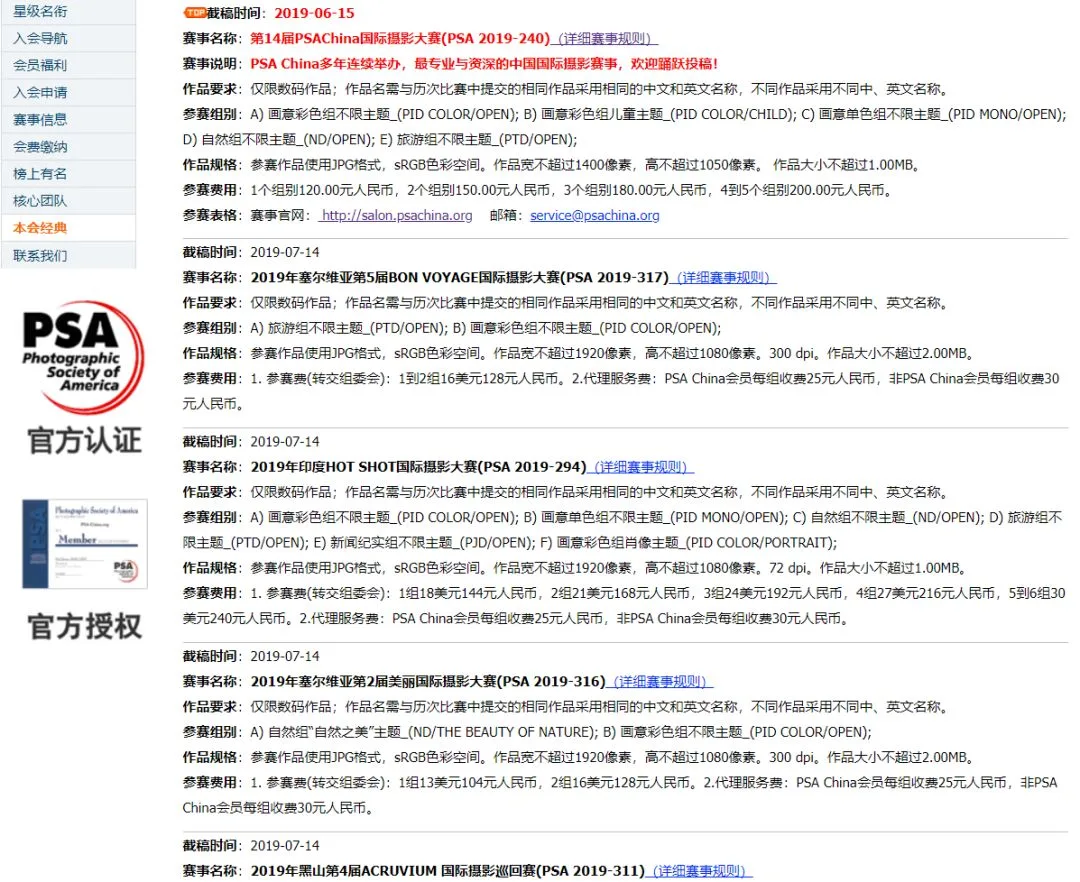
Paid contests run by some foreign salon associations (e.g. PSA) — especially fee-charging ones from non-mainstream national associations, with inflated words like 'Master,' 'World,' 'Royal' in their names, such as a certain 'American Masters Association Photography Award' or 'World Royal Photography Alliance Top Ten Photographers of the Year' — are generally not recommended.
The jury is another key factor in an organizer's credibility. A panel of renowned photographers, editors, curators and industry figures basically guarantees a contest's quality.
The Huawei Next-image Awards, for instance, is a relatively new mobile photography contest, but its jury is an all-star lineup — clearly trustworthy, with great room to grow.
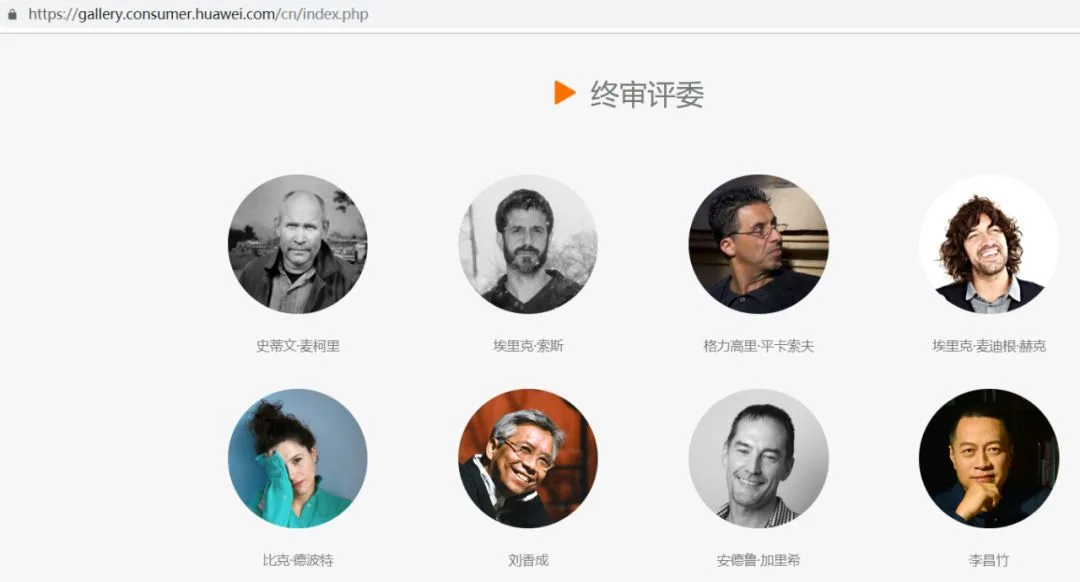
Most money-trap contests have gaudy posters, shabby websites, and either don't dare list their jury or stock it with self-proclaimed 'masters.' Anyone with a little experience can spot them.
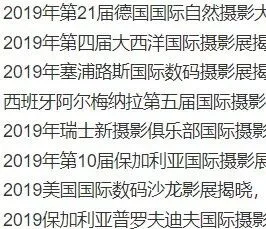
History matters too — reputation takes time to accumulate.
World Press Photo, for example, began as a domestic Dutch contest, but over 62 years of history, one iconic winning image after another gradually made it the most authoritative international contest in photojournalism.
Among contests of the same category, the older ones are usually the better known.
Among the three major mobile photography contests, IPPA (iPhone Photography Awards — not run by Apple) covers less ground than MPA (Mobile Photography Awards) and offers weaker prizes and jury than the Huawei Next-image Awards — but its first-mover advantage since 2007 has attracted outstanding entries and strong media attention, making it the world's best-known mobile photography contest.
3) Professionalism of winning works and photographers
A contest's prestige and exposure grow through mutual reinforcement between organizer and entrants.
The most direct indicator of a contest's quality is the standard of its winning works. Great winners continuously raise a contest's influence, attracting more masters and great submissions — a virtuous cycle.
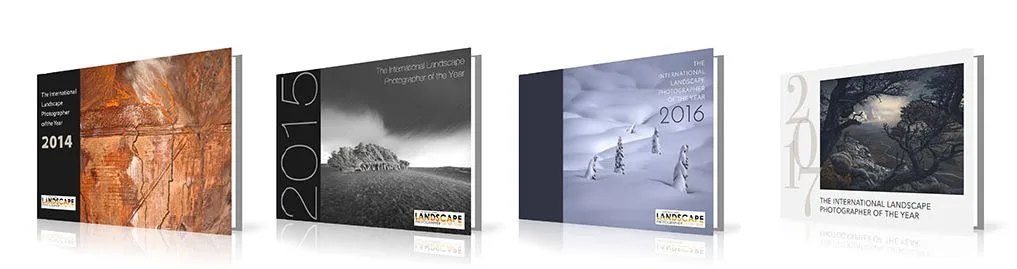
The Monochrome Photography Awards, International Landscape Photographer of the Year and the EPSON International Pano Awards are all privately run commercial contests with short histories, but their winners have consistently maintained a high standard — steadily attracting better submissions, with prestige and exposure on a positive trajectory.
Some contests hand out hundreds of grand prizes at once; many winning works are mediocre, and scandals regularly surface, driving serious entrants away. As bad money drives out good, the contest's standard declines linearly. Stay away from these.
Photography is a highly popular pursuit, and amateurs do occasionally win professional awards — but the ratio can't be absurdly high. If a photo award is won year-round by non-professionals — especially by local 'photography masters' or celebrities — something is definitely wrong.
China is a big photography nation but not yet a photography powerhouse. If a foreign contest's leaderboard is dominated by Chinese photographers year after year, that is highly suspicious.
Conversely, contests that professional photographers flock to — and that renowned photographers list prominently in their bios and résumés — are very likely the real deal.
3. How to enter photography contests
Every contest has a dedicated page with detailed entry instructions.
First, read the rules and FAQ carefully and understand the following:
Submission method:
Digital or print? Email or web form?
Deadline:
For international contests, submit a few days early to be safe with time zones.
Image specifications:
Single image or series? Minimum/maximum dimensions, aspect ratio, resolution and color space requirements?
Get these wrong and all your effort is wasted. The EPSON Pano Awards, for example, requires an aspect ratio greater than 2:1 and a long edge of exactly 3,000 pixels; to compete for Photographer of the Year you must submit at least 4 images.

Regions and divisions:
Some contests have international and domestic regions, or professional, open and student divisions.
International regions and professional divisions carry more influence — and fiercer competition.
Some contests restrict open divisions to non-professionals; some have special divisions for university students. Read carefully.
Entrant eligibility:
Some contests restrict entrants by nationality, gender or age — read carefully.
Theme:
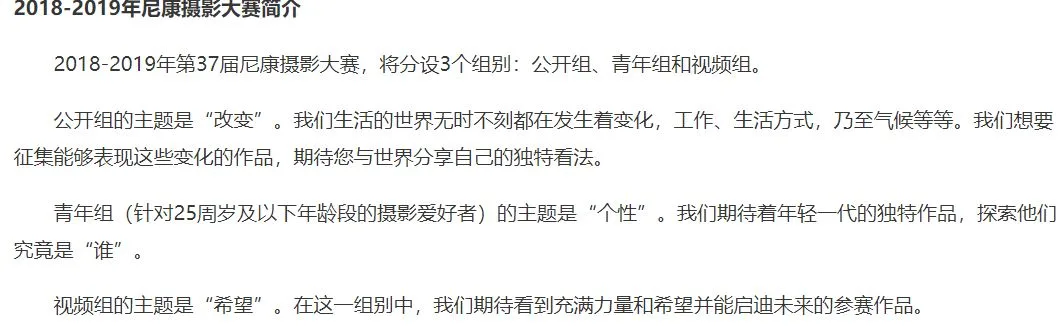
Some contests, like the Nikon Photo Contest and HIPA, set an annual theme such as 'Hope' or 'Peace.' Don't enter if your photos don't fit.
Categories:
Many contests set categories — 'Landscape,' 'Advertising,' 'Nature,' 'City,' 'Portrait,' sometimes even finer. Choosing the category that best fits your photo matters.
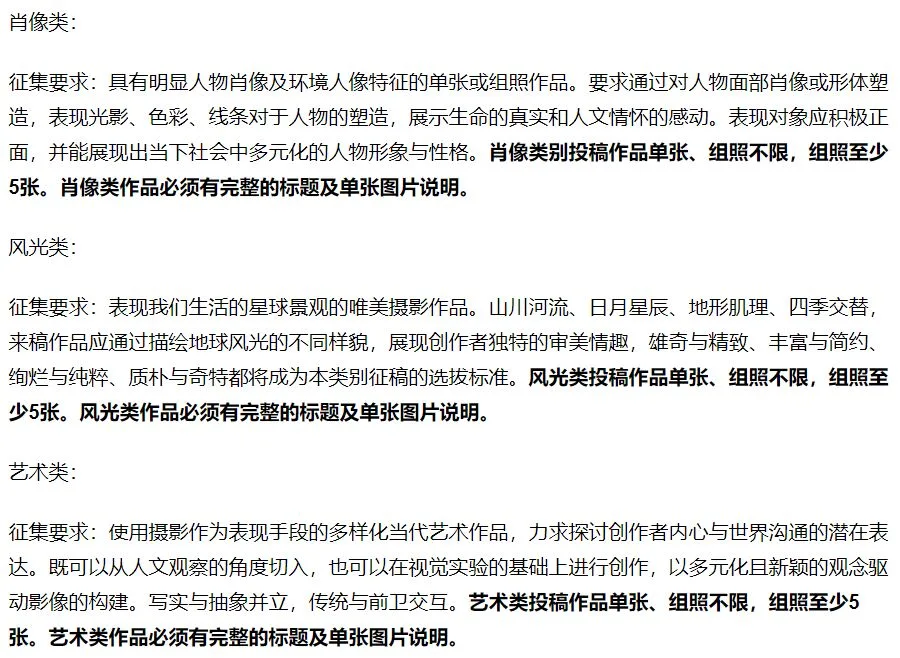
Creation date and award history:
Some contests require photos taken within the past 1, 2 or 5 years — older photos can't be entered.
Some require that the photo has not won awards in the organizer's other contests — or even any public photography award at all.
The National Geographic Photo Contest, for example, requires works shot within the past 2 years that have not won other National Geographic photography awards.
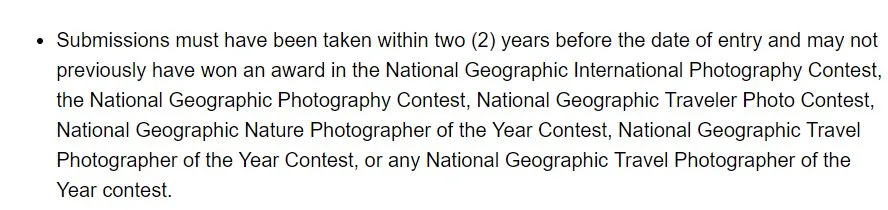
Equipment:
Some contests restrict equipment: IPPA requires Apple devices, the Huawei Next-image Awards requires Huawei products, and the SkyPixel contest requires drones. Most mobile photography contests also prohibit desktop post-processing.
Post-processing limits:
Allowed editing varies enormously between contests — even between categories of the same contest.
Some contests let you composite freely; some allow simple adjustments; some strictly forbid altering any element in the frame. Reading these rules is critical.
The National Geographic Photo Contest's post-processing rules, for example:
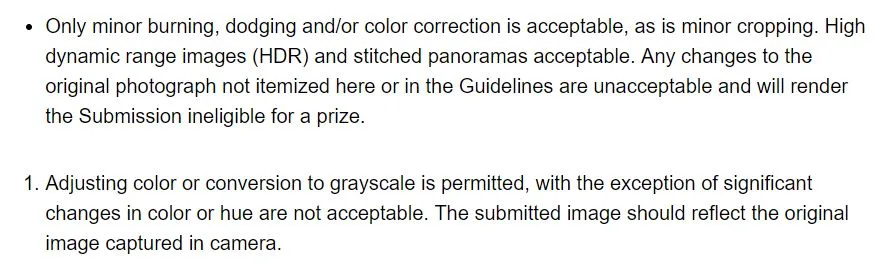
Moderate dodging and burning, color adjustments and cropping are allowed. HDR exposure merging and panoramas are allowed. Converting color to black-and-white is allowed.
Drastically changing the hue of objects is not allowed.
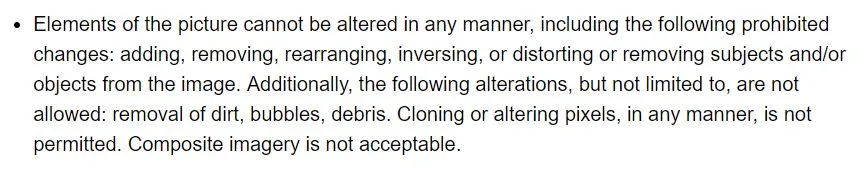
No element in the photo may be altered — no adding, removing, inverting or distorting objects, and no removing anything from the scene. Removing stains, foam, trash, cloning objects or compositing scenes are all prohibited.
The JD.com Photography Golden Statue Award, by contrast, is more lenient: as long as the scene's authenticity is preserved, heavy color grading and object cleanup are acceptable, though computer-composited creative works are not — except in the art and creative divisions, where compositing is fine.

Artist statement:
The more professional the contest, the more the statement matters. An unprofessional or fabricated statement will cost your work points.
Portrait and property rights:
Many renowned contests require winners to guarantee their entries don't infringe third-party copyright, portrait rights, reputation rights, privacy or property rights — pay attention to this.
Entry fees:
Free or paid? Are there discounts for multiple entries or early submission?
Usage rights:
Most contests allow organizers to use photos in contest-related promotion. But some small contests demand full commercial usage rights or even copyright of entries — be very wary of this.
Reading the rules only guarantees you won't be disqualified.
To actually win, you also need to understand the contest's overall character.
Different contests favor different aspects. By studying past winners and jury backgrounds, you can submit your photos to the contests whose character suits them best.
National Geographic, a documentary-leaning nature and geography contest, values storytelling, cultural context or moment. Pure sunrise-sunset landscape spectacles rarely win there. Images that aren't the most stunning but capture geographic character, a decisive moment or a rare celestial event break through more easily.
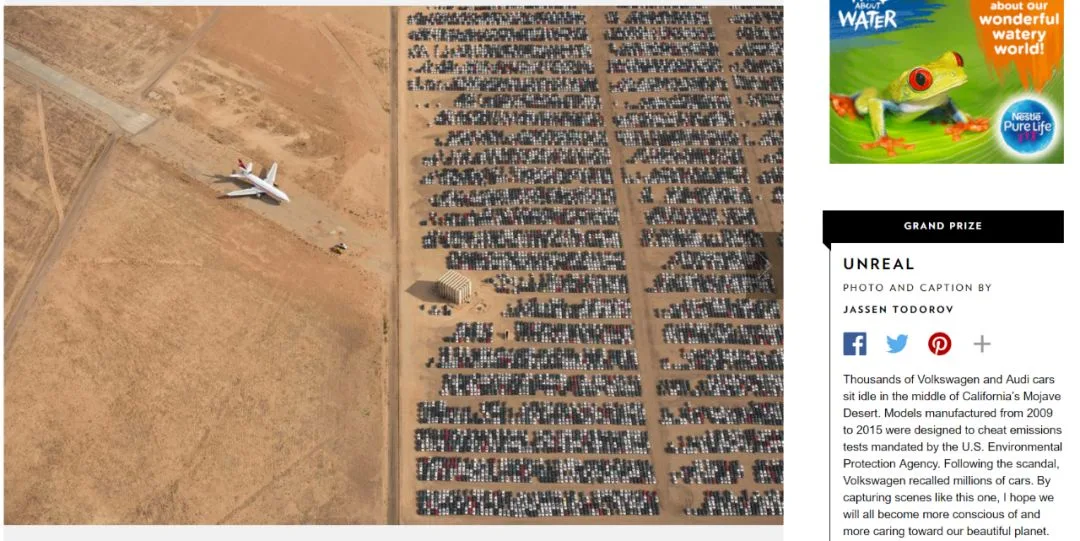
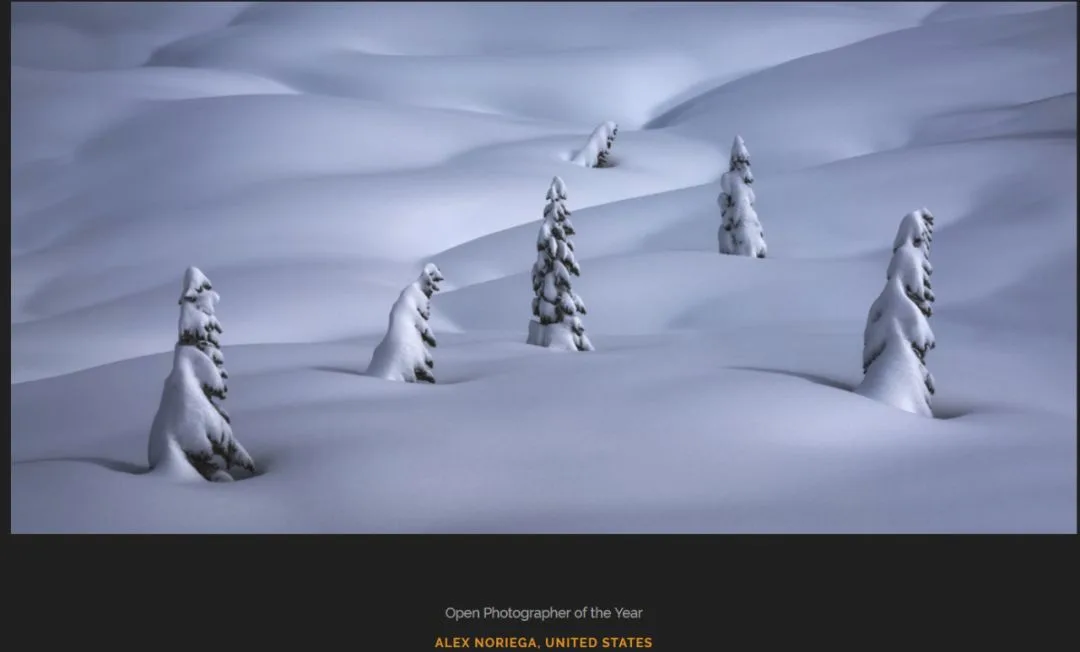
The EPSON Pano Awards and International Landscape Photographer of the Year, by contrast, prize visual beauty and impact, focusing on control of tone, color and atmosphere. Many National Geographic winners, if not visually striking enough, might be eliminated in the first round of these two.
The Landscape category of the Sony World Photography Awards leans toward contemporary landscape, asking works to engage with environmental and social issues — a different demand on entrants.
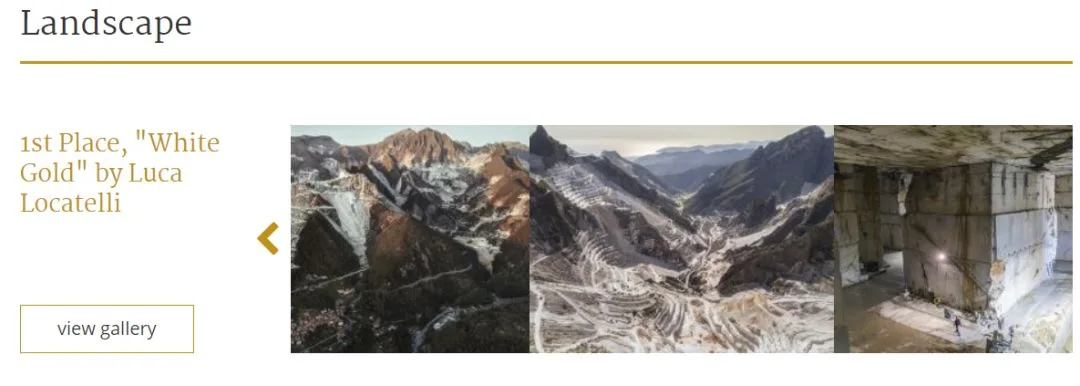
As you can see, even within the 'landscape' category, different contests want entirely different things. Understanding a contest's character helps you place your photos where they fit best.
Because of the language barrier, many Chinese photographers enter foreign contests through specialized agencies — that's perfectly fine and very convenient.
The only caution is to apply the criteria from section 2 to judge a contest's credibility yourself — don't let an agency talk you into a foreign money trap.
In summary
Recommended for ordinary enthusiasts and beginners:
All contests with no entry fee.
Recommended for advanced enthusiasts and professional photographers:
All contests with no entry fee (especially those with high prize money),
the paid contests with real prestige and exposure mentioned above,
or any contest that scores well on the three criteria: exposure and rewards, organizer credentials and history, and professionalism of winners.
Strongly NOT recommended for ordinary enthusiasts:
Low-profile contests with high entry fees,
Contests with high entry fees and small total prize money,
High-fee foreign salon contests — especially from non-mainstream countries, and foreign paid contests with inflated words like 'World,' 'Master,' 'Outstanding,' 'Art,' 'Salon,' or 'Tour' in their names.