Photography Tutorial · 2022-08-28
Can Photoshopped Photos Still Be Called Documentary Photography?
Can a photo color-graded in post still be called documentary photography?
Can a composite Photoshopped photo also be called a documentary photo?
Can a photo staged with actors still be called documentary?
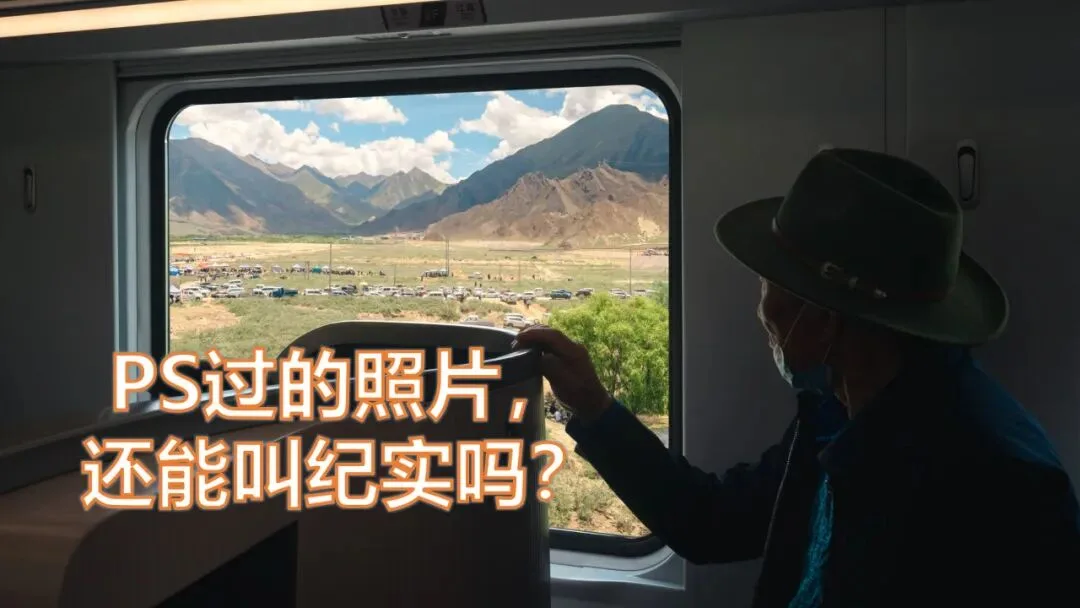
In today's photography tutorial, Thomas will discuss a very interesting topic with everyone.
Perhaps by the end, you'll think more deeply about artistic documentary and traditional documentary.
Video
▶ Watch the video tutorial on Bilibili
This is the illustrated companion to the video above. Can a heavily color-graded photo still count as documentary? What about a PS composite where the scene and models were all specially arranged? In this tutorial, prompted by the debate around a composite photo that circulated during the Chongqing wildfire, Thomas discusses the two levels of "truth" and argues that while such photos are not news documentary, they can deserve the name of "art documentary".
First, the core framework. This slide from 1:35 in the video splits "truth" into two levels — physical, momentary, detail-level truth, and conceptual, era-level, depth-level truth. The whole argument of the video is built on this one chart.

01 A Composite Photo Sparks the Debate
The trigger was a news event: during the Chongqing wildfire, a photographer created a composite photo as a tribute to the motorcyclists riding supplies to the front line. As it spread, the photo gradually lost its "composite" label — everyone assumed it was a real photograph — until the photographer himself clarified (at 0:56 in the video). The interesting part was the comment section: people were not particularly offended (at 1:10 in the video), which stands in sharp contrast to our usual instinct that Photoshop and post-processing destroy photography's truthfulness.
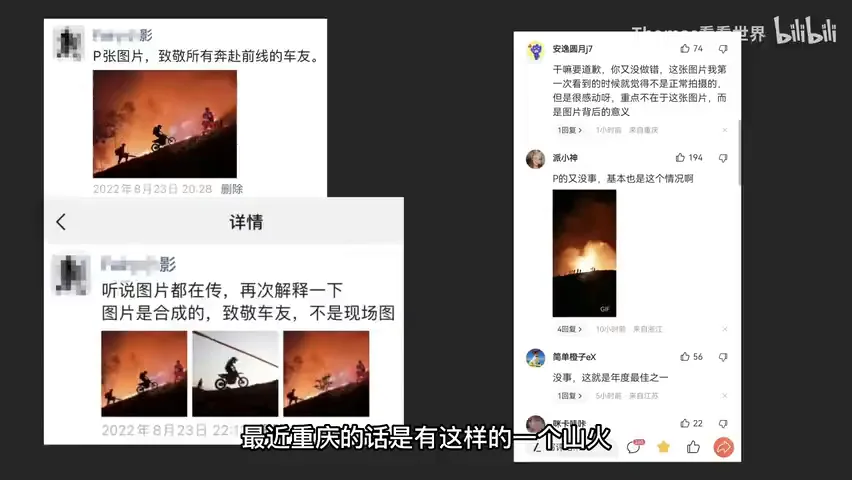
02 Truth Has Two Levels
Why the difference? Thomas argues that truth has many levels: on one side, physical truth, momentary truth, detail-level truth; on the other, conceptual truth, truth to the era — depth-level truth (at 1:33 in the video). Here is the simplest test: does a physically truthful photo necessarily carry truthful content?
The answer is no. During the pandemic years, some Western media reported with "real photos": in a supermarket where 99% of the shelves were full, they would deliberately pick the one empty shelf to shoot — physically and momentarily true, yet in terms of broader time and conceptual truth, not a truthful photo at all (at 2:18 in the video).
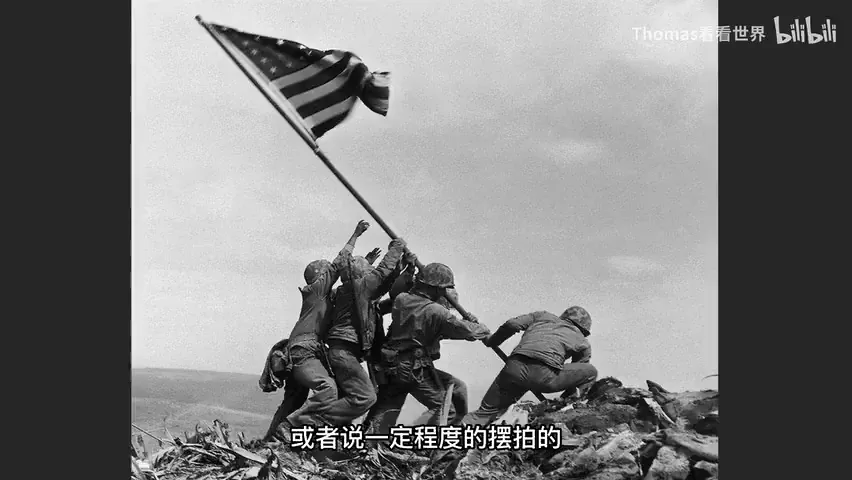
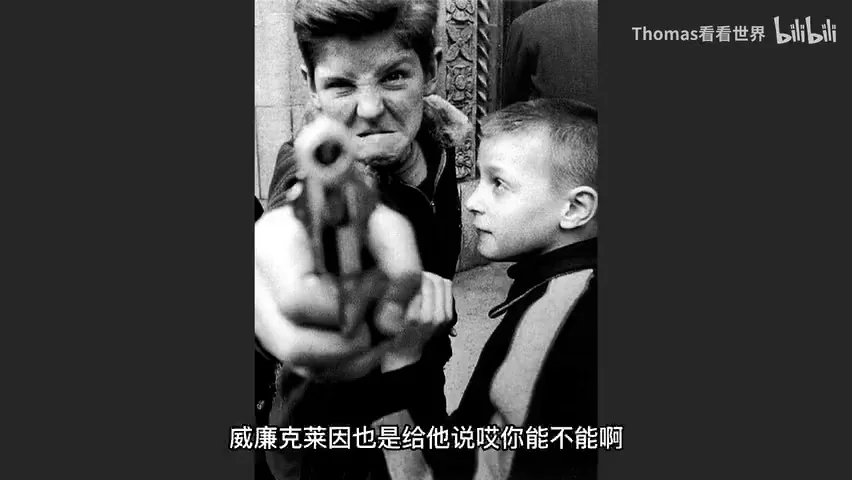
Conversely, many classic traditional documentary photos were not entirely truthful in that instant. A good number of iconic World War II photos involved a degree of staging — the Iwo Jima flag-raising among them (at 2:57 in the video); and the boy pointing a gun at the camera in William Klein's famous frame was smiling at first — Klein told him, "Can you look angrier? Can you point the gun at me more angrily?" — and only then was that classic of photographic history born (at 3:07 in the video). Honestly, what moves us most in the great traditional documentary photos is not their physical truth but their portrayal of humanity, society and their era, and even the role they played in spreading and resolving events (at 3:27 in the video).
03 Art Documentary: Another Path
So what is art documentary? This card from 3:51 in the video gives the definition: using creative visual language and methods of making to present the overall face of an event and an era, its emotional character, or deeper reflection. Its difference from traditional documentary lies only in the method — traditional documentary freezes a real moment, while art documentary may use staging, constructed scenes and a measure of post-processing to present a broader social truth — with its pursuit and core unchanged (at 4:01 in the video). The changed method serves mostly to inject the photographer's personal perspective, and to meet the social-media era's demand for single images that travel.

We now live in the era of mobile photography and multimedia video: still photography's documentary function keeps weakening, and it is harder than ever for one photo to stand out from the ocean uploaded every day — which forces photographers to inject personal thinking and perspective, and to do visual processing of their own (at 4:32 in the video). The example given is the staged work "Follow You" by photographer Wang Qingsong: anyone with the exam-oriented education experience of the post-80s and post-90s generations will feel it reflects, with startling truth, the psychology and overall environment of our school years (at 4:57 in the video).
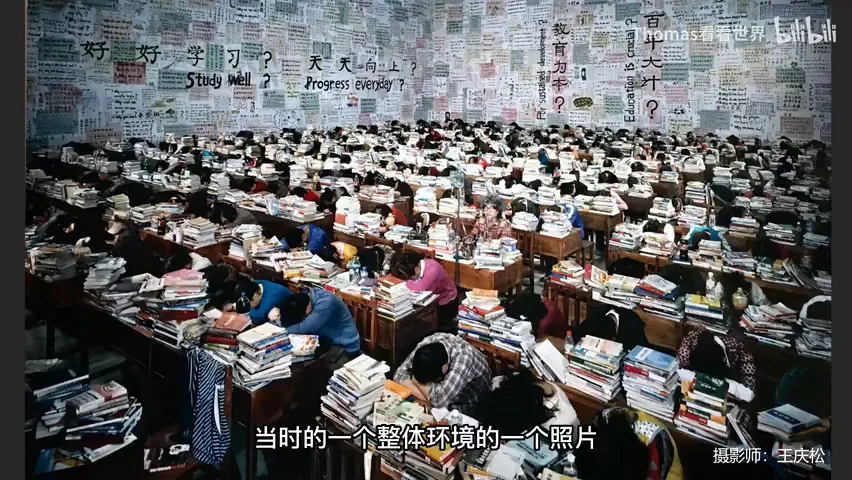
And precisely because it is a staged, set-built group of images, the photographer controls every detail — on the several-meter-long original you can find countless deliberately planted symbols, metaphors and signs (at 5:21 in the video). Its depth and representativeness are thereby strengthened. To understand the education system and the state of students back then, you can watch documentaries or read the literature; but the work that is truly "worth a thousand words" is a photo like this (at 5:55 in the video).
04 Trainscape China: Creatively Merging Real Elements
Thomas himself has been working on his "Trainscape China" series for years. His principle: the views outside and inside the window are both genuinely photographed, with no PS modification of elements; but in pairing inside and outside he adds creative ideas (at 6:08 in the video). For example, in the image at 6:27 in the video, the left is the final piece and the right shows the two originals — shot respectively through the window and inside the carriage of the same train.
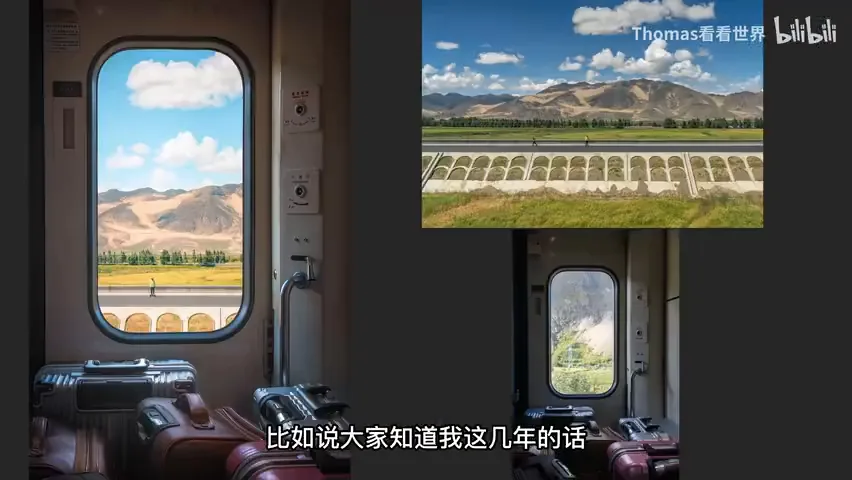
Why merge them? Look only at the top-right original: the person is interesting, but you would never know it was shot from a train; in the bottom-right original the pile of suitcases is interesting, but the view outside is plain. Merged, the image first gains visual impact and shareability; second, its meaning gains room to expand — why are those suitcases inside the carriage? They connect intimately with the labor of the road workers outside, so inside and outside interact both conceptually and visually (at 7:19 in the video). There is also a practical reason: shooting directly inside the carriage means reflections and depth-of-field problems (at 7:43 in the video).
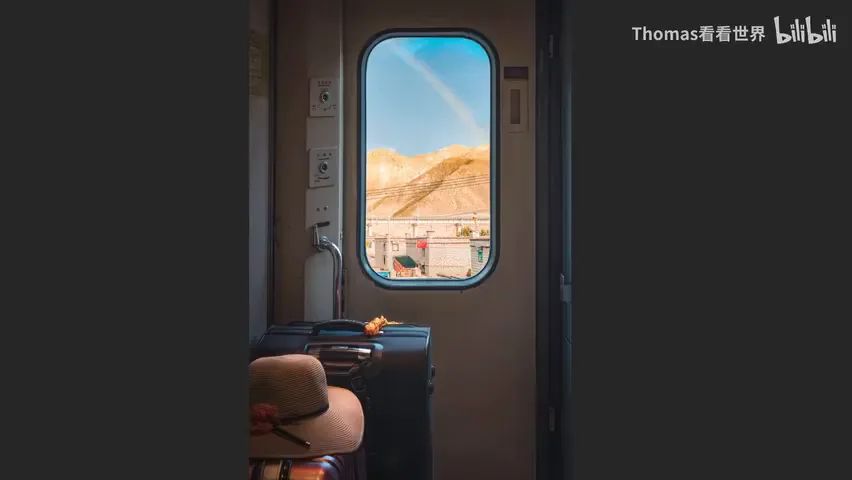
In another work, the ribbon on a suitcase echoes the rainbow outside the window, and the fresh flowers on a hat form a visual and conceptual dialogue with the national flag (at 8:02 in the video). Such echoing details are exactly the kind of meaning that merged composition makes possible.
05 Glimmer in the Unfinished Building: The Emotional Truth of Heavy Grading
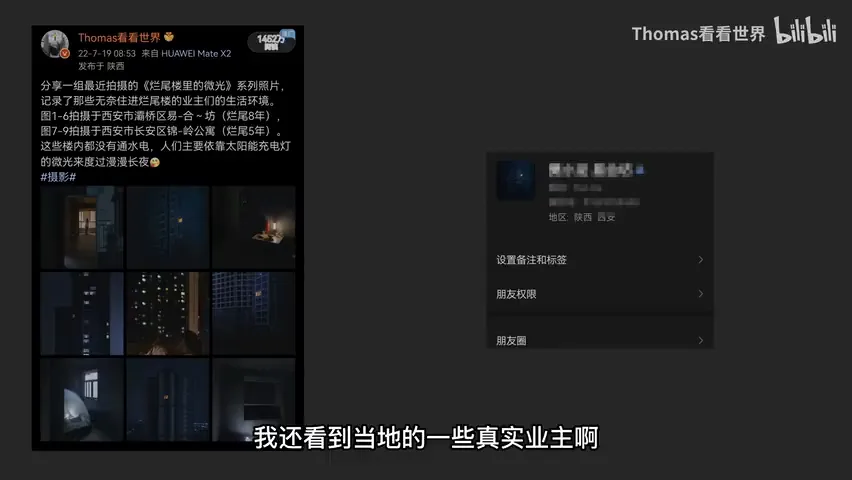
His recent "Glimmer in the Unfinished Building" series uses heavy color grading. At 8:23 in the video he shows original and final side by side — a complete color modification that traditional documentary, and especially news photography, would absolutely forbid. The cost is clear: it breaks physical, momentary truth — the owners of the unfinished buildings rely on solar lamps, whose light is a pale, washed-out white, without the many colors of electric light (at 8:43 in the video).
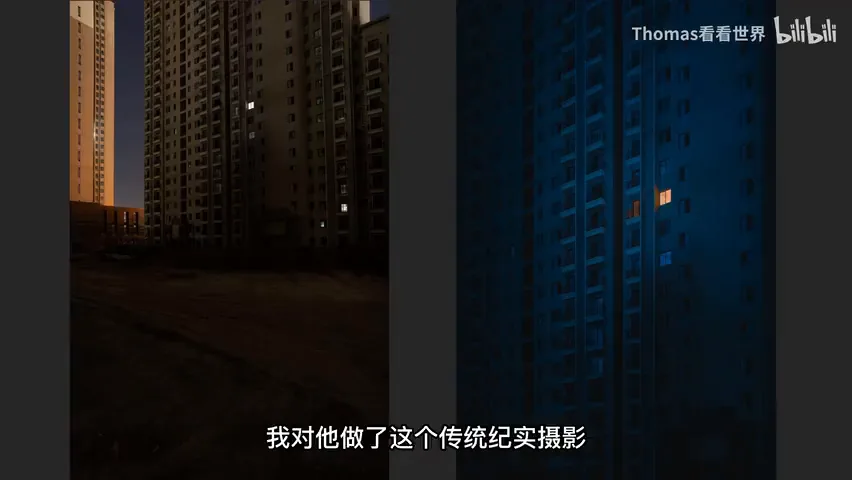
So why grade the lamps warm? Because Thomas feels that these people still hold hope and keep striving to live in very difficult circumstances — a state of life that warm lamplight can stand for (at 8:56 in the video). And it is exactly this creative visual presentation that lets the series travel on social media and truly move people — and that spread in turn helps resolve the situation (at 9:17 in the video). Later, some of the local owners changed their avatars to these photos — in a sense proof that the series rather truthfully reflected their demands, their state of mind, their inner voice (at 9:31 in the video).
Back to the original question: can a photoshopped photo still be called documentary? Everyone has their own answer. Thomas's final point: whether you keep working in the news-documentary, traditional-documentary mode or blend in personal artistic ideas and methods, work that truly deserves the name of documentary must pursue the broader truth of humanity, society and the era (at 10:44 in the video). Like "Trainscape China" — perhaps not entirely "true" in a single instant, but look at it in ten, twenty, fifty years, when you want to understand Tibet as it was, the series is the truth (at 10:15 in the video).
1. Truth has two levels: physical, momentary, detail-level truth versus conceptual, era-level, depth-level truth — a physically truthful photo is not necessarily truthful in content; 2. Traditional documentary often involves staging too — what moves us has always been its portrayal of humanity, society and the era; 3. Art documentary differs from traditional documentary only in method, not in pursuit or core; 4. Whatever the means, the ultimate aim of documentary is the broader truth — one that spreads and helps resolve the events it depicts.
HD video:
https://www.bilibili.com/video/BV1fB4y1x7uJ/
Other related tutorials:
"From Beginner to Professional: Learning and Creation Methodology Ordinary Photographers Won't Share!"
"The 4 Stages of Learning Photography"
"Want to Improve Your Aesthetics? Sharing 6 Websites Professional Photographers Keep Private!"
"How to View Imitation in Photography? How Can Imitation Truly Improve Your Shooting Level?"
"Was the International Photo Contest Grand Prize Photo Stolen? How Artists Steal Inspiration and Style"
"Renowned Portrait & Landscape Photographers Discuss Shooting Experience! This Cross-Disciplinary Dialogue Has Too Much Substance!"
"Dialogue with 4 Photography Masters on the Questions Photographers Care About Most!"