Photography Tutorial · 2019-08-04
Predicting Sunset Glow Before You Go: How Photographers Plan Sunrise, Sunset & Milky Way Shoots
Thomas Chu Photo
Landscape photographers jokingly say they 'live at the mercy of the weather' — weather and astronomical timing have a huge impact on our results.
If you check sunrise, blue-hour and Milky Way times in advance, your planning becomes far more targeted.
And if you can also predict the weather at your location — even the probability of sunset glow, rainbows or a sea of clouds — that's simply ideal!
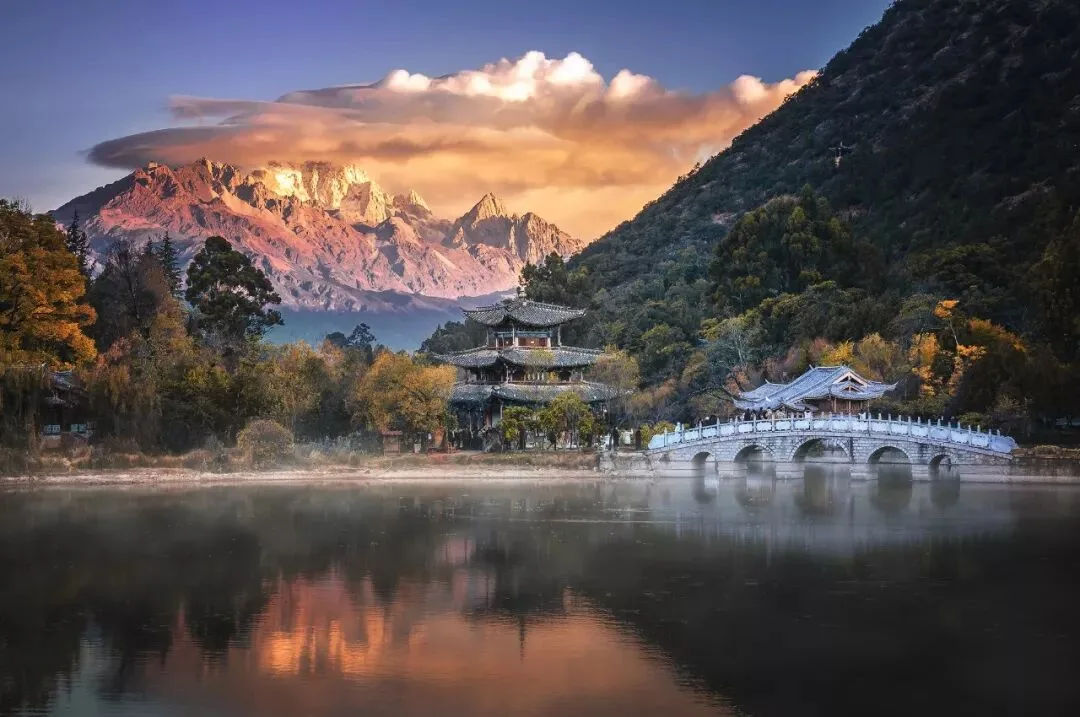
Today Thomas introduces a free photography-planning mini app and shows you how to use it.
Video Tutorial
▶ Watch the video tutorial on Bilibili
This is the fully illustrated companion to the video above. This episode is a vertical phone walkthrough: Thomas demonstrates a free photography-planning mini app, LiJing Weather, covering sunrise and sunset times, golden and blue hours, moon phases for stargazing, hourly weather, and even the probability of sunset glow, sea of clouds and rainbows. Read it here for the framework, then dive into the video for the details.
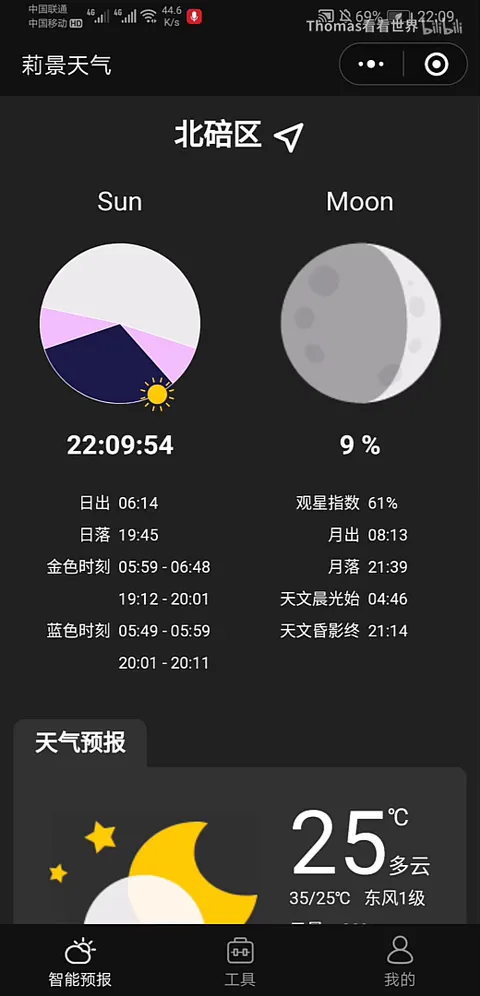
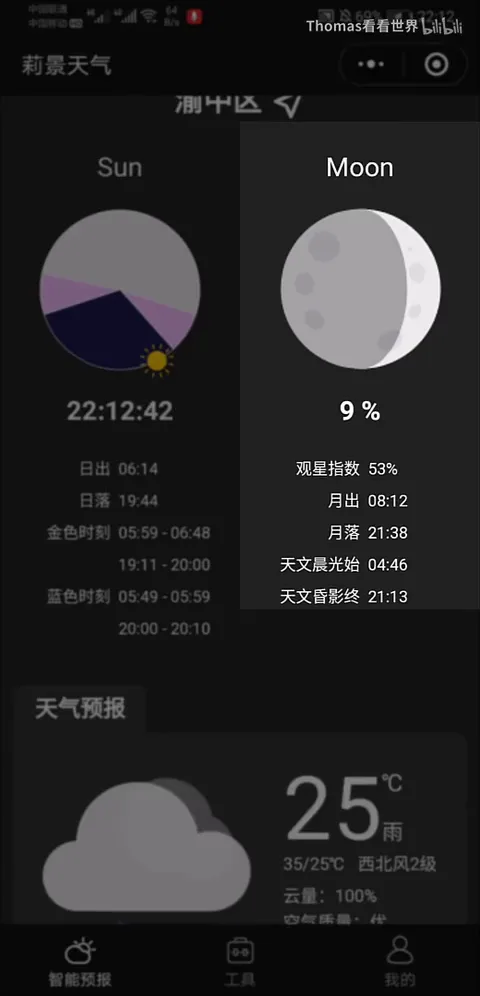
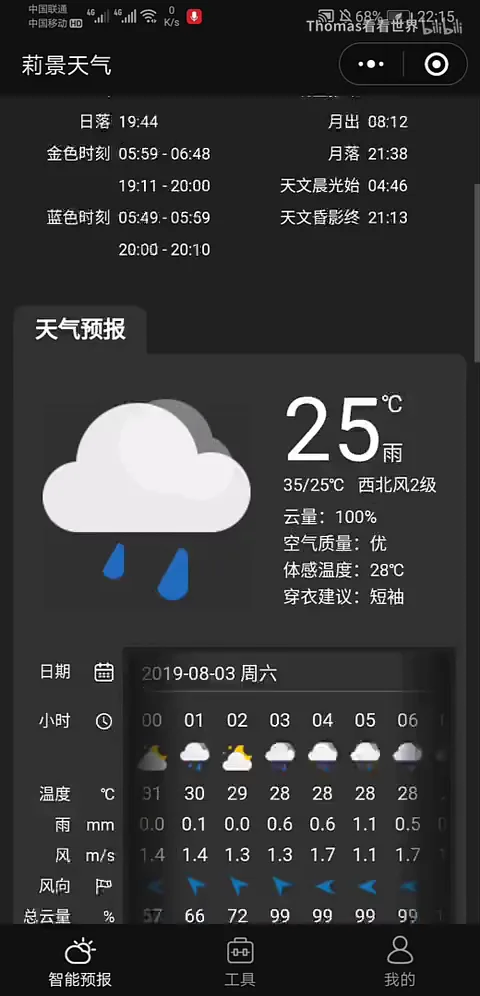
Start with the overview. This home-screen capture condenses the app's core: the Sun column lists the precise start and end of sunrise, sunset, golden hour and blue hour; the Moon column shows the moon phase, stargazing index, moonrise and moonset, and astronomical twilight times; scrolling down reveals hourly weather plus the probabilities of sunset glow, sea of clouds and rainbows — each unpacked below.
01 Finding the Tool: the LiJing Weather Mini App
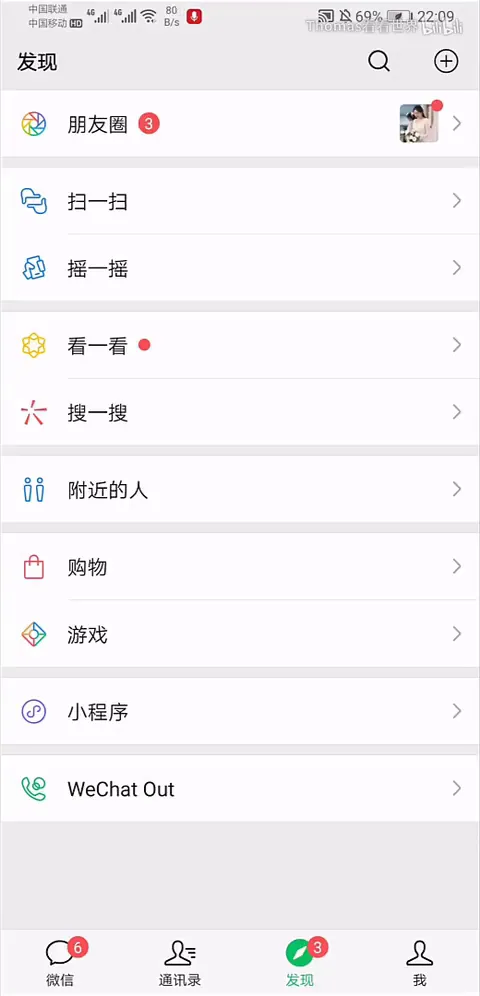
The mini app was developed by a Tsinghua University student, and it is free and excellent (at 0:20 in the video). To open it: go to Discover → Mini Programs in WeChat and search for LiJing Weather — note that Li is the character for jasmine. It specializes in forecasting sunrise glow, sunset glow, sea of clouds and rainbows (at 0:33 in the video).
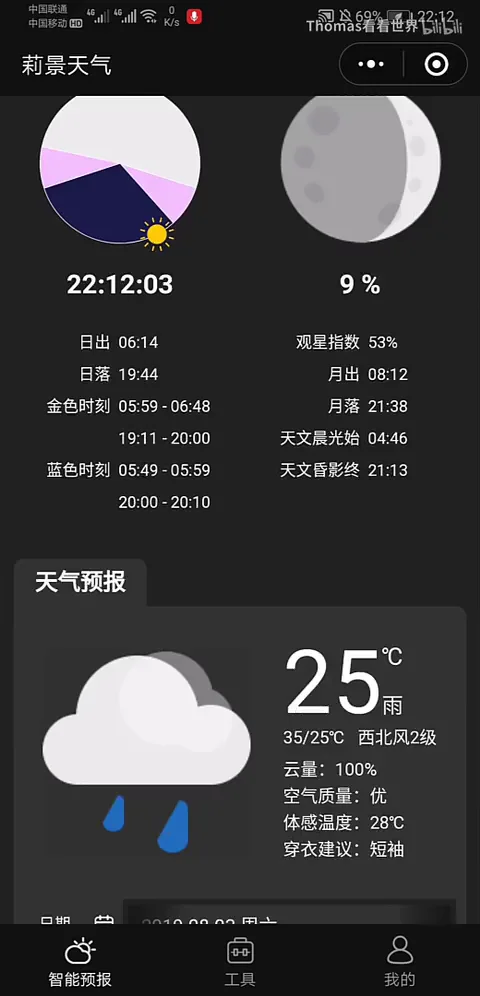
The interface has two tabs, Smart Forecast and Tools, with Smart Forecast being the everyday workhorse. The location at the top defaults to where you are; to check a destination, just type and search — switching from Beibei to Yuzhong district in Chongqing, for example, updates every sunrise, moon and weather figure accordingly (at 1:05 in the video). Before leaving for unfamiliar territory, switching the location to your shooting destination is step one of planning.
02 Beyond Sunrise and Sunset: Golden and Blue Hours
The most basic hard facts are sunrise and sunset times. In Chongqing on that day: sunrise 6:14, sunset 19:44 — for a sunrise shoot you want to be at your spot by about 5:50, with time to compose calmly and wait (at 1:31 in the video).
But what landscape photographers truly wait for are the two "hours." Golden hour is the window around sunrise and sunset when the sun sits low: the light is soft and golden, and with morning or evening glow it produces those gleaming golden shots most easily (at 1:55 in the video).
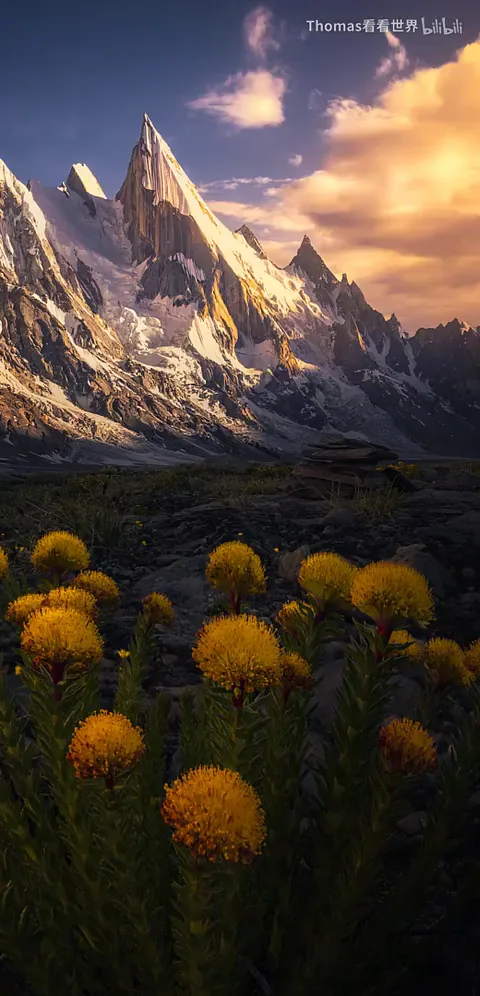
Blue hour is the stretch when the sky is neither fully dark nor fully lit: it turns a pure blue that contrasts beautifully with the warm city lights — the prime window for urban night scenes. The home screen gives each window to the minute: that evening's blue hour in Beibei ran 20:01 to 20:11, just ten minutes end to end (at 2:22 in the video).
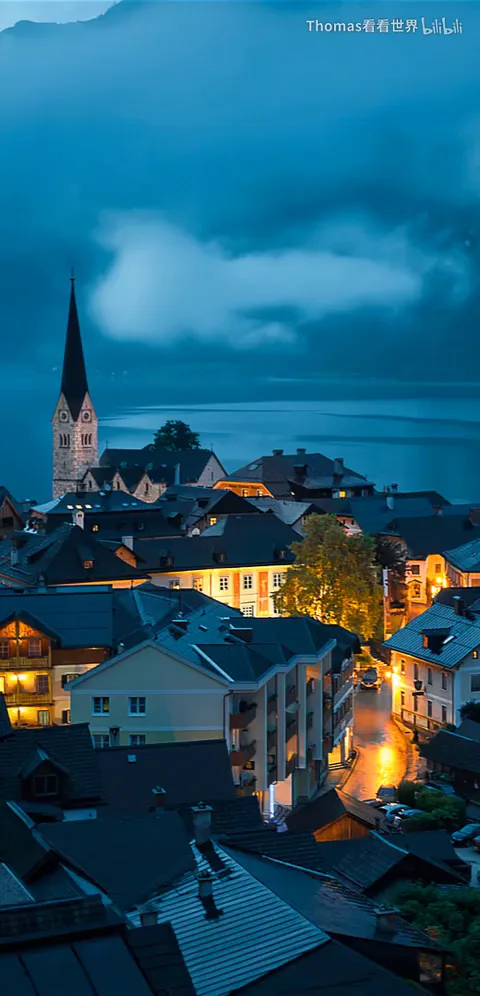
03 Moon Phase and Moonset: the Sweet Spot for Stars
The moon icon in the Moon column shows the night's phase at a glance. A large moon (more than half lit) floods the sky and drowns the stars, especially the Milky Way core; a moonless night delivers a spectacular sky but leaves the landscape pitch black and muddy (at 2:57 in the video).
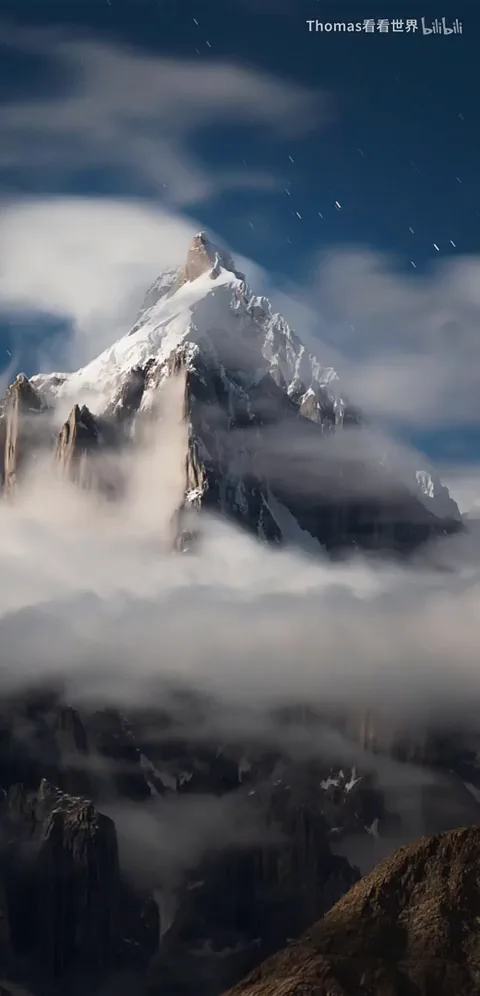
Thomas's favorite window is a crescent moon — a slim sliver that lends the landscape a touch of fill light without washing out the stars. On that day the moon was 9% lit, rising at 8:12 and setting at 21:38: until about half past nine the thin moonlight lifts the foreground, and after it sets the truly dark hours begin for dense starfields (at 3:44 in the video).
04 Astronomical Dawn and Dusk: the True Night
Two terms lower on the page are unfamiliar to many: astronomical dawn and astronomical dusk. They bracket the part of the day completely free of any sunlight — on that day in Yuzhong, from 21:13 until 4:46 the next morning, with neither direct nor scattered sunlight. That is night in the strict sense (at 4:12 in the video).
For Milky Way shooters, astronomical dawn is the alarm bell: after 4:46 scattered sunlight brightens and purples the sky and the galaxy fades; by about 5:49 it is too bright to see many stars at all (at 4:51 in the video). Schedule your main star session between moonset and astronomical dawn; the hour-plus gap from astronomical dawn to blue hour is handy buffer for packing up and shooting the sunrise.
05 Weather, Cloud Layers and Sunset-Glow Odds
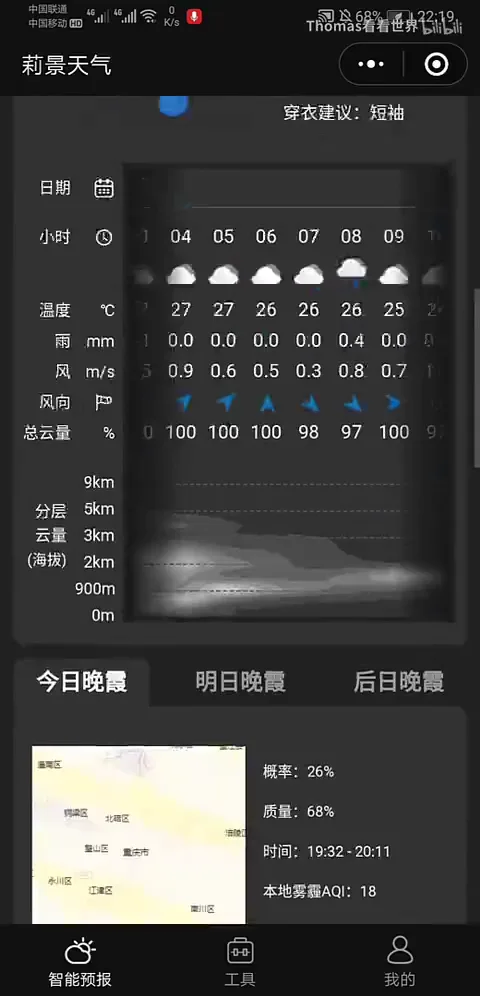
Whether the stars appear at all depends on the other half: the weather. The forecast runs day by day and hour by hour, listing temperature, rain, wind speed and cloud cover (at 5:25 in the video): 1.1 mm of rain means it is raining, while 0.0 mm means cloudy but dry — still worth heading out; drone pilots should watch the wind column especially closely.
The layered cloud chart visualizes clouds from the ground up to about 9 km: high-altitude cloud dominates the early morning, thins by midday, and when low cloud builds in the evening, mist or rain fog may form — watch for it if you are after moody shots (at 6:21 in the video). One rule of thumb: the transition from clear to rainy and back to clear produces the most dramatic images. In the video, Monday afternoon's fully overcast, 5-mm-level downpour is a write-off, while Wednesday, as cloud cover falls, is the day worth staking out in Chongqing (at 6:42 in the video).
If reading cloud charts feels arcane, let the predictions speak: the sunset-glow forecast gives a straight probability — 26% for Saturday, none for the next two days; with odds that low, don't bother heading out (at 7:31 in the video). Sunrise glow works the same way; the sea-of-clouds forecast showed 62% within 100 km peaking at 5:00 (at 8:04 in the video); there is even a rainbow prediction. The developer publishes the full forecasting methodology on the app's official account for those curious.
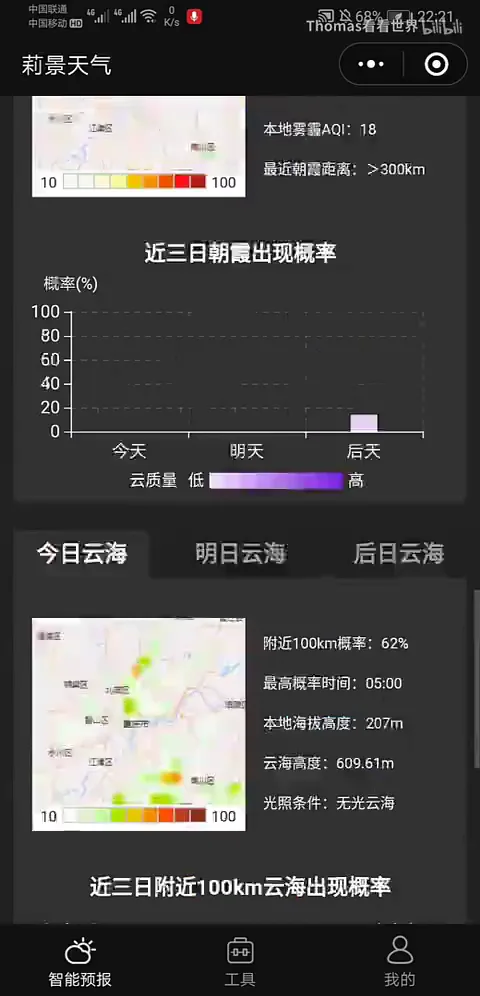
With all this in hand, you know before leaving home the sunrise and sunset, the bounds of true night, moonrise and moonset, the whole week's weather, even the odds of sunset glow: at 90% you must be there early; golden masterpieces and night scenes each have their own window. Technology lets landscape photographers stop wandering out blind and instead plan with precision from an air-conditioned room, then execute on location (at 8:12 in the video).
1. Check your destination before you go: the exact windows of sunrise, sunset, golden and blue hours, and work backwards to arrival times; 2. Favor crescent-moon nights for stars — a sliver of moon lights the land without drowning the Milky Way, and the true-dark core runs from moonset to astronomical dawn; 3. Watch rain and wind in the hourly forecast, read layered cloud for mist and sea of clouds, and remember clear-to-rain transitions deliver the keepers; 4. When the odds of glow or rainbows are low, stay home — when they are high, arrive early.
Vertical mobile video — best watched fullscreen!
How to find this mini app?
Tap the mini-app card below: