Photography Tutorial · 2024-03-10
What Gear for −30°C? Polar Cold-Weather Kit & Shooting Tips
Shooting in extreme winter cold is a challenge photographers regularly face.
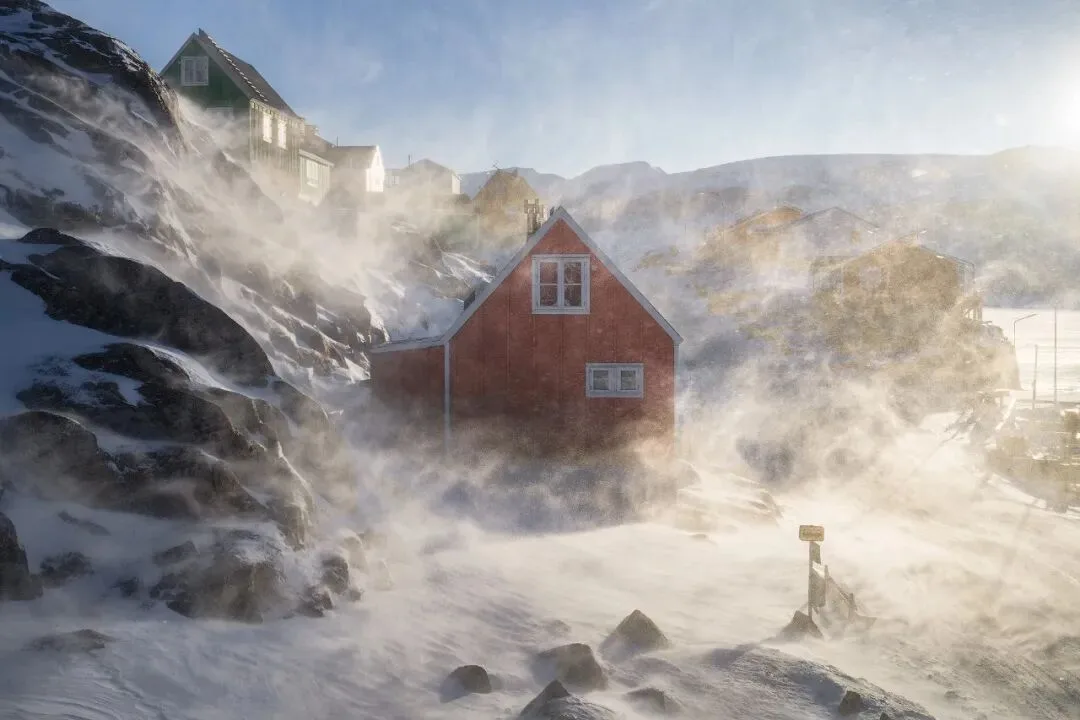
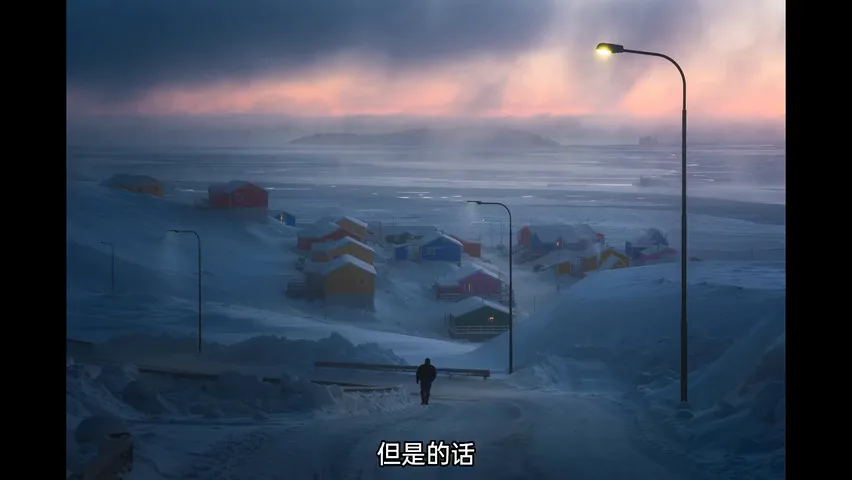
Whether in Xinjiang, Inner Mongolia or Northeast China — or in Arctic Greenland, where I went this time — winter temperatures of −20 to −30°C put serious demands on both gear and clothing.
In today's video tutorial, Thomas shares the cold-weather clothing, camera gear and field experience from this Arctic trip.
Video
▶ Watch the video tutorial on Bilibili
This is the illustrated companion to the video above. Greenland in the Arctic, minus thirty degrees: spectacular icebergs at sea, dreamlike colorful fishing villages, and bone-chilling primitive transport. What gear does a photographer bring into this extreme cold, how should you dress, and what must you watch out for? Thomas first shares his winter clothing out in the snow, then opens his camera bag indoors and walks through the drone's central role, the trade-offs of a lightweight camera kit, and the key winter shooting precautions.
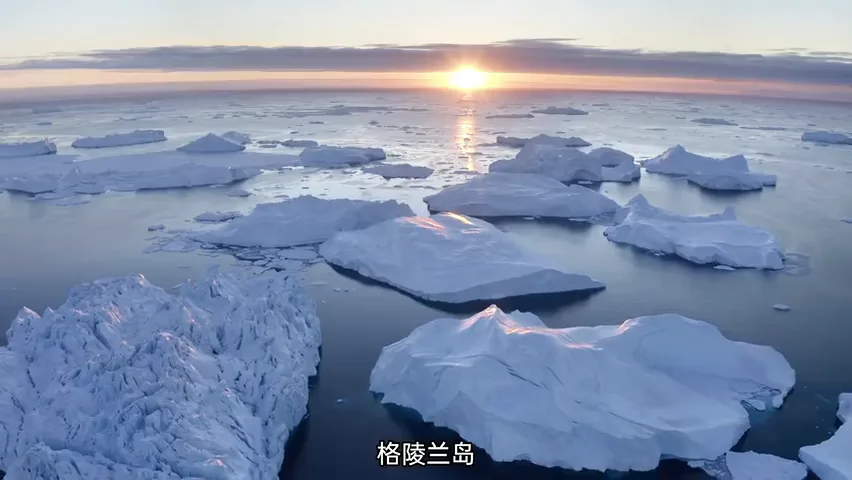
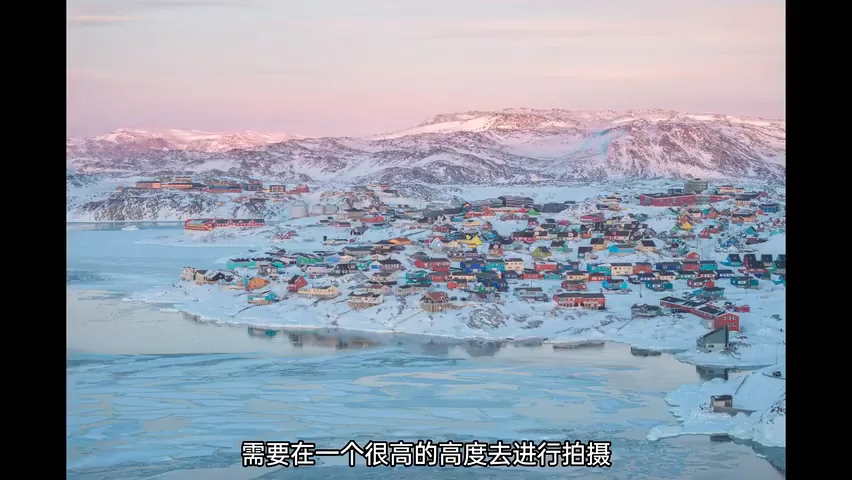
First, a look at the location at minus 30 — sea icebergs in Greenland below (at 0:01 in the video). In conditions like these, clothing is the precondition for everything.
01 Clothing: Leave No Skin Exposed
The first rule of winter dressing is to keep every bit of skin covered (at 0:41 in the video). Any exposed fingers or face will feel freezing, and the wind makes it sting. So besides a hat, Thomas adds a balaclava that leaves only his eyes showing; ski goggles matter too, because the light on snow is brutally bright.
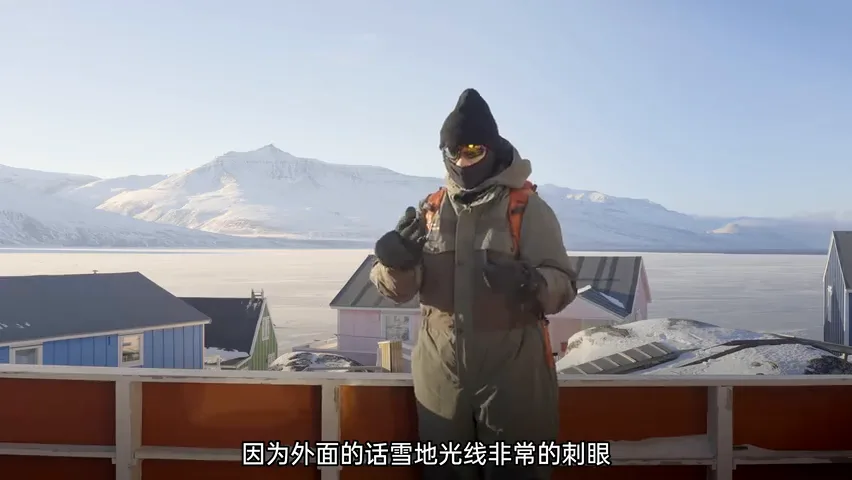
One of the most critical items for winter shooting is the photography glove: warm enough, yet able to operate a camera and a drone. Thomas uses PGYTECH's winter photo gloves — reasonably warm, with an outer shell, flip-open caps on each finger, and touchscreen-friendly fingertips (at 1:12 in the video). The drone's on-screen buttons are still tiny, though, so in practice he flicks a finger out to tap, then pulls it straight back the moment the setting is done — a bare finger hurts badly after just 10 or 20 seconds.
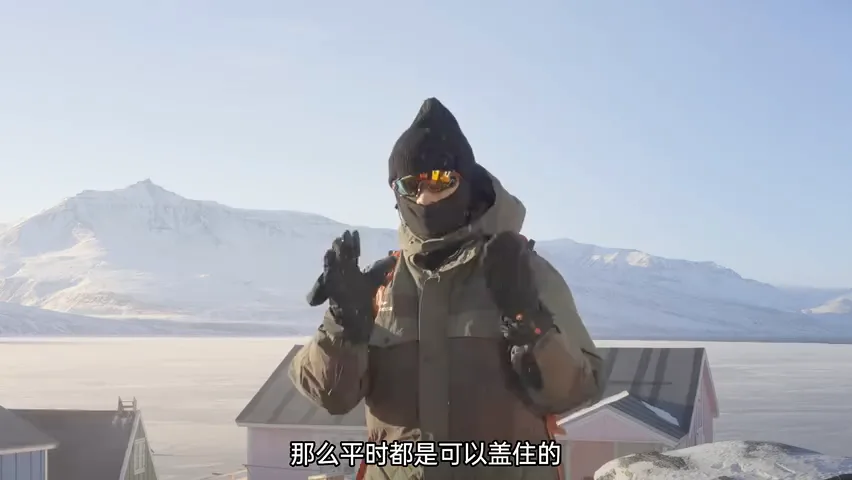
For the body he wears a one-piece outdoor worksuit — search "winter fishing suit" and you'll find similar ones; the one-piece design keeps him warm enough in minus-20-to-30 winds (at 1:51 in the video). Two more details matter: base layers should not be cotton but fast-wicking synthetics; and on walking sections, unzip first to let heat out and try not to sweat — sweat plus wind is miserable. For footwear, buy snow boots or outdoor shoes slightly oversized and layer on several pairs of socks (at 2:33 in the video).
02 The Drone: The Main Workhorse in the Arctic
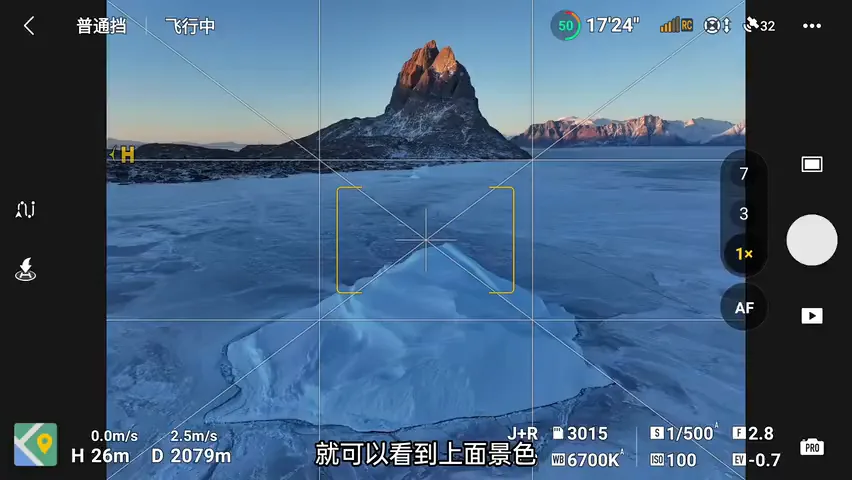
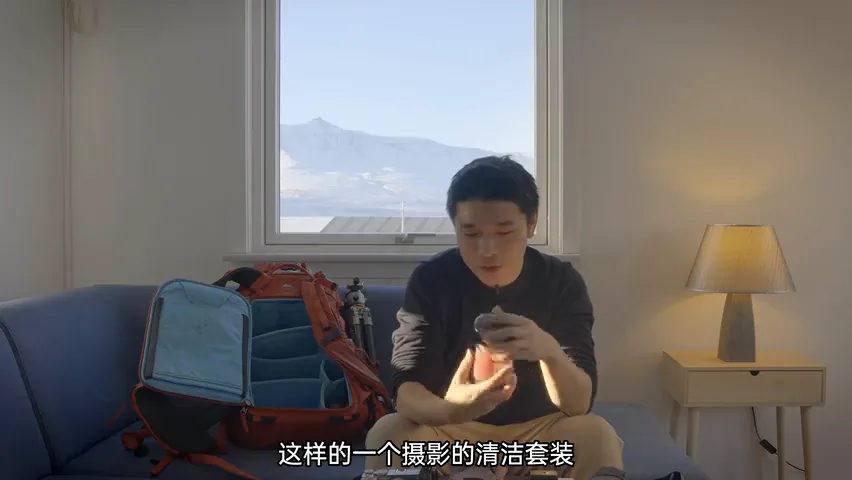
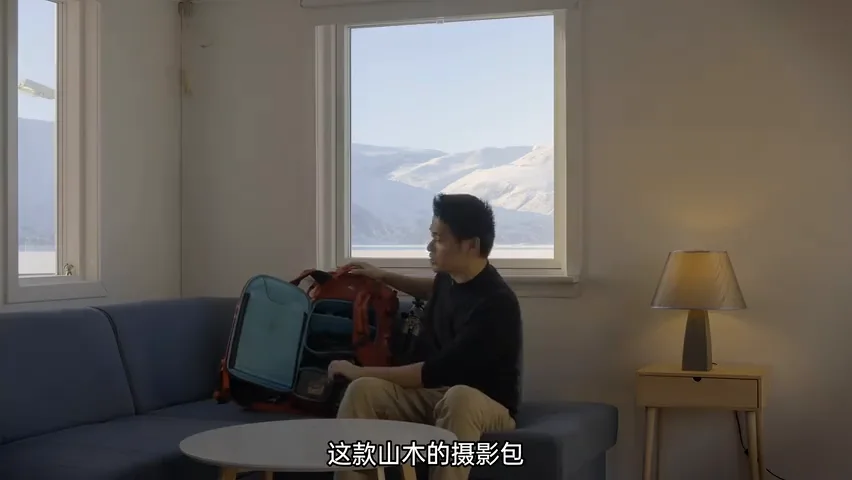
The camera bag is still his Shimoda: a full-length equipment compartment inside, plus an expandable top for clothes and food — very handy (at 2:56 in the video). But the most important piece of gear on this Greenland trip is the Mavic 3 Pro drone — of every 100 photos Thomas shoots now, 70 come from the drone. A drone is flexible and free, reaching any angle: many of the towns here needed a very high vantage only a drone can reach; shooting the Greenland icefjord used to mean going out by boat, with the angle dictated by the boat's heading — now he launches from shore and the whole icefjord within 8 km is fair game, in wide angle or at 70mm, even 200mm equivalent on the 7x telephoto (at 3:07 in the video).
This time he brought the screen-in remote controller; it and the drone ran without major anomalies at minus 30 (at 4:07 in the video). If you use a standard controller with your phone, watch for the phone dying in the cold — a hand warmer stuck to the back helps. He carried five drone batteries in the bag's lower compartment — because the drone is no longer just a camera platform: many camera positions get scouted by drone first. Curious what the view from a summit looks like? Fly up and check; if it's great, hike up for sunrise the next day (at 4:29 in the video). So the more drone batteries, the better.
03 Camera and Lenses: Portability First
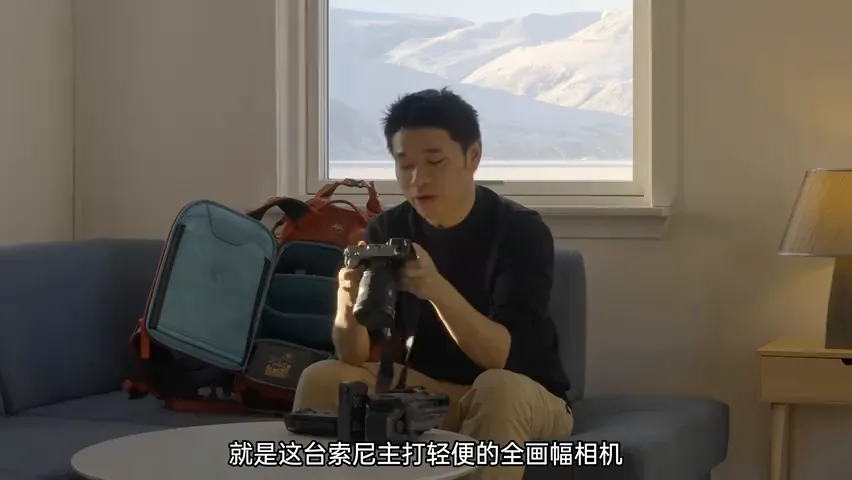
With the drone and batteries already weighing a lot, portability now comes first when choosing a camera. Thomas's main body is Sony's compact full-frame A7CR, paired with the large-aperture 24-70 GM II F2.8 as the walkaround lens (at 5:10 in the video). His National Geographic award-winning photos were all shot on the 24-105 G (F4), but an F4 aperture does cost some image quality in blue hour and low light — hence the move to F2.8, especially important on trips that include people and street scenes. The A7CR's small gripe: its flip screen isn't a three-axis one, and with an L-plate attached it can no longer flip sideways.
Here's a strongly recommended little accessory: the L-plate (at 6:06 in the video). It gives a more comfortable grip, and for vertical shooting you no longer flip the tripod head sideways — the camera mounts vertically directly on it, very stable on a tripod. Before buying, check the exact model for your body: Thomas uses a Fotopro plate custom-cut for Sony's A7C series, with openings for the SD card slot, battery door and USB port so nothing gets blocked.
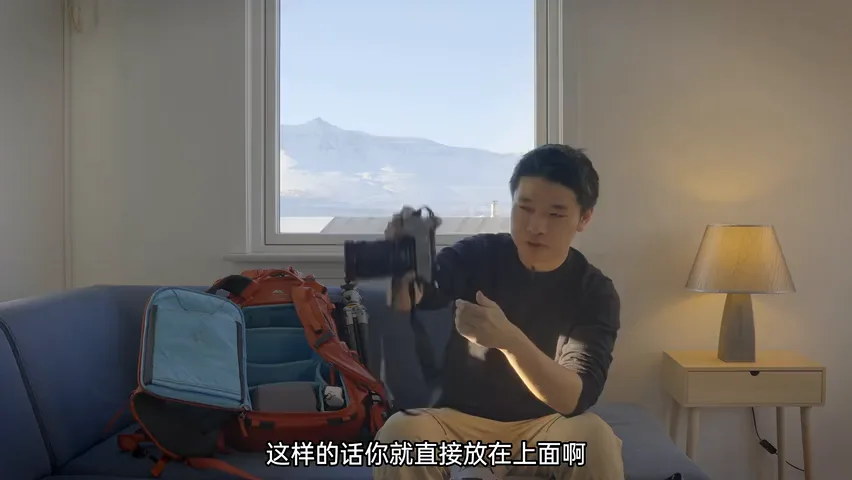
For telephoto, this trip's choice was the 70-200 GM II F2.8 — same logic as above: shooting moving people on the street in low light demands the F2.8 aperture (at 6:57 in the video). For pure landscape work he usually brings the 100-400 instead: heavier, but it reaches farther for more extreme framing — the downside being no large aperture, so night image quality suffers. Before every trip he weighs it carefully: portability or low-light performance.
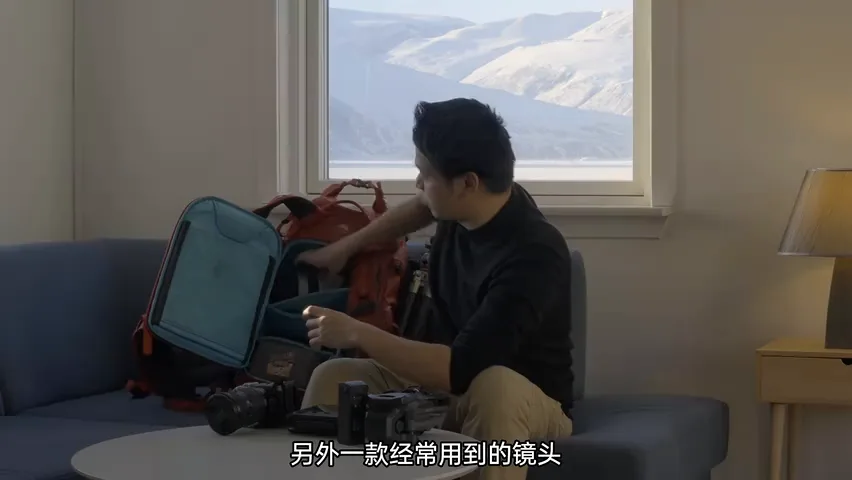
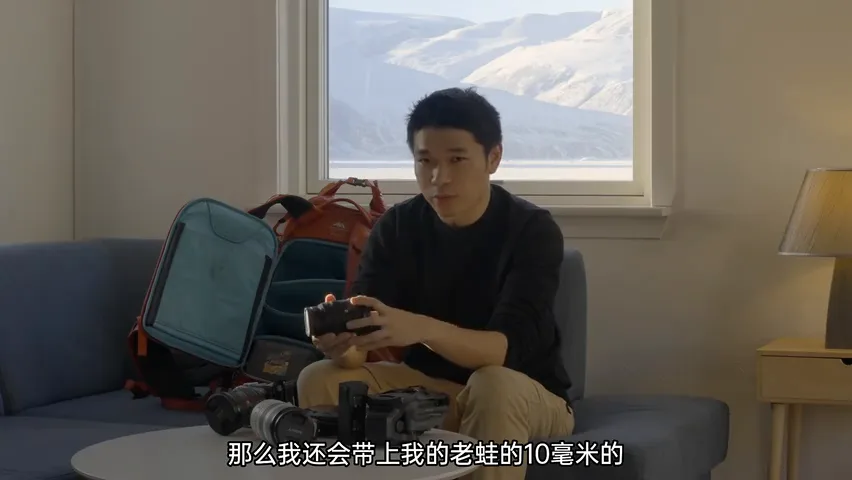
The usual wide-angle is Sony's 16-35 F2.8 — he rarely reaches for ultra-wides like 14mm or 12mm (at 7:50 in the video). And if the itinerary calls for ice textures, flowers and ultra-wide framing, he also packs two tiny manual lenses including the Laowa 10mm (at 8:05 in the video).
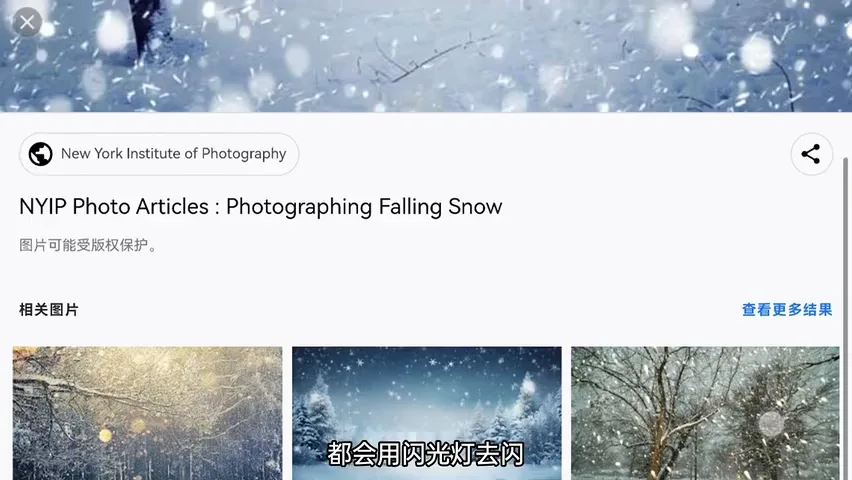
A few accessories: just one spare camera battery — on this winter town trip he's out at most six or seven hours before recharging at the lodging, so one is enough, plus a small power bank (at 8:22 in the video). The Godox flash came along though unused so far: he has seen photographers flash the falling snow in winter scenes, which adds lovely layering and atmosphere (at 8:45 in the video). The tripod is a Fotopro model about to launch: flat T-shaped leg tubes instead of round ones, folding to a very small footprint without reversing; and flip-locks instead of twist locks — quicker to open, and once clicked shut you know it's locked (at 9:02 in the video).
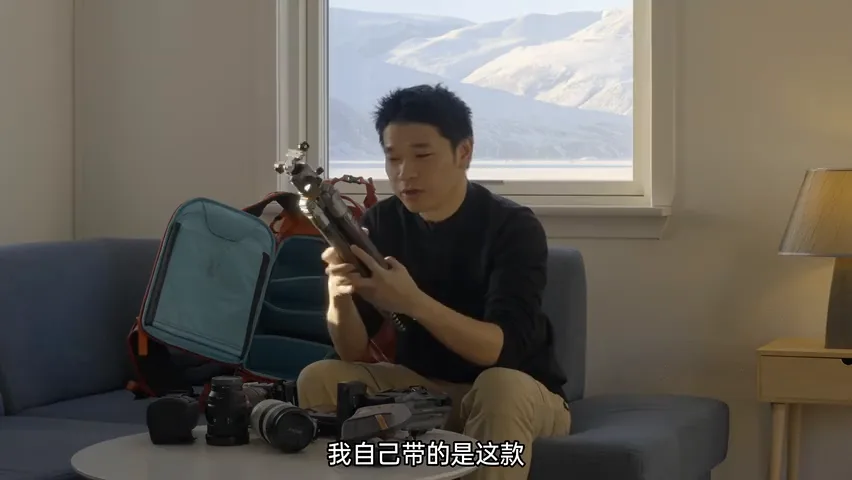
Finally, a VSGO cleaning kit, and spare drone propellers tucked into the bag — invaluable if a prop gets clipped on landing (at 9:42 in the video). The three most useful items: a blower, for dust on lenses; a lens pen and cloth for smudges; and sensor cleaning swabs — changing lenses outdoors lets dust in eventually, and when the blower can't remove it, a swab carefully wipes the sensor clean. Handle with extreme care (at 9:57 in the video).
04 Winter Shooting Precautions
The first keyword is freeze protection. Ordinary cameras, phones and drones work fine at around minus 30 (at 10:36 in the video); when it gets colder, take the battery out of the camera whenever you're not shooting and keep it in an inner pocket close to your body, reinstalling it to shoot.
The second keyword is condensation. After an hour or two outdoors the body may be at minus fifteen or twenty; carry it straight into a warm room and frost forms instantly on the body, the lens, even inside on the sensor — and it won't clear for hours (at 11:06 in the video). The right way: put all gear back into the camera bag, zip it shut, and don't open it indoors until it has warmed up gradually over an hour or two. Also, when flying the drone or reading a screen, either wear a mask over your nose or be careful not to breathe onto the screen — breath frosts a cold screen instantly and won't wipe off for a while (at 11:58 in the video).
Third, the tripod: if the legs stood in water, dry them before packing away, or take it somewhere warm to dry before locking (at 12:22 in the video). Lock a wet leg and the water inside freezes within minutes — it will never open again without half a day of thawing.
1. Clothing solves "not cold" first: balaclava and goggles with no skin exposed, PGYTECH gloves balancing warmth and operation, a one-piece fishing suit over wicking base layers, oversized boots with extra socks; 2. The drone is the Arctic workhorse: high angles, the 8-km icefjord, 7x telephoto — a screened controller survives the cold better, and the more batteries the better, for scouting camera positions too; 3. Camera kit favors portability: A7CR with the 24-70 GM II F2.8 for low light, an L-plate as the vertical-shooting savior, and the telephoto chosen per trip between 70-200 and 100-400; 4. Guard against freezing and frost: batteries warm against the body, cold gear zipped in the bag to warm gradually, no breathing on screens, and dry wet tripods before locking.