Photography Tutorial · 2020-10-08
A Cross-Genre Dialogue: Portrait Meets Landscape Photographer
Thomas Chu Photo
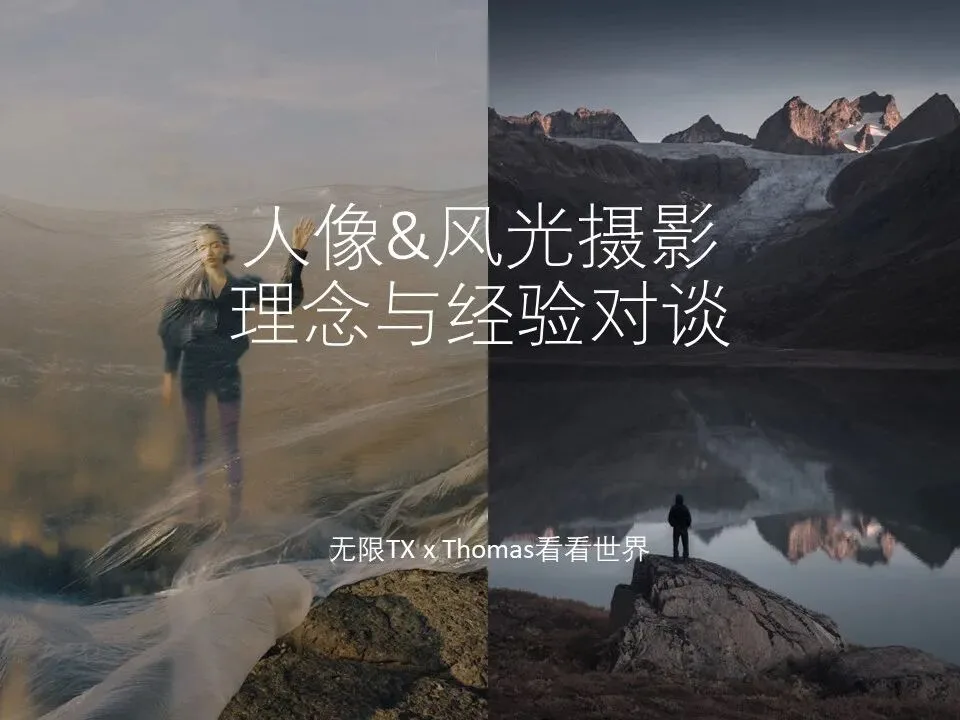
Recently, renowned portrait photographer 无限TX and landscape photographer Thomas Chu Photo carried out a crossover creation and workshop together in Dunhuang.
In the very same desert, the perspectives of a portrait photographer and a landscape photographer turned out completely different!
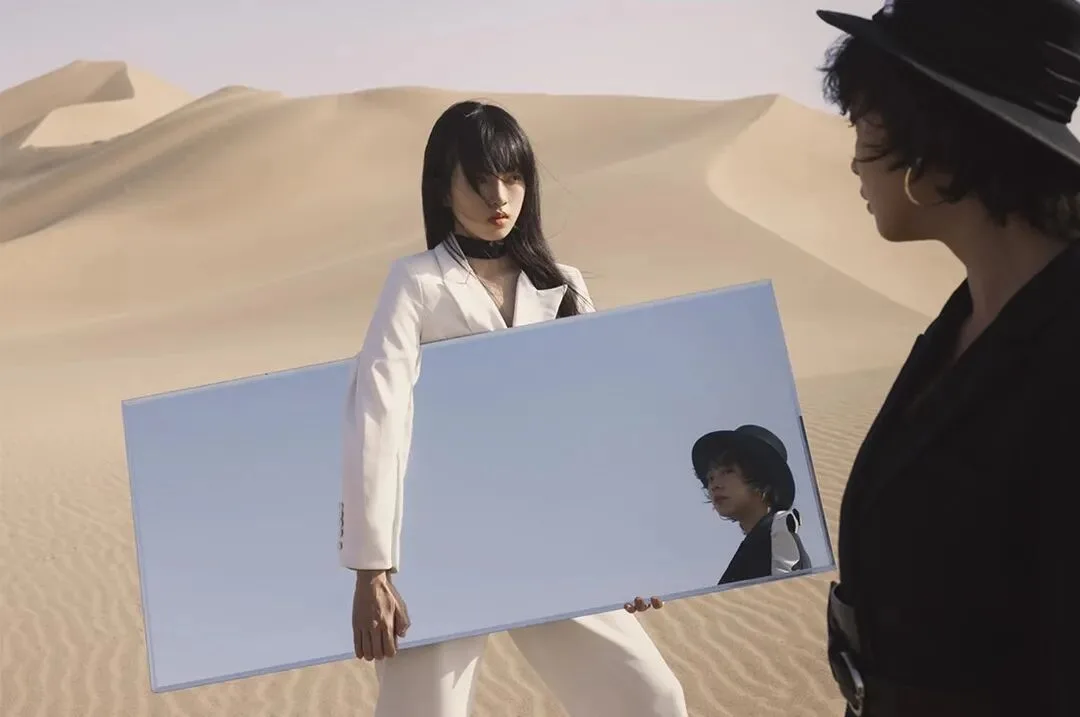
Photography: 无限TX
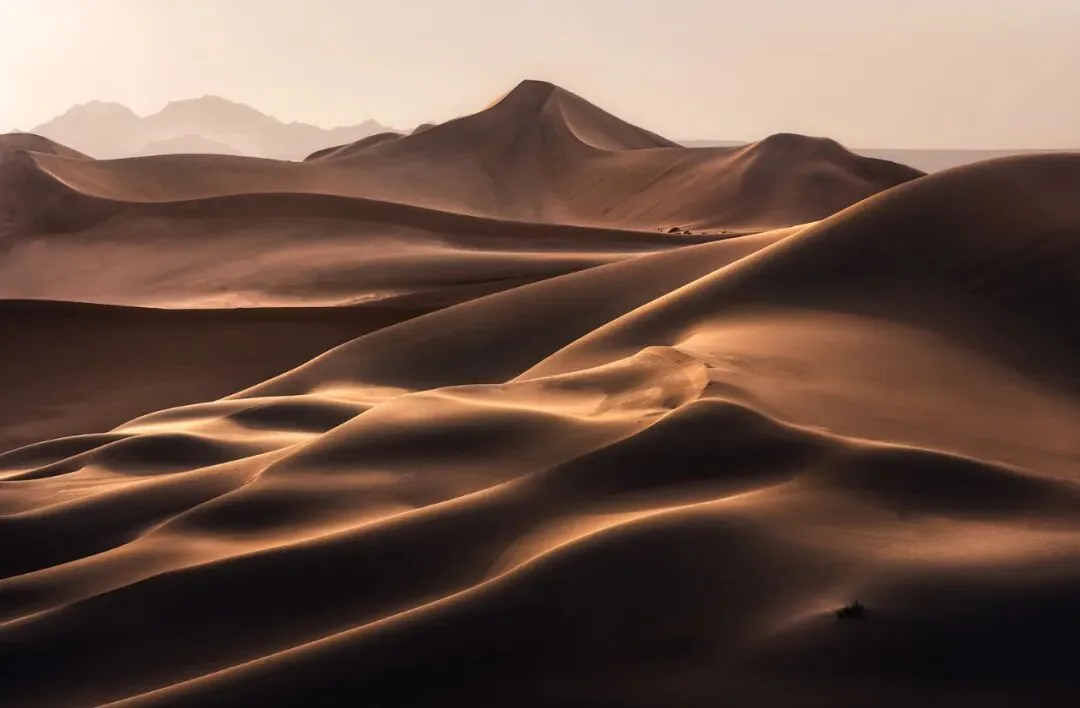
Photography: Thomas Chu Photo
Both are photography, yet portrait shooting and landscape creation have their differences as well as much in common in aesthetics, learning, and business. Between creating and teaching, the two photographers held a rich conversation covering 6 questions everyone cares about:
1. What do you consider good portrait and landscape photography?
2. What are the similarities and differences between portrait and landscape photography? Why this crossover collaboration?
3. Could you briefly introduce your personal photography journey?
4. How did you learn photography? Any advice for self-learners?
5. Which are your own 3 favorite personal works (or series)?
6. Why did you decide to become a professional photographer? What is the life of a professional photographer like, and what are its pros and cons?
Below is the full video of this conversation along with the presentation slides!
Video conversation
▶ Watch the video tutorial on Bilibili
This is the fully illustrated companion to the video above. Landscape photographer Thomas × portrait photographer WuxianTX — conversations across these two genres are rare: how does each define a good photograph? What do portrait and landscape photography share, and where do they differ? What were their growth paths and learning methods? And one of the biggest questions — how do you go professional? A 42-minute dialogue organized into six questions, with the full takeaways in text below.
First, Thomas's answer to "what makes a good photograph". This slide from 10:00 in the video lists four dimensions — achieve any one and you have a solid image; achieve two and it is an outstanding one (at 10:38 in the video). Each is unpacked below.

01 What Makes a Good Photograph
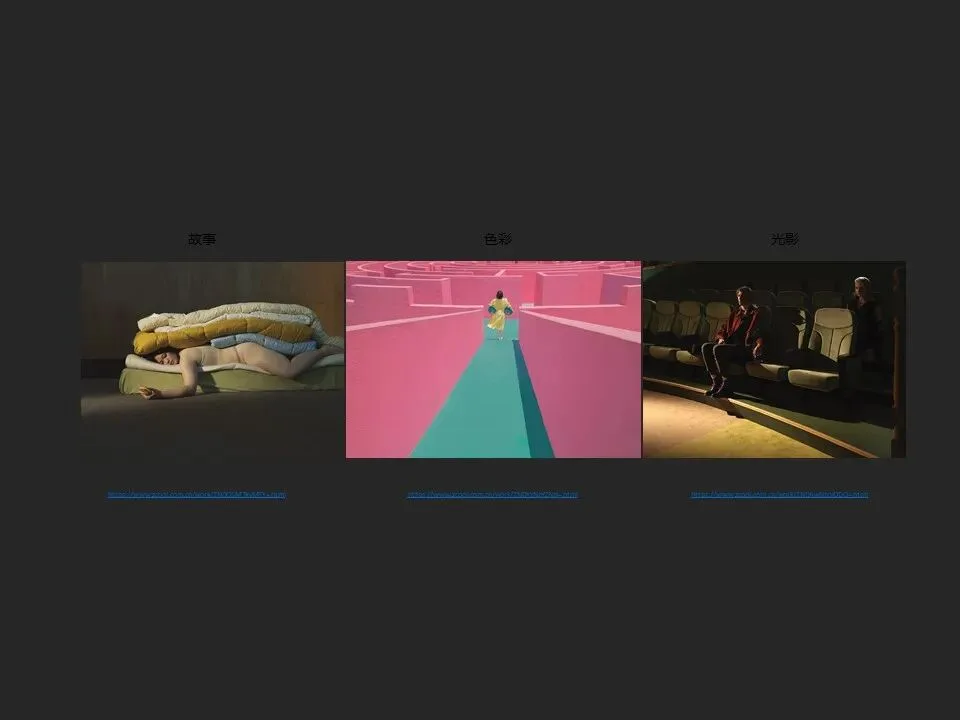
Teacher Wuxian's answer starts from portraiture: themes should come from life — his recent "Obesity" photo series is about something deeply human; next comes the expression of emotion, where the moving elements are usually the eyes and the body language; then narrative — give the model and the whole theme an entry point, a storyline like heartbreak or travel, and the series comes alive instead of feeling dry; finally, fold in personal style — he likes color coordination and wide-angle lenses for tension and physical force (at 1:18 in the video).
Take the Obesity series: the models were amateurs recruited on Weibo, none as heavy as the concept required, so liquefy in post it was; the props revolve around the hamburger — layered, fattening — arranged to mimic its shape and create a sense of destruction, with lighting building the mood (at 5:11 in the video). The image below is a textbook prop metaphor: a body wrapped in layered quilts, precisely like a burger.
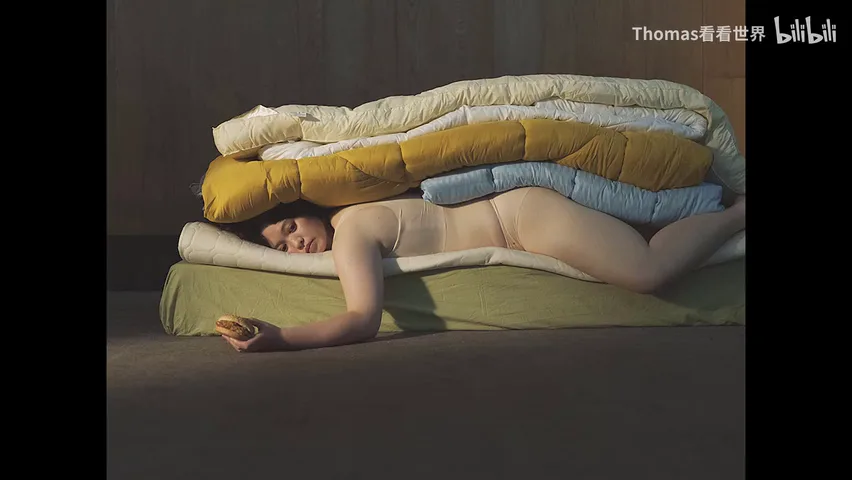
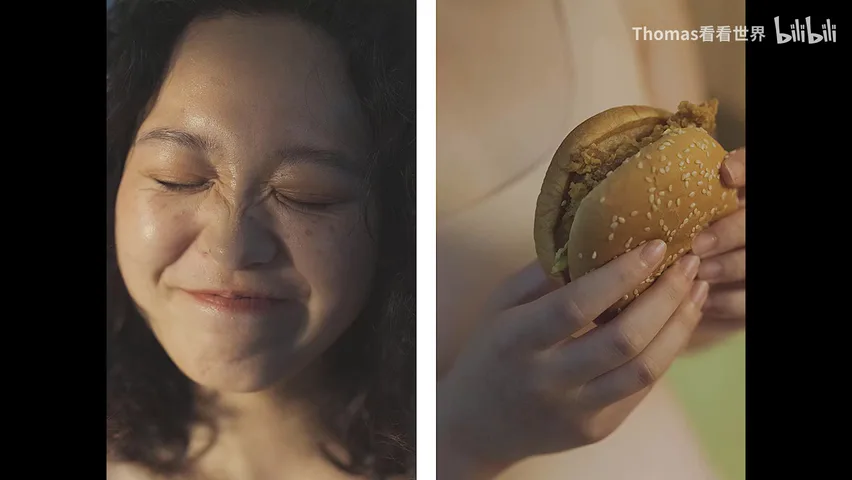
The model's emotion is likewise drawn out by the props: the conflicted state of craving the burger yet fearing to eat it, plus details like grabbing fries (at 6:08 in the video). This combination of prop and emotion gives the work its depth.
Thomas's answer is more universal. Beautiful photos, stylish photos, story-driven photos — every one of those standards has counterexamples in real life. After much thought he landed on one common thread: good photos are the ones that leave a deep impression, evoke resonance, or offer an experience (at 7:27 in the video). We can judge a photo at first glance precisely because of whether it impresses us, whether it strikes a chord.
What achieves that? Many dimensions — hit any one: overwhelming visual beauty; strong personal style or visual impact — during the Golden Week hundreds of thousands of tourists shoot the identical Crescent Spring in Dunhuang, so an identical frame impresses no one, while a lesser-known vantage, darker or high-key tones, or fresh color pairings can; the decisive moment, light and story — a photo whose light isn't even the best may be the most interesting because it kept a story, or because that one second of light hit the snow mountain before the cloud dissolved; a scene or story that strikes a chord, such as a social topic like obesity; and a novel concept or way of presentation (at 8:00 in the video).

02 Portrait vs Landscape: Same and Different
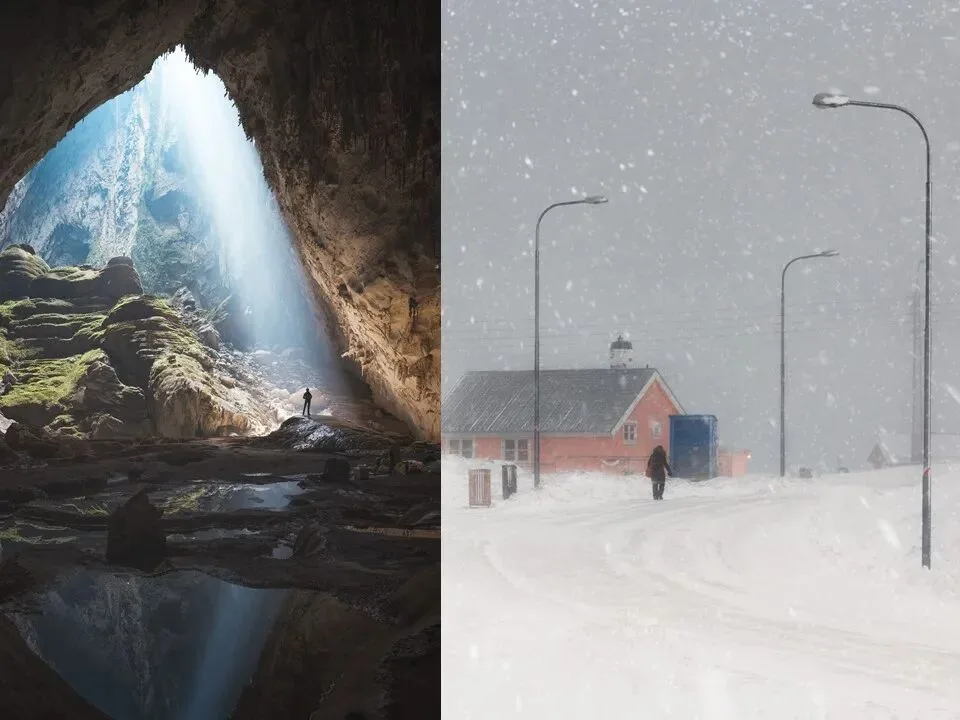
As for what the two genres share, Thomas puts it in one line: both are photography, both are two-dimensional art — the aesthetic fundamentals of color and tone transfer completely; only the subject matter and emphasis differ (at 13:47 in the video). In the same desert, Thomas's people are often tiny dots in a vast landscape, because he is showing the environment and its grandeur; Wuxian shoots the model's movement, wardrobe and styling — the spirit of the person.
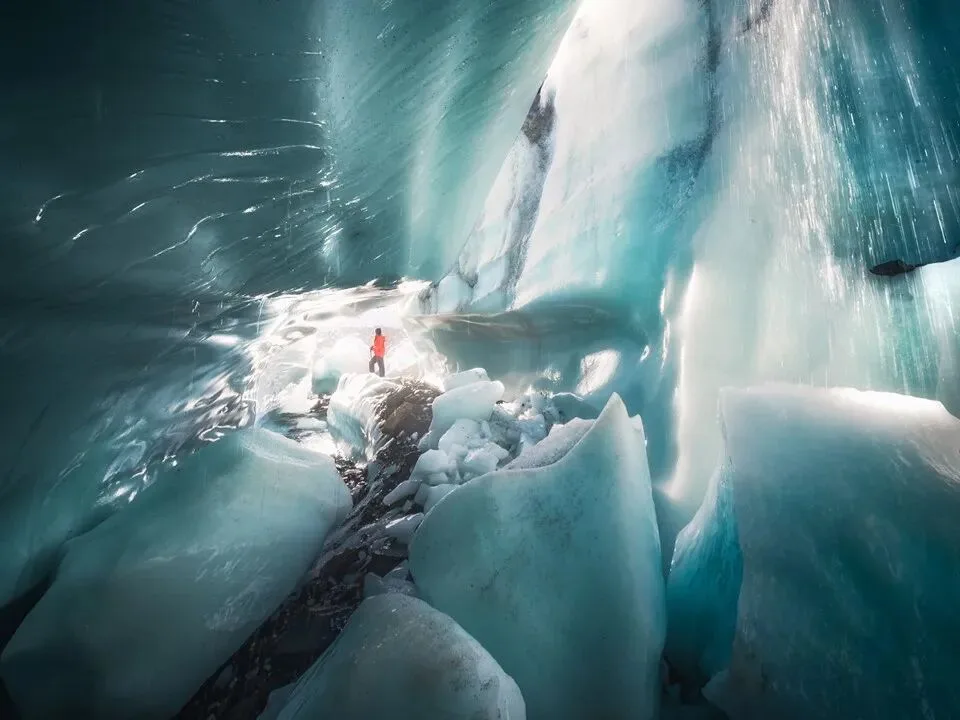
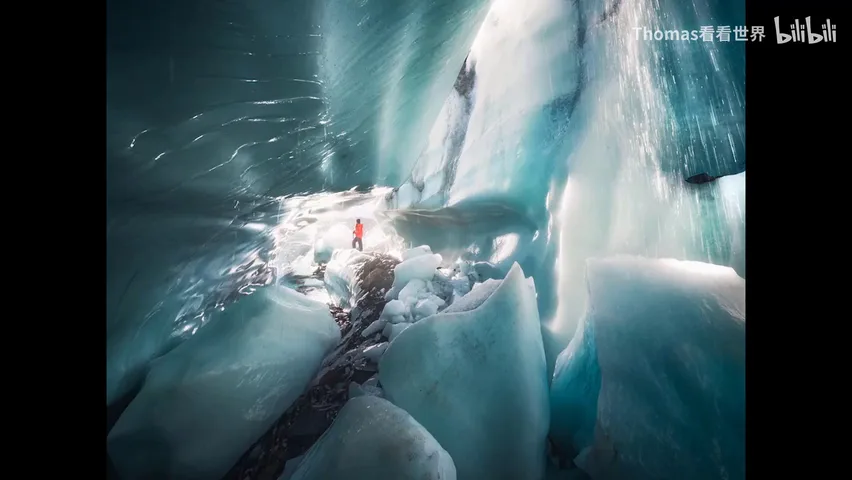
The amusing term here is "utility person". The people in Thomas's frames exist to give the landscape scale: a human is about 1.5 to 2 meters tall, so with a person beside the ice cave you know the cave is roughly three meters and the glacier perhaps hundreds — the person is a yardstick for the scenery, not the subject (at 15:00 in the video). The image below is the textbook case: a tiny figure inside an ice cave carrying the scale of the whole scene.
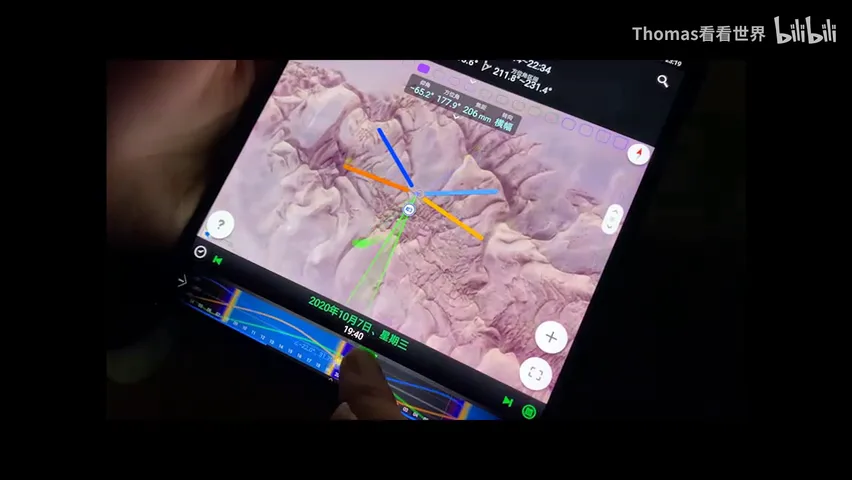
The occasion for this cross-genre dialogue is a photo workshop the two are leading together. Wuxian admits that portraits don't demand that much from a location — on his two previous Dunhuang trips he scouted by the roadside or in tourist-heavy dunes, working around crowds; this time, scouting with Thomas, they found desolate, untouched desert, far better than before — and Thomas even scouts via satellite maps first, a lesson learned (at 12:20 in the video). Mutual learning is exactly the point of the conversation.
03 Growth: The Three Stages
Wuxian divides a photographer's growth into three stages (at 16:56 in the video): 2013-2015, the passion stage — progress is fastest right after starting; he shot sixty to seventy series a year with no systematic courses, figuring everything out himself, so for ordinary people this stage is about volume: shoot a lot and learn what every tool does along the way; 2016-2018, the rising stage — a clear personal style takes shape, and the keyword is thinking more; 2018-2020, the stable stage — commercial work, more thematic projects, consistent output.

He singles out two hurdles: the inconsistent period — you plan a series perfectly in your head but the results fall flat, which means your technique needs more work; and the plateau — many photographers hit it, run out of ideas, and quit. To go far on this road, persistence is everything (at 19:33 in the video).
Thomas's observation: people spend too much time on technique and gear comparisons while neglecting taste and vision. He suggests spending at least a third of your time on films, reading, art and design, studying others' work and summarizing — why was it shot this way, planned this way (at 21:41 in the video)? Walk into a desert and you instinctively hunt for foregrounds, frames and leading lines because you've seen so many; for dunes, the best light is often neither noon nor sunset but some window in between when the shadows land just right.
On tools, his stance: software and technique serve the image — don't get obsessed. To make a color a darker red, Curves, HSL, Color Balance or Selective Color all get there — what matters is the destination; take whichever path is most natural for you (at 23:39 in the video). Also, portrait or landscape, photography is a whole pipeline: planning, scouting, shooting, Photoshop post, then picture editing for publication (color pairing, sequencing) and output (the science of papers) — all learned through practice. Practice a lot, but on top of seeing and thinking; otherwise it's just ineffective repetition (at 24:47 in the video).

04 Three Favorite Series Each
Asked for his favorites, Wuxian picked three different directions: the Obesity series (story-driven planning), a color-coordination series, and a lighting series — "ask me which I'm most satisfied with, and the next one wins", as with most photographers (at 26:06 in the video).
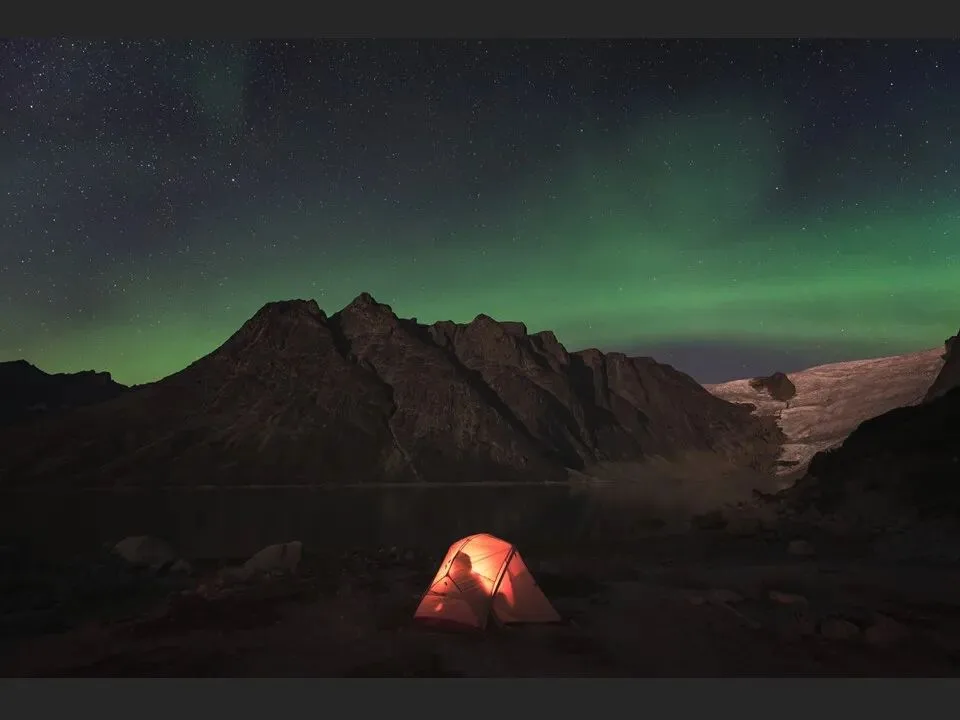
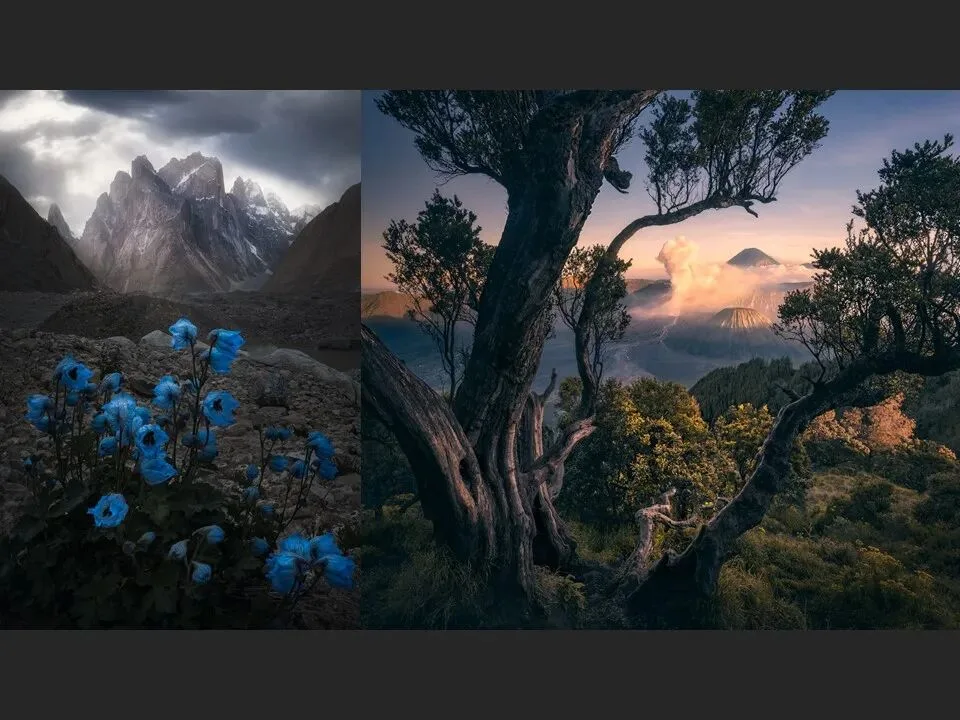
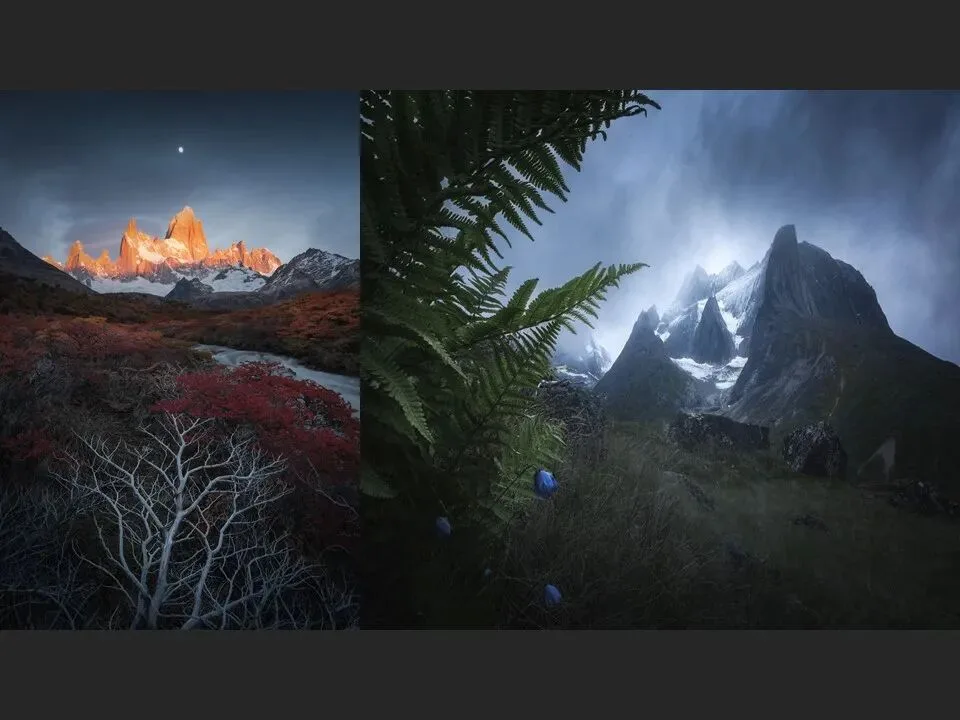
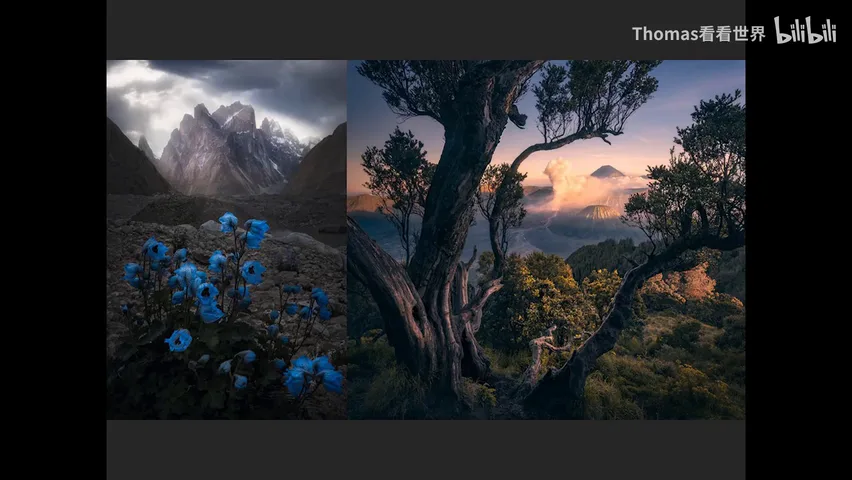
Thomas's three: first, the "vitality" work from before 2018 — he was still imitating the style of foreign masters while folding in his own discoveries: flowers blooming at the foot of 5,000-to-6,000-meter peaks, lush life not far from the barren wastelands of Mount Bromo. He loves frames where extreme environments and life share the scene (at 27:25 in the video).
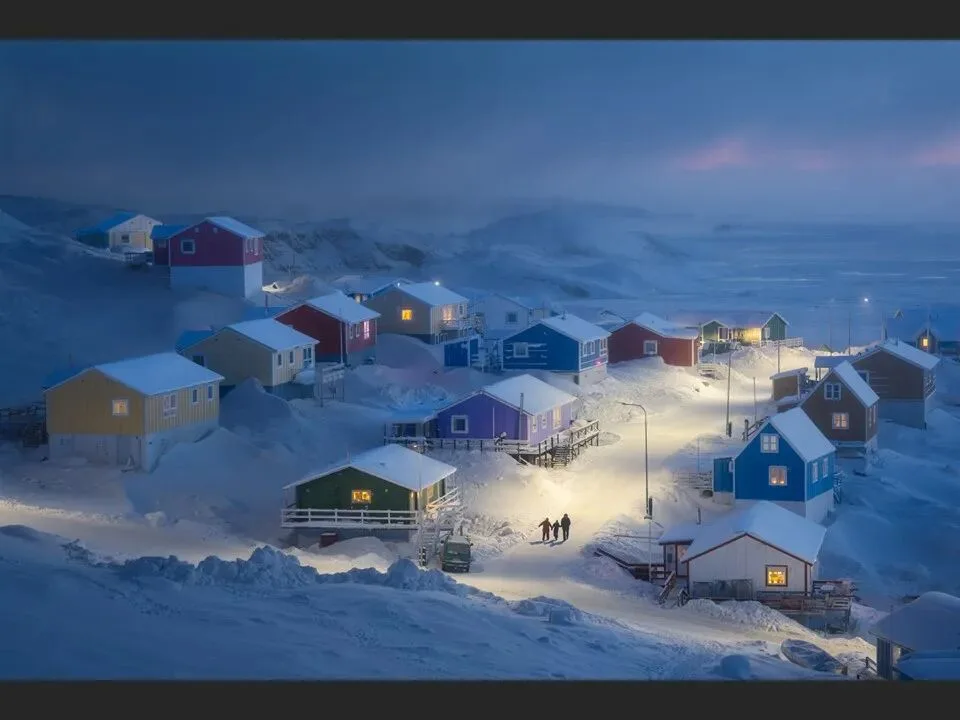
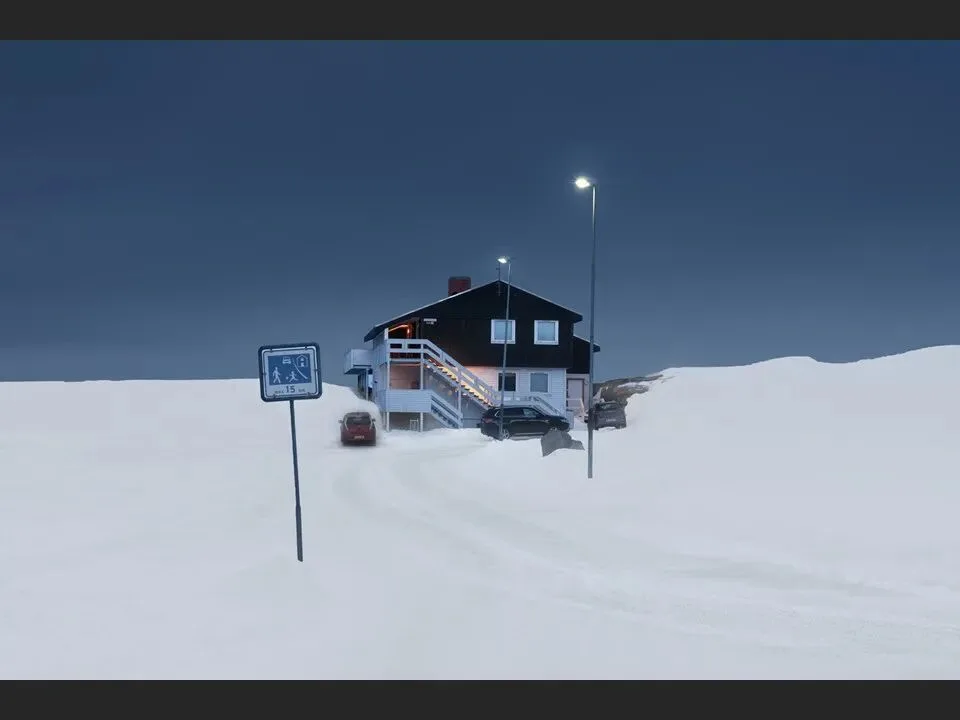
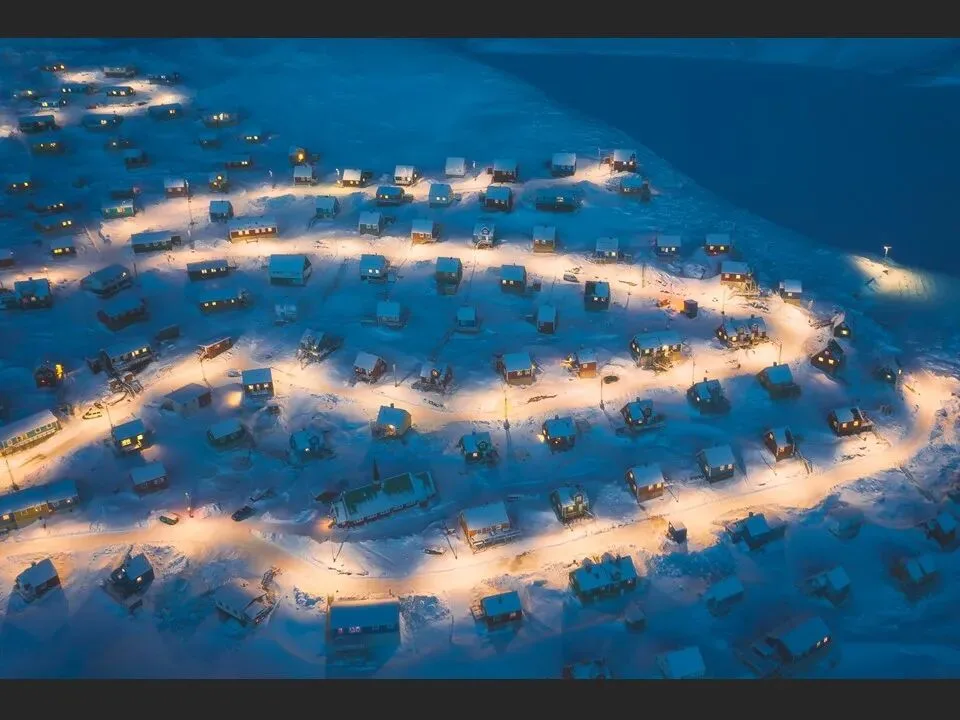
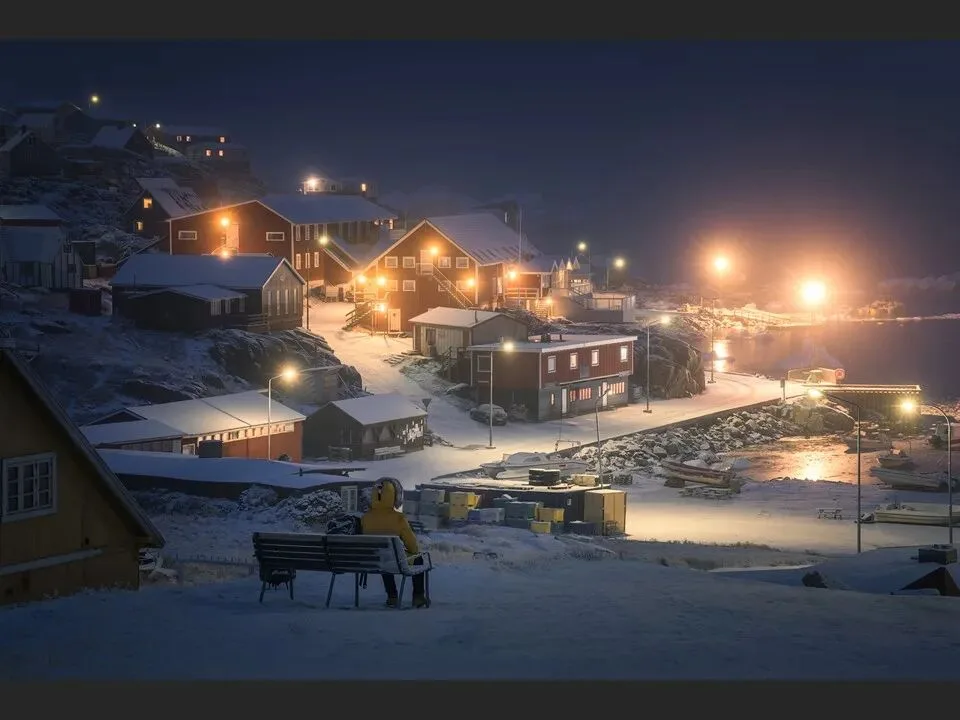
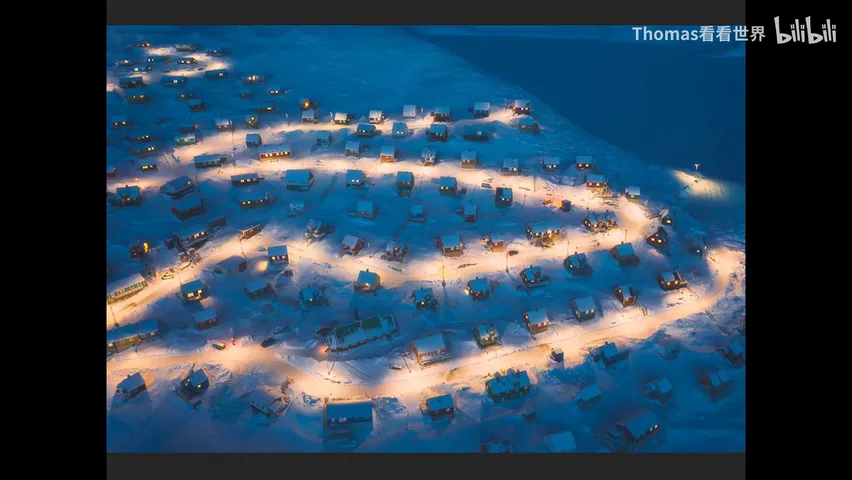
Second, the Greenland series (at 28:25 in the video): he gradually found his own signature shooting window — the blue hour after sunset before dark, when sky and ground shadows both turn blue while town lights glow warm, a dreamy warm-cool contrast. He intends it as a complete project: recording the transition from nature to town, to declining towns, to cities.
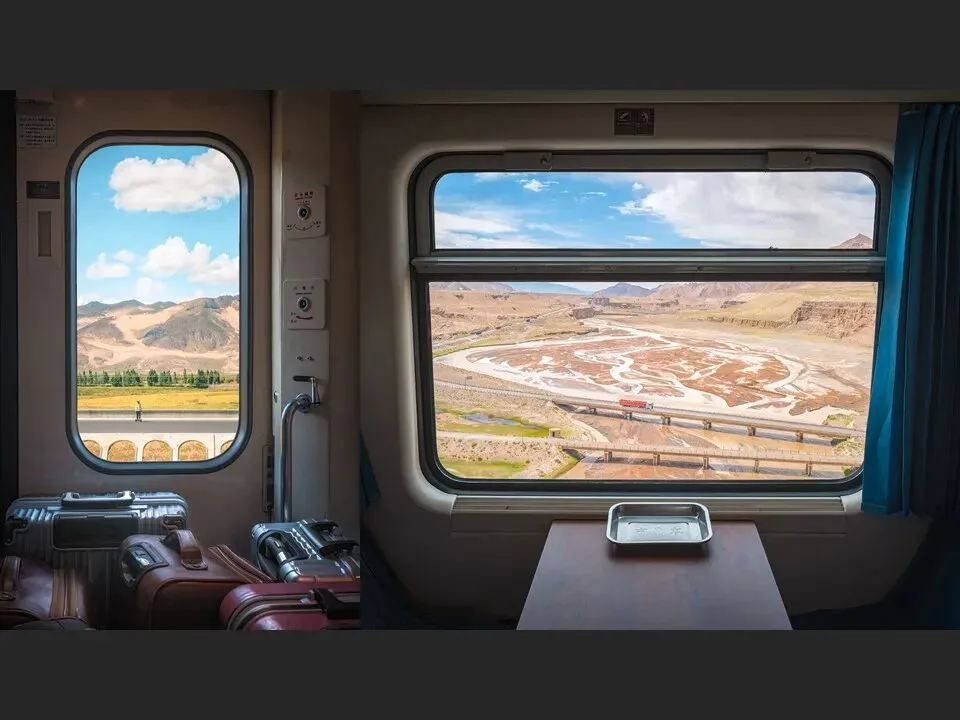
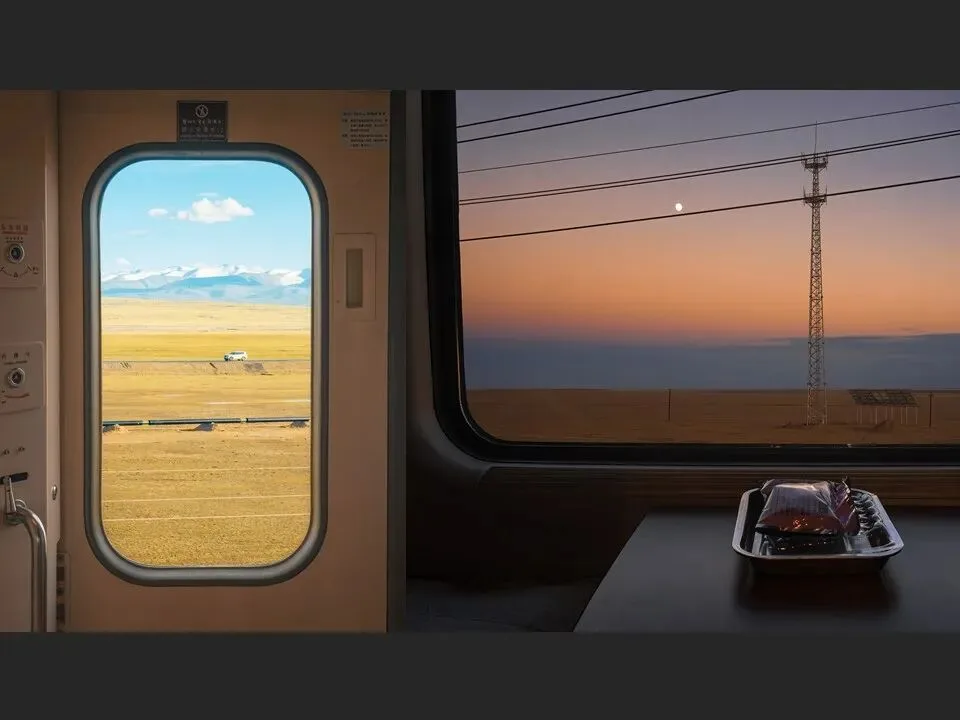
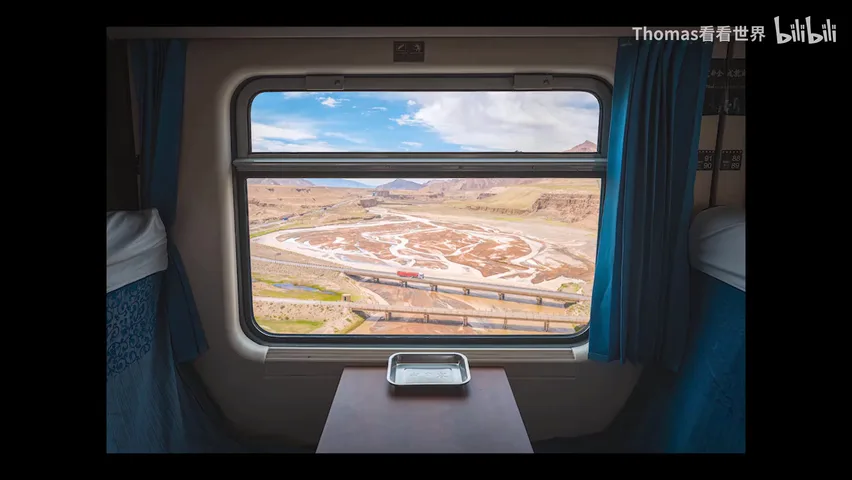
Third, "Trainscape China": riding the train from Xining to Golmud he realized the views outside rival any spectacular nature shot worldwide — and they often contain "modern China": the Qinghai-Tibet line as a sky road, the high-speed rail as China's calling card — signal towers in the Hoh Xil no-man's-land, pipelines along the railway, the Qinghai-Tibet highway and oil lines, all traces of Chinese ingenuity reshaping nature; inside the window he leaves clues — a half-eaten melon, neatly stacked luggage — adding layers and story (at 30:08 in the video). Photography isn't only simplification; often it is addition (at 32:18 in the video).
05 The Road to Professional Photography
How does one become a professional? Wuxian's answer is "naturally": as your personal work matures, brands that fit your aesthetic come to you, commissions grow, and one day you simply are a professional (at 33:59 in the video). On money he is blunt: in any field, earning well means climbing to the top of the pyramid — "photographers don't make money" usually means the foundation isn't there yet; and doing what you love makes you more focused and professional, deeply satisfying when client and photographer are both happy. Early on, don't think about how much you earn — measure how much value you create for clients, and a professional eye forms over time (at 34:41 in the video).

Thomas adds the essential difference between professional and hobbyist: not skill — hobbyists often out-shoot pros — but whether you can feed yourself with photography (at 36:28 in the video). Landscape is precisely the hard genre to monetize: a portrait client commissions you directly, but the snow mountain will never buy your photo. So you hunt for monetization within your personal work: self-media (stills and short video on distribution platforms), leading photo tours, and brand collaborations (at 36:41 in the video). His own choice was aligning commerce with passion — after winning awards, offers poured in for liquor, real estate, cars — and he chose automotive: car shoots happen outdoors, they mesh with landscape, and geography, tone and mood are his strengths (at 38:30 in the video).

After going professional, both stress staying true to the original heart. Professional photography is more tedious than imagined: client management, business operations — and the client leads. Thomas gives an example: on a car shoot the client demanded his favorite snow mountain be cropped out; after talking it through, he had to comply (at 39:51 in the video). But burying yourself entirely in commercial work erodes your original motivation and turns you into a work machine — so keep improving and trying new styles. Wuxian kept hunting new subjects after going professional, his skill never stalling. Styles, trends and technology all advance at full speed; stop learning and the wave will leave you behind (at 40:56 in the video).
Finally, Thomas notes that being a photography hobbyist is a genuinely happy thing: purely for love, enjoying it, free of client pressure and noise, slowly honing technique and finding your own style (at 41:53 in the video). May this conversation leave you with a real improvement too.

1. Good photos share one trait: deep impression, resonance or experience — hitting any one of beauty, style, moment, story or concept is solid; two is outstanding; 2. Portraits prize spirit, landscapes prize scale, yet the aesthetics of color and tone are shared — cross-genre learning cuts both ways; 3. Three growth stages: passion demands volume, ascent demands thinking, stability demands system — and the only answer to a plateau is persistence; 4. Going professional means finding monetization that merges with your passion in your personal work — and within commerce, keeping the original heart and never stopping learning.
HD video:
https://www.bilibili.com/video/BV1rZ4y15754/
无限TX's portfolio page:
https://www.zcool.com.cn/u/13572846
Thomas Chu Photo's portfolio page:
https://thomaskksj.tuchong.com/

Post-processing machine: Dell XPS17 9700
Thanks to the following brands
for supporting this crossover creation

PPT