Photography Tutorial · 2016-12-13
A Portrait Photographer's Growth Journey and Learning Advice
This is an article by my photographer friend Sun Zheng.
In it he not only shares his growth since first picking up a camera, but also lays out his self-taught learning path and advice without reservation — all solid, practical content.
The books and resources he recommends are an extra treat for those who love shooting portraits.
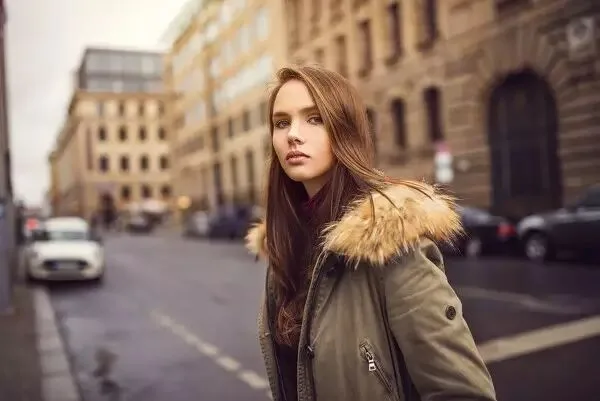
This is not a summary, but something written at the start of a change. It's not about teaching experience — it's about writing down the mindset with which I plan to make my change. Writing it down is how I organize my own thinking, and I hope it's of some use to you too.
1
A Few Thoughts on Photography
First, photography is the process of using specialized equipment to record images, converting the real world into two dimensions and then sampling it into binary code....
Heh. What motivation would someone who thinks like that have to do photography?
If you say photography for me is about recording decisive moments, recording my life, recording family and friends — that photography is essentially recording — that sounds more comfortable. But I feel it lacks a sense of participation, and I think this mindset carries enormous laziness. If the focus is on recording, you develop passive thinking, and it especially limits creativity.
Photography is the process of recording a moment; the photographer is the one who creates that moment. A photographer doesn't just record a photo — they also create that instant. This idea makes me comfortable: it lets me actively record while also actively imagining.
The difference between photographers lies not only in the way they record — parameter settings, composition, shooting angle, exposure, even lighting — but also in creation. Note that I said "also", not "more". Who is the story's protagonist? Where does it happen? What is he thinking? What is he doing? What mood? When does the story take place? The variables are endless. As a photographer, you have to create that moment. A "feeling" needs a carrier and a means of expression. An article can't directly hand you a feeling, but tell you a story and you'll feel it.
So the way a photo is recorded holds no secrets, and shouldn't. Technology should be open source! Open source! Open source! Reverse-engineering it isn't hard either. It does distinguish photographers — the visual difference between my photos and Japanese-style fresh minimalism or fine art is obvious at a glance. But what I really dislike is people insisting on defining which style is better or more "advanced".
Another thing that distinguishes you from other photographers is the feeling expressed through content as the carrier. That part of the difference interests me more, because it's something deeply personal — decided by childhood memories, quite mysterious.
So how do you improve? You need to know.
There are no rules for good photographs — there are only good photographs. — Ansel Adams
Thinking this way takes a load off. All those rules — the golden ratio, diagonal composition, symmetry — don't treat them as rules, only as suggestions. The various shooting techniques, flash theory, even color theory: they were summarized by our predecessors to help us record our content better. The correct way to understand them is that these theories let us acquire our predecessors' experience as quickly and simply as possible. Now that we've separated "recording method" from "photo content", we can tackle each one individually.
2
Recording Method
Improving here is mainly about reading and deliberate practice. Just read the classics — those "master photography in X days" books only waste more of your time. Heh.
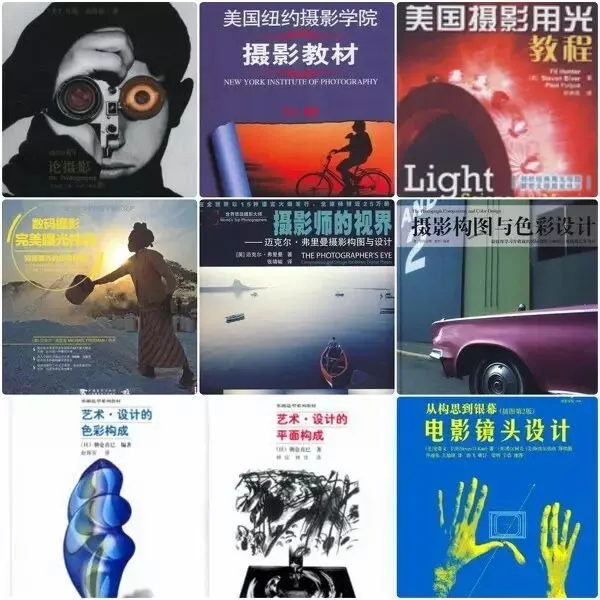
For beginners — especially the ladies — setting parameters in different environments (aperture, shutter, ISO, etc.) can be quite hard. The first photography book I read was, of course, the New York Institute of Photography course, though it dates a bit and much of the film-related content can be skipped. I originally learned on 135 and 120 film SLRs — but that was back in 2007. I looked for something newer, checked the tables of contents, and decided: still, I'll recommend the NYIP course.
For lighting, you must at least read this one:
"Light: Science and Magic" (《美国摄影用光教程》) http://book.douban.com/subject/3206941/
Superb! A hard-theory book! Before this book, don't read anything else about lighting. It's a systematic way to understand light. At first it feels like physics — that's fine. Trust me, this is the right way to understand light. Your understanding of light must be built correctly from the start.
On composition: a good-looking photo can be analyzed for its composition, but shooting by compositional methods won't necessarily give you a good photo.
I personally feel that good photos have no causal relationship with the "compositional methods in common beginner books".
When I shoot, I basically never think about compositional rules. Honestly, I think those rules were reverse-engineered by mediocre analysts trying to explain pretty pictures — but they really don't do much. A nice photo that happens to use diagonal composition isn't nice because of the diagonal — it's nice because of a thousand other factors.
Instead, read books that explain things in depth:
"Photographic Composition and Color Design" (《摄影构图与色彩设计》) https://book.douban.com/subject/4062254/
Then read:
"The Photographer's Eye" (《摄影师的视界》) http://book.douban.com/subject/4048631/
"Perfect Exposure for Digital Photography" (《数码摄影完美曝光技法》) http://book.douban.com/subject/4907369/
After reading this one I no longer knew how to expose — if you can get through it, finish it at least once. If you really can't, then let it go.
"Color Composition for Art & Design" (《艺术·设计的色彩构成》) http://book.douban.com/subject/1603077/
"Plane Composition for Art & Design" (《艺术·设计的平面构成》) http://book.douban.com/subject/1603076/
"On Photography" (《论摄影》) http://book.douban.com/subject/4282084/
"Film Directing Shot by Shot" (《电影镜头设计》) http://book.douban.com/subject/4213525/
When it comes to photography books, too many are a waste of life. Read with care.
Congratulations on getting through all that blablabla above! If technical books feel dry, I understand — when I read them it felt like studying for a major. It's the road you must take, and it's also the shortest one. Every clever shortcut is actually a long detour.
Ahaha, here's an article prepared for you to cure your laziness:
"Why Do You Have 10 Years of Experience but Still Aren't an Expert?"
http://36kr.com/p/5043788.html — deliberate practice
3
Photo Content and That Feeling
How to find or define your own style — or how to shoot distinctive photos that carry your own feeling — is a question that comes up from every direction.
Is style determined by the camera body, lenses, flashes, softboxes?
Is style determined by image style, exposure, tone, composition, brightness, lighting, detail?
Is style determined by post-processing methods?
Is style determined by expressions, clothing, props, environment, location?
Is style determined by the model's appearance, profession, or actions?
Is style determined by the theme or content expressed?
Is style determined by all these expressive techniques put together?
She is simply herself — the moment you name her, you're wrong. She is the moon; everything mentioned above is merely the finger pointing at the moon. You don't need to deliberately create her or find her. She is right there — just walk over gently and naturally, look up, and you see her.
Let me share my own journey. In my family, my grandfather took photos, my father took photos too — family albums from black-and-white to color, piles of them. There were quite a few photography theory books and masters' classic albums, and plenty of cameras as well.
I remember a huge classic Western black-and-white portrait hanging at home when I was little — everything looks big when you're a kid. Later, through primary and middle school, my dad would often bring home magazines and photo books scoured from secondhand book markets — eighty percent of it foreign castoffs. The one name I fully remember is VOGUE. I just flipped through them for fun back then. This habit of his also led me to collect punched CDs. My mom couldn't understand why the two of us spent money on garbage.
I began seriously teaching myself photography in the summer of 2007. Like everyone of that era, I read the New York Institute of Photography course. My cameras were a Mamiya ZM and a Mamiya RZ67, both with standard lenses. A crucial point in time.
Back then my dad recommended a photographer to me: Joey L. In 2007 he hadn't yet shot the Twilight posters and wasn't as famous as now. I still can't figure out how my dad knew about him. Born at the end of '89, Joey L's photos were infinitely lethal to a kid his own age who loved Green Day and Sum 41. He had already released his first tutorial DVD. Mm — thank goodness for eMule.
Although my dad undoubtedly had a huge enlightening influence on my photography, limited by his rigid straight-male worldview, I successfully resisted through nonviolent non-cooperation. I don't believe the outside world influences you — you can only choose what to let influence you. Sometimes you really do need to persist and believe in yourself.
There were even more old-school master photographers back then, plus floods of saccharine portraits — not yet "fresh minimalism", more like its predecessor. During my four undergrad years my subjects were eclectic, and portraits were not that many. About this many:

All people around me. By the way, a moment of silence for the D90 and 50mm f/1.8D. In 2011 I used a flash and an umbrella for the first time. The benefit of having photographers in the family: if you don't mind old gear, there's everything at home. The rest you all know — in summer 2014 my camera bag was stolen. What happened after can be found on my Weibo (www.weibo.com/sunmonk).
Now let me line up my photos from different periods for your reference. The ones from before Germany are in the collage above.
For the first year and a half in Germany I had no flash. It looked roughly like this. Having just arrived, I felt the air was incredibly clean and every sunset too enchanting, so I produced tons of backlit pre-sunset shots. The location was an empty lot next to the building I lived in.
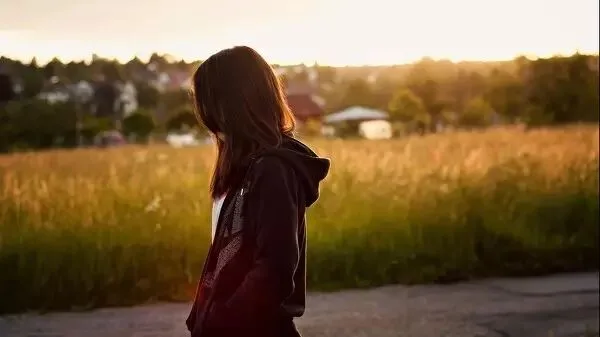
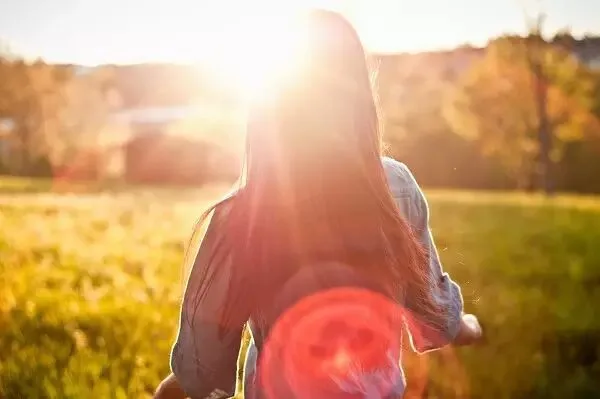
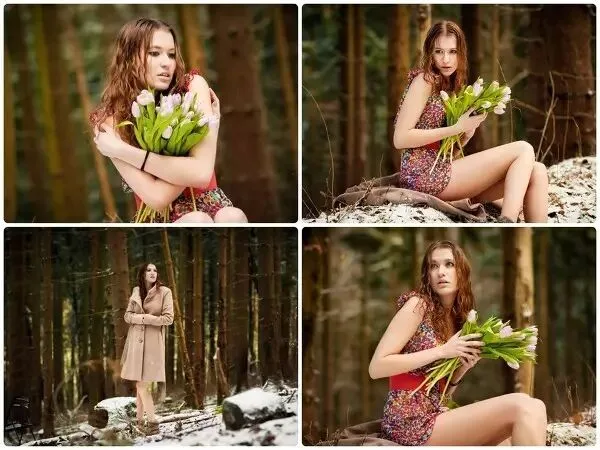
After that I shot this girl many times.

The first time shooting a girl with runway and modeling experience. Everything up to this set was shot on the D90, mostly with the 50mm f/1.8D and 85mm f/1.8G.
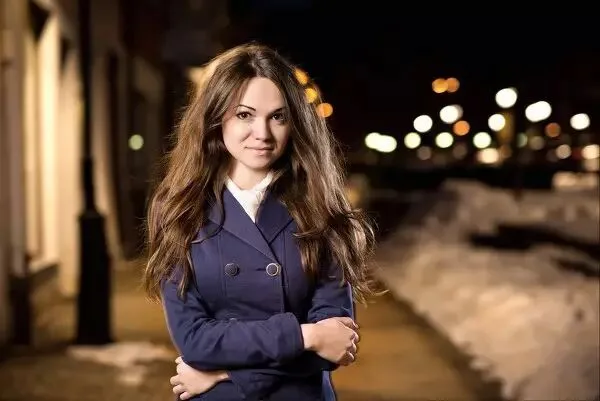
In 2013 I switched to the full-frame D600, mainly with the 85mm and 35mm. I intensely consumed tons of books and videos about flash, bought three speedlights, light stands, softboxes, umbrellas, a beauty dish, a snoot — a complete three-light kit. This was my first shoot with the full kit, and the start of my days dragging a rolling case to shoots.
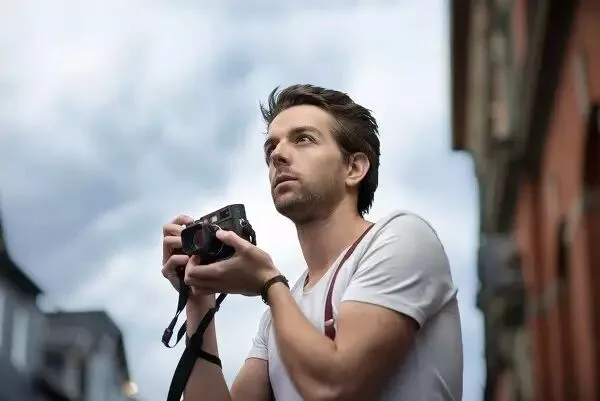
Then came a period of intensive flash shooting. I started writing that forum thread, updating it often and sharing methods. At first I wrote to summarize things for myself — then figured since it was written anyway, I might as well post it. Back then I was just trying this and poking at that.

This set is a personal milestone. I feel my technique began maturing from this set onward. I love the mood and tones, and the amount of detail. Though, admittedly, it might also be the handsome guy — and the handsome guy's Leica.
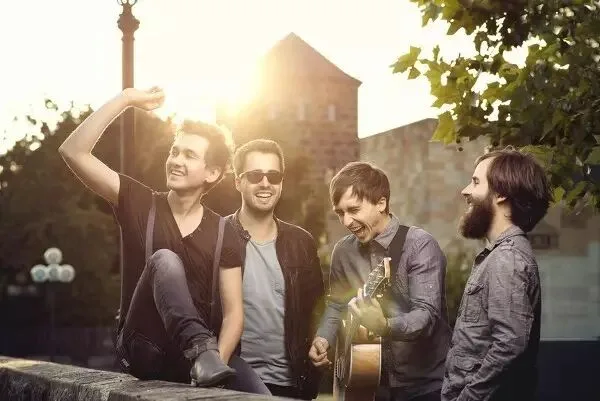
A band shot shortly after the previous one. Also a milestone for me.
The Conon K4T — a 400W location strobe with high-speed sync — and a 120cm octabox were first used on this set. A high-power location strobe that can handle any situation removed all limits from my shooting; it's a light you can completely trust. Mm — the feeling of "time to go big" surged through my whole body.
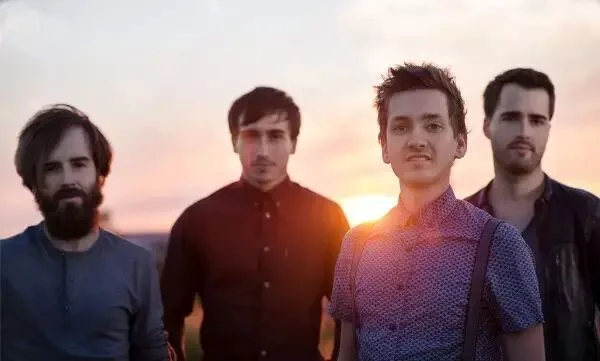
Hahaha, after finishing these two sets I was in a fantastic mood — and then my camera bag got stolen. ( ▼-▼ ) From then on I started shooting weddings and couples (needed the money). But those photos aren't convenient to post here, ha.
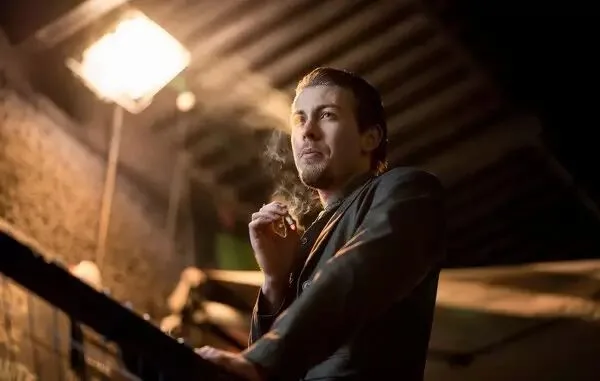
The timeline jumps straight to early 2016 — the personal-project reboot phase I mentioned. In Berlin it's hard to book ordinary people for shoots, so I started with actors.
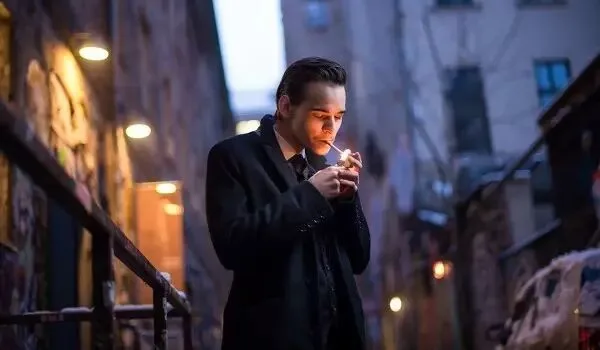
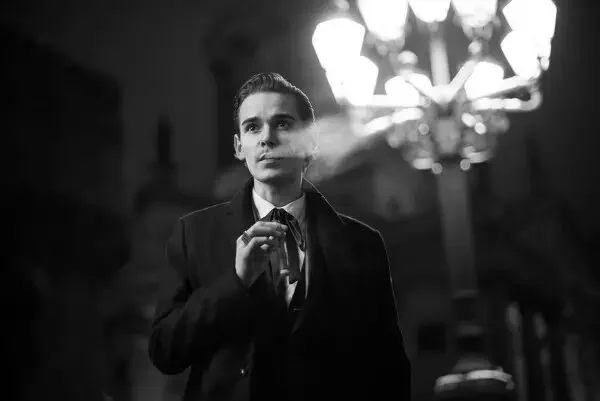
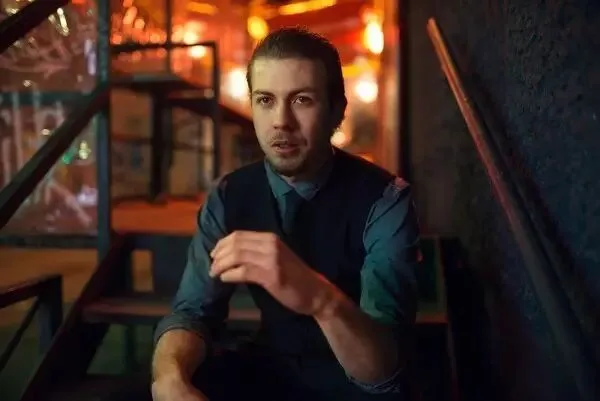
This fellow is also an actor and band member. Actors certainly have plenty of shoot experience. Every shoot has a clear purpose — which side of the actor to show — and the shots are for their agency. The requirement is not merely looking good, pretty, or handsome. Skin is expected to stay largely unretouched, keeping personal features. And actors cooperate with a shoot better than ordinary people.
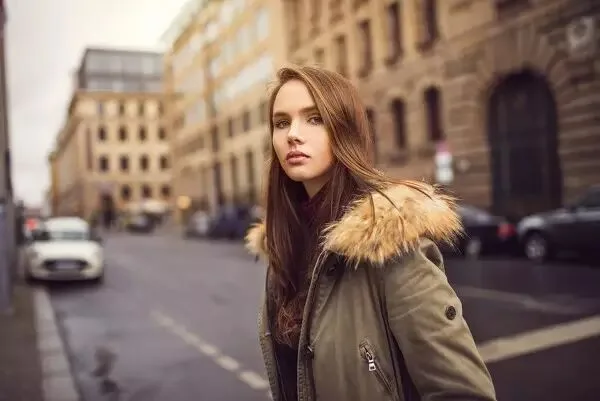
This set features the model from March 20 — runway and plenty of shoot experience, a law major in university. Models actively cooperate too: unbothered by crowds, no tantrums, no diva behavior. This girl is the protagonist of the tutorial section later.

The photos above trace my own development, for your reference. Now let me talk about how to improve "photo content and that feeling". These days, finding excellent photographers and seeing excellent photos is so much easier than back in 2007, and learning methods are far more advanced.
At the start of this article I said I spent a year and a half resetting myself to zero — luckily, we can learn together.
Watch more video tutorials and read more books!
The first recommendation has to be this video course:
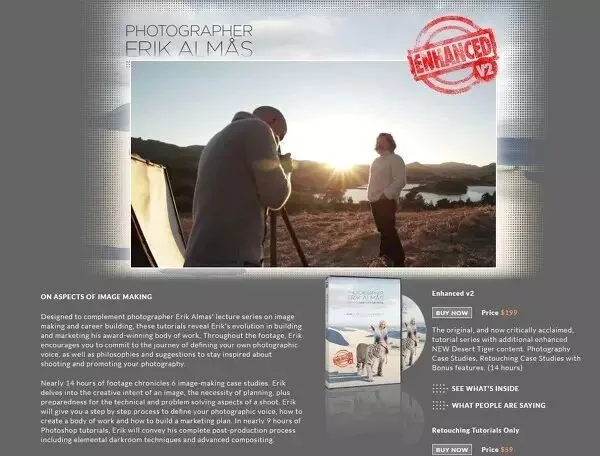
While studying photography fundamentals, watch Erik Almas's ON ASPECTS OF IMAGE MAKING at the same time.
http://acuities.erikalmas.com/
This is a tutorial DVD Erik made based on his dozen-plus years of experience. It clearly walks through several of his shoots with real examples — from pre-production to shooting to post — plus his advice for young photographers drawn from his own experience.
The film introduces a method: find 100 photos you love — emphasis on photos you love — then categorize and statistically analyze them. Very much worth trying. He also gives young photographers ten pieces of advice, each one pure gold.
This is a process that requires massive reading and accumulation. I'm just recommending the following videos and books. Each one is insanely good. Whether to watch or read them is up to your mood~
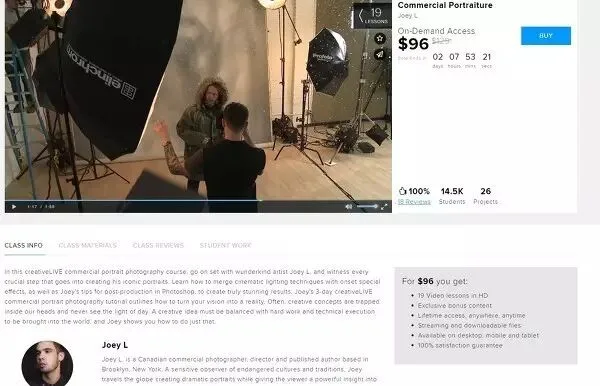
My idol's video course — how could I not praise it! I so want to list it as required viewing!
Commercial Portraiture Joey L
https://www.creativelive.com/courses/commercial-portraiture-joeyl
His personal website
https://www.joeyl.com/
Other tutorials
https://www.learnfromjoeyl.com/
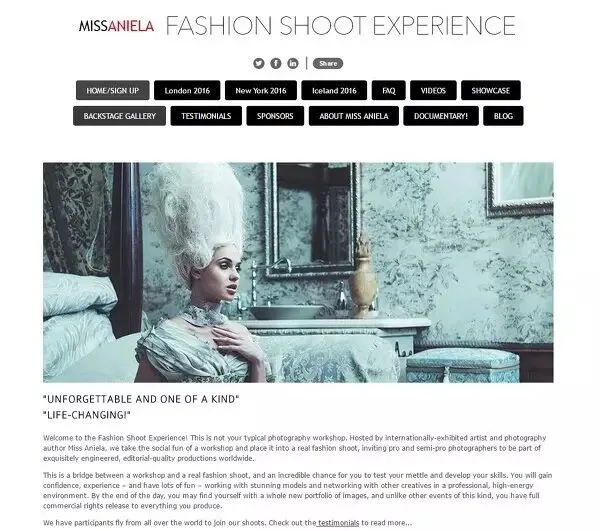
Miss Aniela's two blogs — she is my favorite female photographer
fashion shoot experience
https://fashionshootexperience.wordpress.com/
ROCKSTARLAVENDER — BLOG OF MISS ANIELA, ARTIST
https://rockstarlavender.wordpress.com/
Erik Johansson, surrealist artist
http://www.erikjohanssonphoto.com/
His TED talk — that last line is brilliant!
Erik Johansson: Unmögliche Fotografie
https://www.youtube.com/watch?v=mc0vhSseGk4
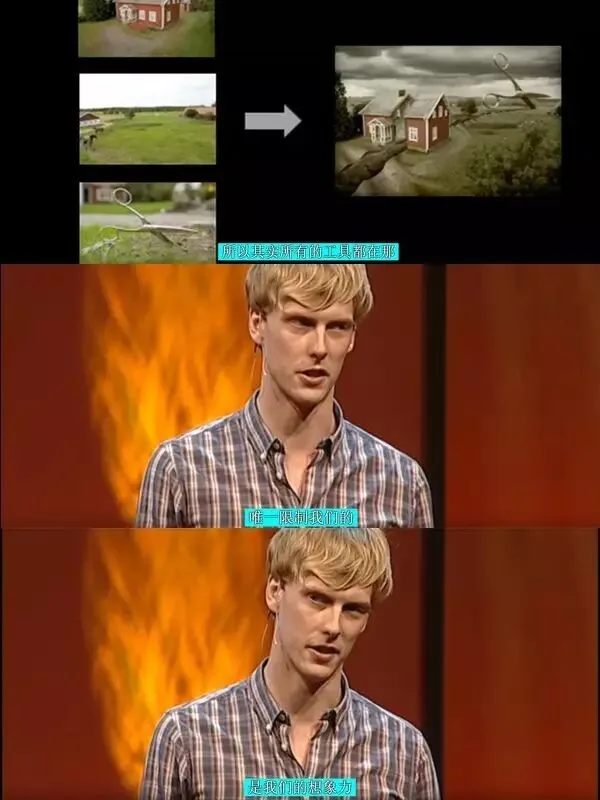
(The only thing limiting us is our imagination)
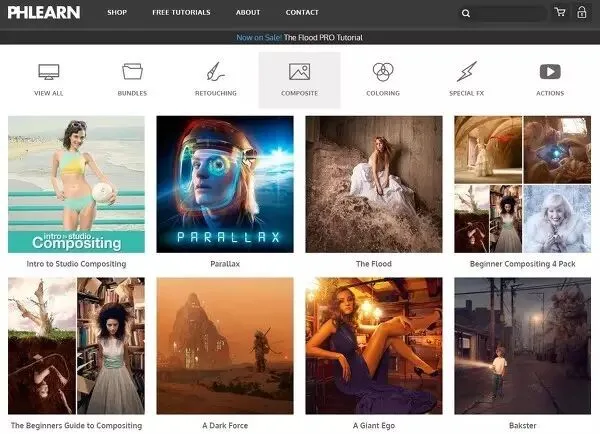
Phlearn's post-processing tutorials — you have to know him. Watching the editing process broadens your pre-shoot imagination. His tutorials may also include pre-shoot preparation and post sections.
https://phlearn.com/
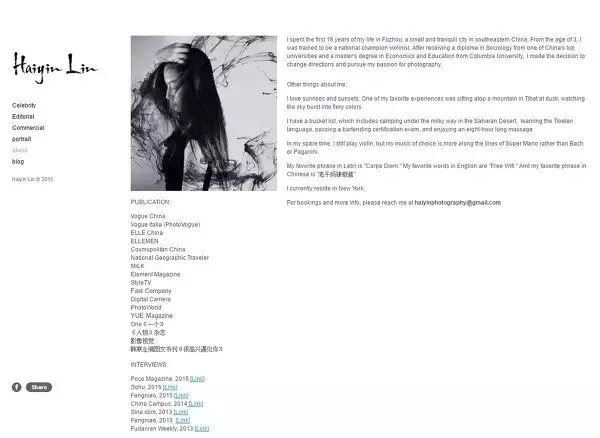
Lin Haiyin — the goddess, no explanation needed. She often posts reflections, tutorials, and recommendations. Do subscribe: http://www.haiyinlin.com/ http://www.weibo.com/soloviolet WeChat official account: haiyinlinphotography
Erik Almas's second video course
The Complete Guide To Composite Photography, Color, & Composition with Erik Almås
http://rggedu.com/products/erik-almas-photography-tutorial-color-composition-composites
One-light ONELIGHT 2.0
http://dedpxl.com/product/onelight/
A must-watch for wedding photography
How To Become A Professional Commercial Wedding Photographer DVD
https://fstoppers.com/product/how-become-professional-commercial-wedding-photographer-dvd
Sculpting with light
http://book.douban.com/subject/24152951/
All kinds of flash applications. Your thinking expands instantly — it feels like reading a novel. Relaxed and fun.
Color for Designers: Exploration, Theory, & Application
https://www.creativelive.com/courses/color-designers-exploration-theory-application-richard-mehl
Posing 101 Lindsay Adler
https://www.creativelive.com/courses/posing-101-lindsay-adler
Posing books — though for posing, videos are even better.
Here's a lighting simulation software recommendation while we're at it.
https://www.elixxier.com/en/index.php
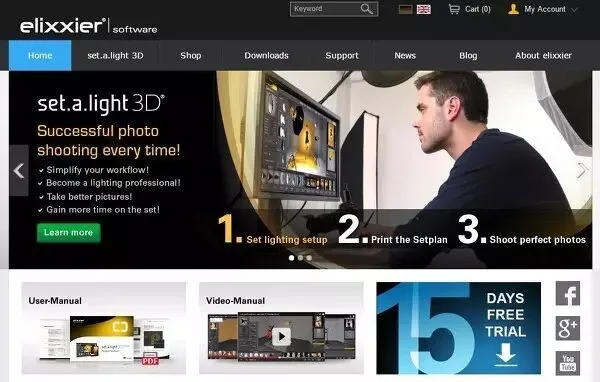
There are simply too many to list — I'll update as I come across good ones.
You also need to look at lots of photos. Everyone says "look at more photos" — but how many is "more"? Please don't compete on numbers. For reference: I just checked — 7,000 favorites collected on Flickr, 4,500 on 500px. And that's only the count of favorites; if roughly one in six viewed photos becomes a favorite, that's about 70,000 photos viewed.
That doesn't even count photo books and magazines. Browsing photos is a leisure habit — like watching variety shows on Friday and Saturday nights; it's easy to get hooked.
The photo you were meant to create is already out there — go find her.
The adorable author
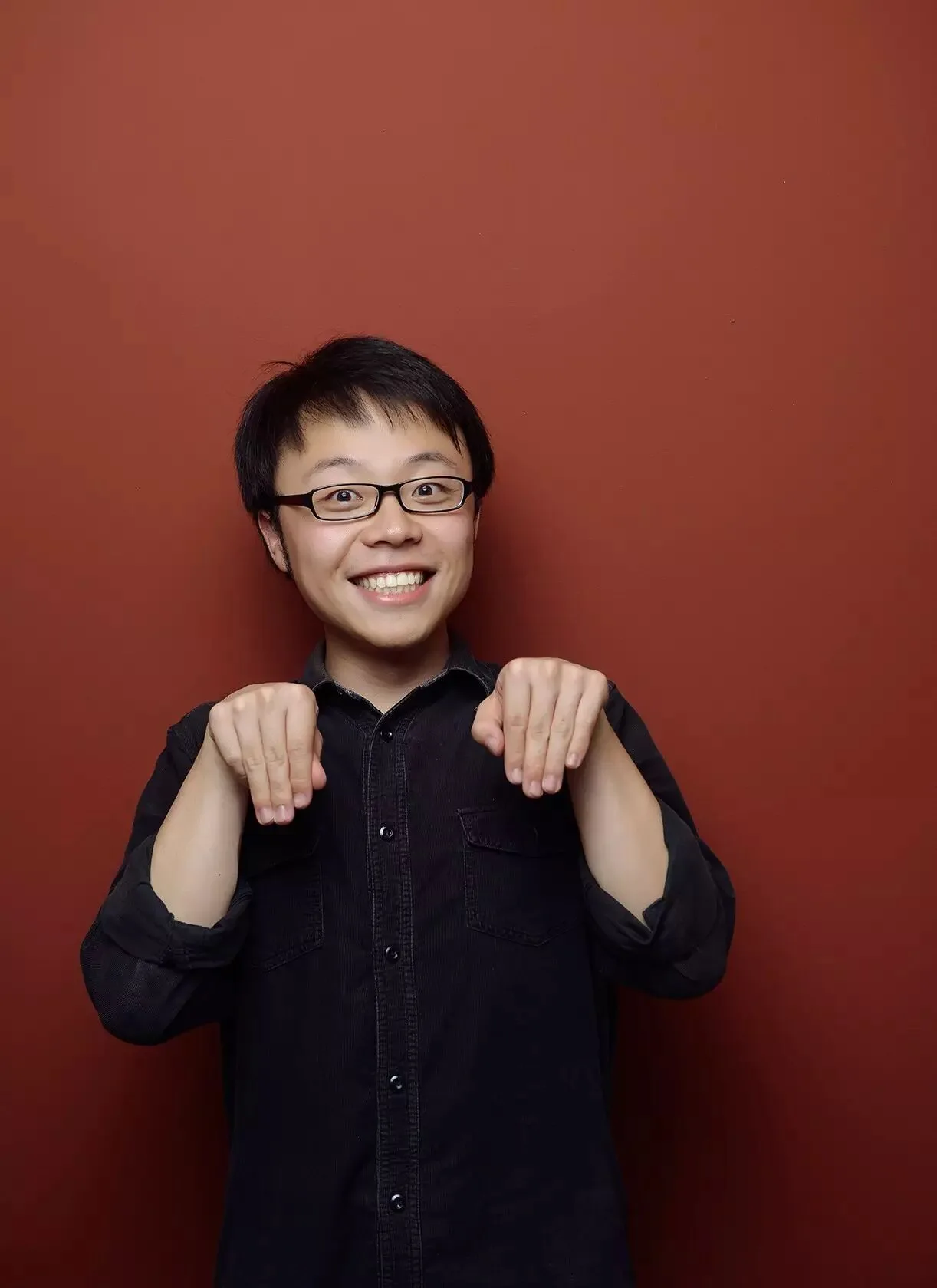
▲ Sun Zheng (sunmonk)
Hello everyone, I'm Sun Zheng.
A post-80s photographer whose style keeps changing, yet somehow hasn't changed,
cute yet cheeky,
unable to stay serious yet quite earnest.
Feel free to follow my Weibo @sunmonk
http://www.weibo.com/sunmonk
Thanks to Sun Zheng for sharing all this practical knowledge.
Everyone is welcome to discuss in the comments:
the photography books, websites, and resources you recommend.
Follow @Thomas Chu Photo, and learn one photography skill every week.