Photography Tutorial · 2018-10-28
Post-Processing Is Communication, Not Showing Off
Thomas Chu Photo
When first learning language arts, we study all kinds of rhetorical devices — parallelism, hyperbole, metaphor, and so on. Back then, only essays with ornate wording were considered good essays.
Later we discovered that concise, incisive writing can also make a great essay. What we love about an author is not merely his gorgeous sentences, but more his wildly imaginative ideas, his clear and profound insights, or his one-of-a-kind experiences.
The same is true of photo post-processing. Piling up various techniques and stacking up material sometimes only makes a photo gorgeous yet hollow — while what the photographer actually wanted to express gets lost in the dazzling imagery.
Although Thomas's WeChat account has always shared all kinds of in-camera and post-processing techniques for landscape photography, in an age where soft focus, light rendering, focal-length blending, and other techniques are massively overused, Thomas still hopes everyone will remember this sentence:
"Post-processing is not about showing off technique — it is about communicating better."
1
Crude Technique vs. Excessive Technique
In my view, the use of post-processing technique falls into three categories: crude technique, moderate technique, and excessive technique.
Crude technique means the fundamentals are not yet solid and the control of visual language is chaotic — the photo looks fake at a glance, or immediately uncomfortable.
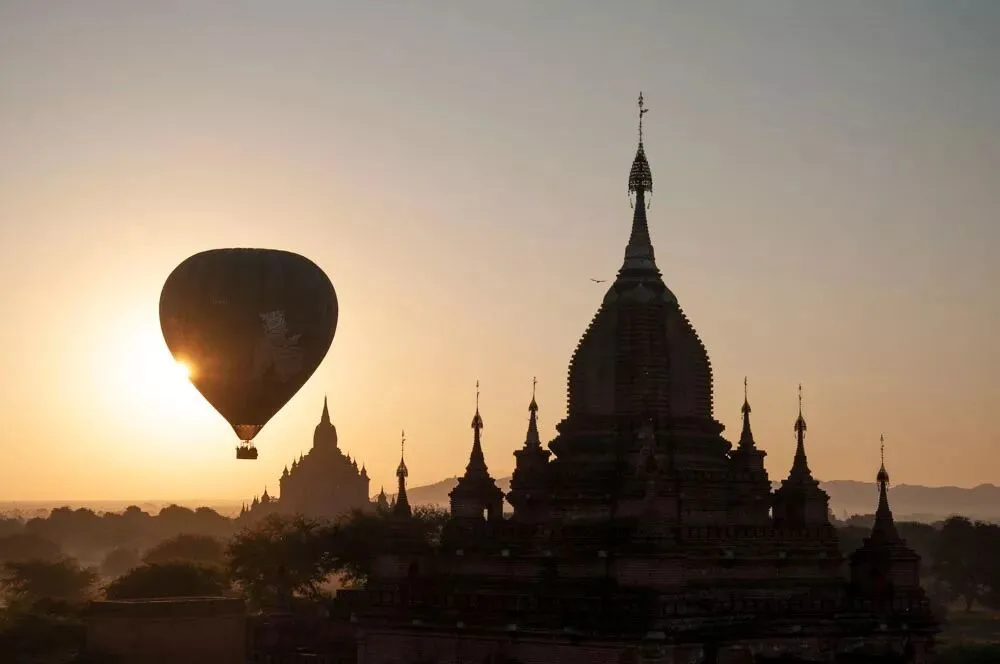
The photo below is one I shot in 2014 in Bagan, Myanmar: a distinctive hot-air balloon happened to drift past behind a pagoda — history and modernity interwoven in that instant.
The image below is the finished product of my post-processing at the time. Not only was it gilding the lily, the craft was very poor — anyone can see at a glance that the balloons behind look unnatural, and Photoshopping in so many balloons was meaningless anyway.
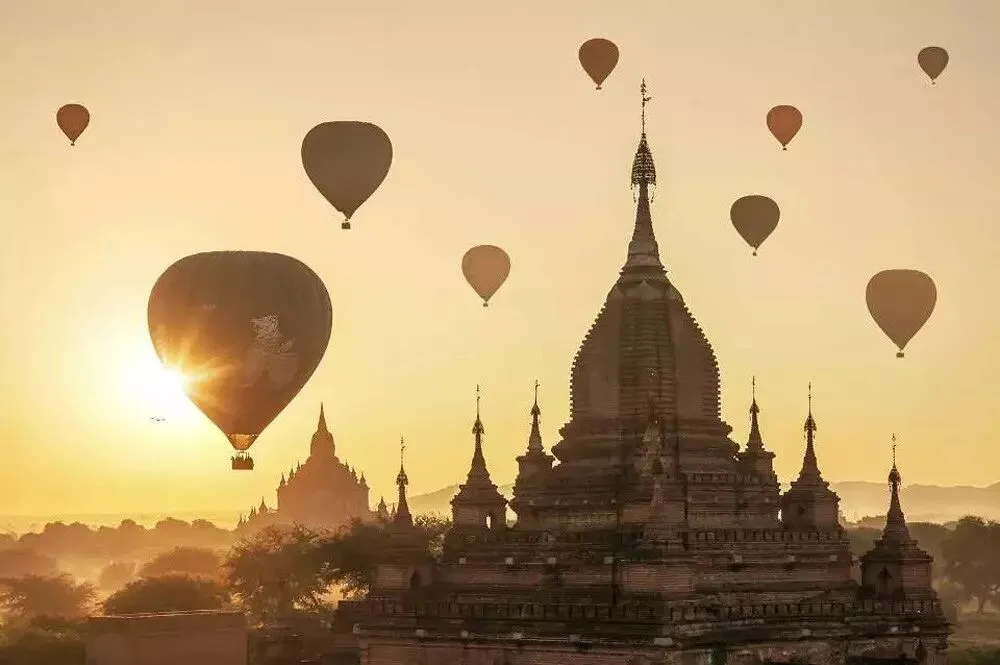
However, technical deficiency is easy to remedy: put in more deliberate study, and you will improve quickly. But many friends then fall into a second quagmire — excessive technique.
Excessive technique means the technique itself is competent and the visual language gorgeous, but the techniques are applied merely to use them — to show off — and their application fails to express the character of the scenery, the atmosphere of the environment, or the photographer's ideas; sometimes it even makes the picture's emotion feel jarringly wrong.
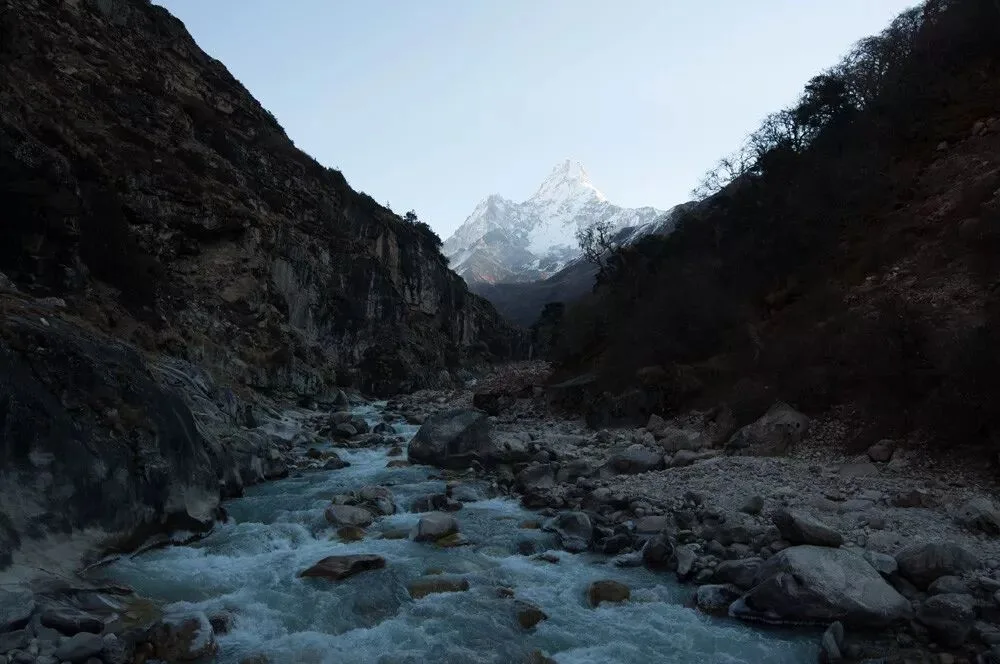
The original of this case was shot by me in daytime in 2012 on the Everest trekking route in Nepal, with the sacred snow mountain Ama Dablam in the distance.
The photo below is the work I finished in post at that time, using fairly complex techniques to convert daytime directly into night: the starry sky is overlaid material, the clouds are made in post, and since I had no stackable material for the slow-shutter water, I had to repaint it with a brush myself.
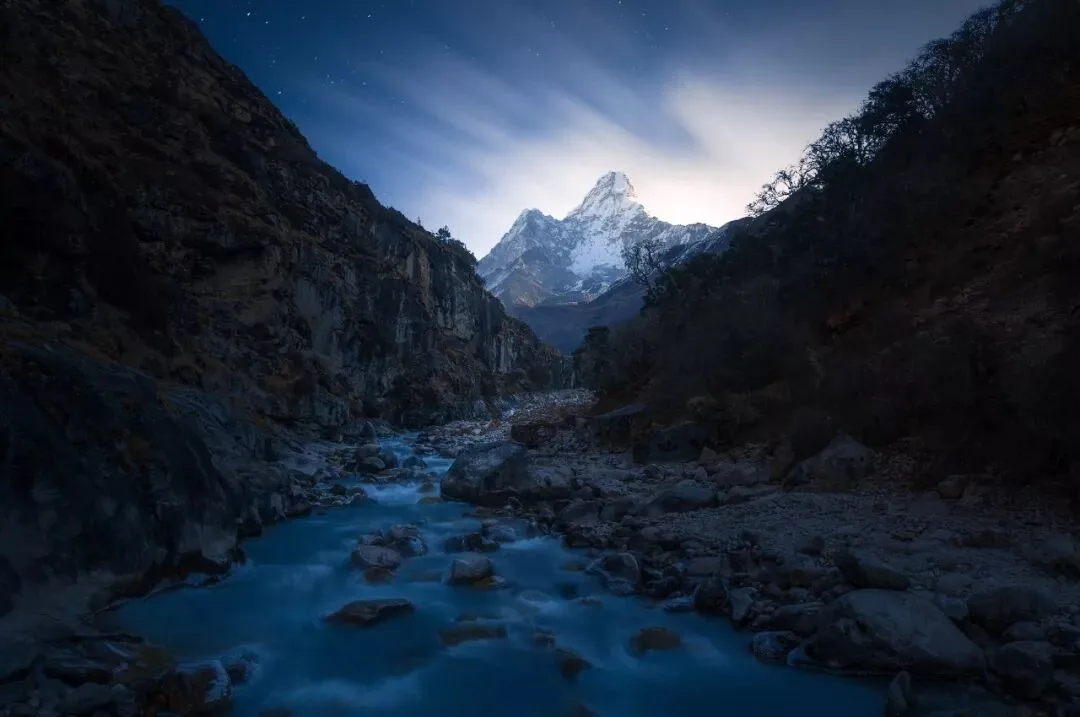
But such a work is more like a piece of pure CG effects — all the material serves post-processing for its own sake, unlike the works of Benjamin Everett, where compositing in post serves to express a certain philosophy of the author.
Of course, when I myself look at this photo, I feel no stirring of reliving the adventure — and viewers have even less way of learning through this photo what is distinctive about the Himalayan region of Nepal. A work that cannot even move the photographer himself can hardly move anyone else.
By comparison, I much prefer the photo below, where all the post-processing and visual expression serve to highlight the character and spirit of the snow mountain.
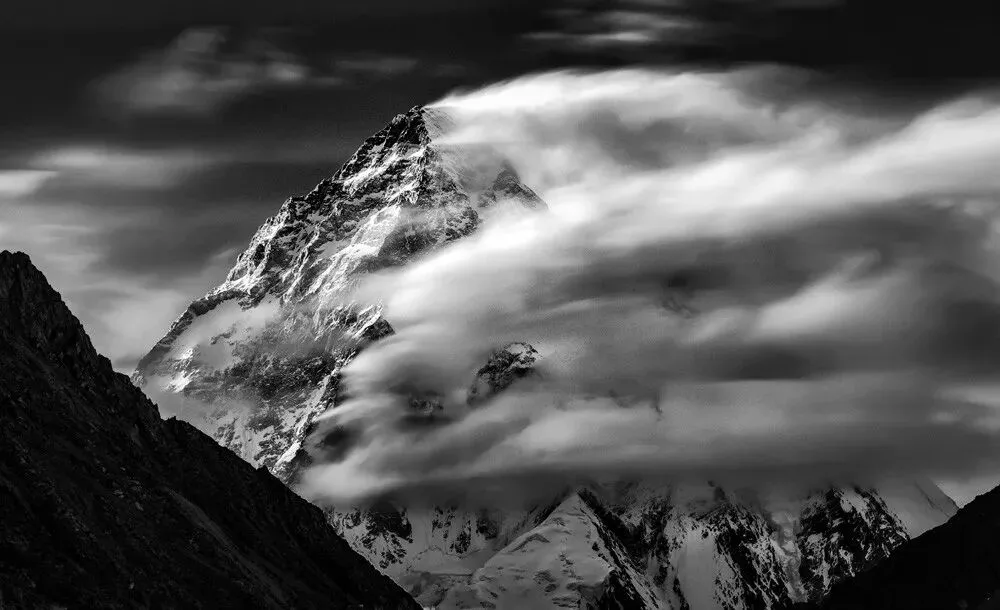
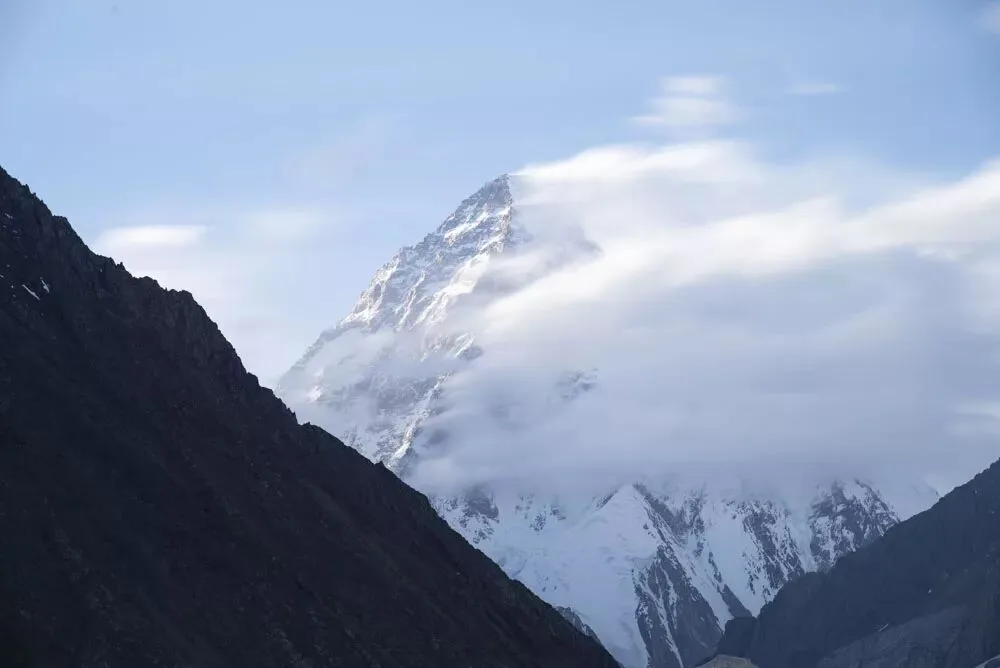
Below is the original of this photo of K2. The original image is bright and vivid — which does not quite match the feeling this mountain gives people: the world's second-highest peak, with a fatality rate among climbers far higher than Everest's.
So in post I removed the color and processed it into dark tones, to bring out this majestic and desolate atmosphere. I also accentuated the flowing clouds to a degree — these storm clouds on the mountain make the peak look like a general wearing a cape, commanding awe without anger.
A photo can serve commercial promotion, highlighting a product's selling points. A photo can also be artistic expression, presenting the author's ideas. A photo can also be a travel record, sharing the colors of the journey.
There is no standard measure for post-processing — it depends more on the photographer's purpose. We can process for some purpose, but we must never process for processing's sake.
2
Post-Processing Serves Communication
The presentation of a photographic work is a two-way communication process: the photographer expresses, and the audience interprets.
That a photographic work should not be gorgeous for gorgeousness' sake does not mean beauty is unimportant. In fact, beauty is a necessary element in photographic communication — just as we cannot go out with unkempt hair and a dirty face.
Even in speech we choose our words so our language is beautiful and fluent. Photo post-processing is similar: on one hand, it must create basic formal beauty so viewers are interested in looking further into the photo; on the other hand, the photographer needs to emphasize and strengthen what he wants to express, while weakening and hiding irrelevant clutter.
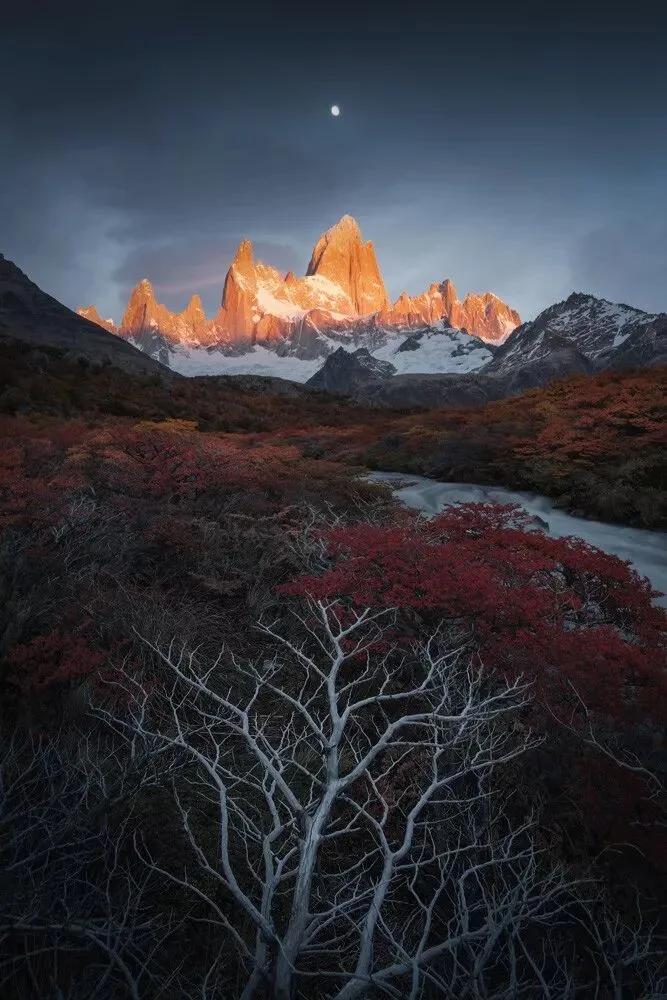
The photo below was shot in late autumn in Patagonia, South America. I really like this composition, because the multicolored shrubs and the withered branches in front nicely convey the atmosphere of late autumn turning to early winter — and the round moon has also long been associated with autumn in countless ways.
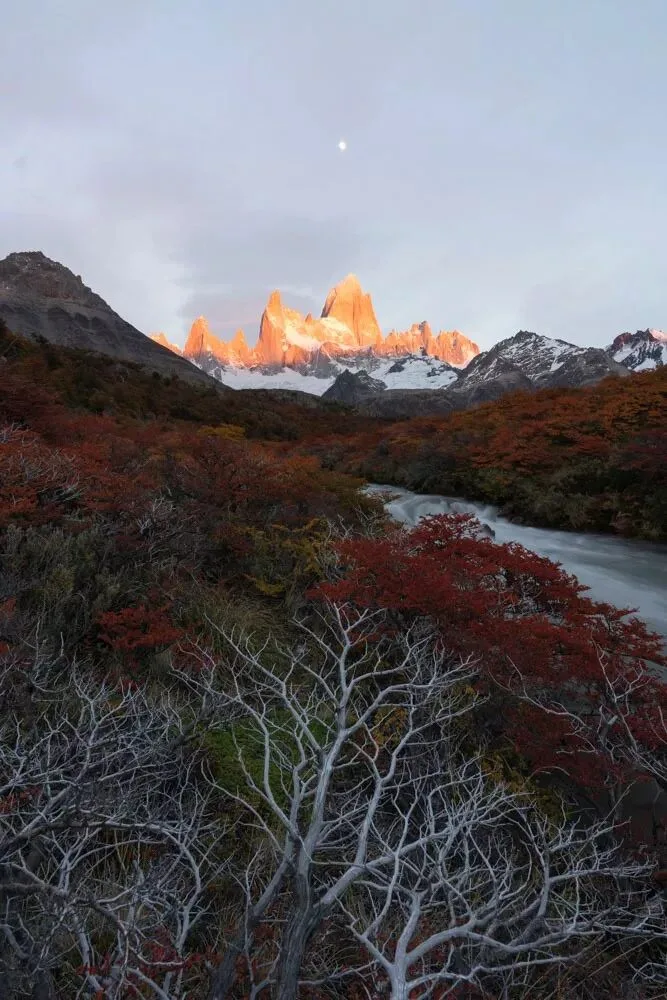
In post-production I cropped the image to remove some empty sky and redundant weeds, highlighting the core point of interest. The colors of the peaks and the autumn hues of the shrubs were somewhat unified, so the peaks provide context and attract the eye without jutting out too abruptly in the frame.
The moon was shifted slightly, making the composition more balanced and the whole more beautiful.
Extensive dodging and burning in post highlighted the most central branch — the one with the most vital, tensile form — while hiding the rather messy dead branches around it.
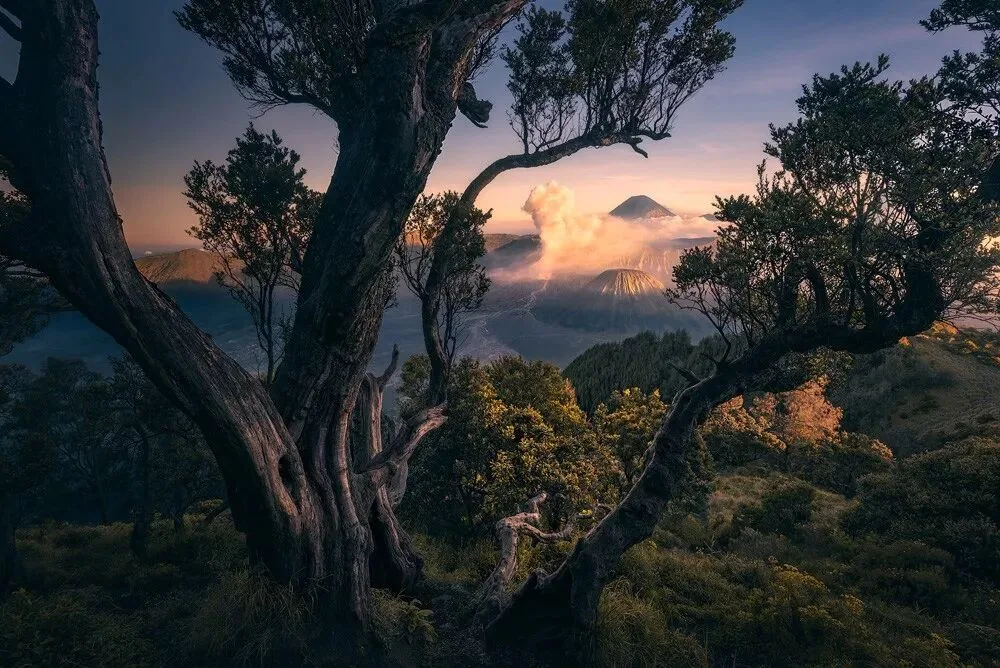
The scene below is one I found at Mount Bromo in Indonesia. Bromo is known as a "lunar landscape," because it looks nothing like scenery on Earth. So when composing in the field, I wanted to find some exaggerated foreground to emphasize this sense of unreality.
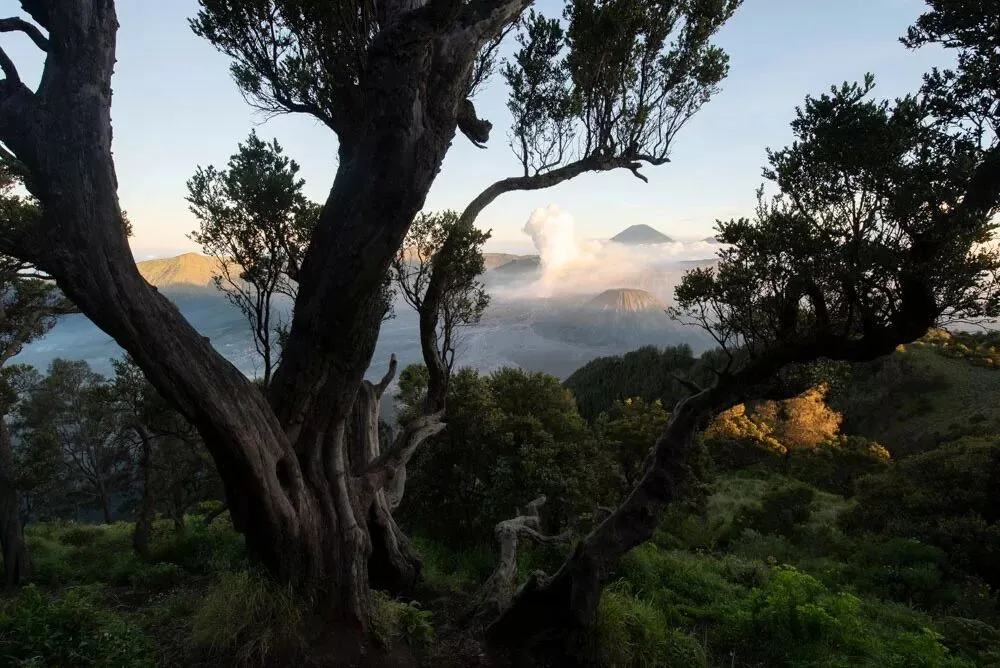
My post-processing went in two steps: on one hand, basic beauty-building — enhancing three-dimensionality, strengthening texture, unifying tonality; on the other hand, some personalized expression — using rather magical color schemes to set off a peculiar atmosphere, making the scene look like a primordial Earth landscape.
In post, through dodging and burning, I redistributed the visual weight in the frame so the viewer's gaze can focus as much as possible on the erupting volcano and the strangely shaped foreground tree.
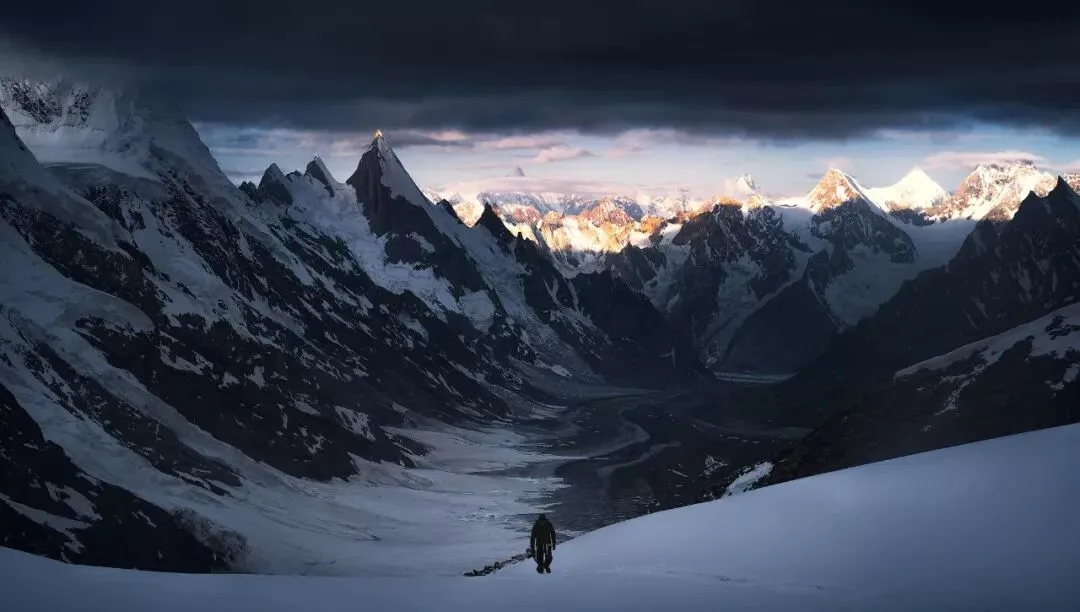
Of course, not every photo needs heavy post-processing. Sometimes the original's expression is already clear enough, and only slight retouching is needed.
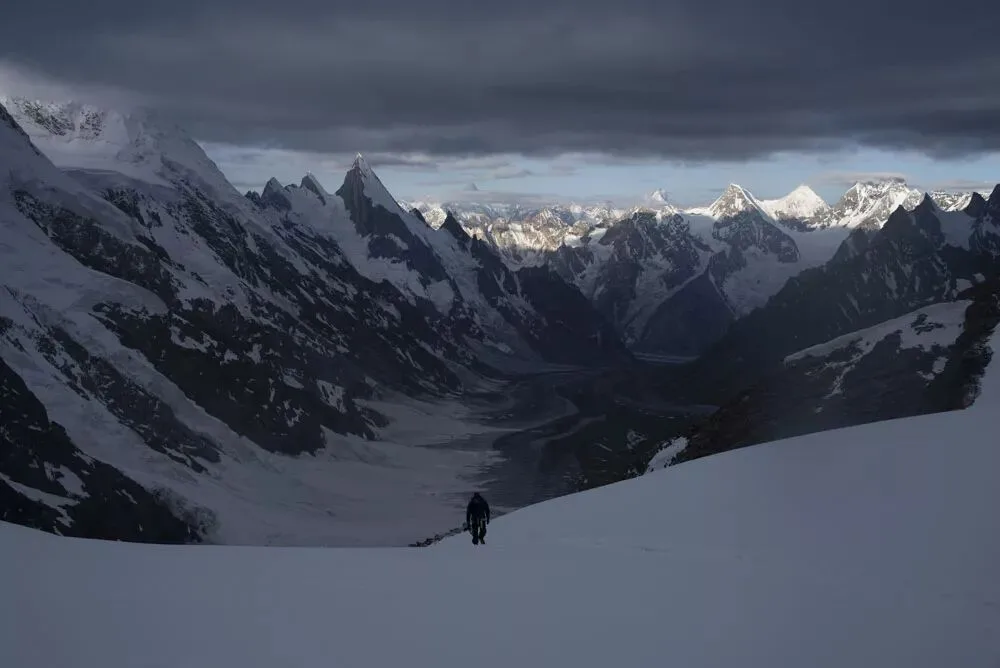
In the photo above, the setting of the snowy mountains is already conveyed fairly clearly, but the climbers striving upward are not yet prominent enough. So the post steps mainly used cropping and dodging/burning to make the figures more obvious — done in a few minutes.
3
Ideas Matter More Than Technique in Post
The pixels in a photograph are not absolutely untouchable.
If the goal is to reproduce natural scenery, of course one must not over-retouch — otherwise the original intention is lost. If the goal is to express some of the photographer's ideas, a wider latitude of post-processing can be explored. Technique, and the degree of technique, both serve the photographer's communication and expression.
The original of this panorama was shot on an uninhabited island in southern Greenland. My teammate and I spent 2 days landing on the island's western beach and climbing to the cliffs on the east. This is little-known, uncharted territory — we came to explore based on estimates from satellite maps.
When we climbed the peak on the island's east side and saw the magnificent 180-degree fjord scenery in the distance, the awe in our hearts was beyond words.
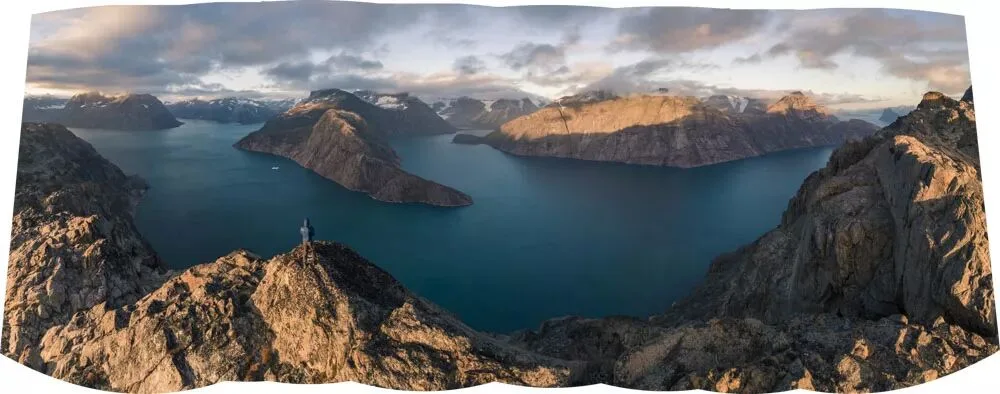
But clearly, the pose in the original — hands on the drone controller — could not express how we felt at the time. So I took another timed self-portrait with arms spread wide.
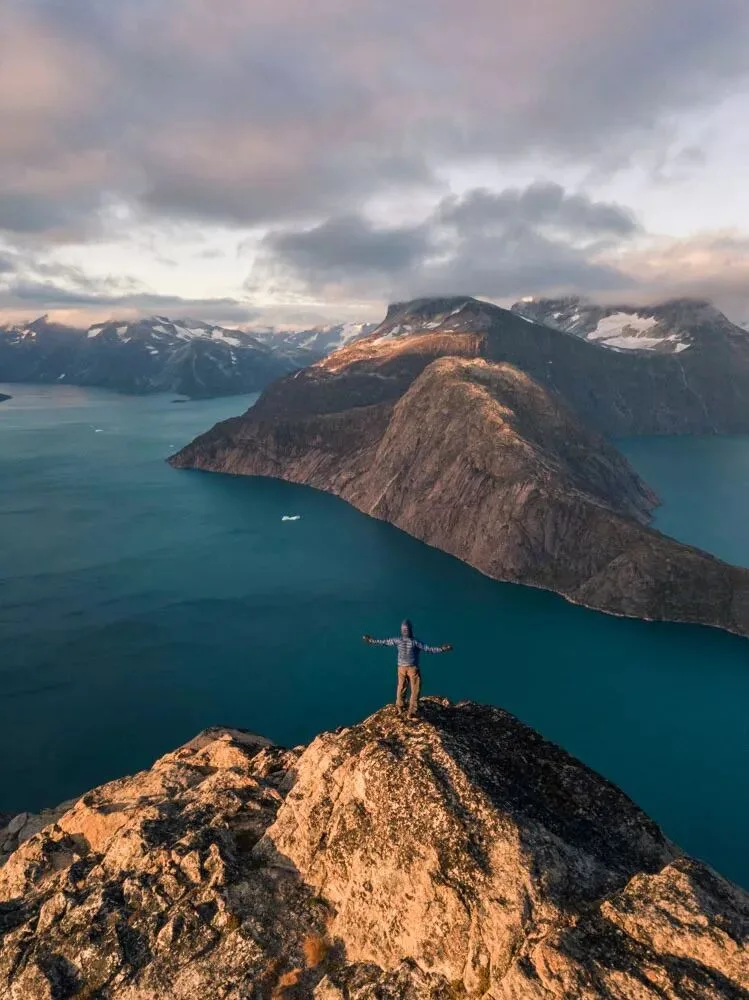
In post, I replaced the figure in the panorama with the close-up of the person, to restore the awe and excitement we felt then.
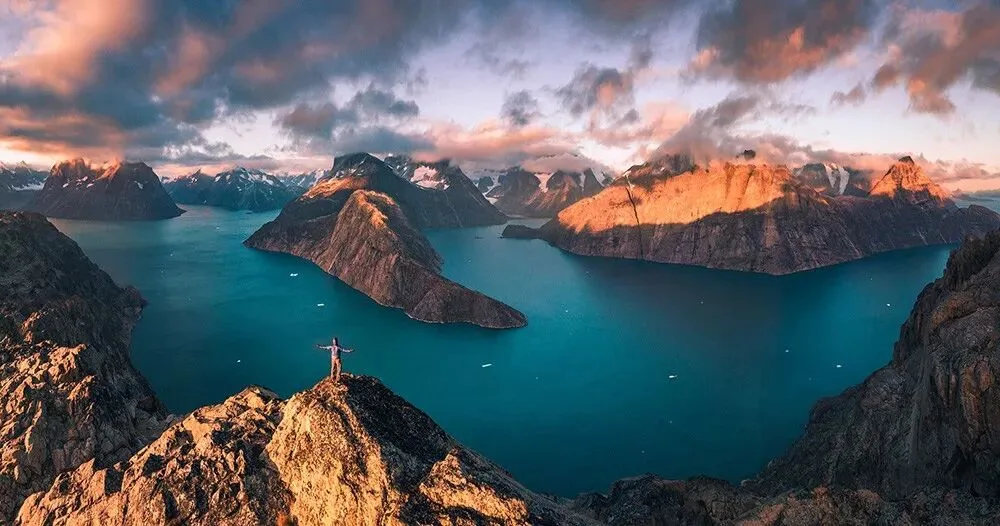
Photo post-processing can reproduce real scenery — it can also reproduce the photographer's feelings.
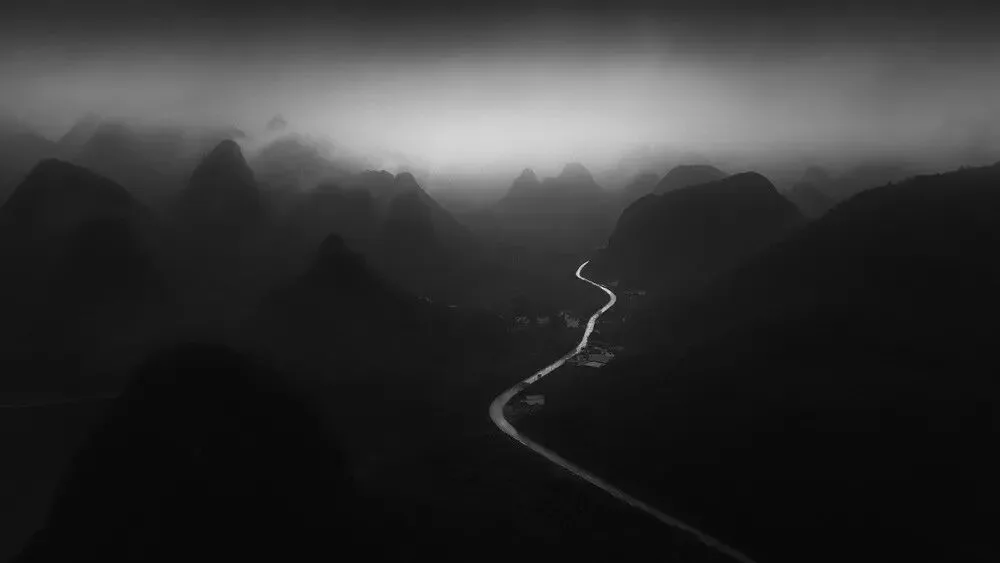
Below is the original of an aerial rain scene in Guilin. But the whole expanse of white made me feel it was overcast rather than rainy.
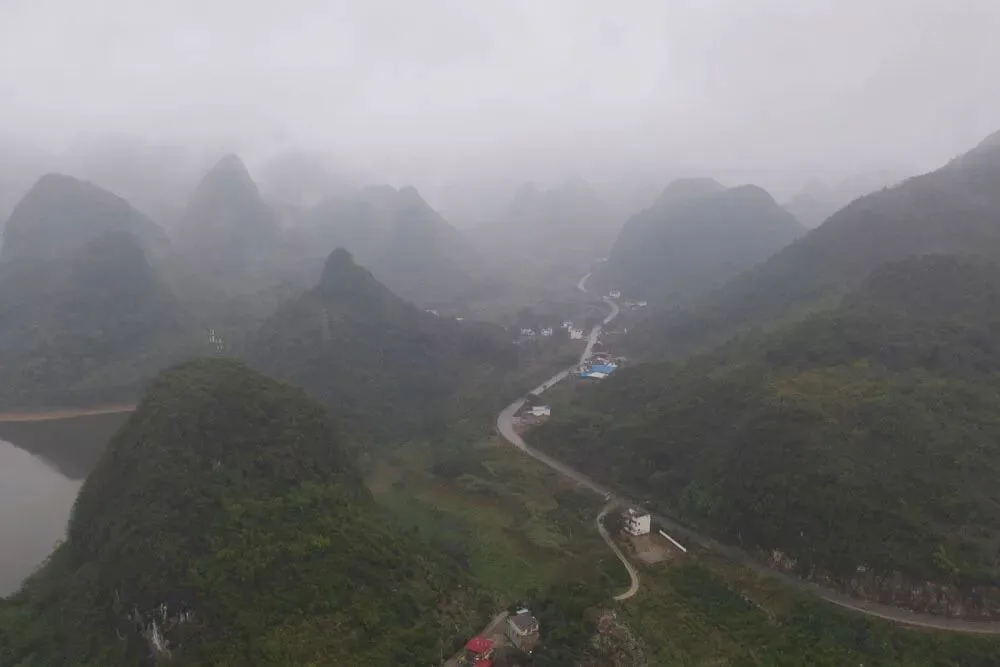
My own feeling about rainy days is more dark, subdued, and hazy. So in post I made a substantial tonal adjustment, making the whole photo better match my own feeling of a rainy day.
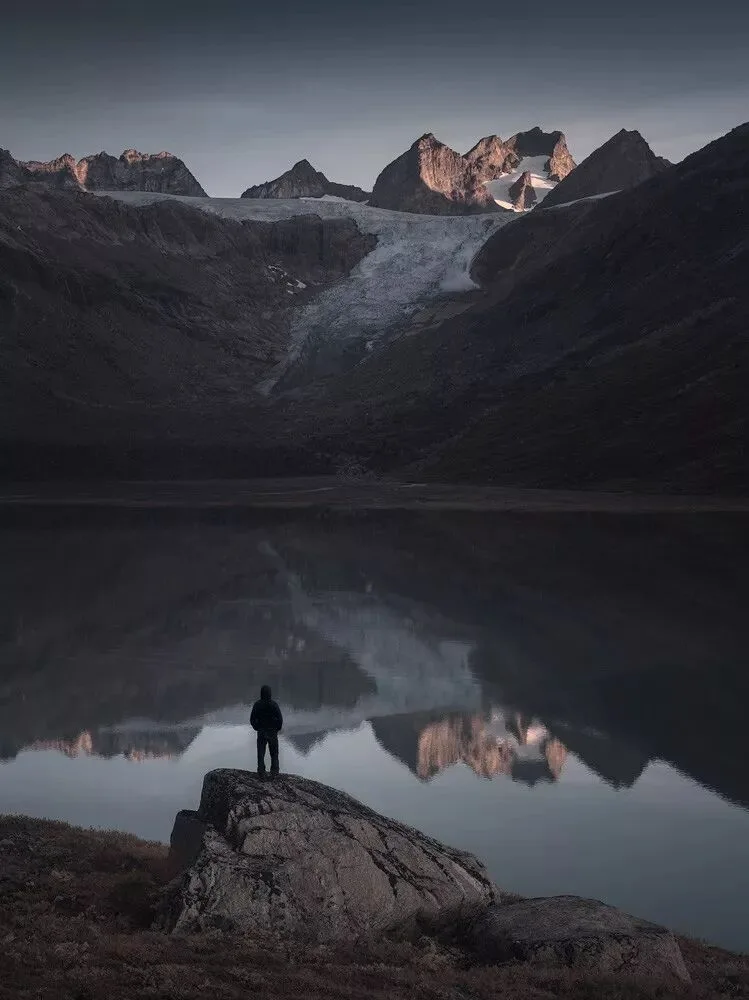
The photo below was shot during my 2-plus months of hiking and exploring in Greenland — within dozens of kilometers around, there were probably only my teammate and me. Though it was a magnificent sunrise, between heaven and earth there was a loneliness and quiet cut off from the world.
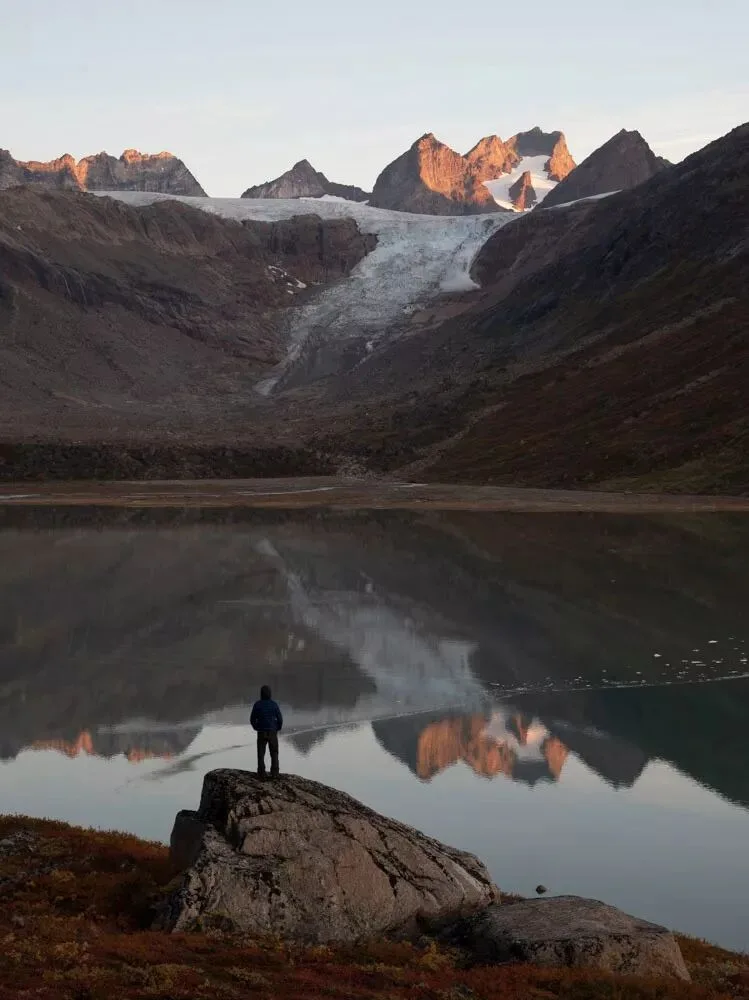
The original's overall saturated warm tones, and the foam on the water's surface, were quite damaging to this quiet, lonely atmosphere.
So in post I made the whole image cooler and paler in tone, and also Photoshopped out irrelevant clutter — making the picture better match the atmosphere I wanted to communicate with the audience.
There is a saying: never forget your original intention. Photo post-processing is not about showing off technique — it is about communicating better.
Post-processing is not processing for processing's sake,
but about recreating the awe of the sun, moon, and stars,
about enjoying the joy of exploration and discovery,
about sharing the emotion of being there.
Author: Thomas Chu Photo
A post-90s outdoor landscape photographer and post-processing tutorial blogger. Thomas is the author of the best-selling photography textbook "The Fundamentals of Landscape Photography Post-Processing" (《风光摄影后期基础》), and has written over 200 photography tutorials on platforms such as WeChat Official Accounts, Weibo, and Zhihu (ID: Thomas看看世界).
Related articles:
"In Post-Processing, Technique Is Not the Most Important Thing!"
"The Core Technique of Photographic Composition — It's Not the Rule of Thirds, Nor Subtraction"
"A Photographic Work Is Not a Pile-Up of Details and Techniques"
"Is Photography as Simple as Pressing the Shutter? On the Path of Advancement"
"How to Analyze and Imitate a Photographer's In-Camera and Post Style"