Photography Tutorial · 2018-03-22
On Restraint in Landscape Photography Post-Processing
Preface
To date, one of the questions I've been asked most is not whether I use Photoshop, but how I use it. So I believe that by now most people have accepted Photoshop's existence and understood its role — the digital darkroom. Of course, a few people still ask me whether a certain image was 'Photoshopped', or whether such a place really exists. Given today's technology and the sophistication of cinematic effects, I understand why some people ask. Everyone has a different threshold and bottom line for post-processing; this article merely expresses and discusses some of my views — just casting a brick to attract jade. Feel free to discuss and comment below.
Photoshop in post is powerful, but not omnipotent. No current post tool can turn a bad composition into a good one, or create wonderful, natural scenery and light out of thin air. Perhaps one day, as technology advances, Photoshop will be able to do that.
For landscape photographers, no matter how powerful post-processing becomes, we still need to spend enough time outdoors exploring subjects and chasing unique natural light, constantly trying new shooting ideas, improving our in-camera skills, and learning from failures and attempts — only then can we get wonderful works. Understanding this naturally reduces total reliance on post, and stops us from expecting great work from post alone.
Of course, some may say there is plenty of creative landscape photography now — shooting different elements in-camera and then 'creating' a landscape work in post. Yes, that is indeed a form of art. I don't object to it; on the contrary, I also enjoy this kind of landscape work, from artists like Benjamin Everett and Michal Karcz.
Benjamin Everett

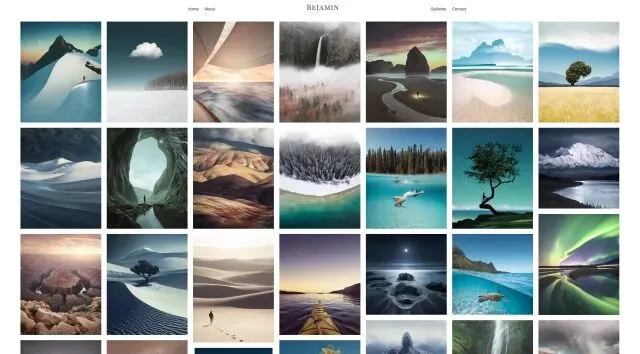
The 2018 Hasselblad Masters landscape winner: his work is neither realism nor surrealism — I feel it constantly explores the union of physical reality and spirit. Viewing his work, you often find everything drawn from reality yet wrapped in a hazy, not-quite-real feeling.
Michal Karcz
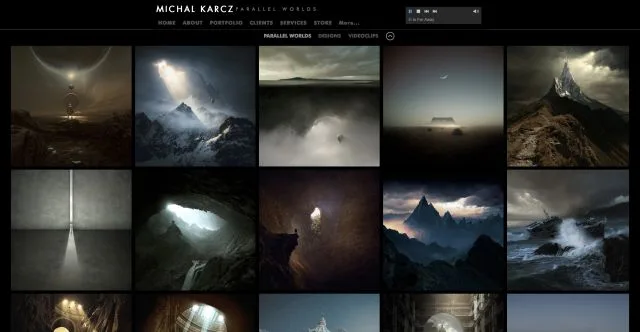
A Polish photographer and designer. Trained in fine art, he excels at combining painting and photography to create images of another world. His works often stir the viewer's emotions, leading them out of reality into another realm. His style is mysterious, dreamlike and solemn.
If you love this kind of creative landscape photography, by all means learn and pursue it — there is nothing wrong with that.
If, like me, you are a nature lover who hopes the scenes you photograph can be seen by others in reality, then read on for my views on the acceptable limits and bottom line of landscape work.

The Authenticity of Scenery
Basically, I make the fullest possible use of my Raw files — I try to squeeze out the best color, contrast, detail and so on. If a Raw file contains no basis of color, light or scenery at all, it is very hard or impossible to fabricate them out of nothing. Even creative landscape works are built on a partial foundation of real color, light and scenery.
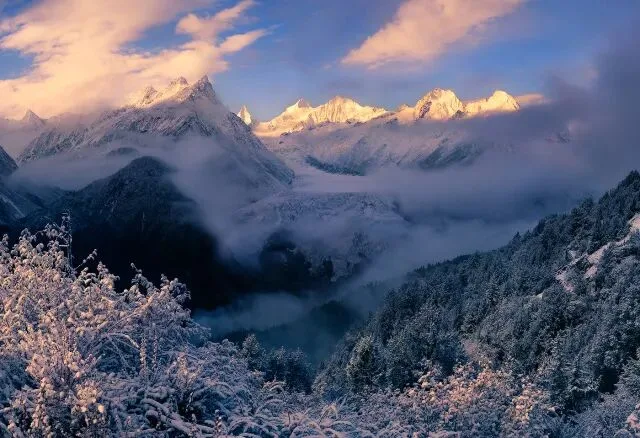
《Fulfill the Dream》
Someone recently asked me about the authenticity of this image — does such a place really exist in Tibet? The answer is yes, and here I also post a phone snapshot of it.
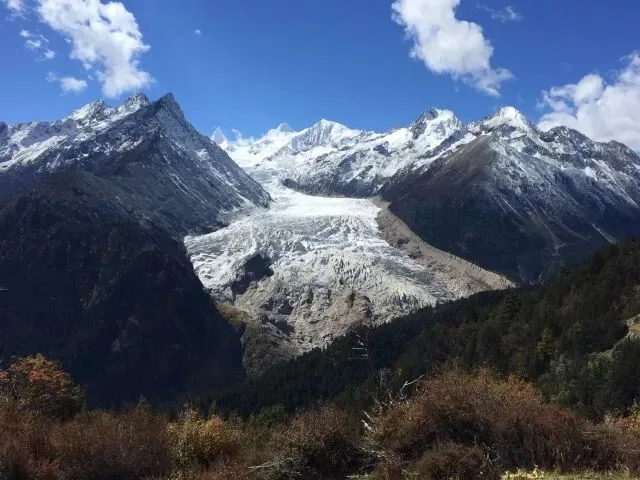
For me, my landscape works are shown to the public. If someone travels to the place I photographed and finds that the lake, mountain or stream in my work doesn't actually exist, that would be a 'tragedy' and a 'disaster'. So I hope that when someone arrives at that place one day, they can appreciate it and feel what I felt when shooting — that matters enormously. It is the unique bond between photographic art and reality, and I don't want to break it.
For example, what I consider realistic landscape photography is not moving a waterfall from one place to another, or grafting a peak from here onto there — that violates the authenticity of scenery. But from the angle of pictorial aesthetics, slightly moving a flower shot near the location — with its light unchanged and the retouching seamless — is acceptable to me, because that flower does exist there. Of course, this is only my personal post-processing threshold; some friends may disagree.
The Matching of Light
Whether creative or realistic, landscape works must obey light and optical laws — this is equally important. Photography is the art of light: if an image violates optical laws, it falls apart and loses all meaning, becoming a mere collage.
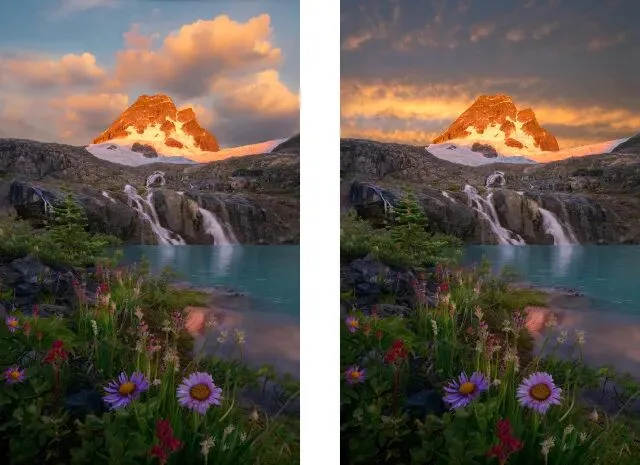
In the right image, the foreground is lit from the front while the sky is replaced with a backlit one — does that still look natural? Does it obey the laws of light? I don't think so.
I have seen quite a few landscape images with the entire sky replaced. I don't have a big problem with sky replacement per se, though I still reserve judgment. If the light can be matched and the post work looks natural, replacing the sky is really no problem — after all, clouds are constantly changing, and no two moments of sky are exactly alike (except a completely cloudless, lightless night sky or Milky Way — which is why I rarely shoot pure Milky Way images without clouds or light). But if the light can't be matched and the result doesn't look natural, it is drawing legs on a snake. I have even seen many sky-replaced landscapes where the foreground is front-lit but the sky is backlit or side-lit — no amount of post skill can harmonize that. For sky replacement, only some examples manage to match the light and look natural, so I still reserve my opinion.
On Focal-Length Blending and Warping
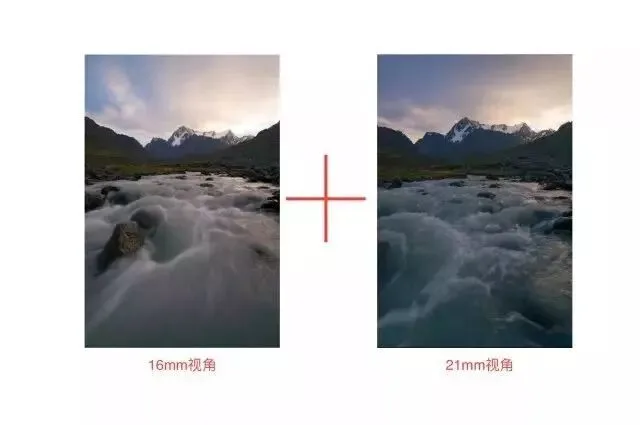
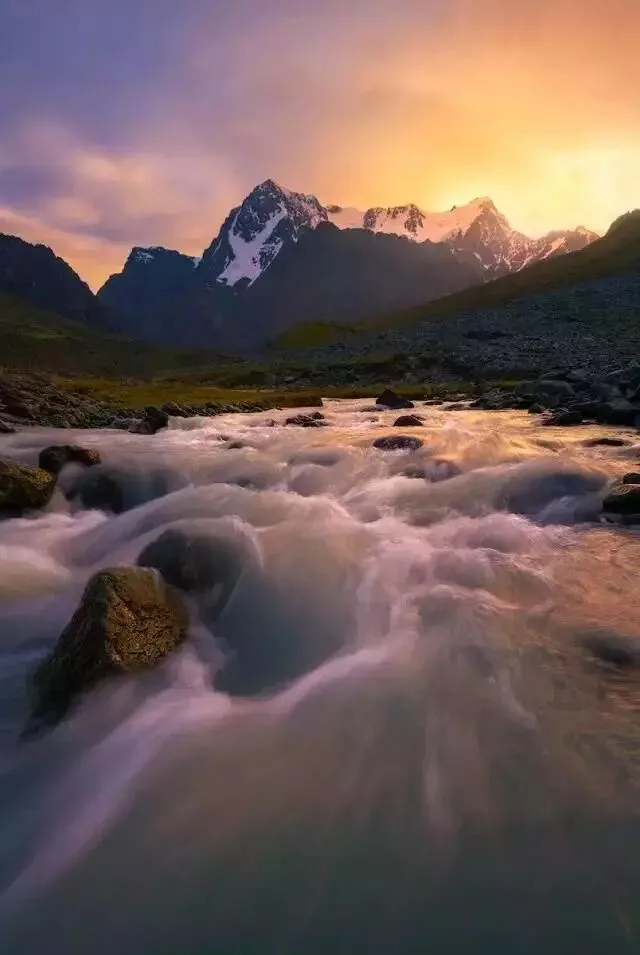
Perhaps you have heard the term 'focal-length blending' many times in the past year or two, and quite a few people use this technique. Personally, I think it must be used with great caution. Because of the lens, the arrangement of elements in the frame is already fixed: the positions and size ratios of foreground, midground and background are all 'set' by the lens. For example, when shooting a mountain-and-river scene, if you zoom in too close to shoot the peaks and then merge that with a previously shot wide-angle foreground, the positions and size ratios of foreground, midground and background easily fall out of balance — sometimes the midground even disappears, creating an illusion of copy-paste, which I think should be avoided. The midground and the transition zone where two frames of different focal lengths join are critical. Without a proper midground and transition area, I believe it is better not to do focal-length blending at all.
As for warping, the warp tool is also a double-edged sword: used well, it can better restore the feeling of the scene; used badly, it ruins the image outright. I have seen many cases of scenery stretched too far.
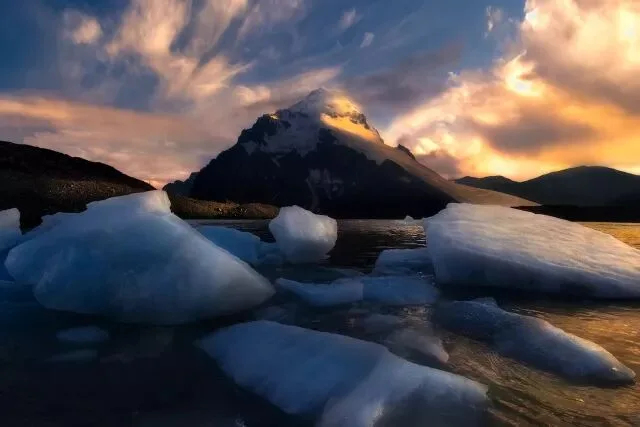
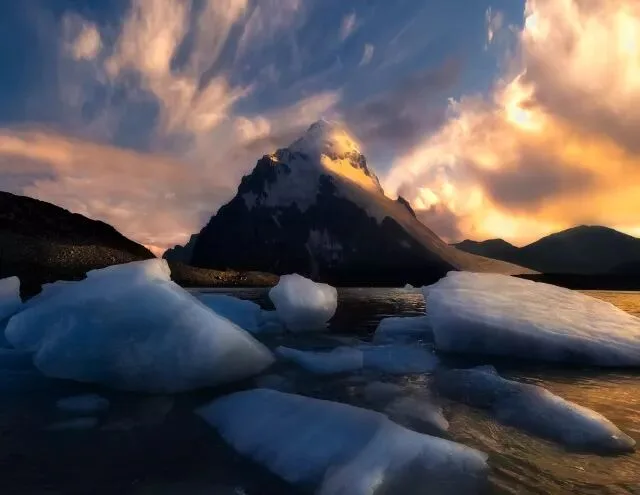
Do you think the peaks in the image below look natural? I don't.
Conclusion
Art is always changing and evolving, and so is photography. Public opinion generally lags behind artistic progress, but eventually most people will accept and respect digital photographic art, and realize that the relationship between reality and photography will not disappear because of these changes. At least for me, the threshold of realistic landscape post-processing is respecting the scene and restoring the feeling of being there — and I believe that has never changed. It is foreseeable, though, that some people will still insist that an image straight out of the camera is the only 'true' photograph, while everything else is classified as PS manipulation. Those who refuse to evolve and accept new methods are outdated; no one will go back to the past and abolish digital post-processing — it has become an indelible part of photography. So we might as well accept this fact, re-measure our own post-processing thresholds, and learn to treat it as part of the art.
Jiying AdventureX
Extreme Challenges
Extreme Imagery
Geek Sharing
http://www.theadventurex.com