Photography Tutorial · 2017-05-30
Where Do Your Photos Fall Short Compared to a Pro's?
When people think of professional photographers, the first thing that comes to mind is expensive, professional gear.
In fact, with the spread of digital cameras, many enthusiasts already own quite sophisticated equipment. So compared with professional photographers, where exactly do our photos fall short?
This article takes Max Rive — the most popular landscape photographer on Instagram — as an example, analyzing the gap between us and the great master from 4 aspects.
1
Deep Understanding of the Subject
Whether it's portraits, landscapes, or still life, a deep understanding of the subject requires genuine professional passion and long-term, in-depth practice. How much professional and meticulous preparation goes into a good work before shooting is something many people can hardly imagine. It is not, as many assume, a matter of showing up casually and walking away with a masterpiece.
Take landscape photography as an example: the planning period may last half a year or even several years. For the same location, the window when water level, sky conditions, blooming season, and so on are all just right may be only a few days in a whole year — without that knowledge, you can only rely on luck.
For example, in this work by Max below, capturing a perfectly positioned Milky Way arch, a moonlit peak, and snow-covered foreground all required careful planning of the shooting time.
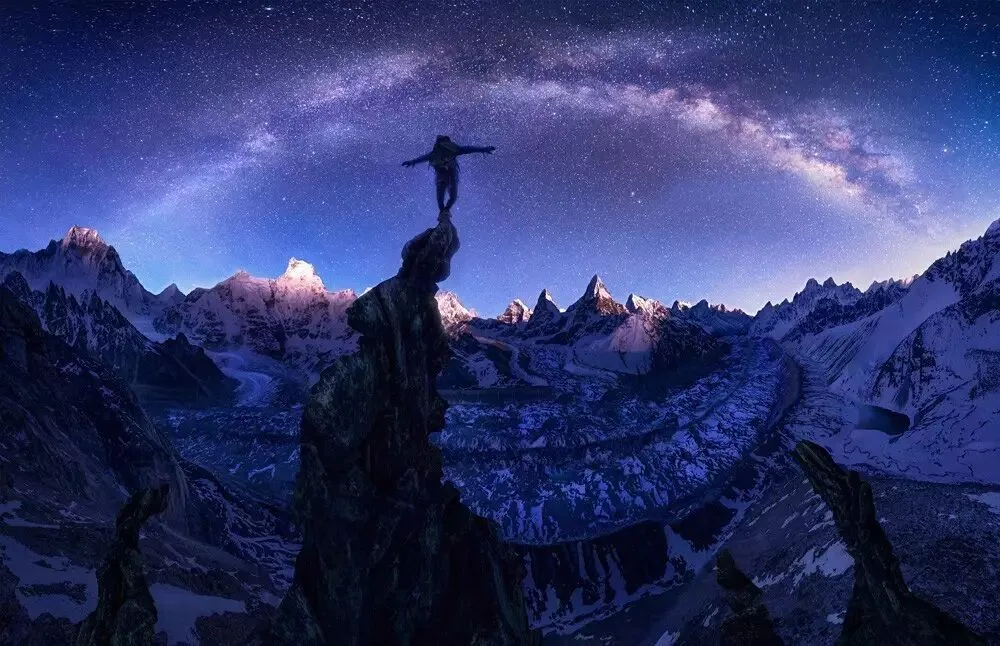
Seasons, tide levels, blooming periods, celestial events, clouds and fog, aurora probability, volcanic activity — all of these need to be understood;
Photos, guides, travel notes, and routes from ordinary tourists, photographers, and locals all need to be carefully read and analyzed;
On flat maps and 3D terrain maps, repeatedly simulate shooting positions on site — even visit the location multiple times for field scouting...
A great landscape work can involve a great deal of work before the shutter is pressed.
Beyond preparation, the photographer's deep understanding of the subject is also reflected in composition.
Ordinary people see a mountain as a mountain and water as water. But when a photographer sees a mountain, they think:
What is this mountain's shape and orientation? From which angle, and at what time of day, does the light bring out its three-dimensionality best?
What foregrounds near the mountain could set it off? Villages, flower fields, lakes, or gorges?
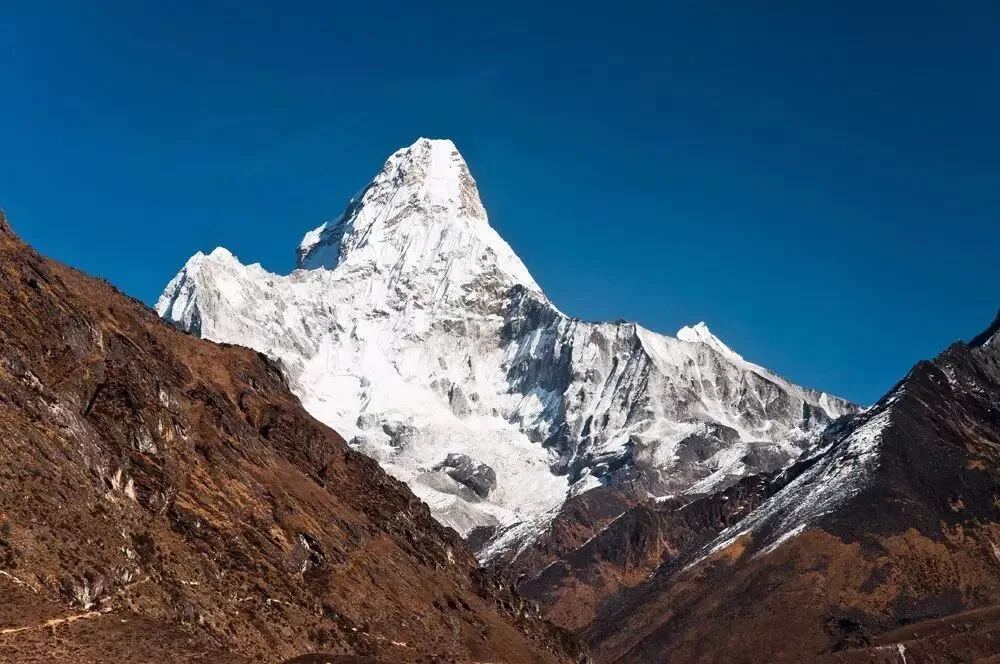
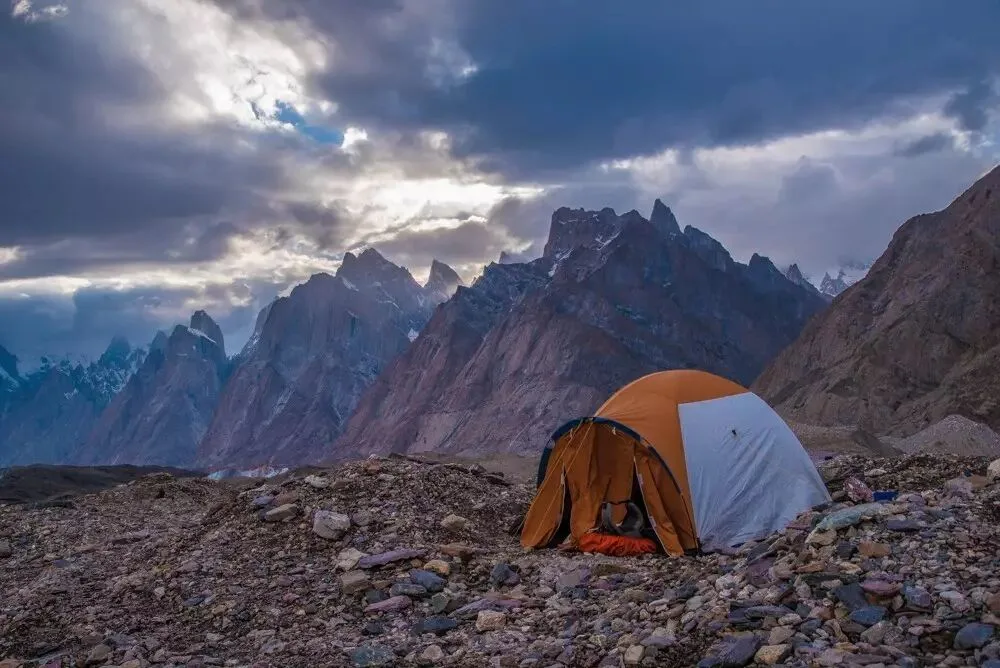
The image below, for instance, is the ordinary tourist view of Ama Dablam:
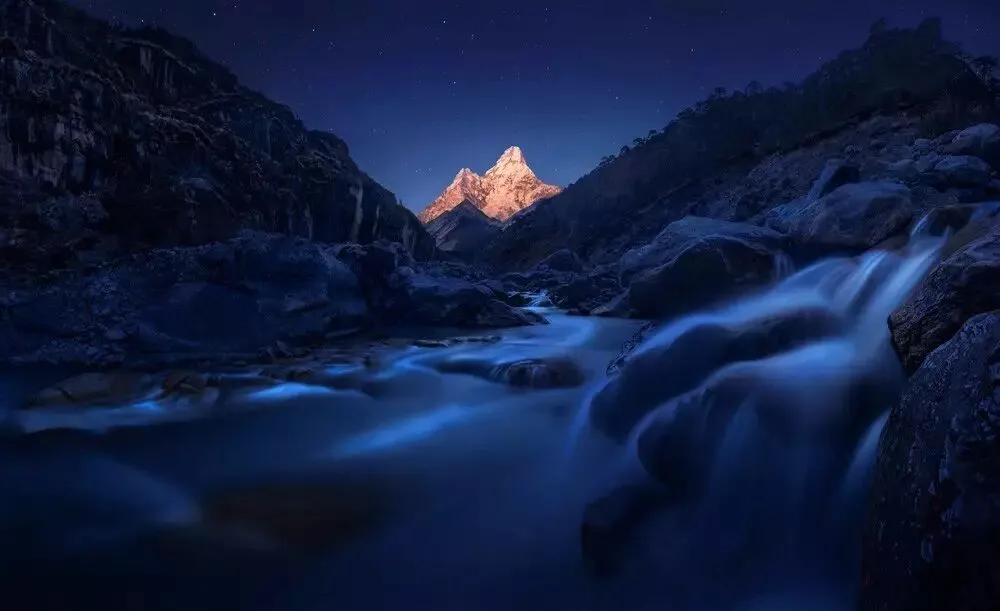
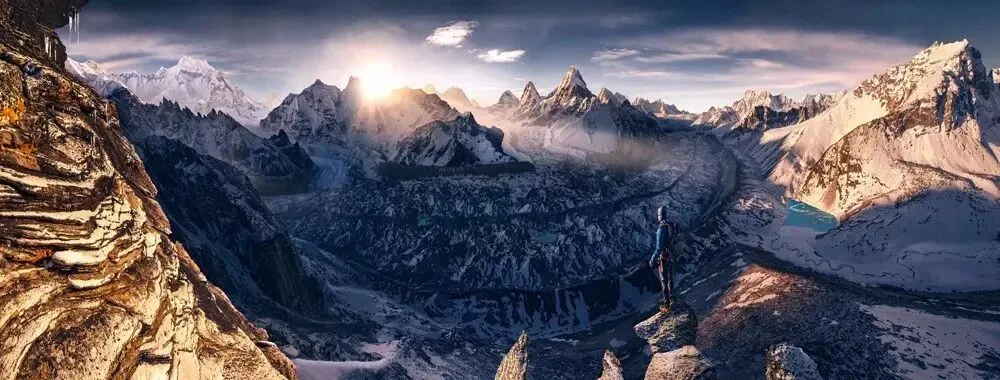
The composition below, by contrast, comes from master Max. The spatial depth brought by the foreground waterfall, the textural contrast between flowing water and rock, and the mutual set-off between the warm-colored peak and the cool-colored ground all make this work stand out.
2
Degree of Dedication
Search for "EBC trek" online, and almost every photo that comes up was shot during daytime, between 8 a.m. and 5 p.m. After all, trekking at five thousand meters of altitude is already exhausting — getting up early and returning late for shooting would be brutal.
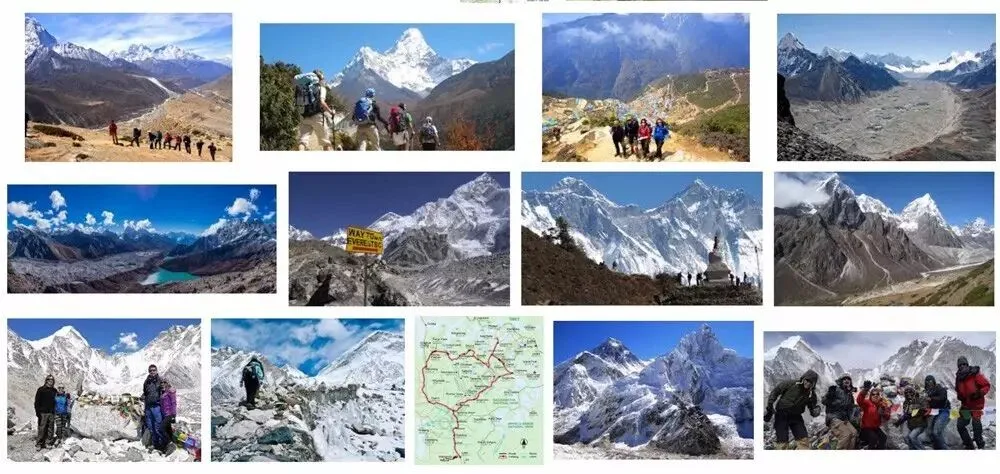
Now look at a professional landscape photographer's shooting times: 9 p.m., 2 a.m., 6 a.m... Completely out before dawn and back after dark, running at full load.
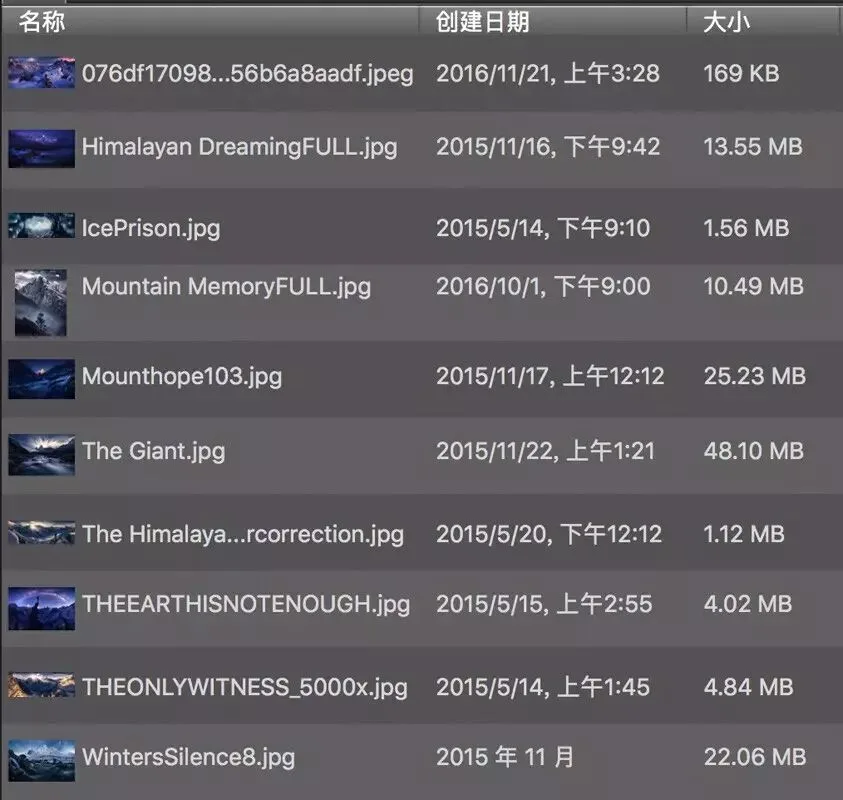
Besides the difference in shooting hours, the depth of cultivation and number of visits a professional photographer devotes to a single place is also hard for enthusiasts to match.
After all, if it's just a hobby, visiting a place once is enough. But not for professional photographers — for nearby locations they may go shoot every few days, just to increase the probability of encountering good weather.
They also visit distant places several times, even setting aside time every year to explore and lead tours there — discovering many unique vantage points.
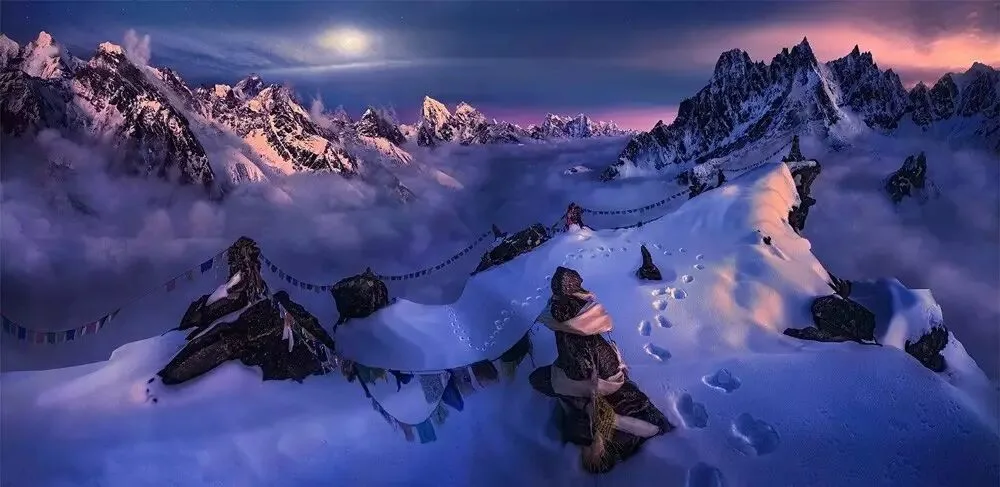
3
Technique, Before and After the Shot
There is an order to learning, and every craft has its specialty. A professional photographer needs to have every in-camera technique at their fingertips, and post-processing skills must be second nature.
For example, Max's award-winning work below required complex focus stacking in the field, along with multi-frame stitching techniques.

Or take the image below: besides overcoming the challenge of extreme dynamic range in the field, unifying and controlling color, texture, and tonality in post also demands considerable technique.
4
Aesthetics and Style
Very often, our gap with the masters in post-processing lies not in technique but in aesthetics. Using the very same curves, layers, and masks, the beauty of the resulting photos can differ by miles.
Common beginner retouching mistakes: regardless of everything, cranking up global saturation, clarity, and sharpness; highlights -100, shadows +100...
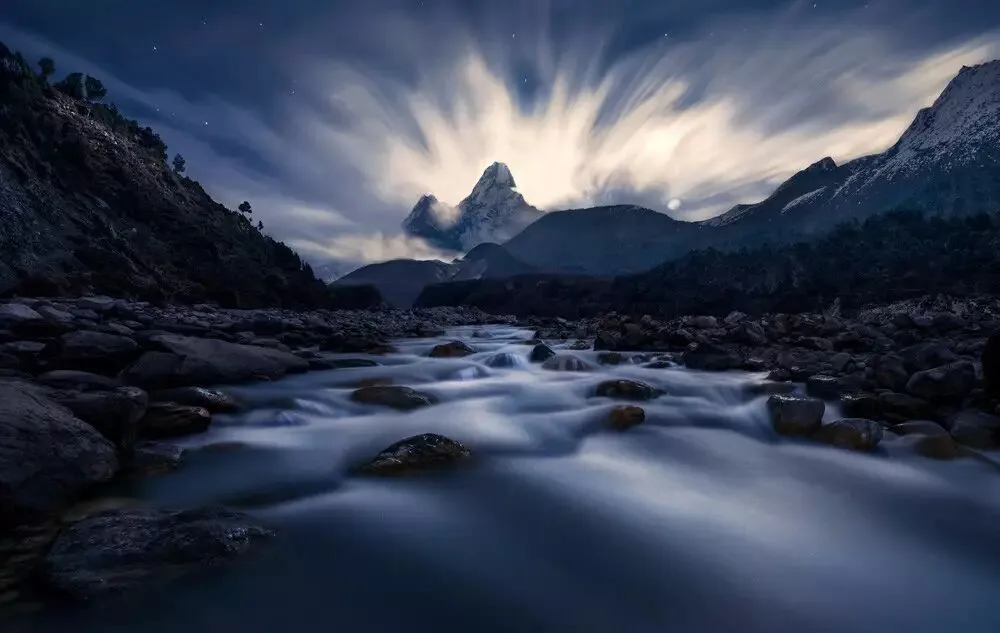
How masters retouch — guiding with brightness:
Use brightness to guide the viewer's eye. Where detail doesn't need to stand out, not only should you avoid lifting the shadows — you should actually darken them.
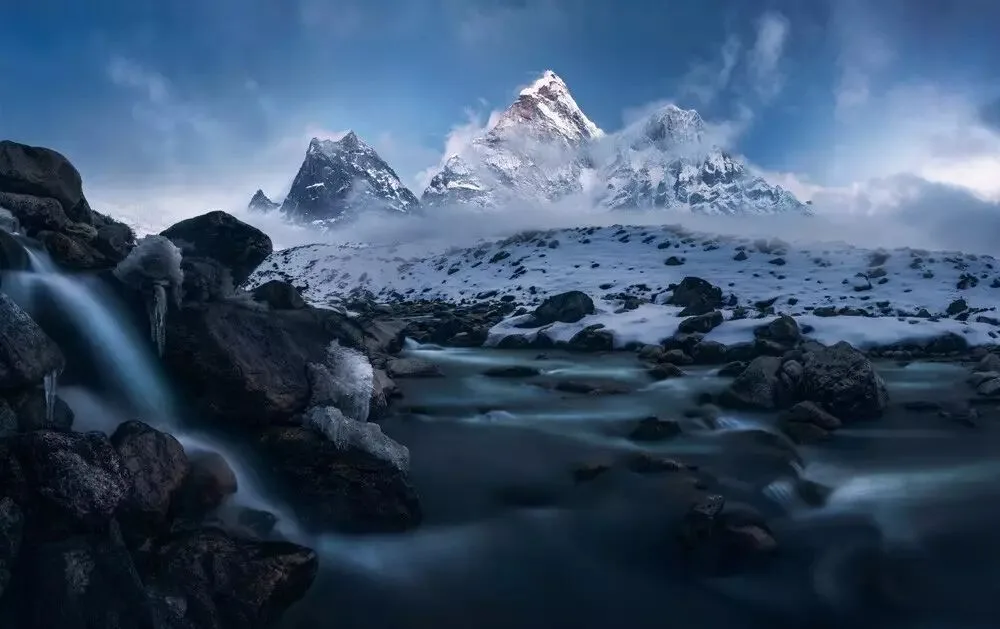
How masters retouch — controlling color:
Harmonious in hue, moderate in saturation.
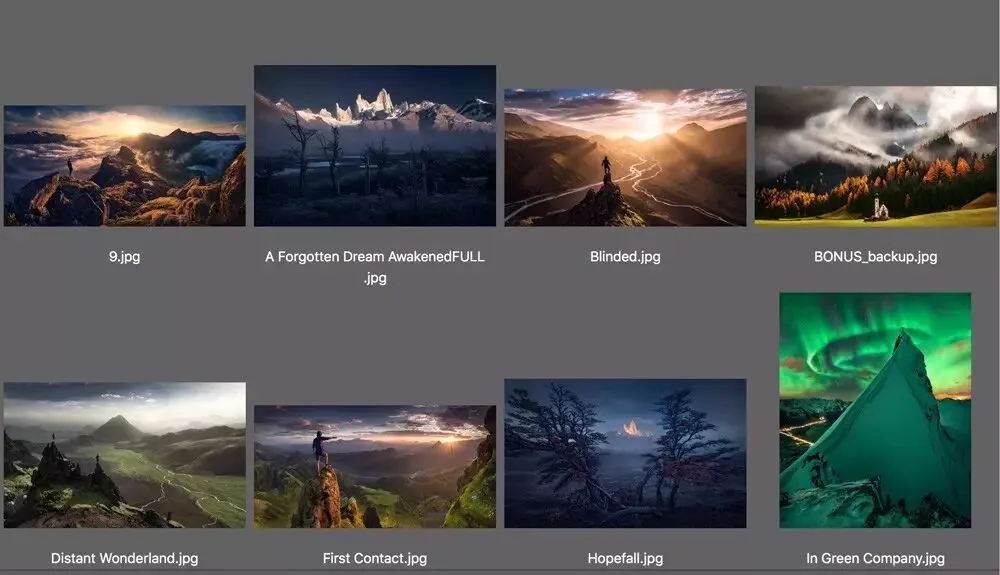
Aesthetic sense alone is not enough. A unified aesthetic, massive accumulation, and long-term practice — that is what forms a photographer's distinctive style and recognizability.
A magnificent sunset panorama with a dashing (posh) hiker standing in front — the moment we see this kind of photo, we may immediately think of Max Rive.
Summary
In short, the gap between ordinary enthusiasts and professional masters lies more in the understanding of content, the degree of dedication, technical level, and aesthetic style.
Of course, understanding of content and degree of dedication require long accumulation — there are no shortcuts. But technical level and aesthetic style, with a good teacher, can indeed improve quickly.