Photography Tutorial · 2023-10-04
Six Classic Landscape Scenarios: How to Shoot Starry Skies, Seascapes and Cities
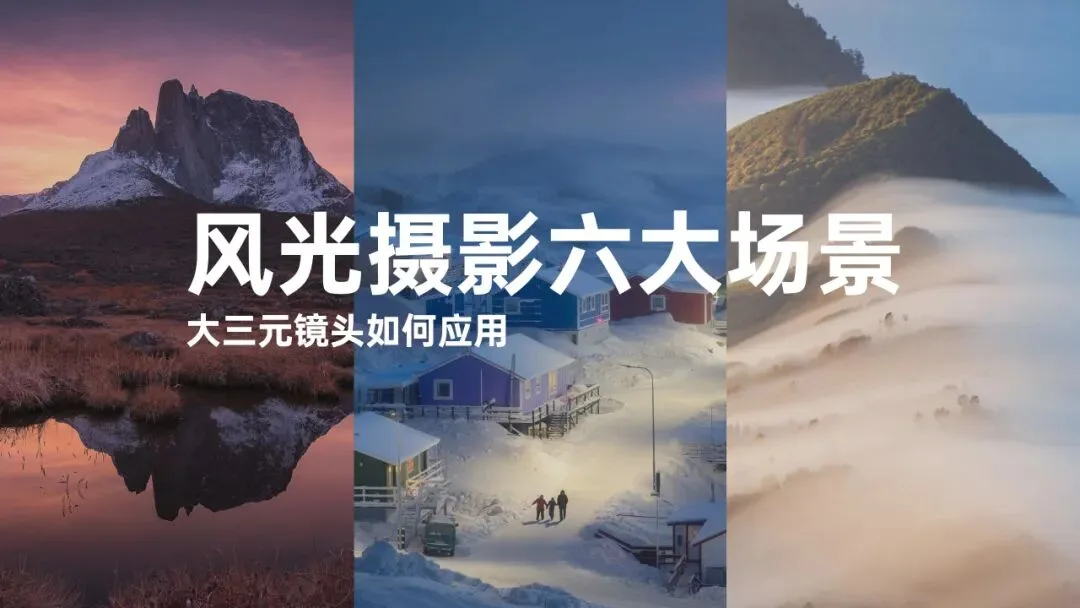
In today's tutorial, I will summarize the six most common shooting scenarios in landscape photography and the corresponding techniques: four in natural landscapes — sunrise/sunset, starry skies and the Milky Way, telephoto intimate scenes, and water/seascapes — plus two in urban landscapes: skylines and street life.
Can Sony's trio of f/2.8 zoom lenses cover such diverse shooting environments? I will also share my hands-on experience.
Video
▶ Watch the video tutorial on Bilibili
This is the fully illustrated companion to the video above. Thomas covers the six most common landscape scenes in one pass: sunrise-sunset, the Milky Way, telephoto details, and water/seascapes on the nature side, plus city skylines and street life in the urban category — gear choices, composition ideas and exact settings for each, along with his hands-on notes on covering them all with Sony's f/2.8 GM trio. Keyframe screenshots are paired throughout; skim here for the framework, then hear the details in the video.
Start with the overview. The video opens with a chapter card for each of the six scenes — the route map of the whole tutorial. The first four belong to nature, the last two to the city; each is unpacked below.
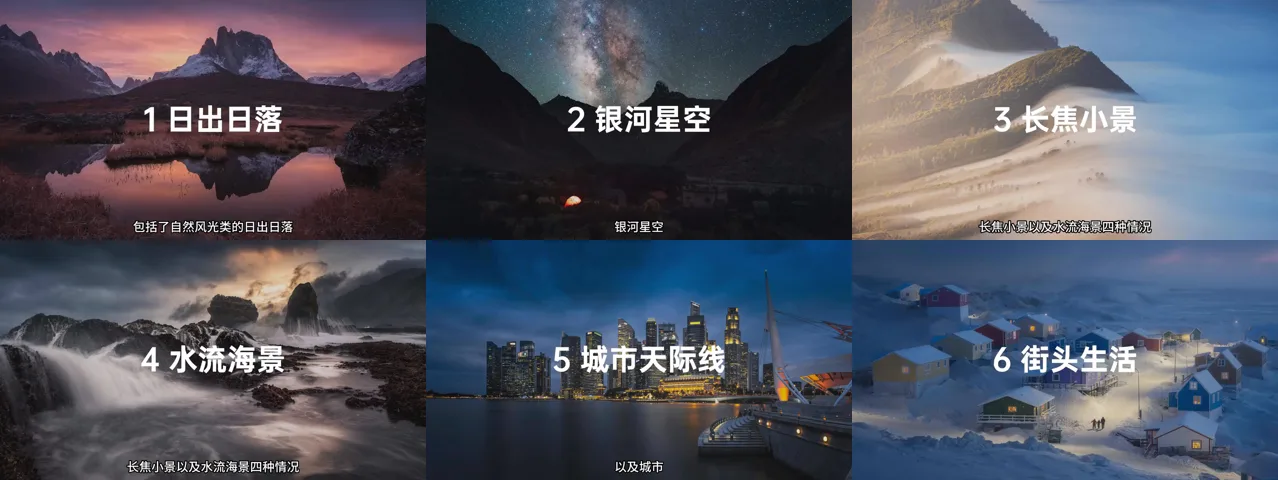
01 Sunrise & Sunset: Golden Light with a Shadowed Foreground
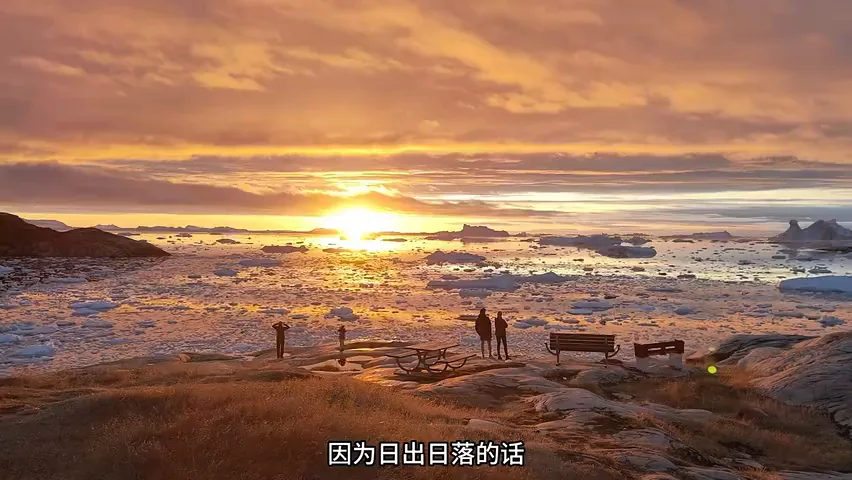
The first recommendation for beginners is unquestionably sunrise and sunset — the golden light — and Thomas's workhorse here is the 16-35 GM wide angle, ideal for grand dawn scenes (at 1:08). Yet in his photos the sun is either still below the ridge or just breaking over it, rarely hanging high. The reason: the foreground usually sits in shadow, which keeps it clean; once sunlight floods the foreground it turns messy. The sunlit background against the shadowed foreground builds contrast in warmth, brightness and color (1:40-1:56 in the video) — that is what makes the shot.
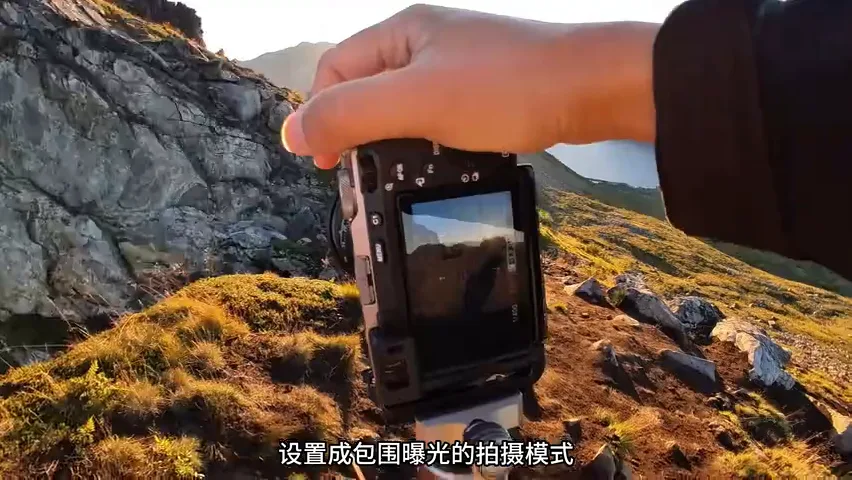
Such scenes are almost always high-contrast, so set the camera to exposure bracketing: for example -4, -2, 0, +2, +4 for 5 frames, or 3 or 7 frames as the situation demands (at 2:10). The 16-35 GM rarely produces ghosts or flare in harsh contrast and controls focus breathing well, so image quality survives the blend (at 2:28).
02 Milky Way: Planning Matters More than Settings
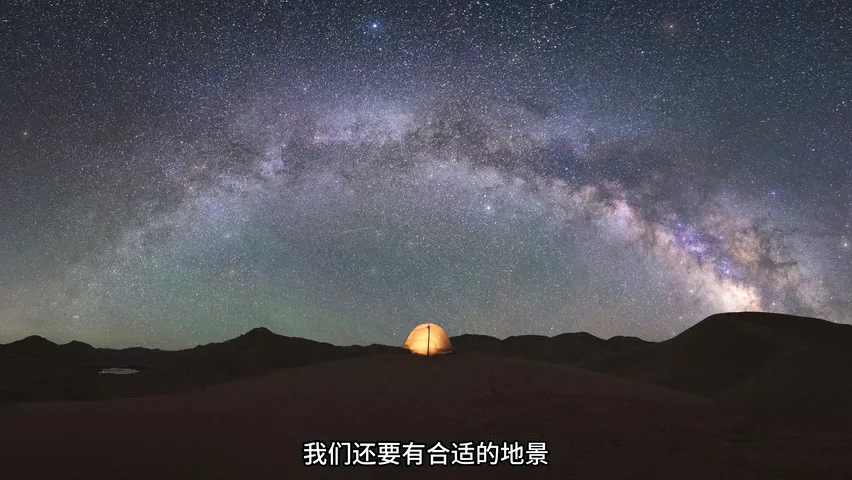
The astro workhorse is likewise the 16-35 GM II at f/2.8 — the wide aperture gathers enough light for clean night frames, and the wide angle matters because star shots are never just about stars: you need a fitting foreground echoing the sky (at 2:57). The settings are almost a formula: 16, 20 or 24mm, f/2.8, ISO 3200 or 6400, 20-25 s (at 3:08).
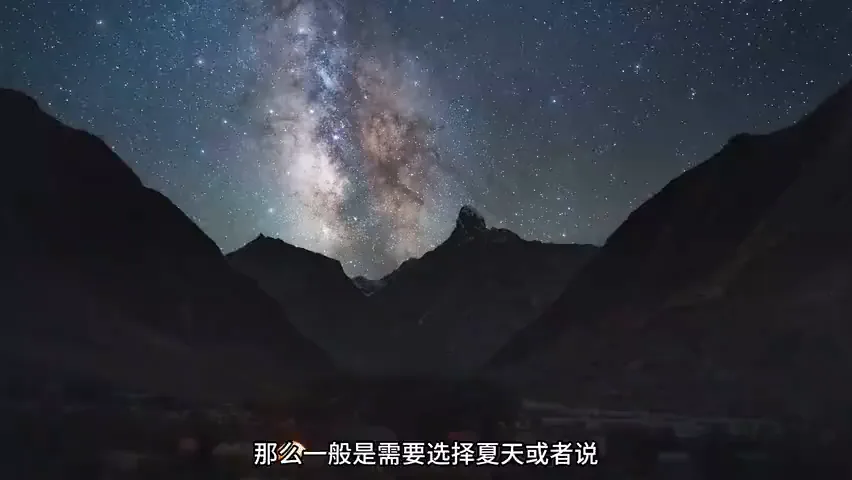
Planning beats settings. For a dazzling vertical core you need summer; winter only offers the Milky Way's faint tail. In spring and autumn the galaxy often hangs low and horizontal — perfect for a panoramic stitch of the Milky Way arch, truly spectacular (at 3:47). And always check the moon phase first: past half moon or full, the stars thin out badly; with just a sliver of moon you can still shoot the galaxy while it gently lights the foreground — sometimes even capturing the moon and Milky Way together (4:00-4:10).
03 Telephoto Details: Compression and Layers
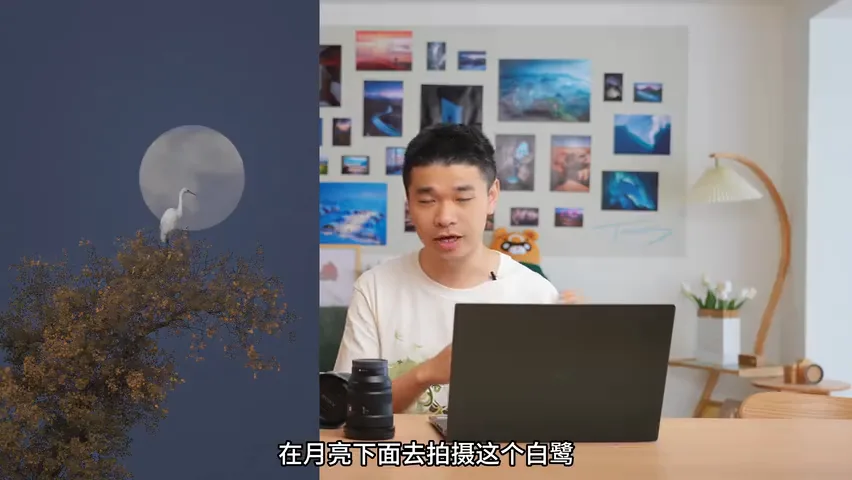
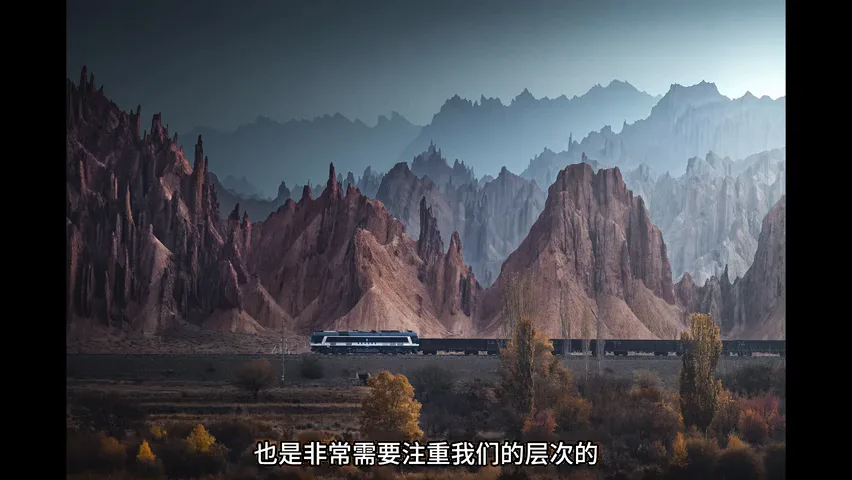
As he shoots more and more, Thomas reaches ever more for the 70-200 GM II and 100-400 GM for telephoto details — the former lighter, the latter reaching longer, both razor sharp (at 4:23). Two keywords govern telephoto composition: compression and layers (at 4:46). Compression: shooting an egret under the moon, the bird appears as large as the moon itself — the telephoto scrambles real-world size relationships. Layers: in the train photo, near trees, the mid-ground train and distant stacked peaks build depth by accumulation (at 5:07).
04 Water & Seascapes: Three Shutter-Speed Regimes
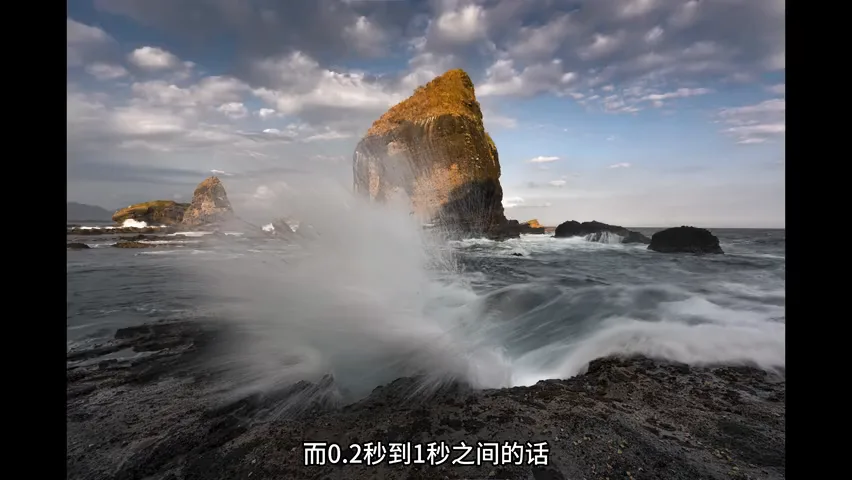
Water is the most playful subject, because the look changes completely with exposure time (at 5:32). Gear-wise the 16-35 GM still does most of the work, its perspective exaggerating the lines of waves and streams; distant waterfalls go to the 100-400 (at 5:44). Shutter time comes in three regimes: 1/1000 s or faster freezes water and spray mid-air; between 0.2 s and 1 s the flow stretches into silky ribbons full of motion; and 5 s or longer fogs the sea or lake into perfect calm (5:58-6:21).
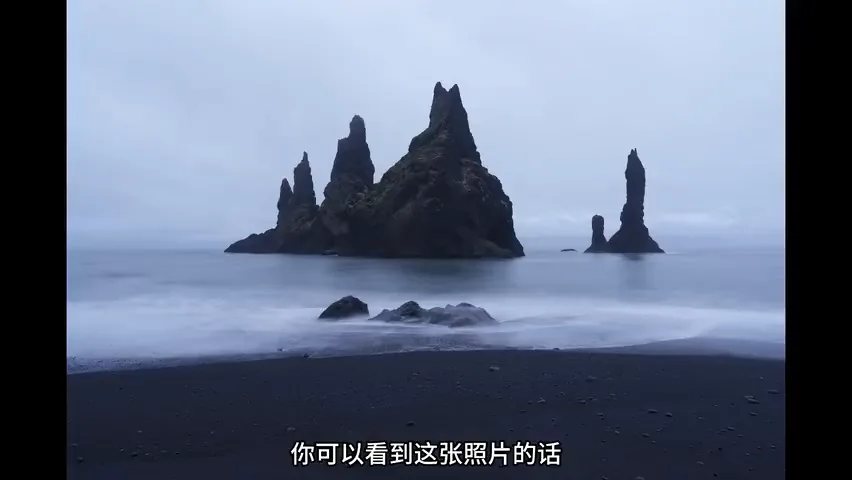
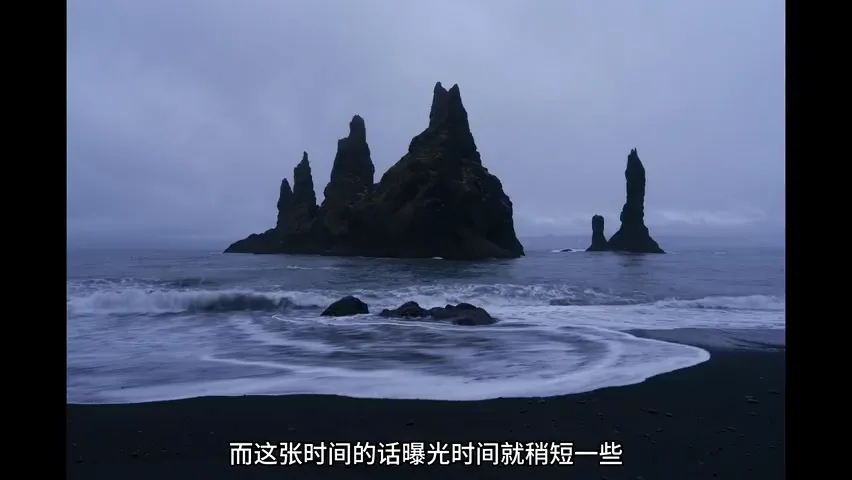
On the same Icelandic black beach, the difference between two exposure times is unmistakable (at 6:24): the long exposure fogs the sea completely, leaving the reefs standing in cloud, while the shorter one lets the waves draw gorgeous silky threads. Deciding first whether you want the water frozen or flowing — then choosing the shutter — is the starting point of all water photography.
05 Urban Work: Skylines and Street Life
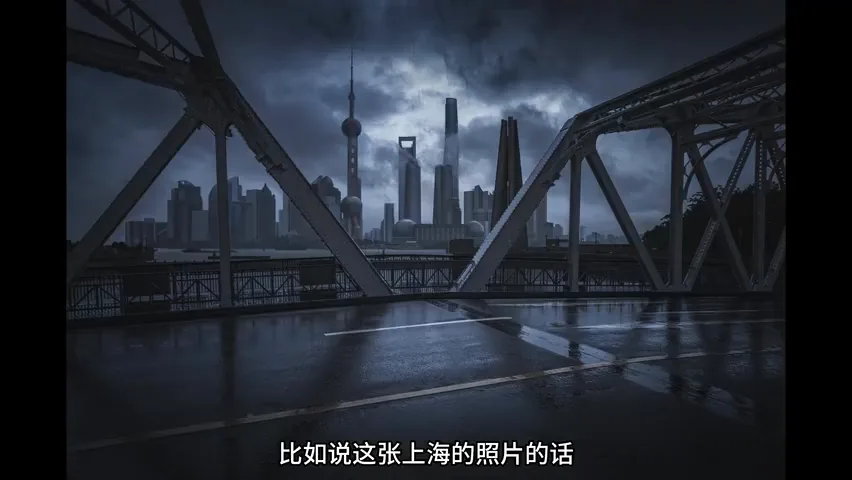
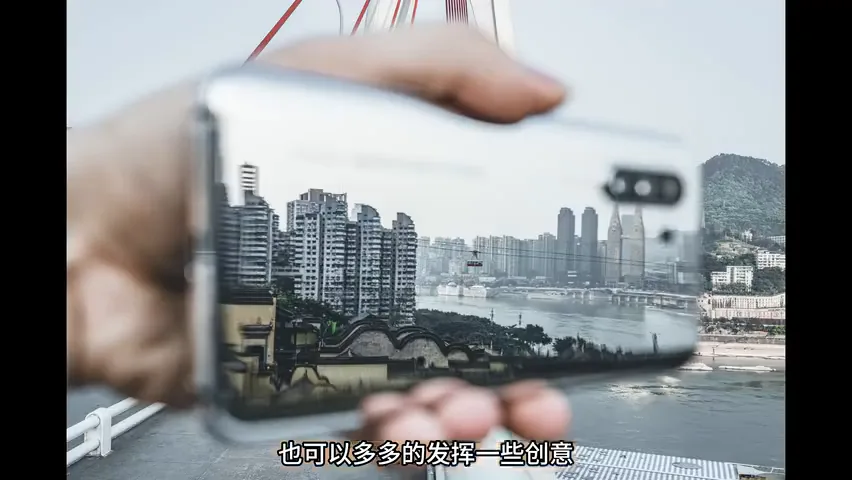
In the city Thomas shoots two subjects most. One is the skyline: working near the towers from a river, waterfront or street, he again uses the 16-35 GM — his Shanghai frame took the 20mm end, pulling in enough of the bridge deck as a foreground so the perspective adds depth and distance (at 7:04). Keep the camera level for that upright-and-horizontal look; if you tilt upward, leave room for perspective correction — frame at 16mm for a 20mm picture so you can crop and fix later (at 7:41). And play: reflecting the skyline in a phone's glass back adds an extra layer of space (at 7:54).
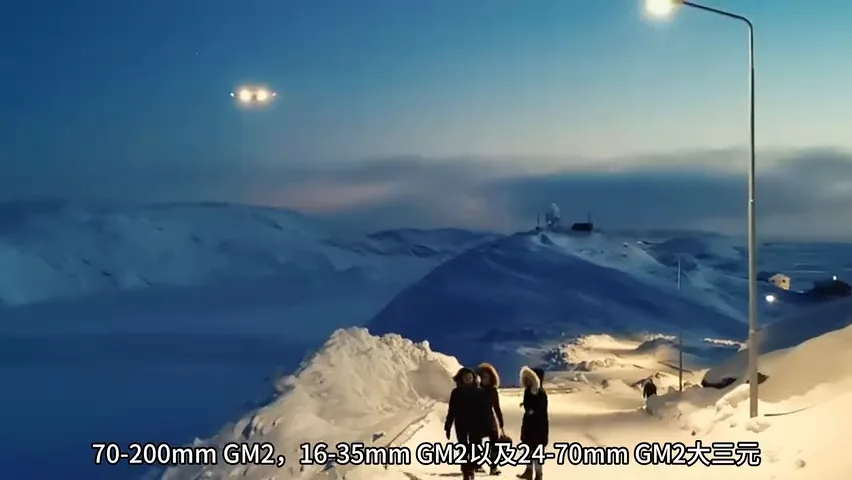
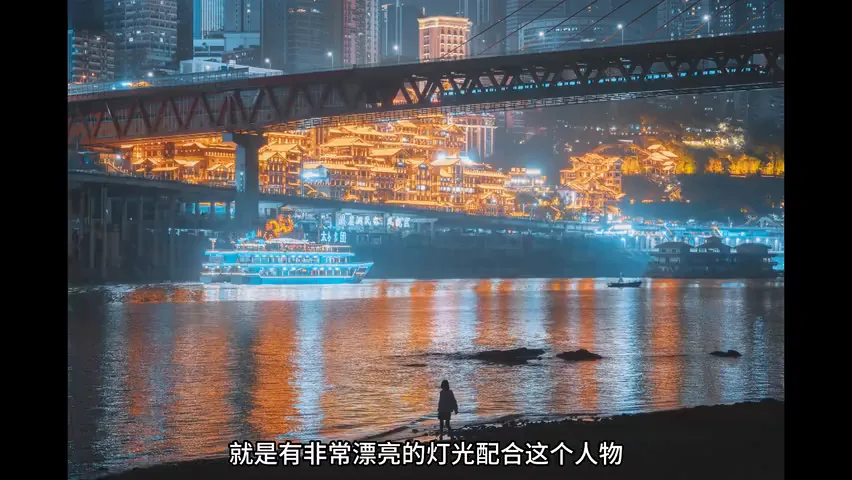
The other is street life, where all three f/2.8 GM lenses rotate in — what matters most is the aperture, since these scenes happen in low light, rain, or blue hour, when beautiful lamps meet passers-by (at 8:25). Typical settings: ISO 800-3200, f/2.8, 70-200mm at 1/60, 1/40 or a faster 1/100 s so people stay sharp (at 8:38). If high-ISO noise bothers you, run a time blend: a clean ISO 200, f/8, 10 s background plus a frozen ISO 1000-1600, f/2.8, 1/60 s figure, merged in post (8:58-9:11).
1. Shoot sunrise-sunset with the sun below the ridge or just breaking, keep the foreground in shadow for warm-cool contrast, and let bracketing handle the contrast; 2. For stars: 16-35 f/2.8, ISO 3200-6400, 20-25 s — summer for the core, spring/autumn stitches for the arch, check the moon phase, and a crescent doubles as foreground fill; 3. Telephoto details live on compression and layers — 70-200 for light weight, 100-400 for reach; 4. Water has three shutter regimes: 1/1000 s frozen, 0.2-1 s silk, 5 s-plus fog; 5. Keep urban wide shots level with correction headroom, shoot street life wide open at high ISO in blue hour, and fall back on time blends when noise piles up.