Photography Tutorial · 2024-03-29
Can Drones Also Shoot Humanity? Appreciation of the 2023 SkyPixel Photography Contest Works!
In today's photography tutorial, Thomas will study and appreciate the winning works of the 9th SkyPixel Photography Contest with everyone, drawing inspiration and insight from them.
In addition, I've observed a new trend in aerial photography: besides landscape photography, with the continuous evolution of telephoto lenses, drones will also produce a large number of excellent humanity photography photos!
Video
▶ Watch the video tutorial on Bilibili
This is the illustrated companion to the video above. The 2023 DJI SkyPixel contest results are in, and the predictions Thomas made last October came true almost across the board — the grand prize and many winners indeed use telephoto lenses, simpler compositions and strong storytelling. This article walks through why the grand-prize image "Mongolian Yurt" rewards a long look, and a batch of human-centered drone telephoto works.
When reviewing the monthly preliminaries last October, Thomas made two points: a longer focal length and a simpler, purer composition often beat cramming in more cluttered scenery; and if you enter SkyPixel, give your photo a story — a human moment, human emotion — because that is what moves people. This year's winners list is the best possible proof of both (at 1:04-1:29 in the video).
01 Prediction Confirmed: a Grand Prize Painted Like Genre Art
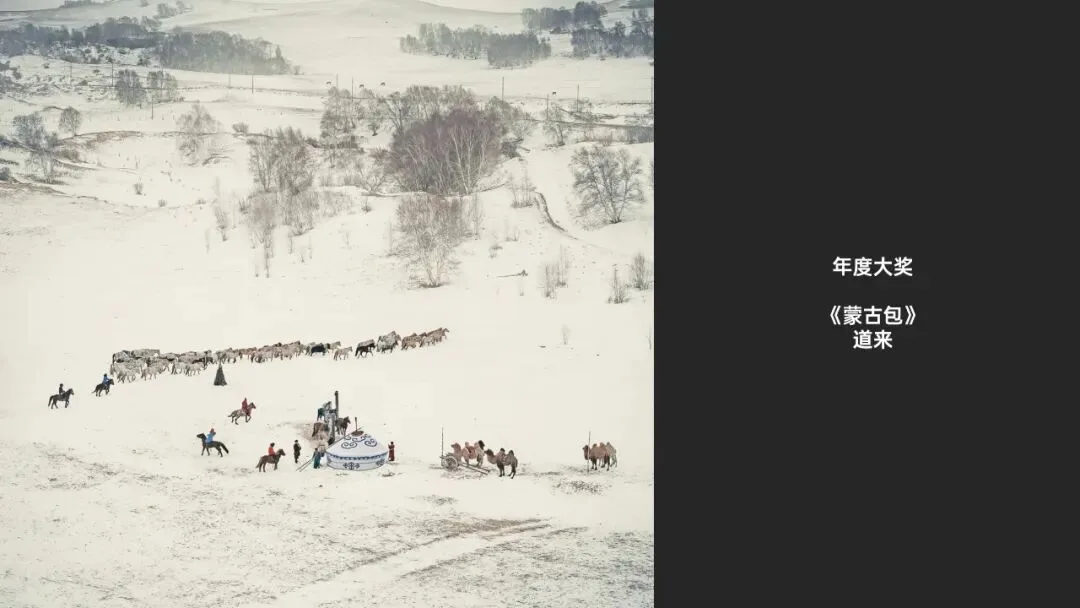
Start with the grand prize "Mongolian Yurt" by a Chinese photographer (at 1:41-1:56 in the video). It records the Ice-and-Snow Naadam festival. Honestly, at first glance it does not hit hard — you might wonder how such a photo wins the top prize. The judges' comments are worth reading (at 2:04 in the video).
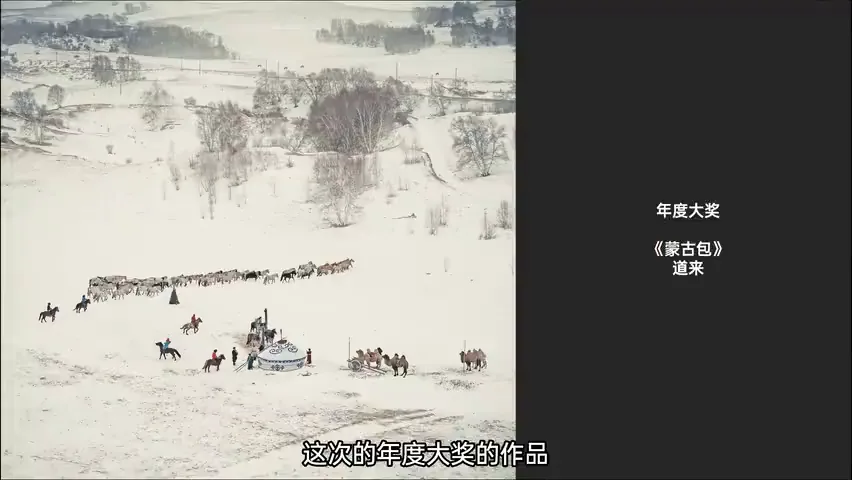
The judges' keyword is "rewarding to look at, again and again," because the details are endless: camels in the foreground, several people in traditional dress chatting beside the yurt, horse herders behind them, forests farther out, and grazing horses beyond even that (at 2:13-2:33 in the video). The scene is vividly alive — from this one frame you can read how Mongolian herders live, the nature around them, their ethnic dress, and story after story. That is what makes it so rewarding.
The photo was clearly shot on the Mavic 3 Pro's telephoto camera (at 2:55-3:08 in the video). Thomas has said the telephoto matters to photographers as much as the drone's invention did — it makes aerial telephoto possible. Getting this close with a wide-angle drone would inevitably disturb the people on site, and proximity forces the Western near-big-far-small perspective; to achieve the gentle, lofty perspective of Chinese painting you must compress from the air with a telephoto. The era of drone documentary photography has arrived (at 3:08-3:49 in the video) — documentary here meaning not street shots or portraits, but stories of people and the spaces they live in.
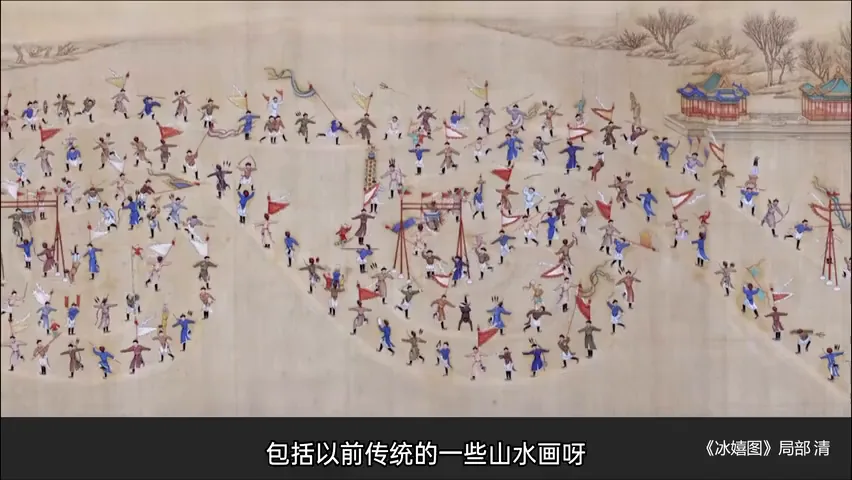
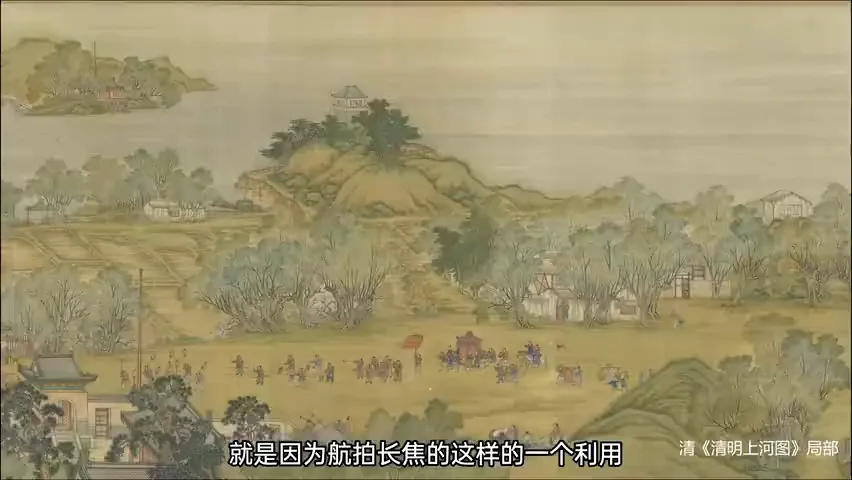
On seeing it, Thomas immediately thought of the Qing dynasty painting "Ice Amusements" — nearly identical in composition and color — and of sections of "Along the River During the Qingming Festival": the same lofty perspective, richly layered scenes, and people embedded in their environment (at 4:03-4:36 in the video). The Chinese judges saw traditional Chinese painting in it; the two international judges thought of Western woodcuts and copperplate engravings. A photo at once familiar, endlessly viewable and eye-opening about Mongolian folk life fully deserves the grand prize — and it heralds the arrival of an era of drone documentary masterpieces (at 4:37-5:20 in the video).
02 Telephoto Documentary: Quiet Records and Rhythm
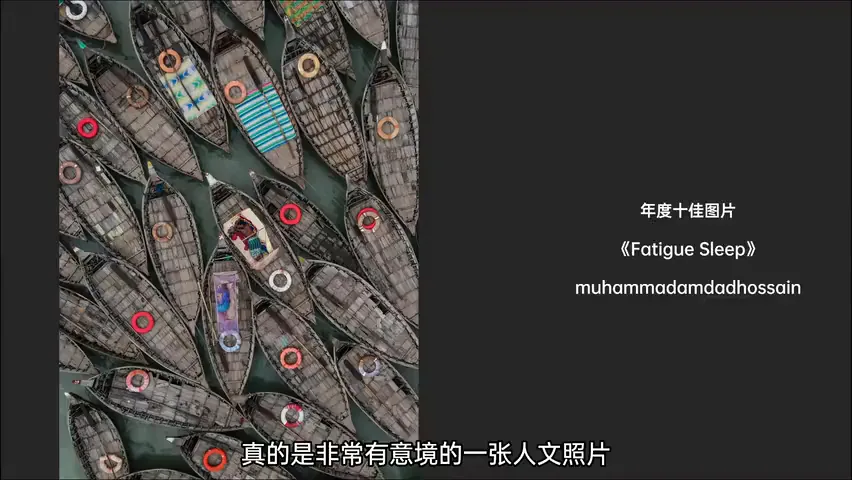
The Top 10 also holds plenty of drone documentary work. Take the Bangladeshi boatmen at 5:29, resting on their boats. Shoot this with a wide-angle drone hovering close and you would likely be stoned away; a telephoto leaves the quietness intact (at 5:29-5:45 in the video). The boats form a strongly repeating structure alongside round life rings, their colors repeating yet varying; in the middle, two men lie on a boat that is both their workplace and their home — a deeply evocative documentary frame.
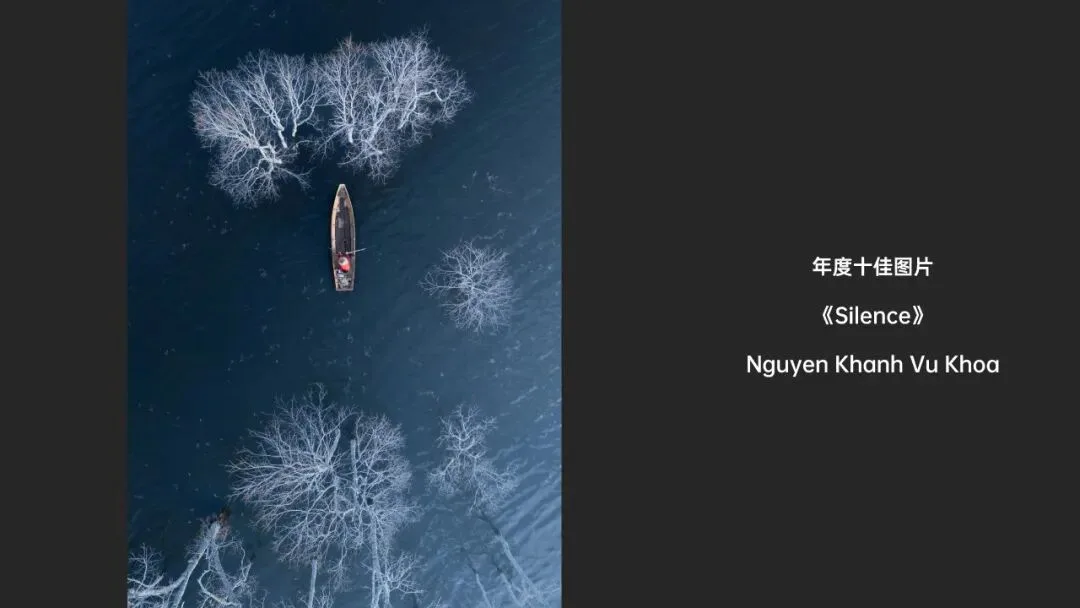
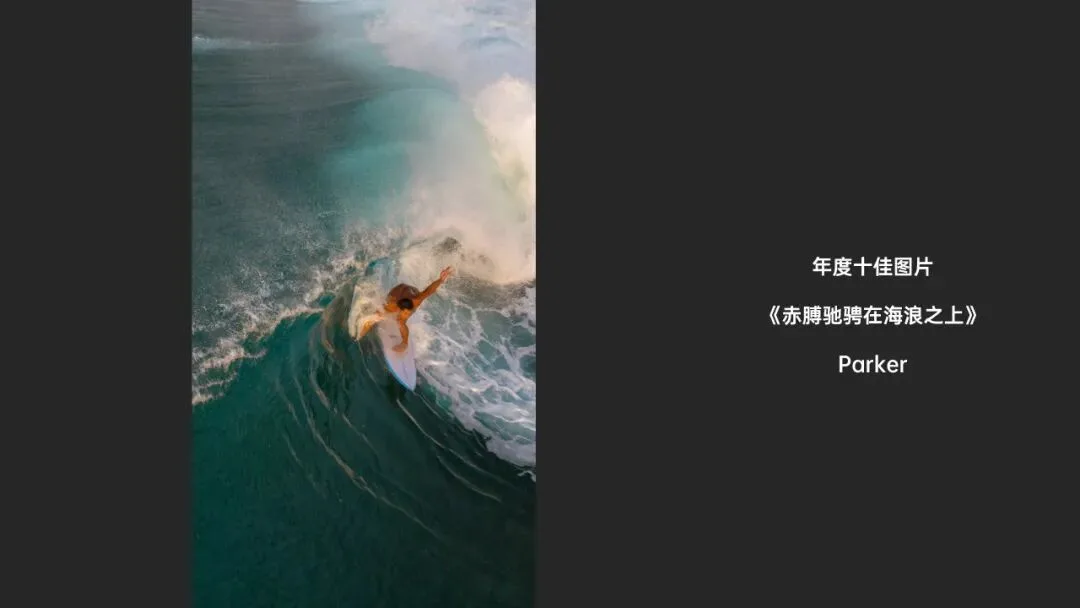
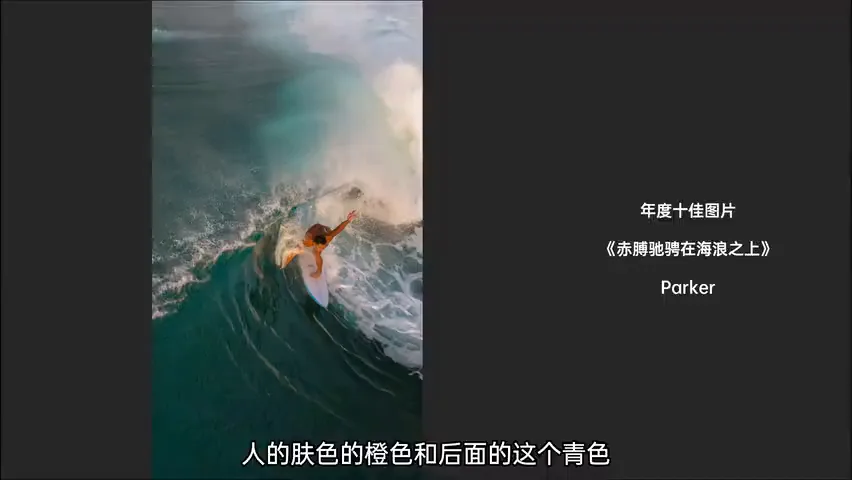
The next frame (at 6:08 in the video): a fisherman rows across a beautiful winter lake, his small boat slipping beneath a frost-covered tree — landscape and figure breathing in the same picture. As a former SkyPixel judge, Thomas has seen countless surfing-and-rowing scenes, all shot wide with the human nearly invisible; this one uses a telephoto, playing down the waves and the whole sea while playing up the figure's motion (at 6:17-6:37 in the video).
The finest touch is the echo of details: the curve of his arms mirrors the direction of the wave, creating a harmonious rhythmic beauty, while the orange of his skin against the teal sea builds a spectacular warm-cool contrast (at 6:37-6:55 in the video). "Riding Bareback on the Waves" is full of story — surfing need not be about the ocean's grandeur; the rhythm of a figure can be just as moving.
03 Light, Shadow and Abstraction: Slow Shutters to Textures
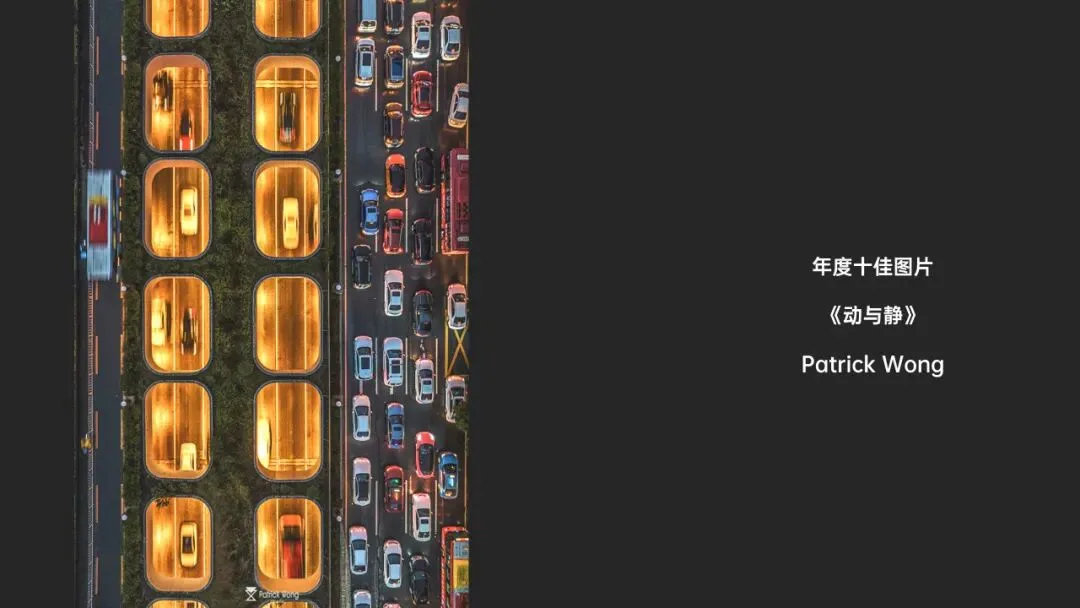
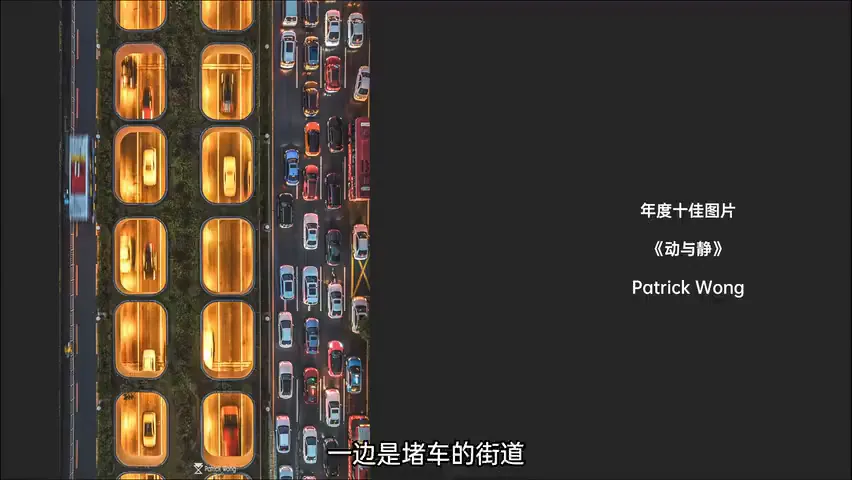
Why did Thomas bet on human elements? Partly because three of the judges are veteran magazine editors, and partly because wide-angle drone landscape epics have simply been seen too often — innovation had to move toward telephoto and toward people (at 6:59-7:28 in the video). Take the frame at 7:30: one street jammed with traffic, the other side flowing free, the slow shutter smearing the cars into light trails — a meeting of motion and stillness that is the photo's finest asset.
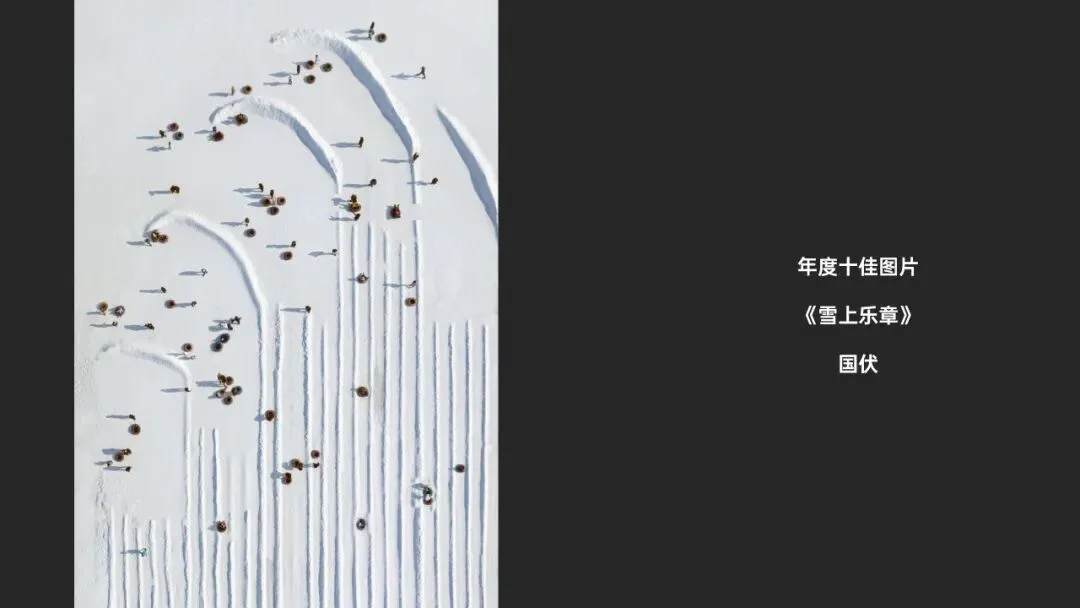
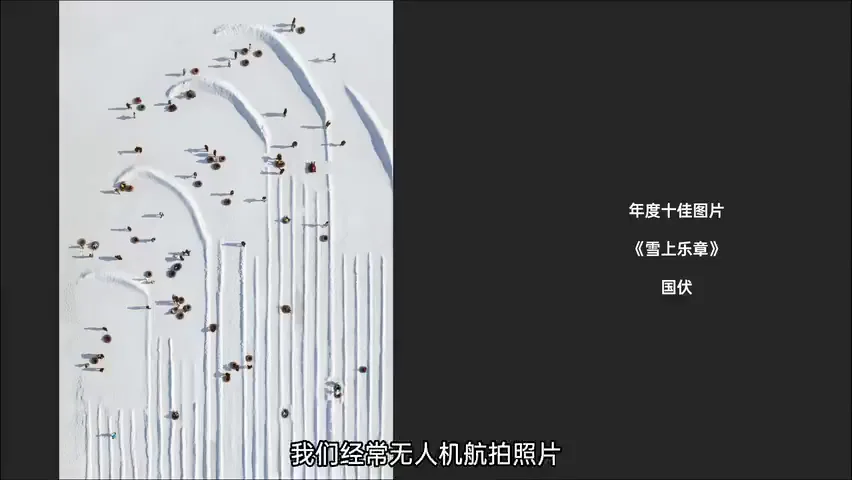
The work at 7:44 records a story yet reads as pure abstraction with geometric flavor: in extremely low light, long shadows stretch across the snowfield, the shadows forming the figures' shapes and gestures while the bodies themselves are tiny black dots. Telling a story through shadows instead of subjects is a classic drone technique, and this example is exceptionally distinct (at 7:44-8:07 in the video). The frame at 8:09, meanwhile, is unmistakably telephoto from its perspective alone — the subject looms large against beautifully layered background tones, a genuinely magnetic way of seeing (at 8:09-8:22 in the video).
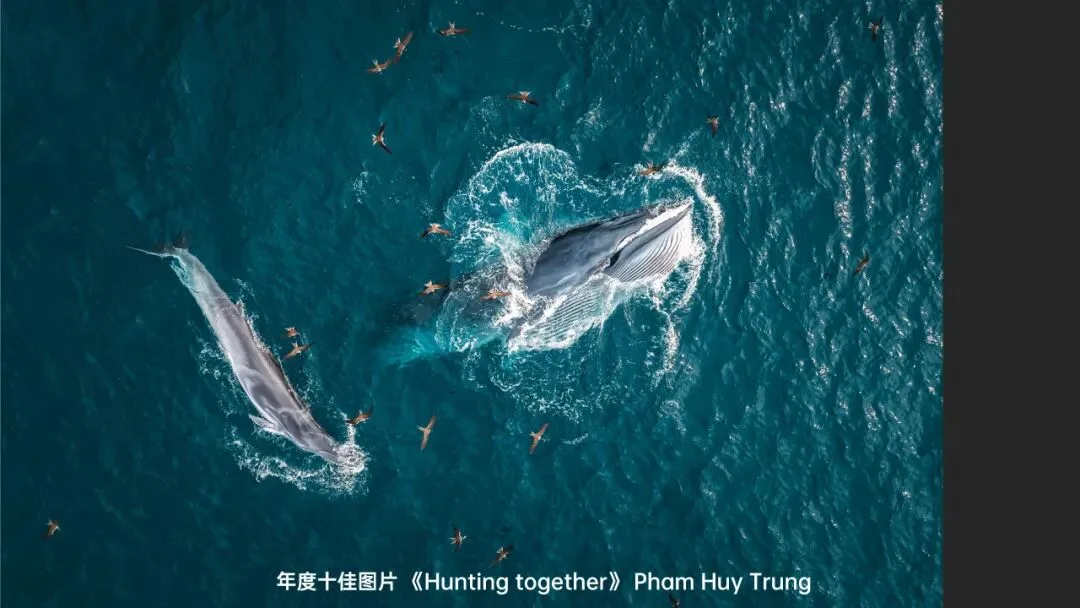
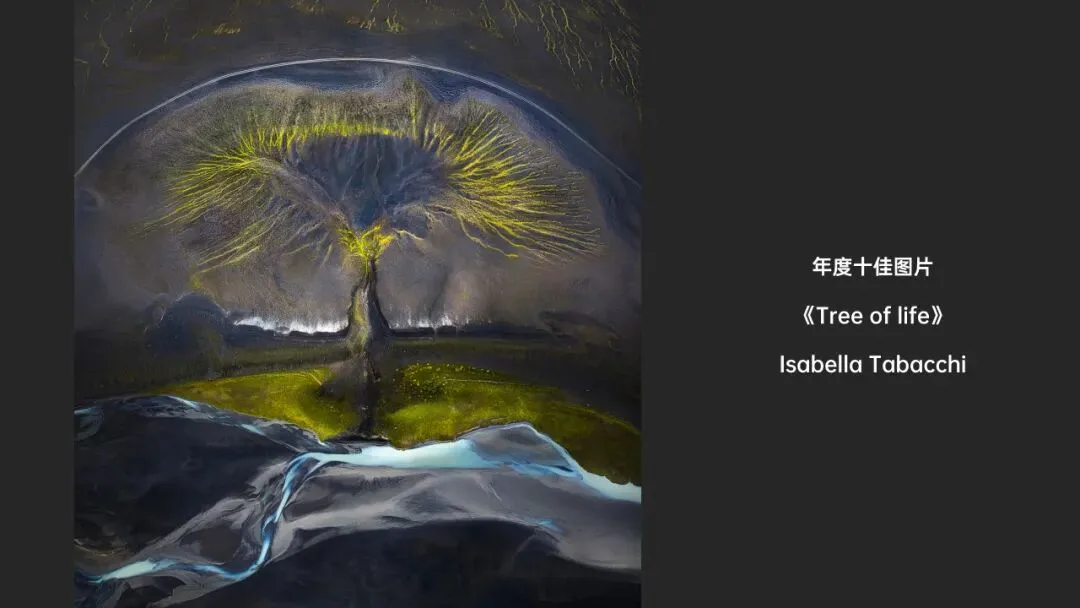
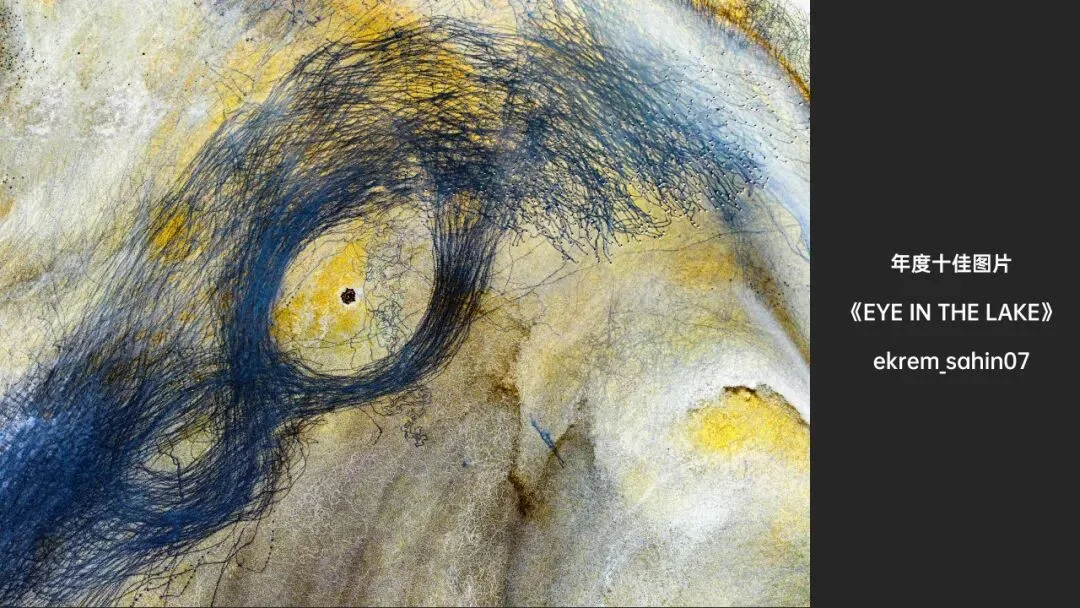
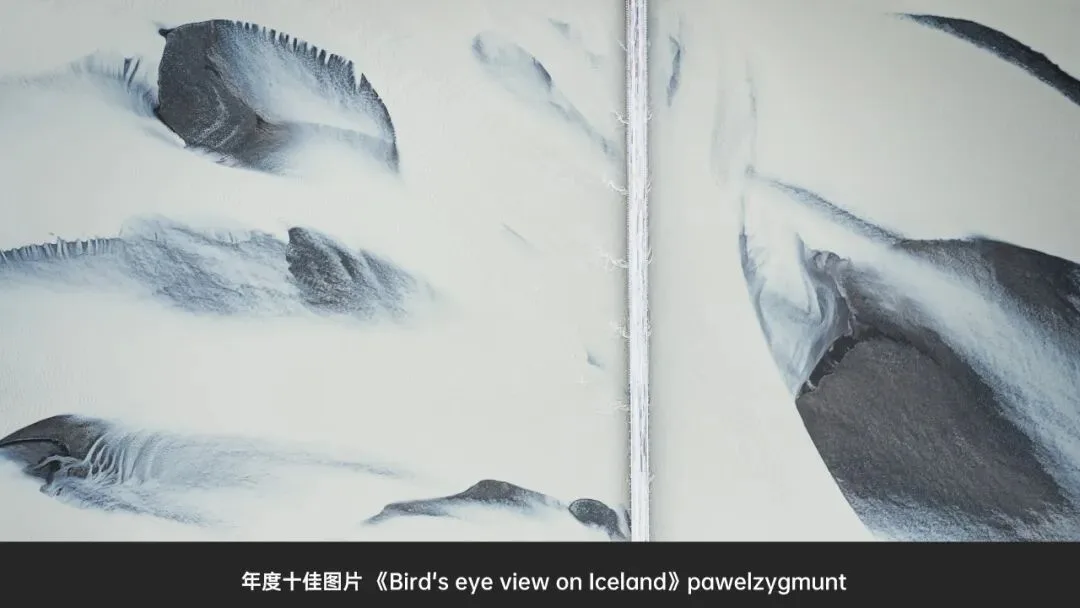
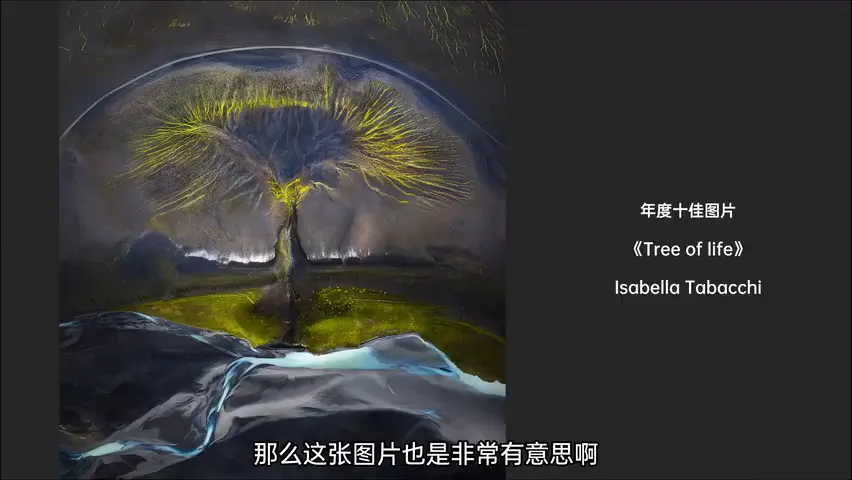
Even classic subjects get fresh treatment. The breaching whale at 8:32 is tailor-made for a drone's straight-down capture. The Iceland frame at 8:43 is more interesting still: the terrain's texture resembles a tree, with a river flowing right beneath its canopy — water as the source of life, evocative and abstract at once (at 8:43-8:54 in the video). This year's landscape winners lean abstract overall, which Thomas attributes mostly to taste; the eye-like water at 9:05 he finds so-so — well structured, almost musical, but a scene he has seen rather often (at 8:56-9:21 in the video).
04 Nominees and the Trend: Telling Stories Visually
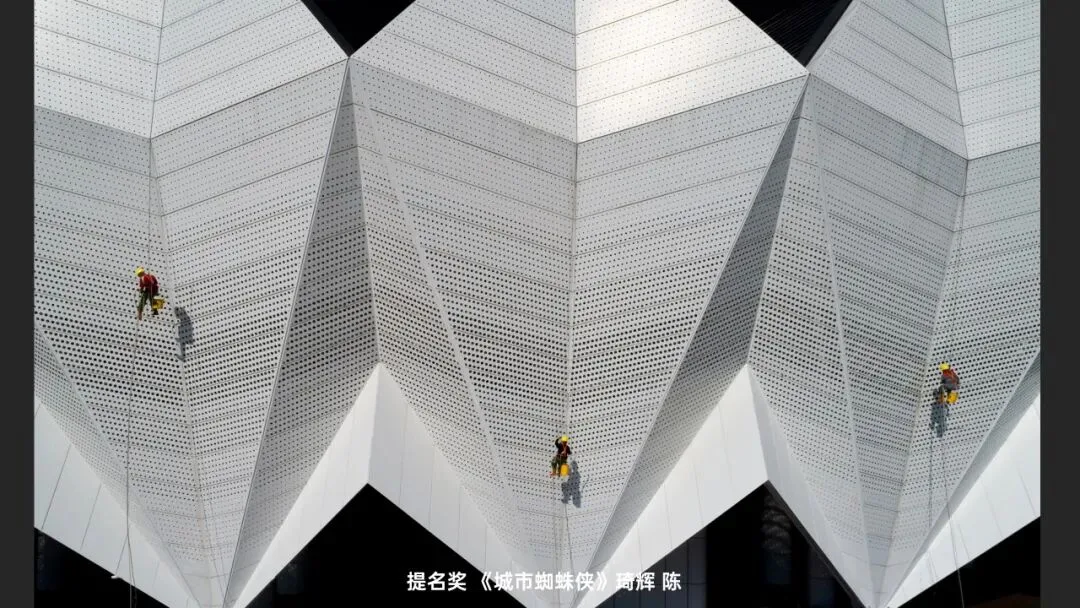
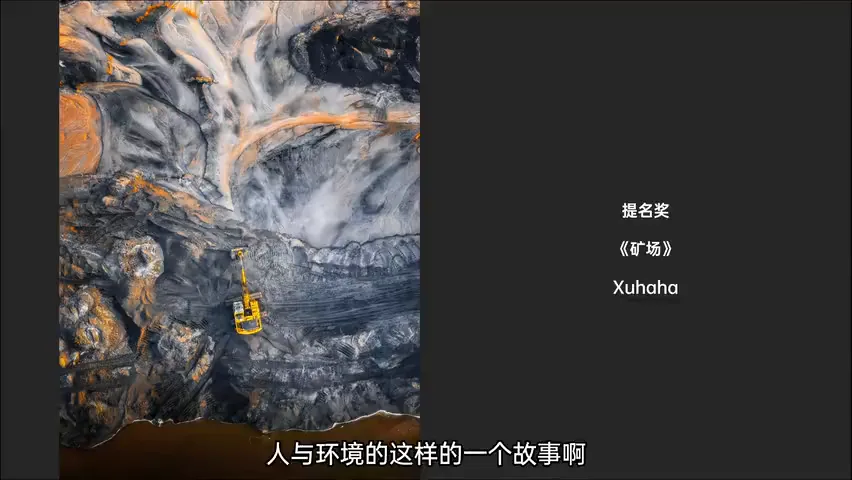
The five nominees that follow are equally strong, and the judging logic is consistent — the photos are rich in story, and the story is told visually rather than staged as a plot (at 9:22-9:38 in the video). Take 9:39: a minimalist, abstract stadium backdrop where a few figures land like the finishing stroke of a brush, their shadows stretching behind — something only possible by waiting for the right light. The visual result is outstanding.
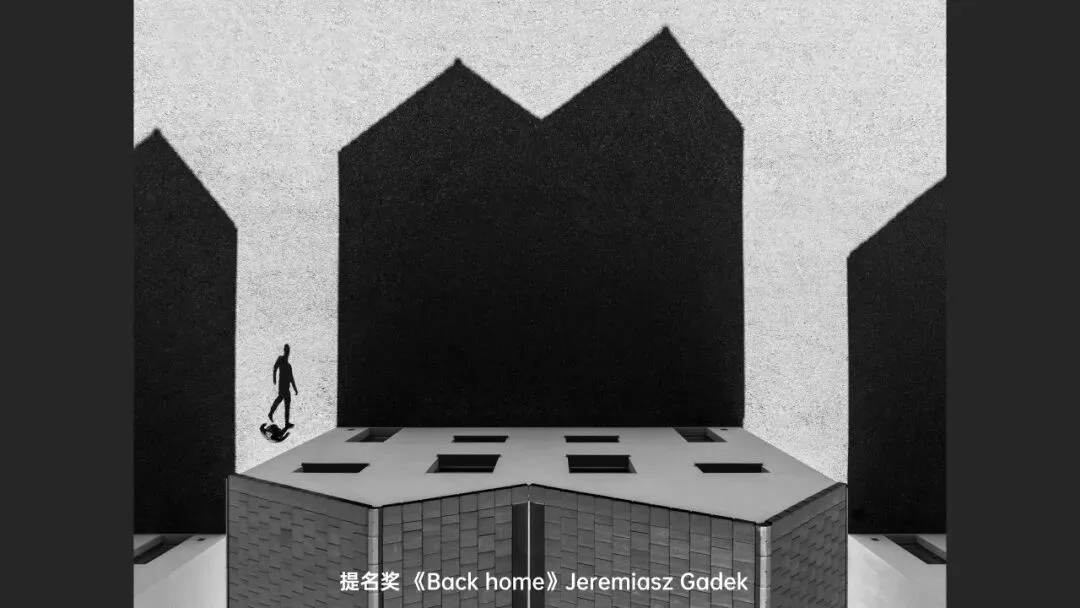
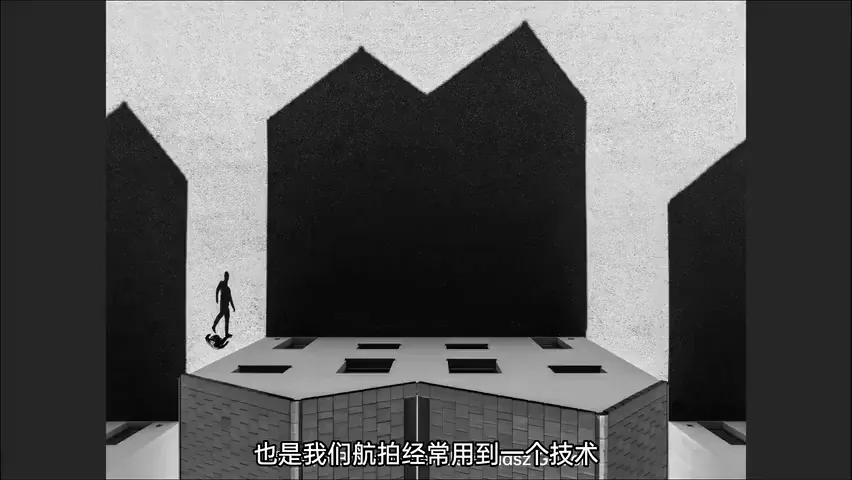
The frame at 9:58 uses aerial photography's most classic trick — storytelling through shadow: you notice the house's shadow and the human shadow first, and the person is simply on the way home. It is a visual only aerial photography can produce (at 9:58-10:13 in the video). Thomas says it recalls Edward Burtynsky's classics — images that once demanded helicopters or large-format gear; now, with drones, any of us can tell the story of people and their environment (at 10:14-10:29 in the video).
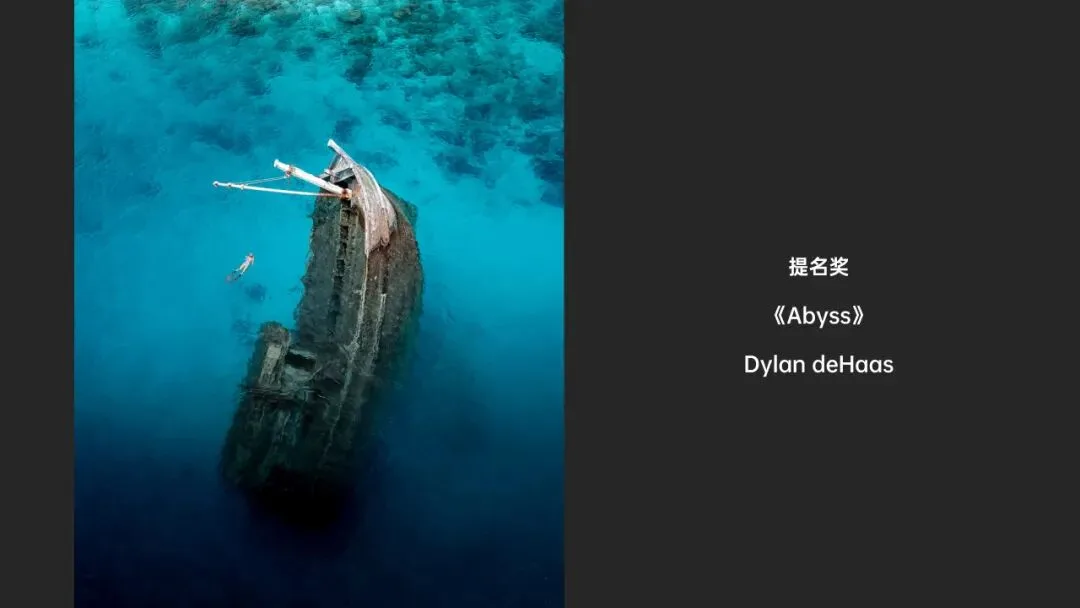
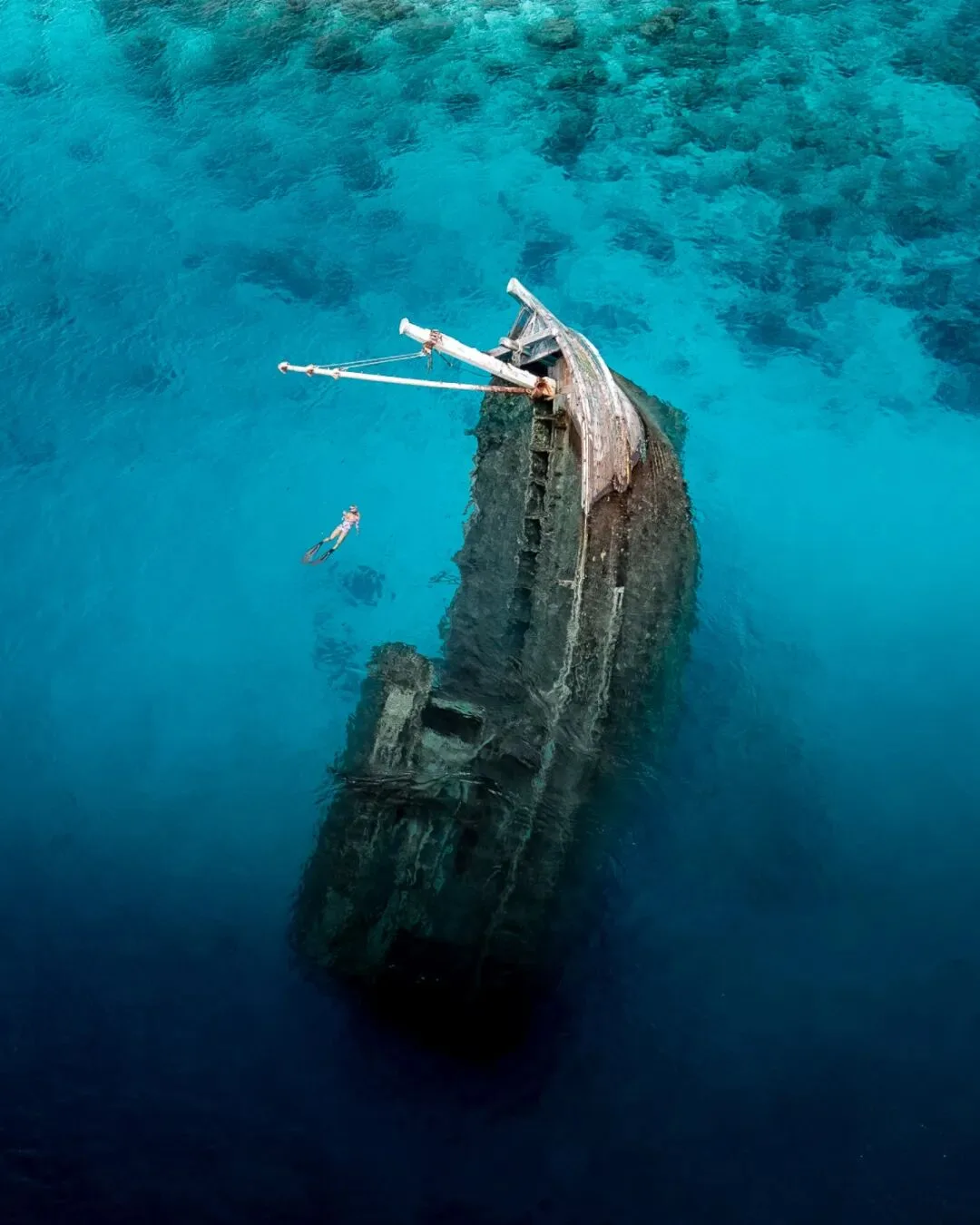
"Abyss" at 10:31 is drenched in atmosphere and mood: clean water, a sunken ship, a lone snorkeler drifting beside it — person, wreck and sea forming a threefold contrast in scale and a threefold echo of story. Thomas says that if he were judging, this one deserves a higher award (at 10:31-10:55 in the video).
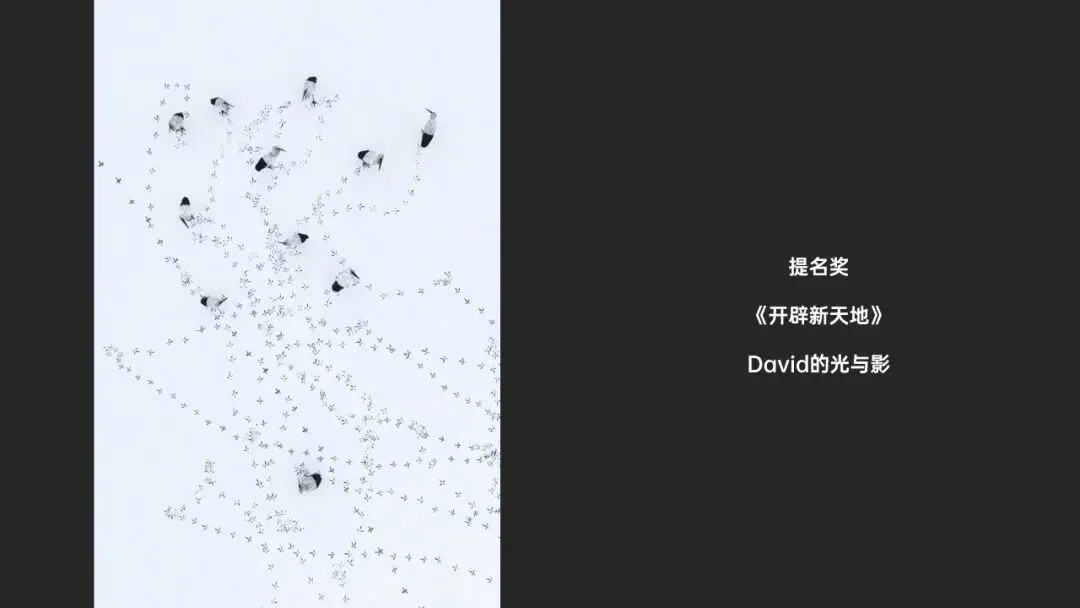
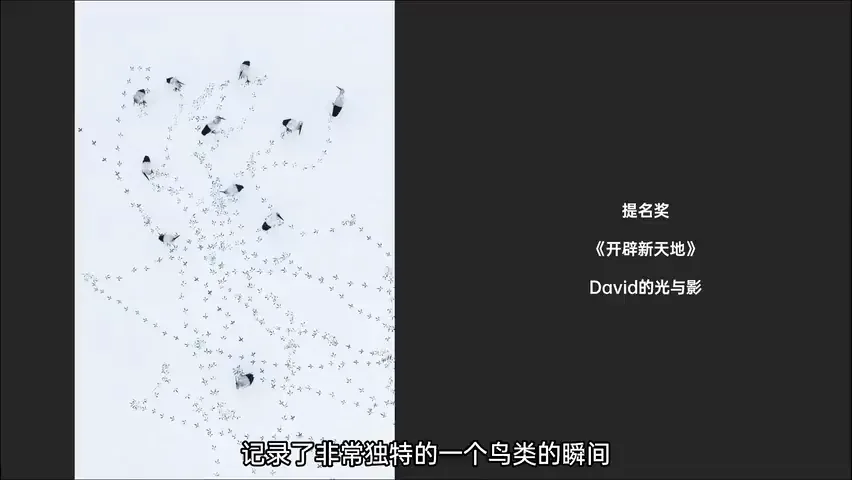
"Breaking New Ground" at 10:57 records a truly unique instant of bird life — the footprints a flock leaves as it takes off. Thomas adds a practical tip: many aerial photographers deliberately wait for snow, because bare ground is messy while snowfall turns it clean — the ground becomes a stage and your elements become the actors. Here the actors are the birds and the prints they press into the snow, vivid and expressive (at 10:57-11:28 in the video).
The trend from this contest is clear: drone photography is not only central to pure landscape epics but is becoming indispensable in documentary work (at 11:30-11:49 in the video). Documentary photography is no longer just street scenes, portraits and environmental portraits — it can be the drone-telephoto view: people and the environments they live in, their relationships, interactions and the stories that grow out of them. Thomas himself plans to create more works blending people and landscape with a drone telephoto (at 11:50-12:23 in the video).
1. The telephoto means as much to drone photography as the drone itself did: quiet observation, Chinese-painting perspective and heightened human motion all depend on it in the air; 2. Rewarding images are built from detail and story — the judges' repeated keyword belongs in every shoot plan; 3. Tell stories with visual language: shadows standing in for subjects, slow shutters mixing motion and stillness, snow as a stage — all techniques you can borrow today; 4. A new branch of documentary photography has opened up: people, their environments, their relationships, interactions and stories.
HD video:
https://www.bilibili.com/video/BV1Mm411k7A3/
The 2024 album-grade weekly calendar "Seeing the World 2024" (《看见世界2024》), which includes Thomas's works from the past two years, is now available on Taobao. Everyone is welcome to visit the People's Posts and Telecommunications Press Taobao store to purchase!

Winning Works