Photography Tutorial · 2024-05-05
Chinese Photographers Won Awards! Appreciation of the 2024 Sony World Photography Awards Professional Category!
In today's video, Thomas will appreciate this year's Sony World Photography Awards Professional category, including works won by Chinese photographers.
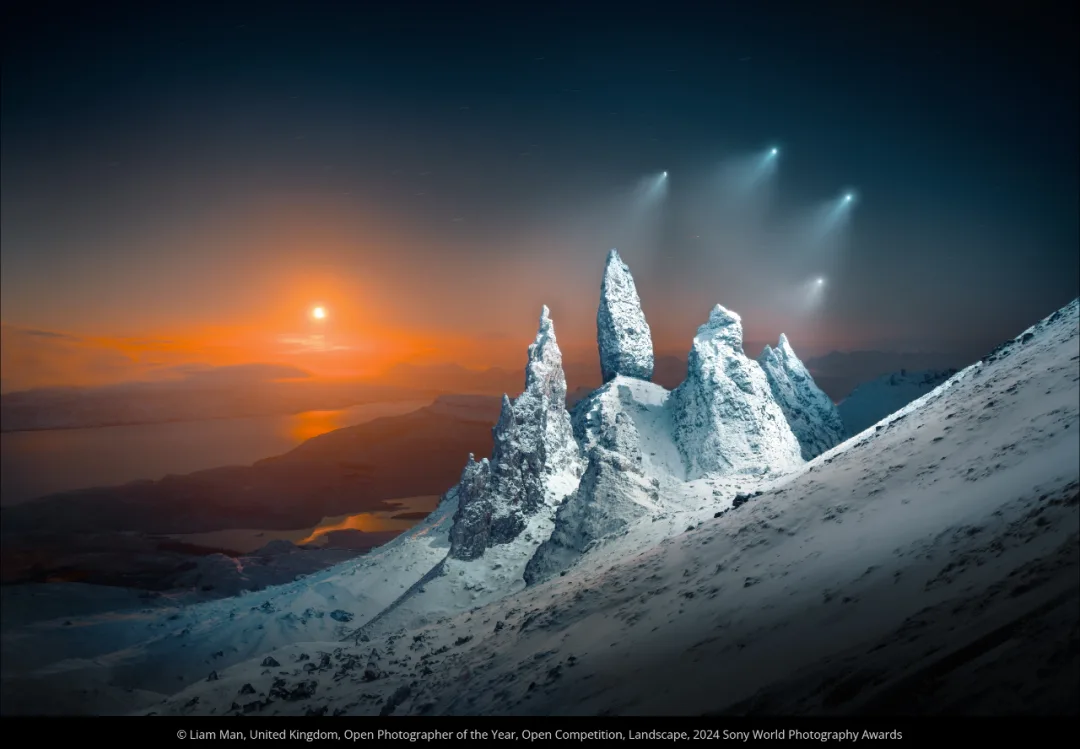
At the same time, Thomas will also share the preferences of different photography contests, the various angles everyone should focus on for learning and analysis, and how photographers justify their ideas, expanding common themes and concepts from daily life.
Video
▶ Watch the video tutorial on Bilibili
This is the illustrated companion to the video above. As the Sony World Photography Awards announced its 2024 winners, Thomas reviews this year's Professional category work — but first he makes a more important point: different contests want different things. Before entering or studying any award, understand its taste. Keyframe screenshots from the video, including the official winners'-gallery pages, accompany the text.
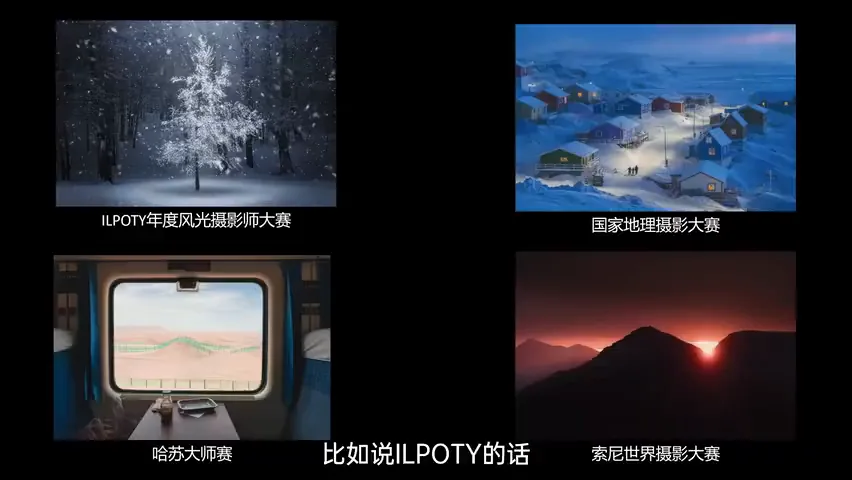
The collage above condenses the video's opening comparison: Hasselblad Masters, LPOTY (Landscape Photographer of the Year), and the National Geographic contest — the same landscape genre, utterly different tastes. The article follows the order "contest preferences → Nature & Wildlife → Landscape → Architecture → lessons from the Open section".
01 Know the Contest: Taste Shapes Strategy
LPOTY chases extreme visual impact — if you have a spectacularly beautiful frame, send it there (at 0:28-0:40 in the video). The National Geographic contest, which Thomas has won, cares more about storytelling, or geographic information and extreme weather (at 0:41-0:51 in the video). The recently announced Hasselblad Masters finalists each submit three images that must combine strong visual impact with a thematic idea — a hybrid contest (at 0:52-1:07 in the video).
Today's subject, the Sony World Photography Awards, leans harder on thematic presentation and concept excavation, and places no great demand on visual spectacle or beauty (at 1:08-1:24 in the video). So on one hand, different works suit different contests; on the other, when analyzing winners you must account for each contest's taste — with the Sony Professional section, watch how these photographers dig a perfectly ordinary subject into something a photo series can carry (at 1:34-1:53 in the video).
02 Nature & Wildlife: Spider Webs to Human-Elephant Conflict
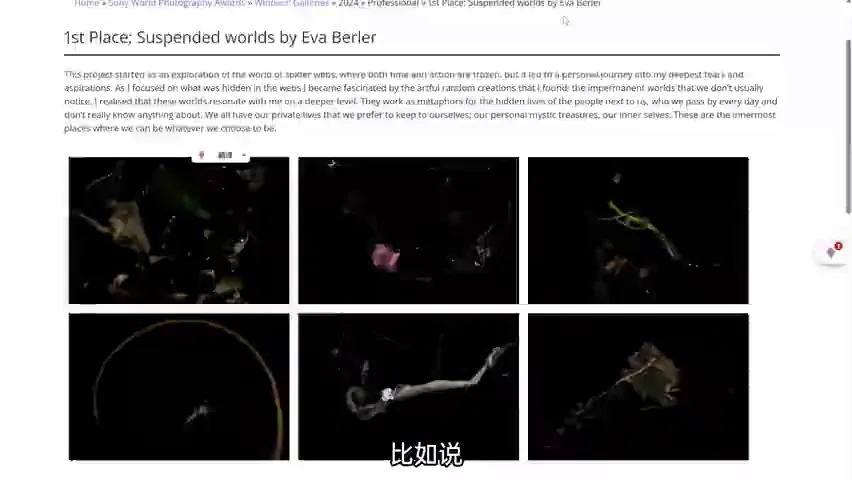
First place in Nature & Wildlife, "Suspended Worlds" (Eva Berler), photographs the most ordinary thing in our lives — the spider web we pass and shy away from daily (at 1:54-2:10 in the video; the winners'-gallery page is shown around 1:54 above). Shot on black backgrounds with flash, though Thomas sees room to improve — several frames drift out of focus and feel messy (at 2:20-2:33 in the video). The statement is the real delight: we see webs constantly yet never study them, just as everyone keeps an inner world and private space — lifting the theme from a natural element to human social relations (at 2:35-3:18 in the video).
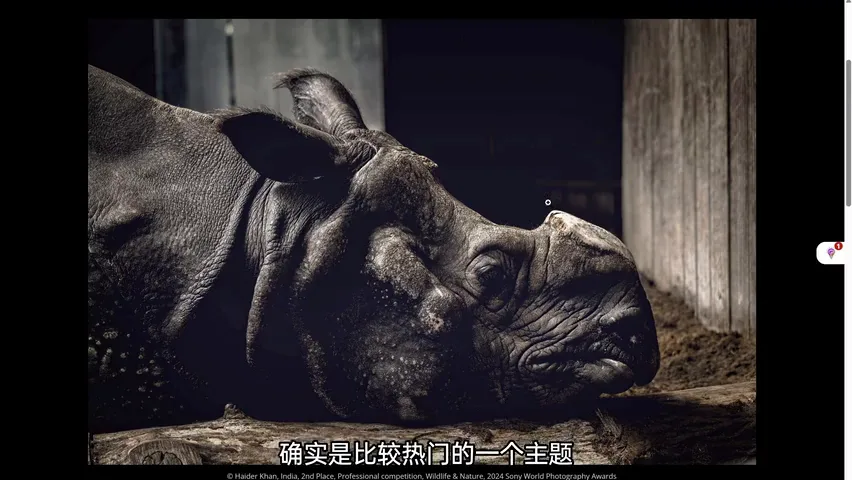
Second place takes a hot topic — animal conservation — though the images read muddy (at 3:19-3:28 in the video). Its rhinos have their horns sawn off to deter poaching, yet end up in the closed space of a zoo — a portrait of human protection and human-animal relations that feels distinctly beside the point (at 3:29-3:53 in the video; screenshot around 3:27 above). Third place, "In the Footsteps of Giants" (Jasper Doest), is a classic documentary essay on the tangled relations between people and elephants in African countries (at 3:54-4:05 in the video): a shot elephant with onlookers, the seizure of elephant habitat, face-to-face conflict, migration, and a wall broken by passing elephants (at 4:05-4:37 in the video) — many angles on humans and nature, and a theme with real depth.
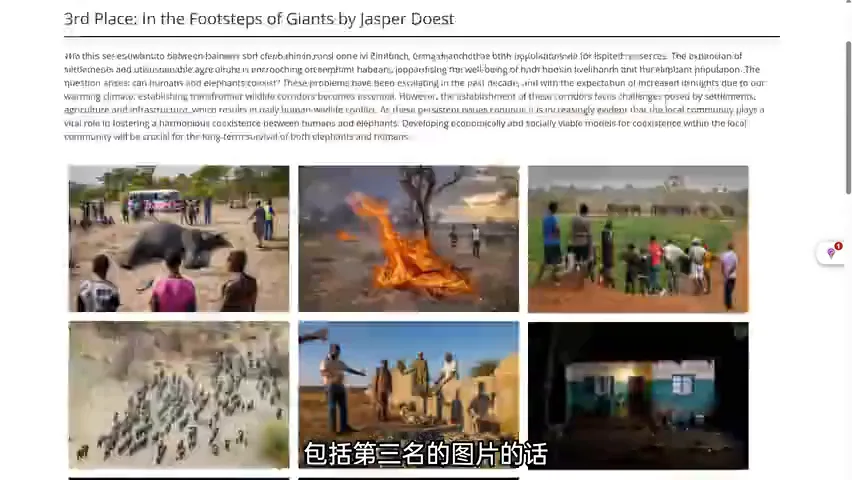
On this traditional documentary work Thomas keeps a personal reservation: faced with a wall of text and a stack of images, modern viewers struggle to click in — such themes may serve video better, interviewing the people and recording the elephants' lives up close from many angles (at 4:41-5:08 in the video).
03 Landscape: Matching Method to Meaning
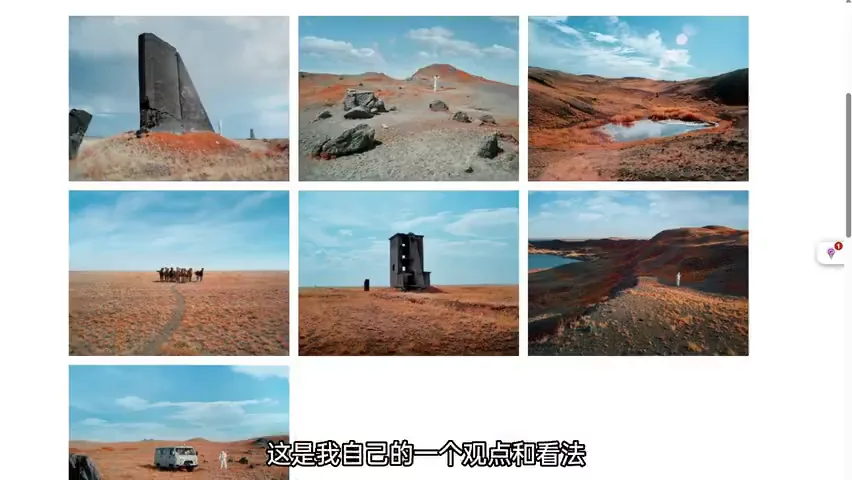
The Landscape first prize uses a striking method — infrared photography (at 5:10-5:29 in the video). But the infrared is not specialness for its own sake: the series portrays land in the former Soviet Union contaminated by nuclear radiation, and the author offers two justifications — infrared light, like nuclear radiation, is an invisible form of radiation, forming an analogy; and local scientists genuinely monitor vegetation with infrared photography, so the method stands on scientific ground (at 5:45-6:30 in the video; the series grid is shown around 5:15 above). Matching your means of expression to your theme takes exactly this kind of thinking and research (at 6:31-6:50 in the video).
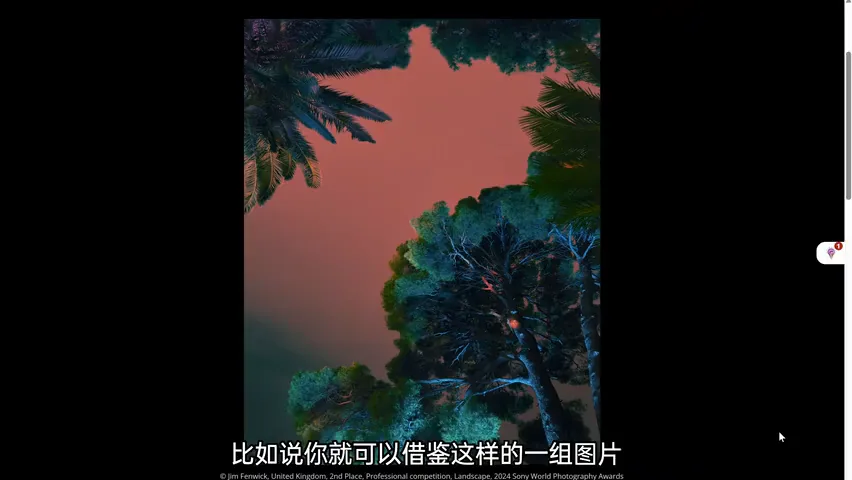
Second place photographs the most common element in our lives — trees (at 6:51-7:05 in the video). This photographer's angle is trees in wildfire: clouds behind reddened by the fire, the trees lit by a man-made glow — a deeply subtle relation; not necessarily beautiful, but unmistakably distinct (at 7:06-7:27 in the video; screenshot around 7:47 above). The lesson: for a subject as common as trees, you can use the tree as a backdrop for different human-tree relationships (like Fu Yongjun's World Press Photo-winning "One Tree by the West Lake"), or photograph trees under different lights — wildfire, city lights, park lamps, car headlights, sunlight, fireflies — each light mapping a different living environment and state (at 7:28-8:15 in the video).
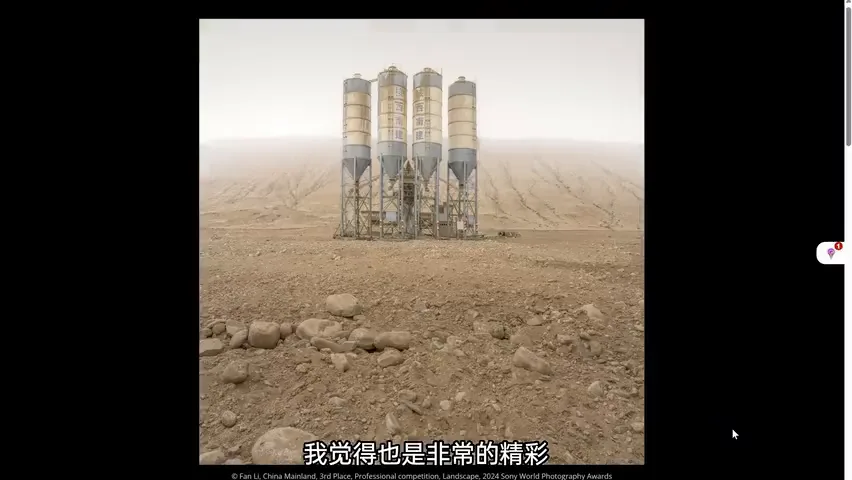
Third place goes to Chinese photographer Li Fan, equally remarkable (at 8:27-8:31 in the video). Portraying abandoned human architecture, its visual language is well worth borrowing: an overall low-saturation texture that feels comfortable, yellow and yellow-green foregrounds against blue-gray backgrounds, the layers pulled wide apart (at 8:33-8:53 in the video; the two screenshots above show 8:33 and 8:46). The flaw is visual inconsistency: some frames give the ground very little space, others too much; most use mid-telephoto while a few switch to wide angle, creating slight visual displacement (at 8:54-9:15 in the video). Still, as a mode of expression the series richly rewards study.
04 Architecture: Three Ways to Build a Series
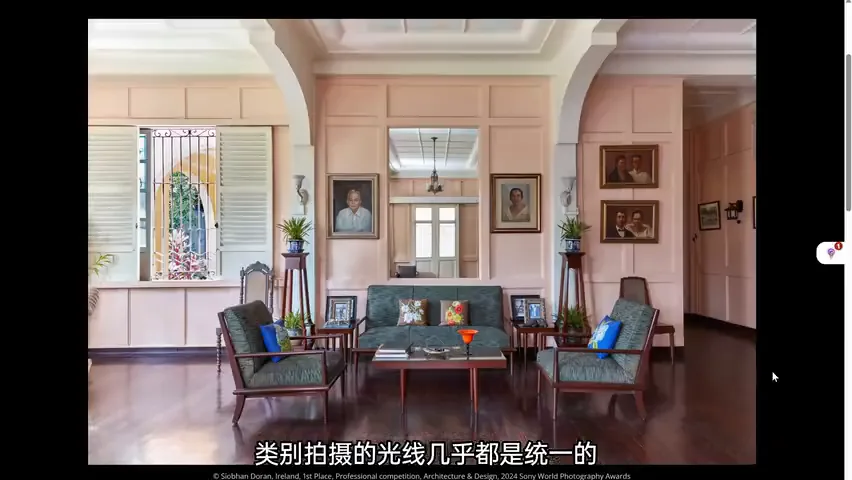
The Architecture first prize is a textbook typology: angle, category and lighting are almost entirely unified, with the room's arrangement as the only variable (at 9:22-9:38 in the video; screenshot around 9:34 above). Through those different arrangements you read the former occupants' professions, eras and preferences — observing the human through architecture, which is where the series shines (at 9:40-9:57 in the video).
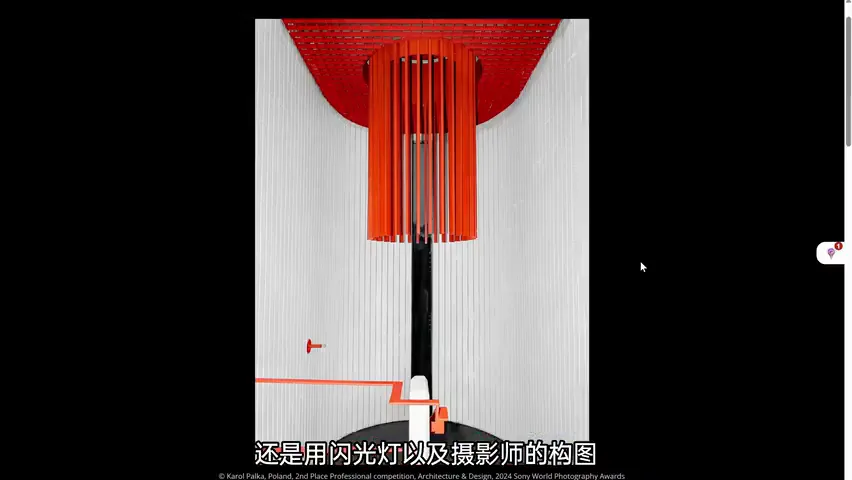
The second series photographs many traditional health resorts in Slovenia, and runs opposite to the typology: compositions vary widely, and the core is using flash together with the photographer's framing to seek out different structures and colors inside these buildings (at 9:58-10:23 in the video; screenshot around 10:13 above).
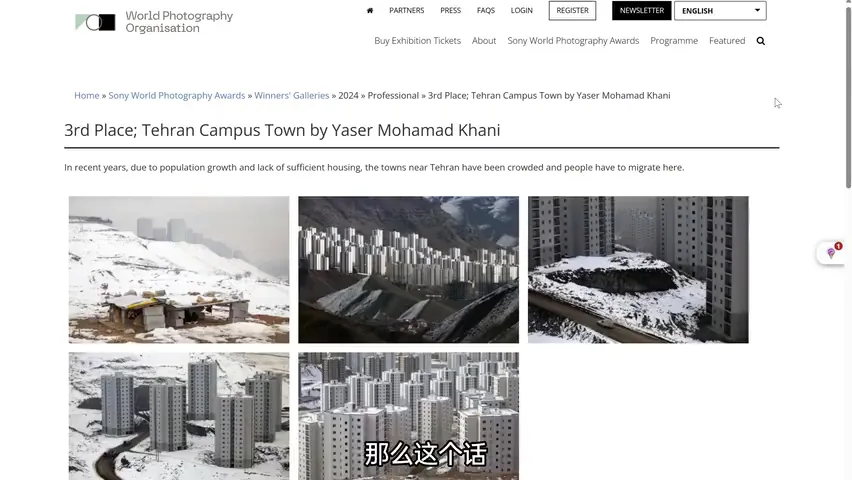
The third series, "Tehran Campus Town" (Yaser Mohamad Khani), photographs a new town on the edge of Tehran (at 10:24-10:34 in the video). What deserves borrowing is how it uses different foregrounds to give the same buildings different themes: framed by penned livestock, traditional life and the modern towers look distinctly out of joint (at 10:35-10:53 in the video). Another classic frame is rich in layers — physical layers and layers of meaning: traditional low-rise buildings in front, towers under construction in the middle, finished high-rises beyond, and natural mountains in the distance, each carrying its own significance (at 10:54-11:19 in the video; the series page is shown around 11:16 above).
05 From Open-Category Singles to Your Own Series
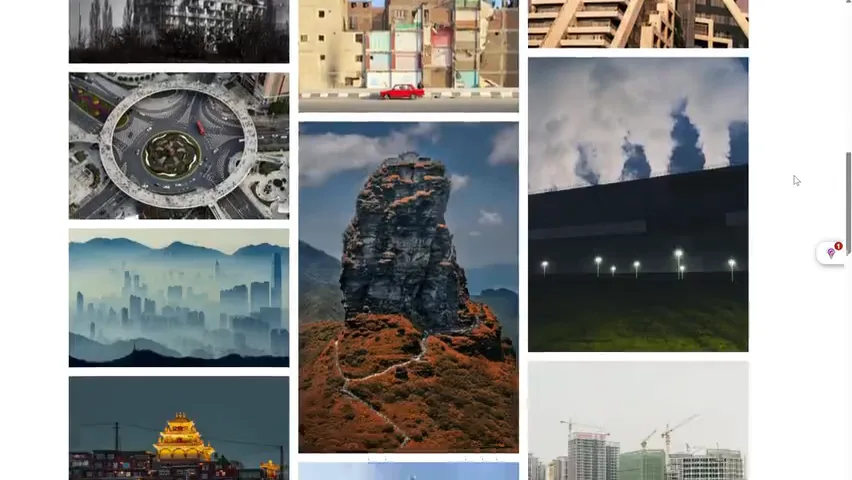
In this year's Open section — single images — many Chinese photographers captured fascinating scenes: a tower being demolished against traditional buildings, a sand-fixing net with high-rises rising behind it, the dense city against the city's scale (at 11:20-11:46 in the video; screenshot around 11:31 above). Each of these themes holds a seed that could grow into a series — through simple typology, different foregrounds, different angles, or methods like infrared photography and unusual light (at 11:47-12:14 in the video). That is the greatest lesson analyzing the Sony Professional category can give us.
1. Contests differ in taste: LPOTY wants visual impact, National Geographic wants story and geographic information, Hasselblad Masters wants impact with ideas, and the Sony Professional section prizes theme and concept above all. 2. Ordinary subjects become series through excavation: spider webs can point to private lives; trees can be shown under wildfire, street lamps and headlights, each light a different condition of life. 3. Method must match meaning: land scarred by nuclear radiation shot in infrared carries both analogy and scientific grounding. 4. Series can be built many ways — typology seeks sameness, the Slovenian resorts seek difference, Tehran layers its towers with changing foregrounds — and the Open-category single that moves you is often the first piece of your own photo essay.
HD video:
https://www.bilibili.com/video/BV1Ub421a75k/
Scan the QR code above or click "Read More" at the end of the article