Photography Tutorial · 2023-07-12
Northwest China Through a Telephoto: Sony 70-200mm F4 G II Field Test
Two weeks ago we drove 2,000 km from Dunhuang in Gansu, via Mangya in Qinghai, to Kuqa in Xinjiang, hoping to document the grandeur of Northwest China.
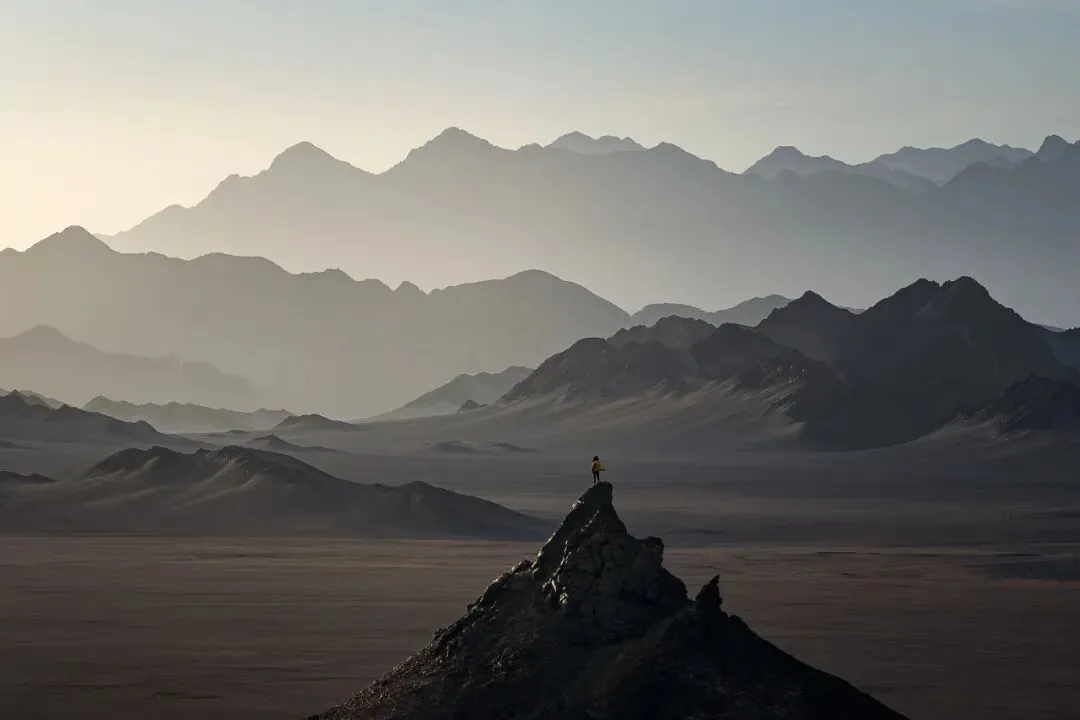
On this trip, 95% of the frames were made with a telephoto — especially Sony's new FE 70-200mm F4 MACRO OSS G II. Its portability, image quality, autofocus and stabilization all impressed me, and the macro capability opened a whole new door for us.
Travel Video
▶ Watch the video tutorial on Bilibili
This is the illustrated companion to the video above. Thomas has just finished a 2,000-kilometre drive from Dunhuang, Gansu, through Mangnai, Qinghai, to Kuqa, Xinjiang — and 95% of the frames from this Northwest China trip came from a telephoto. Using Sony's new 70-200 F4 II as the thread, this piece explains why the Northwest is telephoto country, plus field techniques: catching the train at Emerald Lake, the Eboliang yardangs, Heidu Mountain and more.
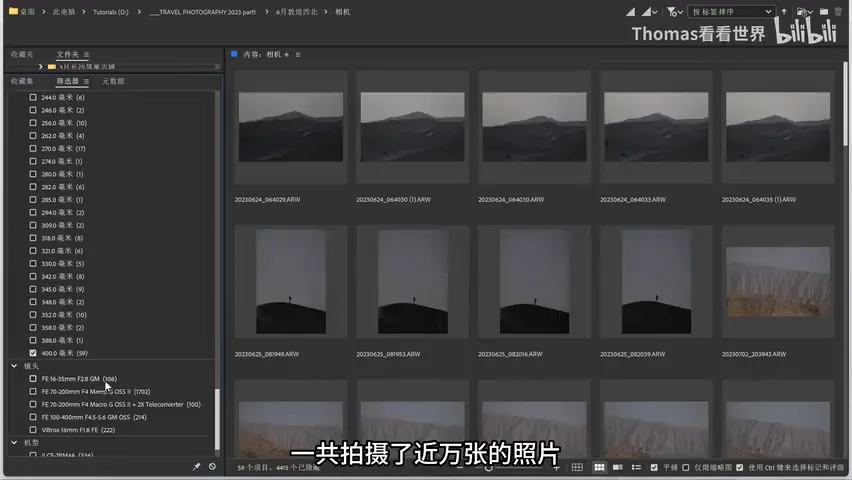
Start with one striking number. This screenshot from Thomas's photo-management software shows the trip produced nearly ten thousand images, of which fewer than 500 were shot wider than 70mm — and even the drone footage is overwhelmingly telephoto (at 1:11-1:27 in the video).
01 Why the Northwest Belongs to the Telephoto
Why did this trip run almost entirely on telephoto? Thomas offers two reasons (at 1:28-1:44 in the video). First, the Northwest is bone dry — the lush vegetation and flowers that usually anchor a wide-angle foreground simply don't exist here. Second, and more important: Northwest China is genuinely vast and magnificent.
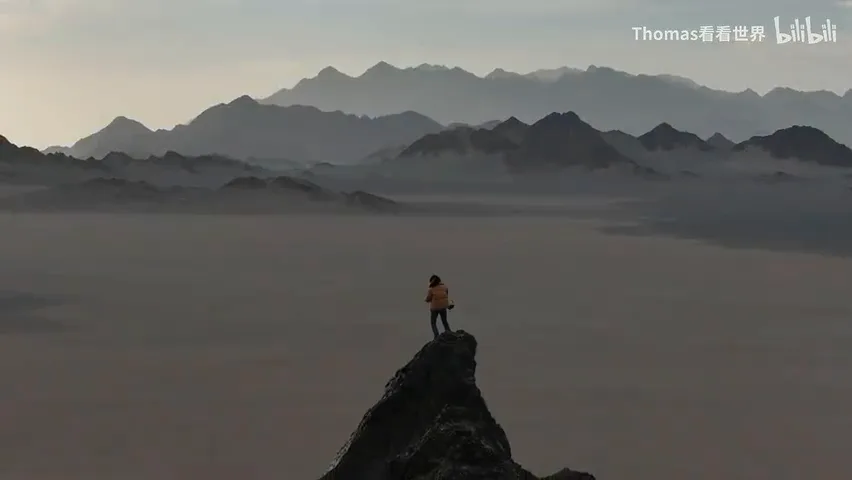
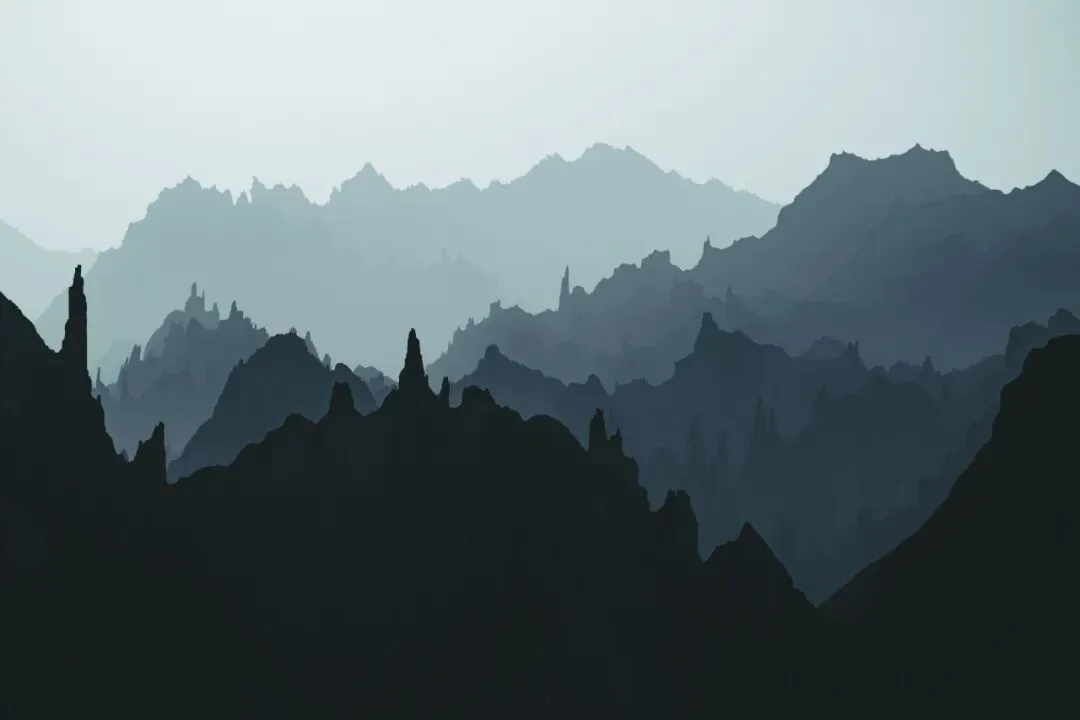
The wind farms make it obvious: from afar they seem unremarkable, but up close each blade is enormous (at 1:53-2:03 in the video). At such scale a wide angle shrinks everything to insignificance; a telephoto, by contrast, uses compression to stack the distant skyline and mountains into one dense layer — and the scene grows even grander (at 2:03-2:20 in the video).
02 The Lighter New 70-200 F4 II
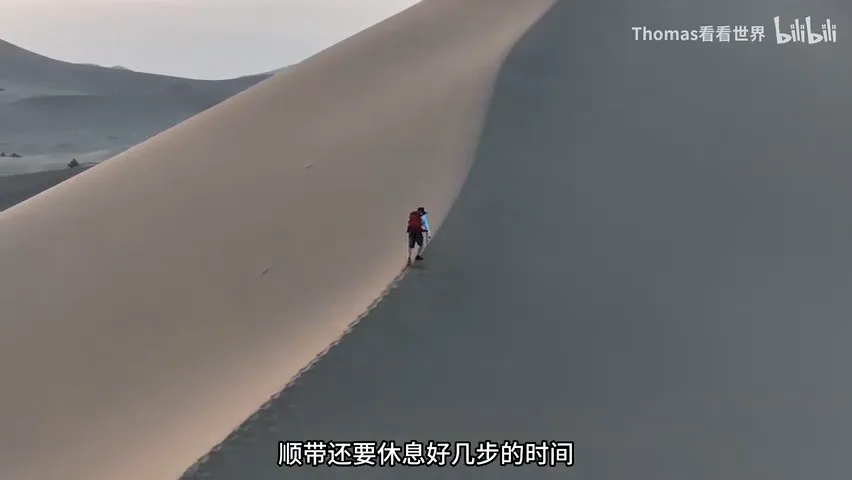
At the start of the trip Thomas carried the previous-generation Sony GM telephoto — superb optics, but fatally heavy (at 2:20-2:35 in the video). He shows a clip of climbing a sand dune: two steps up, one slide back, and several pauses to catch his breath (at 2:35-2:50 in the video). For landscape work, the weight you carry decides how far and how high you can go.
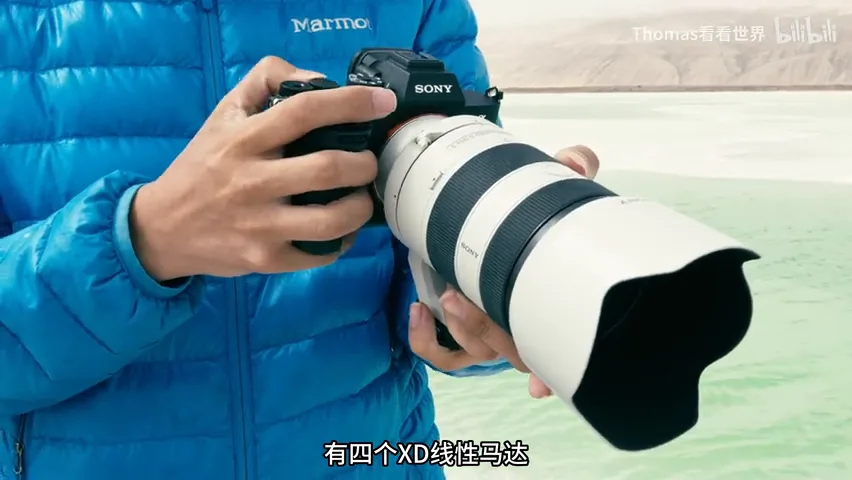
For the second half of the trip he switched to Sony's new 70-200 F4 II (at 2:54-3:24 in the video). Weight first: 794 grams, roughly half of the old lens — remarkably light in a class where hunks of glass usually demand serious muscle. Then optics: a complex 13-group, 19-element formula that maintains the G series' high resolution, and with Sony's compact 2x teleconverter the reach extends to 400mm — one lens covering the 70-400mm range that matters for landscape (at 3:24-3:55 in the video).
03 Emerald Lake: Two Trains a Day
Next Thomas takes us to Emerald Lake in Mangnai, Qinghai, to catch the train that crosses the salt lake only twice a day (at 3:55-4:22 in the video). The new 70-200's four XD linear motors focus fast for both video and stills — and in a scene you may get one chance at, focus simply cannot fail (at 4:05-4:20 in the video).
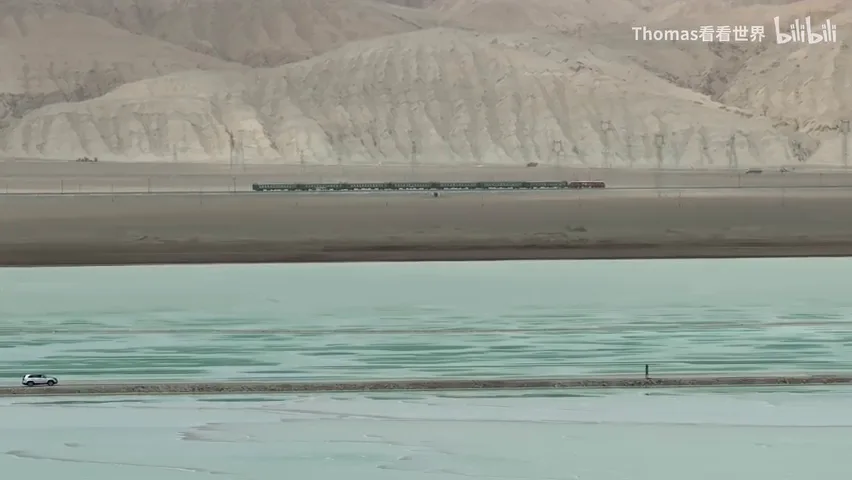
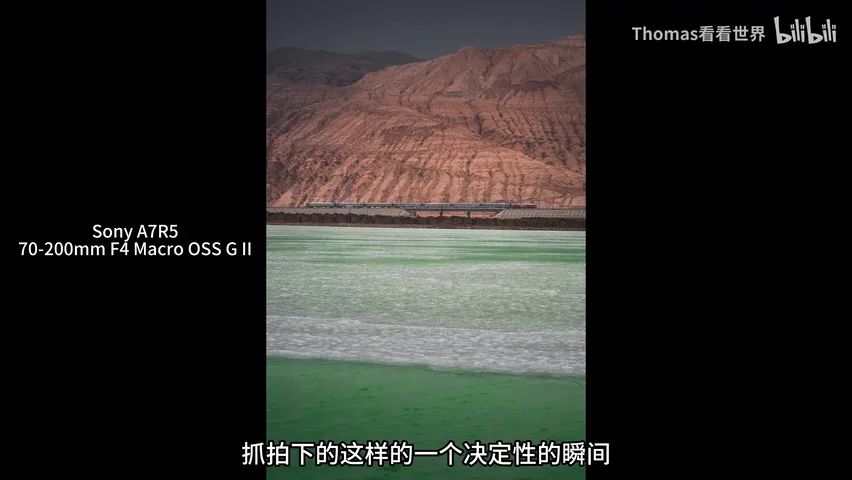
Around ten in the morning, fifteen minutes before the train runs from Mangnai to Golmud, he is already lying in wait: emerald brine in the foreground, the railway and train mid-frame, mountain textures in the distance — telephoto compression stacks them into crisply layered composition (at 4:22-4:43 in the video). As the train approaches he launches the drone early, tracks the train's progress with the long lens, and fires the moment it reaches the bridge — the decisive instant. A great catch demands patient waiting, precise focusing and a decisive shutter (at 4:43-5:02 in the video).
04 Yardangs, Heidu Mountain and Burning Skies
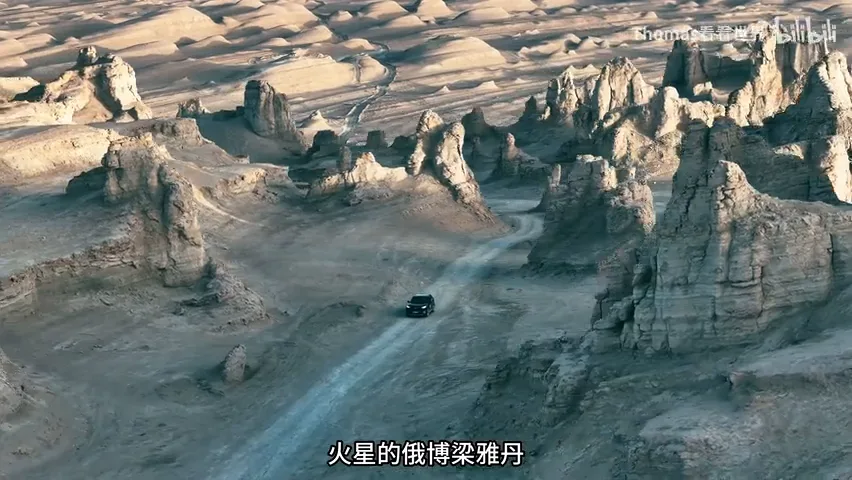
Beyond Emerald Lake, two more spots in Mangnai deserve your time. One is the Eboliang yardangs, called the most Mars-like place on Earth: a dry, ferociously windy climate has carved countless standing yardang pillars, and standing among them is overwhelming (at 5:02-5:25 in the video). Telephoto stacks the layered yardangs; and this is also one of the rare places on the trip where a wide angle earns its keep — with almost no light pollution, the night sky is spectacular (at 5:25-5:39 in the video).
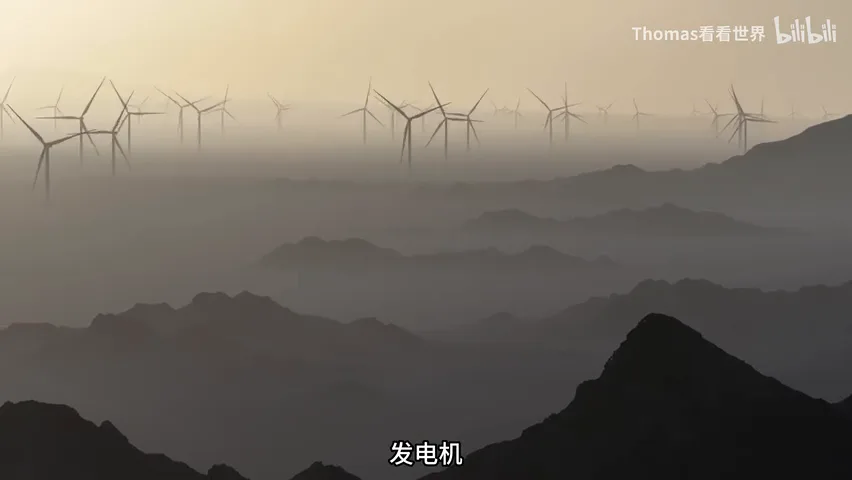
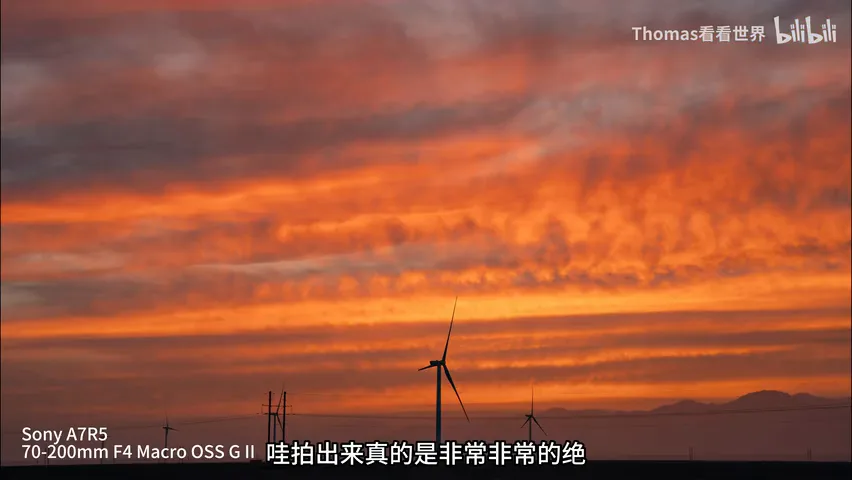
The other is Heidu Mountain in Qinghai, very close to Lenghu town: grey-black gravel hills scattered across a flat plateau, dubbed a "natural ink-wash scroll" for their unique black-and-white palette (at 5:39-5:57 in the video). Right beside it stands a huge field of wind turbines — a dense gathering of giants, spectacular in itself — and they were lucky enough to catch consecutive mornings and evenings of glorious colored skies (at 5:57-6:12 in the video).
05 One Lens, Two Jobs: Telephoto Plus Macro
The new 70-200's name carries a bonus: Macro. It doubles as a true macro lens with 1:1 magnification and an astonishingly close minimum focus distance — most telephotos focus no nearer than half a metre, while this one can practically touch your palm and still lock (at 6:12-6:57 in the video). One lens, two jobs: on the road it reaches distant scenery as a telephoto and dips into small details as a macro, with no extra lens to carry (at 6:57-7:39 in the video).
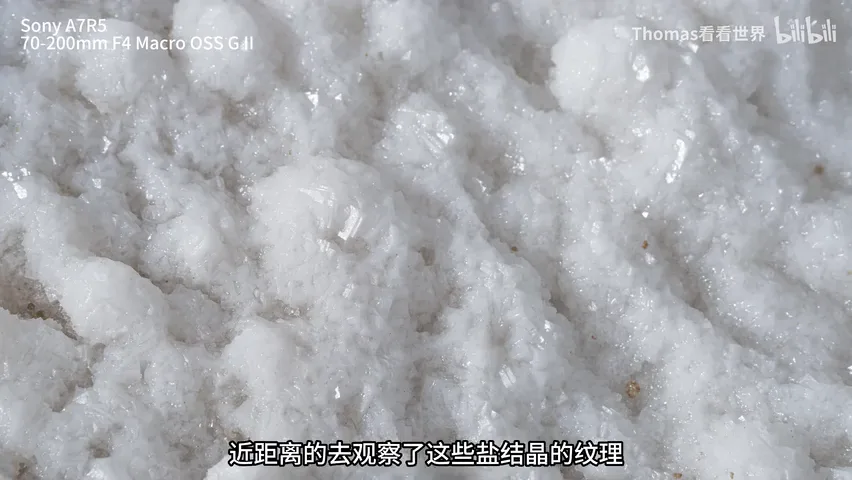
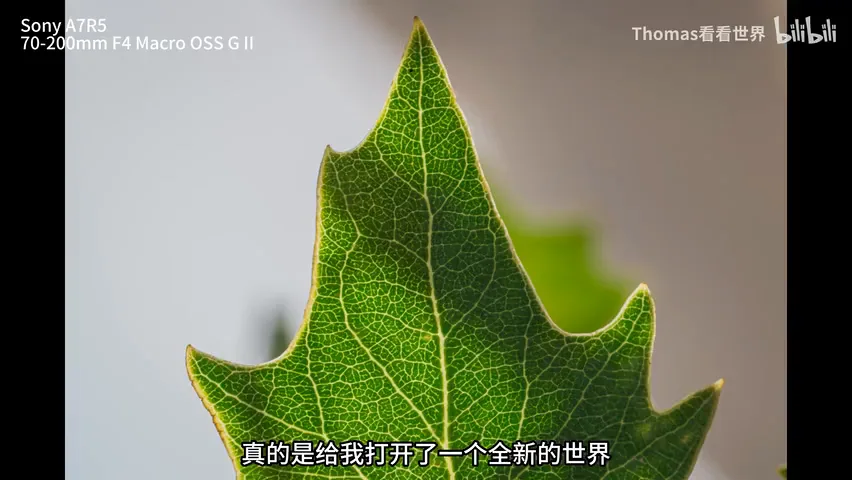
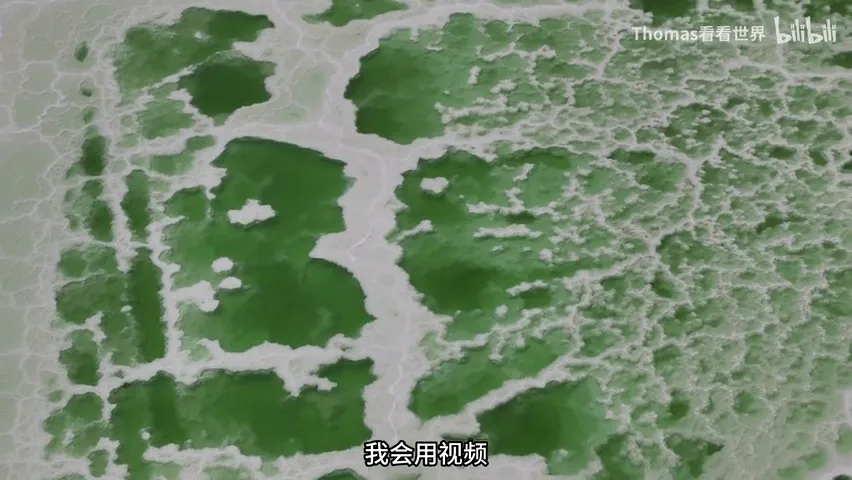
On this trip Thomas also discovered macro for the first time: studying the texture of salt crystals up close and photographing leaf details was great fun — the macro capability opened a whole new world of possibilities (at 7:07-7:36 in the video). His closing advice: Gansu, Qinghai, Xinjiang, Tibet — places like these are made for a telephoto, because the distant mountains are truly distant and need compression to reveal their layers. Next time you head out that way, buy or rent one (at 7:45-8:07 in the video).
1. The Northwest is dry and vast: wide angles find no foreground and shrink the subject, while telephoto compression makes it grander; 2. In telephotos, weight matters first — the 794-gram 70-200 F4 II with a 2x teleconverter covers 70-400mm; 3. The decisive moment takes patience, precise focus and a decisive shutter, with compression stacking foreground, subject and far mountains into layers; 4. A 70-200 with the Macro badge adds 1:1 close-ups — one lens, two jobs, lighter pack.