Photography Tutorial · 2021-04-25
Old Farmer Leading an Ox with Artificial Morning Fog — Why Are Such Photos Soul-less?
Thomas Chu Photo
Recently a short video went viral: artificial morning fog paired with an old farmer leading an ox, breathtakingly beautiful, with hundreds of cameras with long and short lenses clicking nonstop.
As leisure and entertainment, such behavior is understandable, but why are photos shot this way lacking soul and value?
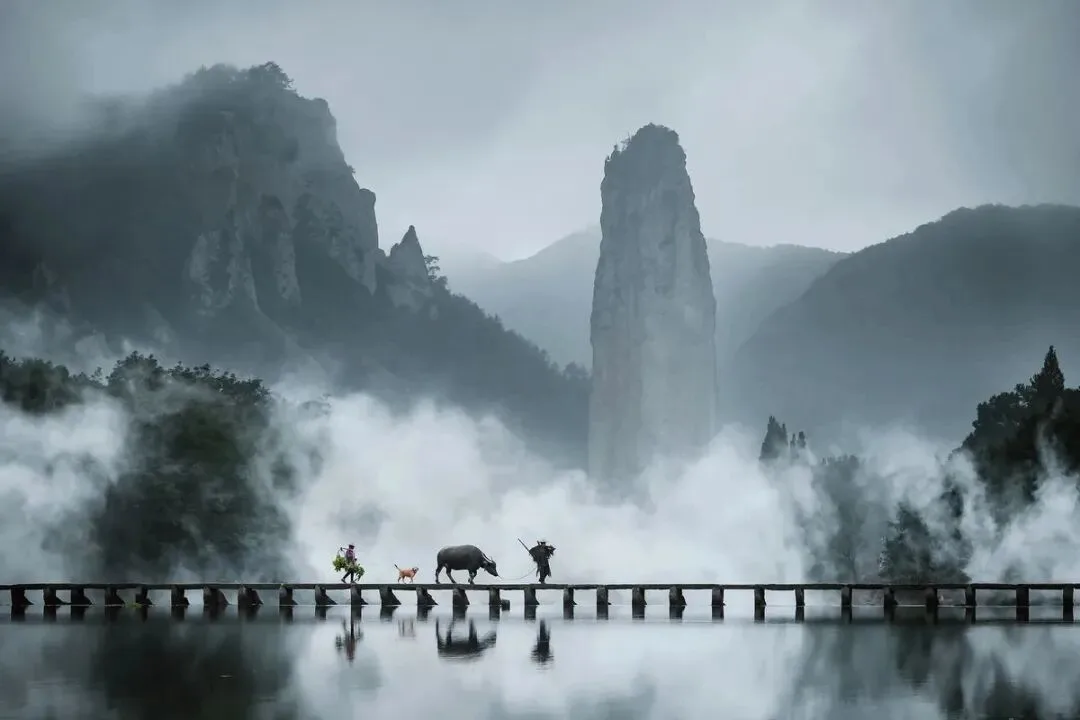
Photographer: Jord Harmond
In today's video tutorial, Thomas will analyze with everyone why such photos lack soul, have no commercial or artistic value, and are extremely hard to win awards — and how photographers and advanced enthusiasts should create better.
Video tutorial
▶ Watch the video tutorial on Bilibili
This is the fully illustrated companion to the video above. A clip from Xiandu, Lishui, Zhejiang recently went viral: someone drags a smoke cake to fake fog while an old farmer in costume leads an ox across the bridge, and hundreds of big lenses fire like machine guns. Using this case, Thomas explains why such "arranged photos" have no soul and what serious photographers should do instead — his full commentary is laid out here with keyframe screenshots.
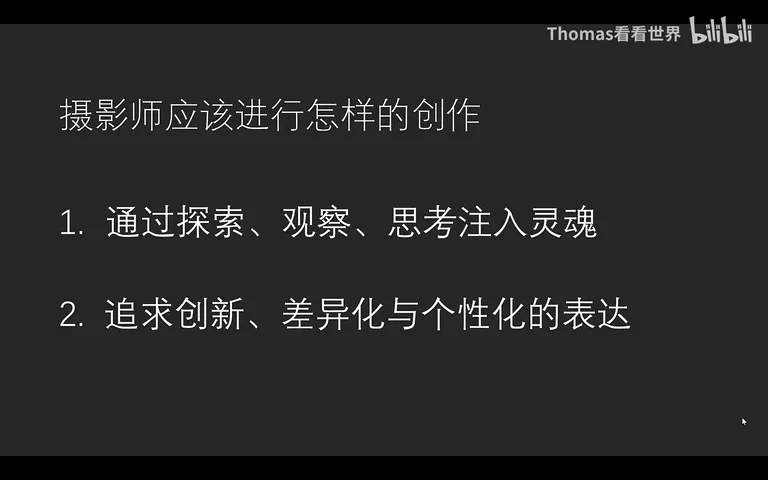
Start with the overview. The slide above, captured at 5:50 in the video, sums it up: two reasons such shooting is discouraged — soulless photos, and heavy homogenization that kills their value; and two answers — inject soul through exploration, observation and thinking, and pursue innovative, differentiated, personal expression. Each is unpacked below.
01 The Xiandu Scene: A Perfectly Arranged "Shoot"
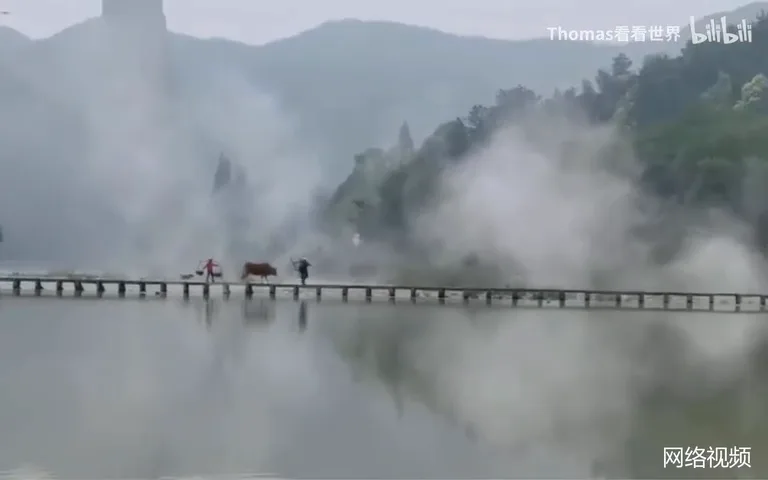
The viral clip was shot at Xiandu in Lishui, Zhejiang: someone sweeps a smoke cake through the frame and thick fog billows up; professional actors enter — an old farmer in period costume leading an ox, a dog trailing behind — crossing the bridge at a leisurely pace, even pausing halfway so the photographers can freeze the "perfect moment" (at 0:46 in the video).
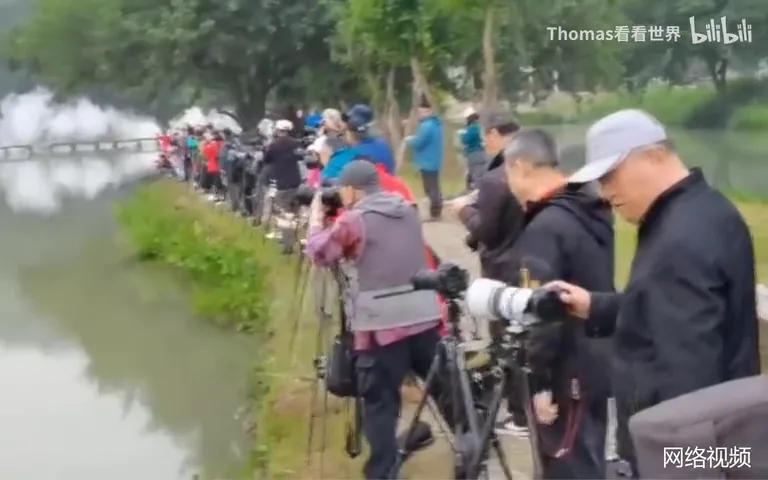
The banks are packed with big glass, shutters rattling like machine guns (at 1:03 in the video). Thomas's stance has two layers: as leisure and entertainment it is beyond reproach — the scenic area has done its job, laying on fog, actors and a painting-like mood, better than the many spots that fence off a view, charge 200-300 yuan and offer no service at all; and retirees rising before dawn to shoot quietly beat spending the night at mahjong or squabbling over square-dancing grounds.
02 Why It Is Discouraged: No Soul, No Market
But if you take yourself for a photographer, or a serious committed amateur, this kind of shooting deserves no encouragement. First, these photos have no soul. The test is simple: does the photo carry the photographer's own thinking, observation and creativity (at 2:41 in the video)? At Xiandu the models are arranged by the scenic area, and the composition, vantage point and timing were all planned by earlier shooters and the site — all you do is press the shutter. Put a surveillance robot there, snapping every second in all weather, and its results would be identical to yours, perhaps better (at 3:08 in the video). Can a robot's photo be said to have a soul?
Second, from a practical angle, heavily homogenized photos lack commercial value (at 3:47 in the video). Want to sell through stock libraries? Search "old farmer leading an ox at Xiandu" and a thousand identical frames come up — unless you have connections, why would anyone buy yours? Competitions? The odds shrink by the day. The cormorant fishermen of Guilin and the terraces of Yuanyang did win awards abroad at first — the earliest shooters brought genuine innovation and discovery, and judges were unfamiliar with the scenes; but when thousands of such photos are produced daily, those chances no longer reach the latecomers (at 4:45 in the video).
03 The Reverse Move: Inject Soul, Seek Difference
So how should a committed amateur shoot? Reverse the logic above. First, inject soul: through your own exploration, observation and thinking, put your views and your unique composition into the frame (at 5:41 in the video). Second, pursue innovation, differentiation and personal expression — shoot differently from everyone else, and the photo is worth more whether entered or sold (at 5:58 in the video).
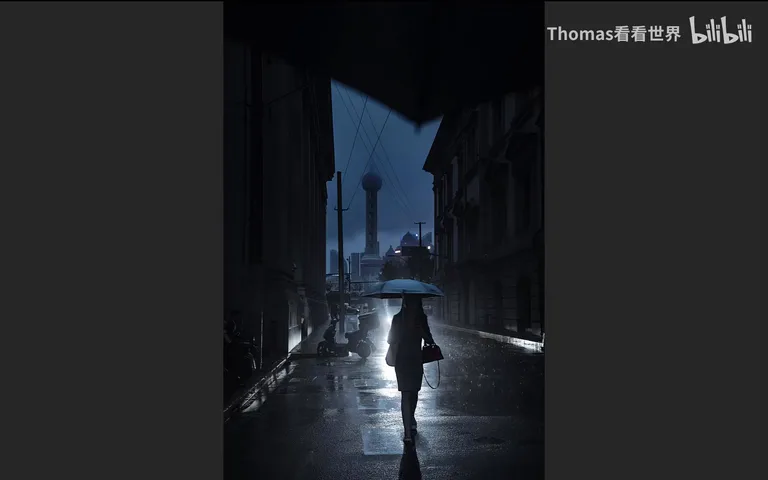
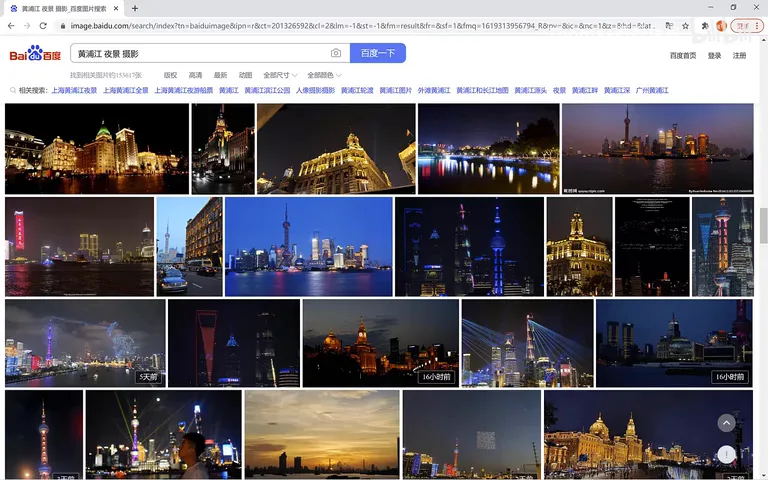
Take Shanghai. A straightforward night shot on the Bund carries little personal input — thousands of identical versions turn up in a single search; fine for practice, not for creation (at 6:41 in the video). When Thomas went, he first asked what Shanghai felt like to him: an international metropolis, the "Magic City", hectic, even faintly oppressive. So he shot on a rainy day, framed the Oriental Pearl Tower, waited for a pedestrian glancing at a phone to hurry past, added one flash, and fired as a car swept by behind — layers and atmosphere instantly appear (at 7:08 in the video).

04 A Case: From the Potala Palace to Tibet's Infrastructure
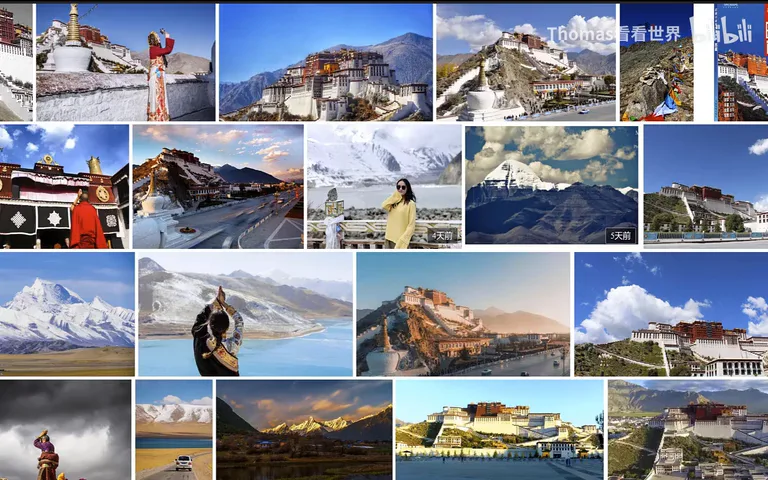
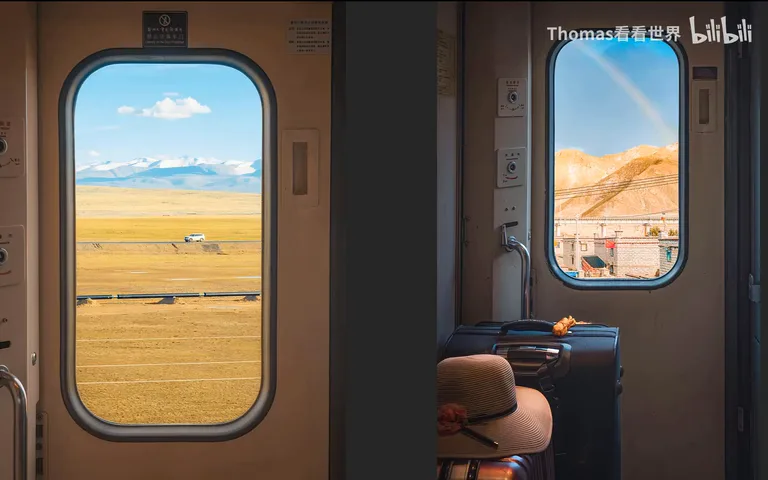
Or Tibet. The first associations are always the Potala Palace, prostrating pilgrims and monks in Tibetan robes — shooting the same pictures again adds no difference, no value, none of your own thinking (at 8:26 in the video). Yet Tibet offers far more. Thomas's recent series turned to the region's infrastructure: after decades of building, it has been transformed — riding the train, he documented 4G towers in the no-man's land, dust-control netting across the Gobi, modern roads, pipelines and new villages (at 8:59 in the video).
And he shot it all through the train window — itself a landscape and a mode of travel that only modern China offers (at 9:16 in the video). The series is still Tibet, but with strong documentary value for our times, and — crucially — it breaks away from the homogenized Tibet photos; it drew a lot of attention precisely because thinking, exploration and a personal viewpoint were poured into it.
05 Even at a Xiandu-Style Spot: Shoot It Differently
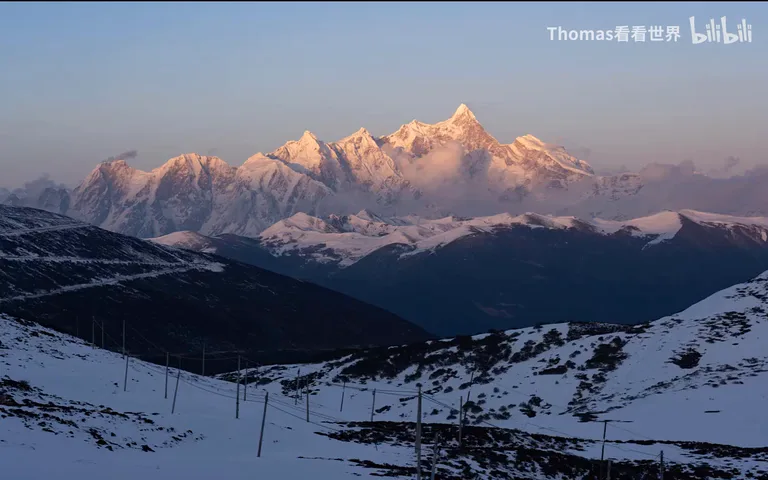
But what if your destination is exactly such a hotspot — Xiandu, Nyingchi, Namcha Barwa? At the very least, differ in composition, location choice and post-processing (at 10:02 in the video). Thousands shoot at the Namcha Barwa viewpoints every day, so Thomas scouted both Sosong Village and the Serkyem La pass beforehand: at Sosong Village he used peach blossoms as the foreground and graded the image into a magical, almost surreal tone, revealing a different face of Namcha Barwa (at 10:28 in the video).
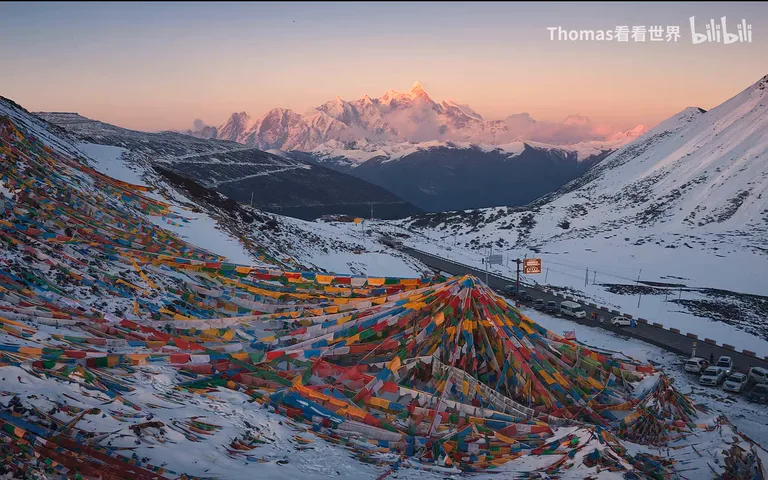
The other image came at the pass: while everyone crowded the road and platform up front, he spotted a huge sweep of prayer flags hidden behind — prayer flags being an object deeply tied to the Tibetan landscape. He flew the drone straight back there and framed the Namcha Barwa sunset through the flags of Serkyem La (at 10:54 in the video). At least in composition he stood apart from the hundreds present that day, and the photo carries his own thinking about framing and geography.
Day to day it comes down to three plain habits: read more — look at other art forms and other people's photos, and see which fresh work already exists; observe more — your own life included, because even places shot to death like Tibet or Xiandu still hold new creative possibilities; and think more — craft different compositions, different moods in post, viewpoints and subjects that are truly your own (at 11:16 in the video). That is how work with a real soul gets made.

1. Whether a photo has a soul depends on whether your own thinking, observation and creativity went into it — if the site arranges everything and you just press the shutter, the result differs little from a surveillance robot's; 2. Homogenization strips photos of commercial value — stock libraries won't buy them, competitions won't reward them, and only the earliest innovators reap the dividend; 3. The answer is to reverse the logic: inject soul and pursue innovative, differentiated, personal expression; 4. Read more, observe more, think more — even a shot-out location like Xiandu still holds new creative possibilities.
HD video:
https://www.bilibili.com/video/BV1yV411J7PJ/
Related articles:
"The Core Technique of Photography Composition - Not the Rule of Thirds, Nor Subtraction"
"Want to Improve Your Aesthetics? Sharing 6 Websites Professional Photographers Keep Private!"
"Renowned Portrait & Landscape Photographers Discuss Shooting Experience! This Cross-Disciplinary Dialogue Has Too Much Substance!"
"How to Improve Aesthetics and Learn Photography Through Contests? Methodology Sharing Is Here!"
"Is Photography Just Pressing the Shutter? A Brief Talk on the Path of Photography Advancement"
"The 4 Stages of Learning Photography"
"Subtraction Alone Isn't Enough — How to Do the 'Addition' in Photography?"
"Compared with Professional Photographers, Where Do Your Photos Fall Short?"
"How to View Imitation in Photography? How Can Imitation Truly Improve Your Shooting Level?"
"About Photography Contests, Here's the Most Detailed Beginner's Guide"
"Photography Contest Judges Talk - What Is a Good Photo? "
"Photography Works Are Not a Piling Up of Details and Techniques"
"How to Avoid Turning Landscape Photography into Syrupy Sweet Photos?"
"How to Break Through the Bottleneck of Landscape Photography"
"Advanced Photography Thinking - 'Awakening' Your Inner Artistic Cells"
"How to Give Your Landscape Photography Ideas"
"The Meaning of Landscape Photography Is Not Just Shooting and Post-Processing"
"Six Common Landscape Photography Misconceptions"
"These 6 Points Are What I Want to Tell You"
"Landscape Photography Requires Following Your Inner Self - Thomas in Dialogue with Photographer Yunman (云漫)"
"Dialogue with 4 Photography Masters on the Questions Photographers Care About Most!"
"Photography Post-Processing Is Not Showing Off Skills, but for Better Communication."