Photography Tutorial · 2023-04-09
Shoot One Tree for 10 Years? Photograph the Same People for 40 Years? Photography Can Be Played Like This!
Besides capturing decisive moments, photography can also show the changes of time, the relationships between people and things, and even the many facets of life and society.
In today's aesthetic expansion video, Thomas will introduce three groups of photographers' works: "TTP 2018" (《TTP 2018》), "A Tree by the West Lake" (《西湖边的一棵树》), and "The Brown Sisters" (《布朗姐妹》).
Let's see what unique photographic charm there is in shooting a table for 6 years, a tree for 10 years, and the same family portrait for 40 years~
Video
▶ Watch the video tutorial on Bilibili
This is the fully illustrated companion to the video above. Beyond freezing the decisive instant, can photography record time itself? Thomas picks three classic bodies of work built on "photographing the same subject over years" — TTP 2018 by Japan's Hayahisa Tomiyasu, A Tree by West Lake by Fu Yongjun, and The Brown Sisters by Nicholas Nixon: six years on one table, ten years on one tree, forty years on the same four sisters. Keyframe screenshots follow — watch time flow slowly through the images.
Start with the overview: this card from the opening of the video lays out the three series and their photographers, each unpacked below.
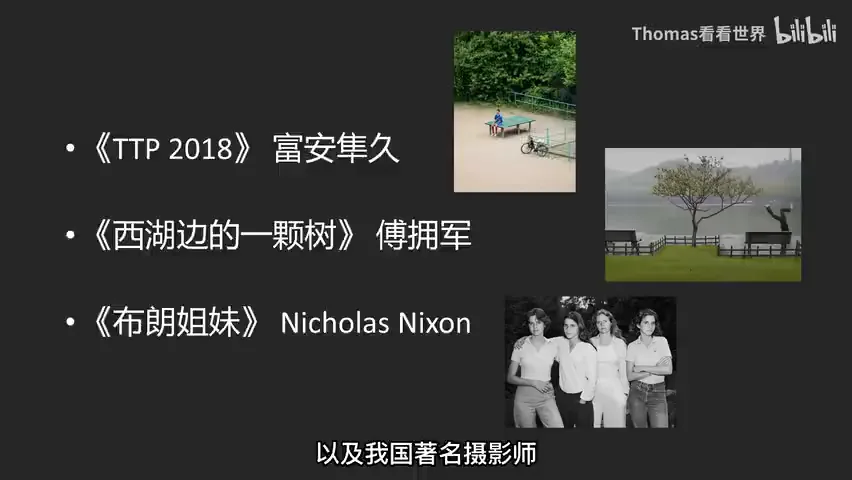
01 Six Years Around One Table
At first glance TTP may puzzle you too: is this photography? An utterly ordinary table-tennis table, a person sitting there blankly, seemingly meaning nothing. But scroll on: the viewpoint never changes, the subject never changes, and the people quietly do — first a few kids playing, then the table stops being a place for ping-pong at all and turns into a playground (at 0:36 in the video).
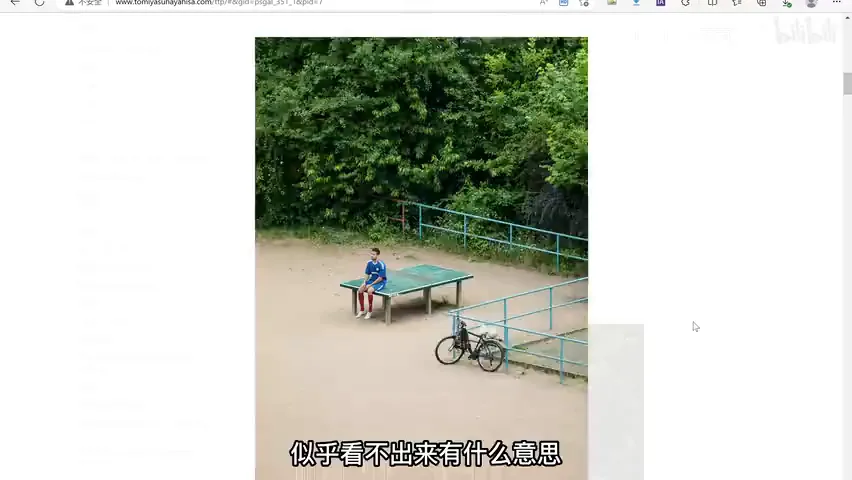
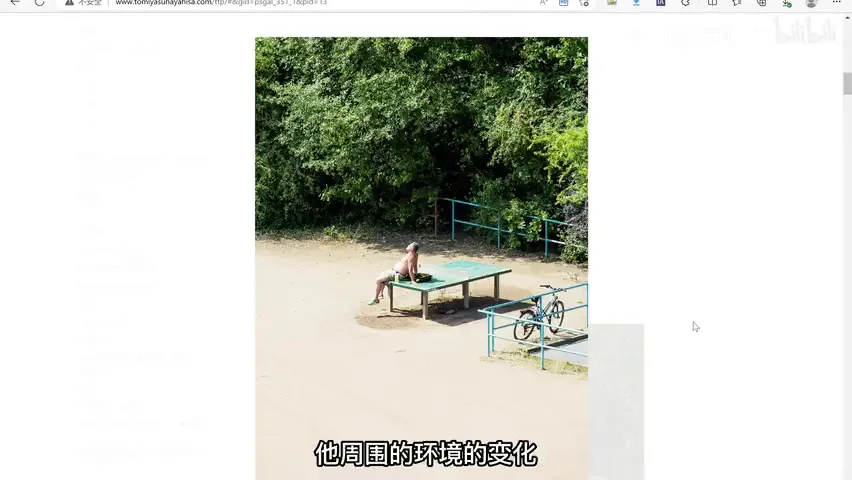
What makes the series delightful is that hardly a single frame shows the table used for ping-pong — it dries laundry, hosts parties and open-air gatherings, gives cyclists a place to rest, and on snowy days becomes the backdrop for a child's portrait (at 2:04 in the video).
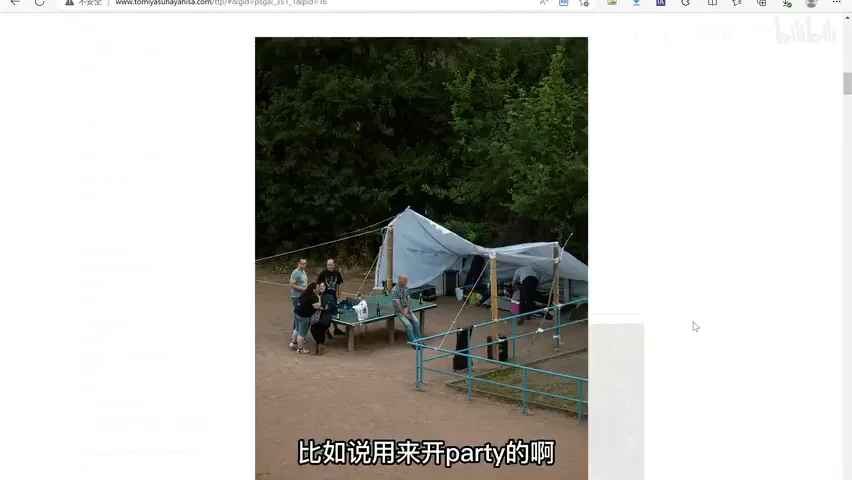
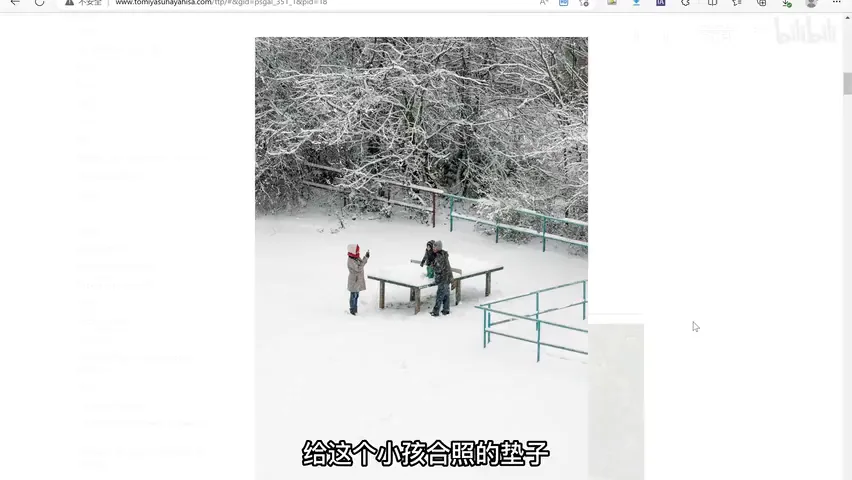
The photobook holds more than 100 images: one viewpoint, one subject, yet through them the surroundings turn with the seasons — and more importantly, the whole sweep of human life passes by. Thomas finds this approach genuinely delightful (at 2:12 in the video).
02 Ten Years Beside a Tree at West Lake
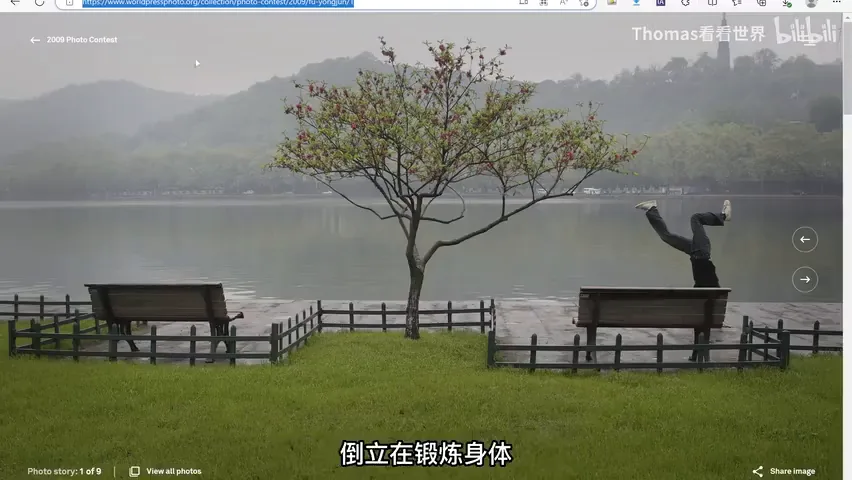
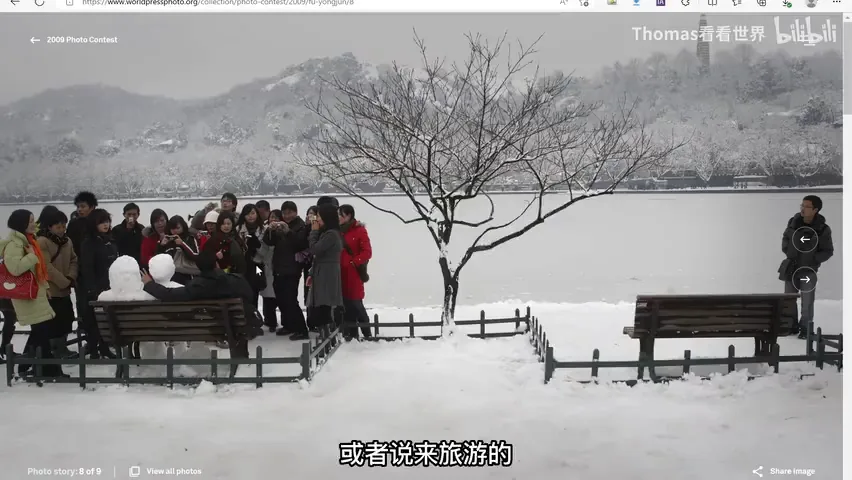
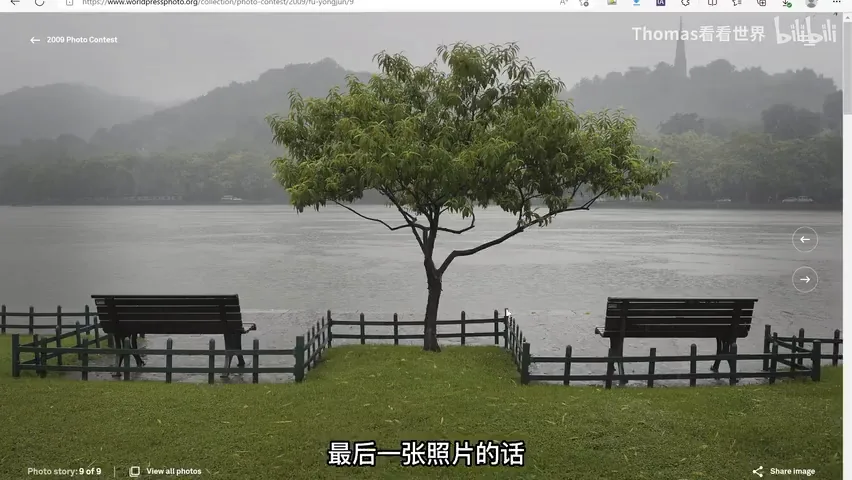
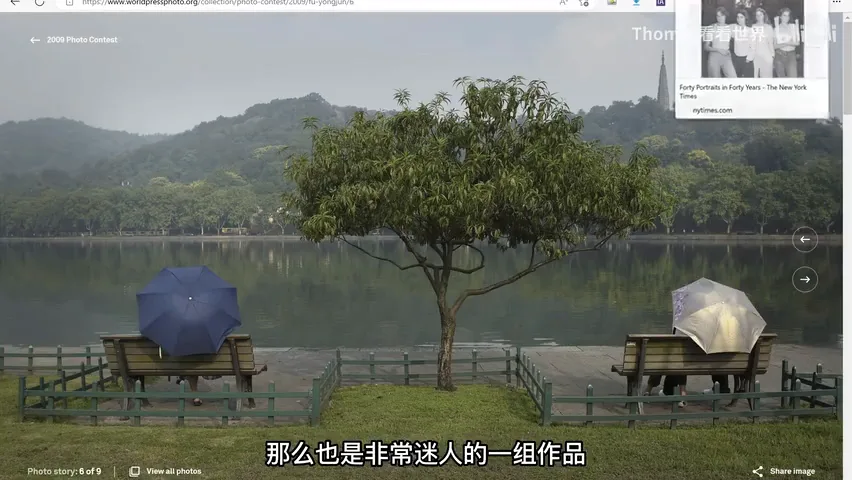
Around 2009, Fu Yongjun won the prestigious World Press Photo with A Tree by West Lake. The framing is strikingly consistent: one tree on the West Lake shore, a bench on each side. Most of us linger on the lake's famous scenery when shooting there; Fu found a grand vista inside a tiny viewpoint (at 2:34 in the video).
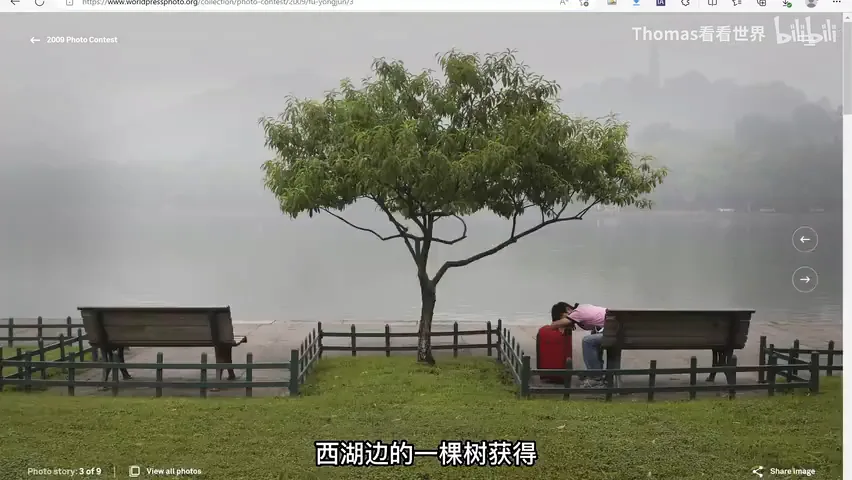
Beneath the tree unfolds the whole human comedy: a man handstanding through his workout; a traveler or migrant worker whose room isn't ready yet, resting on the bench with his suitcase; peach blossoms opening as couples settle in beneath them, whispering or posing for photos — another pair, it seems, out on the lake; and several old gentlemen each at his own pace — jogging, exercising morning drills, strolling. One tree mirrors the daily life along West Lake (at 3:08 in the video).
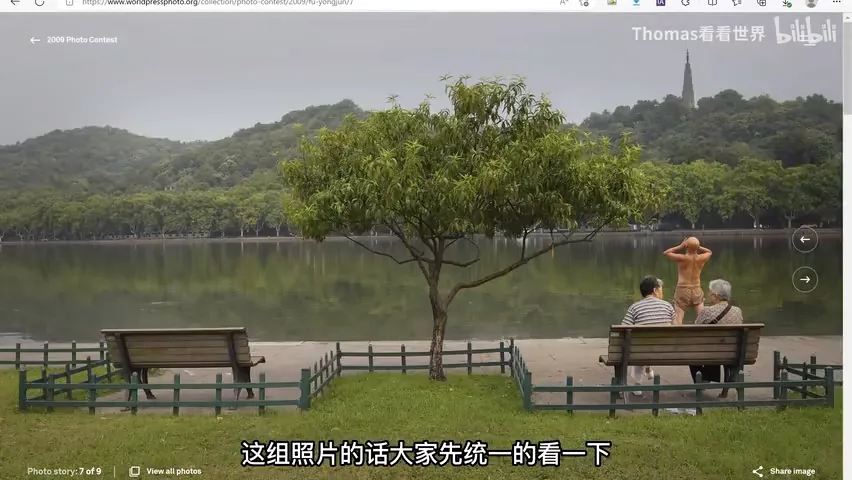
The seasons flow through the tree as well: under a blazing sun people shade themselves with parasols; when the tree withers, snow blankets the scene, university students on a trip pile up snowmen nearby; and the final frame, a rainy day with the tree and benches standing empty, is thick with atmosphere. The tree was later removed and replaced with another — and Fu kept shooting, which makes the series all the more intriguing (at 4:05 in the video).
03 Four Sisters Across Forty Years
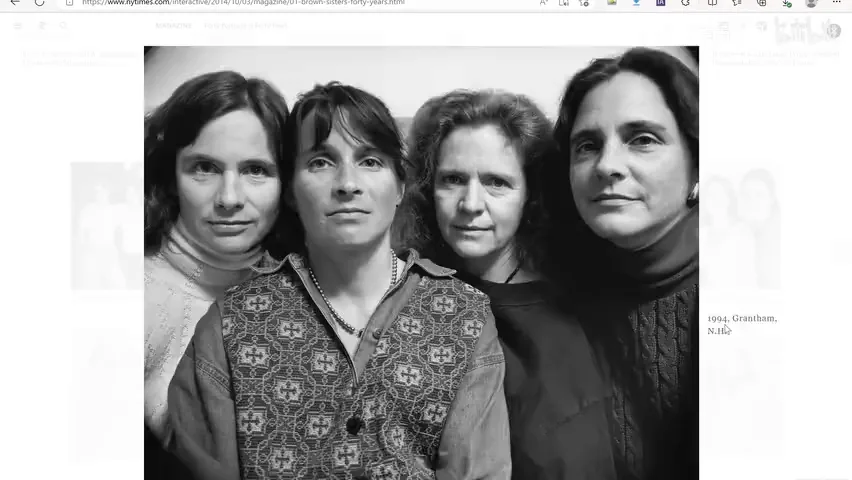
The last series, The Brown Sisters by Nicholas Nixon, rests on a simple idea: at roughly the same time each year, photograph his wife's four sisters — gathered in one place, standing in the same order. Across the years their expressions, bearing, clothing, even their ages and the texture of their skin all shift (at 5:09 in the video).
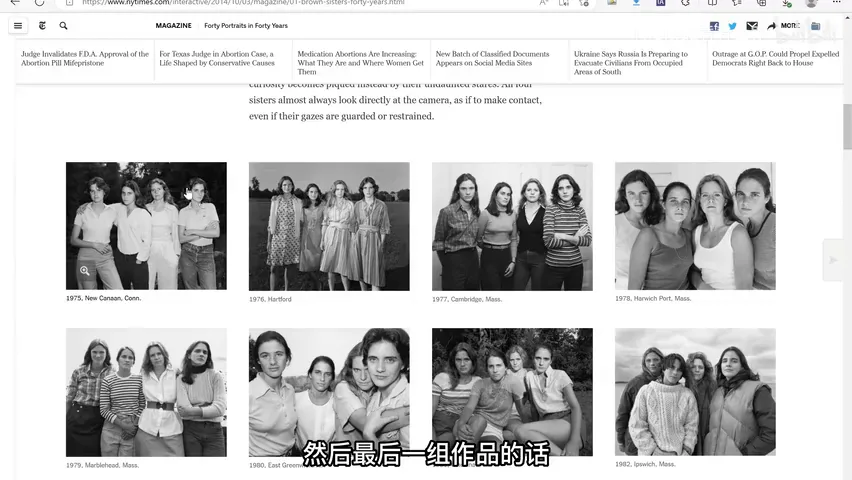
What is rarest is the unbroken 40-year commitment of photographer and subjects alike. Any single frame is an ordinary family snapshot; place all forty side by side and they become four lives unfolding in full — some sisters aging faster, some slower, none escaping the passage of time. Forty years, the same people, the same ritual: deeply moving (at 5:45 in the video).
All three series share one rule: when showing the passage of time, hold everything else constant — subject, viewpoint, even weather and light as much as possible. Otherwise, with everything in the frame shifting, the human and temporal change you want to reveal drowns in noise. Photography needs subtraction: fix the viewpoint and the people, and let age, expression and surroundings change on their own — read in sequence, the years surface on their own (at 6:32 in the video).
1. A long-term project need not chase spectacle: a ping-pong table, a single tree, one annual portrait — enough to carry the seasons and the whole range of human life; 2. Lock the viewpoint and framing — let the people change while the composition holds, and only then can the flow of time be seen clearly; 3. Sequenced photographs gain their power in series: one frame is an instant, a series is years; 4. Start with what is close at hand — observe and photograph it over a long time, and the rewards may surprise you.
HD video:
https://www.bilibili.com/video/BV18M4y117PG/
Related tutorials:
"From Beginner to Professional: Learning and Creation Methodology Ordinary Photographers Won't Share!"
"Want to Improve Your Aesthetics? Sharing 6 Websites Professional Photographers Keep Private!"
"How to View Imitation in Photography? How Can Imitation Truly Improve Your Shooting Level?"
"Was the International Photo Contest Grand Prize Photo Stolen? How Artists Steal Inspiration and Style"
"Renowned Portrait & Landscape Photographers Discuss Shooting Experience! This Cross-Disciplinary Dialogue Has Too Much Substance!"
"About Photography Contests, Here's the Most Detailed Beginner's Guide"
"How to Improve Aesthetics and Learn Photography Through Contests? Methodology Sharing Is Here!"
"Can Photoshopped Photos Still Be Called Documentary Photography?"
"In the Video Era, Does Still Photography Still Have a Future?"
"How to Avoid Monotony in Landscape Photography? Some of My Thoughts"